
Reviewed · SLUM AND COMMUNITY TOURS
Walking Tour of Dharavi Slum in Mumbai
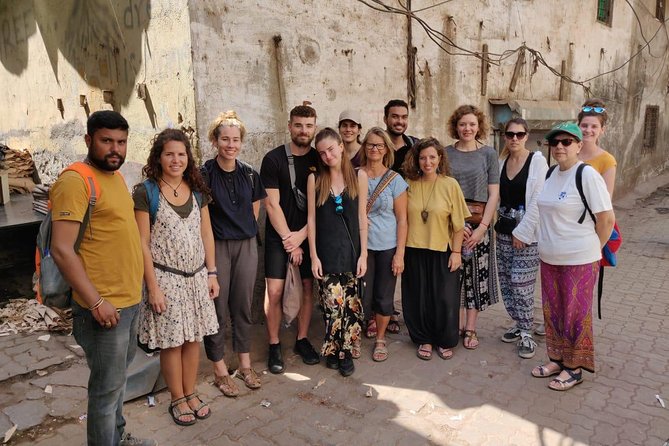
Dharavi is more than a label. This two-hour walk gives you a close look at Mumbai’s small-scale industries, from plastic recycling and leather work to pottery and soap-making. I like the local guide format and the chance to see working businesses rather than just hearing general facts. I also like the small maximum of 15 people, which makes questions and conversation easier. The main consideration is that this is a walking tour through crowded, working neighborhoods, so you need modest clothing, decent fitness, and respect for privacy.
At $12 per person, this is one of Mumbai’s better-value cultural outings. Guides such as Ganesh, Alam, and Dawood have been praised for clear explanations, patience, and care for the community. Still, the experience may feel uncomfortable if you expect a polished sightseeing route. Photography is restricted in some places, and the tour ends near Sai Hospital rather than returning you to Mahim Station.
In This Review
- Key points to know before you go
- Why this Dharavi walk is worth your time
- Meeting near Mahim Station in the morning
- The main 90-minute walk through Dharavi
- Leather work and the 10-minute industry stop
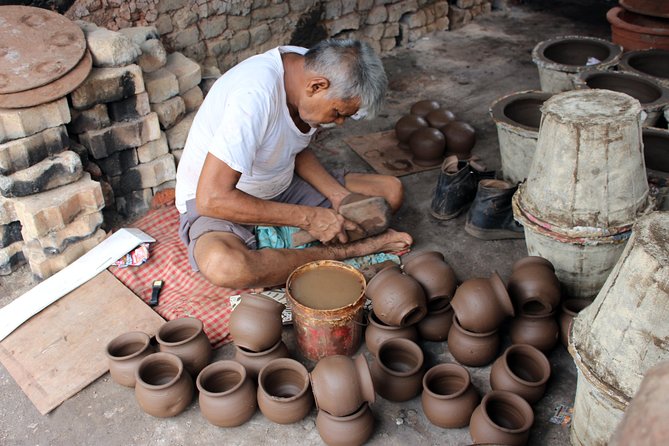
- Pottery in Kumbhar Wada
- Temples, mosques, churches, and community life
- What the guides add to the experience
- Comfort, clothing, and practical limits
- Is $12 a fair price?
- Who should book this walking tour?
- FAQ
- How long does the Dharavi walking tour last?
- Where does the tour start?
- Where does the tour end?
- Is hotel pickup included?
- Is photography allowed?
- Can children join the tour?
- What happens if I need to cancel?
- Should you book the Dharavi walk?
Key points to know before you go
- Local guides with personal ties: Some guides, including one described as born and living in Dharavi, provide a personal view of daily life and local work.
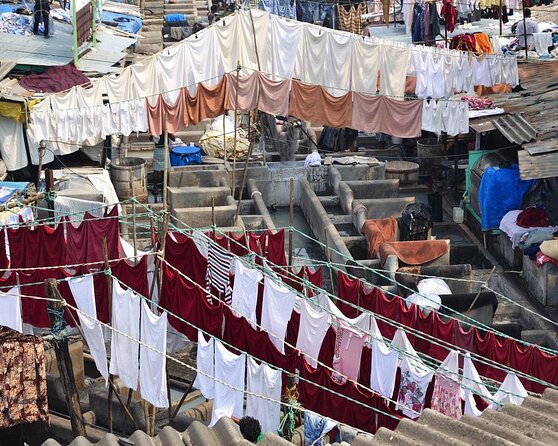
- Working industries, not staged displays: You might see plastic recycling, leather tanning, garment work, soap-making, embroidery, and pottery in very tight spaces.
- Small group size: The tour accepts no more than 15 people, with occasional private or nearly private departures.
- A short but active route: Expect about 1 hour 30 minutes to 2 hours on foot, with no hotel pickup or drop-off.
- Photography needs care: Pictures are not allowed at certain locations, mainly to protect residents’ privacy.
- Simple meeting arrangements: You meet near Mahim Station in the morning and finish opposite Sai Multispeciality Hospital in Dharavi.
Why this Dharavi walk is worth your time
Dharavi is often reduced to a single word, but daily life here is more layered than that label suggests. The neighborhood is home to almost one million people and includes homes, workshops, religious buildings, shops, and small factories. This tour helps you see how work and community fit together in a very confined urban setting.
I like that the walk focuses on activity rather than distant observation. You are not simply driven past an area and given a few statistics. You walk through it with a guide who explains what you are seeing and why these businesses matter.
The tour also challenges the easy idea that Dharavi is only a place of hardship. Poverty is part of the setting, and the tight spaces can be confronting, but the route also shows skill, enterprise, family work, and cooperation. That balance is important. You should come ready to listen, not to collect dramatic images.
The strongest part of the experience is often the guide. Ganesh is praised for explaining the history and for making stops at plastic recycling and ceramics areas especially clear. Alam is described as attentive to safety and generous with information about the community. Dawood has also been praised for helping visitors feel at ease and explaining the key parts of the neighborhood in clear English.
Guide quality can vary on any walking tour, but the personal connection matters here. A local guide can explain details that would be easy to miss, including why certain industries developed in Dharavi and how different communities live close together.
More Walking Tours in Mumbai
- Group Guided Walking Tour in Fort and Colaba
★ 5.0 · 1,073 reviews - Private Guided Walking Tour in Fort & Colaba
★ 5.0 · 895 reviews - Private Guided Walking Tour in Bandra Queen of Suburbs
★ 5.0 · 383 reviews
Meeting near Mahim Station in the morning
The tour begins near Mahim Station, on the west side, outside a coffee shop. The tour information gives two coffee shop details, Cafe Coffee Day in the meeting description and Third Wave Coffee at the listed address on Tip Road. Because of that mismatch, I would confirm the exact meeting point before setting out.
The address provided for the start is Third Wave Coffee, Unit 58, Ground, Ram Mahal, Senapati Bapat Marg, Marinagar Colony, near Mahim Station, Mumbai 400016. The location is close to public transportation, which is useful if you are staying elsewhere in Mumbai and want to avoid paying for a private transfer.
Give yourself time to find the station area and the correct cafe. This is not a hotel pickup service, so you are responsible for reaching the starting point. The meeting is scheduled in the morning, which can help you avoid the strongest heat later in the day, though you should still carry water.
The group limit is 15 people. That is small enough for a guide to keep the group together and answer questions without turning the walk into a moving crowd. One departure had no other participants, allowing the guide to adjust the pace and timing to suit the visitor. You should not count on a private tour, but the small-group format gives you a better chance of personal attention.
The main 90-minute walk through Dharavi
The first and longest part of the tour lasts about 1 hour 30 minutes. You move through Dharavi on foot while the guide explains the neighborhood, its industries, and its communities.
The value here is the connection between what you see and what you are told. A narrow workspace can look confusing at first. With context, you begin to understand how a tiny operation can support families, supply larger businesses, or turn discarded materials into something useful.
The walk may include recycling, embroidery, garment-making, soap-making, leather work, and pottery. The exact order of stops can vary, but the point is the range. Dharavi is not built around one trade. It is a large working district with many forms of production taking place close to homes.
Plastic recycling is one of the most memorable stops for many people. You might see how discarded material is sorted and processed using methods suited to limited space. This can be more instructive than a visit to a large industrial plant because the guide can show how local workers adapt tools, rooms, and routines to the conditions around them.
Garment-making and embroidery offer another view of the area. The work requires patience and skill, and the guide can help you understand how production fits into the community. Soap-making and other small industries add to the picture of Dharavi as a place where many businesses operate side by side.
The setting is active and crowded. You may be walking through narrow lanes and shared spaces, so keep your group together and follow the guide’s instructions. This is not the right tour for someone who wants a quiet stroll or a carefully arranged photo opportunity.
A few people have found that the walk spent more time on plastic recycling than they expected. If you have a particular interest, such as pottery, leather, or garment work, tell your guide early. The tour can sometimes be adjusted, especially when the group is small.
Leather work and the 10-minute industry stop
Leather is described as Dharavi’s most dominant industry, and the tour gives it a dedicated stop of about 10 minutes. The guide explains the work and its place in the neighborhood rather than treating it as a quick shop visit.
This stop matters because it shows how a major local trade can operate in a dense residential area. You may see workspaces that are practical rather than spacious, with production organized around whatever room is available.
The leather section may not suit everyone. Tanning and industrial work can involve strong smells, close quarters, and sights that some people find difficult. The tour is educational, but it is not designed as a luxury craft demonstration. Wear shoes and clothes you can walk in comfortably, and keep an open mind about the working conditions.
The guide’s explanation is what gives this stop meaning. Without context, you might notice only the physical surroundings. With a local perspective, you can better understand the trade’s role in Dharavi and why it remains such an important source of work.
A completely different kind of day out:
- Dharavi slum tour in Mumbai by Female tour guides of the slum
★ 5.0 · 1,976 reviews - Mumbai: Full-Day Sightseeing Tour of Mumbai
★ 4.9 · 1,822 reviews - Private Mumbai Sightseeing Tour (Traveller’s Choice Award Winner)
★ 5.0 · 1,565 reviews - Elephanta Caves & Island Guided Private Tour
★ 5.0 · 1,327 reviews
Pottery in Kumbhar Wada
The pottery stop lasts around 10 minutes and focuses on the making and selling of ceramics. The pottery area is part of Kumbhar Wada, which appears in the ending location details near Sai Hospital.
Pottery provides a useful contrast with recycling and leather. Instead of processed plastic or treated hides, you see a craft based on clay, shaping, firing, and sales. The stop helps show that Dharavi includes both industrial production and long-standing craft work.
The space is still part of a working neighborhood, not a museum. You might find the area crowded or basic, and the visit is brief. That short timing is enough for an introduction, but not for a long workshop or hands-on lesson.
If pottery is your main interest, ask questions while you are there. The guide can help explain what is being made and how it connects to local trade. You should also be prepared for photography restrictions. Pictures are not allowed at certain points on the tour, and you need to accept those limits without argument.
Temples, mosques, churches, and community life
One of the most valuable parts of the walk is the chance to see Dharavi’s religious and cultural mix. People from many parts of India live here, and temples, mosques, and churches can be found close together.
That variety gives the tour a wider purpose. You are not only looking at workshops. You are seeing a neighborhood where people live, worship, work, and raise families in close proximity.
The guide provides commentary about community life and helps you avoid making quick judgments based on appearances. I appreciate this part of the tour because it puts the industries into human context. A workshop is not an isolated attraction. It is part of a residential area where privacy and dignity matter.
That is also why photography rules are important. You may be able to take pictures in some places, but not in others. Ask before using your camera or phone, and do not photograph people without clear permission. The lack of photos may disappoint you, but it also keeps the experience more respectful.
What the guides add to the experience
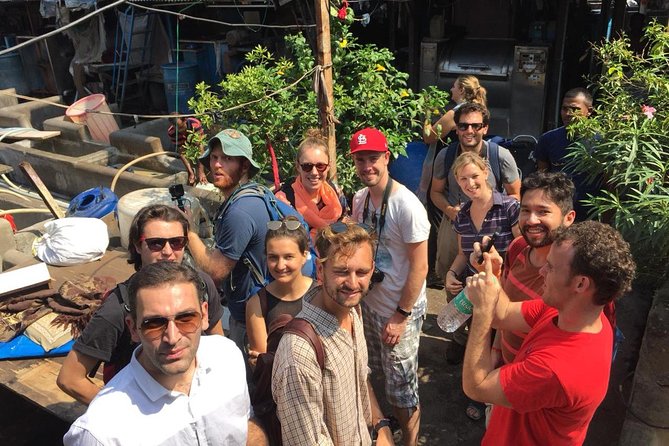
A local guide makes a major difference on this route. The strongest feedback centers on guides who explain clearly, answer questions, and help visitors feel safe.
Ganesh is praised for his English and for explaining the history of Dharavi along with its businesses. Alam is described as careful about group safety and willing to share detailed information. Dawood has been praised for being reassuring, clear, and welcoming, even when a visitor arrived about 10 minutes late.
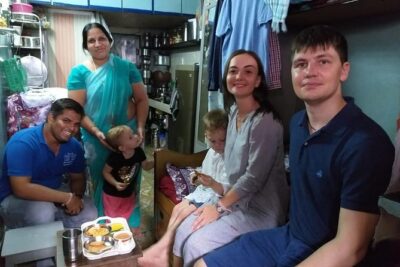
A guide may also be able to take you beyond the basic route when time allows. One tour included a visit for lunch in a Dharavi apartment, while another included an invitation into a garment-making space. These details should not be treated as guaranteed inclusions, since food and drinks are not included and the exact route can differ. Still, they show how a good guide can make the walk feel more personal.
The guide is also the person who sets the tone. A thoughtful guide presents Dharavi with respect, explains difficult subjects without turning residents into a spectacle, and reminds the group when privacy matters. That is the standard I would expect from this kind of tour.
Comfort, clothing, and practical limits
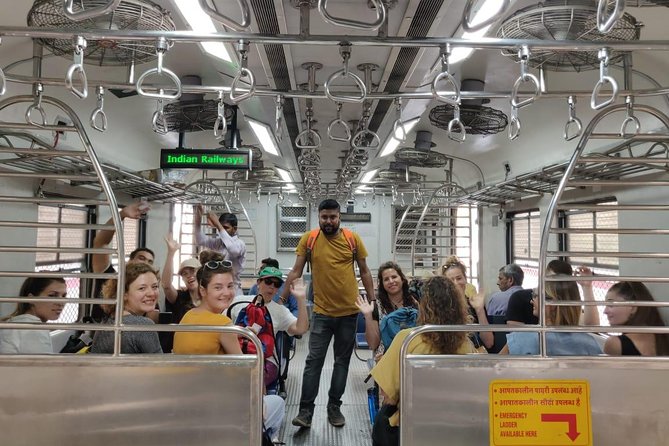
You need a moderate level of physical fitness. The tour lasts up to two hours and takes place on foot, with no vehicle transfer between the stops. Carry water, especially since food and drinks are not included. One guide stopped at a shop so a visitor could buy bottled water, but you should not rely on that happening at a particular moment.
Dress modestly. Very short clothing is discouraged, and respectful dress is especially important in a mixed residential community that includes religious sites. Light, comfortable clothes and practical walking shoes make sense.
Children must be accompanied by an adult, and the minimum age is five. Parents should consider how their child will respond to narrow working areas, unfamiliar smells, and an experience that may challenge simple ideas about poverty and city life.
The tour ends opposite Sai Multispeciality Hospital and Research Centre on 90 Feet Road, behind Sion Hospital, in the Dharavi area. It does not include a return to Mahim Station or hotel drop-off, so plan your next journey from the endpoint.
Is $12 a fair price?
Yes, provided you want a guided cultural walk rather than a standard sightseeing attraction. At $12, you are paying for a local guide, a small group, and access to explanations that would be difficult to get by walking through Dharavi alone.
The price is especially fair when the group is small. If you are one of only a few people, the guide can answer detailed questions and sometimes adjust the timing to your needs. The tour does not include food, drinks, transportation, or shopping, so the value comes from the guidance and access to working areas.
I would not choose this tour because it is cheap alone. I would choose it because the cost is modest for a serious attempt to show Dharavi as a living neighborhood rather than a backdrop. The 98 percent recommendation rate and 4.9 rating from 80 reviews suggest that the experience has been consistently well received, but you should still match your expectations to the conditions.
Free cancellation is available up to 24 hours before the start time. Inside that period, the payment is not refunded and changes are not accepted. Since the tour is often booked 33 days ahead, reserve early if your Mumbai dates are fixed.
Who should book this walking tour?
I would recommend it to you if you want to understand how urban communities work, enjoy guided walks, and are willing to look past stereotypes. It suits curious adults, families with children aged five and up, and visitors who value direct contact with local life over a polished attraction.
It is also a good choice if you want a short activity that fits into a larger Mumbai itinerary. The 1 hour 30 minute to 2 hour length leaves room for other sights, though the morning meeting and separate ending point still require planning.
I would be cautious if you dislike crowded streets, have limited walking ability, or feel uneasy seeing industrial work in confined spaces. You should also skip it if your main goal is photography. The restrictions are part of the responsible approach, not a flaw to work around.
FAQ
How long does the Dharavi walking tour last?
The tour lasts approximately 1 hour 30 minutes to 2 hours. The main Dharavi walk is listed as 1 hour 30 minutes, with separate 10-minute stops for leather and pottery.
Where does the tour start?
You meet in the morning near Mahim Station on the west side, outside a listed coffee shop. The address provided is Third Wave Coffee, Unit 58, Ground, Ram Mahal, Senapati Bapat Marg, Marinagar Colony, Mumbai 400016.
Where does the tour end?
The walk ends opposite Sai Multispeciality Hospital and Research Centre on 90 Feet Road in Dharavi.
Is hotel pickup included?
No. Hotel pickup and drop-off are not included. You need to reach the meeting point near Mahim Station and arrange your own onward transport from Dharavi.
Is photography allowed?
Photography is not allowed at certain locations on the tour. You should follow the guide’s instructions and respect privacy in residential and working areas.
Can children join the tour?
Yes, but children must be accompanied by an adult. The minimum age is five years.
What happens if I need to cancel?
You can cancel up to 24 hours before the experience for a full refund. Cancellations or changes made less than 24 hours before the start time are not refunded or accepted.
Should you book the Dharavi walk?
Book it if you want an honest, guided look at Dharavi’s work and community life, and if you can approach the neighborhood with respect. The low price, small group limit, and strong local guides make it a useful choice in Mumbai.
Before booking, be clear about the limits. You will walk for up to two hours, carry your own water, take no hotel transfer, and follow photography restrictions. If those conditions suit you, this tour can give you a far more grounded view of Mumbai than another pass by a palace or monument.
More Community Tours in Mumbai
- Mumbai: Dharavi Slum, DhobiGhat, and Dabbawallas Tour
★ 4.9 · 689 reviews - Dharavi Slum Tour
★ 5.0 · 625 reviews - Dharavi Slum tour in Mumbai by local resident
★ 5.0 · 572 reviews - Mumbai: Dharavi Slum Slumdog Millionaire Tour with a Local
★ 4.9 · 529 reviews
Just added in Mumbai
- Mumbai Airport to Mumbai Hotels : Private Transfers★ 5.0 · 13 reviews
- Mumbai Sightseeing Tour★ 5.0 · 11 reviews
- Mumbai Spice Markets and Bazaars Tour with Guide and Transport★ 5.0 · 42 reviews
- Mumbai 800 Year Worli Village: Talking Goddess, Old Fort & more★ 5.0 · 94 reviews
- Customize private tour with pickup★ 5.0 · 95 reviews
- Gufran’s Slum Home Tour in the Mumbai Slums★ 5.0 · 19 reviews
- Private Guided Bandra Half Day City Tour in AC Vehicle★ 5.0 · 72 reviews
- The Famous Bollywood Tour of Mumbai★ 5.0 · 97 reviews
Slum and Community Tours, compared.
Dharavi slum tour in Mumbai by Female tour guides of the slum
Read our review →
Dharavi Slum Slumdog Millionaire Tour with a Local
Read our review →
Mumbai Slum Tour – Visit Dharavi Slum with Local Guide
Read our review →
Dhobi Ghat Laundry and Dharavi Slum Tour with Local
Read our review →Browse the lists this tour appears in