
Reviewed · FORTS AND PALACES
Group Guided Walking Tour in Fort and Colaba
Mumbai’s story is written in stone. This 2.5-hour walk links grand colonial buildings, old religious sites, public squares, and the Gateway of India while showing how a fishing and farming settlement grew into India’s great western port city. I especially like the small group limit of 12, which gives your guide room to answer questions, and the route’s wide historical range, from Portuguese and British rule to Jewish life and Indian cricket.
The $16.73 price is another strong point. You get a focused introduction to central Mumbai without paying separate admission fees at the stops. The main drawback is simple: this is a walking tour in an active city, so traffic, heat, crowds, and uneven attention spans can affect the pace. You will get the most from it if you enjoy listening while walking rather than rushing from one photo stop to the next.
In This Review
- Key points to know before booking
- Why this walk is a good introduction to Mumbai
- Starting at the Asiatic Society and Town Hall
- Horniman Circle and St. Thomas Cathedral
- Flora Fountain and Mumbai’s central public life
- Oval Maidan and the birthplace of Indian cricket
- Rajabai Clock Tower and the University of Mumbai
- Kala Ghoda’s art district and architectural details
- The Keneseth Eliyahoo Synagogue and Mumbai’s Jewish past
- Finishing at the Gateway of India and Taj Mahal Palace Hotel
- What $16.73 buys you
- Timing, walking effort, and practical comfort
- Who will get the most from this Fort and Colaba walk?
- Should you book it?
- FAQ
- How long does the Group Guided Walking Tour in Fort and Colaba last?
- How much does the tour cost?
- How many people can join the tour?
- Where does the tour start?
- Where does the tour end?
- Does the tour include the Gateway of India?
- Are admission tickets included?
- Can I cancel for a full refund?
Key points to know before booking

- Nine major sights in 150 minutes: The route moves from the Asiatic Society and Fort to the Gateway of India in Colaba.
- A useful small-group format: With no more than 12 people, the guide can keep the walk personal and respond to questions.
- Mumbai history beyond famous monuments: You hear about Portuguese and British colonization, the city’s Jewish community, Indian cricket, and university life.
- No separate admission charges listed: The tour includes access to the outdoor sights and the church visit without additional ticket costs.
- A strong first-day activity: The route gives you a clear sense of central Mumbai’s layout and leaves you near the Taj Mahal Palace Hotel and harbor.
- Free cancellation up to 24 hours ahead: Bad weather may lead to a new date or a full refund.
Why this walk is a good introduction to Mumbai
Fort and Colaba can feel like a pile of unrelated sights when you first arrive. One minute you are beside a grand civic building, and a few minutes later you are looking at a church, a university tower, a cricket ground, or an old synagogue. This tour gives those places a shared story.
The guide explains how Mumbai developed after Portuguese and British colonization, then connects that past to the city you see today. That matters because the buildings are not just decorative backdrops. They reveal who controlled the city, where commerce took place, how education expanded, and how different communities shaped public life.
I like the route because it does not spend the whole morning on one famous monument. The Gateway of India is the natural finale, but the walk earns that ending by first taking you through the less obvious layers of Fort.
The compact group helps here. A maximum of 12 people is small enough for a guide to point out details, explain a building’s purpose, and offer local suggestions without turning the outing into a moving lecture. Palak is one guide associated with a particularly well-received outing, and the personal tone described from that walk included plenty of historical explanation and a complimentary coffee break. Since the coffee is not listed as a guaranteed feature, treat it as a possible extra rather than part of the promised schedule.
More Walking Tours in Mumbai
- Private Guided Walking Tour in Fort & Colaba
★ 5.0 · 895 reviews - Private Guided Walking Tour in Bandra Queen of Suburbs
★ 5.0 · 383 reviews - Mumbai: Dharavi Slum Walking Tour by First Female Tour Guide
★ 4.9 · 192 reviews
Starting at the Asiatic Society and Town Hall
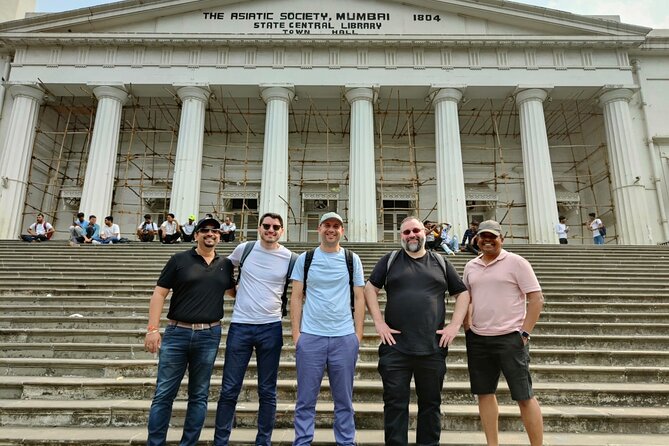
The walk begins at the Asiatic Society Library in Town Hall, where you spend about 20 minutes. This is a fitting start because the building places you right in the old administrative and intellectual heart of Fort.
Your guide sets up the broad story here: Mumbai did not begin as the giant city you see today. The opening explanation covers the city’s development after Portuguese and British colonization and gives you a framework for the rest of the route.
This first stop is more useful than it may sound. Without some context, it is easy to look at the grand facades around Fort and see only old European-style architecture. The guide helps you connect those structures to the growth of trade, administration, education, and public life.
The stop is free, and the meeting point is near public transportation. Give yourself enough time to find Town Hall, since the stated meeting location is the Asiatic Society rather than a broad neighborhood meeting area.
Horniman Circle and St. Thomas Cathedral
Next comes Horniman Circle Garden, with about 15 minutes to look around and hear about its past. The garden is surrounded by Victorian buildings, and the guide explains the activities that once took place in this part of the city.
This stop gives the walking tour a bit of breathing room. You are not only studying facades. You are seeing how open public space worked within the old commercial district. The surrounding architecture also makes this a good place for photographs, particularly if you want a sense of Fort as a complete urban quarter rather than a collection of isolated monuments.
The route then enters St. Thomas Cathedral for another 15 minutes. It is Mumbai’s oldest Anglican church, and the interior provides a change of mood after the outdoor streets and civic buildings.
Inside, you can look at the memorials and grand altar while hearing how the church fits into the city’s colonial past. This is one of the better stops for visitors who want more than exterior photographs. The church’s interior gives the history a human scale, though the time is short, so you should not expect an extended religious or architectural study.
Because the tour depends on access to public sites, the exact experience inside the church can be affected by local conditions. Still, the planned visit adds welcome variety to a route that could otherwise become a long succession of outdoor buildings.
Flora Fountain and Mumbai’s central public life
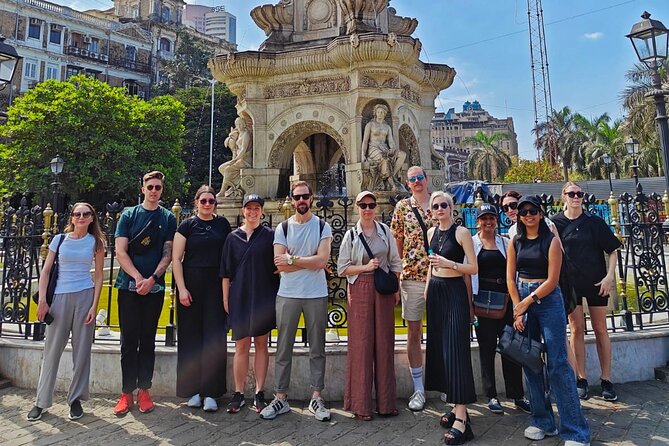
Flora Fountain gets about 15 minutes. The guide presents it as Mumbai’s answer to Piccadilly Circus and explains the role of the Martyrs’ Memorial in the city’s main town square.
This is an important urban stop because it shows how Mumbai’s colonial civic center functioned as a public stage. You get another chance to photograph the fountain and the buildings around it, while the guide adds the political meaning behind the memorial.
The stop can also help you understand Mumbai’s scale. Fort is not a museum district sealed off from daily life. It remains part of the city, and the surrounding movement is part of what you are seeing. I would not expect a quiet, carefully controlled photo session here. The reward is a more truthful picture of central Mumbai, where historic architecture and modern city life share the same streets.
A completely different kind of day out:
- Dharavi slum tour in Mumbai by Female tour guides of the slum
★ 5.0 · 1,976 reviews - Mumbai: Full-Day Sightseeing Tour of Mumbai
★ 4.9 · 1,822 reviews - Private Mumbai Sightseeing Tour (Traveller’s Choice Award Winner)
★ 5.0 · 1,565 reviews - Elephanta Caves & Island Guided Private Tour
★ 5.0 · 1,327 reviews
Oval Maidan and the birthplace of Indian cricket
The route continues to Oval Maidan for roughly 20 minutes. Here, you look across the grand buildings that surround the open ground and hear why this area is known as the birthplace of Indian cricket.
This stop broadens the tour beyond colonial architecture. Sport is one of the clearest ways to understand public culture in India, and the maidan shows how a large open space can become part of a city’s identity. The surrounding buildings also form one of the route’s strongest architectural views.
The site is connected with a UNESCO World Heritage designation, making it one of the walk’s major landmarks. You are not simply passing a cricket field. You are seeing the relationship between open recreational space and the grand institutional buildings of the city.
The 20-minute allocation is sensible. It gives you time to take in the view and listen, but it keeps the walk moving. If you want an extensive discussion of cricket or a long architectural sketching session, this tour will feel too brisk. If you want a concise explanation with a strong visual setting, it works well.
Rajabai Clock Tower and the University of Mumbai
At Rajabai Clock Tower, you spend about 15 minutes hearing about the evolution of the University of Mumbai. The tower is often compared with Big Ben, and it makes an easy visual landmark for the guide to use while explaining the city’s educational growth.
This section adds another piece to the larger story. Mumbai’s development was not only about ports, trade, and colonial administration. Universities and public institutions also helped shape the modern city.
The tower and surrounding university buildings are particularly useful for understanding the architectural mix in this part of town. You may recognize the grand scale, but the guide’s explanation gives it a local purpose rather than treating it as a generic old building.
Again, this is mainly an exterior viewing stop. The value comes from the setting and the explanation, not from a long interior visit. Keep your expectations realistic, especially if you are hoping to climb the tower or tour the university. Those activities are not part of the stated experience.
Kala Ghoda’s art district and architectural details
Kala Ghoda receives about 15 minutes and brings you into Mumbai’s premier art district. The guide points out the area’s varied architecture and shares stories about what the buildings have witnessed.
This is one of the route’s more characterful sections. Instead of presenting one landmark as the whole story, the guide reads the district through its mix of styles and uses. The name is widely associated with the area’s cultural life, but the walk focuses on architecture and the secrets held by the buildings.
I like this part for people who enjoy noticing details they would otherwise miss. A solo walk might take you through Kala Ghoda quickly, with your attention fixed on the next destination. A guide gives you reasons to pause and look up.
The 15-minute stop is brief, so think of it as an introduction rather than a full art-district tour. The main benefit is that it places the surrounding sights into a wider cultural setting before the route moves toward the community history of Colaba.
The Keneseth Eliyahoo Synagogue and Mumbai’s Jewish past
The Keneseth Eliyahoo Synagogue is a thoughtful stop near the end of the walk. You spend about 15 minutes exploring Mumbai’s Jewish enclave and learning about Jewish life that is now almost extinct in the city.
This is precisely the kind of detail that makes a guided walk more valuable than a basic sightseeing route. The Gateway of India gets most of the attention in this part of Mumbai, but the synagogue points to a smaller community that also formed part of the city’s history.
The stop may appeal most to you if you like social history and stories about communities that are easy to overlook. The description does not promise a long interior tour or guaranteed access to every part of the synagogue, so the experience may focus partly on the building and its setting. Even so, it gives the route a human dimension that the grand civic monuments cannot provide on their own.
Finishing at the Gateway of India and Taj Mahal Palace Hotel
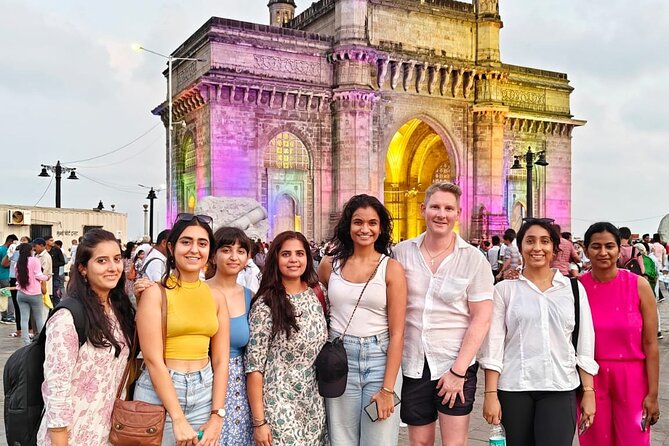
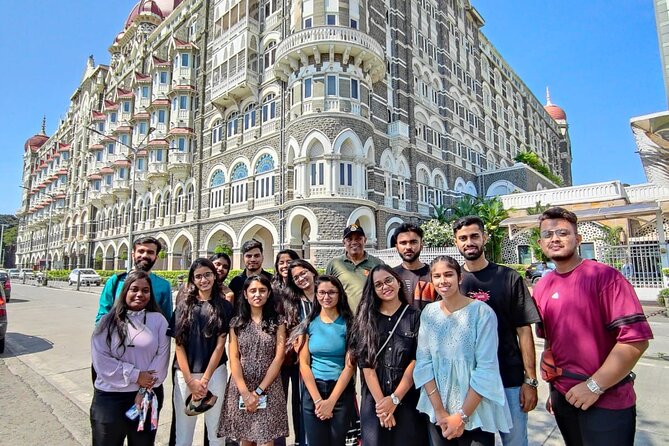
The walk ends at the Gateway of India, with about 20 minutes for the final stop. You also see the Taj Mahal Palace Hotel, giving the tour a pair of Mumbai’s most recognizable symbols.
This is the obvious place for photographs, and the ending feels well chosen. After hearing about the city’s formation, colonial rule, institutions, communities, and public life, you arrive at the waterfront symbols most closely linked with Mumbai’s modern image.
The final stop is also practical. You finish in Colaba, near one of the city’s main sightseeing areas, rather than being returned to the starting point. That makes it easy to continue exploring on your own, although the tour does not include a return transfer.
Allow for the fact that the Gateway of India is a major public attraction. The area may feel much more crowded than the quieter sections of the route, and your guide cannot control how long you get a clear view. The payoff is the setting: the monument, harbor, and Taj Mahal Palace Hotel create a strong final picture of Mumbai.
What $16.73 buys you
At $16.73 per person, this is good value if you want history and orientation rather than private transport or a luxury sightseeing package. The route lasts about two hours and 30 minutes, covers nine stops, and uses a guide to connect them into one story.
The value comes from interpretation. You could walk past Town Hall, Flora Fountain, Rajabai Clock Tower, and Kala Ghoda without knowing why they matter. The tour gives you a working outline of Mumbai’s past, then leaves you with enough context to explore further on your own.
There are no separate admission charges listed for the stops, which keeps the price straightforward. You are paying mainly for the guide’s time and the structure of the route.
A private tour would likely offer more control over the pace, while a self-guided walk would cost less. This small-group experience sits comfortably between those choices. You get more personal attention than on a large coach outing, without the cost of a private guide.
Timing, walking effort, and practical comfort
The tour is listed at 2.5 hours, but the stop times total about 150 minutes, so the schedule leaves little room for long delays. You should expect a steady walk with regular pauses, not a slow afternoon stroll.
Wear comfortable shoes and bring water, especially in warm weather. The tour requires good weather, and poor conditions can lead to a different date or a full refund. Since the route is outdoors for much of the time, weather is a real consideration rather than a minor footnote.
The meeting point is the Asiatic Society at Town Hall, and the end point is the Gateway of India in Apollo Bandar, Colaba. Both locations are near public transportation, and most people can take part. The mobile ticket is convenient, since you can keep confirmation on your phone.
The group maximum of 12 is worth noting. It does not guarantee a private-feeling walk, but it should make it easier to hear the guide and ask questions. If you prefer complete freedom to stop for photographs, shop, or sit in a cafe, a fixed group route may feel restrictive.
You can cancel for a full refund up to 24 hours before the start time. Changes or cancellations inside that 24-hour window are not accepted for a refund, and the cut-off follows Mumbai local time.
Who will get the most from this Fort and Colaba walk?
I would recommend this tour for a first visit to Mumbai, particularly if you want to understand the city before exploring it independently. The route offers a useful foundation in colonial architecture, religious buildings, civic spaces, education, sport, and minority communities.
It also suits you if you prefer a guide who can point out details on the street instead of giving a long talk from one location. The short stops keep the outing varied, and the final arrival at the Gateway of India gives you a clear sense of where you are in relation to Colaba.
History and architecture fans will find the route especially worthwhile. It may be less suitable if you have limited mobility, dislike walking in busy city conditions, or want extensive time inside each attraction. The stated information says most people can participate, but it does not give a detailed accessibility breakdown.
The tour is also a good choice for solo visitors and couples who want some structure without joining a very large group. Your guide can offer local recommendations and tips, which can be useful after the walk when you continue through Fort or Colaba.
Should you book it?
Book this Fort and Colaba walk if you want a reasonably priced, well-paced introduction to central Mumbai with a small group and a strong historical thread. The best parts are the range of subjects, the nine-stop route, and the final sequence at the synagogue, Gateway of India, and Taj Mahal Palace Hotel.
Skip it if you want a private itinerary, long interior visits, or a relaxed pace with plenty of unscheduled time. For most first-time visitors who can handle a 2.5-hour urban walk, the $16.73 cost is a fair exchange for useful context and a much better sense of how Mumbai’s old center fits together.
FAQ
How long does the Group Guided Walking Tour in Fort and Colaba last?
The tour lasts approximately two hours and 30 minutes.
How much does the tour cost?
The listed price is $16.73 per person.
How many people can join the tour?
The maximum group size is 12 people.
Where does the tour start?
The tour starts at the Asiatic Society Library in Town Hall, at Shahid Bhagat Singh Road in Fort, Mumbai.
Where does the tour end?
The walk ends at the Gateway of India in Apollo Bandar, Colaba, Mumbai.
Does the tour include the Gateway of India?
Yes. The Gateway of India is the final major stop, and the route also includes views of the Taj Mahal Palace Hotel.
Are admission tickets included?
Admission at the listed stops is free, and no separate admission charge is listed for this experience.
Can I cancel for a full refund?
Yes. You can cancel at least 24 hours before the start time for a full refund. If poor weather causes the tour to be canceled, you will be offered another date or a full refund.
More Forts and Palaces in Mumbai
- Private Guided Open Jeep Tour in Fort & Colaba
★ 5.0 · 170 reviews - Mumbai 800 Year Worli Village: Talking Goddess, Old Fort & more
★ 5.0 · 94 reviews - Bombay Fort Heritage Walking Tour
★ 5.0 · 27 reviews - Same Day Taj Mahal, Agra Fort & Baby Taj Tour from Delhi by Car
★ 5.0 · 4,304 reviews
Just added in Mumbai
- Mumbai Airport to Mumbai Hotels : Private Transfers★ 5.0 · 13 reviews
- Mumbai Sightseeing Tour★ 5.0 · 11 reviews
- Mumbai 800 Year Worli Village: Talking Goddess, Old Fort & more★ 5.0 · 94 reviews
- Customize private tour with pickup★ 5.0 · 95 reviews
- Mumbai Spice Markets and Bazaars Tour with Guide and Transport★ 5.0 · 42 reviews
- Gufran’s Slum Home Tour in the Mumbai Slums★ 5.0 · 19 reviews
- Private Guided Bandra Half Day City Tour in AC Vehicle★ 5.0 · 72 reviews
- The Famous Bollywood Tour of Mumbai★ 5.0 · 97 reviews
Forts and Palaces, compared.

Same Day Taj Mahal, Agra Fort & Baby Taj Tour from Delhi by Car
Read our review →
Full Day Taj Mahal, Agra Fort & Baby Taj Tour from Delhi by Car
Read our review →
Same Day Taj Mahal, Fort & Baby Taj Tour from Delhi by Car
Read our review →

Sunrise Taj Mahal, Agra Fort & Baby Taj Tour from Delhi by Car
Read our review →
Taj Mahal Sunrise, Baby Taj & Agra Fort Day Tour
Read our review →
Skip-the-Line Taj Mahal & Agra Fort Private Tour
Read our review →
Taj Mahal, Agra Fort, Baby Taj Tour from Delhi by Superfast Train
Read our review →Browse the lists this tour appears in