
Reviewed · SLUM AND COMMUNITY TOURS
Dharavi Slum tour in Mumbai by local resident
Mumbai’s most revealing walk starts in Dharavi. This tour is interesting because a local resident guide leads you through both the working and residential parts of the community, not just past it from a car window. I like the chance to see plastic recycling, soap making, bags, leather drying, and other small industries up close. I also like that the route includes a shop selling Dharavi-made goods without reported pressure to buy.
The main drawback is that this is a walking tour through a densely settled area, so it may feel intense for some people. You also need to meet at the stated Mahim meeting point unless pickup arrangements are confirmed, and the advertised group limit of 99 people is large, even if your actual group may be smaller.
In This Review
- Key points to know before you go
- What this Dharavi walk is really about
- Meeting in Mahim and getting started
- Following a local guide through Dharavi
- Plastic recycling and Dharavi’s working side
- Soap, plastic bags, and small-scale production
- Leather drying and the commercial heart of the route
- Residential lanes and the human side of the visit
- The Dharavi-made goods shop
- Is $4.46 a good value?
- Timing, comfort, and practical preparation
- Who will enjoy this tour most?
- Should you book the Dharavi walking tour?
- FAQ
- How long does the Dharavi tour last?
- How much does the tour cost?
- Where does the tour start?
- Where does the tour end?
- Is pickup available?
- What will you see during the walk?
- Can I cancel for a full refund?
Key points to know before you go
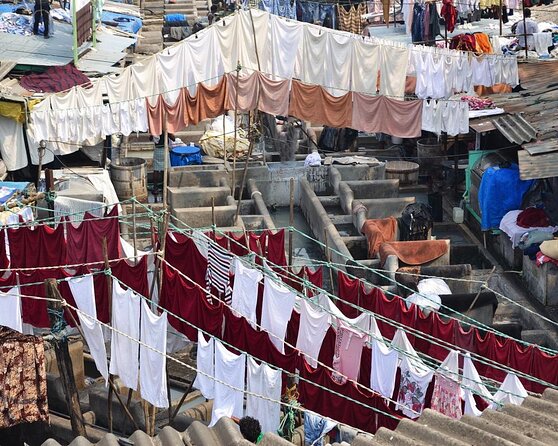
- Local access: An English-speaking guide from Dharavi explains the area while showing you places that are difficult to understand from the outside.
- Working community first: The route includes plastic recycling, soap production, plastic bag making, leather drying, and other factories.
- Residential and commercial areas: You see how homes and businesses share the same compact setting.
- About two hours on foot: The walking portion is listed at two hours, with the total activity lasting roughly two to three hours.
- Strong value at $4.46: The low price makes this one of Mumbai’s least expensive guided cultural walks.
- A clear meeting point: Start and finish at Third Wave CoffeeTip Road in Mahim, with mobile tickets and free cancellation up to 24 hours before departure.
What this Dharavi walk is really about
Dharavi is often reduced to a single label. This tour gives you a more useful way to look at it: as a place where people live, work, manufacture goods, and run small businesses in close quarters.
That distinction matters. You are not simply looking at poverty from a distance. You are seeing an active working neighborhood, with commercial activity beside homes and narrow routes connecting the two. A local guide can explain what you are seeing in a way that a self-guided walk cannot.
The tour is built around walking rather than sightseeing from a vehicle. That means the pace is slow enough to notice details, but the setting may also feel crowded and close. You should arrive ready to listen, follow the guide’s instructions, and treat the area as a neighborhood rather than a staged attraction.
I like the basic idea here because it gives context. A short visit cannot explain every part of Dharavi, but two hours with a resident guide can show you how the area functions. The best part is the balance between industry and daily life.
More Community Tours in Mumbai:
- Dharavi slum tour in Mumbai by Female tour guides of the slum
★ 5.0 · 1,976 reviews - Mumbai: Dharavi Slum, DhobiGhat, and Dabbawallas Tour
★ 4.9 · 689 reviews - Dharavi Slum Tour
★ 5.0 · 625 reviews
Meeting in Mahim and getting started
The stated meeting point is Third Wave CoffeeTip Road, Unit no. 58, Ground, Ram Mahal, Senapati Bapat Marg, Marinagar Colony, Station, Mahim, Mumbai, Maharashtra 400016, India.
That is a detailed address, which is useful in a city where similar street names and busy roads can cause confusion. Check the exact confirmation details before leaving your hotel, especially if you are relying on a taxi or ride service. Pickup is offered, but you should not assume it is automatic. Confirm where you are expected to meet.
The activity ends back at the same meeting point. This makes planning easier because you are not left at an unfamiliar part of Mumbai after the walk. It also means you can pair the tour with another Mahim or central Mumbai activity without arranging a separate return transfer from Dharavi.
The tour uses a mobile ticket, so keep your booking confirmation easy to open. Confirmation is provided at the time of booking. Public transportation is nearby, though the supplied information does not specify the closest station or the best route from your hotel.
Following a local guide through Dharavi
The guide is an English-speaking local resident of Dharavi. That is the central reason to choose this tour.
A guide who lives in the area can do more than point toward workshops. They can help explain the relationship between the working spaces and homes, clarify what different businesses produce, and help you move through the area respectfully. Since the tour is offered as a way to see parts of Dharavi that you may not sensibly explore alone, the guide is not an extra feature. The guide is the practical foundation of the visit.
No guide name is provided, so you cannot request a particular person in advance. Still, the available feedback points to a guide who was friendly, polite, and capable of explaining the route well. That combination matters here. A stiff or careless guide could make the walk feel awkward, while a warm local guide can help you focus on people’s work and routines rather than treating the neighborhood as a curiosity.
The tour is also recommended by 100 percent of its listed participants and carries a five out of five rating from 572 reviews. That is unusually strong feedback, though you should still remember that a high rating cannot remove the physical realities of the setting.
Plastic recycling and Dharavi’s working side
One of the first types of activity on the route is plastic recycling. This is a useful stop because it shows the practical, hands-on work that supports the local economy.
You might see how discarded plastic is handled, sorted, or prepared for reuse, depending on the day’s access and the businesses operating during your visit. The supplied details do not promise a specific demonstration, so it is best to think of this as a look at a working area rather than a formal factory tour.
This part of the walk helps correct the idea that Dharavi is only residential. It is also a place where materials are processed and goods are made. For you, the value lies in seeing the connection between Mumbai’s wider economy and small local workshops.
The setting may be noisy, cramped, or strongly industrial. You should wear practical shoes and remain close to the guide. The information does not list clothing requirements or photography rules, so ask before taking pictures, particularly around workers, homes, and private spaces.
A few more options to weigh up in Mumbai
- Mumbai: Full-Day Sightseeing Tour of Mumbai
★ 4.9 · 1,822 reviews - Private Mumbai Sightseeing Tour (Traveller’s Choice Award Winner)
★ 5.0 · 1,565 reviews - Elephanta Caves & Island Guided Private Tour
★ 5.0 · 1,327 reviews - Group Guided Walking Tour in Fort and Colaba
★ 5.0 · 1,073 reviews
Soap, plastic bags, and small-scale production
The route also includes soap production and the making of plastic bags. These stops give the walk a useful rhythm because you are not only passing through alleys. You are seeing different types of production within the same neighborhood.
Soap making is a good example of how a modest workshop can serve a wider market. Plastic bag production offers another view of local manufacturing. Together, these businesses show how Dharavi’s economy is made up of many small operations rather than one large attraction or factory complex.
You should keep your expectations realistic. This is not advertised as a hands-on workshop, and no claim is made that you will manufacture anything yourself. You are there to observe and learn while the businesses continue their normal work.
I like this part of the itinerary because it gives you something specific to understand. Instead of hearing only broad statements about local industry, you see actual products and processes. The drawback is that access can depend on what is operating that day, so the route may not feel identical on every departure.
Leather drying and the commercial heart of the route
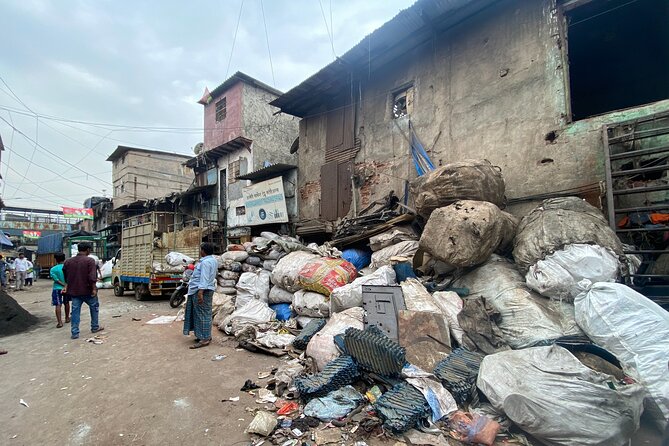
A leather-drying area is another featured stop. This may be one of the more striking parts of the walk because it connects the raw-material stage with the finished goods sold later in the route.
The smell and appearance may be strong. If you are sensitive to industrial odors, keep that in mind before booking. The tour does not promise a polished environment, and that is part of the point. You are seeing working spaces, not a museum display prepared for visitors.
The guide can help place this activity within the larger commercial picture of Dharavi. The route shows that different steps of production can exist close together, with local businesses handling materials, making goods, and selling products within the same broad community.
You should also expect occasional stops in narrow lanes. The provided information does not describe the surface, stairs, or restroom access, so anyone with mobility concerns should ask the operator for current details before booking. Most people can participate, but that does not mean every section will be easy for every person.
Residential lanes and the human side of the visit
The tour includes the residential area as well as the commercial area. This is important, but it also requires more care from you.
Walking through homes and businesses placed close together can help you understand how daily life works in Dharavi. You might notice the shift from workshop activity to domestic space within only a short distance. That contrast is one of the tour’s strongest features because it shows a community that cannot be neatly divided into factory, market, and housing zones.
At the same time, residents are not scenery. Keep your voice down, follow the guide’s lead, and ask before photographing anyone. The tour information does not promise photo opportunities, and you should not treat personal spaces as part of the sightseeing program.
This is also where the quality of the guide matters most. A good guide can explain what is appropriate and keep the group moving without turning the visit into a spectacle. The feedback describes the guide as friendly and respectful, which fits the kind of tone this setting needs.
The Dharavi-made goods shop
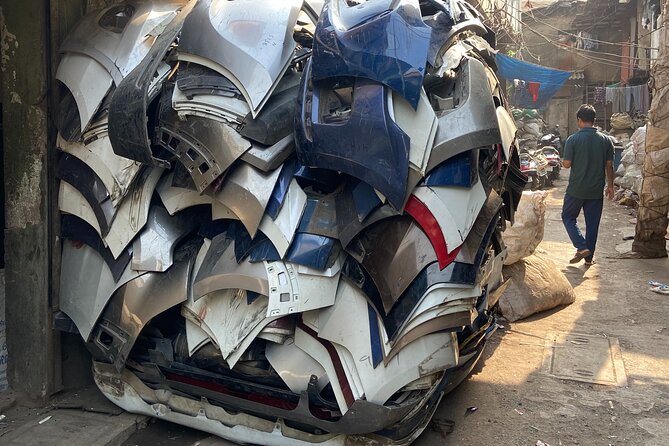
The route includes a shop selling items made in Dharavi. This gives you a chance to see the finished side of the local economy after visiting production areas.
The key point is that you are not expected to buy anything. The available feedback specifically notes that there was no pressure to purchase. That is a small detail, but it changes the mood of a commercial stop. You can browse, ask questions, and decide for yourself.
Buying something can be a practical way to support local makers, but it should remain your choice. Prices, products, and payment options are not specified, so do not assume a particular item will be available. The shop is best treated as an optional final look at goods produced in the neighborhood, not as the main reason to book the tour.
I appreciate that this stop follows the factory visits. You first see some of the work, then you see finished objects. That makes the merchandise feel connected to the community rather than appearing as a random souvenir stop.
Is $4.46 a good value?
At $4.46 per person, this is a very inexpensive guided activity for Mumbai. The price includes admission to the stated Dharavi visit and the services of a local English-speaking guide. For roughly two hours of walking, that is strong value.
The price is especially appealing if you want a short cultural activity that does not consume an entire day. You can fit it around other Mumbai plans, and the return to the meeting point keeps the schedule simple.
There are limits. The low price does not mean you should expect private guiding, luxury transport, or a carefully staged attraction. The maximum group size is listed as 99 people, which is a lot for narrow lanes. Your actual group may be smaller, but you should check if group size is important to you.
Group discounts are available, which may make the tour even better value for families or friends traveling together. The supplied information does not state the discount amount, so confirm the final price before booking.
Timing, comfort, and practical preparation
The walking portion is listed at two hours, while the overall activity is described as approximately two to three hours. Allow the longer window when planning your day.
Wear shoes suitable for walking and clothing that lets you stay comfortable in Mumbai’s conditions. The tour description does not provide a dress code, weather policy, restroom information, or water arrangements, so handle those needs before meeting the guide.
You should also keep your group together. A maximum of 99 participants is permitted, and a large group can be harder to manage in narrow spaces. If you prefer a quieter visit, ask Beautiful Bombay Tours about the expected group size for your date.
Service animals are allowed, and most people can participate. The tour is near public transportation, and pickup is offered. Those details make it easier to fit into a wider Mumbai itinerary, but you still need to confirm the exact pickup arrangement.
Free cancellation is available if you cancel at least 24 hours before the start time. Cancellations made less than 24 hours ahead are not refunded, and late changes are not accepted. The cut-off follows Mumbai local time.
Who will enjoy this tour most?
I would recommend this walk to you if you want a direct look at how a Mumbai community works, rather than another monument or panoramic viewpoint. It suits curious visitors who are comfortable walking, listening, and accepting that the surroundings may be crowded and industrial.
It is also a good choice if you have only a few hours. The short duration, low price, and return to the starting point make it easy to add to a day of sightseeing.
You may want to choose another activity if you dislike close quarters, industrial smells, or visits that include residential spaces. Families should consider the age and comfort of each child, since the tour is a working-neighborhood walk rather than an entertainment attraction.
The tour can also work well for visitors who want to support local guiding. The guide is from Dharavi, and that local connection gives the visit more meaning than a quick drive past the area.
Should you book the Dharavi walking tour?
Yes, if you want an affordable and guided introduction to Dharavi’s homes, workshops, recycling activity, and small businesses. The strongest reasons to book are the local English-speaking guide, the mix of commercial and residential areas, and the chance to see specific work such as plastic recycling, soap making, bag production, and leather drying.
Book with sensible expectations. You are entering a real neighborhood, not a polished attraction. Confirm pickup and group size, arrive at the Mahim meeting point on time, ask before taking photographs, and leave room in your schedule for the full two to three hours.
At $4.46, this is an easy value choice for most visitors who want a more grounded side of Mumbai. The tour will not answer every question about Dharavi, but it can give you a clearer, more human view of the place than sightseeing from outside ever could.
FAQ
How long does the Dharavi tour last?
The walking portion lasts about two hours, while the total activity takes approximately two to three hours.
How much does the tour cost?
The listed price is $4.46 per person. Group discounts are offered, though the discount amount is not specified.
Where does the tour start?
It starts at Third Wave CoffeeTip Road, Unit no. 58, Ground, Ram Mahal, Senapati Bapat Marg, Marinagar Colony, Station, Mahim, Mumbai, Maharashtra 400016, India.
Where does the tour end?
The activity ends back at the same meeting point.
Is pickup available?
Pickup is offered. Confirm the exact pickup arrangements when booking, since the stated meeting point is in Mahim.
What will you see during the walk?
The route includes Dharavi’s commercial and residential areas, plastic recycling, soap production, plastic bag making, leather drying, factories, and a shop selling goods made in Dharavi.
Can I cancel for a full refund?
Yes. You must cancel at least 24 hours before the experience start time for a full refund. Cancellations or changes made less than 24 hours before the start time are not accepted for a refund.
Just added in Mumbai
- Mumbai Airport to Mumbai Hotels : Private Transfers★ 5.0 · 13 reviews
- Mumbai Sightseeing Tour★ 5.0 · 11 reviews
- Mumbai Spice Markets and Bazaars Tour with Guide and Transport★ 5.0 · 42 reviews
- Mumbai 800 Year Worli Village: Talking Goddess, Old Fort & more★ 5.0 · 94 reviews
- Customize private tour with pickup★ 5.0 · 95 reviews
- Gufran’s Slum Home Tour in the Mumbai Slums★ 5.0 · 19 reviews
- Private Guided Bandra Half Day City Tour in AC Vehicle★ 5.0 · 72 reviews
- The Famous Bollywood Tour of Mumbai★ 5.0 · 97 reviews
Slum and Community Tours, compared.
Dharavi slum tour in Mumbai by Female tour guides of the slum
Read our review →
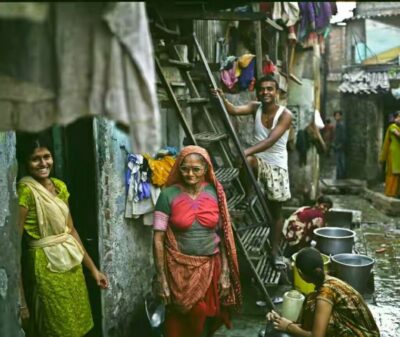
Dharavi Slum Slumdog Millionaire Tour with a Local
Read our review →
Mumbai Slum Tour – Visit Dharavi Slum with Local Guide
Read our review →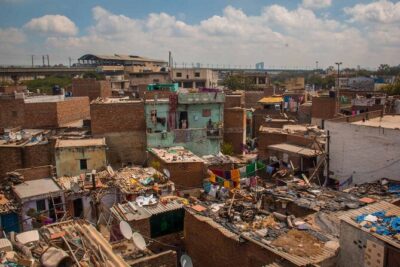
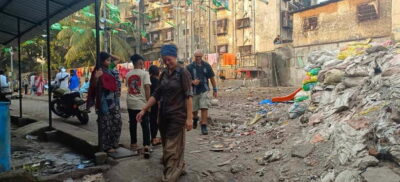
Dhobi Ghat Laundry and Dharavi Slum Tour with Local
Read our review →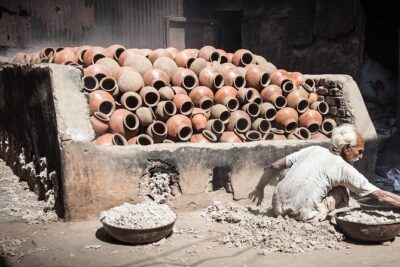
Browse the lists this tour appears in