
Reviewed · SLUM AND COMMUNITY TOURS
Dharavi Slum Tour
Look past Mumbai’s skyline. This two-and-a-half-hour walking tour takes you through Dharavi’s narrow lanes, working businesses, pottery colony, recycling areas, and community projects, offering a more useful picture of daily life than a quick drive past ever could. I like the focus on local enterprise, and I like that a significant part of the money supports education, health, and livelihood work in the community. The main consideration is simple: this is a close look at a densely populated neighborhood, not a polished sightseeing attraction, and photography is not allowed.
The experience costs about $20.40 per person, which is fair for a guided walk with a local English-speaking guide, water or a cold drink, and community support built into the price. You should dress modestly, wear practical closed-toe shoes, and arrive with the right attitude. Dharavi is a place where people live and work, so respect matters more than getting a dramatic story or photograph.
In This Review
- Key points at a glance
- Why Dharavi is more than a slum visit
- Starting at the Reality Tours office
- Walking through Dharavi’s working areas
- Recycling and manufacturing
- Kumbharwada pottery colony
- Papadom making, shops, and residential lanes
- Rooftop visit
- The guide makes or breaks the walk
- Ending with a drink and a community explanation
- Price, timing, and practical value
- Respect, clothing, and comfort
- What the tour gets right, and what it cannot fix
- Who should book this Mumbai experience
- Should you book the Dharavi Slum Tour?
- FAQ
- How long does the Dharavi Slum Tour last?
- Where does the tour start and finish?
- Is photography allowed during the tour?
- What is included in the tour price?
- Does the tour include hotel pickup and drop-off?
- How much of the tour income supports the local community?
Key points at a glance
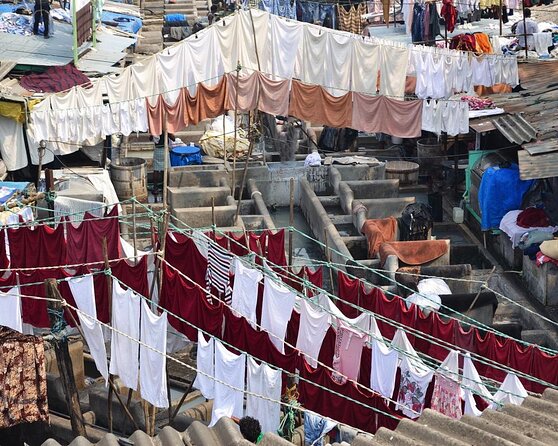
- Recycling and small industry: See how Dharavi’s working economy includes recycling, textiles, leather, bakeries, and other local businesses.
- A local guide changes the experience: Guides such as Rakesh, Leena, Cethan, Rishi, Javed, and Suraj have been praised for clear explanations and thoughtful answers.
- Community funding is part of the price: About 80 percent of the benefits are described as going back into projects such as English education and support for young people.
- No photography inside Dharavi: This rule protects residents’ privacy and helps keep the walk from feeling like a human zoo.
- Transport can be part of the outing: With the appropriate option, you can travel by train with your guide, or make your own way to the meeting point.
- The walk ends with time to talk: At the Reality Tours and Travel office, you receive a soft drink and learn how the funds are used.
Why Dharavi is more than a slum visit
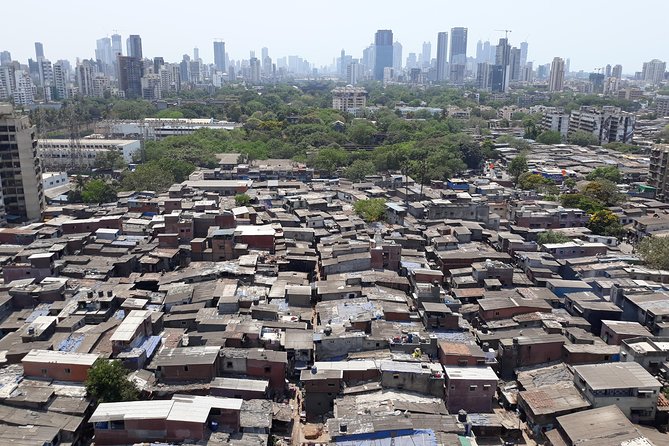
The word slum can flatten a complicated place into one idea. Dharavi is certainly home to serious challenges, but it is also an industrial district, residential neighborhood, and community of nearly one million people. The walk is designed to show those different sides together.
I find the business activity especially important. You may see recycling work, textile production, leather tanning, pottery, papadom making, bakeries, and other enterprises operating close to homes. That mixture can be surprising if you arrive expecting only poor housing and hardship.
The tour’s value comes from context. On your own, you might pass an entrance to Dharavi and see only a maze of lanes. A guide can explain what the work is, how different areas function, and how the community connects to Mumbai’s wider economy. That turns a visual impression into a better understanding of how people earn a living and organize daily life.
This is also why the tour works best when you treat Dharavi as a neighborhood rather than an attraction. People are not there to perform for you. You are entering a place where residents work, study, raise families, and go about ordinary business.
More Community Tours in Mumbai:
- Dharavi slum tour in Mumbai by Female tour guides of the slum
★ 5.0 · 1,976 reviews - Mumbai: Dharavi Slum, DhobiGhat, and Dabbawallas Tour
★ 4.9 · 689 reviews - Dharavi Slum tour in Mumbai by local resident
★ 5.0 · 572 reviews
Starting at the Reality Tours office
The meeting point is the Reality Tours and Travel office on 60 Feet Road in Shahid Bhagat Singh Nagar, Kumbhar Wada, Dharavi. The tour begins and ends here, which keeps the logistics fairly simple.
If you select the train option, you can travel with your guide. That is useful in Mumbai, where road traffic can make even a short journey unpredictable. Rakesh, one of the guides praised for his flexibility, helped adjust plans when traffic caused delays. If you arrange your own transport, you still meet at the Dharavi office.
The experience is usually booked around 16 days ahead, so I would not leave it until the last morning of your Mumbai stay. Confirmation is provided at booking, and the tour has mobile ticketing. The listed maximum is 99 people, though some past groups were much smaller. One account described a group of about 10 people traveling together, which is a more comfortable size for a walking tour in tight lanes.
The tour is near public transportation, and after the walk your guide can help you reach the station. If you want to return toward Churchgate or continue by local train, the guide can escort you there.
Walking through Dharavi’s working areas
The main walk lasts about two hours. You should expect narrow passages, active workspaces, residential areas, and frequent changes in scenery. The experience is not arranged as a museum route. Its interest comes from seeing real businesses and homes sharing limited space.
Recycling and manufacturing
The recycling area is one of the clearest examples of Dharavi’s role in Mumbai’s economy. You can expect to see the working side of recycling rather than a formal exhibit. The guide’s job is to explain what you are seeing and how these activities fit into local livelihoods.
The same applies to textiles and leather work. Small businesses operate within the neighborhood, and the tour gives you a chance to understand that Dharavi is not only a place of residence. It is also a major center of production and trade.
The surroundings may be crowded, noisy, or uncomfortable at times. That is part of the reality of the place, but it also means you should stay close to the group and listen for instructions. Closed-toe shoes are a smart choice, particularly on an industrial walk where surfaces may not be smooth or clean.
A few more options to weigh up in Mumbai
- Mumbai: Full-Day Sightseeing Tour of Mumbai
★ 4.9 · 1,822 reviews - Private Mumbai Sightseeing Tour (Traveller’s Choice Award Winner)
★ 5.0 · 1,565 reviews - Elephanta Caves & Island Guided Private Tour
★ 5.0 · 1,327 reviews - Group Guided Walking Tour in Fort and Colaba
★ 5.0 · 1,073 reviews
Kumbharwada pottery colony
Kumbharwada is the pottery section of Dharavi, and it gives the walk a very different character from the recycling areas. The route includes the pottery colony, where the guide can help you understand the work and the community connected to it.
This stop is useful because it shows the range of skills and trades found in Dharavi. You are not seeing one single type of work repeated across the neighborhood. Instead, the walk introduces you to distinct areas with their own businesses and traditions.
Papadom making, shops, and residential lanes
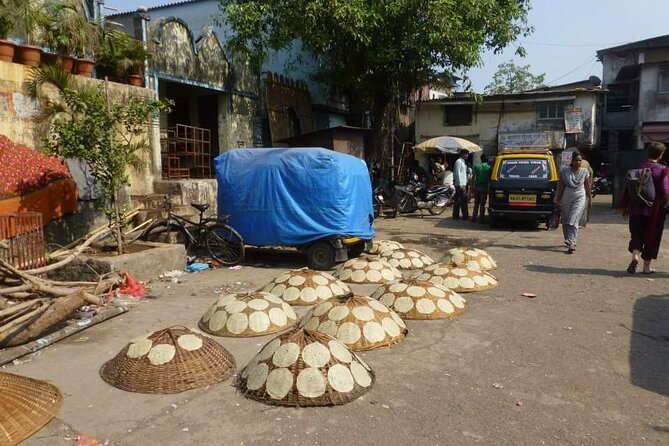
Papadom making is another scheduled part of the walk. Along with shops and residential lanes, it gives you a closer sense of how work and home life overlap.
You may see children heading about their day, residents moving through the lanes, and workers handling everyday business. That can be moving, but it can also feel intrusive if you forget where you are. The no-photography rule is therefore central to the experience, not a minor restriction.
Keep your phone in your pocket and focus on listening. You will leave with fewer images, but the people around you get more privacy.
Rooftop visit
A rooftop visit is included among the places covered. From above, you may gain a clearer sense of how tightly packed Dharavi is and how its residential and industrial areas fit together.
The rooftop is not presented as a grand city viewpoint. Its value is spatial: it helps you understand the density and layout of a place that can feel confusing at street level. You should follow the guide’s directions carefully, since the route is through a lived-in community rather than a purpose-built visitor site.
The guide makes or breaks the walk
The strongest part of this experience is the guide. A good guide does more than point left and right. They explain the businesses, answer questions, and help you read the neighborhood without reducing it to poverty.
Several guide names connected with especially warm feedback include Rakesh, Leena, Cethan, Rishi, Javed, Suraj, and Jay. Assignments can vary, so you should not assume you will receive a particular person, but the repeated praise for the guiding team is encouraging.
Javed was described as a local from the Dharavi community who offered a genuine understanding of the area. Another guide was praised for having grown up in Dharavi and showing strong respect for its culture. Rishi was noted for being patient with a solo participant who arrived late after another tour.
Those details matter. A guide who answers questions without rushing can help you think about urban planning, work, education, and opportunity in modern Mumbai. The walk is at its best when the guide treats you as a curious adult and treats the community with equal respect.
You should also bring questions, but ask them carefully. Questions about work, housing, education, and community life are more useful than questions that treat residents as an exotic spectacle.
Ending with a drink and a community explanation
The walking portion ends back at the Reality Tours and Travel office. You receive water or a cold drink, sit for about 20 minutes, and hear how money from the tours is directed into community work.
This final stop gives the experience a needed pause. Dharavi can be a lot to take in, and the office discussion helps connect what you saw with longer-term projects. The operator supports educational, health, and livelihood efforts, including programs that help young people learn English.
The tour information says a significant portion of proceeds returns to the community, and the supplied details identify about 80 percent of the benefits. That makes the $20.40 price easier to justify, especially if you want your sightseeing money to do more than pay for transport and a guide.
Lunch is not included. It is available as an optional extra, but you should budget separately if you choose it. The basic package includes the guide, water or a cold drink, and the walk itself.
Price, timing, and practical value
At $20.40, this is not the cheapest possible way to spend two and a half hours in Mumbai, but it offers more than a simple neighborhood walk. You are paying for local interpretation, planning, transport help when selected, and community funding.
The price is particularly reasonable if you value understanding over sightseeing checklists. You will not receive a souvenir, a grand monument, or a collection of photographs. Instead, you get access to a part of Mumbai that would be difficult to understand on your own.
The full experience takes about two hours and 30 minutes, including the office discussion. That makes it easy to fit into a day of sightseeing, though I would avoid placing it too close to another fixed booking. Mumbai traffic can be slow, and one guide had to work around traffic problems for a late-arriving group.
A group discount is available, which can improve the value if you are traveling with family or friends. The maximum group size is listed as 99, so ask about the expected group size when booking if that matters to you. The small groups described in the supplied feedback sound more suitable for narrow lanes and questions, but the official limit is much higher.
The tour does not include hotel pickup or drop-off. You need to reach the Dharavi office yourself unless you select the train option that includes travel with the guide. Plan a little extra time for finding the meeting point.
Respect, clothing, and comfort
Dress conservatively, with shoulders and knees covered. This is a matter of respect as well as local custom. Loose, modest clothing is a sensible choice for a walk through homes, workshops, and community spaces.
Wear closed-toe shoes. You will be walking through industrial and residential areas, and practical footwear will serve you better than sandals or dress shoes.
Photography is not permitted inside Dharavi. Do not try to take a quick picture from the side or hide your phone. The restriction is one of the clearest signs that this tour is trying to avoid turning people’s lives into a display.
Most people can participate, but the walk does require you to be comfortable on foot for about two hours. If you dislike confined lanes, busy surroundings, or close contact with active work areas, this may not be your favorite Mumbai activity.
What the tour gets right, and what it cannot fix
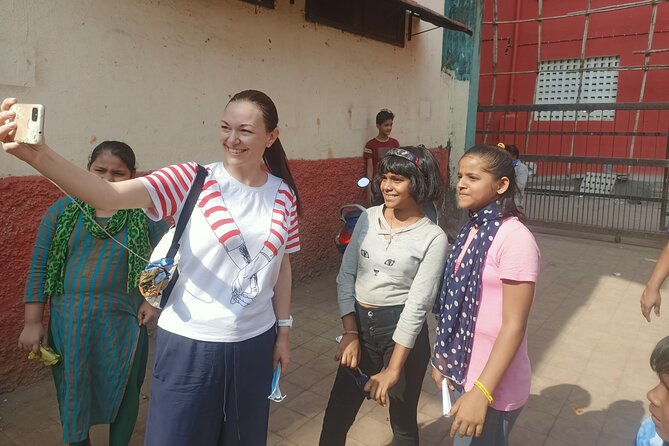
The tour gets the central idea right: Dharavi should be understood as a community with both hardship and agency. It does not pretend that poverty is absent, but it also does not define every resident by poverty.
I especially like the attention given to entrepreneurship and local work. Seeing recycling, leather, textiles, pottery, papadom making, and other businesses helps correct the lazy idea that Dharavi is simply a place where people wait for help.
Still, a two-and-a-half-hour walk cannot explain every part of Dharavi. You will receive an introduction, not a complete account of housing policy, health care, employment, or urban planning. The route also presents only selected areas, so you should not treat it as a full picture of every resident’s experience.
There is an ethical question with any tour of a low-income neighborhood. The community funding and no-photography rule help address it, but your behavior matters just as much. Listen, do not stare, do not block doorways, and do not expect personal stories on demand.
Who should book this Mumbai experience
I would recommend this tour if you want to understand Mumbai through its people and working neighborhoods rather than only through major landmarks. It suits curious visitors who are willing to listen, walk, and accept a little discomfort.
It is also a good fit for solo visitors. The walk has a clear meeting point, a guide, and an end point at the same office. One solo participant described feeling safe and well supported, with the guide waiting patiently after a delay.
Families with older children may find it educational, provided everyone understands the need for respectful behavior. Students and anyone interested in urban planning, small business, social programs, or modern India will find plenty to think about.
I would hesitate to recommend it if your main goal is photography, comfort, or a light entertainment outing. The no-camera rule removes the usual travel keepsakes, and the subject matter calls for more thought than a standard sightseeing stop.
Free cancellation is available if you cancel at least 24 hours before the start time. Changes or cancellations inside that period are not refunded, so leave some room in your schedule.
Should you book the Dharavi Slum Tour?
Yes, if you want a grounded look at Mumbai and can approach Dharavi with humility. The strongest reasons to book are the local guides, the chance to see real industries in operation, and the fact that tour income supports community projects.
Book it as an educational walking experience, not as a photo opportunity. Wear modest clothing and closed-toe shoes, arrive with extra time, and be prepared for a route through narrow, active areas.
At about $20.40, the tour offers good value for anyone who wants to understand a side of Mumbai that is easy to misunderstand from a taxi window. It will not answer every question, but it can give you better questions to carry into the rest of your visit.
FAQ
How long does the Dharavi Slum Tour last?
The experience lasts approximately two hours and 30 minutes. Around two hours are spent walking through Dharavi, followed by about 20 minutes at the Reality Tours and Travel office.
Where does the tour start and finish?
The tour starts and ends at Reality Tours and Travel on 60 Feet Road, Shahid Bhagat Singh Nagar, Kumbhar Wada, Dharavi, Mumbai, Maharashtra 400017, India.
Is photography allowed during the tour?
No. Photography is not permitted while you are inside Dharavi, out of respect for residents.
What is included in the tour price?
The price includes a local English-speaking guide and water or a cold drink. Lunch is optional and costs extra.
Does the tour include hotel pickup and drop-off?
No. Hotel pickup and drop-off are not included. You can travel by train with your guide if that option is selected, or make your own way to the meeting point.
How much of the tour income supports the local community?
A significant portion of the proceeds supports educational, health, and livelihood projects in the community. The tour details indicate that about 80 percent of the benefits go back to community work.
Just added in Mumbai
- Mumbai Airport to Mumbai Hotels : Private Transfers★ 5.0 · 13 reviews
- Mumbai Sightseeing Tour★ 5.0 · 11 reviews
- Mumbai Spice Markets and Bazaars Tour with Guide and Transport★ 5.0 · 42 reviews
- Mumbai 800 Year Worli Village: Talking Goddess, Old Fort & more★ 5.0 · 94 reviews
- Customize private tour with pickup★ 5.0 · 95 reviews
- Gufran’s Slum Home Tour in the Mumbai Slums★ 5.0 · 19 reviews
- Private Guided Bandra Half Day City Tour in AC Vehicle★ 5.0 · 72 reviews
- Mumbai City Sightseeing Tour With Expert Driver★ 5.0 · 75 reviews
Slum and Community Tours, compared.
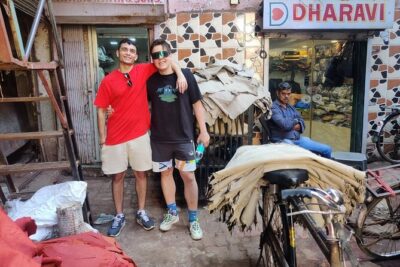
Dharavi slum tour in Mumbai by Female tour guides of the slum
Read our review →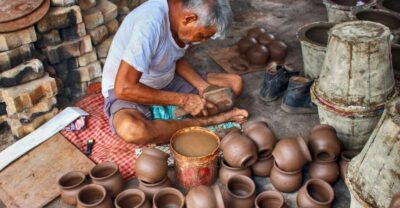
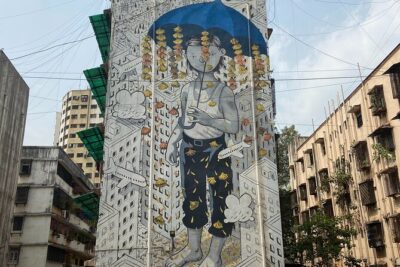
Dharavi Slum Slumdog Millionaire Tour with a Local
Read our review →
Mumbai Slum Tour – Visit Dharavi Slum with Local Guide
Read our review →
Dhobi Ghat Laundry and Dharavi Slum Tour with Local
Read our review →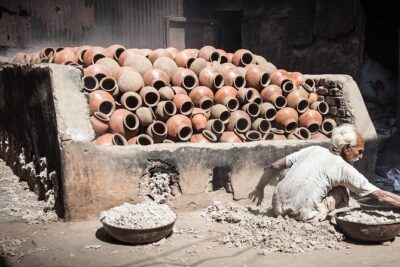
Browse the lists this tour appears in