
Reviewed · SLUM AND COMMUNITY TOURS
New Delhi: Sanjay Colony Slum Tour with Locals
Sanjay Colony tells Delhi’s everyday story. This small-group walk offers a respectful look at life in one of the city’s informal settlements, with local guides explaining work, schooling, religion, home life, and the daily task of finding water. I especially like the local-led format and the chance to visit Learning by Locals, where community education work gives the tour a clear purpose. I also like that tea and water are included. The main consideration is that this is not a sightseeing walk in the usual sense. You are entering a real neighborhood, so sensitivity, modest behavior, and careful listening matter.
At $12 per person, the experience offers strong value for a 1-hour-45-minute visit, especially if you want context that Delhi’s major monuments cannot provide. The small group size helps, with no more than six people per booking and a maximum of ten on the tour. Pickup is offered, but the regular meeting point is at Harkesh Nagar Okhla Metro Gate 2, and the tour ends near the same station.
In This Review
- Key points to know before you go
- Why Sanjay Colony offers a different view of Delhi
- Starting at Harkesh Nagar Okhla Metro Gate 2
- Walking through a working neighborhood
- Learning by Locals gives the tour a clear purpose
- Seeing the public school from outside
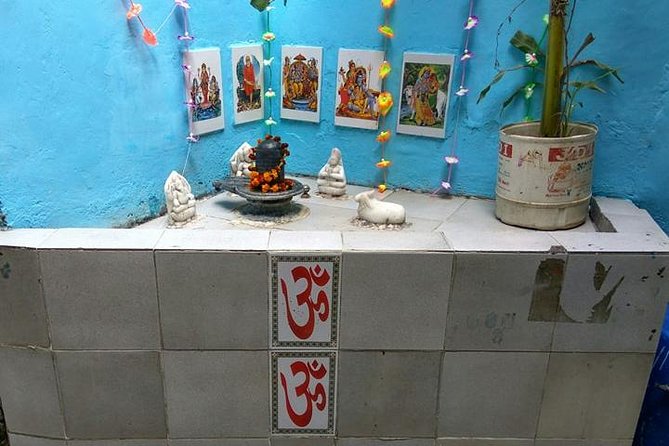
- A temple, home life, and religion
- What the small group and local guide change
- Tea, water, and the practical side of the walk
- Is $12 a fair price?
- Who should book this Sanjay Colony experience?
- Should you book the Sanjay Colony walk?
- FAQ
- Where does the Sanjay Colony tour begin?
- Where does the tour finish?
- How long does the experience last?
- How much does the tour cost?
- What is included in the price?
- Is hotel pickup available?
- What places are included during the walk?
- How many people can join?
- Can I cancel for a full refund?
Key points to know before you go

- Meet local guides at Harkesh Nagar Okhla Metro Gate 2: The tour begins near the metro, making public transport a practical option.
- Visit Learning by Locals: This community NGO gives the walk an education and youth-empowerment focus.
- See a public school from outside: You will learn about Delhi’s education system without entering the school.
- Learn about clothing work and recycling: The walk connects daily livelihoods with the wider economy.
- Tea and bottled water are included: Bring your own water too, especially in hot weather.
- Expect a respectful, small-group experience: Guides such as Badal and Sukhmani have been praised for their care and clear explanations.
Why Sanjay Colony offers a different view of Delhi
Delhi can be easy to reduce to forts, tombs, mosques, markets, and grand government buildings. Those places matter, but they do not explain how most people make a living or how families handle school, water, work, faith, and crowded housing.
Sanjay Colony provides that missing context. Roughly 60,000 people live in the area, and the walk focuses on the systems that shape daily life. You learn about clothing work, recycling, education, religion, and home life while moving through a neighborhood where people are going about their routines.
That setting requires care. This is not a staged village or a photo stop. You are walking through someone’s home area. I would treat the tour as an exchange rather than a spectacle. Listen first, ask questions politely, and avoid turning residents into subjects for casual photographs.
The local guide makes a major difference. A person who knows the neighborhood can explain what you are seeing and help you avoid getting lost in narrow streets. Just as important, you can ask questions in the moment instead of making assumptions from the outside.
More Community Tours in New Delhi:
- Sanjay Colony Slum Tour
★ 5.0 · 498 reviews - New Delhi Sanjay Colony slum Tour (Private Tour)
★ 5.0 · 20 reviews - Moral Slum Tour in Delhi with hotel pickup & drop
★ 5.0 · 17 reviews
Starting at Harkesh Nagar Okhla Metro Gate 2
The meeting point is Harkesh Nagar Okhla Metro Gate 2, at G7VG+62H, Harkesh Nagar, Okhla, New Delhi. The area is near public transportation, and the tour ends near the Harkesh Nagar Okhla metro station, at Metro Gate, G-16, Okhla Phase II.
This arrangement is useful because you do not need to plan a complicated private transfer for the standard walk. You can reach the area by metro and finish close to the same transport connection. Confirm the exact gate and meeting instructions before setting out, since metro stations can have several entrances and the surrounding streets may feel confusing at first.
The walk lasts about 1 hour and 45 minutes. That is long enough to cover several subjects without taking up the whole day. You could pair it with other Delhi sights, but I would avoid scheduling a major timed attraction immediately afterward. Delhi traffic and the pace of a guided neighborhood walk can make tight plans stressful.
A private tour with a car has a different arrangement. In that case, the provider can drop you back at your hotel or help you take an Uber or taxi. That option costs more than the stated $12 shared-tour price, but it may suit you if you have limited time, mobility concerns, or a hotel far from the metro.
Walking through a working neighborhood
The first part of the walk introduces Sanjay Colony as a place of work and family life. The guide explains local livelihoods, including recycling and clothing-related work. The clothing industry is an especially useful subject because it shows how a neighborhood can be tied to wider commercial activity while still facing basic daily pressures.
You may see work happening close to homes, but the provided details do not promise a specific workshop visit or hands-on demonstration. That is worth keeping in mind. The strength of this tour is the explanation around the neighborhood, not a fixed display of attractions.
The guide also discusses the practical challenge of water. This subject can sound ordinary until you understand how much it affects a household’s schedule and security. A local explanation gives you a better sense of why access to water is not just a utility issue, but part of daily planning.
The setting may feel crowded and intense compared with Delhi’s formal tourist areas. That is part of the point, but it can also be tiring in heat or if you are not used to walking through narrow urban lanes. Wear simple, comfortable clothing and shoes. You will be better prepared if you carry a little extra water, even though a bottle is included.
Learning by Locals gives the tour a clear purpose
One of the most meaningful stops is Learning by Locals, a local NGO. The visit lasts about 15 minutes, and it shifts the focus from hardship alone to community effort, youth education, and empowerment.
That balance matters. Tours of poor neighborhoods can become uncomfortable if they show only difficult conditions. Learning by Locals helps explain what people are doing to improve opportunities within the community. The stop also gives you a place to ask about education projects and the role of local students.
The experience may include meeting students, depending on the day and the way the visit is arranged. Several comments about the tour praise the opportunity to meet young people and understand the projects being developed. I would approach this part with the same courtesy you would show in any school or community center. Listen to the guide, follow instructions, and do not assume that children are available for photographs or conversation.
Guides Badal and Sukhmani have received especially warm praise for making this part personal and respectful. Badal is described as friendly and well informed, while Sukhmani is also praised for helping create an unforgettable visit. The provider has used the names of these guides in responses to visitors, but your assigned guide may be different.
A few more options to weigh up in New Delhi
- Old & New Delhi City Tour – Half or Full Day Options Available
★ 5.0 · 4,811 reviews - Same Day Taj Mahal, Agra Fort & Baby Taj Tour from Delhi by Car
★ 5.0 · 4,304 reviews - Taj Mahal Day Tour from Delhi by Superfast Train – TOP RATED TOUR
★ 5.0 · 4,166 reviews - Full Day Taj Mahal, Agra Fort & Baby Taj Tour from Delhi by Car
★ 5.0 · 3,647 reviews
Seeing the public school from outside
The stop at S.D.M.C. Primary School is brief, about five minutes. You view the public school from outside and learn about the education system.
Do not expect a school tour or classroom visit. The value here is the context supplied by the guide. A school building can look simple from the street, but the explanation helps connect it to the choices families make for their children and to the work of Learning by Locals.
This short stop works best as part of the larger story. On its own, five minutes would not justify a special visit. Alongside the NGO and the neighborhood walk, it helps you see how education fits into the community.
If education is your main interest, ask questions during the walk rather than waiting only for this stop. The guide can explain more about the local system and the projects being supported, subject to the time available.
A temple, home life, and religion
The experience also includes a visit to a temple and discussion of religion and home life. The supplied details do not name the temple or promise a formal religious ceremony, so you should think of this as an introduction to the role of faith in the neighborhood.
Religious sites require quiet, modest conduct. Follow the guide’s instructions about where to stand and what to do. If you are unsure about shoes, photography, or entry rules, ask before acting.
The discussion of homes is equally important. You are not simply looking at buildings. You are learning how families organize daily life in a dense settlement and how practical concerns affect routines. Because the walk moves through a lived-in area, the guide’s explanation helps you understand without intruding.
This is also where the tour can feel most personal. You may hear stories about everyday routines and challenges rather than a polished historical narrative. That can be more revealing, but it also means the quality of your experience depends heavily on the guide and on your willingness to listen.
What the small group and local guide change
The tour allows a maximum of six people per booking and no more than ten overall. That is a useful size for a neighborhood walk. You can hear the guide more easily, ask questions without holding up a large crowd, and move through the area with less disruption.
A small group does not remove every concern. Even ten people can feel noticeable in a residential area. The right attitude matters more than the exact number. Keep your voice low, stay with the guide, and avoid blocking entrances or paths.
The guide is also your practical safety net. The description specifically notes that a guided visit helps you avoid getting lost and provides a safe, informative way to enter the area. That does not mean you should stop paying attention to your surroundings. It means you have local direction and someone who can explain the setting.
One review describes a guide arranging an extra guide to walk with a participant who had been ill the day before. That suggests a helpful level of care, although you should not assume that extra support will always be available. If you are recovering from illness, tell the provider in advance.
Tea, water, and the practical side of the walk
Local tea and a bottle of water are included. These are small additions, but they suit the conditions of a walking tour in Delhi. Tea also creates a simple local moment without turning the experience into a formal meal stop.
Still, I would carry extra water. The walk lasts nearly two hours, and Delhi heat can be demanding. The provided information does not state that food, snacks, or a full meal are included, so eat beforehand if you need more than tea.
Comfortable clothing is sensible, and respectful clothing is essential. You are visiting homes, a temple, a school area, and a community NGO. Dress in a way that does not draw unnecessary attention, and keep personal belongings secure as you would anywhere in a busy city.
The tour is near public transportation, and most people can participate. However, the details do not promise step-free access, seating, or special mobility arrangements. If you need those services, contact the provider before booking rather than assuming the route will suit you.
Is $12 a fair price?
At $12 per person, I consider this good value if your goal is understanding rather than entertainment. The price includes a local guide, tea, and water, and the tour covers several subjects: work, recycling, education, religion, home life, water access, and community programs.
The strongest value comes from the local explanation. You could walk near the area on your own, but you would not have the same context, and entering without local guidance could be confusing or intrusive. The guide turns a series of observations into a more useful picture of how the neighborhood functions.
The price does not include a full meal, hotel transport for the standard tour, or a long list of formal attractions. You are paying for access, interpretation, and a carefully managed community visit. If you want monuments, panoramic views, or a polished cultural show, spend the money elsewhere.
The tour has a 4.9 rating from 46 reviews and is recommended by 98 percent of customers. Those figures suggest a strong record, especially for an experience that can feel emotionally demanding. The most praised features are the guides, the respectful handling of the subject, the education work at Learning by Locals, and the sense that the visit is carefully organized.
Who should book this Sanjay Colony experience?
I would recommend it to you if you want to understand present-day Delhi beyond its famous sights. It suits curious visitors who can listen without judging and who are comfortable entering a residential neighborhood with humility.
It is also a good choice for anyone interested in education, local employment, youth projects, or community-led work. The Learning by Locals stop gives the experience more substance than a simple walk through streets.
You may want to skip it if you are looking for a relaxing outing, a photography-focused tour, or a conventional sightseeing route. The subject can be confronting, and the neighborhood is not arranged for visitors. It is also not ideal if you dislike guided walking or need guaranteed accessibility features that are not specified.
Book at least 24 hours ahead if your plans may change. Cancellation is free when made at least 24 hours before the start time. Changes or cancellations inside that window are not accepted for a refund.
Should you book the Sanjay Colony walk?
Book it if you want a short, affordable, carefully guided introduction to a part of Delhi that most visitors do not see. The best reasons are the small group, local guides such as Badal and Sukhmani, the community work at Learning by Locals, and the chance to discuss real issues rather than simply pass through.
Go with the right expectations. You are not buying a show. You are entering a living neighborhood, and your conduct affects the quality of the visit for everyone. If you can be respectful, patient, and open to difficult questions, this $12 experience can become one of the most meaningful hours and 45 minutes of your Delhi stay.
FAQ
Where does the Sanjay Colony tour begin?
It begins at Harkesh Nagar Okhla Metro Gate 2, at G7VG+62H, Harkesh Nagar, Okhla, New Delhi, Delhi 110020, India.
Where does the tour finish?
The walk ends near the Harkesh Nagar Okhla metro station, at Metro Gate, G-16, Okhla Phase II, near Harkesh Nagar, G-block, Harkesh Nagar, New Delhi.
How long does the experience last?
The tour lasts approximately 1 hour and 45 minutes.
How much does the tour cost?
The listed price is $12 per person.
What is included in the price?
The price includes a local guide, local tea, and a bottle of water.
Is hotel pickup available?
Pickup is offered. For a private tour with a car, the provider can drop you back at your hotel or help you arrange an Uber or taxi. The standard meeting point is at Harkesh Nagar Okhla Metro Gate 2.
What places are included during the walk?
The experience includes Sanjay Colony, Learning by Locals, a temple, and S.D.M.C. Primary School viewed from outside.
How many people can join?
A booking can include a maximum of six people, and the total tour group can have no more than ten participants.
Can I cancel for a full refund?
Yes. You can cancel at least 24 hours before the experience start time for a full refund. Cancellations or changes made less than 24 hours before the start time are not accepted for a refund.
Just added in New Delhi
- Old Town Delhi Walking Tour (2 Hours Guided Tour with Local)★ 4.5 · 22 reviews
- Yoga class in Delhi★ 5.0 · 29 reviews
- Unveil Old Delhi’s Food, Spice Market & Heritage Walk★ 5.0 · 26 reviews
- Vegetarian : Private Cooking Class in Delhi home ( Learn 7 meal)★ 5.0 · 58 reviews
- Private Taj Mahal & Agra Fort Tour, Dine with a View★ 5.0 · 27 reviews
- Tour to Akshardham temple with Guide and Delhi Transfer★ 5.0 · 26 reviews
- Private Tour of Taj mahal from Delhi by Train in 90 Min★ 5.0 · 46 reviews
- Private 2-Day Agra & Delhi Tour by Car–Includes Taj Mahal Sunrise★ 5.0 · 11 reviews
Slum and Community Tours, compared.

Dharavi slum tour in Mumbai by Female tour guides of the slum
Read our review →


Dharavi Slum Slumdog Millionaire Tour with a Local
Read our review →
Mumbai Slum Tour – Visit Dharavi Slum with Local Guide
Read our review →
Dhobi Ghat Laundry and Dharavi Slum Tour with Local
Read our review →Browse the lists this tour appears in