
Reviewed · SLUM AND COMMUNITY TOURS
New Delhi Sanjay Colony slum Tour (Private Tour)
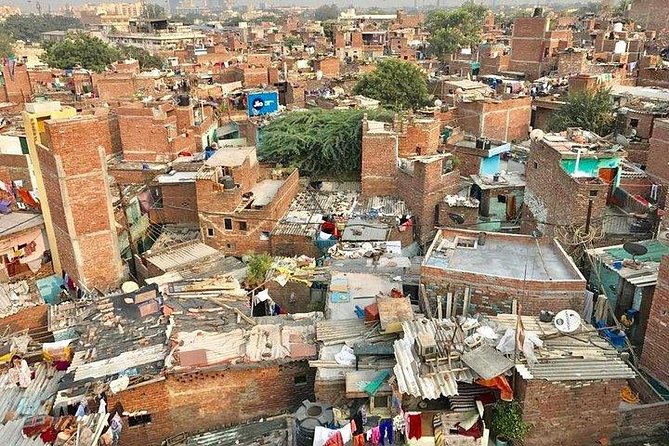
Look beyond Delhi’s grand monuments. This 90-minute private walk through Sanjay Colony offers a close look at clothing work, home life, faith, schooling, water, electricity, and hygiene in a community of about 60,000 people. I like the focus on local voices and the fact that 50 percent of the profits go to Learning by Locals, a nonprofit based in the area.
I also like the small-group format, with no more than six people, and the care taken around privacy. Photography is not allowed, which may disappoint anyone hoping for striking street pictures, but it helps keep the visit respectful and keeps the focus on listening rather than collecting images.
In This Review
- Five things to know before you go
- Why Sanjay Colony offers a different view of Delhi
- Starting at Harkesh Nagar Okhla Metro Gate 2
- Seeing clothing work and local business up close
- The public school and education in Delhi
- A temple and the role of faith
- Meeting locals without turning the area into a spectacle
- Tea, water, and the small social details
- What the $35 price means
- Who will appreciate this 90-minute walk
- Practical ways to prepare
- The final call: should you book it?
- FAQ
- How long does the Sanjay Colony tour last?
- Where does the tour start?
- Where does the tour end?
- How many people can join a private booking?
- Is photography allowed during the tour?
- What is included in the price?
- How does the tour support the local community?
Five things to know before you go
- The tour is private: Your group has the guide to itself, with a maximum of six people.
- Photography is not allowed: Bring curiosity, not a camera plan.
- Half the profits support Learning by Locals: Your payment helps fund work in the community.
- You visit a temple and see a public school from outside: Faith and education are central parts of the walk.
- Tea and water are included: A cup of local tea adds a simple social moment to the visit.
- The meeting point is Harkesh Nagar Okhla Metro Gate 2: The tour returns to the same place.
Why Sanjay Colony offers a different view of Delhi
Delhi is often presented through forts, tombs, markets, and monumental avenues. Those places matter, but they do not explain how many people earn a living, educate their children, manage water supplies, or organize daily life in the city.
Sanjay Colony gives you a chance to consider those questions at street level. The tour is not built around famous architecture. Its subject is the community itself, including the people working in the clothing industry, running local businesses, attending school, practicing faith, and managing the practical demands of home life.
That makes the visit more serious than a quick sightseeing stop. You are asked to pay attention to systems that are easy to overlook: where water comes from, how electricity is used, what hygiene requires in a crowded setting, and how education works through public schools and local support.
The setting is described as a slum, but the tour is not simply a walk past hardship. It also presents work, organization, religious life, education, and community initiative. That balance matters. You should leave with a fuller picture than the usual poor-versus-rich story often offered to outsiders.
More Private Tours in New Delhi
- From Delhi: Taj Mahal & Agra Private Day Trip with Transfers
★ 4.9 · 3,181 reviews - Old & New Delhi Private Tour – Half or Full Day (Rated Excellent)
★ 5.0 · 2,226 reviews - Taj Mahal and Agra Private Car Tour from Delhi with 5* Lunch
★ 5.0 · 1,633 reviews
Starting at Harkesh Nagar Okhla Metro Gate 2
The meeting point is Harkesh Nagar Okhla Metro Gate 2, at Harkesh Nagar, Okhla, New Delhi. The tour ends at the same meeting point, which makes planning easier if you are using the metro or arranging your own transport before and after the walk.
The activity lasts about one hour and 30 minutes. It is a walking experience through a tight urban area, so you should expect the guide to set the pace according to the group and the conditions on the ground. The information provided does not promise hotel pickup, so you should plan to reach the metro meeting point yourself.
A private booking is useful here. With only your own group, you can ask direct questions without worrying about slowing a large party. A group of two to six people should find the format especially practical, since everyone can hear the guide and the visit is less likely to feel like a procession.
The tour is near public transportation, and most people can participate. Still, this is not a polished museum route. You will be walking through a working residential area, where space may be narrow and the surroundings may feel unfamiliar. Come ready to follow the guide’s instructions and keep a respectful distance from residents.
Seeing clothing work and local business up close
One of the tour’s main aims is to show how people work in the clothing industry. That detail gives the walk an economic focus. Instead of seeing Sanjay Colony only as a residential area, you learn how work is tied to homes, streets, and small local businesses.
The experience may be especially useful if you want to understand how Delhi functions beyond formal offices and major commercial districts. Clothing production is part of the area’s working life, and the guide explains how people earn money and manage business within a densely settled community.
The tour also includes discussion of everyday living conditions. You can expect explanations about homes, water, electricity, and hygiene. The value is not in simply looking at these conditions, but in learning about the practical decisions residents face each day.
That context helps you avoid making quick judgments. A water problem is not just an inconvenience. Electricity is not merely a switch on the wall. Hygiene depends on access, space, time, and infrastructure. A local guide can connect those issues to ordinary routines in a way that a passing drive cannot.
The public school and education in Delhi
The first listed stop is SDMC Primary School. The school visit is described as an outside visit, so you should not expect a tour through classrooms or a formal meeting with teachers.
Even from outside, the stop has a clear purpose. The guide explains the education system in Delhi and how schooling relates to children living in the colony. Education is one of the areas where the tour moves beyond description and points toward opportunity, limits, and community support.
The itinerary also includes time at Learning by Locals. This is the nonprofit in the slum that receives half of the tour profits. The organization works with students, and the visit can help you understand how local education support fits alongside the public school system.
Several guides have been praised for making this part personal and clear. Badal was described as an exceptional guide who lives in the area, while Pradeep, the founder, has been recognized for his work with the community. Other named guides include Sukh, who was praised for sharing community stories with warmth, and Pradeep, who has also led visitors through the colony.
You should keep expectations realistic. The school is viewed from outside, and the tour lasts only 90 minutes. It gives you a useful introduction, not a full study of Delhi’s education policy.
A completely different kind of day out:
- Old & New Delhi City Tour – Half or Full Day Options Available
★ 5.0 · 4,811 reviews - Same Day Taj Mahal, Agra Fort & Baby Taj Tour from Delhi by Car
★ 5.0 · 4,304 reviews - Taj Mahal Day Tour from Delhi by Superfast Train – TOP RATED TOUR
★ 5.0 · 4,166 reviews - Full Day Taj Mahal, Agra Fort & Baby Taj Tour from Delhi by Car
★ 5.0 · 3,647 reviews
A temple and the role of faith
The walk includes a visit to a temple inside the colony. This is not treated as a decorative stop. The guide uses the temple to explain the role faith plays in people’s lives.
That makes the visit valuable because religion in India is often part of daily routine, family life, neighborhood identity, and social connection. A temple can be both a place of worship and a familiar point in the community. The tour helps you consider faith as a lived part of local life rather than as another building on a sightseeing list.
Respect is important. Follow the guide’s instructions about where to stand, how to behave, and what is appropriate inside or near the temple. Since photography is prohibited throughout the tour, you will not be taking pictures there or elsewhere in Sanjay Colony.
The no-photo rule is one of the clearest signs that this experience tries to put residents ahead of visitor convenience. You may miss the chance to document the walk, but you gain a better chance to observe without turning people’s homes or working lives into a backdrop.
Meeting locals without turning the area into a spectacle
A tour through a low-income community raises an ethical question: does the visit help people, or does it simply turn poverty into entertainment?
This experience addresses that concern in several practical ways. It uses a private group of no more than six, bans photography, works with local guides, and directs 50 percent of profits to Learning by Locals. Those choices do not erase every concern, but they show an effort to make the tour more respectful and useful.
Your own behavior still matters. Do not point at people, enter private spaces, or ask intrusive questions. Listen when the guide explains what is appropriate. If you meet residents, treat the interaction as a conversation, not a performance arranged for your benefit.
The strongest part of this kind of tour is often the chance to hear how people describe their own community. Guides connected to the area can explain details that a guide from outside may miss. Badal’s local connection and Sukh’s warm storytelling were especially praised, while Pradeep’s role with the nonprofit gives the tour a clear community link.
At the same time, you should understand that a short walk cannot represent every resident or every experience in Sanjay Colony. It offers selected places and themes. Take it as an introduction, not a complete portrait.
Tea, water, and the small social details
Local tea and a bottle of water are included. These are modest additions, but they suit the character of the experience.
Tea gives the tour a pause and a chance to connect in a less formal way. Several people have singled out the warmth of the chai and the friendly atmosphere created by the guides. It is a small moment, yet it can make the walk feel more human than a string of explanations delivered while moving.
Water is practical, especially in Delhi’s heat. The tour is short, but the combination of walking and outdoor conditions can still make a bottle useful. You may also want to carry your own water if you prefer to have more than the included bottle.
Do not expect a meal, shopping stop, or entertainment program. The refreshments support the walk rather than define it.
What the $35 price means
At $35 per person, this is not the cheapest way to spend 90 minutes in Delhi. It is also not priced like a basic group walk. You are paying for a private experience, a local guide, a small maximum group size, refreshments, and a model that sends half its profits to Learning by Locals.
For two people, the cost buys privacy and flexibility. For a group of six, the per-person price may feel more reasonable because you share the private format among several people. Group discounts are available, though the exact savings are not specified.
The best value comes if you care about context and community benefit. If you want a fast photo stop or a conventional list of attractions, this will probably feel expensive and too short. If you want to understand work, education, faith, and daily infrastructure while supporting a nonprofit, the price has a stronger case.
The tour’s five-star rating and 100 percent recommendation record point to a very positive response, especially for the guides’ friendliness, personal approach, and ability to make the experience feel safe. Still, those ratings should not lead you to expect comfort or polish. The subject is real daily life in a crowded community, not a staged attraction.
Who will appreciate this 90-minute walk
I would recommend the tour to you if you:
- Want to see a side of Delhi beyond major monuments
- Prefer a local guide and a small private group
- Care about responsible tourism and community support
- Want to learn about water, electricity, hygiene, schooling, and work
- Are comfortable following a no-photography rule
- Enjoy asking thoughtful questions and listening
Families may find the education focus meaningful, especially if children are old enough to discuss differences in schooling and living conditions with care. Students, first-time visitors seeking context, and people interested in social issues may also get a lot from the visit.
This may not suit you if your main goal is shopping, food, architecture, or photography. The tour does not promise hotel pickup, an extensive school visit, or a long stop at a major attraction. It is also not designed to be a carefree sightseeing stroll.
Practical ways to prepare
Wear clothing suitable for walking and for a visit to a temple. Modest dress and respectful behavior are sensible choices, even though the supplied details do not set a formal dress code.
Keep your phone away during the walk unless you need it for navigation before or after the tour. Photography is not allowed, and you should not try to negotiate an exception. The restriction applies to the people, homes, streets, school area, and temple you see.
Use the metro meeting point as your anchor. The activity begins and ends at Harkesh Nagar Okhla Metro Gate 2, so allow enough time to find the correct gate. Confirmation is provided when you book, and the experience is available as a private activity for your group only.
Free cancellation is available if you cancel at least 24 hours before the start time. Cancellations or changes made less than 24 hours before the start are not accepted for a refund.
The final call: should you book it?
Book this tour if you want a short, serious, community-focused look at Delhi and you are willing to put away your camera. The strongest reasons are the local guides, the small private group, the discussion of real daily challenges, and the fact that half the profits support Learning by Locals.
I would not book it for photographs or for a broad sightseeing overview. I would book it for the chance to understand how work, faith, education, and infrastructure shape life in Sanjay Colony. Guides such as Badal, Sukh, and Pradeep have helped make the experience personal and reassuring, but your own attitude will matter just as much.
For many people, this can be one of the most memorable parts of a Delhi visit because it asks you to look carefully, listen well, and treat the community as a place where people live, work, pray, and study, not as a backdrop.
FAQ
How long does the Sanjay Colony tour last?
The tour lasts approximately one hour and 30 minutes.
Where does the tour start?
It starts at Harkesh Nagar Okhla Metro Gate 2, Harkesh Nagar, Okhla, New Delhi, Delhi 110020.
Where does the tour end?
The activity ends back at the same meeting point.
How many people can join a private booking?
A maximum of six people can participate in each booking, and only your group takes part in the private activity.
Is photography allowed during the tour?
No. Photography is not allowed during this tour.
What is included in the price?
The price includes a local guide, local tea, and a bottle of water.
How does the tour support the local community?
Fifty percent of the profits go to Learning by Locals, a nonprofit organization based in the Sanjay Colony community.
More Community Tours in New Delhi
- Sanjay Colony Slum Tour
★ 5.0 · 498 reviews - New Delhi: Sanjay Colony Slum Tour with Locals
★ 5.0 · 46 reviews - Moral Slum Tour in Delhi with hotel pickup & drop
★ 5.0 · 17 reviews - Dharavi slum tour in Mumbai by Female tour guides of the slum
★ 5.0 · 1,976 reviews
Just added in New Delhi
- Old Town Delhi Walking Tour (2 Hours Guided Tour with Local)★ 4.5 · 22 reviews
- Yoga class in Delhi★ 5.0 · 29 reviews
- Unveil Old Delhi’s Food, Spice Market & Heritage Walk★ 5.0 · 26 reviews
- Vegetarian : Private Cooking Class in Delhi home ( Learn 7 meal)★ 5.0 · 58 reviews
- Private Taj Mahal & Agra Fort Tour, Dine with a View★ 5.0 · 27 reviews
- Tour to Akshardham temple with Guide and Delhi Transfer★ 5.0 · 26 reviews
- Private Tour of Taj mahal from Delhi by Train in 90 Min★ 5.0 · 46 reviews
- Private 2-Day Agra & Delhi Tour by Car–Includes Taj Mahal Sunrise★ 5.0 · 11 reviews
Slum and Community Tours, compared.
Dharavi slum tour in Mumbai by Female tour guides of the slum
Read our review →

Dharavi Slum Slumdog Millionaire Tour with a Local
Read our review →
Mumbai Slum Tour – Visit Dharavi Slum with Local Guide
Read our review →
Dhobi Ghat Laundry and Dharavi Slum Tour with Local
Read our review →Browse the lists this tour appears in