
Reviewed · SLUM AND COMMUNITY TOURS
Mumbai: Private Dhobi Ghat Laundry & Slum Tour with Pickup
Mumbai rewards a closer look. This private tour pairs Dhobi Ghat, the world’s largest open-air laundry, with a guided walk through Dharavi, giving you two very different views of the city’s working life. I like the local perspective and the chance to see real businesses, not just film-set images. I also like that hotel pickup, entrance fees, and water are included. The main consideration is that Dharavi is a residential neighborhood, not a conventional attraction, so you should come with respect and expect a serious, sometimes emotional visit.
The experience is priced at $19 per person, which is strong value for a private tour with transport included. Guides such as Alkama and Muhammad have been praised for clear English, warmth, and pride in the communities they show. One guide even accompanied a visitor by local train, but you should confirm the transport plan when booking rather than assume the train is included.
In This Review
- Key points to know before you book
- Why combine Dhobi Ghat with Dharavi?
- Starting at Dhobi Ghat, Mumbai’s open-air laundry
- Moving from laundry to Dharavi
- Entering Dharavi with a resident guide
- The industries that make Dharavi more than a stereotype
- Looking beyond the Slumdog Millionaire connection
- The guide matters more than the landmark
- Is $19 a good value for Mumbai?
- Who should take this tour?
- Practical advice for a respectful visit
- Should you book the Dhobi Ghat and Dharavi tour?
- FAQ
- How much does the tour cost?
- Is this a private tour?
- Does the tour include hotel pickup and drop-off?
- What is included in the price?
- What will I see at Dhobi Ghat?
- What industries can I see in Dharavi?
- Was Slumdog Millionaire filmed in Dharavi?
- Can I pay later or cancel the booking?
Key points to know before you book
- Dhobi Ghat is a working laundry, not a museum: Clothes arrive from hotels, hospitals, hostels, and homes across Mumbai.
- Dharavi has far more than homes: You may see plastic recycling, leather work, garment production, textiles, and metal businesses.
- The tour challenges film stereotypes: You visit the area connected with Slumdog Millionaire, then look beyond the movie’s narrow picture of life there.
- Local guides shape the experience: Alkama and Muhammad are praised for friendly communication, strong local knowledge, and a positive attitude.
- Private pickup makes the price attractive: Hotel pickup and drop-off, entrance fees, and a water bottle are included.
- Expect a thoughtful visit: The tour can be fascinating and eye-opening, but it also presents poverty and difficult living conditions directly.
Why combine Dhobi Ghat with Dharavi?
Mumbai can feel like several cities pressed into one. At Dhobi Ghat, you see an old service industry operating in full view. In Dharavi, you see homes, workshops, family life, and small businesses sharing a tight urban setting.
That contrast gives the tour its shape. Dhobi Ghat explains part of Mumbai’s daily machinery. Dharavi shows how people live and work within a community that is often reduced to a single negative label.
I like this pairing because it moves beyond sightseeing. You are not simply looking at a famous location and taking a picture. You are learning how clothes are cleaned, how materials are reused, how goods are made, and how families organize daily life in a crowded part of Mumbai.
The tour also aims to correct the picture created by films and media reports. Dharavi has serious problems, but it is not only a place of hardship. It is also a place of work, family, commerce, ambition, and local pride.
More Temples and Religious Sites in Mumbai
- Mumbai: Dhobi Ghat Laundry and Dharavi Slum Tour with Local
★ 5.0 · 469 reviews - Mumbai: Dharavi Slum and Dhobi Ghat Laundry Tour
★ 5.0 · 317 reviews - Private Guided Spiritual Walk in Banganga Hindu Temples
★ 5.0 · 271 reviews
Starting at Dhobi Ghat, Mumbai’s open-air laundry
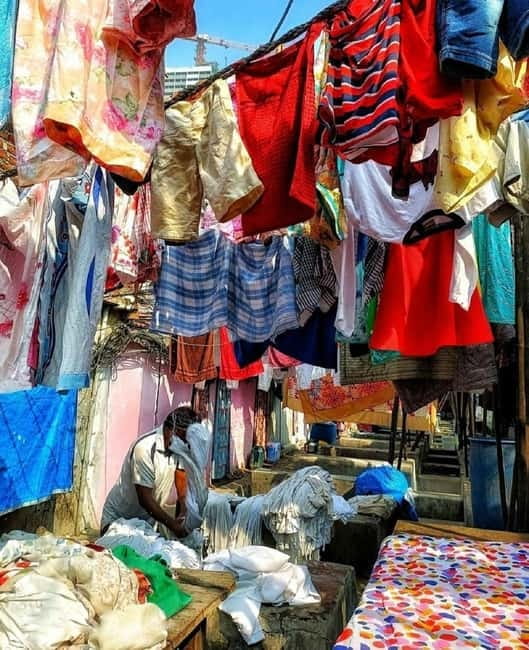
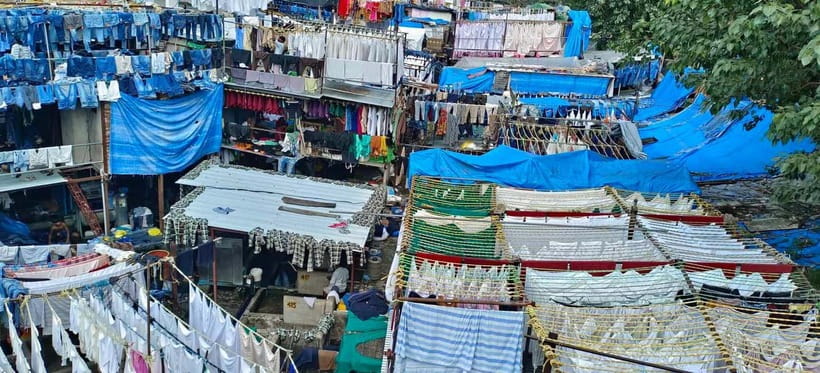
Dhobi Ghat has operated for more than a century. It is known as the world’s largest open-air laundry, with hundreds of washermen and women, called dhobis, working through the day.
Clothing arrives from across Mumbai. Hotels, hospitals, hostels, and private households all send laundry here. The dhobis wash, dry, press, and return the clothing in clean condition.
This is a useful stop because it connects an iconic sight with an everyday service. You are seeing work that many people depend on, rather than a display created for tourists. The open-air setting also makes the process easy to understand. Instead of machinery hidden inside a factory, you can observe the working environment directly.
Your guide explains how the laundry functions and places it in Mumbai’s wider story. That explanation matters. Without a guide, Dhobi Ghat can look like a collection of wash areas and concrete structures. With context, it becomes a picture of an established trade and the people who keep it running.
The visit may be brief compared with the Dharavi portion, but it gives you a strong first look at Mumbai’s working culture. Bring patience and attention. The value is in observing the process, not rushing to collect a quick photograph.
Moving from laundry to Dharavi
The tour includes hotel pickup and drop-off, which removes much of the usual planning involved in reaching both locations. Since this is a private tour, you can ask questions as you go and spend more time discussing subjects that interest you.
Transport details can vary. One visitor chose to take the local train with the guide instead of traveling by car. That added a direct look at how people move around Mumbai, but the train should be treated as a possible arrangement, not a guaranteed feature. Confirm your preferred transport before the tour begins.
The private format is especially useful here. Dharavi is not a place where a quick scripted explanation tells the whole story. You may want to ask about housing, local businesses, family life, work, education, or the film connection. A private guide can respond to your questions without having to follow a large group’s pace.
There is no fixed tour duration stated in the available information. That makes it sensible to confirm the expected length and pickup time when you reserve.
Entering Dharavi with a resident guide
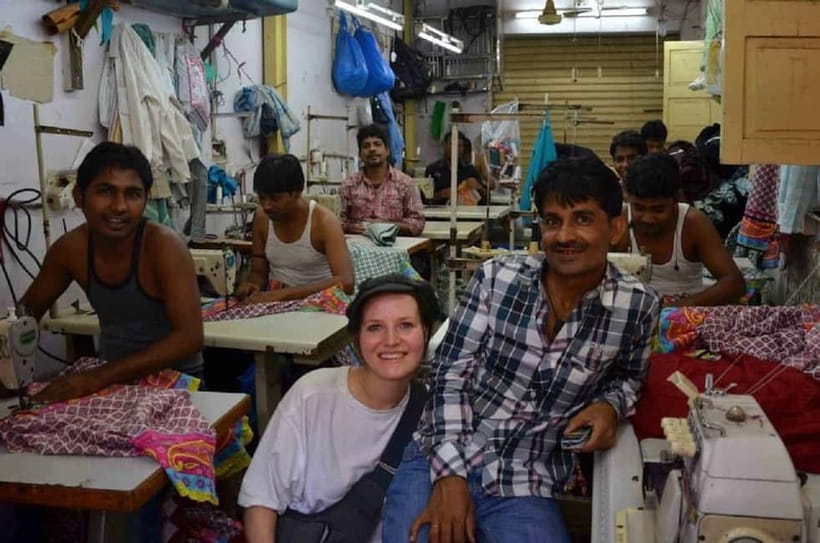
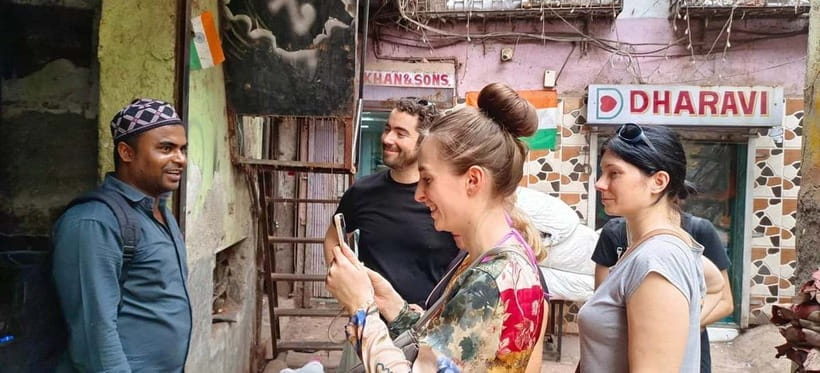
The Dharavi portion is the heart of the experience. The tour is led by a local English-speaking guide, and the description emphasizes that you enter with someone from the area.
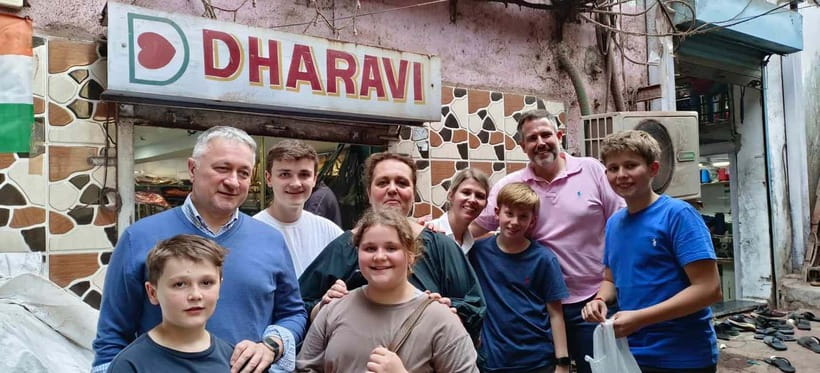
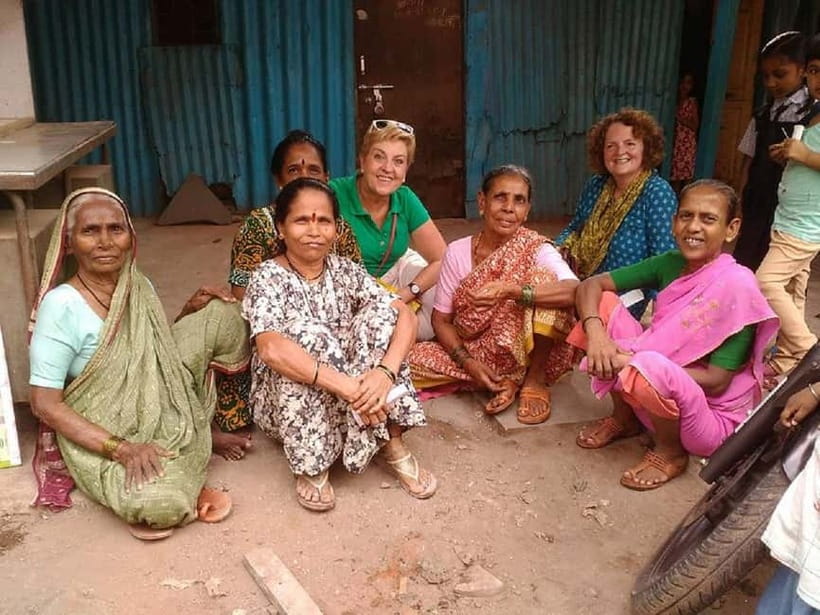
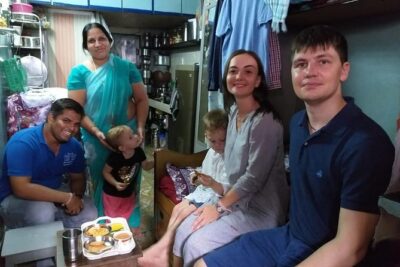
That local connection changes the tone. You are not looking at Dharavi from a distant vehicle or hearing about it through a general city tour. You walk through places where people live, work, relax, and raise families.
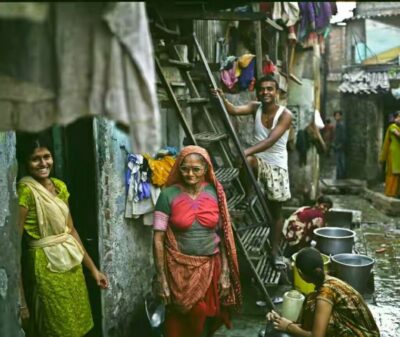
You may see children’s play areas, family homes, workshops, and narrow working spaces. The tour also points out the different industries operating within the neighborhood. Plastic recycling, leather work, garments, textiles, and metal production are all part of the visit.
The description gives Dharavi’s yearly income as about $1 billion. That figure helps explain why the area cannot be understood simply as a residential settlement. It is also a major center of small-scale production and trade.
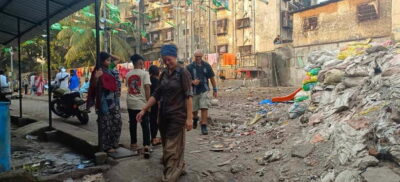
The setting can be confronting. Living and working spaces are close together, and the conditions may be difficult to see. At the same time, the tour tries to show the resourcefulness of the people who live there. You see how work supports families and how businesses operate with limited space and equipment.
I would approach this walk with the same manners you would use in any residential neighborhood. Listen carefully, follow the guide, and avoid treating people’s homes or workplaces as scenery. The aim is to learn, not to collect dramatic images.
A completely different kind of day out:
- Dharavi slum tour in Mumbai by Female tour guides of the slum
★ 5.0 · 1,976 reviews - Mumbai: Full-Day Sightseeing Tour of Mumbai
★ 4.9 · 1,822 reviews - Private Mumbai Sightseeing Tour (Traveller’s Choice Award Winner)
★ 5.0 · 1,565 reviews - Elephanta Caves & Island Guided Private Tour
★ 5.0 · 1,327 reviews
The industries that make Dharavi more than a stereotype
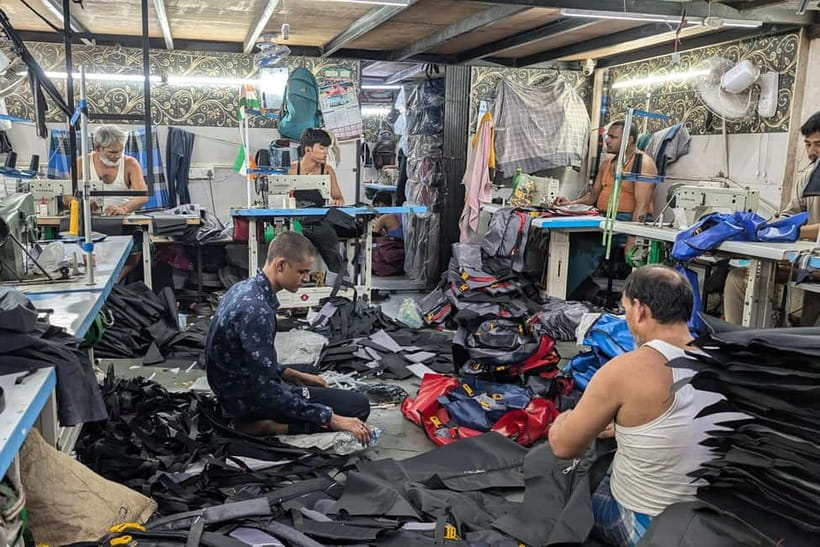
Plastic recycling is one of the most important parts of the visit. You can see how discarded material becomes part of a working supply chain. This helps you understand the neighborhood as a place where people create value from limited resources.
The leather and garment sectors offer another perspective. They show how production can happen in small workshops rather than large industrial buildings. A visitor who expects only poverty may be surprised by the amount of skill, organization, and commercial activity involved.
Metal work and textile production add more layers. Each industry gives the guide a chance to explain how people earn a living and how the local economy connects to the rest of Mumbai.
This is where the tour delivers its strongest lesson. The word slum can make you picture only poor housing. Dharavi is also a place of employment, enterprise, and supply. Its problems are real, but so is its economic role.
You should not expect a polished factory tour. Working conditions may be basic, and the route takes place in a dense residential area. That lack of polish is part of what makes the visit revealing, but it also means you should wear practical clothing and be ready for a walk through tight urban spaces.
Looking beyond the Slumdog Millionaire connection
The tour includes the place associated with filming for Slumdog Millionaire. That connection is likely to interest movie fans, but the guide uses it as a starting point rather than the entire point of the visit.
The film shaped how many people outside India picture Dharavi. This tour tries to separate that fictional story from present-day reality. You see the neighborhood as a community with many forms of work and family life, not as a movie backdrop.
That distinction is important. Film can bring attention to a place, but it can also flatten it. The tour encourages you to look past the most familiar images and ask what daily life is actually like.
There may be surprises along the route, but the useful surprise is not a single landmark. It is the range of activity within a compact area. You may come away understanding why residents resist being described only through poverty.
The guide matters more than the landmark
The strongest part of this experience is likely to be the person leading it. Alkama is praised for excellent English, attentive communication, humor, and a positive attitude. He has also taken time to answer many questions and avoid rushing people through the stops.
Muhammad is described as friendly and well informed, with a clear understanding of the neighborhood. Another guide is praised for explaining both the good and bad sides of life in Dharavi with maturity.
Those details matter because this is a sensitive subject. A poor guide could turn the visit into a voyeuristic walk. A careful guide can explain difficult conditions while also showing dignity, work, and community life.
You should ask questions. The tour is most useful when you understand what you are seeing, rather than simply passing through it. Ask about the industries, the laundry system, local history, family routines, and the difference between the film portrayal and daily reality.
The English language offering is useful for visitors who want a detailed explanation. The guides are described as clear and personable, which helps when the subject involves social and economic issues rather than simple sightseeing facts.
Is $19 a good value for Mumbai?
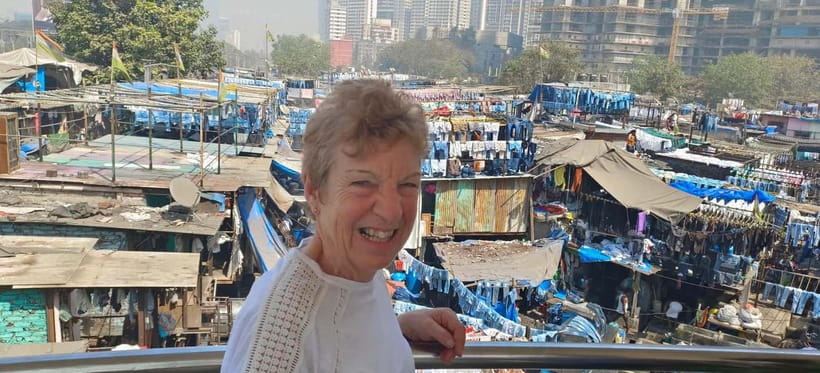
At $19 per person, this is an affordable way to see two distinctive parts of Mumbai. The price includes a private tour, an English-speaking local guide, hotel pickup and drop-off, entrance fees, and a water bottle.
The private format is the biggest value here. You are not paying only for admission to Dhobi Ghat. You are paying for interpretation, local access, transport support, and the ability to ask questions throughout the visit.
It is also useful for a first visit to Mumbai. You do not have to work out how to combine Dhobi Ghat and Dharavi on your own, and hotel pickup makes the day simpler.
The price does not mean the experience is light or carefree. You are paying a small amount for a serious look at working life and poverty in a major city. That is good value if you want context and real interaction. It is poor value if you want a polished attraction, a scenic outing, or a relaxed cultural show.
You can reserve now and pay later, which helps if your plans are still changing. Cancellation is available without charge up to 24 hours in advance.
Who should take this tour?
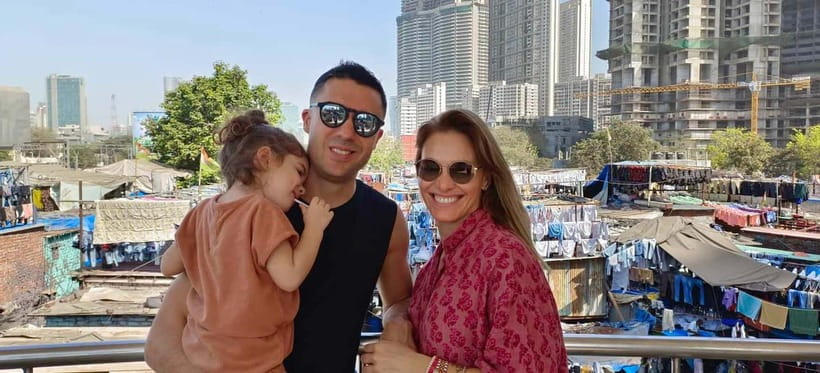
I would recommend it to you if you want to understand Mumbai through its workers and neighborhoods. It suits first-time visitors who want more than grand buildings and standard sightseeing stops.
It is also a good fit if you enjoy guided walks, social history, local industry, and direct conversation. The private setting works well for curious visitors who ask many questions or want a flexible pace.
Families may find the subject educational, though adults should decide how to discuss poverty and difficult living conditions with younger children. The tour presents real homes and workplaces, not a staged family attraction.
You may want to skip it if you dislike walking through residential areas, feel uncomfortable visiting communities facing poverty, or prefer a predictable sightseeing route. There is no shame in choosing a different Mumbai experience. The important thing is to select a tour whose subject and tone match your expectations.
Practical advice for a respectful visit
Wear clothing suitable for walking and keep your focus on the guide’s explanations. Dharavi is a working neighborhood, so people are carrying out ordinary jobs while you pass through.
Treat the area as a community, not a human zoo. Follow local guidance about where to stand, what to photograph, and how to interact with residents. If you have concerns, raise them with the guide before the walk begins.
Because the tour includes pickup and drop-off, confirm your hotel details clearly. Also ask whether the planned transport is by car or local train, especially if you want the train experience mentioned by one visitor.
Give yourself enough time to listen. The most worthwhile parts may be the explanations between stops, when the guide connects a workshop or home to wider questions about Mumbai.
Should you book the Dhobi Ghat and Dharavi tour?
Book this tour if you want a direct, thoughtful look at how Mumbai works. The combination of the century-old laundry, Dharavi’s recycling and manufacturing trades, and a local guide gives you far more context than a quick photo stop.
The $19 price is especially appealing because it covers private guiding, transport, entrance fees, and water. I would book it for an educational city experience, not for entertainment. Go with an open mind, expect some uncomfortable moments, and let the local guide replace easy stereotypes with a fuller picture of daily life.
FAQ
How much does the tour cost?
The tour costs $19 per person.
Is this a private tour?
Yes. The experience is private and includes a local English-speaking guide.
Does the tour include hotel pickup and drop-off?
Yes. Hotel pickup and drop-off are included.
What is included in the price?
The price includes the private tour, English-speaking local guide, hotel pickup and drop-off, entrance fees, and a water bottle.
What will I see at Dhobi Ghat?
You will visit Mumbai’s open-air laundry, which has operated for more than a century. Clothes from hotels, hospitals, hostels, and homes are washed there by washermen and women called dhobis.
What industries can I see in Dharavi?
The tour includes areas connected with plastic recycling, leather, garments and textiles, metal work, and other local businesses.
Was Slumdog Millionaire filmed in Dharavi?
The tour visits a place inside Dharavi where Slumdog Millionaire was filmed. It also focuses on life beyond the movie’s depiction of the neighborhood.
Can I pay later or cancel the booking?
You can reserve and pay later. Cancellation is allowed up to 24 hours in advance for a full refund.
More Community Tours in Mumbai
- Mumbai: Dharavi Slum, DhobiGhat, and Dabbawallas Tour
★ 4.9 · 689 reviews - Dharavi Slum Tour
★ 5.0 · 625 reviews - Dharavi Slum tour in Mumbai by local resident
★ 5.0 · 572 reviews - Mumbai: Dharavi Slum Slumdog Millionaire Tour with a Local
★ 4.9 · 529 reviews
Just added in Mumbai
- Mumbai Airport to Mumbai Hotels : Private Transfers★ 5.0 · 13 reviews
- Mumbai Sightseeing Tour★ 5.0 · 11 reviews
- Mumbai Spice Markets and Bazaars Tour with Guide and Transport★ 5.0 · 42 reviews
- Mumbai 800 Year Worli Village: Talking Goddess, Old Fort & more★ 5.0 · 94 reviews
- Customize private tour with pickup★ 5.0 · 95 reviews
- Gufran’s Slum Home Tour in the Mumbai Slums★ 5.0 · 19 reviews
- Private Guided Bandra Half Day City Tour in AC Vehicle★ 5.0 · 72 reviews
- The Famous Bollywood Tour of Mumbai★ 5.0 · 97 reviews
Slum and Community Tours, compared.
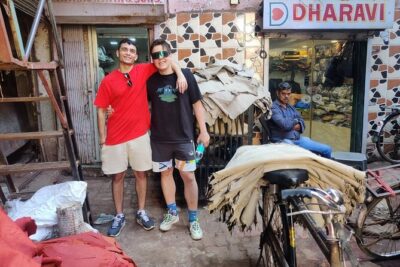
Dharavi slum tour in Mumbai by Female tour guides of the slum
Read our review →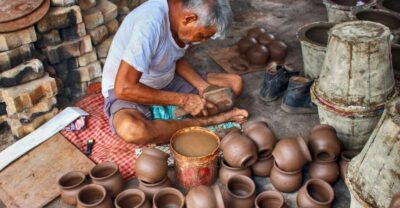
Dharavi Slum Slumdog Millionaire Tour with a Local
Read our review →
Mumbai Slum Tour – Visit Dharavi Slum with Local Guide
Read our review →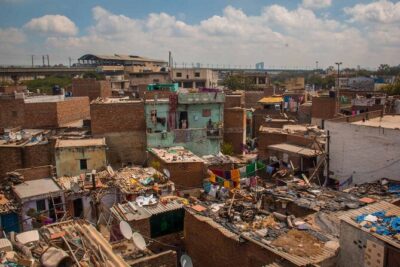
Dhobi Ghat Laundry and Dharavi Slum Tour with Local
Read our review →Browse the lists this tour appears in