
Reviewed · SLUM AND COMMUNITY TOURS
Mumbai: Dharavi Slum and Dhobi Ghat Laundry Tour
Mumbai works hard, and this tour shows you how. For about $5, you follow a local English-speaking guide through Dharavi’s small industries, see traditional washing at Dhobi Ghat, and ride a Mumbai local train for 15 minutes. I like the focus on working communities rather than postcard sights, and I like that the tour explains how people earn a living, not just where they live.
The Dharavi walking tour covers leather work, plastic recycling, and the pottery quarter of Kumbhar Wada. The Dhobi Ghat visit adds a second side of Mumbai’s working life, with clothes washed and handled by traditional methods. The main consideration is pace: three hours goes quickly, and some visitors feel the 40-minute Dhobi Ghat stop is too short for a closer look.
This is not a polished sightseeing outing. You’ll walk through narrow lanes, crowded areas, and active workspaces where photography may be limited. Go with an open mind, listen carefully, dress modestly, and remember that Dharavi is a residential neighborhood and a place of work, not a human zoo.
In This Review
- Key points before you book
- Why Dharavi deserves a closer look
- Leather, plastic, and the business of reuse
- Kumbhar Wada and Dharavi’s pottery tradition
- The 15-minute Mumbai local train ride
- Dhobi Ghat: Mumbai’s famous open-air laundry
- What guides add to the experience
- Timing, meeting points, and practical comfort
- Is the $5 price good value?
- How to behave respectfully in Dharavi
- Who should book this Mumbai tour?
- Final verdict: should you book it?
- FAQ
- How long does the tour last?
- Where does the tour start?
- Where does the tour finish?
- Is the local train ride included?
- What will I see in Dharavi?
- How much time is spent at Dhobi Ghat?
- What should I bring?
Key points before you book

- Dharavi is a working industrial community: You see leather production, plastic recycling, pottery, and other small businesses operating in a compact area.
- Kumbhar Wada adds a traditional craft stop: The pottery quarter gives the tour a link to older community life alongside newer industries.
- Dhobi Ghat handles more than 100,000 clothes daily: The visit explains washing techniques passed down through generations.
- The 15-minute train ride is part of the experience: Mumbai’s local railway gives you a quick glimpse of ordinary city movement during a busy part of the day.
- The guide makes the difference: Priti, Ruba, Subhan, Jawwad, Ansh, Sharon, and others have been praised for clear explanations, humor, patience, and care.
- The price is unusually low: At $5 per person, the tour offers strong value, though you should not expect a long private visit at every stop.
Why Dharavi deserves a closer look
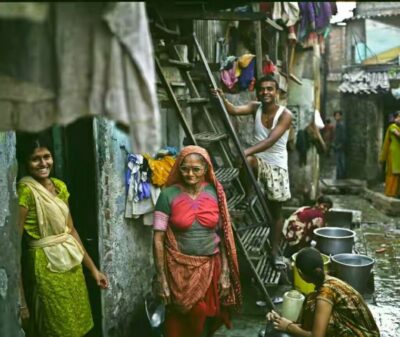
Dharavi is often reduced to one word, but this tour presents a more useful picture. It is a dense community with homes, workshops, recycling businesses, leather work, pottery, and countless forms of small-scale trade. The point is not to pretend life is easy. The point is to show the skill, enterprise, and daily effort that are easy to miss from a car window.
I like this approach because it shifts your attention from poverty alone to work. You learn how raw materials move through the neighborhood, how crafts are practiced, and how people make a living in tight quarters. That does not erase the difficult conditions, but it gives you a fuller view.
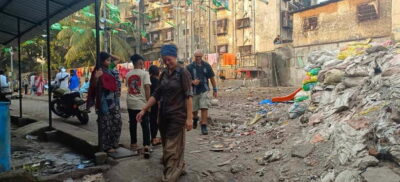
Your guide leads you on foot through narrow lanes and active work areas. Expect a lot of walking and little personal space. Cars, motorcycles, pedestrians, and workers can all share the same tight routes, so stay close to the guide and watch where you step.
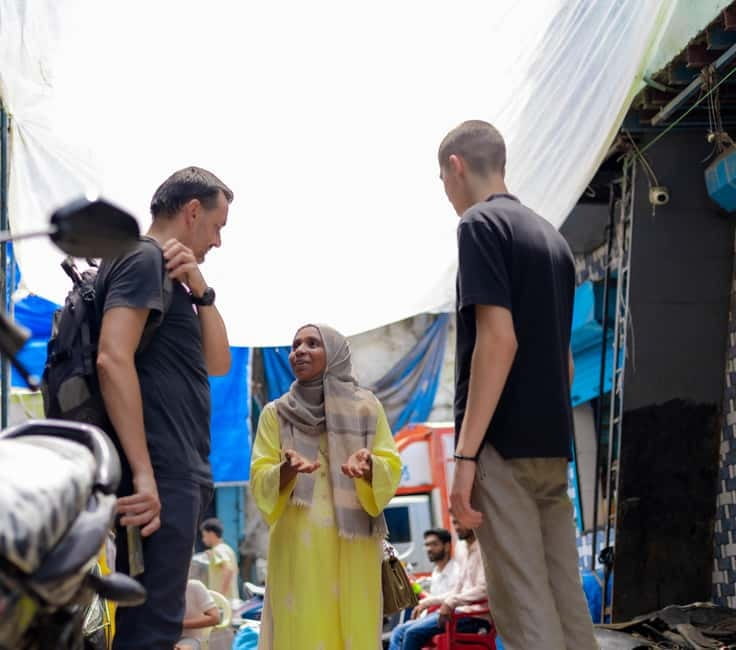
The experience is best when you ask respectful questions. Guides have explained local customs, work methods, and daily routines in clear English, and several have shared personal knowledge of the area. Ruba has been praised for making people feel safe and for explaining community life with sensitivity, while Subhan has earned strong comments for his humor, patience, and ability to answer many questions.
More Temples and Religious Sites in Mumbai
- Mumbai: Dhobi Ghat Laundry and Dharavi Slum Tour with Local
★ 5.0 · 469 reviews - Private Guided Spiritual Walk in Banganga Hindu Temples
★ 5.0 · 271 reviews - Private Combo Tours Sightseeing + Dharavi Slum + Dhobi Ghat & Dabbawalas
★ 5.0 · 245 reviews
Leather, plastic, and the business of reuse
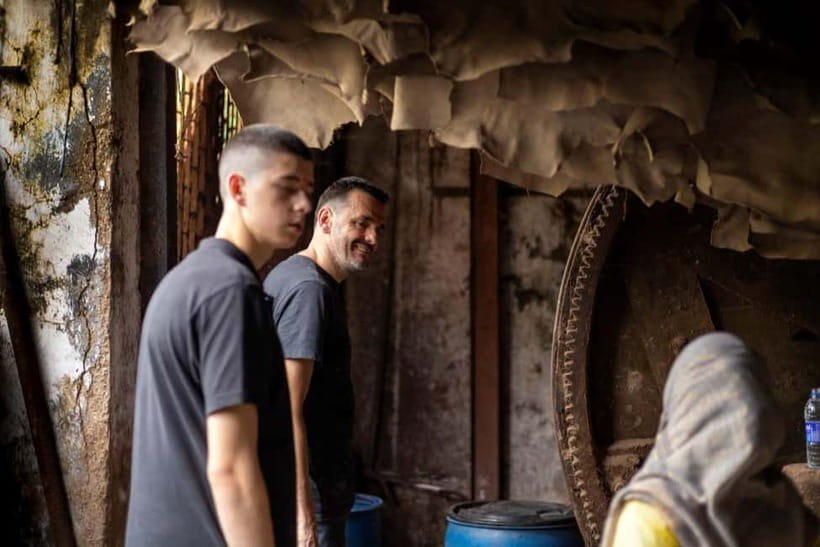
One of the most useful parts of the Dharavi visit is seeing how much activity happens behind ordinary products. The route includes a leather industry described as Asia’s largest leather factory, along with plastic recycling workshops. You’ll learn how these industries support livelihoods and how materials are handled and reused.
This is not a museum visit. You are looking at real work in real surroundings, so conditions may feel cramped, noisy, or rough around the edges. That is precisely why comfortable shoes, water, and attention to the guide matter.
The plastic recycling section helps explain Dharavi’s role in Mumbai’s wider economy. Instead of seeing discarded material as the end of a product’s life, you see how it can become part of another production cycle. Your guide can connect these local businesses to the city’s wider habit of repair, reuse, and informal enterprise.
Photography needs care here. Some parts of the tour may not allow pictures, and you should follow the guide’s instructions without argument. A camera can record a scene, but it cannot give you permission to photograph someone’s workplace or home.
Kumbhar Wada and Dharavi’s pottery tradition
Kumbhar Wada is a pottery-making community with roots reaching back generations. It offers a welcome change of pace from the recycling and leather workshops, since the focus shifts to clay, craft, and family-based production.
The stop matters because it shows that Dharavi is not defined only by newer industries. Traditional skills continue beside modern forms of recycling and manufacturing. You might see the physical spaces where pottery is made, while your guide explains how the craft fits into community life.
Do not expect a long hands-on pottery class. This is a guided look at the neighborhood and its work, not a craft workshop included in the ticket. Still, it is one of the stops that gives the walk a human scale.
For me, this is also where respectful behavior matters most. You are moving through a place where people live and work. Keep your voice low, do not enter private areas, and avoid photographing residents unless the guide clearly says it is appropriate.
The 15-minute Mumbai local train ride

The train segment is short, but it adds a lot to the experience. You ride Mumbai’s iconic local railway for about 15 minutes, seeing one of the city’s fastest and most ordinary ways to get around.
For many visitors, this is their first Indian train ride during a busy period. That can feel intense, but the guide helps organize the journey and assists with tickets. Subhan has been praised for helping with practical details, and Sharon has been noted for arranging train tickets and guiding people through the transfer.
You should expect crowds and a quick pace. Keep your belongings secure, follow the guide, and do not wander off at stations. The train is not a scenic rail excursion. Its value comes from sharing a brief slice of everyday Mumbai movement.
The ride can also reset the rhythm of the tour. After walking through Dharavi’s close lanes, you suddenly see the city in motion. It is a small but memorable contrast, and several people have described the train ride as one of the most exciting parts of the morning or afternoon.
A completely different kind of day out:
- Dharavi slum tour in Mumbai by Female tour guides of the slum
★ 5.0 · 1,976 reviews - Mumbai: Full-Day Sightseeing Tour of Mumbai
★ 4.9 · 1,822 reviews - Private Mumbai Sightseeing Tour (Traveller’s Choice Award Winner)
★ 5.0 · 1,565 reviews - Elephanta Caves & Island Guided Private Tour
★ 5.0 · 1,327 reviews
Dhobi Ghat: Mumbai’s famous open-air laundry

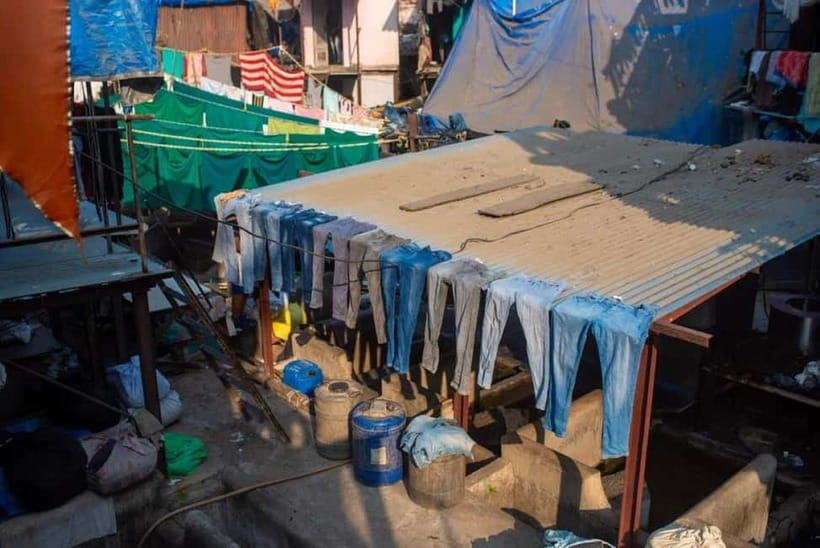
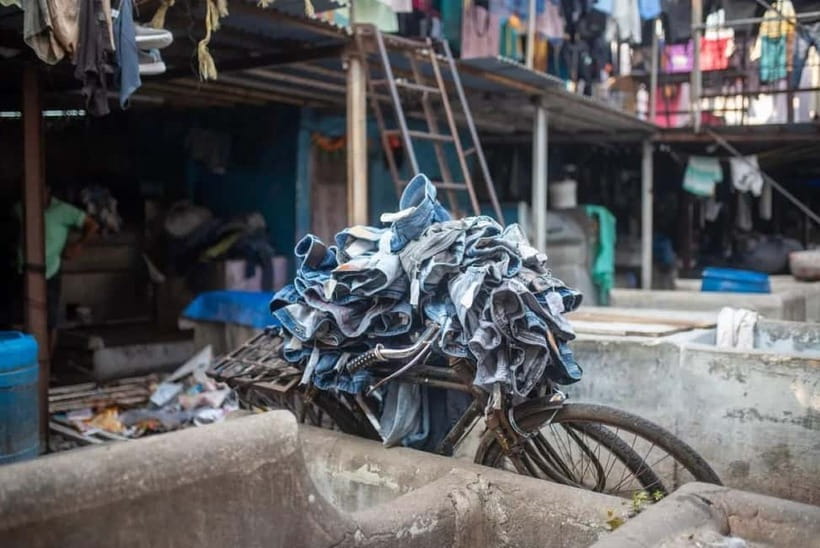
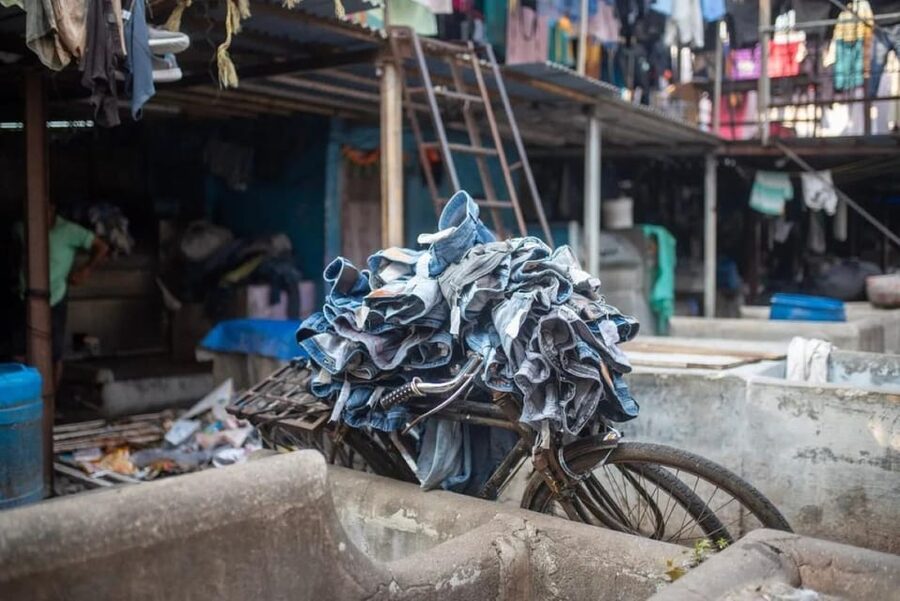
Dhobi Ghat is the tour’s most visual stop. It is known as the world’s largest open-air laundry, with more than 100,000 clothes washed daily using methods passed down over generations.
From the viewing area, you learn how the laundry process works and how traditional washing remains part of Mumbai’s working life. The guide explains the techniques and the role of the dhobis, or laundry workers, rather than leaving you to guess what you are seeing.
The scheduled visit lasts about 40 minutes. That is enough time for an explanation and a good look, but it may feel brief if you want to linger or see every part of the operation. Some people would prefer more time near the washing tanks, so keep your expectations realistic.
The exact viewing experience can depend on access and the day’s conditions. Photography may be restricted in certain areas, and you should let the guide direct you. The best souvenir here is an understanding of the labor involved, not a close-up picture of workers going about their day.
I like pairing Dhobi Ghat with Dharavi because the two stops reveal different systems of work. Dharavi shows many small industries spread through a residential district. Dhobi Ghat presents one highly recognizable service carried out on a large scale using traditional methods.
What guides add to the experience

The tour is conducted in English, and the guide’s ability to explain sensitive subjects is central to its success. A good guide can describe poverty without turning it into entertainment, explain industry without making the walk feel like a sales pitch, and keep you safe in crowded lanes.
Several guides have received especially strong praise. Ruba has been described as kind, insightful, and careful with both visitors and the communities she leads through. Priti has been praised for clear explanations and for helping people understand the shared humanity behind the working conditions.
Subhan is noted for strong English, humor, patience, and detailed explanations. Jawwad, also called Jay or Jawed in some comments, has been praised for showing the different sides of life in Dharavi and answering questions thoroughly. Other guides named positively include Ansh, Anshika, Krishna, Kavita, Ravi, Aarti, Tuba, Chirag, Roopa, and Sharon.
Guide assignments can vary, so you should not book only because you hope for one particular person. The consistent pattern is more important: clear communication, local insight, friendly help, and a respectful tone.
Timing, meeting points, and practical comfort
The tour lasts three hours. You can begin at one of the listed Third Wave Coffee meeting points, but the exact meeting option depends on the booking choice. Drop-off can be at Third Wave Coffee or Mahalaxmi Station, which gives you a useful choice at the end.
Because the route combines walking, a train ride, and more walking, wear shoes that can handle uneven surfaces. Bring water, sunscreen, and a camera, but use the camera only when permitted. Smoking is not allowed during the activity.
The tour does not include hotel pickup, hotel drop-off, food, drinks, or personal expenses. At $5, that is fair. The low price covers the guide, the walking route, the Dhobi Ghat visit, and the local train element, but you should budget separately for anything else you need.
The tour is not suitable for children under five, pregnant women, or wheelchair users. The narrow lanes, crowded spaces, and amount of walking make those restrictions understandable. If you have limited mobility or find busy public transport difficult, this probably is not the right choice.
Is the $5 price good value?
Yes, with sensible expectations. Three hours of guided access to two very different working communities, plus a local train ride, gives you more substance than many low-cost city walks.
The price also makes this a practical choice if you want to understand Mumbai beyond the Gateway of India, museums, and grand colonial buildings. You get context about work, housing, craft, transport, and community life in one compact outing.
The trade-off is depth. You will not have hours at each location, and you should not expect private access, extensive photography time, or a slow, quiet route. The Dhobi Ghat portion in particular may feel rushed if that is your main interest.
Free cancellation up to 24 hours before the start and the option to reserve now and pay later make the booking less risky. Starting times vary, so check availability carefully before choosing the day.
How to behave respectfully in Dharavi
A respectful attitude is not a minor detail here. You are entering a neighborhood where people live, work, shop, and raise families. Follow your guide’s lead and avoid treating ordinary life as a performance.
A few simple rules help:
- Dress modestly.
- Ask before taking photographs.
- Never photograph children or residents without clear permission.
- Do not block doorways or work areas.
- Stay with the guide in narrow lanes.
- Listen when photography is restricted.
- Ask questions about work and community life rather than making assumptions.
The tour can challenge the simplified images often shown on television. Dharavi contains hardship, but it also contains enterprise, skill, family life, and pride. The best experience leaves you thinking about all of those things at once.
Who should book this Mumbai tour?
I would recommend it to you if you want a direct look at the working side of Mumbai and are comfortable walking through crowded, narrow places. It suits curious adults, older children who can manage the pace, photographers willing to put the camera away when asked, and anyone interested in urban industries and local transport.
It is also a good fit for first-time visitors who want an organized introduction rather than trying to find these places alone. The guide provides context and helps with the train, which makes the experience easier to handle.
I would skip it if you want a relaxed sightseeing walk, a long photography session, or a private, polished attraction. It is also a poor match if crowds, heat, narrow lanes, or public transport cause problems.
Final verdict: should you book it?
I would book this tour if you want three purposeful hours and a very low-cost way to understand Mumbai’s working communities. The strongest parts are the guide-led explanations, Dharavi’s mix of leather, recycling, and pottery, and the contrast between that neighborhood and Dhobi Ghat’s traditional laundry system.
Go prepared for a fast pace and limited time at some stops. Wear good shoes, carry water, respect privacy, and treat the local train ride as part of the lesson rather than a bonus attraction. If you do that, this is an unusually good-value introduction to a side of Mumbai that standard sightseeing rarely explains.
FAQ
How long does the tour last?
The tour lasts three hours, including the Dharavi walk, the 15-minute local train ride, and the Dhobi Ghat visit.
Where does the tour start?
The listed starting location is Third Wave Coffee, with two starting options shown under that name. The exact meeting point can vary according to the option booked.
Where does the tour finish?
Drop-off is available at Third Wave Coffee or Mahalaxmi Station, depending on the selected option.
Is the local train ride included?
Yes. The experience includes a 15-minute ride on Mumbai’s local train, and the guide assists with the train portion.
What will I see in Dharavi?
The tour includes local industries such as leather work and plastic recycling, along with the pottery-making community of Kumbhar Wada. Your guide also explains community life and daily work.
How much time is spent at Dhobi Ghat?
The Dhobi Ghat visit and guided explanation are scheduled for about 40 minutes.
What should I bring?
Bring comfortable walking shoes, water, sunscreen, and a camera. Photography may be restricted in some areas, so follow the guide’s instructions.
More Community Tours in Mumbai
- Mumbai: Dharavi Slum, DhobiGhat, and Dabbawallas Tour
★ 4.9 · 689 reviews - Dharavi Slum Tour
★ 5.0 · 625 reviews - Dharavi Slum tour in Mumbai by local resident
★ 5.0 · 572 reviews - Mumbai: Dharavi Slum Slumdog Millionaire Tour with a Local
★ 4.9 · 529 reviews
Just added in Mumbai
- Mumbai Airport to Mumbai Hotels : Private Transfers★ 5.0 · 13 reviews
- Mumbai Sightseeing Tour★ 5.0 · 11 reviews
- Mumbai 800 Year Worli Village: Talking Goddess, Old Fort & more★ 5.0 · 94 reviews
- Customize private tour with pickup★ 5.0 · 95 reviews
- Mumbai Spice Markets and Bazaars Tour with Guide and Transport★ 5.0 · 42 reviews
- Gufran’s Slum Home Tour in the Mumbai Slums★ 5.0 · 19 reviews
- Private Guided Bandra Half Day City Tour in AC Vehicle★ 5.0 · 72 reviews
- The Famous Bollywood Tour of Mumbai★ 5.0 · 97 reviews
Slum and Community Tours, compared.
Dharavi slum tour in Mumbai by Female tour guides of the slum
Read our review →

Dharavi Slum Slumdog Millionaire Tour with a Local
Read our review →
Mumbai Slum Tour – Visit Dharavi Slum with Local Guide
Read our review →
Dhobi Ghat Laundry and Dharavi Slum Tour with Local
Read our review →Browse the lists this tour appears in