
Reviewed · SLUM AND COMMUNITY TOURS
Mumbai: Dharavi Slum Walking Tour with Local Slum Dweller
Look past the movie and meet the neighborhood.
This Dharavi walking tour gives you a grounded look at one of Mumbai’s most misunderstood communities. With a resident guide, you walk through narrow lanes, small workshops, markets, homes, schools, and places of worship while learning how people live and earn a living here. The focus is on local voices and everyday work, not a quick photo stop.
I like the way the tour shows Dharavi as a working community rather than a place defined only by poverty. I also like the chance to visit a potter’s workshop or share a vegetarian meal with a local family. The main consideration is that this is a close, personal look at crowded living conditions and working areas, so you need to arrive with respect, patience, and an open mind.
In This Review
- Key points about the Dharavi walking tour
- Why Dharavi deserves a closer look
- Meeting your guide at Third Wave Coffee
- The first walk through Dharavi’s lanes
- The Slumdog Millionaire filming location
- Recycling, markets, and practical ingenuity
- Pottery at a Kumbharwade workshop
- A vegetarian lunch with a local family
- The personal side of the guiding
- Is $14 good value?
- What to wear and carry
- Who should book this Dharavi tour?
- Should you book it?
- FAQ
- Where does the Dharavi walking tour start?
- Where does the tour end?
- What does the tour include?
- Is lunch included?
- Can I make pottery during the tour?
- What should I bring?
- What language is the tour in?
- Can I cancel the booking?
Key points about the Dharavi walking tour
- Local guides make the difference: Guides such as Abhishek, Bharti Dharavi, Dhruvesh, Rakesh, and Hardik Tank are praised for their warmth, care, and detailed explanations.
- Dharavi is a place of work: You see leather workshops, soap makers, dye businesses, bakeries, recycling activity, markets, schools, hospitals, and homes.
- Recycling is central to the visit: The tour explains how plastic and vegetable oil cans are reused in clever and practical ways.
- You can add a hands-on activity: The pottery option includes a lesson and time at the wheel to make a piece of Kumbharwade art.
- Lunch offers a more personal ending: The optional vegetarian meal takes place with a local family, sitting on the floor and eating with your hands.
- It costs $14 per person: That is a low price for a guided community visit, though lunch and pottery depend on the option you select.
Why Dharavi deserves a closer look
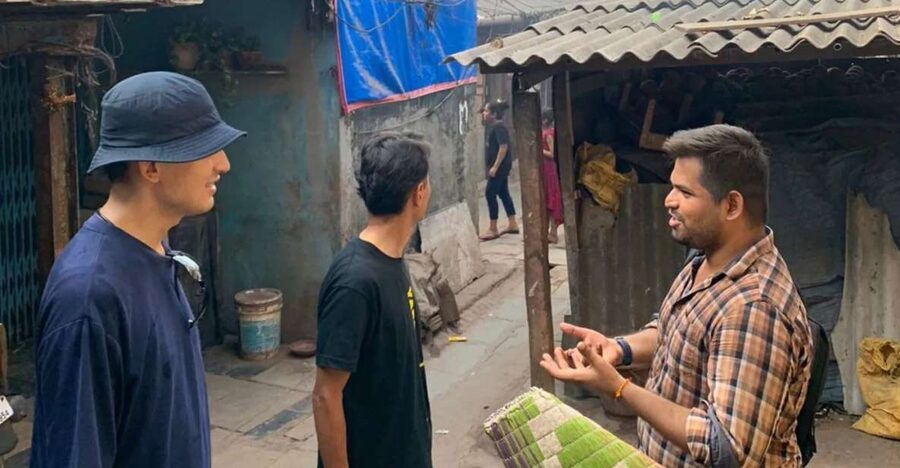
Dharavi is often reduced to a single word: slum. That label misses much of what you see here. This is also a dense residential area, a place of trade, a network of small businesses, and a community where people make things, repair things, recycle materials, and support one another.
The tour helps you replace a simple image with a more useful understanding. Dharavi’s economic output is estimated at about $1 billion a year, with much of that activity linked to informal recycling. The figure matters because it shows the scale of work taking place behind the modest walls and narrow lanes.
You will not see a polished tourist district. You will see people working in small spaces, often with limited room and basic tools. That can be confronting, but it is also why the visit has value. You are not simply looking at hardship. You are seeing skill, enterprise, cooperation, and resourcefulness in daily use.
The best approach is to treat the neighborhood as a real place where people live and work, not as a backdrop. Your guide helps with that. The strongest part of the experience is the chance to ask questions and hear explanations from someone with a direct connection to Dharavi.
More Walking Tours in Mumbai
- Group Guided Walking Tour in Fort and Colaba
★ 5.0 · 1,073 reviews - Private Guided Walking Tour in Fort & Colaba
★ 5.0 · 895 reviews - Private Guided Walking Tour in Bandra Queen of Suburbs
★ 5.0 · 383 reviews
Meeting your guide at Third Wave Coffee
The meeting point is Third Wave Coffee. From there, you begin on foot with an English-speaking guide and return to the same meeting point at the end.
The simple arrangement is useful in a city as busy as Mumbai. You do not need to work out a complicated sequence of local transfers during the activity, and the return to the starting point makes the tour easier to fit into a day of sightseeing. The exact tour duration is not provided, so leave enough open time around it rather than scheduling another fixed appointment too tightly.
The guide is the key to the whole visit. Abhishek is praised for making people feel safe and welcome while explaining the area clearly. Bharti Dharavi is described as warm and generous with her time. Dhruvesh is praised for being polite and respectful, while Rakesh is remembered for making the visit especially enlightening.
Hardik Tank also receives unusually strong praise for the way he handles the tour. Although he is only 18, he is described as offering thoughtful views about Dharavi, India, and the wider world. He was also careful not to disturb workers and residents, which is exactly the attitude you want in a residential area.
Guide assignments can vary, so you should not book on the assumption that one particular person will lead your visit. Still, these individual accounts point to an important strength: the tour depends on people who know the area personally and can explain it with feeling rather than a memorized script.
The first walk through Dharavi’s lanes
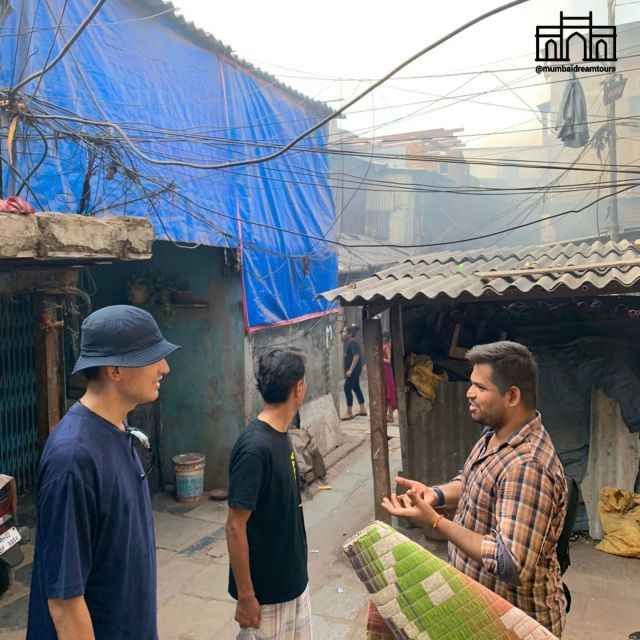
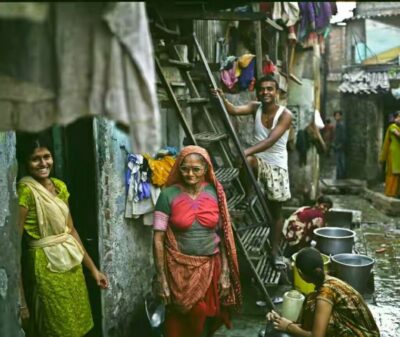
The route takes you into the smaller alleyways where homes and businesses sit close together. You pass bakeries, schools, hospitals, and houses, gaining a sense of how many parts of ordinary life fit into a compact area.
This is where the tour challenges your first impressions. From the outside, the lanes can seem cramped and confusing. With a local guide beside you, they become easier to understand as connected streets serving residents, workers, customers, children, and families.
You may notice how little space some businesses need to operate. The tour points out items made in tiny workshops, including leather goods and other products produced in Dharavi. These are not large factories. They are small operations that make use of every available corner.
The leather workshops are one of the more memorable stops. You learn how a familiar product can pass through a local production chain before reaching a shop elsewhere in Mumbai or beyond. The value here is not just seeing the work. It is understanding the skills and labor behind goods that you might otherwise view only as finished products.
The route also includes soap manufacturers and colored dye makers. These stops broaden the picture. Dharavi is not dependent on one single trade, and the tour gives you a look at several kinds of small-scale industry in one neighborhood.
The Slumdog Millionaire filming location
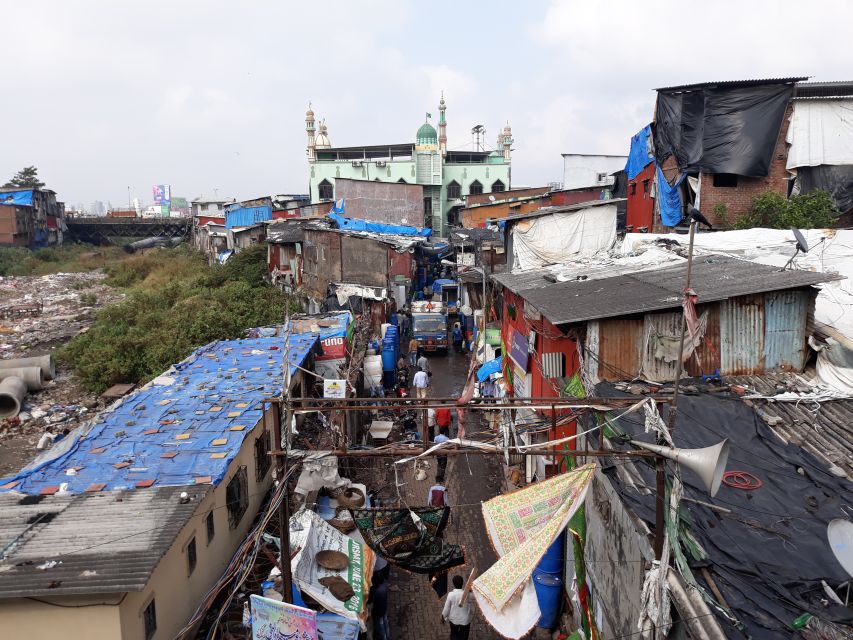
The tour includes the place where Slumdog Millionaire was shot. For many people, that is the initial reason Dharavi appears on a Mumbai itinerary.
It is a useful reference point, but it should not become the whole visit. The film gave Dharavi worldwide attention, yet the community existed long before the cameras arrived and continues to function as a home and workplace afterward. Seeing the filming location can connect the neighborhood to something familiar, but the local stories and working areas are more important.
I would treat this stop as a brief piece of context rather than the main attraction. If you arrive expecting a movie set or a staged scene, you may be disappointed. If you arrive ready to see the real streets and listen to residents, it fits naturally into the wider walk.
A completely different kind of day out:
- Dharavi slum tour in Mumbai by Female tour guides of the slum
★ 5.0 · 1,976 reviews - Mumbai: Full-Day Sightseeing Tour of Mumbai
★ 4.9 · 1,822 reviews - Private Mumbai Sightseeing Tour (Traveller’s Choice Award Winner)
★ 5.0 · 1,565 reviews - Elephanta Caves & Island Guided Private Tour
★ 5.0 · 1,327 reviews
Recycling, markets, and practical ingenuity
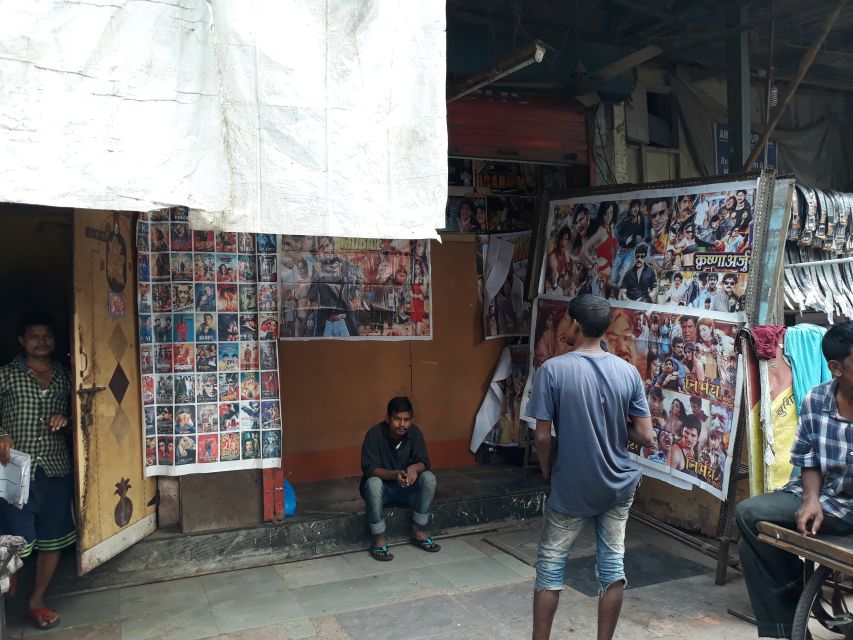
The market area gives the tour another change of pace. Your guide explains how trade works locally and why recycling is so important to the community.
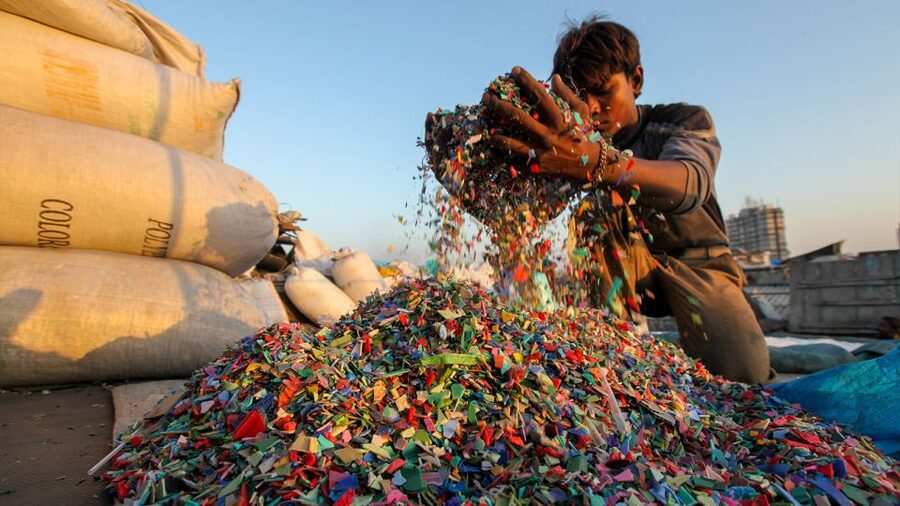
Plastic recycling receives special attention. You learn how discarded materials are collected and processed rather than simply thrown away. The tour also shows how vegetable oil cans can be recycled in inventive ways. These examples make an abstract environmental idea easy to understand because you see reuse happening at the neighborhood level.
This part of Dharavi is especially useful if you want to understand the connection between environmental work and household income. Recycling is not presented only as a green ideal. It is also part of the local economy and a source of practical value.
The visit may challenge the way you think about waste. Items that seem finished in one setting can become useful materials in another. That resourcefulness is one of the clearest lessons of the tour, and it comes across better in a workshop or market than in a museum display.
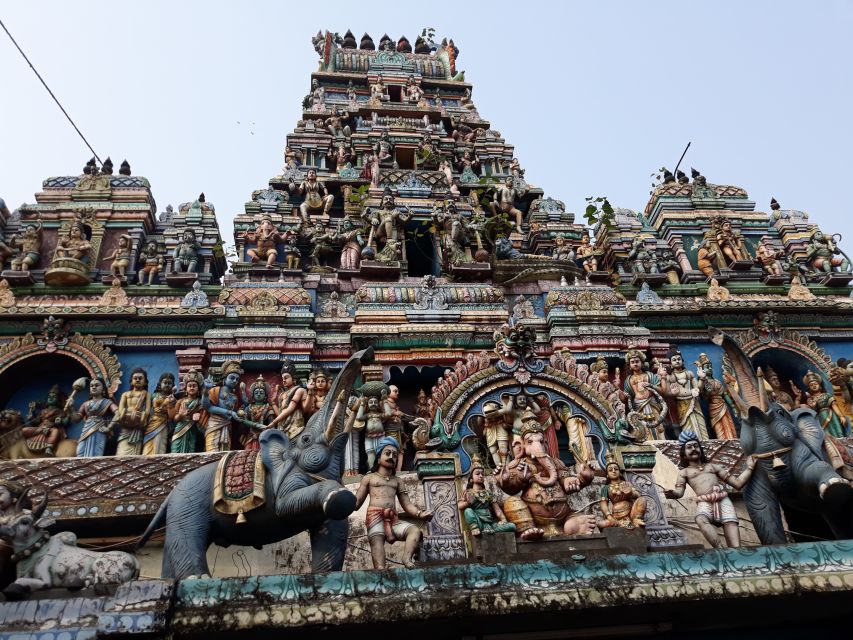
There are also moments that show cooperation between different religious communities. One example involves Muslims making a shrine for Hindus. It is a small scene, but it gives the tour a human dimension that statistics and industry cannot provide.
Pottery at a Kumbharwade workshop
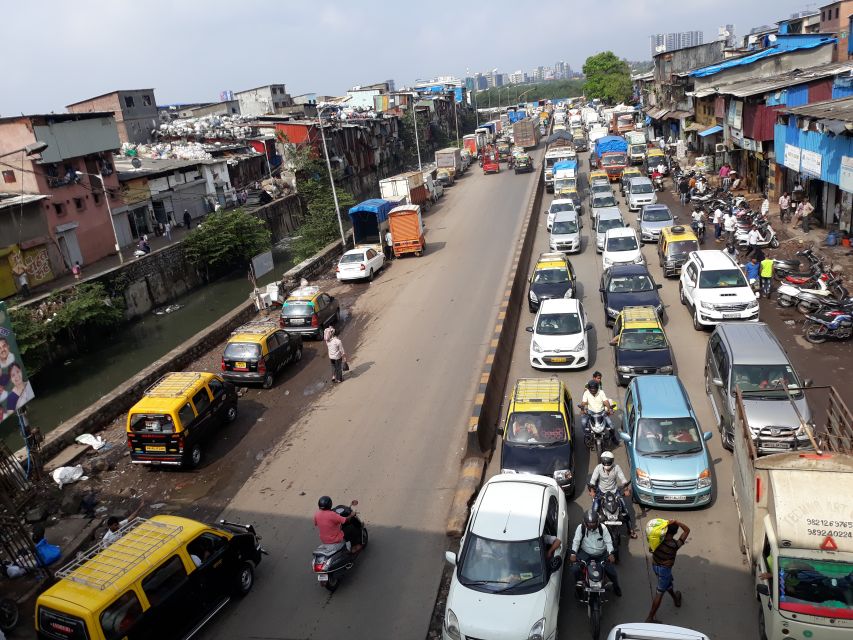
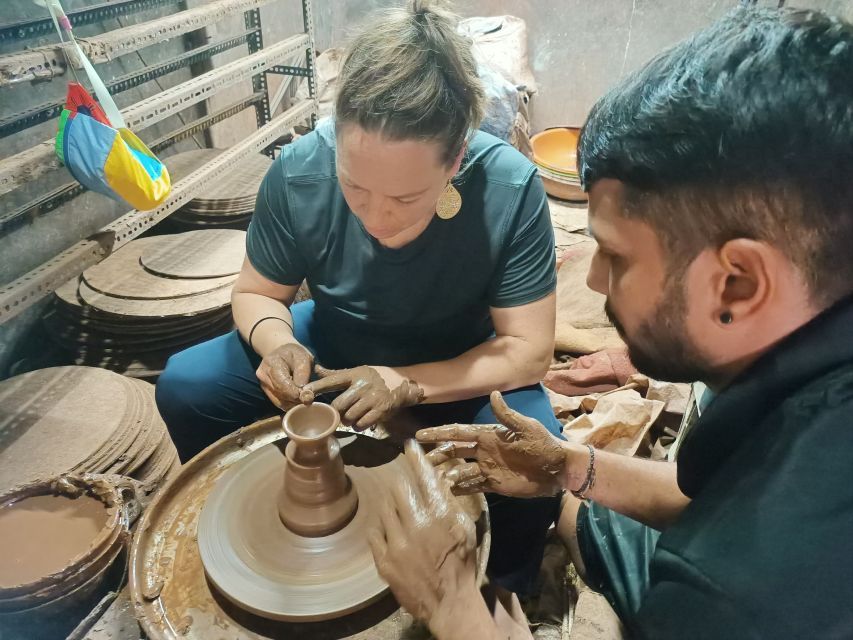
If you choose the pottery option, you visit a local potter’s workshop and receive a general introduction to the craft. You then have a chance to use a wheel and make your own piece of Kumbharwade art.
This is a good add-on for anyone who prefers doing something rather than only watching. Pottery also gives you a direct feel for the patience and control required to produce an everyday object. The clay may not behave perfectly on your first attempt, which is part of the fun.
You should choose this option if you want a slower, hands-on part of the experience. It is less suitable if your main aim is to cover as much of Dharavi as possible or spend more time asking questions during the walking route.
The activity also gives a respectful reason to enter a local workshop. You are not simply looking around for a few seconds. You are meeting a craftsperson, learning the basic process, and taking part in the work.
A vegetarian lunch with a local family
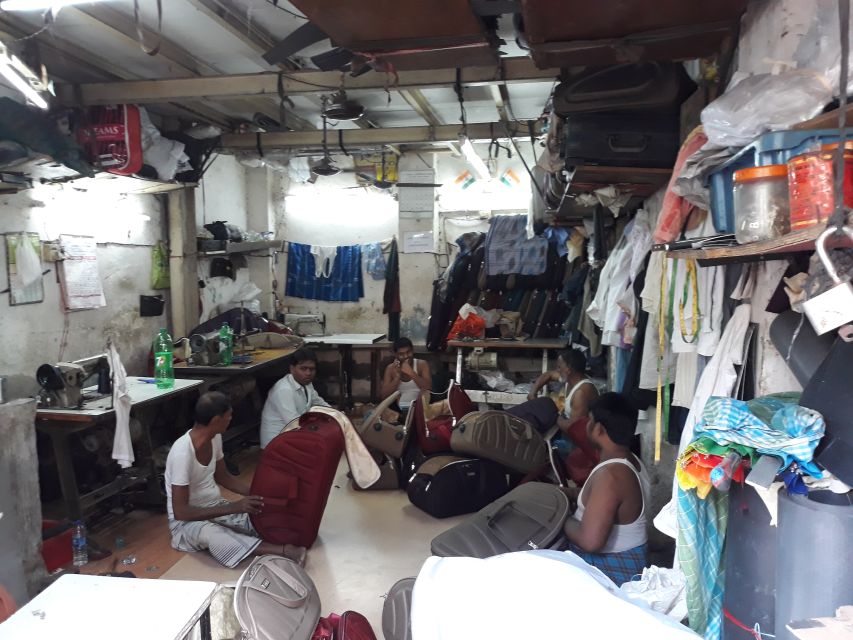
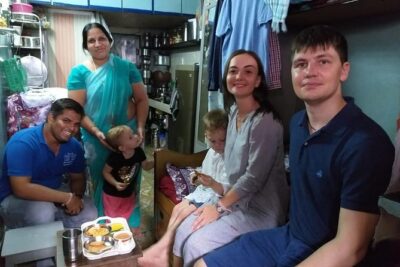
The other optional addition is a vegetarian lunch with a local family. You eat in a traditional, informal way, sitting on the floor and using your hands.
This is likely to feel more personal than a standard restaurant meal. It gives you time to slow down and share a domestic setting instead of moving from one sight to the next. For many people, that human contact is the most memorable part of the visit.
At the same time, you should choose it only if you are comfortable entering a family home and adapting to local customs. The point is not restaurant comfort or a long menu. It is a simple meal and a chance to spend time with residents.
Do not assume the lunch is included with every booking. Food depends on the option selected, so check the exact choice before you pay. Water is included with the tour, but the meal itself is not part of every version.
The personal side of the guiding

A good Dharavi tour needs more than facts. It needs tact. You are walking through someone’s home area, and the guide must help you observe without turning residents into scenery.
The strongest guide accounts show this personal care. Abhishek invited visitors to see his home and meet his family, creating a much more direct connection to the place. Hardik was careful not to disturb people at work and even bought a sugarcane lemon juice for a young girl, a small gesture that left a lasting impression.
Those moments are not guaranteed parts of the route, and you should not expect every guide to invite you into a private home. Still, they show how much the tone of the guide matters. A respectful guide can help you ask better questions, understand what you are seeing, and avoid treating the area like a spectacle.
You should also follow your guide’s lead around photography and personal interaction. Ask before photographing people, homes, or workers, and remember that a friendly welcome does not remove the need for courtesy.
Is $14 good value?
At $14 per person, this is inexpensive for a guided walking experience in Mumbai. The price includes the guide, the Dharavi walk, and water. It does not automatically include both pottery and lunch, so the value depends on the option you choose.
The basic tour is worthwhile if you want context and access that would be difficult to gain by walking through the area alone. A local guide explains what different workshops do, why recycling matters, and how the neighborhood functions as a place of work and residence.
The pottery option adds value through participation. The lunch option adds value through personal contact and time spent with a family. Neither is simply an extra sightseeing stop, so the better choice depends on what you want from the day.
A full refund is available if you cancel at least 24 hours ahead, and you can reserve now and pay later. Those terms are helpful if your Mumbai schedule is still changing. Still, the important value is not the flexibility. It is the chance to see a part of the city in a more honest and detailed way than a passing drive-by can provide.
What to wear and carry
Wear closed-toe shoes. The walk takes place through working lanes, and sensible footwear is more useful than sandals or dress shoes.
Bring a scarf as recommended. You should also carry a respectful attitude and be ready for close quarters. The tour is conducted in English, so you need to be comfortable asking and understanding questions in that language.
Because the route includes homes, workshops, markets, and public areas, dress modestly and keep your clothing practical. That advice is especially useful when the optional lunch or a visit to a family home is part of your plan.
Who should book this Dharavi tour?
I would recommend this experience to you if you want to understand how ordinary people live and work in Mumbai beyond the city’s famous landmarks. It suits curious visitors who like meeting local people, asking questions, and seeing small businesses at close range.
It is also a good choice if you are interested in recycling, informal economies, community life, or handmade production. The leather workshops, pottery, soap making, dye work, and market activity give the tour plenty of substance.
You may want to skip it if you are looking for a polished sightseeing route, a quiet walk, or a conventional museum-style presentation. Dharavi can be crowded and confronting, and the experience asks you to think carefully about poverty, privacy, and the ethics of visiting a residential area.
The tour is also best for people who can accept that the guide controls the pace and the access. You are visiting a living community, not a set of exhibits arranged for visitors.
Should you book it?
Book this Dharavi walking tour if you want a personal, locally guided look at Mumbai’s working life and are ready to leave easy assumptions behind. At $14, the basic visit offers strong value, especially because it includes a resident guide who can explain what you are seeing from direct experience.
Choose pottery if you want to work with your hands. Choose lunch if you want more time with a family and feel comfortable eating in a simple home setting. Either option adds a more personal note, but the walking route itself is the essential part.
I would make this a thoughtful addition to a Mumbai itinerary, not because it is easy or glossy, but because it shows skill, enterprise, recycling, and community in places many visitors would otherwise never understand.
FAQ
Where does the Dharavi walking tour start?
You meet your English-speaking guide at Third Wave Coffee.
Where does the tour end?
The activity ends back at the meeting point.
What does the tour include?
The tour includes the Dharavi walking tour, an English-speaking guide, and water. Vegetarian lunch and the pottery workshop depend on the option selected.
Is lunch included?
Lunch is included only with the option that specifically includes a vegetarian meal with a local family. Food is not included in every version of the tour.
Can I make pottery during the tour?
Yes, if you choose the pottery option. You receive an overview of pottery making, try using a wheel, and make a piece of Kumbharwade art.
What should I bring?
Bring a scarf and wear closed-toe shoes.
What language is the tour in?
The tour is conducted in English.
Can I cancel the booking?
You can cancel up to 24 hours in advance for a full refund. You can also reserve and pay later.
More Community Tours in Mumbai
- Mumbai: Dharavi Slum, DhobiGhat, and Dabbawallas Tour
★ 4.9 · 689 reviews - Dharavi Slum Tour
★ 5.0 · 625 reviews - Dharavi Slum tour in Mumbai by local resident
★ 5.0 · 572 reviews - Mumbai: Dharavi Slum Slumdog Millionaire Tour with a Local
★ 4.9 · 529 reviews
Just added in Mumbai
- Mumbai Airport to Mumbai Hotels : Private Transfers★ 5.0 · 13 reviews
- Mumbai Sightseeing Tour★ 5.0 · 11 reviews
- Mumbai Spice Markets and Bazaars Tour with Guide and Transport★ 5.0 · 42 reviews
- Mumbai 800 Year Worli Village: Talking Goddess, Old Fort & more★ 5.0 · 94 reviews
- Customize private tour with pickup★ 5.0 · 95 reviews
- Gufran’s Slum Home Tour in the Mumbai Slums★ 5.0 · 19 reviews
- Private Guided Bandra Half Day City Tour in AC Vehicle★ 5.0 · 72 reviews
- The Famous Bollywood Tour of Mumbai★ 5.0 · 97 reviews
Slum and Community Tours, compared.
Dharavi slum tour in Mumbai by Female tour guides of the slum
Read our review →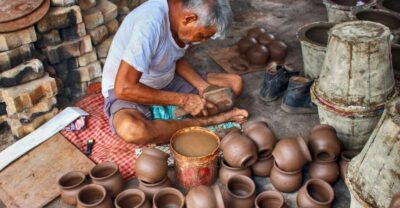
Dharavi Slum Slumdog Millionaire Tour with a Local
Read our review →
Mumbai Slum Tour – Visit Dharavi Slum with Local Guide
Read our review →
Dhobi Ghat Laundry and Dharavi Slum Tour with Local
Read our review →Browse the lists this tour appears in