
Reviewed · SLUM AND COMMUNITY TOURS
Mumbai Dharavi Slum, Dhobi Ghat & Dabbawala Lunchbox Tour
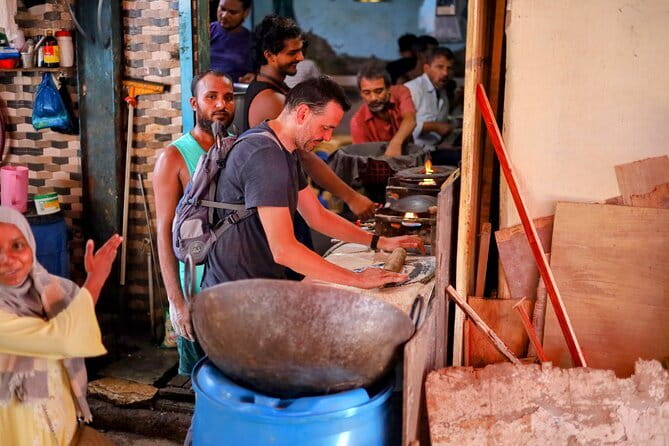
Mumbai works by human systems. This tour shows you three of them, from lunchbox delivery to laundry and neighborhood industry. I like the small-group limit of 15 and the chance to see places that are difficult to understand on your own. I also like that guides such as Javed and Subhan focus on how Mumbaikers live and work, not just on photo stops. The main consideration is that Dharavi is a working residential area, so you should expect a serious, respectful walk rather than a light sightseeing outing.
The tour lasts about three and a half hours and costs $18.33 per person. That is strong value for a guided route with transport, bottled water, and taxes included. Still, the price does not include alcohol, and no separate meal is listed, so do not assume the lunchbox theme means lunch is served.
In This Review
- Key points to know before booking
- Why this three-stop Mumbai route works
- Starting with Mumbai’s dabbawala system
- Dhobi Ghat in 35 minutes
- Dharavi, approached as a living neighborhood
- What the guides add to the experience
- Transport, meeting point, and the final stop
- Is $18.33 good value?
- Who should book this tour?
- Should you book the Mumbai Dharavi, Dhobi Ghat, and Dabbawala tour?
- FAQ
- How long does the Mumbai tour last?
- What time and where does the tour start?
- Where does the tour finish?
- Is transportation included?
- Is food included in the tour?
- What is the cancellation policy?
Key points to know before booking
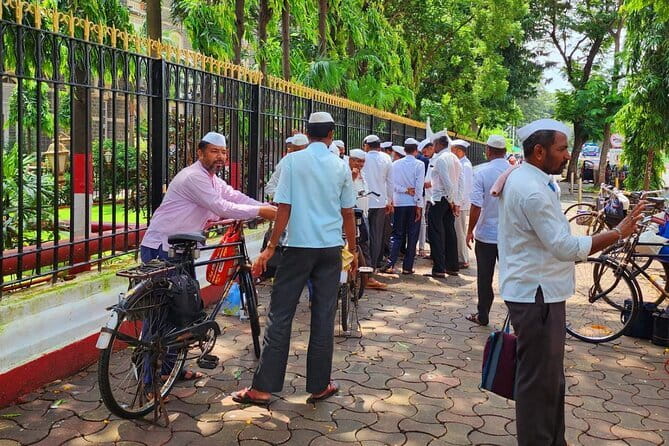
- Three working institutions in one afternoon: See the dabbawala delivery network, Dhobi Ghat, and Dharavi in a single route.
- A small group capped at 15: You get more room to hear the guide and ask questions than on a large bus outing.
- Dabbawala insight starts at a tribute statue: The first stop lasts about 40 minutes and explains Mumbai’s famous lunchbox carriers.
- Dhobi Ghat is a short but memorable stop: Allow about 35 minutes to see the open-air laundry and its daily rhythm.
- Dharavi takes the largest share of the tour: The final stop lasts about 1 hour and 15 minutes and is led by a local guide.
- Convenient finish near Mahim Station: The tour ends at Third Wave Coffee opposite Mahim Railway Station, with help available for your onward journey.
Why this three-stop Mumbai route works
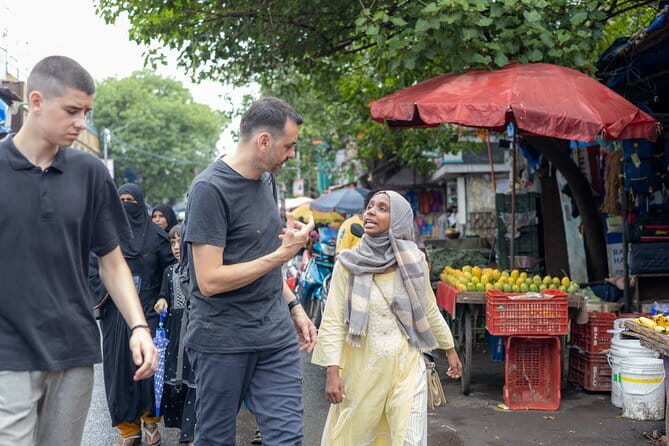
Mumbai can feel like several cities packed into one. Office workers move through the rail network, families run small businesses from tight neighborhoods, and old trades continue beside new commercial districts. This tour gives you a way to connect those pieces.
The three stops are not major monuments. That is the point. You are looking at systems that keep the city fed, clothed, and employed. The dabbawalas handle lunchboxes, Dhobi Ghat handles laundry, and Dharavi contains homes, workshops, and small-scale industry.
I think the route works best if you want context rather than a checklist. You will not spend the afternoon admiring grand architecture. You will spend it watching work happen and asking how ordinary city life is organized.
The timing also makes sense. You meet at 11:30 a.m. outside the Burger King Express Building near Churchgate Railway Station. From there, transportation used during the tour is included, so you do not need to arrange separate rides between all three areas.
More Temples and Religious Sites in Mumbai
- Mumbai: Dhobi Ghat Laundry and Dharavi Slum Tour with Local
★ 5.0 · 469 reviews - Mumbai: Dharavi Slum and Dhobi Ghat Laundry Tour
★ 5.0 · 317 reviews - Private Guided Spiritual Walk in Banganga Hindu Temples
★ 5.0 · 271 reviews
Starting with Mumbai’s dabbawala system
The first stop is the Dabbawala Tribute Statue, where you spend about 40 minutes learning about Mumbai’s lunchbox delivery network. For more than 130 years, dabbawalas have carried home-cooked meals across the city and returned the empty boxes. Their work is famous for its scale and precision, but the useful part of this stop is seeing it as a daily service rather than a business-world curiosity.
Your guide explains how the system operates and how it fits into local routines. The experience can include contact with workers, giving you a more direct sense of the people behind the colored lunchboxes and railway-linked delivery routes.
This stop is especially good for understanding why Mumbai’s transport network matters so much. A lunchbox may begin in one neighborhood, travel through the city, and reach an office worker far away. The dabbawala system depends on coordination, timing, and repeated human effort.
Javed received particularly strong praise for explaining local routines and showing how the lunchbox network works. His approach is useful if you want more than a few fun facts. Subhan was also praised for making the group feel comfortable while sharing stories and local insight.
One practical note: the tour title includes lunchbox, but the listed inclusions do not promise a meal. You should treat this as a dabbawala lesson, not a lunch stop.
Dhobi Ghat in 35 minutes
Next comes Dhobi Ghat, described as the world’s largest open-air laundry. You have about 35 minutes here, enough to take in the rows of washing areas and learn how the dhobis clean large amounts of clothing by hand.
This is a working place, not a staged cultural display. That distinction matters. The value comes from watching a trade operate in its real setting, with the noise, movement, and repeated tasks that make up the job.
The stop is short, so your guide’s explanation is important. Without context, Dhobi Ghat can look like a striking series of concrete washing bays and lines of clothing. With context, you begin to see how laundry forms part of the city’s service economy and how many households and businesses depend on this work.
There is also a practical limit. Thirty-five minutes will not give you a complete picture of every part of the laundry operation. You are getting an introduction and an observation point, not an extended workshop visit.
I like this stop because it balances the dabbawala segment. The first stop deals with moving meals through Mumbai. This one deals with cleaning what people wear. Both show how the city relies on specialized workers whose jobs are easy to overlook.
Dharavi, approached as a living neighborhood
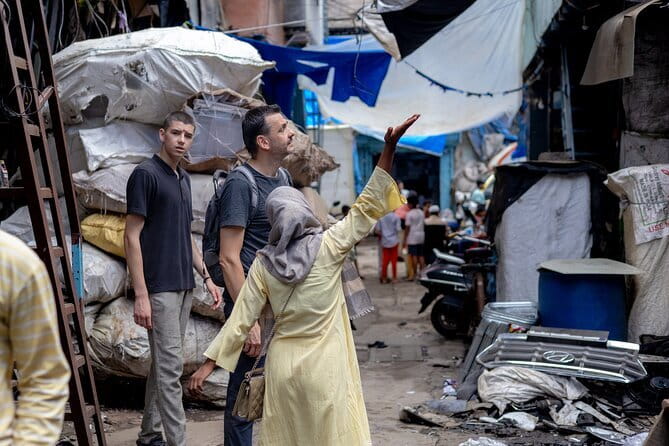
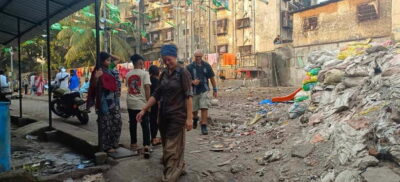
The final and longest stop is Dharavi, with about 1 hour and 15 minutes set aside. Dharavi is often described only through the word slum, but that label leaves out much of what you need to understand. It is also a residential area and a place where people work, trade, and run small businesses.
The tour presents Dharavi through a local guide who knows the community. That local connection matters because the area is difficult to interpret from outside. You need help understanding what you are seeing and how residents make a living there.
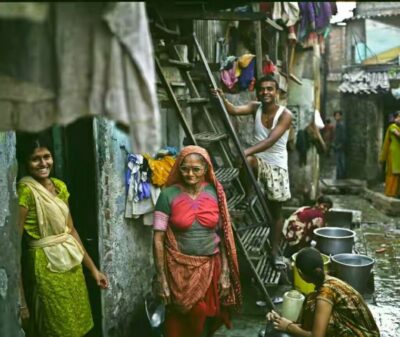
You might see a dense mix of homes, workshops, and commercial activity. The exact route and encounters can vary, but the stated focus is on daily life, industry, resilience, and the people who call the neighborhood home.
I would approach this section with care. Dharavi is not a backdrop for poverty photographs. You should listen, follow the guide’s instructions, and avoid treating homes or workers as entertainment. The best experience comes from paying attention to the skills, effort, and enterprise within the neighborhood.
This is also the part most likely to challenge your expectations. You may find the conditions hard to see, but you will also see a community that functions through work and cooperation. The guide’s role is to provide a fuller picture than a quick drive past the area could offer.
Javed’s ability to explain how locals live and work was a major strength. Subhan was praised for his warm manner, professionalism, and care. Those qualities matter most in Dharavi, where a guide needs both local understanding and good judgment.
A completely different kind of day out:
- Dharavi slum tour in Mumbai by Female tour guides of the slum
★ 5.0 · 1,976 reviews - Mumbai: Full-Day Sightseeing Tour of Mumbai
★ 4.9 · 1,822 reviews - Private Mumbai Sightseeing Tour (Traveller’s Choice Award Winner)
★ 5.0 · 1,565 reviews - Elephanta Caves & Island Guided Private Tour
★ 5.0 · 1,327 reviews
What the guides add to the experience
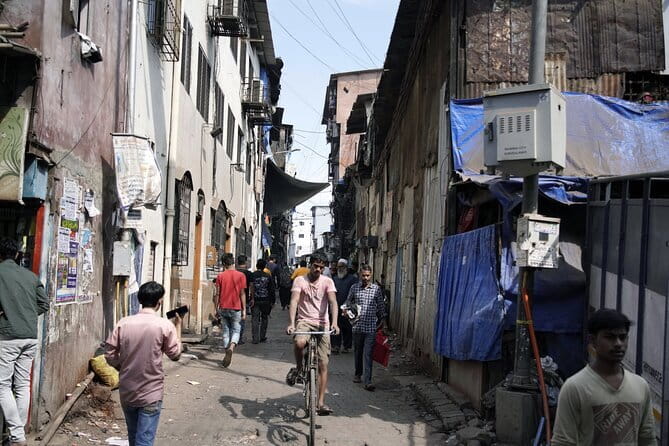
A tour like this depends heavily on the guide. The three locations are valuable, but they can feel disconnected if nobody explains how they fit into Mumbai.
Javed appears especially suited to visitors who want practical details about daily routines. His explanations cover the dabbawalas, Dhobi Ghat, Dharavi, and even local trains, which helps connect the stops to the wider city.
Subhan brings a more personal, welcoming style. If you are nervous about entering unfamiliar parts of Mumbai, a guide who makes you feel at ease can change the entire afternoon.
You should not expect a formal lecture. The appeal is the chance to ask questions as you move through the city. You can ask about work, transport, neighborhood life, or how these services fit into the routines of Mumbaikers.
The group limit of 15 supports that style. It is not a private tour, but it is small enough for the guide to keep the group together and respond to questions. If you prefer complete independence, this will feel structured. If you want access and explanation without arranging everything yourself, the format is useful.
Transport, meeting point, and the final stop

The tour begins at 11:30 a.m. at the Burger King Express Building near Churchgate Railway Station, at No. 14E, IMC Marg. The meeting point is opposite Churchgate, so check the exact location before setting out and allow time to find the building.
Transportation used during the tour is included, along with bottled water and all fees and taxes. That removes some of the friction of crossing Mumbai between three separate areas. You do not need to bargain for a taxi after every stop or work out the route alone.
The tour ends at Third Wave Coffee on Tip Road, directly opposite Mahim Railway Station. This is a practical finish because you can continue by train or arrange another ride from a clear landmark. The guide can assist you in returning to your hotel or reaching your next destination.
The end point is not near Churchgate, so plan your day around the final location. If you have an evening booking in South Mumbai, allow time to travel back. If you are heading north or continuing through Mahim, the finish is more convenient.
Is $18.33 good value?
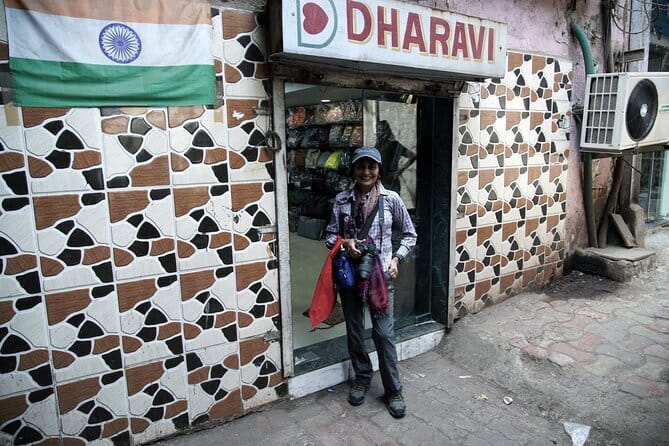
At $18.33 per person, I consider this an excellent value for a guided introduction to three difficult-to-arrange places. The fee includes transport, bottled water, and taxes, and the tour runs for roughly three and a half hours.
The strongest value comes from access. You could see Dhobi Ghat from outside, hear about dabbawalas in a book, or pass Dharavi by train. You would not get the same explanations or local connections. The guide handles the route and introduces the people and places that are hard to find on your own.
The price is also reasonable for a small group capped at 15. It is not a private experience, but you are unlikely to be one face in a huge crowd.
There are limits. No meal is included in the stated package, so bring your own plan for food before or after the tour. Alcoholic drinks are specifically excluded, though that is hardly the reason to book this particular outing.
Group discounts may be available, which can make the cost even more attractive if you are traveling with family or friends.
Who should book this tour?
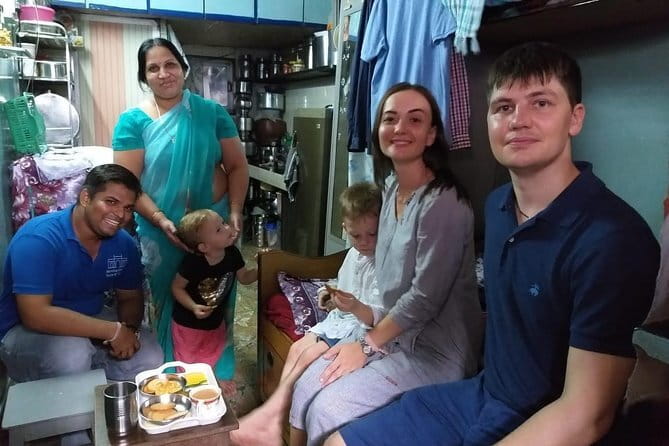
I would choose this tour if you want to understand Mumbai through its people and working systems. It suits first-time visitors who want a safe, organized introduction to parts of the city they might not reach alone.
It is also a good fit for repeat visitors who have already seen the Gateway of India, Marine Drive, and the main monuments. The focus here is on ordinary work and neighborhood life.
You should be comfortable with walking through active urban areas and with a subject that can be emotionally difficult. Dharavi is a real community, not a theme park. Approach it with respect and an open mind.
This may not suit you if you want a relaxed food tour, a photo-focused excursion, or a long visit at one attraction. The route moves between three locations and deals with serious social and economic realities.
Wear practical clothing and shoes suitable for walking. The supplied information does not give a detailed dress code, but a modest, respectful approach is sensible when visiting residential and working areas.
Confirmation is provided at booking, and most people can participate. The tour is near public transportation, starts at a known railway station, and finishes at another. You can cancel for a full refund up to 24 hours before the start time. Cancellations or changes within 24 hours are not refunded or accepted.
Should you book the Mumbai Dharavi, Dhobi Ghat, and Dabbawala tour?
Book it if you want a short, affordable way to see the working side of Mumbai. The dabbawala stop explains an admired city service, Dhobi Ghat shows a traditional trade, and Dharavi adds a more complex look at housing, work, and local enterprise.
The best reason to choose it is the guide-led access. Javed and Subhan were both praised for their care, local insight, and ability to explain everyday life clearly. The small group, included transport, and Mahim finish add practical value.
Skip it if you want a gentle sightseeing afternoon or if you are uncomfortable visiting a densely populated working neighborhood. For the right reader, though, this is one of the more useful ways to understand how Mumbai functions beyond its famous sights.
FAQ
How long does the Mumbai tour last?
The tour lasts approximately 3 hours and 30 minutes. The dabbawala stop takes about 40 minutes, Dhobi Ghat about 35 minutes, and Dharavi about 1 hour and 15 minutes, with the remaining time used for travel between locations.
What time and where does the tour start?
The tour starts at 11:30 a.m. at the Burger King Express Building, Railway Station, No. 14E, IMC Marg, opposite Churchgate in Mumbai.
Where does the tour finish?
The tour finishes at Third Wave Coffee on Tip Road, Unit No. 58, Ground, Ram Mahal, Senapati Bapat Marg, opposite Mahim Railway Station. The guide can assist you with returning to your hotel or continuing to another destination.
Is transportation included?
Yes. Transportation used during the tour is included, along with bottled water and all fees and taxes.
Is food included in the tour?
No meal is listed among the inclusions. Alcoholic beverages are not included either, so the dabbawala lunchbox portion should not be treated as a provided lunch.
What is the cancellation policy?
You can cancel up to 24 hours before the start time for a full refund. Cancellations or changes made less than 24 hours before the start time are not accepted and are not refunded.
More Community Tours in Mumbai
- Mumbai: Dharavi Slum, DhobiGhat, and Dabbawallas Tour
★ 4.9 · 689 reviews - Dharavi Slum Tour
★ 5.0 · 625 reviews - Dharavi Slum tour in Mumbai by local resident
★ 5.0 · 572 reviews - Mumbai: Dharavi Slum Slumdog Millionaire Tour with a Local
★ 4.9 · 529 reviews
Just added in Mumbai
- Mumbai Airport to Mumbai Hotels : Private Transfers★ 5.0 · 13 reviews
- Mumbai Sightseeing Tour★ 5.0 · 11 reviews
- Mumbai Spice Markets and Bazaars Tour with Guide and Transport★ 5.0 · 42 reviews
- Mumbai 800 Year Worli Village: Talking Goddess, Old Fort & more★ 5.0 · 94 reviews
- Customize private tour with pickup★ 5.0 · 95 reviews
- Gufran’s Slum Home Tour in the Mumbai Slums★ 5.0 · 19 reviews
- Private Guided Bandra Half Day City Tour in AC Vehicle★ 5.0 · 72 reviews
- The Famous Bollywood Tour of Mumbai★ 5.0 · 97 reviews
Slum and Community Tours, compared.
Dharavi slum tour in Mumbai by Female tour guides of the slum
Read our review →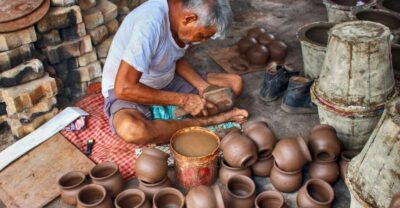

Dharavi Slum Slumdog Millionaire Tour with a Local
Read our review →
Mumbai Slum Tour – Visit Dharavi Slum with Local Guide
Read our review →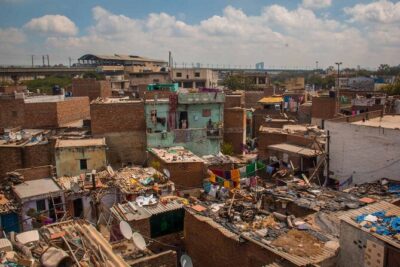
Dhobi Ghat Laundry and Dharavi Slum Tour with Local
Read our review →Browse the lists this tour appears in