
Reviewed · SLUM AND COMMUNITY TOURS
Dharavi Slum Tour
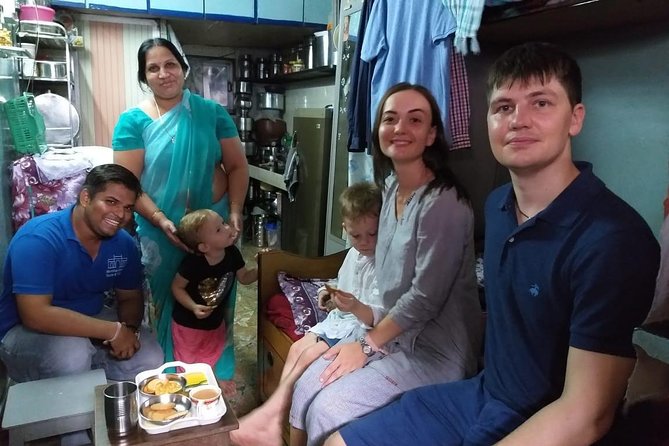
Dharavi is far more than a movie setting. This two-hour Mumbai tour takes you through narrow lanes and working neighborhoods, showing how people build businesses, schools, churches, and daily life in difficult conditions. I like the small group size of five, and I like that the tour aims to replace stereotypes with a closer look at enterprise and community. The main consideration is that walking through tight alleys requires moderate physical fitness and a willingness to enter a busy, crowded setting.
The tour costs $20 per person, includes an English-speaking local guide, and returns to the meeting point. Mohamed and Shailinder helped one guest find the starting point, which is a useful touch when you are trying to locate a busy Mumbai meeting spot. Just remember that private transportation is not included.
In This Review
- Key things to know before booking
- Why Dharavi deserves a closer look
- Starting near Mahim station
- Narrow lanes and a small group
- Plastic recycling and the work of Dharavi
- Leather, pottery, and soap production
- Schools, churches, and community life
- Avoiding the poverty-tourism trap
- What the $20 price provides
- Weather, cancellation, and practical planning
- Who will enjoy this Dharavi walk
- Should you book the Dharavi Slum Tour?
- FAQ
- How much does the Dharavi Slum Tour cost?
- How long does the tour last?
- Where does the tour begin?
- Where does the tour end?
- Is transportation included?
- Is a guide included?
- How many people can join the tour?
- What level of fitness is needed?
- Can I cancel for a refund?
- What happens if bad weather cancels the tour?
Key things to know before booking
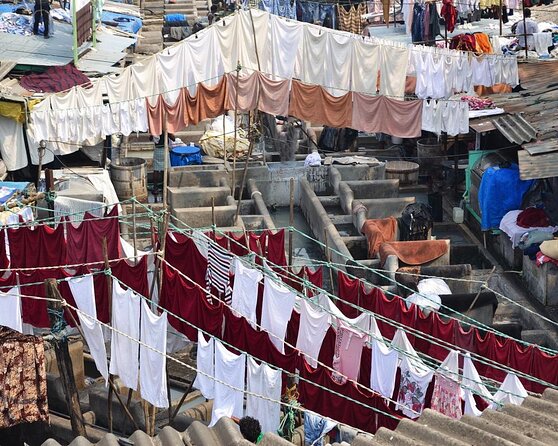
- Dharavi is a working community: You may see plastic recycling, leather work, pottery, soap production, schools, and churches.
- The group is capped at five people: That keeps the walk smaller than many city tours and should make it easier to hear the guide.
- The tour lasts about two hours: It offers a focused introduction rather than an all-day visit.
- An English-speaking local guide leads the walk: The guide helps explain what you are seeing and why it matters.
- The price is $20 per person: For a guided look at several kinds of local work, that is a fair price, especially with a small group.
- You return to the meeting point: The walk starts and ends at Café Coffee Day near Mahim station.
Why Dharavi deserves a closer look
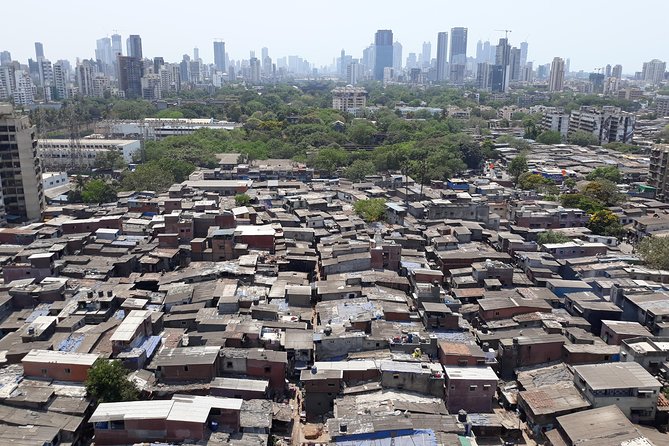
Dharavi became famous around the world after the 2008 film Slumdog Millionaire. That fame can create a narrow picture of the area, as if it were only a place of hardship. This tour takes a different approach. It presents Dharavi as a large, active community where people work, worship, study, and run small businesses.
I appreciate that distinction. The point is not to take pictures of poverty or turn private lives into a spectacle. The point is to see how people create livelihoods and maintain community life despite limited space and difficult conditions.
The supplied description is clear about this purpose: the tour is designed to challenge the idea that Dharavi is only a place of misery. You can expect the guide to focus on what people achieve, not just on what they lack.
That does not mean the setting will be easy or polished. The narrow lanes may feel intense, and the living and working areas are closely packed. You should book this walk only if you can approach the community with respect, patience, and an open mind.
More Community Tours in Mumbai:
- Dharavi slum tour in Mumbai by Female tour guides of the slum
★ 5.0 · 1,976 reviews - Mumbai: Dharavi Slum, DhobiGhat, and Dabbawallas Tour
★ 4.9 · 689 reviews - Dharavi Slum Tour
★ 5.0 · 625 reviews
Starting near Mahim station
The meeting point is Café Coffee Day, Unit No. 58, on the ground floor of Ram Mahal Building. The address is on Senapati Bapat Marg, T.P. Road, near Mahim station, Marinagar Colony, Navjivan Society, Mumbai, Maharashtra 400016.
This location is near public transportation, which helps if you are moving around Mumbai without a private car. Still, the address is detailed enough that you should allow time to find the exact café and building. Mohamed and Shailinder helped a guest arrive at the meeting point, so contacting the operator if you are unsure appears sensible.
Your mobile ticket is useful here. Keep the booking confirmation easy to access, especially if you are meeting the guide in a busy area. Since private transportation is not included, you need to make your own way to the café.
The tour ends back at this same meeting point. That is convenient because you do not have to work out a new pickup location after the walk. It also gives you a clear place to continue your Mumbai sightseeing or return to your accommodation.
Narrow lanes and a small group
The walk itself takes about two hours. That is enough time to get a strong first impression without turning the visit into a tiring half-day commitment.
The group size has a maximum of five people. This is one of the best features of the experience. A small group is less intrusive in narrow lanes, and you should have a better chance to hear explanations from the guide. It also allows the walk to feel more like a guided conversation than a procession.
The tour is available as a group or private experience, according to the supplied details. The exact private-tour pricing is not provided, so check the booking option carefully if you want a walk for your own party.
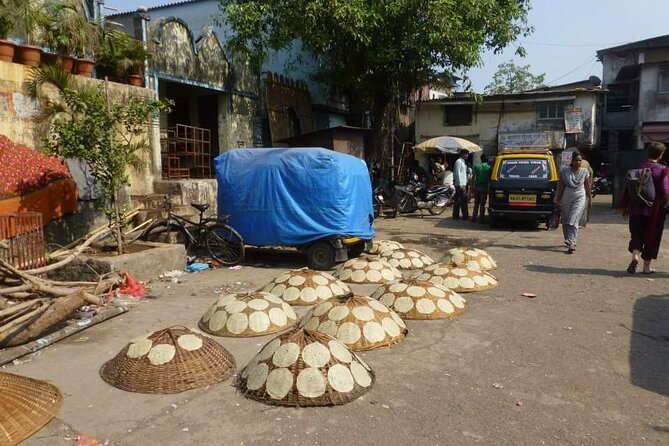
You should expect plenty of walking. The operator asks for a moderate level of physical fitness, which is a practical warning rather than a high barrier. The route runs through narrow alleys, so this is not the right choice if you need a fully accessible, spacious route.
Plastic recycling and the work of Dharavi
Plastic recycling is one of the activities highlighted on the route. Seeing this work helps explain why Dharavi should not be viewed simply as a residential area. It is also a place of production and trade.
You may see how discarded plastic becomes part of a local working economy. The tour does not promise a technical factory visit, so the exact details will depend on the route and the day. Still, this part of the walk gives the area an economic context that a quick drive past Dharavi cannot provide.
This is where a local guide matters. Without explanation, you might notice only the cramped lanes and piles of material. With context, you can begin to understand the labor and organization behind the work.
The setting may be noisy, crowded, or visually difficult. That is part of the experience, but it also means you should keep your expectations realistic. This is not a clean, staged attraction designed for easy viewing.
A few more options to weigh up in Mumbai
- Mumbai: Full-Day Sightseeing Tour of Mumbai
★ 4.9 · 1,822 reviews - Private Mumbai Sightseeing Tour (Traveller’s Choice Award Winner)
★ 5.0 · 1,565 reviews - Elephanta Caves & Island Guided Private Tour
★ 5.0 · 1,327 reviews - Group Guided Walking Tour in Fort and Colaba
★ 5.0 · 1,073 reviews
Leather, pottery, and soap production
The tour also points to leather work, pottery, and soap production. Each activity offers a different view of the skills and small businesses found within Dharavi.
Leather work shows another side of local manufacturing. Pottery brings a more traditional craft into the same compact urban setting. Soap production adds yet another example of goods being made locally rather than simply sold in shops.
I like the range of activities because it keeps the walk from reducing Dharavi to a single industry. You are not seeing one isolated workshop and then leaving. You are getting an introduction to several kinds of work that help make this area function as a mini-city.
The description does not specify whether you will buy products, enter each work area, or watch a full production process. Do not book expecting a hands-on craft class or a shopping tour. Think of these places as working environments that the guide helps you understand from a respectful distance.
Schools, churches, and community life
The tour includes more than industry. Schools and churches are also part of the picture.
That matters because a slum tour can easily become too focused on work and material hardship. Schools and churches show that Dharavi is also a place where people organize daily life, educate children, and practice religion.
This is one of the strongest reasons to choose a guided walk rather than simply passing through the area. A guide can connect the visible buildings and streets with the wider community they serve. You get a fuller picture of Dharavi as a place where people live, not just a place where things are made.
You should still remember that this is an operating neighborhood. Be careful with photography and follow the guide’s instructions. The supplied information does not promise specific photo opportunities, and respectful behavior should come before getting the perfect picture.
Avoiding the poverty-tourism trap
The ethical question is unavoidable: is a slum tour simply sightseeing at someone else’s hardship?
This experience tries to answer that concern by placing achievement and community at the center. Its stated aim is to correct the idea that Dharavi is only miserable and to show what people accomplish in adverse conditions.
That is a worthwhile goal, but the quality of the experience depends on how you behave. If you arrive expecting shocking images or dramatic stories, you are approaching the tour in the wrong spirit. If you arrive ready to listen and learn about local work, the walk has a better chance of being useful and respectful.
I would also keep your expectations grounded. A two-hour tour cannot explain every part of Dharavi or represent every resident’s experience. It offers one guided introduction through selected lanes and activities. The tour is valuable when you treat it as a starting point, not a complete portrait of the community.
The small group helps here. Five people create less disruption than a large coach group, and the guide can give more attention to questions. That does not remove every concern about visiting a residential area, but it is a better setup than a crowded, hurried outing.
What the $20 price provides
At $20 per person, the tour sits in the accessible range for a guided Mumbai experience. You receive about two hours with an English-speaking local guide, a route through several parts of Dharavi, and a group capped at five people.
The value comes from interpretation. You could walk near Dharavi on your own, but you would not necessarily know what the recycling, leather, pottery, or soap work means. You might also miss the schools and churches that help explain community life.
Transport is not part of the price. You must reach Café Coffee Day near Mahim station yourself, so add the cost and time of getting there when planning your day.
Group discounts are available, though the supplied details do not state the discount amount. If you are traveling with friends or family, it is worth checking the final price. Since the tour is often booked six days ahead, I would not leave it until the last minute if your Mumbai schedule is fixed.
Weather, cancellation, and practical planning
The experience requires good weather. If poor weather forces cancellation, you are offered another date or a full refund.
You can cancel for a full refund up to 24 hours before the start time. Cancellations made less than 24 hours before the tour are not refunded, and changes inside that same period are not accepted. The cutoff follows Mumbai local time.
Plan your day around the two-hour duration, but leave room before the start for reaching the meeting point. Since the route uses narrow alleys and requires moderate physical fitness, wear practical clothing and shoes suitable for walking. The provided details do not specify a dress code or luggage policy, so ask the operator if either is important for your plans.
The booking confirmation is issued at the time of booking. Keep it available on your phone, since the tour offers a mobile ticket.
Who will enjoy this Dharavi walk
I would recommend this experience to you if you want to understand Mumbai through local work and community life rather than only through major sights. It suits curious visitors who are willing to listen, walk, and question their first impressions.
It is also a good fit if you prefer a small group. A maximum of five people is unusually manageable for an urban walking tour and should make it easier to stay with the guide.
You may want to skip it if you dislike tight spaces, have difficulty walking for two hours, or want a polished attraction with fixed displays. The route is through working lanes, not a museum.
Families and groups should consider the tone carefully. The tour can be educational, but adults should explain its purpose to children before booking. The aim is not entertainment at someone else’s expense.
Should you book the Dharavi Slum Tour?
Book it if you want a respectful, guided introduction to Dharavi’s working life and community structure. The combination of a local English-speaking guide, a maximum group of five, a two-hour schedule, and a $20 price makes it a practical choice for many Mumbai itineraries.
I especially like the way the tour moves beyond the film image of Dharavi. Plastic recycling, leather work, pottery, soap production, schools, and churches give you several ways to understand the area. The strongest praise attached to the experience is its ability to correct misconceptions and provide an insightful, well-organized walk, with Mohamed and Shailinder helping with meeting-point details.
Do not book it for shock value or staged photographs. Book it because you want a closer look at how people work and build community in a difficult urban setting. Approach it with respect, and this short walk can add real depth to your time in Mumbai.
FAQ
How much does the Dharavi Slum Tour cost?
The tour costs $20 per person. Group discounts are available, but the discount amount is not specified.
How long does the tour last?
The experience lasts approximately two hours.
Where does the tour begin?
The tour begins at Café Coffee Day, Unit No. 58, Ground Floor, Ram Mahal Building, Senapati Bapat Marg, T.P. Road, near Mahim station in Mumbai.
Where does the tour end?
The activity ends back at the meeting point.
Is transportation included?
No. Private transportation is not included. The meeting point is near public transportation.
Is a guide included?
Yes. An English-speaking local guide is included.
How many people can join the tour?
The experience has a maximum of five people. It is offered as either a group or private tour.
What level of fitness is needed?
A moderate level of physical fitness is required because the tour goes through narrow alleys and involves walking.
Can I cancel for a refund?
Yes. You can cancel at least 24 hours before the start time for a full refund. Cancellations or changes made less than 24 hours before the start time are not accepted for a refund.
What happens if bad weather cancels the tour?
If the tour is canceled because of poor weather, you will be offered a different date or a full refund.
Just added in Mumbai
- Mumbai Sightseeing Tour★ 5.0 · 11 reviews
- Mumbai Airport to Mumbai Hotels : Private Transfers★ 5.0 · 13 reviews
- Mumbai Spice Markets and Bazaars Tour with Guide and Transport★ 5.0 · 42 reviews
- Mumbai 800 Year Worli Village: Talking Goddess, Old Fort & more★ 5.0 · 94 reviews
- Customize private tour with pickup★ 5.0 · 95 reviews
- Gufran’s Slum Home Tour in the Mumbai Slums★ 5.0 · 19 reviews
- Private Guided Bandra Half Day City Tour in AC Vehicle★ 5.0 · 72 reviews
- The Famous Bollywood Tour of Mumbai★ 5.0 · 97 reviews
Slum and Community Tours, compared.
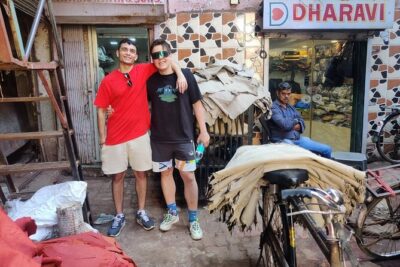
Dharavi slum tour in Mumbai by Female tour guides of the slum
Read our review →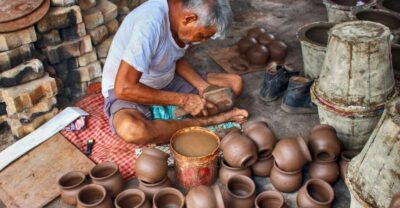
Dharavi Slum Slumdog Millionaire Tour with a Local
Read our review →
Mumbai Slum Tour – Visit Dharavi Slum with Local Guide
Read our review →
Dhobi Ghat Laundry and Dharavi Slum Tour with Local
Read our review →Browse the lists this tour appears in