
Reviewed · WALKING TOURS
Shimla Private Guided Walk Tour exploring the colonial trails
Shimla’s story is best read on foot. This private walk links Christ Church, the Ridge, Scandal Point, Bantony Castle, Gorton Castle, and the Indian Institute of Advanced Study, giving you a useful introduction to the hill station’s colonial past and local culture. The route is led by a local guide who speaks English, Hindi, and Pahari, with guides such as Pawan Sharma and Preeti receiving especially warm praise for their storytelling and patience.
I like the small private format, since you can ask questions and set a comfortable pace instead of following a large crowd. I also like the mix of grand public buildings, working government offices, a Hindu temple, and local gossip. The main consideration is that this is primarily an exterior sightseeing walk. Admission is not included at most heritage sites, and the guide drops you outside the main entrance of the Indian Institute of Advanced Study.
In This Review
- Key points to know before booking
- Why this walk works well as a Shimla introduction
- Starting at Christ Church and the Ridge
- Scandal Point and the red-brick Telegraph Office
- Bantony Castle and Kali Bari Temple
- Railway Board Building and Gorton Castle
- CPWD Office, Vidhan Sabha Chowk, and the Cecil
- All India Radio and the final walk to IIAS
- The guide makes the difference
- Walking conditions, timing, and practical planning
- Who should book this private walk?
- Final verdict: a smart, affordable Shimla orientation
- FAQ
- How long does the Shimla colonial trails walking tour last?
- Where does the tour begin?
- Where does the tour end?
- Is this a private tour?
- Is admission to the attractions included?
- What languages does the guide speak?
Key points to know before booking
- Christ Church to IIAS: This is a one-way route, not a loop, so plan your onward transport from Chaura Maidan after the walk.
- Private guide: Only your group participates, with local guidance in English, Hindi, or Pahari.
- Colonial buildings from the outside: You see Bantony Castle, Gorton Castle, the Railway Board Building, and other landmarks, but entrance fees are not included.
- Two-hour introduction: The route covers many landmarks quickly, making it useful near the start of your Shimla stay.
- Stories matter here: Guides including Pawan and Preeti add anecdotes about Shimla’s past, rather than simply pointing out buildings.
- Good value at $16.67: For a private walk with a local guide, the price is modest, especially for solo visitors or couples who want an orientation.
Why this walk works well as a Shimla introduction
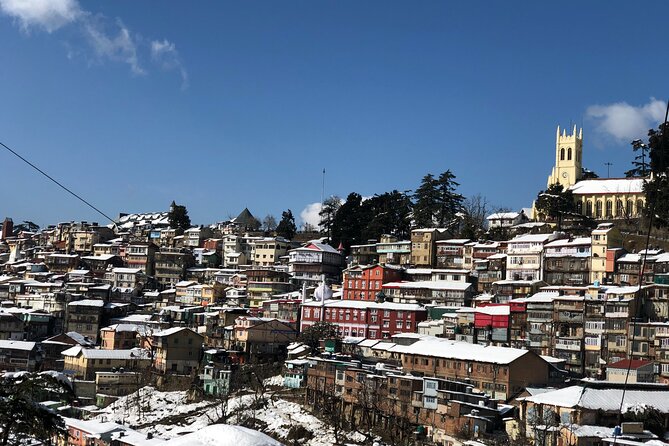
Shimla can feel confusing at first. The Mall, Ridge, old government quarter, steep roads, wooded stretches, and scattered heritage buildings do not always reveal how the town fits together. This walk gives you a basic map in your head while explaining why so many British-era structures appear beside Indian institutions and religious sites.
The route begins in the central part of town and finishes near Boileauganj, at the Indian Institute of Advanced Study. That one-way design is practical if you want to explore the central sights first and then continue toward the western side of Shimla. It is less useful if you need to return to Christ Church immediately afterward, so check your plans before setting out.
At roughly two hours, the tour is short enough to fit into an arrival day or a free morning. The listed stops are often given five minutes each, with just a minute at some viewpoints and 15 minutes at IIAS. That tells you what kind of experience this is: a guided orientation with many brief stops, not a long interior visit at every building.
The price is $16.67 per person, which is strong value for a private activity. You are paying for the guide’s time, the walking route, local explanation, and the convenience of having someone connect the sites. You are not paying for attraction admission, meals, drinks, or anything else not named in the inclusions.
More Walking Tours in India:
- The Great Indian Food Tour: Old Delhi Food and Heritage Walk
★ 5.0 · 1,698 reviews - Group Guided Walking Tour in Fort and Colaba
★ 5.0 · 1,073 reviews - Spiritual City Walking Tour-THE Pushkar Route
★ 5.0 · 907 reviews
Starting at Christ Church and the Ridge
The meeting point is outside Christ Church, at the Ridge. This is an easy central starting point, close to Shimla’s best-known pedestrian areas and public transport links.
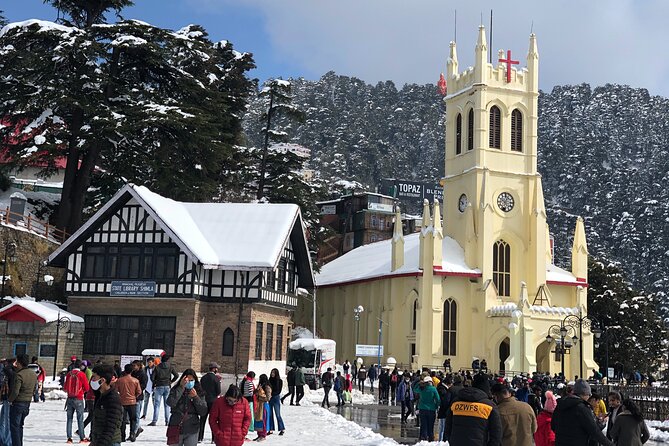
Christ Church is the second-oldest church in North India, after St John’s Church in Meerut. Its importance is not only architectural. Worship is conducted in both Hindi and English, a detail that helps place the church within present-day Shimla rather than treating it as a frozen colonial relic.
The stop is scheduled for about five minutes, and admission is not included. You should expect an exterior explanation unless you arrange and pay for entry separately. If you want a longer look inside, ask the guide at the beginning how much time the schedule allows.
From there, the walk reaches The Ridge, Shimla’s broad open space in the center of town. This is one of the best places to understand Shimla’s public layout. You get a sense of how the Ridge connects the church, Mall Road, and the western end of the town.
The Ridge is also a natural place for photographs and orientation. The official stop is brief, but your guide can explain how the central open area relates to nearby streets and buildings. Keep your camera ready, since this part of Shimla changes quickly from open pavement to crowded pedestrian routes.
Scandal Point and the red-brick Telegraph Office
The next stop is Scandal Point, where the Mall Road meets the Ridge on the western side. The name invites a dramatic tale, but the scheduled stop is only about a minute. Treat it as a quick landmark and a useful junction rather than a full storytelling session.
The walk then continues to the BSNL Office Shimla, the former Telegraph Office. Its red-brick exterior was designed by Scottish architect Scott Begg in 1922. It is a pleasing example of how working civic buildings can be part of Shimla’s architectural appeal.
Admission is not included, and the stop lasts about five minutes. You may not spend much time considering a telecommunications office on your own, which is exactly why a guide helps. The building becomes more interesting when you understand its age, purpose, and place along the Mall Road.
This is one of the tour’s strengths. It does not limit the route to famous churches and hotels. You also see offices and public buildings that helped Shimla operate as an administrative center.
Bantony Castle and Kali Bari Temple
Bantony Castle sits on Kalibari Road, only a short distance from Scandal Point. The former summer palace of the Maharaja of Sirmaur was built in the 19th century. Its location near the center makes it easy to connect the royal side of Shimla with the city’s colonial and administrative past.
The stop is scheduled for five minutes, with admission not included. You should expect to view the site from outside unless entry arrangements are made separately. The building’s history is the main reason for stopping, so listen for the local context rather than expecting a long indoor visit.
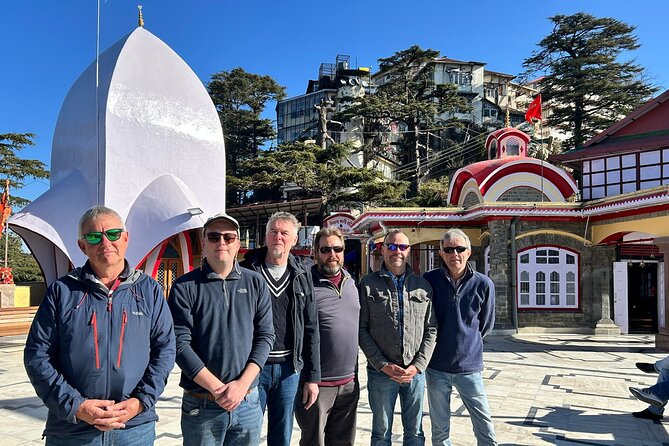
The route then reaches Kali Bari Temple, on Bantony Hill. The temple is dedicated to Goddess Kali in her Shyamala form, the name linked to Shimla itself. This is a useful change of rhythm after the colonial buildings. You move from palaces, offices, and railway structures to a living Hindu place of worship.
Admission is listed as free, though the tour does not promise a long visit inside. Dress and behave respectfully, as you would at any active temple. The guide’s local background can help explain the connection between Shyamala and Shimla, which gives this stop more meaning than a quick photograph.
I especially like this portion of the route because it avoids presenting Shimla as only a British hill station. The town’s identity includes colonial-era institutions, royal connections, local faith, and modern Indian government. Seeing those strands close together gives you a clearer sense of place.
A few more options to weigh up in India
- Jaipur: Private Full Day Sightseeing Tour By Car with Guide
★ 4.9 · 1,839 reviews - Elephanta Caves & Island Guided Private Tour
★ 5.0 · 1,327 reviews - Mumbai: Elephanta Caves Half-Day Guided Tour with Expert
★ 4.8 · 1,032 reviews - Delhi: Old and New Delhi Guided Full or Half-Day Tour
★ 5.0 · 976 reviews
Railway Board Building and Gorton Castle
The Railway Board Building is one of the more unusual sights on the walk. Built in 1896, it was designed largely from cast iron and steel, with fire resistance in mind. The materials were imported from Glasgow, adding another piece to the story of how colonial Shimla was constructed and supplied.
The stop lasts about five minutes, and admission is not included. The building is best appreciated from the outside, where you can study its industrial character and contrast it with the more decorative church and hotel architecture nearby.
Next comes Gorton Castle, a heritage monument associated with careful craftsmanship and inventive design. The scheduled stop is only a minute, so do not expect a detailed architectural inspection. Still, its place on the route helps you see how several important buildings are spread through Shimla rather than concentrated in one museum district.
This section is particularly useful for architecture fans, but you do not need specialist knowledge to enjoy it. The guide’s job is to point out what you might otherwise walk past. On your own, Gorton Castle and the Railway Board Building could easily become background scenery.
CPWD Office, Vidhan Sabha Chowk, and the Cecil
The CPWD Office brings the story back to Shimla’s early administrative development. In 1819, Lieutenant Ross, Assistant Political Agent in the Hill States, set up a wooden cottage in Shimla. Three years later, Scottish civil servant Charles Pratt Kennedy built the first substantial masonry house connected with the early administration.
The listed stop is about five minutes, with no admission included. This is a good example of a place where a short explanation makes the building more meaningful. You see how a small colonial settlement developed into an important hill administration center.
At Vidhan Sabha Chowk, you pass the Himachal Pradesh Legislative Assembly. It is the unicameral legislature of Himachal Pradesh, and the stop is brief. The building is viewed from outside, making this more of a civic orientation point than a formal political tour.
The route then reaches The Oberoi Cecil, one of Shimla’s historic luxury hotels. The Cecil represents another side of the town’s past, one connected with hill-station hospitality and high-end accommodation. The stop lasts about five minutes, and admission is not included.
You should not expect a hotel tour. Instead, the guide helps place the Cecil within the larger story of Shimla’s old public life. For many people, this is also a useful place to understand how the town’s historic center mixes tourism, government, commerce, and daily local movement.
All India Radio and the final walk to IIAS
The route also passes the All India Radio Centre, established in Shimla in 1955. This is a small but worthwhile detail because it extends the story beyond the colonial period. Shimla continued to serve as an important public and administrative center after independence.
The final major stop is the Indian Institute of Advanced Study, or IIAS, in Chaura Maidan. The institute was established by the Ministry of Education in 1964 and began functioning on October 20, 1965.
The walk ends at IIAS after about 15 minutes at the site. Admission is not included, and the guide drops you outside the main entrance. If you want to visit the interior, you will need to handle that separately and allow extra time beyond the tour.
The finish works well thematically. You begin with Christ Church and the Ridge, pass through old offices, royal property, a temple, railway administration, government buildings, a historic hotel, and All India Radio, then finish at a modern Indian research institution. The route gives you a timeline as much as a collection of sights.
The guide makes the difference
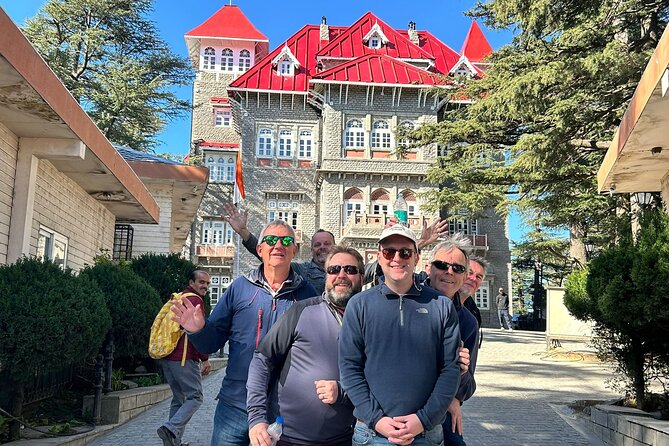
A private walk like this depends heavily on the guide. The strongest feedback centers on Pawan Sharma, who is described as reliable, patient, and passionate about Shimla. He has waited for late arrivals and allowed time for a coffee stop, which matters when you are adjusting to the town’s pace.
Preeti has also been praised for fascinating stories and anecdotes connected with the colonial buildings. Those details can turn a standard sightseeing route into a more personal introduction to Shimla.
The guide speaks English, Hindi, and Pahari. That language range is useful for international visitors, Indian visitors, and anyone who wants a local perspective rather than a strictly formal lecture. The tour also promises local gossip, which suggests a relaxed style alongside the historical explanation.
You should still tell the guide what interests you. If you care most about architecture, ask for more detail at the Railway Board Building and Gorton Castle. If you want culture and religion, give Kali Bari Temple more attention. If you need photographs or a slower pace, say so early.
The private format means the guide can respond to your questions. It also means the experience may feel more personal than a standard group walk. At the same time, a private tour does not automatically mean every site will receive a long explanation. The itinerary has many stops, so the pace remains fairly brisk.
Walking conditions, timing, and practical planning
The tour lasts approximately two hours and begins outside Christ Church. It ends outside the main entrance to IIAS, not back at the starting point. Plan your next move from the institute rather than assuming you can simply continue along the Mall.
The activity is near public transportation, and most people can participate. The route is still a walking tour through Shimla, so you should be prepared for urban walking and changes in street level. The supplied details do not promise a fully accessible route, so anyone with mobility concerns should confirm the exact conditions before booking.
Wear comfortable shoes and keep the schedule flexible. The guide may stop for questions, photographs, or a short coffee break, as Pawan has done for previous parties. Since admission is not included, decide in advance if you want to pay separately to enter any site.
The tour has free cancellation up to 24 hours before the start time. Within 24 hours, you receive no refund, and changes are not accepted. The cut-off follows Shimla local time.
Who should book this private walk?
I would choose this tour if you are visiting Shimla for the first time and want a clear introduction before exploring alone. It is also useful for repeat visitors who have seen the Mall and Ridge but want to understand the buildings around them.
Solo visitors get good value from the private price because they receive a dedicated local guide without needing to organize a larger group. Couples and families may also appreciate the ability to ask questions and pause briefly without holding up strangers.
This is less suitable if you want extended interior visits, a museum-style presentation, or a slow architectural study of every building. The tour covers many points in about two hours, and several stops are only one to five minutes long.
Final verdict: a smart, affordable Shimla orientation
I recommend the Shimla Private Guided Walk Tour if you want history, local context, and a practical introduction to the town in a short period. The $16.67 price is reasonable for a private two-hour walk, especially when the guide adds personal stories, local gossip, and cultural explanation.
Book it early in your stay so the route helps shape the rest of your sightseeing. Ask for Pawan or Preeti if guide choice is available, and confirm the language and meeting details before you go. Skip it if you need attraction entry included or prefer to explore at your own pace without a fixed route.
For most first-time visitors, this is a good way to see Shimla as more than a pretty hill town. It connects the church, Ridge, royal buildings, offices, temple, railway heritage, government quarter, hotel, and research institute into one manageable walk.
FAQ
How long does the Shimla colonial trails walking tour last?
The tour lasts approximately two hours.
Where does the tour begin?
It begins outside Christ Church at the Ridge, near The Mall in Shimla.
Where does the tour end?
It ends at the Indian Institute of Advanced Study in Chaura Maidan. The guide drops you outside the main entrance.
Is this a private tour?
Yes. Only your group participates in the activity.
Is admission to the attractions included?
No. Admission is not included at the attractions listed with entry fees. The tour information also says participants will not enter attractions when admission is not included.
What languages does the guide speak?
The local guide speaks English, Hindi, and Pahari.
Just added in India
- Walking Tour in the old part of the city of Varanasi★ 5.0 · 25 reviews
- Explore Chennai City: Guided Walking Tour on Foot★ 4.3 · 22 reviews
- Vibrant Markets of Trivandrum (2 Hours Guided Walking Tour)★ 4.5 · 15 reviews
- Walk of Divinity Bangalore (2 hours guided walking tour)★ 3.8 · 19 reviews
- Victorian Gothic Heritage Quarter and Art Deco Walking Tour★ 4.9 · 14 reviews
- Vibrant Markets of Mumbai (2 Hours Guided Walking Tour)★ 4.4 · 44 reviews
- Varanasi Walking and Heritage Tour★ 4.6 · 15 reviews
- Varanasi: Manikarnika Ghat (Oldest Cremation Site) Tour★ 4.7 · 22 reviews
Walking Tours, compared.

The Great Indian Food Tour: Old Delhi Food and Heritage Walk
Read our review →


Blue City Heritage Private Walking Tour With Pickup and Drop-Off
Read our review →
Private Guided Walking Tour in Bandra Queen of Suburbs
Read our review →

Private Jodhpur Blue City Walking Tour with Guide
Read our review →Browse the lists this tour appears in