
Reviewed · CITY TOURS AND SIGHTSEEING
Jaipur: Private Full Day Sightseeing Tour By Car with Guide
Jaipur rewards a well-planned day. This private tour packs the city’s major sights into eight hours, pairing an air-conditioned car with a dedicated driver and guide. I like the flexible itinerary, which lets you adjust the route and pace, and I like the strong focus on both grand palaces and everyday craft traditions. The main drawback is that entrance tickets and lunch cost extra, and traffic can make this full schedule feel brisk.
I also like the practical comfort here. You can be collected from a hotel, airport, railway station, or another Jaipur address, then return without arranging local transport between far-flung sights. Guides such as Gaurav, Rohit, Ashwani, and Raj have been praised for clear explanations, photography help, and patience with children. Still, confirm the pickup details in advance, since one recent booking required the guest to contact the company first.
In This Review
- Key details that shape the day
- Why a private car makes Jaipur easier
- Hawa Mahal and the first look at the Pink City
- Amber Fort, where Rajput power takes shape
- Panna Meena Ka Kund and the logic of a stepwell
- Jal Mahal, a quiet pause beside the lake
- Lunch and the Jaipur craft workshop
- Royal Gaitor, a quieter architectural stop
- City Palace, the royal heart of old Jaipur
- Jantar Mantar, Jaipur’s stone observatory
- The pace, timing, and real cost
- Who will get the most from this Jaipur day
- Should you book this Jaipur tour?
- FAQ
- How long does the Jaipur private sightseeing tour last?
- Where can pickup and drop-off take place?
- Is the tour private?
- What type of vehicle is used?
- Are attraction tickets included?
- Is lunch included?
- Which languages are available for the guide?
- What should I bring?
Key details that shape the day
- Start with Jaipur’s biggest sights: The route covers Amber Fort, Hawa Mahal, City Palace, Jantar Mantar, Jal Mahal, Panna Meena Ka Kund, and Royal Gaitor.
- Private car, driver, and guide: You travel in a sedan for one to three people, an SUV for three to six, or a van for larger parties.
- Early timing pays off: Reaching Amber Fort early can mean cooler weather and fewer crowds.
- History comes alive with context: Your guide explains Rajput rulers, palace design, Jaipur’s culture, and the science behind Jantar Mantar.
- Crafts are part of the experience: A short workshop visit introduces hand block printing and rough-stone cutting, with no buying pressure promised.
- The price is unusually low: At $4.88 per person, the value looks excellent, but you must add monument admission and food.
Why a private car makes Jaipur easier
Jaipur’s sights are spread across different parts of the city. Amber Fort sits outside the central Pink City, Jal Mahal lies beside Man Sagar Lake, and the City Palace and Jantar Mantar share the old center. Moving between them by taxi can be tiring, especially if you are visiting Jaipur for only one day.
Here, you have one driver for the entire outing. The driver waits while you explore, then takes you to the next stop. Several guides and drivers named in the feedback, including Sohil, Shakir, Nadeem, Hasan, Ali, and Imran, were praised for safe driving, punctuality, clean cars, and calm handling of Jaipur traffic.
That matters more than it may sound. You can leave the car with your water and shopping bags, avoid negotiating a new fare at every stop, and return to air conditioning after walking through sunlit courtyards. The vehicles are air-conditioned sedans, SUVs, or vans, depending on party size.
The setup is private, but there is one qualification. The information says that a solo guest might occasionally be paired with another solo guest to share the experience. If complete privacy matters to you, ask about this before confirming.
More Sightseeing Tours in Jaipur
- Jaipur: Full-Day City Tour with Car, Guide & Skip-the-Line
★ 4.8 · 512 reviews - Full-Day Jaipur Private Sightseeing Tour by Car with Guide
★ 5.0 · 472 reviews - Private Full Day Jaipur Sightseeing Tour By Tuk Tuk
★ 5.0 · 382 reviews
Hawa Mahal and the first look at the Pink City
Depending on the day’s traffic and the guide’s plan, Hawa Mahal may come first or later. The listed route begins with a short visit of about 20 minutes, while the broader description allows up to an hour. Treat it mainly as an introduction and photo stop unless you specifically ask for more time.
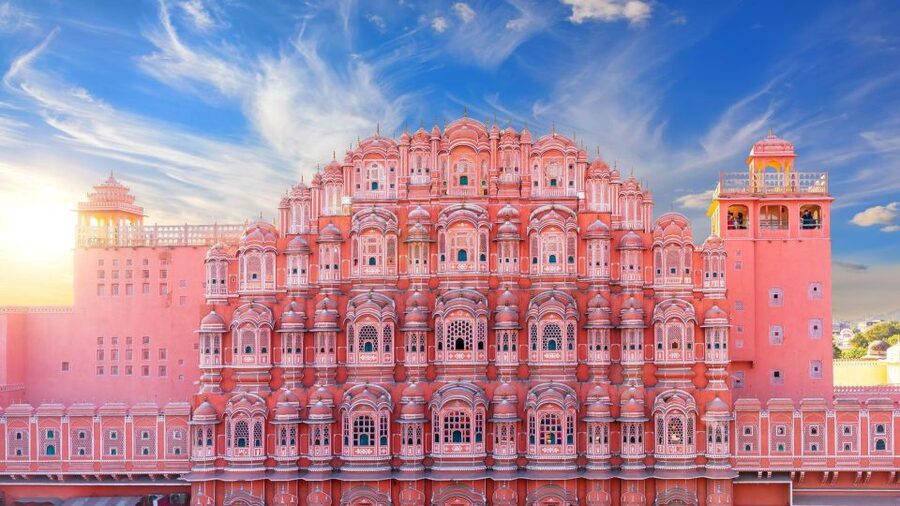
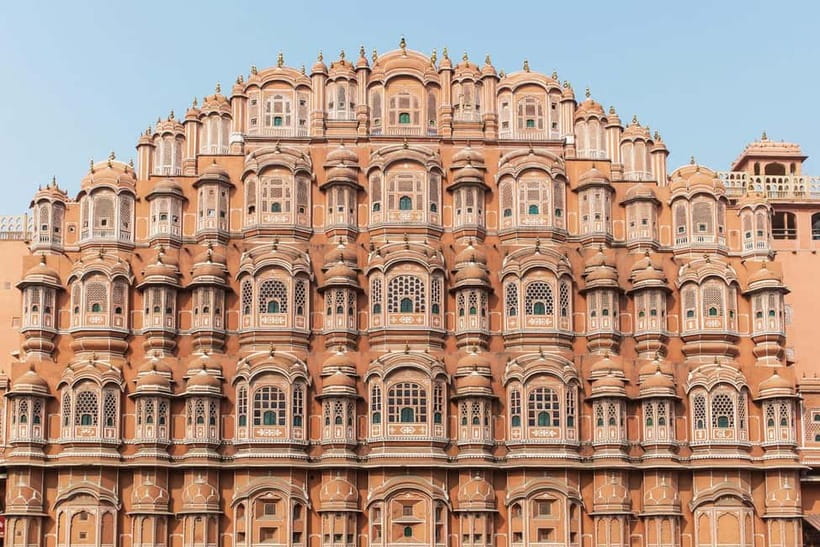
The Palace of Winds is famous for its tiered facade and rows of delicate lattice screens. Sawai Pratap Singh commissioned the building so royal women could observe city life without appearing in public. From the street, the palace looks more like an ornate screen than a conventional residence, which makes it one of Jaipur’s most memorable urban sights.
A guide can help you notice details that disappear in a quick photograph. Ask about the purpose of the windows, the palace’s connection with royal customs, and how the facade fits into the old city. If you want interior views and more time here, say so at the start because Amber Fort and the central palace complex usually receive more of the day.
Amber Fort, where Rajput power takes shape
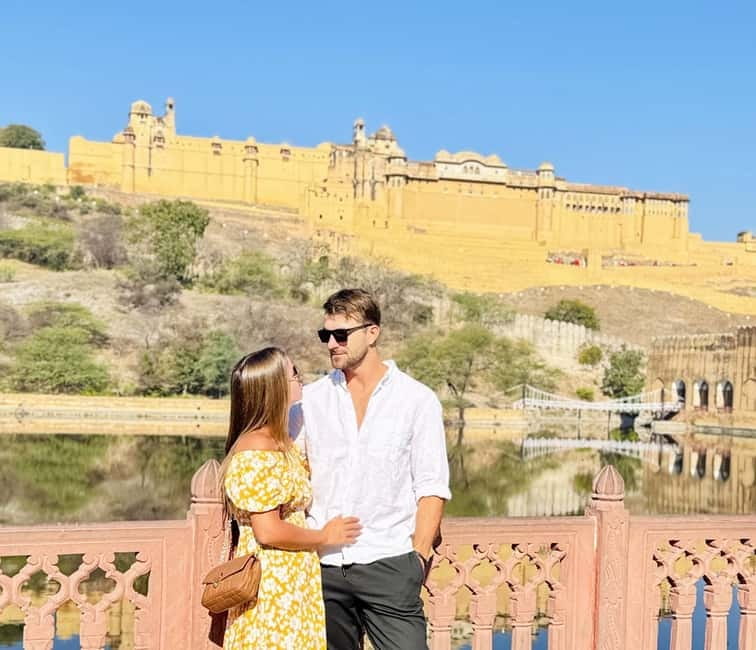
Amber Fort receives roughly two hours and is the day’s major stop. Built from red sandstone and white marble on rugged hills outside Jaipur, it brings together Hindu and Muslim design in courtyards, gateways, royal rooms, and decorative halls.
This is where a good guide earns the fee. The fort is large enough to blur into a procession of walls and arches without explanation. Guides named Gajender Singh Rathore, Ashwani, Rohit, Dharm Veer, and Raj were praised for connecting architecture with stories about Rajput rulers, court life, and the purpose of individual spaces.
Look for the Sheesh Mahal, or Mirror Palace, the Ganesh Pol gateway, the grand courtyards, and the royal chambers. Ask your guide to explain how the rooms were arranged and how the fort’s hilltop position helped control the surrounding area. The views are a reward in their own right, though the approach and courtyards involve walking in sun.
An early start is useful. One party began at the stepwell and fort first thing and found the weather cooler and the crowds lighter. You should wear sports shoes, carry sunscreen and sunglasses, and keep water available. Two hours is enough for a useful visit, but not for every corner at a slow pace.
The tour also offers an optional three-hour guided Amber Fort version. Choose that only if the fort is your main interest and you are happy to give less time to the central palaces and observatory.
Panna Meena Ka Kund and the logic of a stepwell
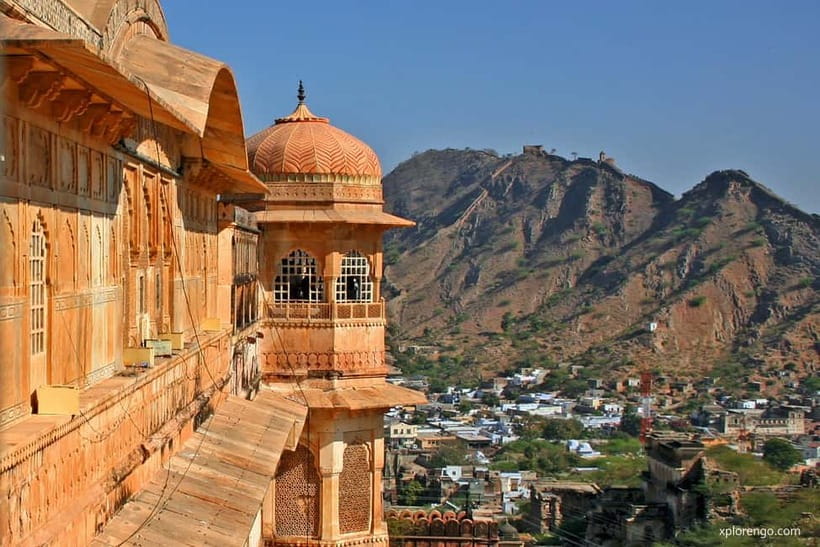
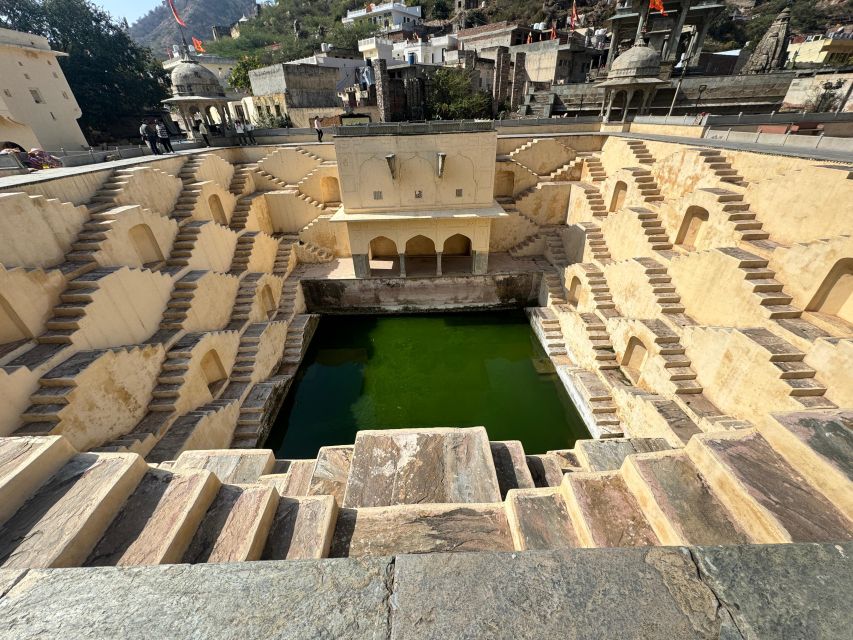
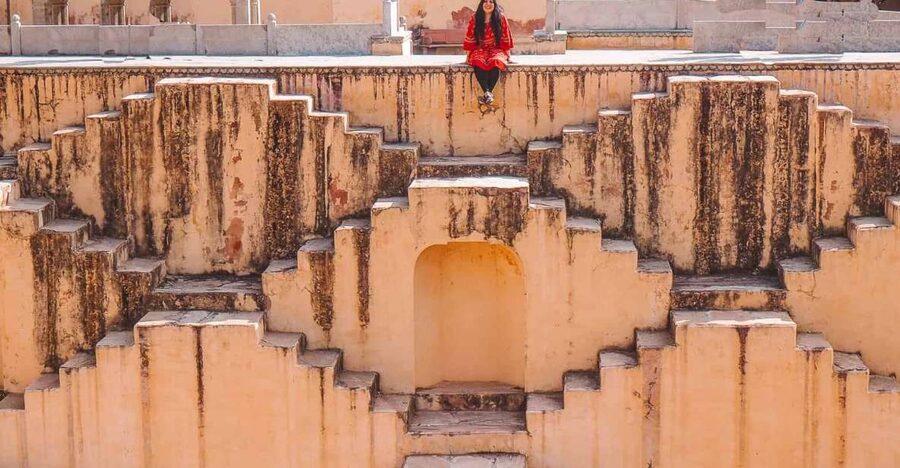
Just near Amber Fort, Panna Meena Ka Kund takes about 30 minutes. This 16th-century stepwell is built around symmetrical stairways descending toward the water. Its design was not only decorative. The structure helped collect and store rainwater.
The geometry makes this a good stop after the fort. You can see how practical water management became architecture, and your guide can explain the way the stairways were arranged. The fortress backdrop adds visual drama without requiring another long visit.
Thirty minutes is usually a sensible allocation. I would not rush the photographs, but I also would not trade a substantial amount of City Palace time for this stop. The stepwell works best as a short, focused visit that adds a different side of Jaipur’s past.
A completely different kind of day out:
- 3-Hour Morning Bike Tour of Jaipur
★ 5.0 · 1,253 reviews - Jaipur: Private Sightseeing Day Tour with Guide by Car
★ 4.8 · 773 reviews - Pink City Cooking Class
★ 5.0 · 452 reviews - Private Elephant Sanctuary
★ 5.0 · 390 reviews
Jal Mahal, a quiet pause beside the lake
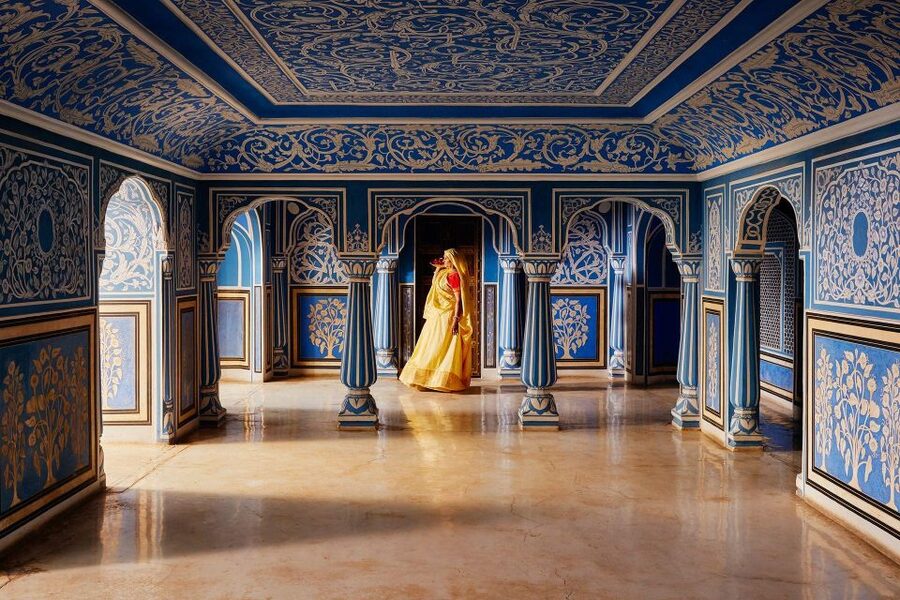
Jal Mahal is scheduled for about 20 to 30 minutes. The red sandstone palace appears to float in Man Sagar Lake, although only the upper levels are visible above the water. It dates from the 18th century and reflects Rajput royal taste in a calmer setting than the forts and palace courtyards.
This is mainly a viewpoint and photo stop. The tour description does not promise an interior visit, so plan to admire the palace from the lakeside rather than enter it. The short pause gives your feet a break and breaks up the day’s heavier concentration of monuments.
Your guide may use the stop to discuss royal retreats, lake setting, and the visual relationship between water and architecture. Keep expectations realistic: Jal Mahal is not a long indoor attraction on this outing.
Lunch and the Jaipur craft workshop
Lunch is listed as an optional one-hour break at a local restaurant. Food is not included, so you pay for your own meal. The advantage of leaving this flexible is that you can choose a longer meal, a quick bite, or possibly continue if you are trying to see every major site.
The workshop visit takes about 10 to 15 minutes in the description, although the route allows up to 30 minutes for an arts and crafts market visit. You may see traditional Jaipur hand block printing and the cutting of rough stones. This gives you a glimpse of skills that sit outside the royal monuments and helps connect the city’s grand buildings with its working craft culture.
The activity is described as educational, with no pressure to buy. That is useful, but I would still make your preference clear. If you want a quick look and more time at the monuments, tell your guide. If you are interested in textiles, stonework, or local shopping, ask for a little more explanation.
Royal Gaitor, a quieter architectural stop
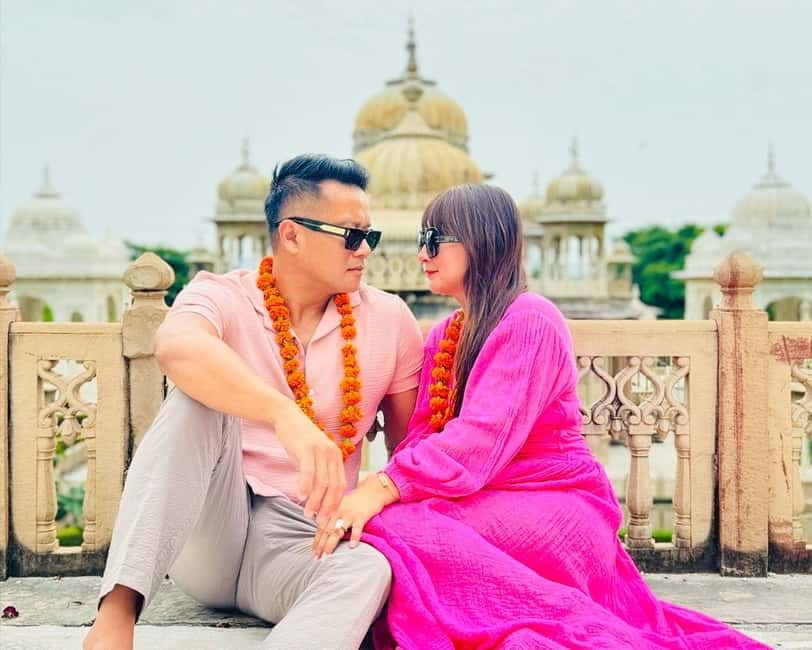
Royal Gaitor Tumbas is allocated around 30 minutes in the route, although the longer description allows an hour. This 18th-century complex contains royal memorials, carved stone details, and dedicated temples. It is a more peaceful counterpoint to Amber Fort and the central palace.
The site shows how Jaipur’s royal story continued beyond residences and military buildings. Pointed carvings, domed forms, and temple details reward a slower look, even during a short visit. The complex also has religious importance, so dress and behavior should be respectful.
I would use this stop to ask your guide about the people commemorated here and the role of memorial architecture in Rajasthan. If you are tired after several major sights, 30 minutes is enough. If carved stone and ceremonial buildings interest you, request the longer version.
City Palace, the royal heart of old Jaipur
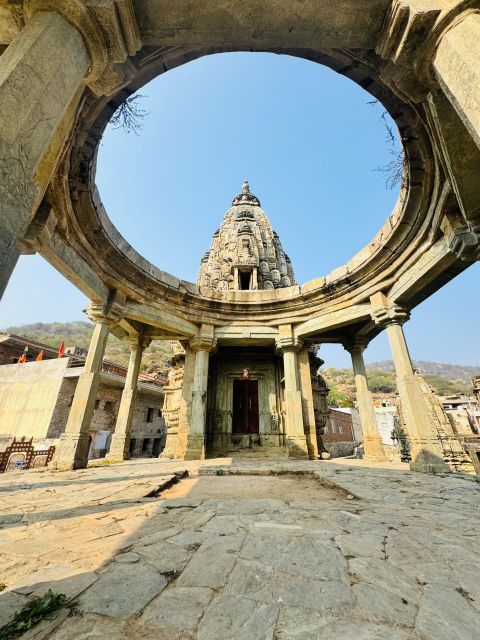
City Palace receives about 1 to 1.5 hours. Built by Maharaja Jai Singh, it remains linked to Jaipur’s former royal family and presents a mix of courtyards, gateways, decorated rooms, and palace collections.
This is one of the places where the guide’s storytelling makes a real difference. Without context, you may notice color and ornament but miss how the palace functioned. Ask about the relationship between public court spaces and private royal areas, and how Jai Singh’s planned city grew around the palace.
The time allocation is useful but not generous. You can see important sections and listen to a structured explanation, but you may need to choose between lingering over objects and moving through the full complex. If City Palace is your priority, say so before the route begins.
A helpful guide may also take photographs for you. Sunil, MJ, and Rohit were specifically praised for taking good pictures, while several guides were noted for allowing plenty of time at each stop. That can be a small but welcome benefit when you are traveling alone or with children.
Jantar Mantar, Jaipur’s stone observatory
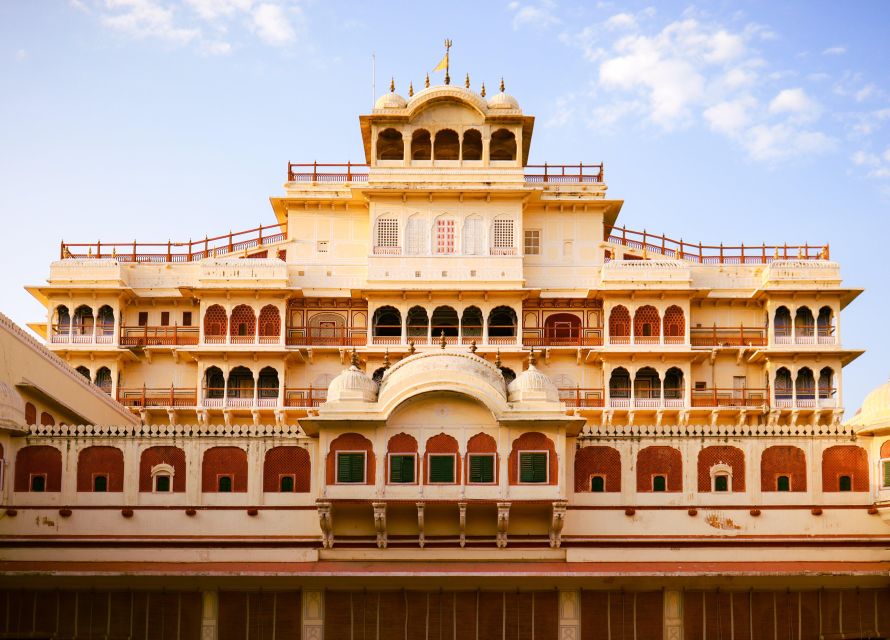
Jantar Mantar is given about an hour, and I consider that time well spent. This UNESCO World Heritage Site contains 19 astronomical instruments commissioned by Rajput ruler Sawai Jai Singh. Its most famous instrument is the world’s largest stone sundial.
The scale can surprise you. These are not small museum objects behind glass. They are large masonry instruments designed to measure time and track celestial positions. At first they may look like abstract ramps and walls, but a guide can show you how their angles and shapes served practical purposes.
This is also the stop where questions help most. Ask your guide to explain how the sundial works, what the instruments measured, and why Jaipur became associated with astronomy as well as palaces. Dharm Veer was praised for explaining the observatory instruments in an engaging way, and other guides were noted for making scientific details easy to follow.
An hour is enough for the main instruments with commentary. It is less satisfying if you simply walk around taking photographs, so stay close to the guide here.
The pace, timing, and real cost
The advertised duration is eight hours, but the listed stops, lunch, traffic, and ticket queues can make the day feel tightly planned. The route also gives different time estimates for several places, especially Hawa Mahal, Jal Mahal, Royal Gaitor, and the craft stop. Use the itinerary as a framework, not a promise that every minute will follow one fixed clock.
The low advertised price of $4.88 per person is excellent value if you are traveling with others. Your car, fuel, parking, hotel pickup and return, driver, and authorized guide are included. For a group of six, the per-person rate is particularly attractive because you share the vehicle while keeping a private arrangement.
You still need to budget for admission tickets and lunch. Bring cash for tickets, as one useful tip from the day-to-day experience is that having plenty of small cash makes entry easier. The exact ticket total depends on which sites you enter and the ticket rules in force at the time.
The price is less meaningful for a solo visitor if another guest is added to share the ride, but it can still be worthwhile because local transport, navigation, and guiding are handled for you. Free cancellation up to 24 hours before departure and reserve-now, pay-later booking also make the plan flexible.
Who will get the most from this Jaipur day
I would choose this tour if you have one full day in Jaipur and want the major landmarks without arranging separate rides. It is a good match for couples, families, first-time visitors, and small groups that value a private vehicle.
Families may appreciate the ability to adjust the pace. A guide named Ashwani was praised for accommodating two young children, and several people valued patient explanations and time to explore. The air-conditioned car also gives you a quiet break between outdoor stops.
It suits solo visitors who want help with photos, tickets, navigation, and local context. Guides speak English, French, Italian, and Spanish, so language can be matched when available. The tour is less suitable if you prefer to spend an entire day at just one monument, avoid all shopping-related stops, or dislike a schedule with many major sites.
Before the day begins, confirm your pickup time, vehicle size, language, and the stops you care about most. Tell the guide if you want Amber Fort first, more time at City Palace, or a shorter craft visit. That small conversation can turn a packed route into a day that feels personal.
Should you book this Jaipur tour?
I would book it for an efficient first look at Jaipur, especially if you want Amber Fort, Hawa Mahal, City Palace, and Jantar Mantar in one organized day. The strongest part is the combination of a private car and an active guide who can explain both palace life and the science of the observatory.
I would skip it only if you want a slow, unstructured day or already know you need long visits at each site. Otherwise, the combination of flexible timing, multilingual guiding, hotel pickup, and an unusually low base price makes this a sensible way to get oriented in the Pink City. Just add admission fees and lunch to your budget, start early if possible, and make your priorities clear.
FAQ
How long does the Jaipur private sightseeing tour last?
The tour duration is eight hours. The actual pace can vary with traffic, lunch, ticket entry, and how long you choose to stay at each stop.
Where can pickup and drop-off take place?
Pickup and drop-off can be arranged from locations in Jaipur, including a hotel, airport, railway station, or another preferred address.
Is the tour private?
It is described as a private tour with a dedicated car, driver, and guide. The information also notes that a solo guest might sometimes be paired with another solo guest to share the experience.
What type of vehicle is used?
One to three people travel in an air-conditioned five-seater sedan. Groups of three to six use an air-conditioned eight-seater SUV, and groups of seven to ten use an air-conditioned ten-seater van.
Are attraction tickets included?
No. Entry tickets are not included in the tour price, so you should budget separately for admission to the monuments.
Is lunch included?
No. Lunch is optional and is not included. A one-hour break at a local restaurant is provided in the schedule.
Which languages are available for the guide?
Guiding is available in English, French, Italian, and Spanish.
What should I bring?
Bring your passport or ID card, sunglasses, a camera, sunscreen, and sports shoes. Pets, alcohol, and drugs are not allowed.
Just added in Jaipur
- Jaipur Private Tour 2 Days with Car & Guide★ 5.0 · 13 reviews
- Jaipur Private Sightseeing Tour – All-Inclusive with Car & Guide★ 5.0 · 16 reviews
- Private Jaipur Tour with Guide & All Entry Tickets★ 5.0 · 20 reviews
- Yoga in Jaipur with Amit (Yogi on Travel)★ 5.0 · 17 reviews
- Vintage Walk Amer★ 5.0 · 11 reviews
- Private 4-Day Wildlife & Taj Mahal Tour from Jaipur to Delhi★ 5.0 · 23 reviews
- Wheel Pottery Workshop★ 4.5 · 19 reviews
- Ranthambore Tiger Safari Private Same Day Trip from Jaipur★ 5.0 · 18 reviews
City Tours and Sightseeing, compared.
Old & New Delhi City Tour – Half or Full Day Options Available
Read our review →
Old & New Delhi City Tour – Choose Half or Full Day Experience
Read our review →
Old & New Delhi Full or Half Day Sightseeing Tour
Read our review →
Private Mumbai Sightseeing Tour (Traveller’s Choice Award Winner)
Read our review →
Highlights of Mumbai Sightseeing Tour: TRAVELLERS CHOICE AWARDED
Read our review →
Old & New Delhi Private City Tour – Traveler’s Choice (Top Rated)
Read our review →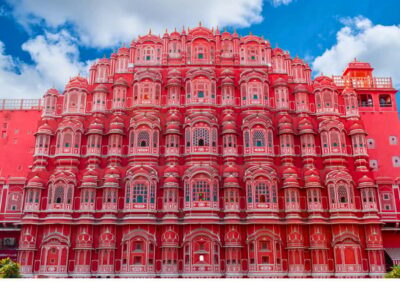
Browse the lists this tour appears in