
Reviewed · VARANASI TOURS
Varanasi Walking and Heritage Tour
Varanasi begins where the pavement ends. This three-hour walk brings you close to Manikarnika Ghat, ancient temples, painted lanes, and the Kashi Vishwanath Temple Corridor for only $13 per person. I like the low price and the way the route joins sacred places with ordinary city life. The main consideration is the guide’s walking and speaking pace. One guest found the guide, Praveen, full of detail but too quick and too inclined to walk ahead.
You begin and end at the Bank of Baroda ATM, which gives the outing a clear shape in a city that can feel wonderfully confusing. I also like that tea or coffee, bottled water, and several temple admissions are included. This is not a slow, polished sightseeing circuit. It is a close-up walk through Varanasi, with uneven attention spans, narrow streets, and powerful religious sites.
In This Review
- Five details that define this Varanasi walk
- Starting beside the Bank of Baroda ATM
- Vishalakshi Mata and the first sacred layer
- Dharmeshwar Mahadev in the Kashi Khand tradition
- Walking toward Kashi Vishwanath Temple Corridor
- Manikarnika Ghat and the meaning of the Kund
- Nepali Temple and a change in visual mood
- Manikarnikeshwar, Ratneshwar, and Chakrapushkarni Kund
- Flower markets, painted lanes, and the everyday city
- What the guide adds, and where the style may not suit you
- Is $13 good value for three hours?
- Who should book this walk?
- Should you book the Varanasi Walking and Heritage Tour?
- FAQ
- Where does the tour start and finish?
- How long does the Varanasi heritage walk last?
- What languages are available for the live guide?
- Is tea or coffee included?
- Which admissions are included?
- Can I cancel for a full refund?
Five details that define this Varanasi walk
- Manikarnika Ghat brings difficult truths into view: This is the tour’s most serious stop, and you should approach it with quiet respect.
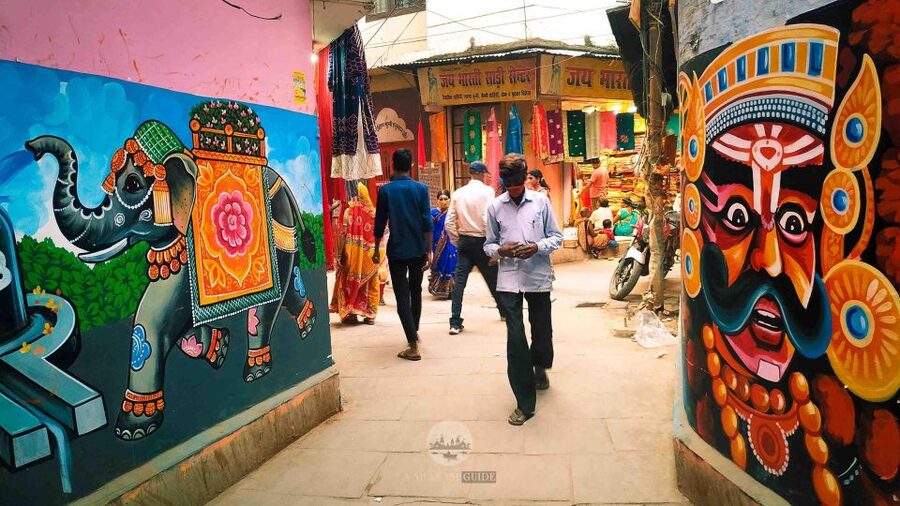
- The small lanes are part of the attraction: Painted temples, local shrines, architecture, and daily movement make the walk feel more like a city encounter than a checklist.
- Several admissions are included: Vishalakshi Temple, Nepali Temple, Manikarnikeshwar Temple, Ratneshwar Temple, and Chakrapushkarni Kund are covered.
- The route is short but packed: In three hours, you move through a number of religious sites, so explanations may come in concentrated bursts.
- Praveen Pathak leads in three languages: English, Spanish, and Hindi are available, which is useful for mixed-language groups.
- The price is unusually modest: At $13, the tour offers good value if you want orientation and cultural context without paying for a full-day outing.
Starting beside the Bank of Baroda ATM
The meeting point at the Bank of Baroda ATM is practical rather than scenic. That is a good thing in Varanasi. You have a fixed landmark, and you return to the same place at the end, so the tour does not leave you guessing where the experience finishes.
The walk is designed for a compact three-hour window. That makes it useful if you have only a day in Varanasi, or if you want an introduction before exploring the ghats and lanes on your own. You will not see every corner of the city, but you can get a strong first sense of why Varanasi feels unlike almost anywhere else.
The route is mainly on foot. You should expect frequent stops, close quarters, and streets where the city’s religious life is not separated from everyday errands. I would choose comfortable shoes and keep your attention on the route rather than trying to rush from one point to the next.
The most important practical tip is simple: tell the guide your preferred pace at the start. Praveen Pathak has been praised for taking people to many characteristic parts of the city and explaining the culture with warmth. One detailed account also found his style too intense, with long explanations delivered at each stop while he walked ahead. Clear communication early can help make the walk more comfortable.
A few more options to weigh up in Varanasi
- Varanasi : Full Day City Highlights Day Tour & Ganges Cruise
★ 4.8 · 520 reviews - Hidden Secrets of Varanasi: Vibrant Tradition (Guided Tour)
★ 5.0 · 429 reviews - Varanasi: Sunrise Boat Tour with Arti Ceremony
★ 5.0 · 375 reviews
Vishalakshi Mata and the first sacred layer
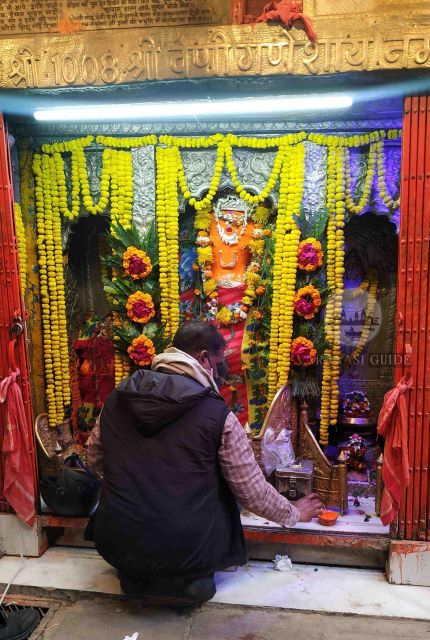
The first major visit is Shri Vishalakshi Mata Shaktipeeth Temple, Kashi. The guided portion is listed at about five minutes, so do not expect an extended temple lesson here. Instead, this stop gives you an immediate introduction to Varanasi’s living religious identity.
Vishalakshi Mata is one of the sacred points connected with the city’s Shakti tradition. The experience is not just about looking at a building. It is about seeing how a temple fits into the movement of people, prayer, and small streets around it.
Because the visit is short, your guide’s explanation matters. A good guide can give you just enough background to understand the place without turning the first stop into a lecture. If you need more time for prayer or personal observation, say so. The schedule includes several stops, and the pace may otherwise carry you onward quickly.
Dharmeshwar Mahadev in the Kashi Khand tradition

From there, you visit Dharmeshwar Mahadev Temple, associated with Kashi Khand, for roughly ten minutes. This adds another layer to the religious map of Varanasi. The city is not defined by one famous temple alone. Its identity is spread across many shrines, wells, courtyards, and small sacred points.
I like this part of the route because it helps you see the difference between a major headline attraction and the wider network of places that gives Varanasi its meaning. You may not remember every name after the walk, but you will begin to understand that the city’s holiness is woven through its lanes.
The ten-minute visit is enough for a focused explanation and a look around. It is not enough for a long, unhurried study of the temple. That tradeoff runs through the entire tour: you gain range, but you give up depth at individual sites.
Walking toward Kashi Vishwanath Temple Corridor
The route then leads you on foot toward the Kashi Vishwanath Temple Corridor. The walk is listed at about ten minutes, and the journey itself is part of the lesson. Varanasi’s narrow lanes connect temples, homes, shops, art, food, and religious traffic in a tight urban fabric.
The corridor is one of the city’s best-known modern changes, but the walk around it also points to the older city that surrounds it. You see how grand religious projects meet tiny streets and long-established buildings. That contrast is one of the most useful things to notice here.
Do not think of this as a full temple visit to Kashi Vishwanath. The scheduled section is a walk, not a listed admission or extended interior tour. If entering the temple is a priority for you, confirm the plan before booking or at the beginning of the walk. The tour’s value is the surrounding context, not a promise of a long visit inside.
A completely different kind of day out:
- Banaras Wala Tours
★ 5.0 · 329 reviews - The Ultimate 1 Day in Varanasi – How to Spend 13 Hours – Private Guided Tour
★ 5.0 · 295 reviews - A Journey of A lifetime
★ 5.0 · 272 reviews - Varanasi: Hidden Secrets of Vibrant Tradition (Guided Tour)
★ 4.9 · 176 reviews
Manikarnika Ghat and the meaning of the Kund
The visit to Manikarnika Kund and Manikarnika Ghat is the emotional center of the experience. The schedule gives about ten minutes to this section, with time for a photo stop, tea, guided explanation, walking, and passing by. That is a lot to fit into a short period, so you should prepare for a concise visit.
Manikarnika is a cremation ghat, and the site asks for a different kind of attention from the temples. It is not an attraction to consume quickly or photograph casually. Your guide can help explain its role in the religious life of Varanasi, but you should also allow the place to speak through its atmosphere and seriousness.
The tour describes Manikarnika as a place to understand the truth of life. That phrase can sound grand, but here it points to something direct: death is visible, public, and tied to faith. You may find the experience moving, confronting, or simply difficult. None of those reactions is wrong.
The Kund itself is another important part of the sacred geography. You visit it more than once in the listed route, which suggests that the guide uses the area to explain several connected traditions and sites. The repeated stop may feel slightly unclear unless the guide explains the distinction between the Kund, the ghat, and the nearby temple. Ask questions if the names begin to blur together.
Tea is included during the route, and having a short pause near this part of the walk can help break up the steady flow of information. Still, keep your expectations modest. This is a street-side refreshment element within a cultural walk, not a meal or café stop.
Nepali Temple and a change in visual mood
The Nepali Temple, also called Kathwala Temple, receives about fifteen minutes. It is one of the longer visits on the route, and the extra time gives you a chance to look more closely at its design and setting.
The temple adds variety after the intense religious focus around Manikarnika. Varanasi is often described through the Ganges and its ghats, but its architectural character also comes from unusual temple forms and outside influences. Here, the guide can help you notice details you might otherwise pass without understanding.
Admission to the Nepali Temple is included. That matters at this price because small entry fees can add up when a walking tour visits several religious sites. You still need to respect temple rules and local customs, but the guide should help you understand how to behave at each stop.
This may be the place where you most appreciate a slower pace. Fifteen minutes is not a long time, but it is enough to take in the structure, listen to the explanation, and avoid treating the temple as a quick photograph between stops.
Manikarnikeshwar, Ratneshwar, and Chakrapushkarni Kund
The walk also includes admission to Manikarnikeshwar Temple, Ratneshwar Temple, and Chakrapushkarni Kund. Not every one of these receives a separate long stop in the schedule, so think of them as part of the wider Manikarnika area rather than three full sightseeing appointments.
This cluster is where a guide can add real value. Without context, several shrines and sacred water points can begin to look alike, especially when you are taking in new names in a short time. With an explanation, you can see how the places connect to the stories and rituals of Kashi.
The included admissions are a useful feature for anyone who wants more than a walk past exterior walls. At the same time, the tour is not designed as a specialist study of Hindu temple architecture or theology. If you already have extensive knowledge of Varanasi’s religious traditions, you may want a longer private tour with more time at each site.
Flower markets, painted lanes, and the everyday city
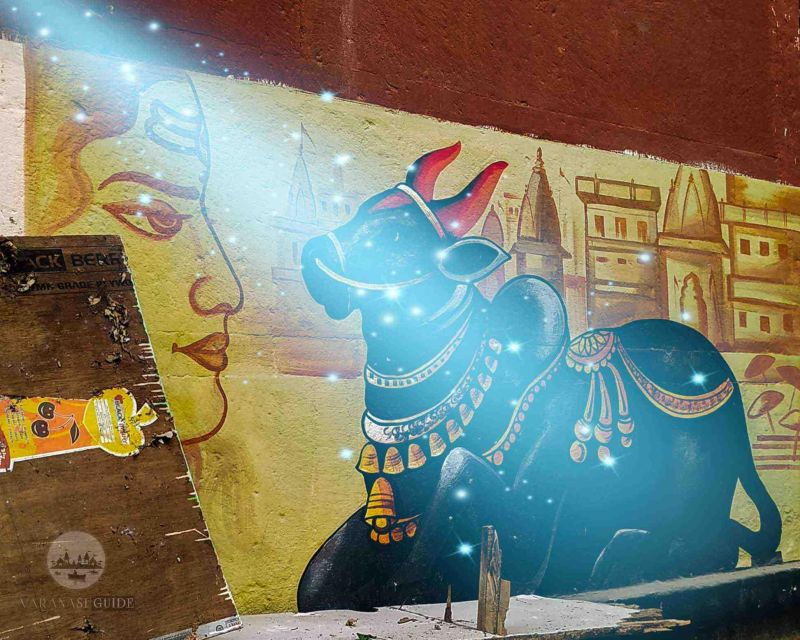
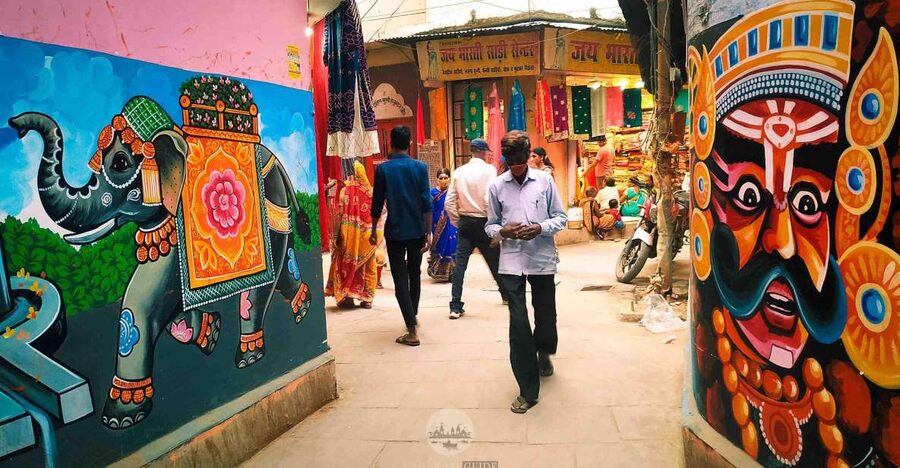
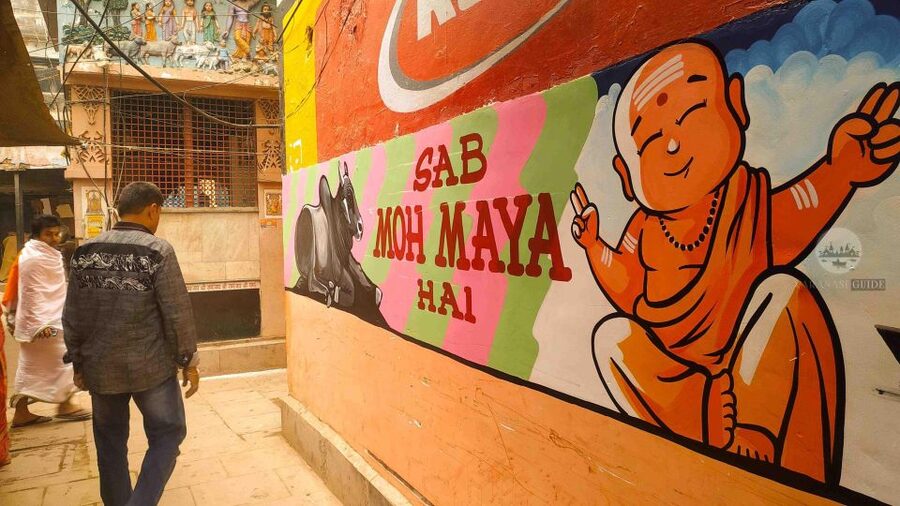
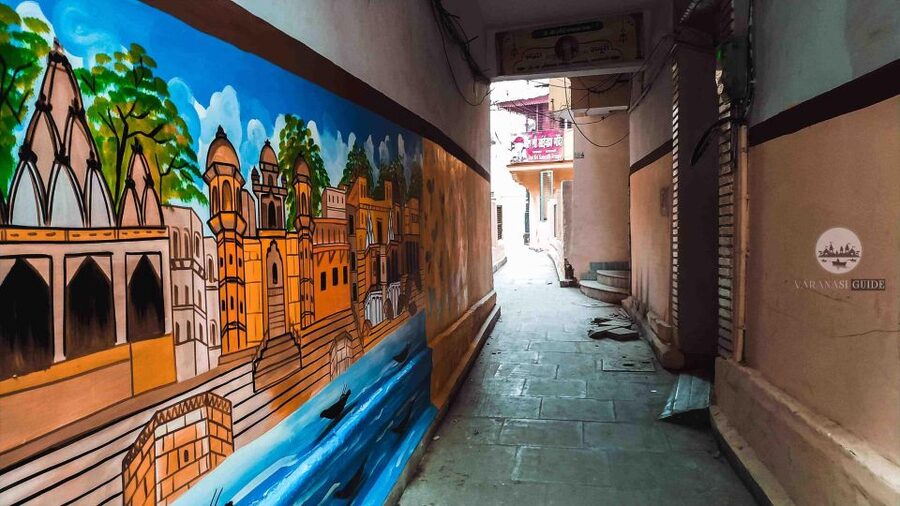
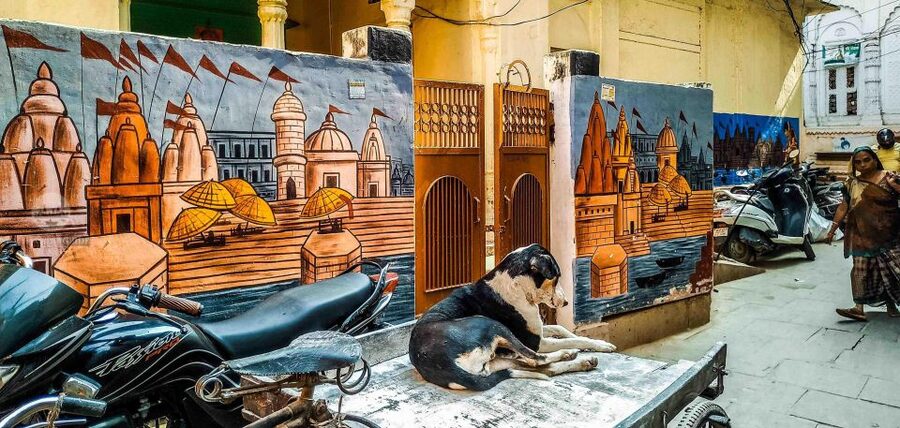
The highlights also include a flower market and tiny streets filled with temple colors, painted art, and small shrines. These details may become your favorite part of the walk. They show Varanasi as a lived-in city rather than a set of famous religious labels.
The flower market is especially useful for understanding how devotion becomes part of commerce and daily routine. Flowers are not just decorative objects here. They are connected with offerings, ritual, and the constant movement of people through the sacred quarter.
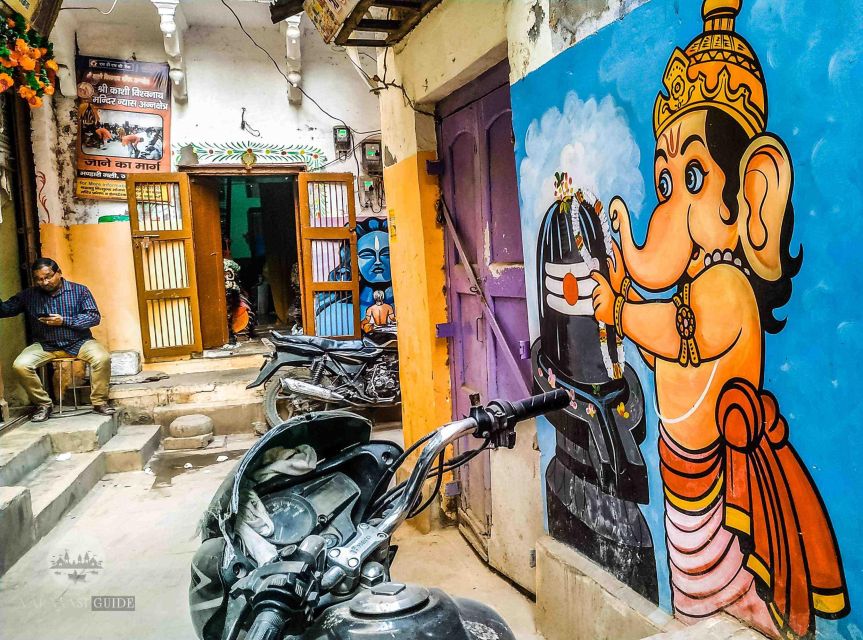
The lanes provide a different kind of reward. You might pass walls covered in bright color, small temple entrances, old architectural details, and ordinary city scenes compressed into a narrow space. This is where you need to stay alert and follow the guide. The setting is visually busy, and it is easy to lose the group if you stop every few steps.
I would also keep your camera secondary. The best part of these lanes is the combination of sounds, movement, colors, and small discoveries. Take photographs when appropriate, but do not let the search for a perfect image distract you from the living place around you.
What the guide adds, and where the style may not suit you
The strongest praise for this experience centers on the human side. Praveen has been described as kind, helpful, and able to reveal many characteristic corners of Varanasi. Several people found the walk a major help when they had only one day and feared they could not grasp the city in such a short visit.
The guide has also helped some people see the Ganga Aarti. That is worth noting, but the listed three-hour route does not present the ceremony as one of the regular scheduled stops. Treat it as a possible extra connected with the guide’s local help, not as something guaranteed by this walking plan.
Language choice is another advantage. You can book with a live guide in English, Spanish, or Hindi. That makes the experience more accessible for couples, families, and mixed groups who want cultural explanations without relying on a translation app.
The weakness is pace. One person found the guide’s factual detail impressive but felt worn down by being spoken to intensely at each stop. If you prefer relaxed conversation while walking, tell Praveen or the guide at the outset. Ask for shorter explanations, slower walking, and time to look around. You should not have to absorb every fact in one burst.
Is $13 good value for three hours?
At $13 per person, I consider this strong value if your goal is orientation, temple access, and local context. Tea or coffee, bottled water, and several admissions are included, so the low headline price does not leave you paying for every small part of the outing.
The value comes less from the number of monuments and more from the connections between them. You get a guide to explain why a Kund matters, how a temple fits into Kashi’s traditions, and what you are seeing in the narrow lanes. Without that context, you could easily spend three hours walking through the same area and understand far less.
There are limits. Drinks beyond the included tea or coffee are not covered, and lunch is not included. The tour also does not provide a full-day exploration of Varanasi, a boat ride, or a guaranteed Ganga Aarti visit in the listed schedule.
For a first look, a short stopover, or a budget-conscious itinerary, the price works very well. If you want extended time at every temple or a private pace built around photography, you may find the schedule too compressed.
Who should book this walk?
I would recommend it to you if you want a guided first encounter with Varanasi and you are comfortable walking through religious areas that can feel intense. It suits people who want temples, ghats, local lanes, art, and cultural explanation in one compact outing.
It is particularly useful if you have only one day in the city. The walk gives you a framework, and you can return later to the places that caught your attention. It also suits visitors who like history and religion explained in plain language rather than presented only through monuments.
You may want another option if you dislike a fast walking pace, find concentrated commentary tiring, or need long quiet periods at each temple. This is a full route in a short time, not a slow meditation walk.
You should also approach Manikarnika with care. If you are not ready to encounter a working cremation ghat, the guide may be able to explain the area respectfully, but the stop remains a central part of the experience.
Should you book the Varanasi Walking and Heritage Tour?
Book it if you want an affordable, tightly organized introduction to Varanasi’s temples, ghats, lanes, and sacred water sites. The combination of included admissions, multilingual guiding, tea, and a $13 price makes it an easy choice for a first visit.
Before the walk begins, tell your guide how much detail and what pace you prefer. That one conversation could make the difference between an absorbing cultural walk and an exhausting series of lectures. If you want broad coverage and authentic street-level context, I would book it. If you want a slow, highly flexible exploration, look for a longer private experience instead.
FAQ
Where does the tour start and finish?
The tour starts and returns to the Bank of Baroda ATM.
How long does the Varanasi heritage walk last?
The experience lasts three hours.
What languages are available for the live guide?
The guide is available in English, Spanish, and Hindi.
Is tea or coffee included?
Yes. Tea or coffee and bottled water are included.
Which admissions are included?
Included admissions cover Vishalakshi Temple, Nepali Temple, Manikarnikeshwar Temple, Ratneshwar Temple, Manikarnika Ghat, and Chakrapushkarni Kund.
Can I cancel for a full refund?
Yes. You can cancel up to 24 hours in advance for a full refund, and you can reserve now and pay later.
Just added in Varanasi
- Walking Tour in the old part of the city of Varanasi★ 5.0 · 25 reviews
- Varanasi: Manikarnika Ghat (Oldest Cremation Site) Tour★ 4.7 · 22 reviews
- Varanasi: Private Heritage Walking Tour & Sunrise Boat Ride★ 4.9 · 11 reviews
- Varanasi: Sunrise Boat Ride w/ Ghats & Morning Rituals★ 3.5 · 26 reviews
- Full-day private Varanasi tour with AC car, boat & Sarnath★ 4.9 · 103 reviews
- Varanasi Landmark Evening City Tour – Aarti & Boating★ 4.7 · 34 reviews
- Varanasi: Ganga Arti Evening Light Ceremony on the Main Ghat★ 4.1 · 11 reviews
- Varanasi: Ganges River Sunrise and Morning Walking Tour★ 4.8 · 16 reviews
Varanasi Tours, compared.
Full Day City Highlights Day Tour & Ganges Cruise
Read our review →
Hidden Secrets of Varanasi: Vibrant Tradition (Guided Tour)
Read our review →
The Ultimate 1 Day in Varanasi – How to Spend 13 Hours – Private Guided Tour
Read our review →
Hidden Secrets of Vibrant Tradition (Guided Tour)
Read our review →
Private Heritage and Spiritual Walk Tour – Varanasi Kashi
Read our review →Browse the lists this tour appears in