
Reviewed · BOAT TRIPS AND BACKWATER CRUISES
Varanasi: Sunrise Boat Tour with Arti Ceremony
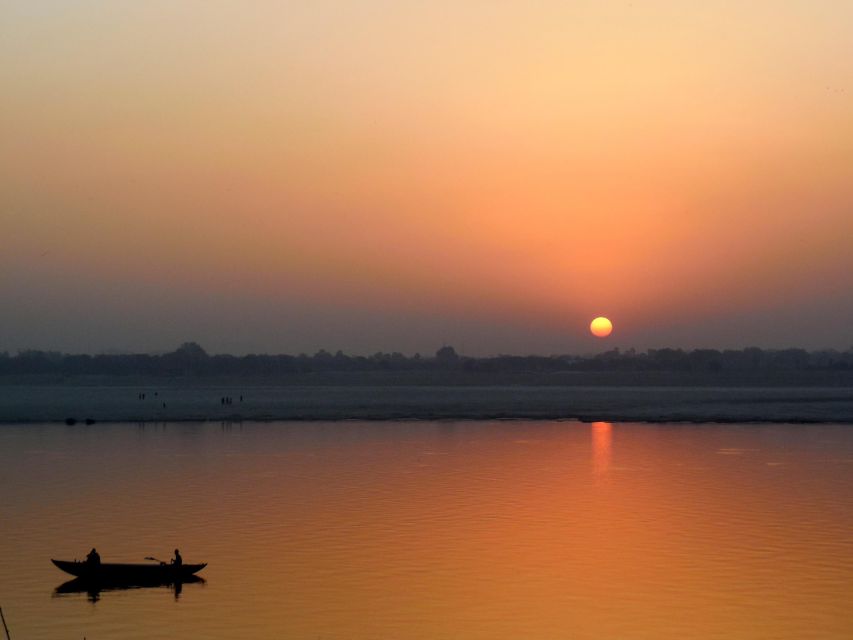
Varanasi wakes on the river. This early boat outing pairs the morning Arti ceremony and havan with a slow ride past roughly 55 ghats, giving you a clear view of the city from the Ganges. I like the peaceful sunrise setting and the chance to see daily rituals before the streets fully stir. The main consideration is the very early start, plus the fact that Manikarnika Ghat is an active cremation site and can feel confronting.
I also like the guide-led storytelling. Karan is frequently praised for his clear English, humor, history knowledge, photography, and ability to answer questions without rushing you. If you want more than a pretty boat ride, this personal attention adds real value.
In This Review
- Key points to know before booking
- Why a Varanasi sunrise boat ride matters
- Meeting near Assi Ghat before dawn
- Watching the arti and havan at Assi Ghat
- Boarding the boat and meeting the riverfront
- Passing roughly 55 ghats from the water
- Understanding Manikarnika Ghat
- Returning toward Assi Ghat
- Karan’s guiding style and photography
- Is $31 a fair price?
- Who should book this Varanasi tour?
- Practical advice for a better morning
- FAQ
- Where does the tour meet?
- How long does the experience last?
- What time does the tour start?
- What does the tour include?
- Does the tour visit Assi Ghat?
- How many ghats do you see?
- Does the route include Manikarnika Ghat?
- What language does the guide speak?
- How much does the tour cost?
- Can you cancel for a refund?
- Should you book the sunrise boat tour?
Key points to know before booking
- Starts at Assi Ghat: Meet near the Palace on Ganges, on the left corner of the street close to Assi Ghat.
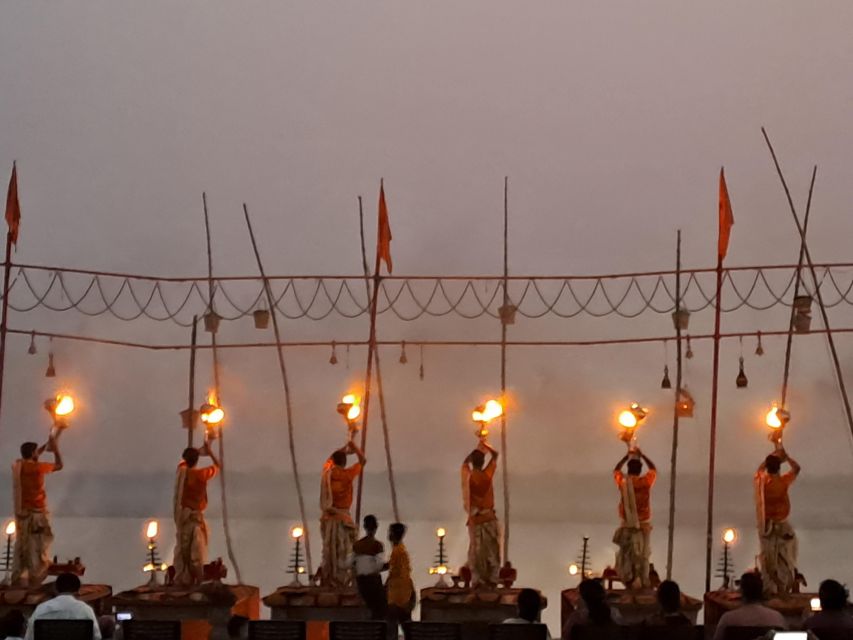
- Combines ritual and sightseeing: You see the morning arti and havan before boarding the boat.
- Covers about 55 ghats: The ride gives you a broad view of Varanasi’s riverfront, not just one famous landing.
- Includes Manikarnika Ghat: You pass the city’s most venerated cremation site, an important but sensitive part of the route.
- Karan earns high praise: His explanations, patience, humor, photos, and follow-up help are major strengths.
- Costs $31 per person: For two to three hours with a guide, rituals, and a full riverfront circuit, that is a fair price if you value context.
Why a Varanasi sunrise boat ride matters
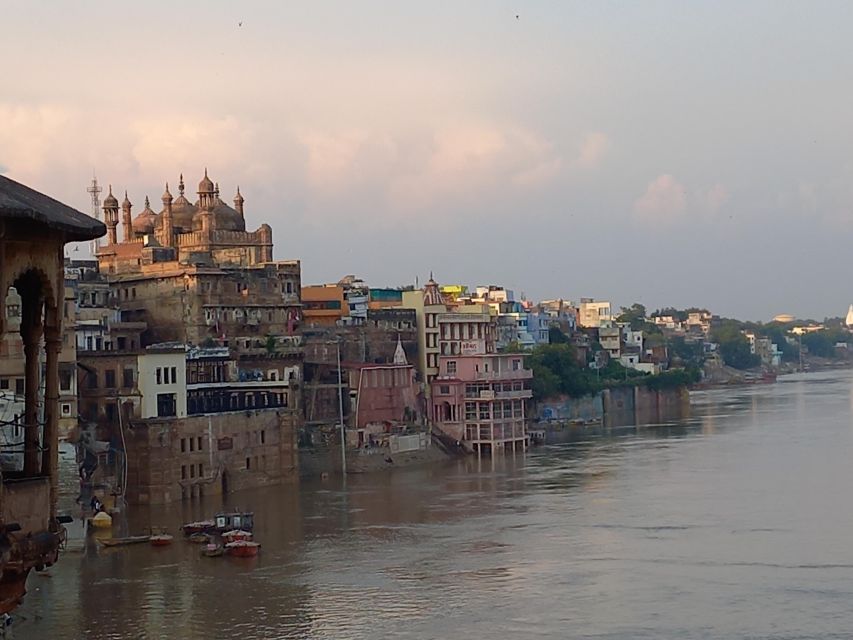
A boat ride on the Ganges is one of the best ways to understand Varanasi’s unusual rhythm. From the river, the city’s ghats form a long stone edge lined with temples, palaces, shrines, bathing steps, cremation grounds, and everyday working spaces.
From street level, Varanasi can feel crowded and hard to read. The river gives you room to watch. You can see how closely religious life and ordinary life share the same waterfront. People bathe, wash clothes, pray, gather for ceremonies, and begin their morning while boats move quietly past.
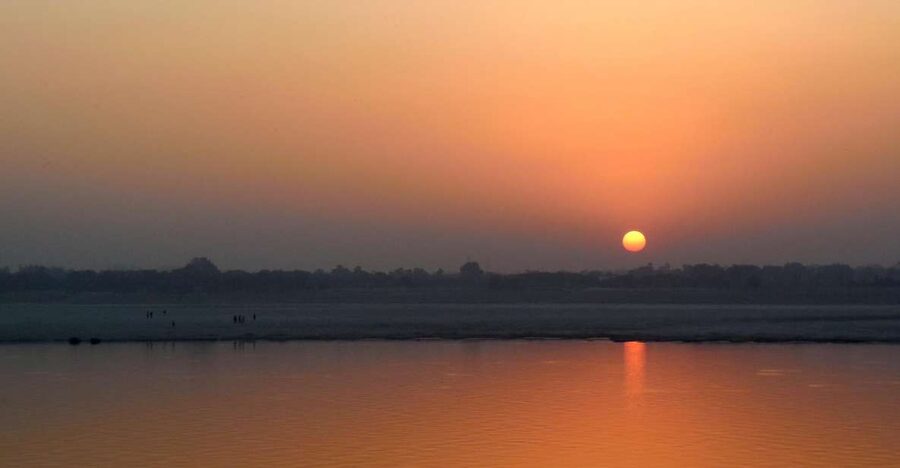
The early hour is important. Sunrise changes the color of the riverfront, and the city often looks softer from the water than it does from its narrow lanes. The boat also gives you a panoramic view that is difficult to get on foot.
This is not simply a sightseeing cruise. The point is the connection between the river, the ghats, and the rituals taking place beside them. A guide helps turn a row of old buildings into a readable story.
More Boat Trips in Varanasi
- Varanasi : Full Day City Highlights Day Tour & Ganges Cruise
★ 4.8 · 520 reviews - Marigold Boat Tour in Varanasi
★ 5.0 · 122 reviews - Varanasi Morning Boat Tour [RowBoat]
★ 5.0 · 88 reviews
Meeting near Assi Ghat before dawn
The stated meeting point is in front of the Palace on Ganges in Varanasi, on the left corner of the street near Assi Ghat. You should confirm the exact meeting instructions and starting time when booking, since the start varies and the activity lasts about two to three hours.
Assi Ghat is the southern starting point for the outing. It is a useful place to begin because the tour can introduce you to the religious side of Varanasi before you see the ghats from the river.
The early start is both the reward and the price of admission. You need to get out of bed while much of the city is still quiet, but that is when the light is best and the morning ceremony takes place. January visitors have reported fog, and in one case the boat ride was shifted to the afternoon because visibility was poor. That flexibility can protect the experience when the sunrise is hidden.
Bring a warm layer in cooler months. Several people appreciated having hot chai during the morning, though chai should be viewed as an extra comfort connected with the outing rather than a formally listed inclusion.
Watching the arti and havan at Assi Ghat
The tour begins with the morning arti ceremony and havan at Assi Ghat. Arti is a Hindu worship ritual using lamps and gestures of offering. Havan is a fire ritual, one of the longstanding practices associated with Hindu worship.
The value of seeing these ceremonies with a guide is that you are not left to guess what each movement means. Karan is praised for explaining the ritual clearly and helping people find good seats and views. That matters because a ceremony can be easy to watch but harder to understand from the edge of a crowd.
You should approach this part with respect. It is a religious event, not a staged show built for cameras. Watch quietly, follow the guide’s advice, and avoid treating the ritual as a photo opportunity first and a sacred act second.
The ceremony also gives you a better start than heading straight onto the boat. You first see Varanasi in an active devotional setting, then watch the same city open up from the river. The two parts belong together.
One practical point: the supplied details describe a morning arti at Assi Ghat. Do not confuse it with Varanasi’s better-known evening Ganga arti at Dashashwamedh Ghat. This tour focuses on the morning ceremony at Assi Ghat.
Boarding the boat and meeting the riverfront
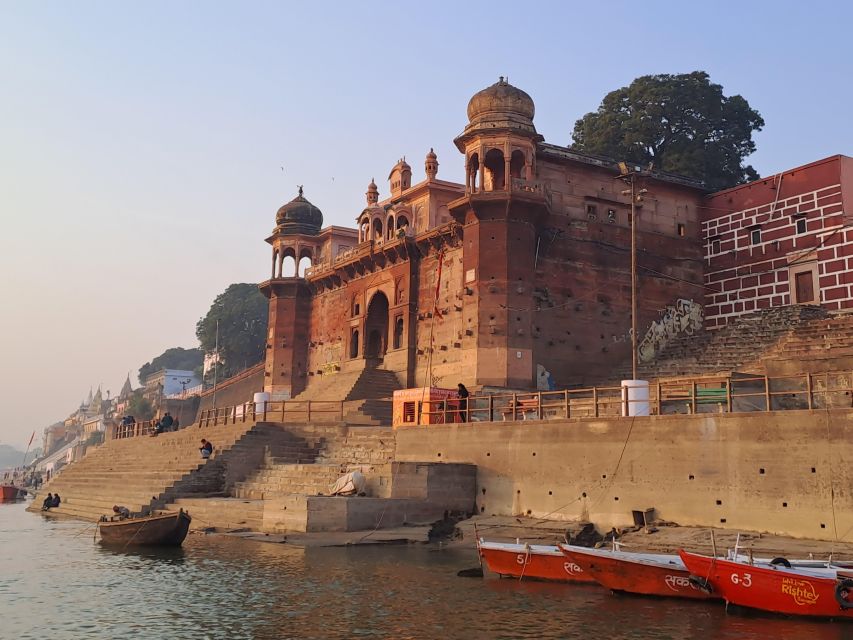
After the ceremony, you board the boat for the main sightseeing portion. The route travels along the Ganges and passes about 55 important ghats before reaching Manikarnika Ghat and returning toward Assi Ghat.
That route gives you a wide introduction to Varanasi. Rather than seeing one ghat in isolation, you watch the riverfront change as the boat moves. The guide points out temples, monuments, palaces, and other structures along the bank, then explains why each place matters.
One useful detail comes from a solo visitor who noted that the boat uses the engine mainly on the return. The outward journey can therefore feel especially quiet, with the guide’s stories easier to hear. This is the kind of small operational detail that improves the ride: less engine noise means more time to watch the city and listen.
The boat is also a good equalizer for a mixed group. You do not need to be a strong walker to see the long stretch of ghats, and you avoid trying to navigate every riverfront step on foot. Still, this is not a luxury cruise. Expect a practical sightseeing boat rather than a polished resort-style vessel.
A completely different kind of day out:
- Hidden Secrets of Varanasi: Vibrant Tradition (Guided Tour)
★ 5.0 · 429 reviews - Banaras Wala Tours
★ 5.0 · 329 reviews - The Ultimate 1 Day in Varanasi – How to Spend 13 Hours – Private Guided Tour
★ 5.0 · 295 reviews - A Journey of A lifetime
★ 5.0 · 272 reviews
Passing roughly 55 ghats from the water
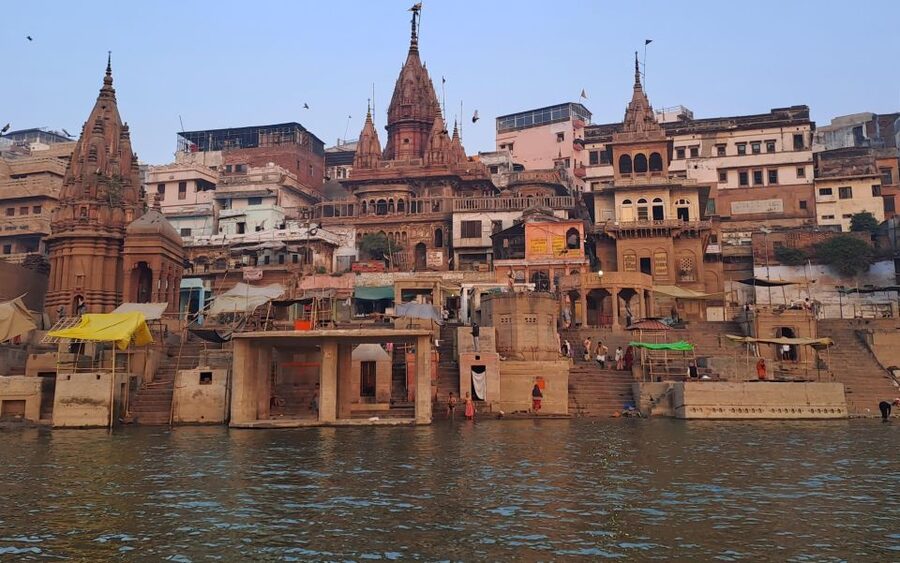
The heart of the tour is the long view along the ghats. A ghat is a set of steps leading down to the river, often connected with bathing, worship, cremation, festivals, or access to nearby temples and neighborhoods.
The boat’s position across the water lets you see the ghats as one connected city edge. You can study the different buildings and activity without standing in a single crowded spot. This broader view is one of the strongest reasons to choose a boat tour early in your Varanasi visit.
Your guide’s commentary is important here. Karan is praised for covering ancient and modern history, local customs, Hinduism, and the stories connected with individual ghats. He also adjusts his explanations to the group and responds to specific questions. That makes the tour more useful than a quiet ride where the boatman simply points at landmarks.
The views are often the star. At sunrise, the ghats catch the changing light while the city appears behind them in layers of stone, smoke, domes, balconies, and temple shapes. The river creates distance, so you can take in the full sweep of Varanasi instead of focusing on one building at a time.
The tradeoff is that details may be harder to see from the water. If you want to inspect carvings, enter temples, or wander through lanes, you need a separate walking tour. This boat ride is best for the big picture and the relationship between city and river.
Understanding Manikarnika Ghat
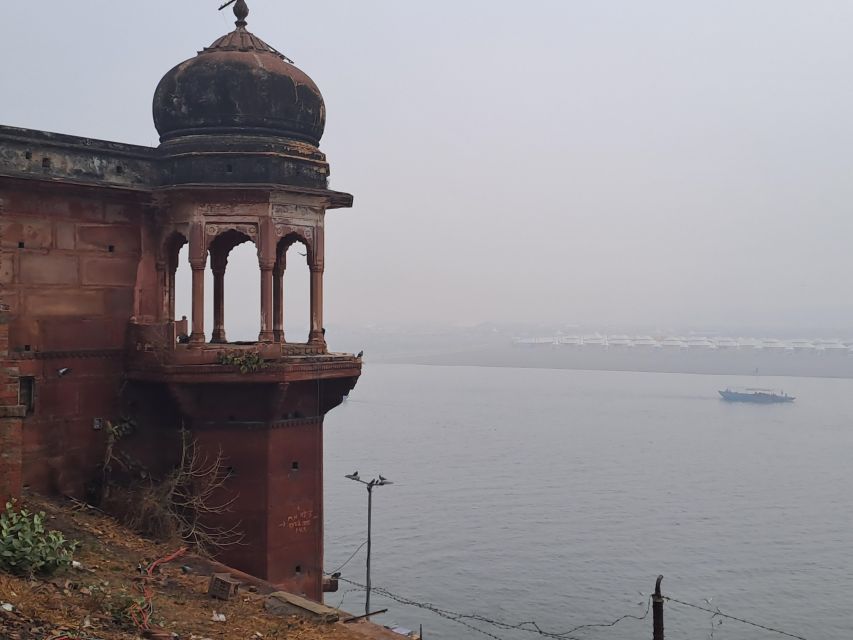
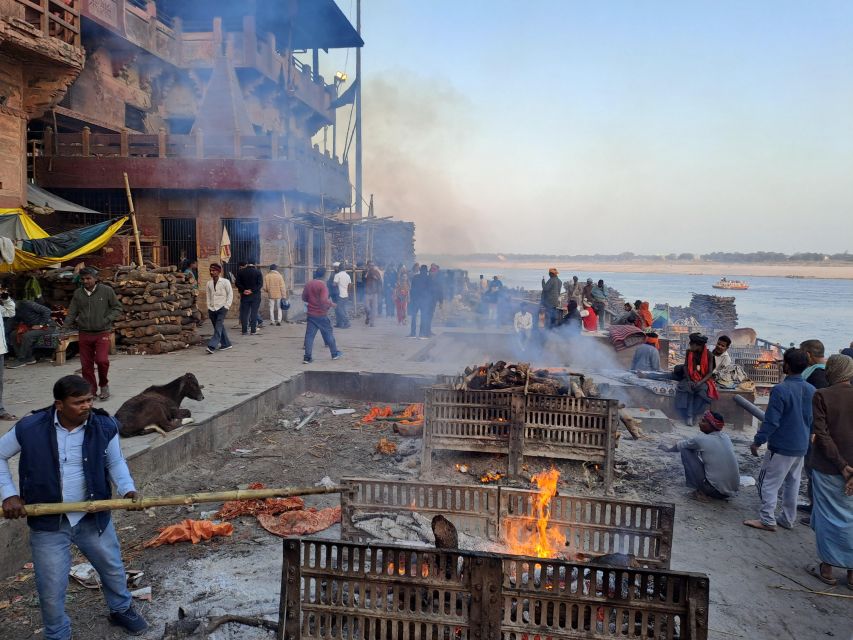
The boat continues to Manikarnika Ghat, widely regarded as Varanasi’s most venerated crematorium. It is a central part of the city’s religious identity and one of the most serious stops on the route.
This is not a casual attraction. Cremation is taking place here, and you may see smoke, funeral activity, or the work surrounding the site. Your guide can explain the role of the ghat, but no explanation removes the need for discretion.
The tour’s strength is that it does not sanitize Varanasi. The city’s sacred life includes birth, bathing, prayer, death, and cremation. Seeing Manikarnika from the river gives you a respectful distance while still showing an essential part of the city.
You should follow local customs and the guide’s instructions about photography. Avoid intrusive pictures of mourners or ceremonies. If you already know this setting may be emotionally difficult, consider that before booking, especially for children or anyone sensitive to funeral scenes.
For many people, this is the moment that gives the tour its weight. The sunrise views are beautiful, but Manikarnika reminds you that Varanasi is not only a picturesque riverfront. It is also a living religious city where death is part of daily reality.
Returning toward Assi Ghat
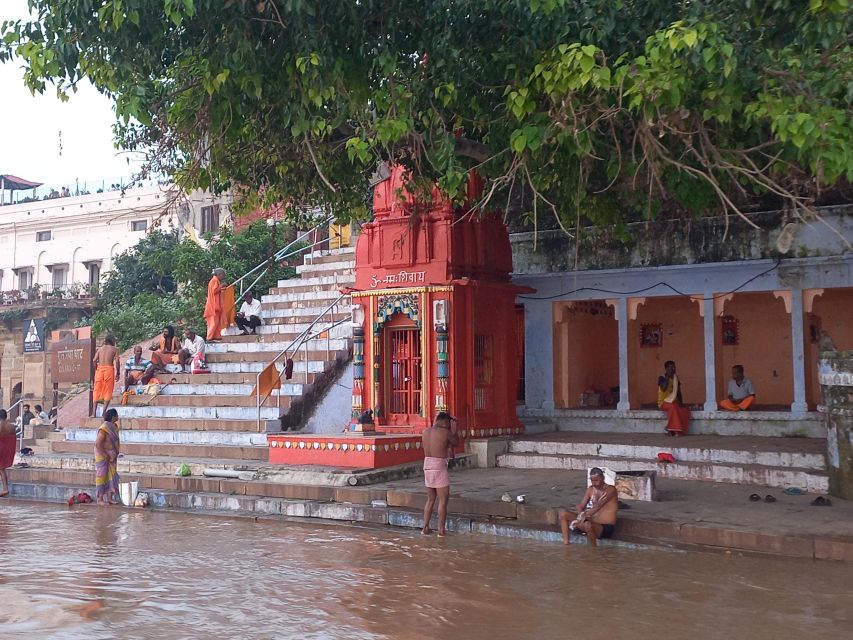
After Manikarnika Ghat, the boat slowly returns to Assi Ghat. The return gives you a second look at the same riverfront, now under stronger daylight and with more activity along the banks.
This part can feel less dramatic than the sunrise departure, but it has its own value. You may notice details you missed in the dim early light. The guide can also continue the conversation, answer questions, and connect what you have seen with the wider story of Varanasi.
Several visitors found Karan helpful beyond the formal tour. He offered restaurant advice, helped arrange a tuk-tuk in one case, and guided some people toward additional visits such as Sarnath and a heritage walk. Those extras are not included in the advertised package, but they show how the guide may help you plan the rest of your time.
The tour returns to the Palace on Ganges area. From there, you can continue exploring Assi Ghat or use the morning as a starting point for more sightseeing.
Karan’s guiding style and photography
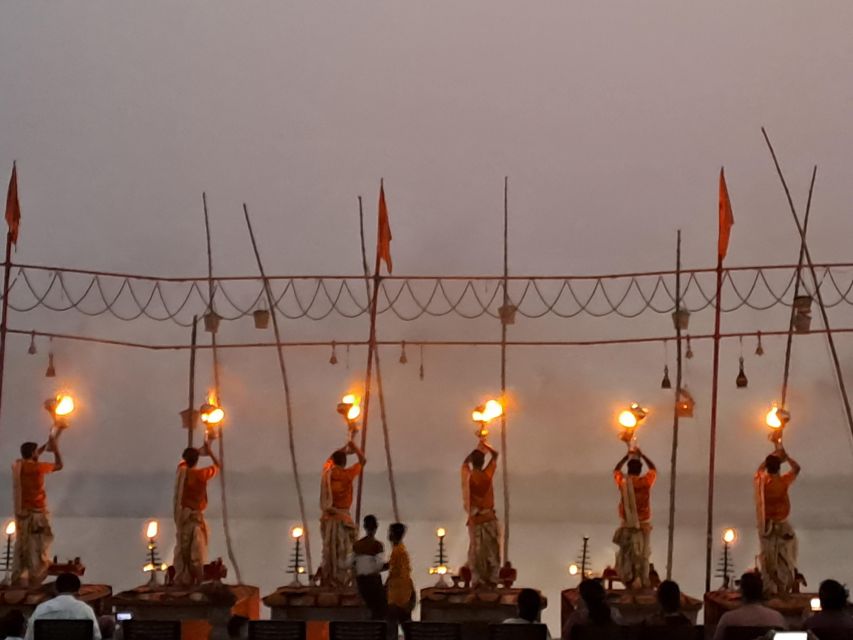
The guide can make or break an experience like this. Without context, you see a handsome riverfront and a series of ceremonies. With a good guide, you begin to understand why the ghats matter and how local customs fit together.
Karan receives especially strong praise for being punctual, approachable, funny, and patient. He is also praised for communicating well before the tour, helping groups with different backgrounds, and tailoring the discussion to their interests.
His English is described as very good. He has lived and worked in Europe, which some visitors found helpful when discussing Indian customs with people from Western cultures. That does not replace local knowledge, but it can make questions easier to ask and explanations easier to follow.
He is also often praised for taking photographs. If you want sunrise pictures of yourself or your group, this is a useful bonus. Still, I would treat the photos as an added kindness rather than a guaranteed professional photography service.
The personal approach seems to be the tour’s strongest feature. Several people went on to book other activities with Karan, including a heritage walk, a Sarnath visit, and temple sightseeing. You should not feel pressured to add anything, but his wider local advice may be valuable if you are new to Varanasi.
Is $31 a fair price?
At $31 per person, this tour offers reasonable value if you want a guided introduction rather than a bare boat rental. The fee covers the sunrise boat ride, the morning arti, the havan, and an English-speaking guide for roughly two to three hours.
The value comes from combining several elements in one outing. You see a religious ceremony, travel along a large stretch of the riverfront, hear stories about the ghats, and reach Manikarnika before returning to the starting area.
A cheaper independent boat may suit you if you only want sunrise photographs and do not need commentary. But arranging the ceremony, route, and historical explanation on your own may be less straightforward. You are paying for structure, local interpretation, and the guide’s help with timing.
The price is less attractive if you dislike early mornings, want a private luxury boat, or prefer a short ride without religious or cremation-related content. In that case, a simpler river outing may fit better.
Free cancellation up to 24 hours before the start and the option to reserve now and pay later reduce the financial risk. Since fog can affect the sunrise, flexible booking terms are useful, though you should still check the exact current conditions before you go.
Who should book this Varanasi tour?
I would recommend it to first-time visitors who want a clear introduction to Varanasi. It works particularly well for couples, solo visitors, families with older children, and anyone who prefers a guide to explain customs and history while they watch.
It is also a good first-morning activity. You gain an overview of the ghats before deciding which areas deserve a closer visit on foot.
You may want to skip it if you strongly dislike dawn starts, boats, ritual settings, or exposure to cremation grounds. The tour is respectful in tone, but it does not hide the harder parts of Varanasi.
Photography fans should like the sunrise views and the chance to see the city from across the water. People interested in Hindu traditions will get more from the arti and havan than someone looking only for a scenic cruise.
Practical advice for a better morning
- Confirm the meeting instructions at the Palace on Ganges and check the exact start time.
- Wear a warm layer in winter, especially if fog or cool morning air is expected.
- Keep your camera ready for the sunrise, but give the religious ceremony and cremation site proper respect.
- Ask questions. Karan’s patient, conversational style is one of the main benefits of choosing a guided tour.
- If fog blocks the sunrise, ask about a later boat departure. One January outing was postponed until the afternoon and still produced worthwhile river views.
- Leave room in your schedule afterward if you may want restaurant advice, a heritage walk, Sarnath, or temple visits with the same guide.
FAQ
Where does the tour meet?
You meet in front of the Palace on Ganges in Varanasi, on the left corner of the street near Assi Ghat.
How long does the experience last?
The experience lasts about two to three hours, with the guided tour at Assi Ghat and the boat ride included.
What time does the tour start?
It starts in the morning, but the exact starting time varies. You need to check availability for the date you want.
What does the tour include?
It includes the sunrise boat tour, the morning arti ceremony, the havan ritual, and a live English-speaking guide.
Does the tour visit Assi Ghat?
Yes. The activity begins at Assi Ghat, where you attend the morning ceremony before the boat ride.
How many ghats do you see?
The boat route passes about 55 of Varanasi’s important ghats.
Does the route include Manikarnika Ghat?
Yes. The boat reaches Manikarnika Ghat, the city’s most venerated cremation site, before returning toward Assi Ghat.
What language does the guide speak?
The live guide speaks English.
How much does the tour cost?
The listed price is $31 per person.
Can you cancel for a refund?
Yes. You can cancel up to 24 hours in advance for a full refund. You can also reserve now and pay later.
Should you book the sunrise boat tour?
Yes, if you want to see Varanasi through both its beauty and its religious life. The best parts are the early arti at Assi Ghat, the wide river views, the long route past the ghats, and Karan’s personal explanations.
Book it early in your Varanasi stay so the riverfront gives you a frame for the rest of the city. Just prepare for the dawn start and the serious atmosphere at Manikarnika Ghat. If those are acceptable to you, $31 is a fair price for a well-organized introduction to Varanasi from the Ganges.
Just added in Varanasi
- The Ultimate 1 Day in Varanasi – How to Spend 13 Hours★ 4.9 · 32 reviews
- Spiritual Tour in Varanasi with a local- 2 Hours Tour★ 4.8 · 13 reviews
- Sarnath Tour- Where Buddhism Originated★ 4.9 · 15 reviews
- Private Sunset Boat Ride and Ganga Aarti with Reserved Seat★ 4.7 · 18 reviews
- Varanasi: Mysticism Tour with Boat Ride & Ganga Aarti★ 3.5 · 33 reviews
- GROUP YOGA CLASS – BEGINNER / ADVANCED – Sunrise Yoga with Ayush in Varanasi★ 5.0 · 79 reviews
- Walking tours – for an authentic Varanasi experience★ 5.0 · 40 reviews
- Single Walking Tour. Local culture, religion, traditions and more. Daily Tour★ 5.0 · 28 reviews
Boat Trips and Backwater Cruises, compared.
Full Day City Highlights Day Tour & Ganges Cruise
Read our review →


5 Days Luxury Kerala Tour with Houseboat Experience
Read our review →
Kochi Sightseeing Tuk-Tuk Tour with Pickup From Cruise Ships
Read our review →
Kochi Tuk-Tuk Sightseeing Tour with Cruise Ship Pickup
Read our review →Browse the lists this tour appears in