
Reviewed · VARANASI TOURS
Hidden Secrets of Varanasi: Vibrant Tradition (Guided Tour)
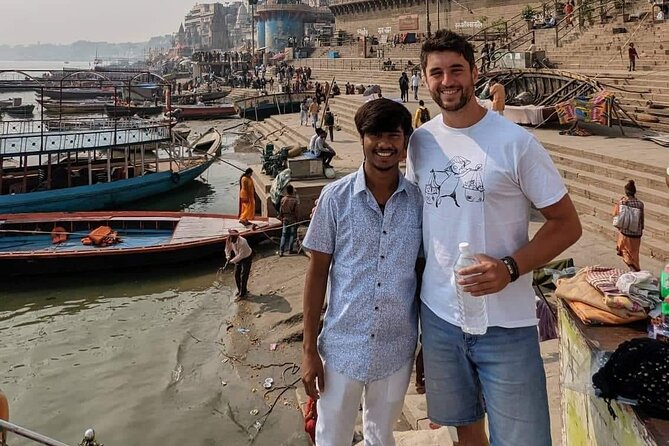
Varanasi reveals itself one alley at a time. This three-hour walking tour brings you from the Ganges to old temples, a sacred cremation ground, local markets, food stalls, and quiet corners most first-time visitors would miss. I like the way it combines famous sights with everyday Varanasi, and I especially like the local guides, including Akash, Badal, Niwas, Vidya, and Rakesh, who explain customs through personal knowledge of the city.
The price is $24.55 per person, a fair deal for a small-group introduction to a difficult city to read on your own. I also like the practical touch of bottled water and tea or coffee. The main drawback is the pace: three hours is enough for an excellent orientation, but not enough for long visits at every stop. The walking route can also feel intense, especially around the ghats and narrow lanes.
In This Review
- Key points before you book
- Why Varanasi benefits from a local guide
- Starting at Dashashwamedh Ghat
- Vishalakshi Temple and the city’s religious fabric
- Nepali Temple, also called Kathwala Temple
- Manikarnika Ghat: the most serious stop
- Manikarnikeshwar Mahadev Temple below street level
- The narrow lanes are part of the attraction
- Food, tea, and the everyday city
- What the guides add to the experience
- Price, group size, and practical value
- Who should book this Varanasi walk?
- Should you book Hidden Secrets of Varanasi?
- FAQ
- How long is the Hidden Secrets of Varanasi tour?
- How much does the tour cost?
- Where does the tour start?
- Where does the tour finish?
- What places are included on the route?
- Is admission included?
- Is food included?
- How large can the group be?
- Are service animals allowed?
- Can I cancel for a full refund?
Key points before you book
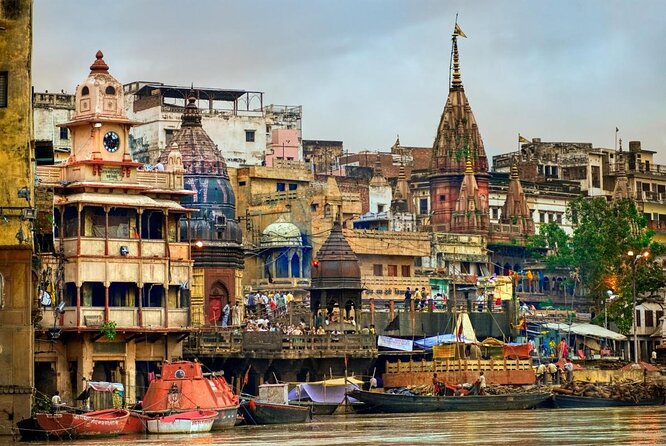
- Manikarnika Ghat is the emotional center: You see one of Hinduism’s most sacred cremation grounds, with the guide explaining the rituals and their meaning.
- The route mixes major sights with ordinary life: Temples and ghats are paired with local lanes, markets, small shrines, street art, and food stops.
- Local guides make the difference: Guides such as Akash and Badal are praised for clear English, patience, humor, and a strong sense of place.
- It is a useful first-day tour: The walk helps you get your bearings before tackling Varanasi alone.
- Expect a real walking experience: Cows, crowds, funeral processions, maze-like lanes, and people asking for your attention are all part of the setting.
- The tour returns to the starting point: Meet at the Virtual Experiential Museum near Manmandir Ghat, and finish there after roughly three hours.
Why Varanasi benefits from a local guide
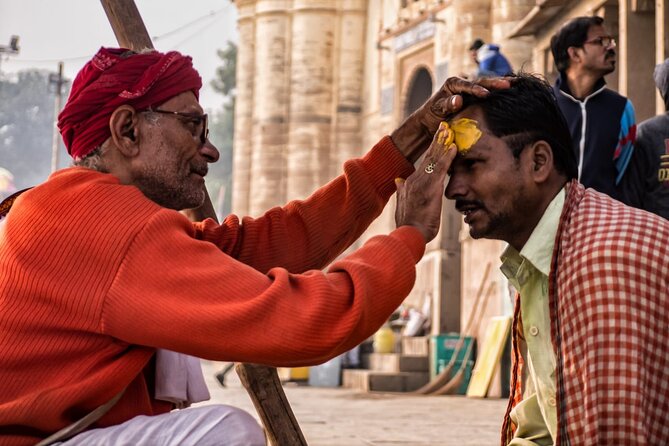
Varanasi is not hard to find. It is hard to understand.
The old city around the Ganges is a maze of lanes, shrines, homes, shops, cows, funeral processions, and sudden river views. A map helps only so much. A local guide gives the streets a human scale and helps you understand what you are seeing rather than simply pointing at it.
That matters most in places where religious activity is still part of daily life. A temple may be tucked below street level. A procession may move through a lane with little warning. A ghat may look like a set of broad stone steps, yet carry centuries of religious meaning. The guide provides the context, then gives you room to look and ask questions.
The strongest part of this experience is its balance. You see major sights such as Dashashwamedh Ghat, Vishalakshi Temple, and Manikarnika Ghat, but you also walk through less polished parts of the old city. That combination helps you see Varanasi as a living place, not just a collection of monuments.
I would book this near the beginning of your stay. Several guides, especially Akash and Badal, are praised for helping people feel settled in a city that can otherwise seem overwhelming. After the walk, you should have a better sense of where the ghats are, how the lanes connect, and how to move around with more confidence.
A few more options to weigh up in Varanasi
- Varanasi : Full Day City Highlights Day Tour & Ganges Cruise
★ 4.8 · 520 reviews - Varanasi: Sunrise Boat Tour with Arti Ceremony
★ 5.0 · 375 reviews - Banaras Wala Tours
★ 5.0 · 329 reviews
Starting at Dashashwamedh Ghat
The tour begins near the Virtual Experiential Museum at Manmandir Ghat, in the Bangali Tola area. From there, the first listed stop is Dashashwamedh Ghat, one of the best-known riverfront steps in Varanasi.
You get about 10 minutes here, so think of this as an orientation rather than a long river visit. The ghat sits near the old Vishwanath Temple and is one of the main places to understand Varanasi’s connection with the Ganges. The setting is open, public, and constantly active.
Your guide can help explain the role of the ghats, the rituals carried out beside the river, and the difference between the areas used for bathing, prayer, ceremonies, and cremation. The short stop also gives you a first look at the scale of the riverfront before the route turns into the old lanes.
The limitation is clear: 10 minutes passes quickly. If you want extended time for photographs or quiet reflection, you may need to return later on your own. Still, as a first stop, it gives the rest of the walk a useful setting.
Vishalakshi Temple and the city’s religious fabric
The next stop is Vishalakshi Temple, also called Vishalakshi Gauri Temple. The visit lasts about 15 minutes, with admission included.
This temple is dedicated to Vishalakshi, an aspect of the goddess Parvati. A guide is particularly useful here because the significance of a Hindu temple is not always obvious from its entrance, images, or rituals. You can ask about the goddess, the temple’s place in Varanasi, and the customs taking place around you.
The visit is brief, so you should expect an introduction rather than an extended religious ceremony or architectural study. Dress and behavior should be respectful, and follow your guide’s instructions inside. The route’s value lies less in the number of minutes spent at the temple and more in connecting it to the other sacred places you see that morning.
I appreciate that this is not treated as an isolated monument. The temple forms part of a larger religious network that includes the river, shrines, cremation grounds, and underground sanctuaries. That connection is one of the things a good local guide can make clear.
Nepali Temple, also called Kathwala Temple
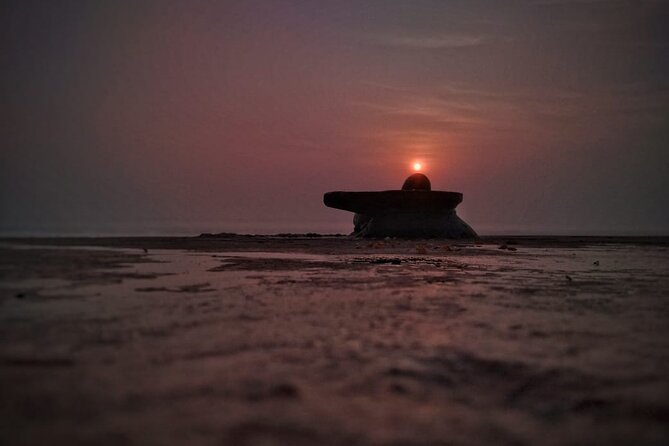
The 15-minute visit to Nepali Temple adds a different architectural note to the route. Its formal name is Shri Samrajeswar Pashupatinath Mahadev Mandir, and it is also known as Kanthwala Mandir or Mini Khajuraho.
The temple is regarded as one of Varanasi’s older and better-known shrines. Even a short stop here breaks up the riverfront focus and shows how varied the city’s sacred buildings can be. The name Mini Khajuraho points to its sculptural style, though the supplied tour details do not promise a full architectural explanation, so ask your guide what features are most important.
This is another place where the guide’s local knowledge carries the experience. Without context, you may simply see another temple in a city filled with temples. With explanation, you can better place it within Varanasi’s religious and artistic traditions.
The tour includes admission, which keeps the price simple. As with Vishalakshi Temple, the schedule allows a short visit, not a slow study of every detail.
A completely different kind of day out:
- The Ultimate 1 Day in Varanasi – How to Spend 13 Hours – Private Guided Tour
★ 5.0 · 295 reviews - A Journey of A lifetime
★ 5.0 · 272 reviews - Varanasi: Hidden Secrets of Vibrant Tradition (Guided Tour)
★ 4.9 · 176 reviews - Private Heritage and Spiritual Walk Tour – Varanasi Kashi
★ 5.0 · 172 reviews
Manikarnika Ghat: the most serious stop
Manikarnika Ghat is the key stop on the walk, with about 25 minutes set aside. It is one of the holiest Hindu cremation grounds on the Ganges, and it is not a conventional sightseeing stop.
You may see cremation rituals taking place. The guide’s job here is not to turn grief into a spectacle, but to explain the religious meaning and help you behave appropriately. Several accounts of the tour praise Akash in particular for explaining the rituals from beginning to end, giving visitors a way to understand what they are seeing without reducing it to a photo opportunity.
This part may feel confronting. You should be prepared for smoke, funeral activity, and a serious atmosphere. Keep your distance, follow local customs, and listen carefully to your guide. Photography around cremation activity requires great sensitivity, and you should not assume that taking pictures is acceptable.
For me, this is where the tour offers something a guidebook cannot easily provide. You are not simply told that Manikarnika is sacred. You are shown how death, faith, family duty, and the river fit into the religious life of Varanasi.
The 25-minute time allowance is long enough for an explanation, but the experience may feel shorter or longer depending on what is happening that day. The tour needs to stay respectful and flexible here.
Manikarnikeshwar Mahadev Temple below street level
The final listed stop is Manikarnikeshwar Mahadev Temple, with around 10 minutes inside. The linga is located underground, and the temple is linked to a belief about worship at Manikarnika and freedom from rebirth.
This small, unusual shrine gives the tour another layer. You move from the public riverfront and its large rituals into a more enclosed sacred space. The setting helps show how Varanasi’s religious life can appear in unexpected places, sometimes below the level of the street and inside the maze of the old city.
Do not expect a large temple complex or a long visit. Ten minutes is enough to hear the story, see the setting, and understand why the shrine matters. The stairs or confined space may not suit everyone, though the tour information says most travelers can participate and service animals are allowed.
The narrow lanes are part of the attraction
The scheduled stops tell only part of the story. Much of the pleasure comes between them, as the guide leads you through lanes that can be difficult to follow alone.
You may pass residential areas, tiny temples, markets, colorful street art, and small corners with no obvious sign explaining their importance. The route is designed to show the lived-in side of Varanasi, not just the places printed on a city map.
That is also where the walk can become chaotic. The old city has cows, crowds, funeral processions, shopkeepers, and people seeking attention for food, souvenirs, or photographs. One account describes the guide sometimes moving ahead in the maze, then locating the group again. That detail is worth noting: stay close, especially at busy intersections and lane turns.
The guides are praised for checking that people are keeping up and for allowing rest when needed. Akash is repeatedly singled out for clear explanations and a good sense of humor. Badal is praised for making solo visitors feel comfortable, while Niwas is described as enthusiastic about his home city and careful not to rush the walk.
Food, tea, and the everyday city
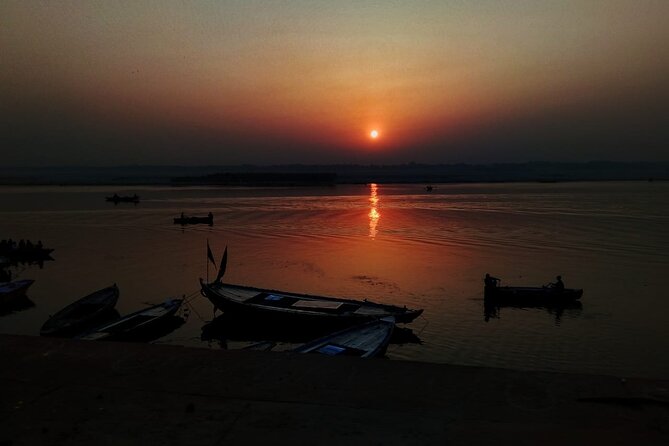
The route includes popular food stalls and local food culture in its description. Bottled water and coffee or tea are included, but food and other drinks are not. That means you should carry some cash if you want to buy snacks or try something along the way.
The food element is useful because it connects religion and daily life. Varanasi is not only ghats and temples. It is also tea, cooking, markets, family businesses, and people going about ordinary tasks beside sacred places.
The exact food tasting is not fixed in the information provided, so you should not book this expecting a full meal or a formal food tour. Some experiences may include opportunities to try local street food, but food purchases are separate. Ask the guide what is available that day and mention any dietary concerns before buying anything.
What the guides add to the experience
The company uses several local guides, and the quality of the commentary appears to be the main reason people value the walk. Akash is praised for his English, detailed explanations, patience, and ability to answer questions. Badal is described as friendly, attentive, and particularly reassuring for a solo woman traveling alone.
Niwas, also written as Nivas or Niwaz in the supplied material, receives repeated praise for making the city come alive and for sharing local traditions with warmth. Vidya and Rakesh are also described as passionate about Varanasi’s culture and history.
Because different guides may lead the tour, the experience will not sound exactly the same every time. That is not necessarily a problem. The shared strength is local familiarity and a willingness to explain daily life rather than recite only textbook facts.
You should ask questions. One particularly useful feature of this kind of walk is the chance to clarify unfamiliar words, rituals, and customs as they arise. Akash is praised for patiently explaining difficult English terms, which matters if you are not a native English speaker.
Price, group size, and practical value
At $24.55 per person, this is reasonably priced for an approximately three-hour guided walk with temple admissions, bottled water, and tea or coffee. The maximum group size is 25, so you should not assume a private tour or a tiny gathering.
The actual value depends on how much help you need finding your way through Varanasi. If you are comfortable wandering alone and reading about each temple afterward, you can spend less. But the route, local access, and explanations save time and reduce the chance of missing the meaning behind what you see.
A group of up to 25 can be less personal than the small groups praised in several accounts. If the group is full, keep near the guide and speak up when you have a question. The tour ends back at the meeting point, and transportation is not included, so you must arrange your own way to and from the start.
The mobile ticket is convenient, and confirmation is provided at booking. The walk is near public transportation, and most people can take part, but you should be comfortable walking on uneven, crowded routes for several hours.
Free cancellation is available if you cancel at least 24 hours before the start time. Changes or cancellations inside that window are not refunded, and poor weather or failure to reach the minimum group size can lead to a new date or a full refund.
Who should book this Varanasi walk?
I would recommend it to first-time visitors who want a clear introduction before exploring alone. It also suits solo visitors, couples, and anyone curious about Hindu customs, cremation rituals, local food, and the ordinary neighborhoods behind the ghats.
It is a good fit if you want interpretation rather than a checklist of monuments. You will get more from it if you ask questions, stay close to the guide, and accept that Varanasi is not tidy or predictable.
I would be cautious about booking it if you want a slow photography tour, a private luxury experience, or long periods inside each temple. The route is active, the group may be sizable, and Manikarnika Ghat can be emotionally difficult.
Should you book Hidden Secrets of Varanasi?
Yes, if you want help making sense of Varanasi quickly and respectfully. The strongest reasons are the local guides, the access to difficult-to-find lanes, and the careful explanation of Manikarnika Ghat and the city’s religious customs.
Book it early in your stay, wear comfortable walking shoes, bring modest clothing for temple visits, and keep some cash for optional food and drinks. If you can accept the noise, crowds, and serious nature of the cremation ground, this is a good-value way to meet Varanasi on its own terms.
FAQ
How long is the Hidden Secrets of Varanasi tour?
The tour lasts approximately three hours.
How much does the tour cost?
The listed price is $24.55 per person.
Where does the tour start?
It starts at the Virtual Experiential Museum near Manmandir Ghat, Bangali Tola, Varanasi.
Where does the tour finish?
The activity ends back at the meeting point.
What places are included on the route?
The route includes Dashashwamedh Ghat, Vishalakshi Temple, Nepali Temple, Manikarnika Ghat, and Manikarnikeshwar Mahadev Temple.
Is admission included?
Admission is included for Vishalakshi Temple, Nepali Temple, Manikarnika Ghat, and Manikarnikeshwar Mahadev Temple. Dashashwamedh Ghat has free admission.
Is food included?
Food and drinks are not included, but bottled water and coffee or tea are included.
How large can the group be?
The maximum group size is 25 people.
Are service animals allowed?
Yes, service animals are allowed.
Can I cancel for a full refund?
Yes, if you cancel at least 24 hours before the experience start time. Cancellations or changes made less than 24 hours before the start time are not refunded.
Just added in Varanasi
- The Ultimate 1 Day in Varanasi – How to Spend 13 Hours★ 4.9 · 32 reviews
- Spiritual Tour in Varanasi with a local- 2 Hours Tour★ 4.8 · 13 reviews
- Sarnath Tour- Where Buddhism Originated★ 4.9 · 15 reviews
- Private Sunset Boat Ride and Ganga Aarti with Reserved Seat★ 4.7 · 18 reviews
- Varanasi: Mysticism Tour with Boat Ride & Ganga Aarti★ 3.5 · 33 reviews
- GROUP YOGA CLASS – BEGINNER / ADVANCED – Sunrise Yoga with Ayush in Varanasi★ 5.0 · 79 reviews
- Cultural & Spiritual Trails of Old Town Varanasi Guided Walking Tour★ 4.5 · 73 reviews
- Walking tours – for an authentic Varanasi experience★ 5.0 · 40 reviews
Varanasi Tours, compared.
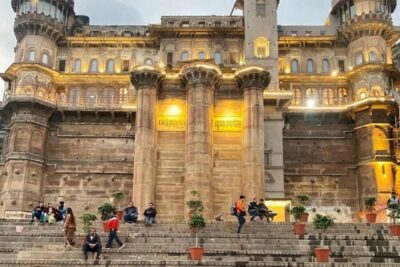
Full Day City Highlights Day Tour & Ganges Cruise
Read our review →
The Ultimate 1 Day in Varanasi – How to Spend 13 Hours – Private Guided Tour
Read our review →
Hidden Secrets of Vibrant Tradition (Guided Tour)
Read our review →
Private Heritage and Spiritual Walk Tour – Varanasi Kashi
Read our review →
Browse the lists this tour appears in