
Reviewed · WALKING TOURS
Panjim: Guided Walk Tour of Portuguese-Influenced Goa
Goa’s Portuguese past is best seen on foot. This $14 Panjim walking tour links whitewashed churches, hilltop views, old courts, and the colorful Fontainhas Latin Quarter in two hours. I like the small-scale route and the local storytelling, especially the way architecture is tied to daily life. The main drawback is the uphill stretch at Altinho and the possibility that a quiet-speaking guide may be harder to hear.
You’ll also get useful city tips from an English or Hindi-speaking guide, including guide Joaquim, whose historical anecdotes have earned especially warm praise. Just remember that this is a real walking tour, not a sightseeing ride, and the café stop may involve your own spending because food and drinks are not included.
In This Review
- Key things to know before you go
- Why this short Panjim walk works
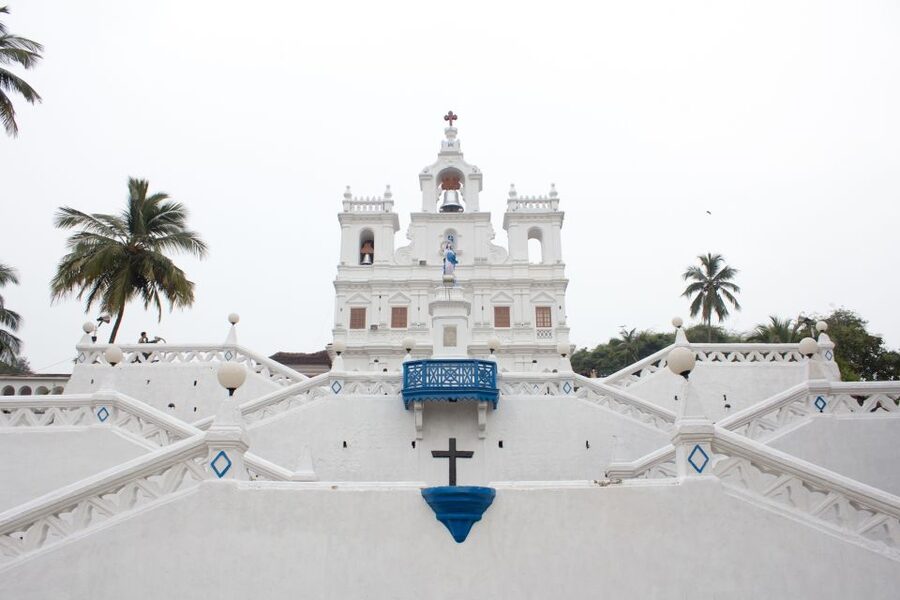
- Starting beneath Panjim’s white church
- Up Altinho Hill through stepped streets
- Colonial buildings around the Old High Court
- A modest art gallery and a change of pace
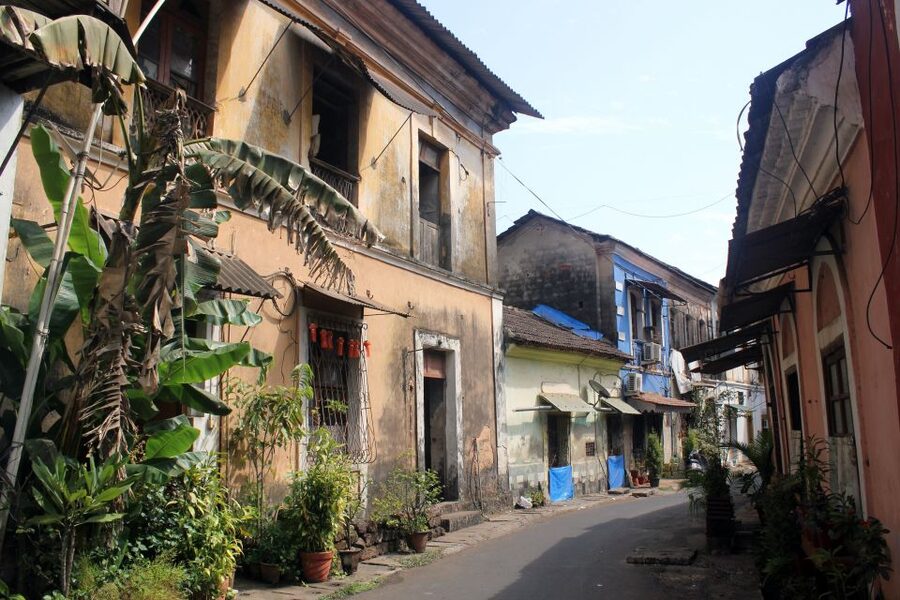
- Fontainhas, where Panjim becomes most photogenic
- The Chief Minister’s Residence and Maruti Temple
- The café stop and what you should budget
- Guide style, language, and pace
- Is $14 a fair price?
- Who should book this Panjim experience?
- Should you book it?
- FAQ
- Where does the Panjim walking tour meet?
- How long does the walking tour last?
- Which languages does the guide speak?
- Is the tour wheelchair accessible?
- What should I bring?
- Is food included during the café stop?
Key things to know before you go
- The route begins at Panjim Church: Meet at the staircase of Our Lady of the Immaculate Conception Church, at 165, Avenida Teófilo Braga, 10 minutes early.
- Fontainhas is the visual star: Expect painted homes, narrow lanes, cafés, heritage details, and plenty of photo stops.
- Altinho adds a workout: The route includes uphill sections and stepped streets, so comfortable shoes matter.
- The pace is intentionally relaxed: The walk is designed for stories, questions, and close looks rather than racing between monuments.
- You get local help beyond history: Your guide can suggest places to eat and ways to explore Panjim without wasting money.
- The route description has two possible endings: Fontainhas is listed as the finish, while Maruti Temple is also described as the final stop, so confirm the exact sequence when you meet.
Why this short Panjim walk works
Panjim, also called Panaji, can look easy to understand at first. You see the church, a few old streets, and colorful houses, then assume the city’s story is simply Portuguese architecture in the tropics. This walk is useful because it connects those sights to Goa’s culture, religion, government, and changing city life.
At $14 per person, the value comes less from admission tickets and more from access to context. You are paying for a guide, a planned route, local recommendations, and the chance to notice details you could easily pass without seeing. The walk also reaches less obvious corners, including heritage points and lanes that are more rewarding with explanation.
I especially like the two-hour length. It is long enough to give you a proper sense of Panjim, but short enough to fit into a first day, a free morning, or a break between other plans. The relaxed pace suits anyone who wants to stop for photographs and ask questions rather than march through a checklist.
The style is described as infotainment, which means the guide aims to keep history lively and accessible. That matters in Goa, where dates, rulers, religious traditions, and colonial influences can become a blur if they are presented as a lecture. The strongest guide feedback points to Joaquim, also spelled Joachim in one account, who is praised for historical anecdotes and an enthusiastic way of explaining both Goa and wider European history.
More Walking Tours in India:
- The Great Indian Food Tour: Old Delhi Food and Heritage Walk
★ 5.0 · 1,698 reviews - Group Guided Walking Tour in Fort and Colaba
★ 5.0 · 1,073 reviews - Spiritual City Walking Tour-THE Pushkar Route
★ 5.0 · 907 reviews
Starting beneath Panjim’s white church
Your meeting point is the staircase of Our Lady of the Immaculate Conception Church. Meet 10 minutes before the start at 165, Avenida Teófilo Braga, Goa. The church is one of Panjim’s easiest landmarks to recognize, with its broad white frontage and prominent staircase.
It is a fitting place to begin because the route starts with a major symbol of Portuguese-influenced Goa. The church gives you an immediate sense of the city’s colonial-era visual style, but the real benefit is hearing how this building fits into Panjim’s religious and civic story.
Bring water with you. A bottle is not included, and Goa’s heat can make a two-hour walk feel longer than it looks on paper. Comfortable clothes and shoes are specifically recommended, and I would take that seriously rather than treating this as a gentle flat stroll.
The church staircase can also be a practical meeting challenge if the area is busy. Give yourself enough time to find the guide without rushing. An active WhatsApp number is requested for coordination, so make sure your booking contact details are current.
Up Altinho Hill through stepped streets
From the church, the route heads toward Altinho Hill and the Archbishop’s Palace area. This part adds a little effort, but it also changes the feel of the walk. Instead of only viewing grand façades from street level, you move through stepped streets and uphill lanes toward an area linked with Goa’s church leadership and administration.
The climb is one of the tour’s clearest trade-offs. It is not described as a strenuous hike, but the route does include uphill sections at Altinho Hillock. If you have limited mobility, the tour is marked wheelchair accessible, yet the stated terrain deserves careful attention. Ask for a precise route check before booking if steps or inclines could be difficult for you.
The reward is a better sense of Panjim’s shape and position. A later viewpoint offers sightseeing over the city, and the climb helps make that view feel earned rather than simply delivered from a vehicle. Along the way, the guide can point out Indo-Portuguese design details and explain how homes and public buildings reflect more than one cultural influence.
This is also where a slower guide makes a difference. A hurried walk would reduce Altinho to a hill between two stops. A good storyteller turns it into a chance to look at streets, walls, entrances, and the relationship between public buildings and residential areas.
Colonial buildings around the Old High Court
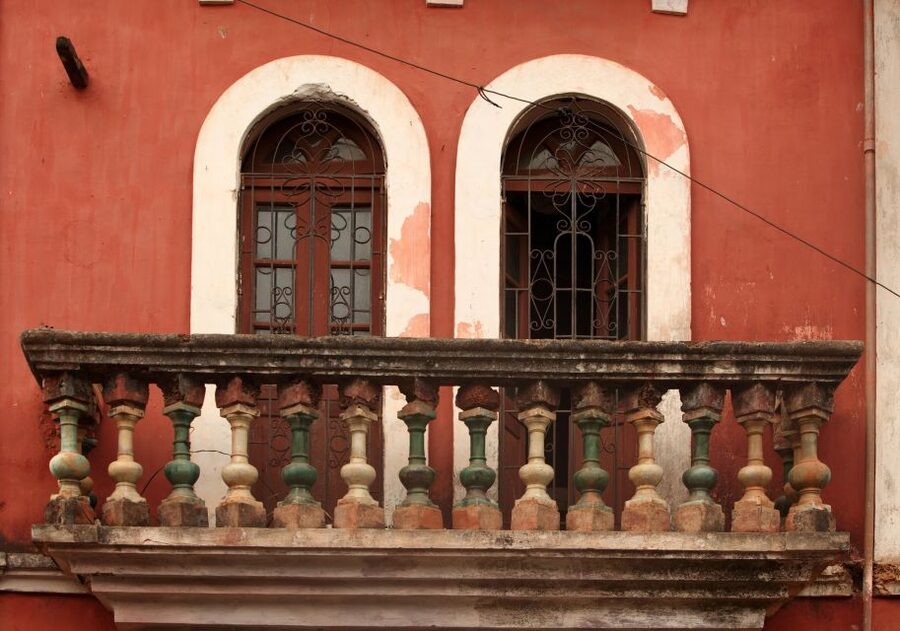
The walk continues toward the Old High Court area, home to one of India’s oldest High Courts and a group of colonial-era buildings. You do not need to be a legal history enthusiast to enjoy this section. Courts and government buildings show how colonial power was organized, and they help explain why Panjim looks different from a purely Portuguese village or a modern Indian city.
The value here is visual and historical. Your guide can help you read the buildings instead of simply photographing them. Look for the formal scale of public architecture compared with the more personal feel of the homes in Fontainhas later in the route.
This is a good place to ask questions about the difference between Portuguese influence and Portuguese identity. Goa’s buildings, food, religion, names, and customs developed through contact between local traditions and European rule. The experience is strongest when it treats that past as complicated rather than turning it into a postcard.
The route does not appear to include a long indoor museum visit at this point. You should expect exterior sightseeing and explanation, with the focus on streets and buildings. That keeps the pace moving, but anyone wanting extensive interior access should see this as an introductory heritage walk, not a full architectural tour.
A few more options to weigh up in India
- Panaji: Heritage Walk through Goa’s Latin Quarter
★ 4.8 · 291 reviews - Goa Kayaking Sal Backwaters Mangroves Magic!
★ 5.0 · 230 reviews - Old Goa: Walking Tour of Heritage Churches
★ 4.9 · 81 reviews - Private Beach Photoshoot in North Goa by Professional Photographer
★ 4.5 · 78 reviews
A modest art gallery and a change of pace
One stop includes a modest art space with Scandinavian and local artwork. This is an unusual addition to a Portuguese heritage walk. It gives the route a present-day note and reminds you that Panjim is not only a preserved old quarter.
The gallery visit is listed as a short stop, so do not expect a large museum or a long independent viewing session. Its importance lies in contrast. After churches, courts, palaces, and heritage houses, contemporary art gives you another way to think about place and identity.
The mix of Scandinavian and local work may seem unexpected, but that is part of the appeal. It shows the city as a place where outside influences continue to meet local culture. You can ask the guide how the art space fits into Panjim’s creative life, though the exact exhibits may change.
Fontainhas, where Panjim becomes most photogenic
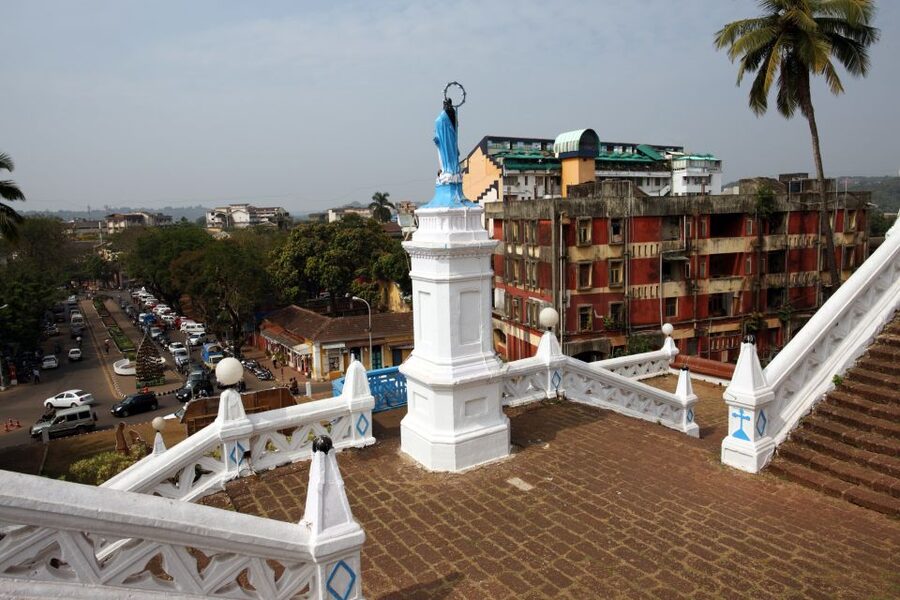
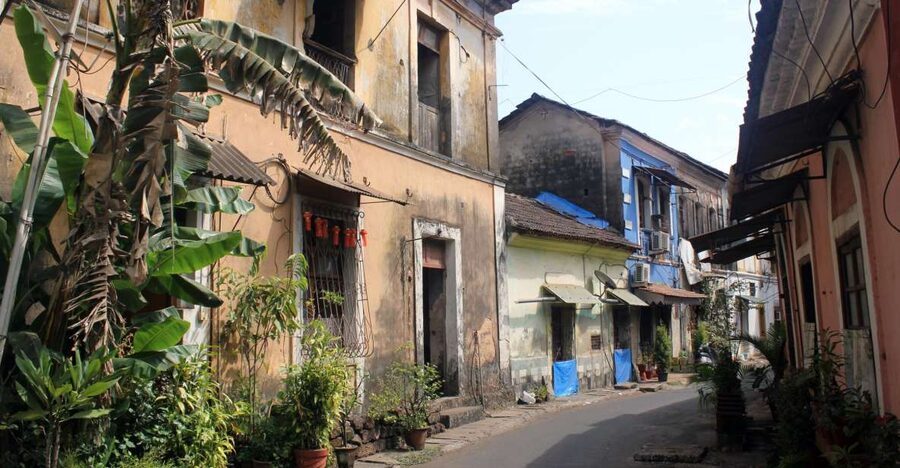
Fontainhas is the emotional center of the walk. This Latin Quarter is known for colorful houses, narrow lanes, cafés, and Indo-Portuguese architectural details. Here, the route becomes less about major monuments and more about the texture of ordinary streets.
I like this section because the houses make history feel close. Painted walls, balconies, doors, and small architectural features give you plenty to study, while friendly local life continues around you. You are not only looking at a monument preserved behind a barrier. You are walking through a neighborhood.
Bring a camera, but do not let it turn the visit into a race for pictures. The best parts of Fontainhas are often the small details: a lane that bends out of sight, a bright façade beside a weathered one, or a home whose design shows the meeting of local and Portuguese traditions. Your guide’s explanations add meaning to images you might otherwise collect without context.
This is also the place where respectful behavior matters most. People live in these houses, and the colorful streets are not a film set. Ask before photographing people, avoid blocking doorways, and keep your voice down in residential lanes.
The tour description places the finish at Fontainhas, but the detailed route also names the Chief Minister’s Residence and Maruti Temple as later stops. That creates a minor planning question. The safest approach is to ask your guide at the start whether your group will finish in Fontainhas or continue to Maruti Temple.
The Chief Minister’s Residence and Maruti Temple
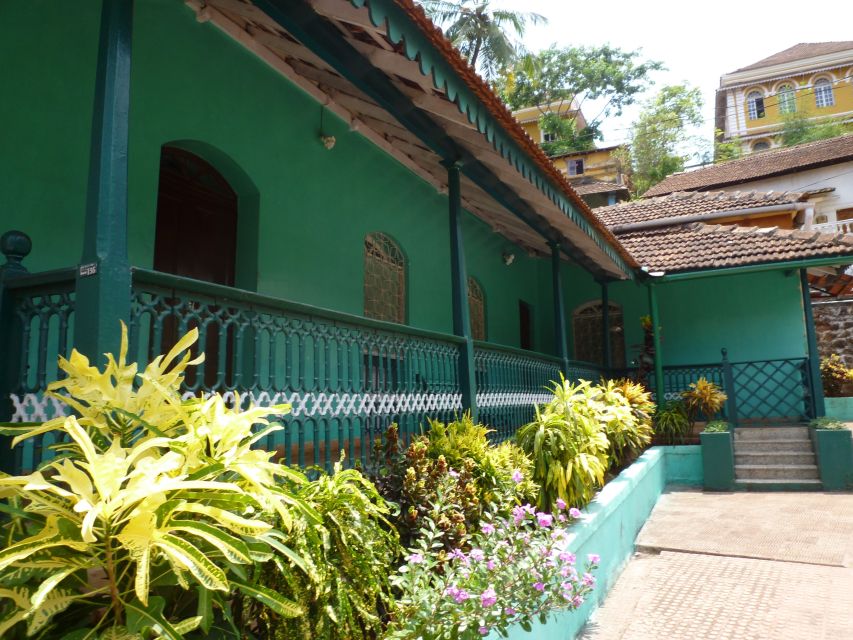
The route passes the exterior of the Chief Minister’s Residence. Since this is an exterior sight, you should not expect to go inside. The stop is still useful because official residences help connect the old colonial city with present-day Goa’s government.
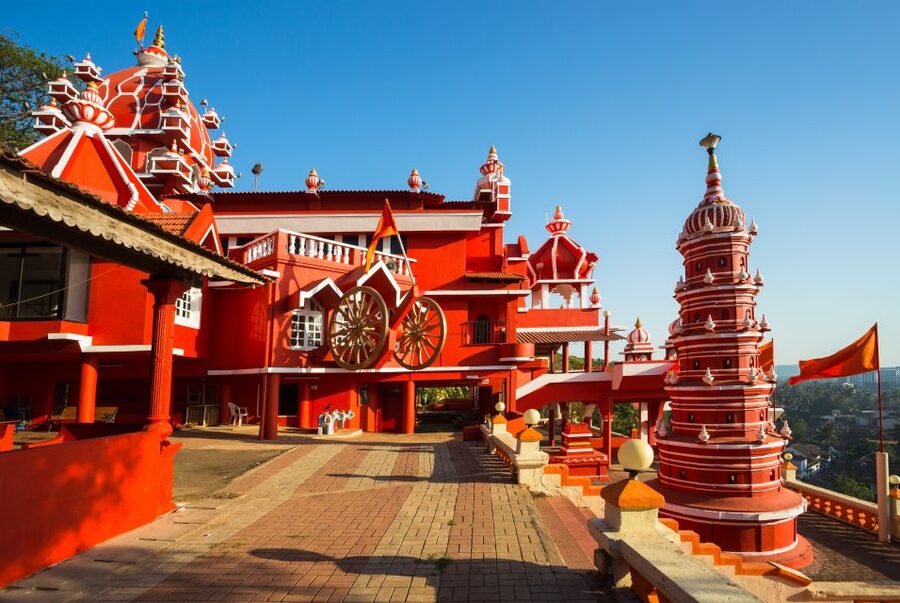
The final named monument is Maruti Temple on Altinho, described as a peaceful Hindu temple overlooking Panjim. Its inclusion broadens the tour beyond a narrow focus on Portuguese buildings. Goa’s story is not only Catholic churches and colonial façades. A Hindu temple, a church, a court, and a family home all belong to the same urban story.
If Maruti Temple is included in your version of the route, it gives the walk a calm ending and another viewpoint over Panjim. If your guide finishes in Fontainhas instead, you still end in the most atmospheric part of the old city. Because the supplied route details differ, confirm the endpoint if you need to arrange transport immediately afterward.
The café stop and what you should budget
The timing includes a local café stop described as a food tasting for about 15 minutes. At the same time, food and drinks are listed as not included. Treat this as a chance to pause and possibly try something locally, but carry a little cash or payment method for anything you order.
Do not count on this stop as a full meal. Two hours is a short period, and the café visit is one part of a route that also includes walking, sightseeing, and guided visits. If you need breakfast, lunch, or a substantial snack, eat beforehand or plan another stop after the tour.
The café is valuable for a different reason. It gives you a break from monuments and a chance to ask for practical advice. This is the moment to ask your guide where to eat, which parts of Panjim are easy to explore alone, and how to avoid spending more than necessary.
Guide style, language, and pace
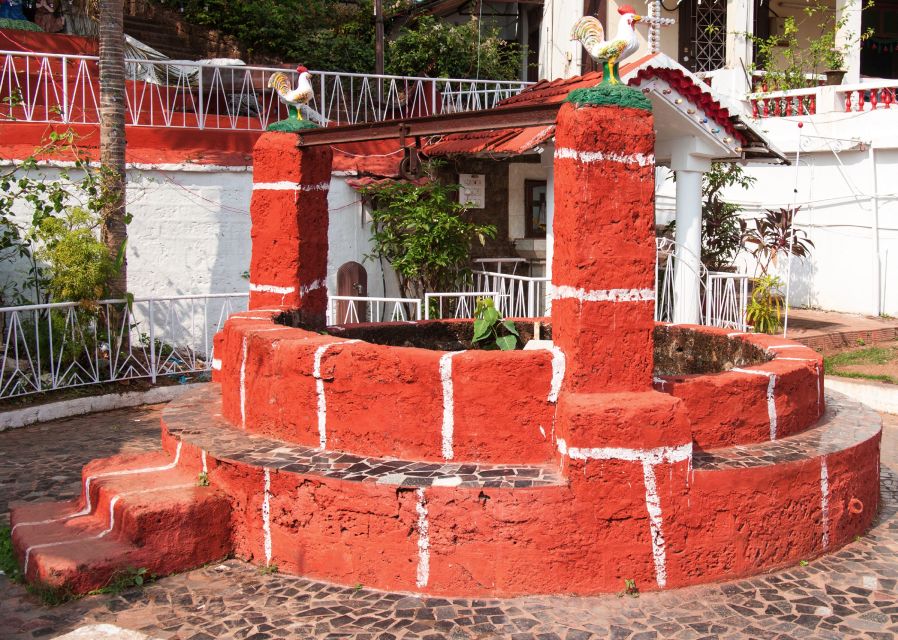
The tour is offered in English and Hindi. The guide is described as friendly and highly trained, with a focus on stories, local insight, and recommendations. The best feedback centers on explanations of Goa’s history, architecture, and European connections, along with a pace that allows you to take in the city.
One point to watch is speaking volume. A guide on this route may talk quietly, especially in narrow streets or near traffic. Stay close enough to hear, and tell the guide politely if you are missing words. That small adjustment can make a big difference.
The pace is intentionally slower than a standard highlights march. That suits you if you want to understand the fabric of Panjim, take photographs, and stop for questions. It may feel too gentle if you want to cover a large area quickly or spend most of the time inside major attractions.
The group size is not specified, so do not assume a private walk. Your experience may depend partly on how large the group is and how easily you can stay near the guide. The WhatsApp contact request helps with meeting arrangements, but it does not guarantee a particular group size.
Is $14 a fair price?
Yes, for most people, $14 is a sensible price for this kind of introduction. There are no major entry tickets highlighted, so the value rests on the route design and the guide’s ability to explain what you are seeing. The walk covers several different sides of Panjim in a compact period, from church architecture and government buildings to art, cafés, homes, and a Hindu temple.
You are also getting local recommendations that can save money later. A useful guide can help you choose where to eat and what to see next, which makes the fee more than a payment for two hours of walking.
The price does not include hotel pickup, transport, water, food, or drinks. That is not a serious weakness for a central walking route, but it means you should arrive ready to walk and carry your own bottle. The tour is best viewed as a city orientation, not an all-inclusive excursion.
A 4.6 rating from 26 reviews suggests a strong overall response, while the individual comments show the pattern clearly: the guide’s historical storytelling and the relaxed pace are the main strengths. The weaker points are practical, mainly unclear photo expectations and a guide who may speak too softly.
Who should book this Panjim experience?
I would recommend it to first-time visitors who want a quick introduction before exploring Panjim alone. It also suits architecture fans, people interested in colonial history, photographers, and anyone who prefers local streets to large formal attractions.
It is a good choice if you want a tour that includes both Portuguese-influenced buildings and living Goan culture. The inclusion of Fontainhas, a café, a Hindu temple, and present-day government landmarks keeps the experience from becoming a single-theme church tour.
You may want something else if you dislike walking uphill, need guaranteed indoor access, or want a private experience with a fixed itinerary. The route also has a small amount of uncertainty around the final stop, so clarify that before you set up your next activity.
Book with comfortable shoes, water, sun protection, and enough time after the walk that you do not need to rush away. Free cancellation up to 24 hours before the start and reserve-now, pay-later booking make it easier to fit into a changing Goa schedule.
Should you book it?
Book this tour if you want a friendly, affordable introduction to Panjim and care more about stories and local details than a long list of ticketed sights. The strongest reason to go is the combination of Fontainhas, Altinho, colonial buildings, and practical city advice in only two hours.
Skip it if you want a flat route, extensive interiors, or a perfectly fixed ending. For most visitors, though, the price is modest, the route is well chosen, and the slower pace gives you time to see why Panjim is more than a collection of pretty Portuguese-style houses.
FAQ
Where does the Panjim walking tour meet?
Meet your guide at the staircase of Our Lady of the Immaculate Conception Church, at 165, Avenida Teófilo Braga, Goa. Arrive 10 minutes before the tour begins.
How long does the walking tour last?
The tour lasts two hours. Starting times depend on availability.
Which languages does the guide speak?
The live guide speaks English or Hindi.
Is the tour wheelchair accessible?
The activity is listed as wheelchair accessible. However, the route includes uphill sections and stepped streets around Altinho Hillock, so check whether the specific route suits your needs.
What should I bring?
Bring comfortable shoes and comfortable clothes. You should also bring your own water bottle because water is not included.
Is food included during the café stop?
Food and drinks are not included. The route includes a local café stop described as a food tasting, so clarify with your guide what is covered before ordering.
Just added in India
- 5 Days Golden Triangle Tour with Ranthambore Delhi Agra Jaipur★ 5.0 · 11 reviews
- Five Days Golden Triangle Tour with Ranthambore Delhi Agra Jaipur★ 5.0 · 11 reviews
- 5 Days Golden Triangle Tour with Ranthambore India★ 5.0 · 10 reviews
- 5-Day Private Luxury Golden Triangle Tour From Delhi★ 5.0 · 45 reviews
- Delhi, Agra, Jaipur & Ranthambhore Tiger Safari 5-Day Tour★ 5.0 · 47 reviews
- Private 5 Days Golden Triangle Tour – Visit Delhi Agra and Jaipur★ 5.0 · 26 reviews
- 5-Day Private Delhi, Agra and Jaipur with Ranthambhore Tiger Tour From Delhi★ 5.0 · 44 reviews
- 5-Day Private Golden Triangle Tour: Delhi, Agra, and Jaipur★ 5.0 · 62 reviews
Walking Tours, compared.

The Great Indian Food Tour: Old Delhi Food and Heritage Walk
Read our review →


Blue City Heritage Private Walking Tour With Pickup and Drop-Off
Read our review →
Private Guided Walking Tour in Bandra Queen of Suburbs
Read our review →
Private Jodhpur Blue City Walking Tour with Guide
Read our review →Browse the lists this tour appears in