
Reviewed · WALKING TOURS
Heritage Walking Tour of Kolkata
Colonial Kolkata is best read on foot. I like the route’s close look at grand British-era buildings, and I like that it adds a ferry ride on the Hooghly River rather than keeping you on city streets. The main concern is tour reliability: two one-star accounts describe a guide who never arrived, unanswered messages, and a contact number that did not work.
This is a private tour for your group, lasting about two to two and a half hours. The start at The LaLiT Great Eastern Kolkata and finish at St. John’s Church make it a useful introduction to the old administrative center, but you should confirm the meeting details before setting out.
In This Review
- Five things to know before booking
- Starting beside Kolkata’s old hotel district
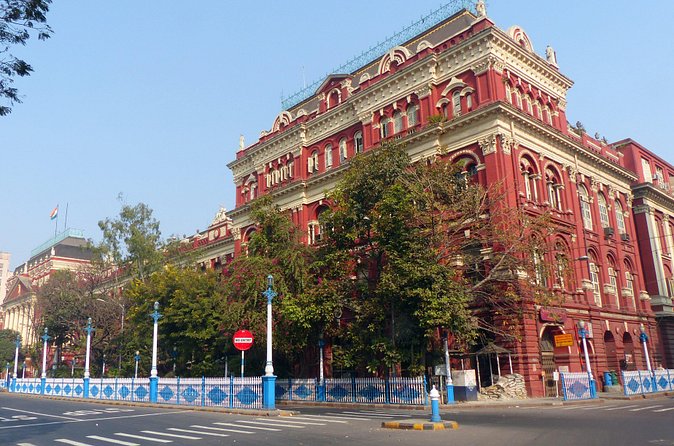
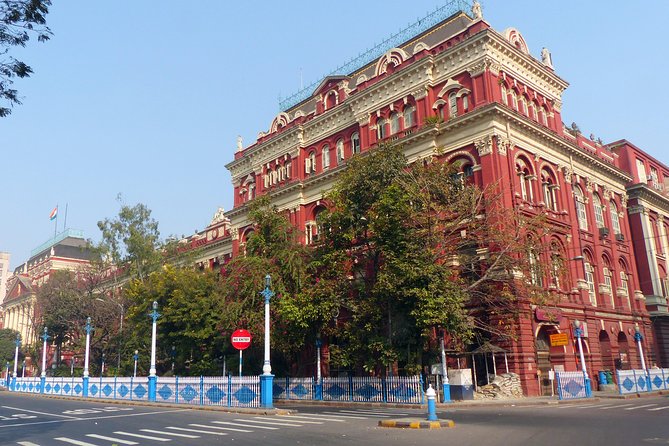
- Reading the Writers’ Building and the East India Company
- Raj Bhavan and the architecture of power
- Currency Building and the city’s financial story
- Crossing the Hooghly for bridge views
- Howrah Station and the walk to St. John’s Church
- What the $60 price really includes
- The serious reliability warning
- Who will get the most from this walk?
- Should you book the Heritage Walking Tour of Kolkata?
- FAQ
- Where does the Heritage Walking Tour of Kolkata begin?
- Where does the tour end?
- How long does the walking tour take?
- Is the ferry ride guaranteed?
- Is hotel pickup included?
- What is included in the price?
- Can I cancel for a full refund?
Five things to know before booking
- The tour begins at a landmark hotel: The LaLiT Great Eastern was described as Asia’s first five-star hotel, giving the walk an atmospheric starting point.
- The route focuses on Raj-era Kolkata: You pass the Writers’ Building, Raj Bhavan, Currency Building, St. Andrew’s Kirk, and other colonial structures.
- The Hooghly ferry is tide-dependent: If the crossing cannot run, the plan changes to a ghat tour.
- The finish is historically important: St. John’s Church includes the grave of Job Charnock and the Black Hole Monument.
- The $60 price buys a private outing: Bottled water and a tour expert are included, but food, insurance, tips, and hotel transfers are extra.
- Confirm the operator before the day: The overall rating is 4.4 from 15 ratings, but two serious complaints report a no-show and failed contact attempts.
Starting beside Kolkata’s old hotel district
The walk begins outside The LaLiT Great Eastern Kolkata at Dalhousie Square. The address is 1, 2, 3 Old Court House Street, in the B.B.D. Bagh area. That location matters because the tour starts in the middle of Kolkata’s former British administrative quarter, not in a modern shopping district or a distant hotel zone.
The hotel itself gives the opening some character. It is presented as the first five-star hotel in Asia, so you begin with a building tied to Kolkata’s colonial-era social life. From there, the route moves into the streets around the old government offices.
You should arrive with enough time to identify the hotel entrance and guide. This is a city walk, and a missed start can waste a large part of a short stay. The operator offers a mobile ticket, and I would keep the confirmation, meeting address, and contact details saved offline.
The tour is private, meaning only your own group participates. That can be a real advantage in Kolkata. You can ask questions at the pace you need, and a guide can spend more time on a building that catches your eye. It also means you do not get the possible price advantage of joining a large shared group, though group discounts are available.
More Walking Tours in Kolkata:
- Raj Heritage Walk
★ 5.0 · 93 reviews - British Raj Heritage walk in Kolkata with guide
★ 5.0 · 54 reviews - Kolkata: Guided Heritage Walking Tour
★ 4.6 · 23 reviews
Reading the Writers’ Building and the East India Company
One of the key sights is the Writers’ Building. It originally housed the clerks of the East India Company, a useful reminder that Kolkata grew as a center of trade and administration before it became the capital of British India.
The building is important less for a quick photograph than for what it explains. The word writers referred to office workers, not authors. A guide can connect the building to the machinery of colonial rule, showing how paperwork, finance, and administration shaped the city.
You will mainly walk past these structures rather than enter every one. That keeps the tour moving, but it also means the quality of the explanation matters greatly. Without context, a long row of old facades can blur together. With a good guide, each building becomes part of a larger story about the East India Company, the Raj, and the making of Calcutta.
The route also includes the Telegraph Office and the Dead Letter Office. These names offer a glimpse into the communication systems that supported the colonial government. The Dead Letter Office, in particular, is the kind of stop that can surprise you. It is not one of the city’s usual postcard sights, but it points to the human business behind imperial administration: letters sent, delayed, misdirected, or never delivered.
Raj Bhavan and the architecture of power
Raj Bhavan, also called the Governor’s House, is another major stop. During the Raj, it served as the official residence of the Viceroys of India. The building represents the political power concentrated in this part of Kolkata.
This is one of the strongest reasons to take the walk with an expert guide. You will see grand colonial buildings in many Indian cities, but their purpose is not always obvious. Here, the route brings together offices, residences, churches, banks, and communications buildings, making the old district easier to understand as a working center of government.
You should expect an exterior-focused visit. The tour description does not promise entry into Raj Bhavan or the other government buildings, and access may be restricted. The value comes from seeing the buildings in their urban setting and hearing how they functioned.
The walk also passes St. Andrew’s Kirk, a Scottish church with a distinctive connection to the British community. Its presence shows that colonial Kolkata was not shaped by one institution alone. Government, commerce, religion, and transport all left their mark within a compact area.
Currency Building and the city’s financial story
The Currency Building adds another layer to the route. It served as the Reserve Bank of India until 1937. That detail helps you see how the district handled not only political authority but also money and financial administration.
I like this part of the itinerary because it keeps the tour from becoming a parade of government facades. The buildings point to different systems that made the colonial city work. The Writers’ Building suggests administration, the Telegraph Office suggests communication, Raj Bhavan suggests political authority, and the Currency Building suggests finance.
The guide is expected to add unusual facts and stories along the way. That is where the tour can rise above a standard photo walk. The available description does not name the guide, so you cannot choose a particular historian or specialist in advance. The experience will depend heavily on the person assigned to your group.
The pace should suit most people who can participate in a city walking tour. The full route lasts about two to two and a half hours, and bottled drinking water is included. Still, you should dress for walking in Kolkata’s weather and use sensible footwear. Those are practical choices for any outdoor city tour, even though no special clothing requirements are listed.
A few more options to weigh up in Kolkata
- Cultural Confluence of Kolkata – Culture Kaleidoscope Tour
★ 5.0 · 701 reviews - Kolkata Heritage Tram Tour
★ 4.0 · 395 reviews - Bengali Nights Kolkata Food Tour with 13+ Tastings
★ 5.0 · 325 reviews - Magic Hour Tour
★ 5.0 · 241 reviews
Crossing the Hooghly for bridge views
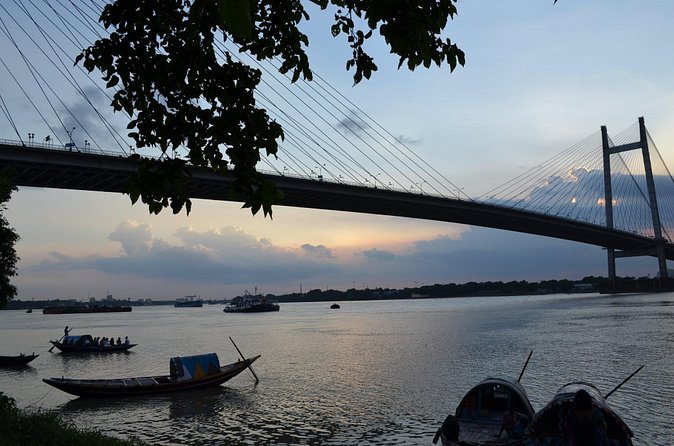
The ferry ride is the tour’s most distinctive feature. After seeing the old administrative quarter, you cross the Hooghly River for views of Kolkata from the water. The route is meant to give you photographs of both the Howrah Bridge and Vidyasagar Setu.
That change of viewpoint is valuable. On foot, you study individual buildings and streets. From the river, you see the city as a whole, with its bridges linking Kolkata to Howrah and the broad waterway shaping movement through the region.
The Howrah Bridge is especially important to Kolkata’s identity, while Vidyasagar Setu offers a different form and scale. Seeing both from a ferry gives you a more useful sense of their relationship than a quick roadside stop would.
The crossing is not guaranteed. It depends on the tide, and on some days the ferry ride may be replaced by a ghat tour. You should treat the boat as a strong bonus rather than the one reason to book. If the tide cancels the crossing, the experience will focus more closely on the riverfront and landing places instead.
Weather, safety, traffic, and road conditions can also change the route. The operator reserves the right to alter the program, and no refund or compensation is promised for delays or changes caused by conditions outside its control. That is normal for an outdoor trip, but it is worth remembering if you have a tight connection or a fixed afternoon plan.
Howrah Station and the walk to St. John’s Church
The ferry portion includes an outside view of Howrah Station, described as India’s busiest railway station. You do not appear to get an interior station tour, but even an exterior look puts Kolkata’s old river crossing into a transport context.
The station and the bridges tell a different story from the colonial offices. They show how the city connected administration and commerce to a much wider network. If you enjoy seeing how a city functions, this part adds more than another old facade.
The walk concludes at St. John’s Church on Council House Street, opposite Dewars Garage at Lal Dighi. The church is a fitting endpoint because it holds two significant memorials: the grave of Job Charnock, associated with the founding of British Calcutta, and the Black Hole Monument.
St. John’s gives the tour a quieter ending after the streets and river crossing. It also leaves you near the same historic district where the walk began, though the end point is not the hotel. You should plan your onward transport from the church rather than assume hotel drop-off.
What the $60 price really includes
At $60, this is not simply a short stroll past old buildings. You are paying for a private guide, historical interpretation, bottled water, and a ferry element when conditions allow. For a couple or small group that values personal attention, the private format may be reasonable.
The value is weaker if you only want a list of landmarks or a few quick photographs. Much of the experience depends on the guide explaining why the buildings matter. The tour does not include food, insurance, hotel pickup, or hotel drop-off. Tipping is optional, and transfers can be arranged on request, presumably at an additional cost, though no transfer price is provided.
Group discounts may improve the cost for a larger party. Because only your group participates, the price can make more sense when shared among several people. A solo visitor should compare the cost with other walking options before booking.
Bottled water is a modest inclusion, but useful in a two-hour outdoor activity. It saves you one small errand and helps keep the walk comfortable. Do not read too much into it, though: there is no meal or refreshment stop included.
The serious reliability warning
The biggest issue is not the route. It is the risk of a failed start.
Two one-star accounts describe nearly the same problem. In one case, the guide did not arrive and did not answer texts, emails, or phone calls. In another, no operator appeared at the meeting point after a 45-minute wait, and the listed contact number was out of service. One person said the failure consumed the half-day available in Kolkata, while the other was still waiting for a refund after canceling.
Those are serious complaints, especially for a private experience with a fixed meeting point. The overall score is 4.4 from 15 ratings, so the two poor accounts do not define every booking. Still, the specific nature of the complaints means I would not treat confirmation as a minor formality.
Contact the operator before the tour, preferably well before the 24-hour cancellation cutoff. Save the confirmation and ask for the guide’s name and a working day-of-tour phone number. If no clear response arrives, have a backup plan for the B.B.D. Bagh area.
The cancellation policy allows a full refund if you cancel at least 24 hours before the start time. Cancellations made within 24 hours are not refundable, and changes inside that period are not accepted. That makes early confirmation even more important.
Who will get the most from this walk?
I would recommend this experience to someone visiting Kolkata for the first time who wants a quick orientation to the old colonial center. It suits you especially well if you enjoy architecture, political history, urban change, and short walks with a clear endpoint.
It also works for a small private group that wants to ask questions without keeping pace with strangers. The ferry adds variety, and the final stop at St. John’s Church gives the route a proper historical finish.
I would be more cautious if you have only a few hours in Kolkata, need a guaranteed start, or must reach another appointment immediately afterward. The ferry can change with the tide, and the operator’s stated ability to alter the route means you should leave spare time.
This is also not a food tour, interior museum tour, or general survey of all Kolkata. The focus is narrow: British Calcutta, colonial buildings, the Hooghly crossing, Howrah Station from outside, and St. John’s Church.
Should you book the Heritage Walking Tour of Kolkata?
I like the shape of this tour. It connects The LaLiT Great Eastern, the Writers’ Building, Raj Bhavan, the Telegraph and Dead Letter offices, St. Andrew’s Kirk, the Currency Building, the Hooghly River, Howrah Station, and St. John’s Church in one compact outing.
Book it if you want a private historical walk and can accept that the ferry depends on the tide. At $60, it offers fair value for a small group when the guide arrives and provides strong context.
I would book only after confirming the operator directly. The 4.4 rating is encouraging, but the two detailed no-show complaints are too specific to ignore. If confirmation is solid and your schedule has some breathing room, this could be an efficient, enjoyable way to meet old Kolkata. If reliability is your top concern, choose a plan with a clearly staffed meeting point and a dependable backup.
FAQ
Where does the Heritage Walking Tour of Kolkata begin?
It begins outside The LaLiT Great Eastern Kolkata at Dalhousie Square, at 1, 2, 3 Old Court House Street, Chowringhee North, Kolkata, West Bengal 700069.
Where does the tour end?
The tour ends at St. John’s Church, 2/2 Council House Street, opposite Dewars Garage, Lal Dighi, B.B.D. Bagh, Kolkata, West Bengal 700001.
How long does the walking tour take?
The experience lasts approximately two hours to two hours and 30 minutes.
Is the ferry ride guaranteed?
No. The ferry crossing depends on the tide. On some days, it may be replaced with a ghat tour.
Is hotel pickup included?
No. Hotel pickup and drop-off are not included, though transfers are available on request.
What is included in the price?
The price includes a tour expert and packaged drinking water. Food, insurance, and optional tipping are not included.
Can I cancel for a full refund?
Yes, if you cancel at least 24 hours before the experience start time. Cancellations and changes made less than 24 hours before the start time are not accepted for a refund.
Just added in Kolkata
- Kolkata 3-Hour Tour of Kumortuli – The Goddess Beckons★ 5.0 · 26 reviews
- Explore Kolkata- Private Tour with Lunch★ 5.0 · 87 reviews
- Walk the Kolkata Wetlands: Green Eye Candy★ 5.0 · 10 reviews
- Taj Mahal and Agra Day-Trip from Kolkata with Both side Commercial Flights★ 5.0 · 15 reviews
- Kolkata – A Sea of Faces and A Thousand Places (local guide)★ 5.0 · 52 reviews
- Guided Kolkata Sightseeing Trip by Car, Walk & Sunset Cruise Excursion Trip★ 5.0 · 13 reviews
- Day trip from Kolkata to Bishnupur for Terracotta Temples and Silk★ 5.0 · 14 reviews
- Raj Heritage Walk★ 5.0 · 93 reviews
Walking Tours, compared.

The Great Indian Food Tour: Old Delhi Food and Heritage Walk
Read our review →


Blue City Heritage Private Walking Tour With Pickup and Drop-Off
Read our review →
Private Guided Walking Tour in Bandra Queen of Suburbs
Read our review →
Private Jodhpur Blue City Walking Tour with Guide
Read our review →Browse the lists this tour appears in