
Reviewed · KOLKATA TOURS
Kolkata Heritage Tram Tour
Kolkata still rattles along on rails. I like this tour for its old tram ride and its broad look at the city’s religious, civic, and cultural landmarks, all with snacks and refreshments included. The early 7:00 am start also gives you a calmer view of central Kolkata before the day grows louder and busier.
I especially like that you get off the tram instead of simply watching the city through a window. The stops at Tipu Sultan Masjid, Nonapukur Tram, and Mother House add real substance. The main drawback is that guides can be hard to hear over street noise, so you may need to stay close to the guide during explanations.
In This Review
- Key points to know before booking
- Why a tram is a smart way to meet Kolkata
- The 7:00 am start and what it changes
- From Birla Mandir to Kolkata’s religious mix
- Churches, cemeteries, and overlooked corners
- Sacred Heart Church and the Portuguese connection
- Tipu Sultan Masjid, 20 minutes of Islamic heritage
- Nonapukur Tram, the tour’s star stop
- Mother House and the final stop
- Snacks, guide quality, and the sound problem
- Is $60 a fair price?
- Who should book this tram tour?
- Should you book the Kolkata Heritage Tram Tour?
- FAQ
- Where does the Kolkata Heritage Tram Tour take place?
- What time does the tour start?
- How long does the tour last?
- Is pickup available?
- Are food and drinks included?
- How many people can join the tour?
- Can I cancel for a full refund?
Key points to know before booking
- Kolkata’s tram story: The tour visits Nonapukur Tram, described as the birthplace of Calcutta Tramways, and rides on a heritage tram with old mechanical features.
- A wide city introduction: You pass or stop near temples, churches, a cemetery, a mosque, colleges, cultural institutions, the Maidan, and Victoria Memorial.
- Early morning timing: The 7:00 am departure means less traffic and a city that is only beginning its daily rush.
- Food included: Snacks and refreshments are provided, with one account describing a very generous snack bag.
- Small-group format: The maximum group size is 20 people, which should make it easier to follow the guide than on a large coach tour.
- A sound issue to plan for: Street noise may make spoken explanations difficult. Sitting or standing near the guide matters.
Why a tram is a smart way to meet Kolkata
Kolkata can feel like several cities at once. Grand colonial-era buildings, religious centers, colleges, cemeteries, markets, and ordinary residential streets sit close together. A walking tour can show you one district well, but it takes more time and energy to connect these parts.
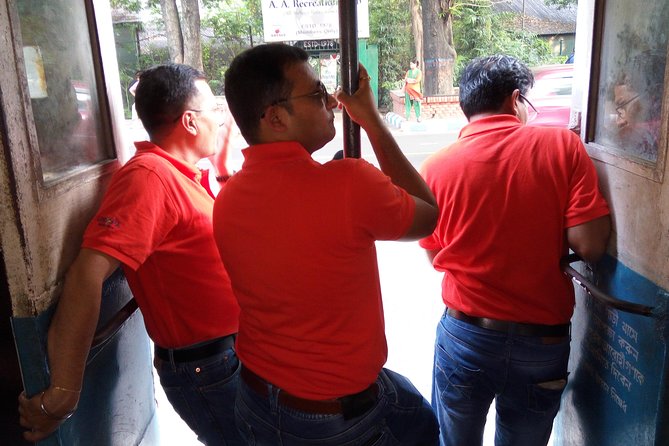
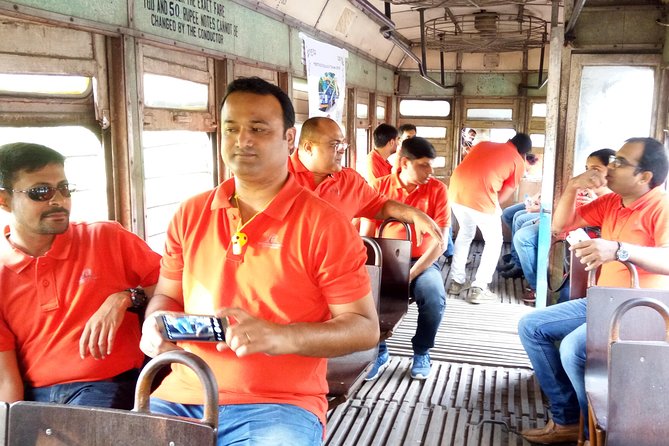
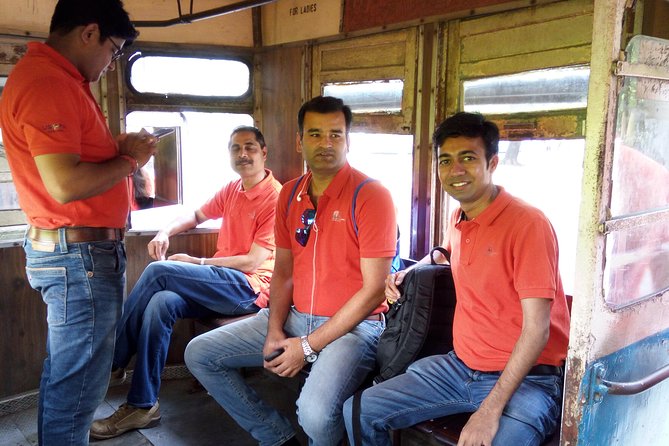
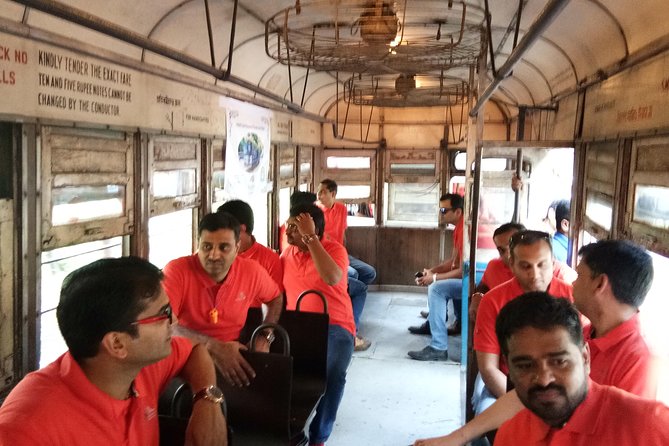
The tram gives you a moving overview. You get a seat, a changing view, and a sense of how the city’s streets fit together. This is not a polished sightseeing bus with a sealed cabin. The point is the old tram itself, with its rumble, open street views, and connection to Kolkata’s long public transport tradition.
The experience lasts about two to three hours. That is long enough to introduce central and north Kolkata without taking up a full day. You also get out at selected points, which keeps the ride from becoming a passive city tour.
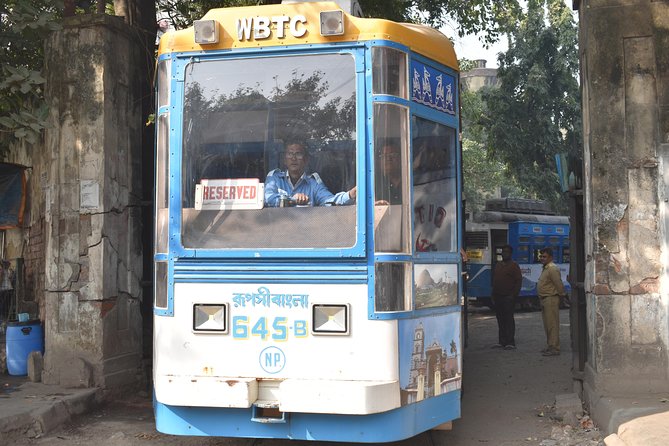
The tram network has a special place in India. Kolkata is the country’s only city with a tram network, and the tour makes that fact more than a line in a guidebook. At Nonapukur Tram, you see a place tied directly to the birth of Calcutta Tramways. For anyone interested in public transport, the old cars are a major part of the appeal. One strong account describes century-old cars running with their original mechanical systems.
A few more options to weigh up in Kolkata
- Cultural Confluence of Kolkata – Culture Kaleidoscope Tour
★ 5.0 · 701 reviews - Bengali Nights Kolkata Food Tour with 13+ Tastings
★ 5.0 · 325 reviews - Magic Hour Tour
★ 5.0 · 241 reviews
The 7:00 am start and what it changes
The early start is one of the tour’s practical strengths. Kolkata’s streets are easier to observe while the city is waking up, and there is less traffic than later in the morning. You may also find it easier to take in the architecture and street scenes without the full crush of the day.
The tradeoff is simple: you need to be ready early. If your schedule includes a late night, this may feel demanding. But for a first look at Kolkata, I think the timing works well. You cover a lot of ground before the heat and traffic make a long outing tiring.
Pickup is offered, and the meeting time is 7:00 am. The tour is near public transportation, and a mobile ticket is available. Confirmation is sent at booking. These details are basic, but they matter when you are arranging an early morning outing in a large city.
From Birla Mandir to Kolkata’s religious mix
The tour includes Birla Mandir on Asutosh Chowdhury Avenue in Ballygunge. The temple was built by the Birla family and is dedicated to forms of Vishnu, including Rama and Krishna. It gives you an early example of Kolkata’s modern Hindu religious architecture and the influence of one of India’s best-known industrial families.
Another stop also relates to the Birla family. The supplied details do not identify the second landmark by name, so you should treat it as another Birla-built point of interest rather than expect a specific monument unless the operator confirms it before departure.
This section of the tour helps put Kolkata’s religious life into context. You are not seeing only one faith or one period of construction. Later stops bring churches and a major mosque into the picture, making the route feel like a cross-section of the city rather than a single-theme temple tour.
A church stop is also included, described as an old and peaceful place visited by both local people and visitors. The details provided do not give its name, but the emphasis is on quiet, beauty, and spiritual atmosphere. This may appeal to you if you enjoy places where the point is not only architecture but also the way a building is still used.
Churches, cemeteries, and overlooked corners
The Lower Circular Road Cemetery, also called the General Episcopal Cemetery, was established in 1840 and remains a working cemetery. It contains about 12,000 graves, including those of former residents of Kolkata. That makes it a useful stop for understanding the city’s colonial and Christian past, though the scale and subject may not suit everyone.
You should expect this part of the tour to be more reflective than entertaining. A cemetery is not a quick photo stop in the same way as a monument. It can offer a quiet break from traffic and a chance to consider the different communities that shaped Kolkata, but you will want to behave respectfully and follow any instructions from the guide.
The route also passes the first Assembly of God Church School in Kolkata. Pastor Buntain founded it in January 1964 after being moved by the hardship faced by poor and homeless children. The school began with 200 children and focused on education. This stop adds a social side to the tour, showing how religious institutions have also taken on educational and community roles.
Maulana Azad College provides another link to public education. Founded in 1926, it is a government-administered college for liberal science and arts near the junction of Rafi Ahmed Kidwai Road and SN Road. You do not need to be a student of architecture or education to appreciate the point: Kolkata’s identity is tied to its colleges as much as its monuments.
The tour also includes Thoburn Memorial Methodist Church, established in 1873, and the Lord Jesus Church in Taltala. The latter was formerly a Presbyterian place of worship associated with the Church of Scotland before being handed to the Jesuits in 1970. These details show how buildings can change hands while remaining part of the city’s active religious life.
A completely different kind of day out:
- Alleyway Food Tour
★ 5.0 · 137 reviews - Private Custom Full Day Sightseeing Tour of Kolkata
★ 5.0 · 128 reviews - Private Half-Day Kolkata Tour
★ 5.0 · 125 reviews - Kolkata: A Sea of Faces and A Thousand Places
★ 4.9 · 116 reviews
Sacred Heart Church and the Portuguese connection
Sacred Heart Church is scheduled for about 20 minutes, with no admission charge. The stop points to the Portuguese legacy of Bengal, a part of Kolkata’s past that can be easy to miss when attention is focused on British buildings and grand civic monuments.
The description also refers to conflict and an attempted attack or street incident connected with the area. The wording is incomplete, so you should not expect a detailed account of that event from the information available. What is clear is that the church offers a chance to look beyond the most familiar version of Kolkata’s past.
Twenty minutes is enough for a short visit and explanation, not a long architectural study. If you want extensive time inside each church, this tour may feel fast. If you want a city overview with several brief stops, the pace makes sense.
Tipu Sultan Masjid, 20 minutes of Islamic heritage
Tipu Sultan Masjid is another scheduled stop of about 20 minutes, with free admission. The mosque is named after Tipu Sultan, the ruler of Mysore, and is described as an important architectural and cultural landmark in Kolkata.
This is one of the tour’s most useful stops because it widens the story beyond temples and churches. You get a direct look at the city’s Islamic heritage and at the way historical figures from outside Bengal are remembered in Kolkata.
As with any active place of worship, you should follow local rules and dress and behave respectfully. The supplied information does not specify a dress code, so check with the guide if you are unsure. The short time allocation suggests that this is an introduction rather than a full mosque visit.
The route also includes the Muslim Institute and the West Bengal Urdu Academy. The Muslim Institute began with a foundation laid by students and young people in July 1902. The Urdu Academy was created by the Left Front government to support the Urdu language. Together, these stops point to the role of education, youth groups, and language institutions in Kolkata’s public life.
Nonapukur Tram, the tour’s star stop
Nonapukur Tram is scheduled for about 20 minutes and is identified as the birthplace of Calcutta Tramways. For many people, this will be the most distinctive part of the experience.
The tram ride itself is fun, but Nonapukur gives the ride a sense of place. You are not simply using an old vehicle as a novelty. You are visiting a location linked to the system that made that vehicle part of Kolkata’s daily life.
Transit fans will appreciate the old cars and their original mechanical features. Even if you are not interested in transport history, the stop helps explain why riding the tram matters to the city. It is a working piece of urban history, not just a decorative carriage brought out for photographs.
The route also includes a heritage book store. The available details do not say how long you spend there or whether purchases are expected. Still, it fits the wider theme of Kolkata as a city shaped by reading, colleges, language, and public debate.
Mother House and the final stop
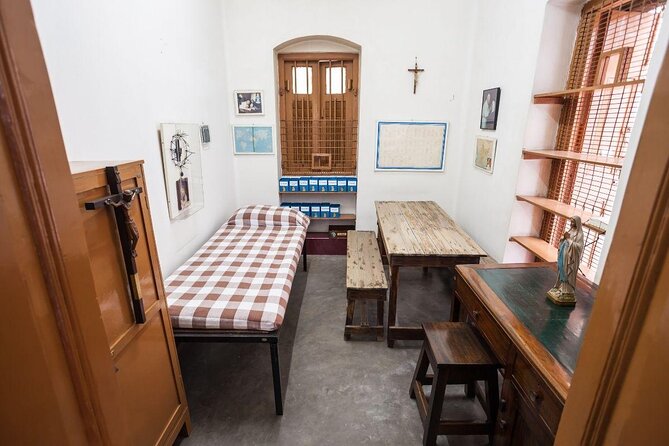
Mother House, also called Mother Teresa’s House, receives about 30 minutes and has no admission charge. It is the former home of Mother Teresa and her final resting place, identified here as the resting place of Saint Teresa.
This is likely to be the most emotionally significant stop for many people. The visit gives you time to pause rather than simply photograph a building from outside. The 30-minute allocation is longer than the two church and mosque stops, which allows a more measured visit.
You should keep your expectations practical. This is not a full-day religious tour or a detailed study of Mother Teresa’s work. It is one important stop within a broader city route that also covers transport, education, architecture, and community institutions.
The route also passes major sights such as the Maidan and Victoria Memorial. These are important visual anchors, even when the tour’s main stops lie elsewhere. The Maidan gives you a sense of Kolkata’s open central space, while Victoria Memorial adds one of the city’s most recognizable monuments to the tram ride.
Snacks, guide quality, and the sound problem
Snacks and refreshments are included, which is especially useful at a 7:00 am departure. One account described the snack bag as unusually generous. That does not turn the outing into a food tour, but it means you are less likely to begin the morning hungry while moving from stop to stop.
The human side of the tour is important. Mr. Arif, also referred to as Mr. Ariff, is connected with the tour company and has been described as both driver and guide. Haris is also named as a guide. Their connection to Kolkata and the ability to link central and north Kolkata with local stories can make the difference between a simple tram ride and a useful introduction.
The clearest weakness is audibility. Tram bells, engines, traffic, and street noise can overwhelm a spoken explanation. A request for headsets was noted as a possible improvement, with the provider indicating that headsets would be introduced in the future. For now, stay near the guide and ask for repetition when you miss a point.
The maximum group size is 20. That is not an intimate private tour, but it is still manageable. The smaller scale should make it easier to remain close to the guide and easier to ask questions than on a large sightseeing bus.
Is $60 a fair price?
At $60 per person, this is not the cheapest way to ride public transport in Kolkata. You are paying for more than a tram fare. The price covers a guided overview, transport between several parts of the city, stops at religious and cultural landmarks, snacks and refreshments, and the convenience of pickup.
The value depends on how you normally travel. If you are happy to research the route, arrange local transport, and visit each place on your own, you can spend less. But recreating this morning would take planning, local knowledge, and patience, especially if you want to connect Nonapukur Tram, Tipu Sultan Masjid, Mother House, the churches, colleges, and the central landmarks in one outing.
I think the price is easiest to justify during a short stay. You get a broad first look without giving up an entire day. It is also a good fit if you want local context but do not want a long walking tour in Kolkata’s heat and traffic.
The value is weaker if you want a slow, detailed visit at every stop. Several locations receive only about 20 minutes, and the tour is designed for range rather than deep time in one building.
Who should book this tram tour?
I would choose it for a first morning in Kolkata, especially if you want help getting your bearings. The route introduces the city’s religious variety, education centers, public institutions, and transport history in one compact outing.
It also suits anyone who likes unusual transport. The heritage tram is not a side detail. It is the central experience, and the old cars with original mechanical systems give the morning a character you will not get from a standard road vehicle.
This is a good match for:
- First-time visitors who want a broad introduction
- People interested in Kolkata’s tram system
- Families and mixed-interest groups who prefer riding with short walks
- Visitors who want churches, mosques, temples, colleges, and civic sights in one route
- Anyone with only a few days in the city
I would think twice if you need a quiet, highly detailed lecture at every stop. The noise issue is real, and the 20-person maximum is not the same as a private tour. You should also be comfortable with a 7:00 am start and an experience that depends on good weather.
Free cancellation is available up to 24 hours before the start time. Changes or cancellations inside that window are not accepted for a refund, and poor weather may lead to a new date or a full refund.
Should you book the Kolkata Heritage Tram Tour?
Book it if you want Kolkata in broad strokes, with a memorable tram ride at the center. The combination of Nonapukur’s tram connection, Mother House, Tipu Sultan Masjid, the churches, the cemetery, and major city sights gives you more than a standard monument circuit.
Skip it if your main goal is to spend an hour or more at each landmark, or if you dislike early starts and noisy group touring. For everyone else, $60 is a reasonable price for a guided morning that connects parts of Kolkata you might not otherwise see together. Stay close to the guide, bring patience for the sound of the street, and let the old tram do what it does best: show you how the city moves.
FAQ
Where does the Kolkata Heritage Tram Tour take place?
The tour takes place in Kolkata, India. It includes sights and stops in central and north Kolkata, along with locations such as Nonapukur Tram, Tipu Sultan Masjid, Mother House, Birla Mandir, the Maidan, and Victoria Memorial.
What time does the tour start?
The stated start time is 7:00 am.
How long does the tour last?
The experience lasts approximately two to three hours.
Is pickup available?
Yes. Pickup is offered.
Are food and drinks included?
Yes. Snacks and refreshments are provided.
How many people can join the tour?
The maximum group size is 20 travelers.
Can I cancel for a full refund?
Yes, if you cancel at least 24 hours before the experience start time. Cancellations made less than 24 hours before departure are not refunded. If poor weather causes the operator to cancel, you will be offered another date or a full refund.
Just added in Kolkata
- Kolkata 3-Hour Tour of Kumortuli – The Goddess Beckons★ 5.0 · 26 reviews
- Explore Kolkata- Private Tour with Lunch★ 5.0 · 87 reviews
- Walk the Kolkata Wetlands: Green Eye Candy★ 5.0 · 10 reviews
- Taj Mahal and Agra Day-Trip from Kolkata with Both side Commercial Flights★ 5.0 · 15 reviews
- Kolkata – A Sea of Faces and A Thousand Places (local guide)★ 5.0 · 52 reviews
- Guided Kolkata Sightseeing Trip by Car, Walk & Sunset Cruise Excursion Trip★ 5.0 · 13 reviews
- Day trip from Kolkata to Bishnupur for Terracotta Temples and Silk★ 5.0 · 14 reviews
- Raj Heritage Walk★ 5.0 · 93 reviews
Kolkata Tours, compared.
Cultural Confluence of Kolkata – Culture Kaleidoscope Tour
Read our review →
Bengali Nights Kolkata Food Tour with 13+ Tastings
Read our review →
Private Custom Full Day Sightseeing Tour of Kolkata
Read our review →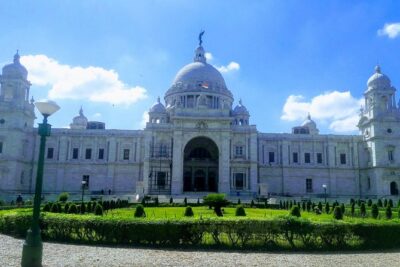

Browse the lists this tour appears in