
Reviewed · PUSHKAR TOURS
Full Day Spiritual Tour of Ajmer & Pushkar-The Pushkar Route
Two cities, one compact day. This private tour links Ajmer’s Sufi, Jain, Sikh, and Mughal landmarks with Pushkar’s Hindu temples and sacred lake, giving you a useful look at two very different spiritual centers near one another. I like the way the route moves from Ajmer’s narrow town lanes to Pushkar’s ghats and temples, and I also like that a guide explains the religious background instead of simply pointing out buildings. The included lunch break, with a view, gives the six-hour schedule a welcome pause.
The main consideration is pace. The tour tries to cover ten named stops, while the description refers to eleven major points, and several visits last only 30 minutes. You will see a lot, but this is best for getting an introduction rather than spending a long, quiet period at any one temple, museum, or shrine.
In This Review
- Key points to know before booking
- Why this route works for Ajmer and Pushkar
- The gold-filled Jain temple in Ajmer
- Ajmer Sharif and the Sufi tradition
- Akbar’s Palace and the Ajmer museum collection
- Ana Sagar Lake and the Mughal gardens
- Lunch with time to reset
- Sikh history at Gurudwara Sahib
- Varaha Temple and Vishnu’s boar form
- Old Rangji Temple near Varaha Ghat
- The underground Atmateshwar Mahadev temple
- Brahma Temple, one of Pushkar’s defining sights
- Pushkar Lake and the evening arti
- What $50 per person really buys you
- Timing, pace, and who should book
- Should you book the Pushkar Route?
- FAQ
- Where does the tour take place?
- What time does the tour start?
- How long does the tour last?
- Is pickup offered?
- Is this a private tour?
- Is lunch included?
- Are admission tickets included?
- Is Pushkar Lake free to enter?
- Does the tour include the evening arti?
- What happens if bad weather cancels the tour?
Key points to know before booking
- Ajmer and Pushkar in one private outing: You get a single-group tour covering both cities, with no strangers joining your party.
- A strong religious mix: The route includes Jain, Muslim, Sikh, and Hindu sites, making it more varied than a temple-only excursion.
- Ajmer Sharif is a central stop: You have about 45 minutes at the important Sufi shrine of Khwaja Moinuddin Chishti.
- Pushkar Lake finishes the day: The tour ends with the evening arti, a prayer ceremony beside the lake.
- Lunch is built into the schedule: One hour is set aside for lunch, with a meal and view praised as a pleasant break.
- Good value at $50 per person: Admission is included at the listed sights, and the private format keeps the day focused on your group.
Why this route works for Ajmer and Pushkar
Ajmer and Pushkar sit close together, but their religious character feels quite different. Ajmer is shaped by Sufi Islam, Mughal-era buildings, Jain worship, and Sikh connections. Pushkar is one of India’s important Hindu pilgrimage towns, centered on temples, ghats, and a sacred lake.
I like this pairing because you do not spend the whole day seeing variations of the same monument. In Ajmer, you move through a town with several faith traditions living close together. In Pushkar, the mood turns more devotional and reflective, especially at the ghats and during the evening arti.
The tour begins at 10:00 a.m. and lasts about six hours. Pickup is offered, and the activity is private, so you can ask the guide to explain points that match your interests. One particularly useful strength is the conversational style described by a past participant. The guide adjusted the explanation to that person’s background and interests instead of delivering a fixed speech.
That matters here. Religious sites can be confusing if you do not know the difference between a shrine, a temple, a ghat, and a memorial. A good explanation helps you understand what you are seeing and how each place is used.
A few more options to weigh up in India
- Spiritual City Walking Tour-THE Pushkar Route
★ 5.0 · 907 reviews - Afternoon Walk Tour with Sunset & Fire Ritual -The Pushkar Route
★ 5.0 · 119 reviews - Evening Walking Tour with Fire Rituals-The Pushkar Route
★ 4.9 · 108 reviews
The gold-filled Jain temple in Ajmer
Your first stop is Soni Ji Ki Nasiyan, also known as Soni Ji Ki Nasiya, along with Soni Ji Ki Haveli and Soni Temple. This Jain site was built in the 19th century and is dedicated to Lord Rishabhdev, regarded in Jain tradition as the first of the Tirthankaras.
The attraction is particularly known for its ornate interior and extensive use of gold. More than 1,000 kilograms of gold were used in the decorative work, a detail that gives you an idea of the scale and expense of the project. You have about 45 minutes here, with admission included.
I would pay attention to the contrast between the temple’s religious purpose and its highly decorative presentation. Jain worship places great importance on discipline and nonviolence, while this interior is visually elaborate. The short visit should be enough to see the main features and hear the basic story, though you may wish for more time if religious art interests you.
Ajmer Sharif and the Sufi tradition
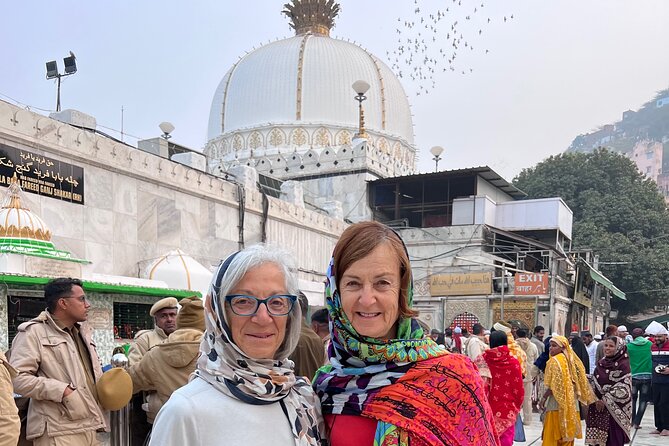
The next stop is Dargah Khwaja Kanoon Sahib, described as part of the Ajmer Sharif complex associated with Khwaja Moinuddin Chishti. The saint came to Ajmer from Persia in the late 11th century, and his tomb remains an important Muslim shrine.
This is one of the most meaningful stops on the route. It is not simply an old building to photograph. It is a living place of devotion, and the small lanes around Ajmer add to the sense that you are moving through a working religious center rather than an isolated monument.
The scheduled visit lasts 45 minutes, and admission is included. I would use your guide here. The customs, prayers, and layout may not be immediately clear, especially if you have not visited a Sufi shrine before. Modest, respectful behavior is sensible at any religious site, though the supplied information does not specify a dress code or shoe arrangements.
The timing is enough for an introduction, but not for a slow, unhurried visit. If Ajmer Sharif is your main reason for visiting Ajmer, tell the guide early so you can make the most of this part of the route.
Akbar’s Palace and the Ajmer museum collection
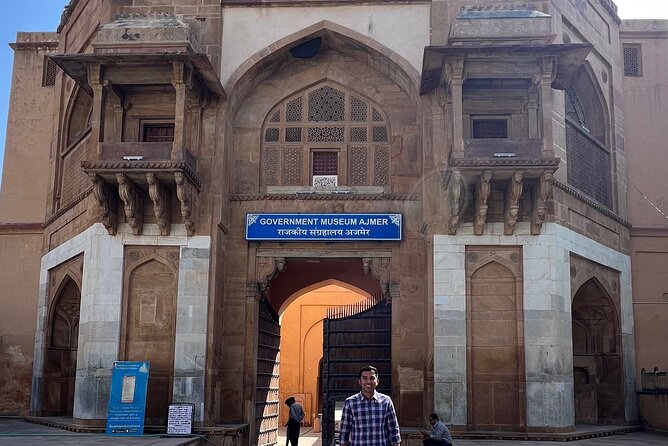
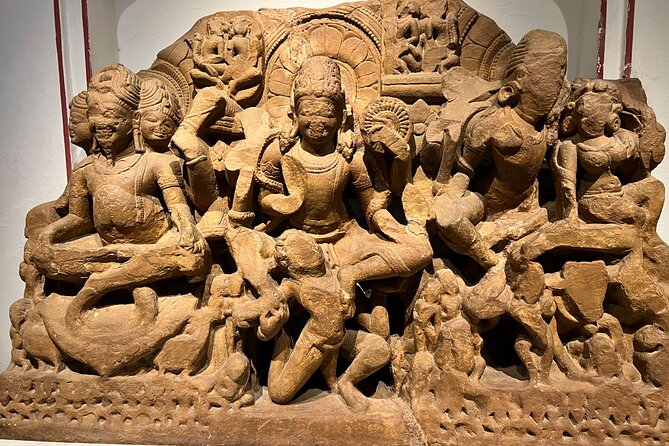
Ajmer’s Government Museum occupies the grounds of the old 16th-century Akbari Fort. This stop gives the tour a change of pace after the religious sites, with historical objects, sculptures, miniature paintings, and other artifacts.
You have 45 minutes here, and admission is included. I like this addition because it gives context to the city’s political and artistic past. The temple and shrine stops show how people worship. The museum helps explain the rulers, artists, and communities that shaped Ajmer.
A 45-minute visit will give you a guided overview rather than time to inspect every display. If you enjoy museum collections, keep your expectations realistic. The value comes from seeing a range of objects and connecting them to the wider story of Ajmer.
A completely different kind of day out:
- Old & New Delhi City Tour – Half or Full Day Options Available
★ 5.0 · 4,811 reviews - Old & New Delhi City Tour – Choose Half or Full Day Experience
★ 5.0 · 4,513 reviews - Same Day Taj Mahal, Agra Fort & Baby Taj Tour from Delhi by Car
★ 5.0 · 4,304 reviews - Taj Mahal Day Tour from Delhi by Superfast Train – TOP RATED TOUR
★ 5.0 · 4,166 reviews
Ana Sagar Lake and the Mughal gardens
The route then moves to Ana Sagar Lake, an artificial lake built by King Arnoraja, also known as Anaji Chauhan. The lake later gained Mughal additions, including Daulat Bagh Garden under Jahangir and further work connected with Shah Jahan.
You have 30 minutes here. That is enough to pause, take in the water, and hear how a Chauhan-era project was later shaped by Mughal rulers. I see this as a breathing space between the denser Ajmer visits.
The stop is shorter than the museum and shrine visits, so do not expect a full lakeside outing. Its main value is the view and the historical connection between different ruling periods. It also helps break up the enclosed spaces of the earlier sites.
Lunch with time to reset
The schedule allows one hour for lunch before the Pushkar section. The experience includes lunch, and a past participant singled out the meal and its view as a pleasant respite.
That hour is important. The route is full, and several visits involve walking or standing. A proper pause keeps the afternoon from becoming a blur of temple names. I would use this time to ask your guide which Pushkar sites deserve your closest attention, especially if you have a particular interest in Shiva, Vishnu, Brahma, or Sikh history.
The supplied plan does not identify the restaurant or provide a menu, so you should not book this expecting a specific cuisine or setting. What is clear is that lunch is treated as part of the experience rather than an afterthought.
Sikh history at Gurudwara Sahib
The Pushkar section begins at Gurudwara Sahib. This is an interesting choice because Pushkar is usually presented almost entirely through its Hindu identity. The stop introduces you to Sikh religion and community life, along with the connection between the site and two of Sikhism’s ten famous and respected teachers.
You have 30 minutes here, with admission included. I like the way this expands the route beyond the most familiar Pushkar sights. It reminds you that pilgrimage towns can carry several layers of religious history.
The visit is short, so expect an introduction rather than an extended study of Sikh theology or architecture. Your guide’s explanation is likely to be most useful here, since the stop’s value rests heavily on understanding the religious connection.
Varaha Temple and Vishnu’s boar form
Varaha Temple is one of Pushkar’s older temples and is dedicated to Lord Vishnu in his boar incarnation, Varaha. The temple is described as one of the eight Swayambhu Kshetra of Vishnu, a term connected with sacred places believed to have a self-manifested divine presence.
The building was constructed in the 12th century by King Anaji Chauhan. You have 30 minutes to see the temple and learn why it matters.
This stop is valuable if you want more than the famous Brahma Temple. Varaha is less familiar to many first-time visitors, and the guide can make the symbolism easier to follow. The drawback is the same as elsewhere in Pushkar: 30 minutes gives you a clear introduction, but not much time for a slow architectural examination or extended prayer.
Old Rangji Temple near Varaha Ghat
Old Rangji Temple sits near Varaha Ghat in the middle of Pushkar. It is about 200 years old and dedicated to Lord Vishnu. The temple was commissioned in the 19th century, placing it in a different period from the older Varaha and Atmateshwar sites.
The stop lasts 30 minutes and admission is included. Its location in the town center makes it a useful part of the walking route, since you can experience Pushkar as a place of daily worship rather than a string of separated attractions.
I would listen for the architectural and religious differences between this temple and Varaha Temple. The tour’s mix of sites works best when you compare them instead of treating each stop as an isolated photo opportunity.
The underground Atmateshwar Mahadev temple
Atmateshwar Mahadev Mandir is dedicated to Lord Shiva and was constructed in the 12th century. It is an underground cave temple, known for Hemadpanti architectural carvings and its unusual setting.
You have 30 minutes here, with admission included. This may be one of the more distinctive stops in Pushkar because the underground layout changes the experience. Instead of another large temple exterior, you get a more enclosed sacred space tied to Shiva worship.
The description does not provide details about stairs, passages, or physical access. If you have mobility concerns, ask about the route before booking. For most participants, the short visit should allow time to see the carvings and hear the temple’s story.
Brahma Temple, one of Pushkar’s defining sights
The Brahma Temple is one of the main reasons many people come to Pushkar. It is described as the only temple in the universe dedicated to Lord Brahma, and its structure dates to the 14th century, with later renovations.
The temple uses black and white marble, and you have 30 minutes to visit. This is a key spiritual stop, but it is not the place to expect a long museum-style inspection. Its importance comes from the rare dedication to Brahma and Pushkar’s role in Hindu tradition.
I would let the guide explain the religious background before focusing on details such as the marble, pillars, and layout. The stop is brief, so keep your attention on the central features and the reason this temple has such a special place in Pushkar.
Pushkar Lake and the evening arti
The final stop is Pushkar Lake, surrounded by 52 ghats. Each ghat has its own religious and cultural importance, and the ghats are used for bathing, ceremonies, and meditation. Many were built or supported by kings and emperors from different parts of India.
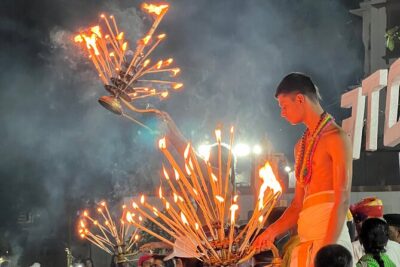
You have about 45 minutes here, and the lake visit is free. The tour finishes by watching the evening arti, a Hindu prayer ceremony. This gives the day a natural ending. After the formal history of temples and museums, you get to see a living ritual beside the water.
This is likely the most atmospheric part of the route, but it also calls for respect. The ghats are sacred spaces, not just viewpoints. Follow your guide’s advice about where to stand and how to behave during the ceremony. The final 45 minutes should give you enough time to see the lake and observe the arti without rushing through it.
What $50 per person really buys you
At $50 per person, the value depends on how much you want done in one day. This is a private tour, pickup is offered, mobile tickets are available, and admission is included at the listed attractions. The lake itself has no admission charge.
Those inclusions make the price easier to justify than a simple sightseeing transfer. You are paying for a guide, a planned route, access to multiple religious and historic sites, a lunch break, and the convenience of covering Ajmer and Pushkar together.
The private format matters most. You are not tied to the questions or pace of a large group, and the guide can adjust explanations to your interests. The strongest praise attached to this experience concerns the guide’s grasp of religion and culture, plus the conversational way information was shared.
Still, the price will be less attractive if you prefer to explore slowly or spend half a day at Ajmer Sharif alone. This tour is built around range and convenience. It is not built around long stays at individual sites.
Timing, pace, and who should book
The tour starts at 10:00 a.m. and is suitable for most participants. It is near public transportation, though pickup is also offered. Since it is private, it suits couples, families, and small groups who want one guide focused on them.
I would recommend it especially if you have one day for both Ajmer and Pushkar. It is also a good choice if you want religious context and do not want to work out the route between ten separate sights yourself.
The main caution is the schedule. The named stops add up to a busy day, and the description refers to eleven major points even though ten are specifically listed. The advertised duration is about six hours, so actual time at each place may need to stay tight, particularly once driving, walking, lunch, and the evening arti are included.
The experience requires good weather. If poor weather causes cancellation, you are offered another date or a full refund. For other changes, cancel at least 24 hours before the 10:00 a.m. start to receive a full refund. Changes or cancellations inside that window are not accepted for a refund.
Should you book the Pushkar Route?
Book this tour if you want a well-packed introduction to two sacred cities, especially with a private guide who can explain the differences between Jain, Muslim, Sikh, and Hindu traditions. The included admissions, lunch break, pickup option, and evening arti add practical value to the $50 price.
I would skip it only if your priority is slow, independent exploration. With 30 minutes at several Pushkar temples, you will see the essentials but may not have time to linger.
For most first-time visitors with limited time, the route makes a sensible choice. It connects Ajmer’s major sights with Pushkar’s temples and lake, then ends with a ceremony rather than another monument. That final shift from sightseeing to worship is what gives the day its strongest sense of place.
FAQ
Where does the tour take place?
The tour covers Ajmer and Pushkar in India, with Pushkar listed as the location.
What time does the tour start?
The scheduled start time is 10:00 a.m.
How long does the tour last?
The experience lasts approximately six hours.
Is pickup offered?
Yes, pickup is offered.
Is this a private tour?
Yes. Only your group participates in the activity.
Is lunch included?
The schedule includes one hour for lunch, and the experience includes lunch with a view.
Are admission tickets included?
Admission is included at the listed stops. Pushkar Lake has no admission charge.
Is Pushkar Lake free to enter?
Yes, the listed admission for Pushkar Lake is free.
Does the tour include the evening arti?
Yes. The tour finishes by watching the evening arti at Pushkar Lake.
What happens if bad weather cancels the tour?
You are offered a different date or a full refund if poor weather causes cancellation.
Just added in India
- Walking Tour in the old part of the city of Varanasi★ 5.0 · 25 reviews
- Explore Chennai City: Guided Walking Tour on Foot★ 4.3 · 22 reviews
- Vibrant Markets of Trivandrum (2 Hours Guided Walking Tour)★ 4.5 · 15 reviews
- Walk of Divinity Bangalore (2 hours guided walking tour)★ 3.8 · 19 reviews
- Victorian Gothic Heritage Quarter and Art Deco Walking Tour★ 4.9 · 14 reviews
- Vibrant Markets of Mumbai (2 Hours Guided Walking Tour)★ 4.4 · 44 reviews
- Varanasi Walking and Heritage Tour★ 4.6 · 15 reviews
- Varanasi: Manikarnika Ghat (Oldest Cremation Site) Tour★ 4.7 · 22 reviews
Pushkar Tours, compared.

Afternoon Walk Tour with Sunset & Fire Ritual -The Pushkar Route
Read our review →
Evening Walking Tour with Fire Rituals-The Pushkar Route
Read our review →
Spiritual Walking tour with Puja Ceremony -The Pushkar Route
Read our review →
Evening Walking tour with Fire Ceremony – The Pushkar Route
Read our review →

Experience Private Food And Culture Walk-The Pushkar Route
Read our review →Browse the lists this tour appears in