
Reviewed · SUNSET AND EVENING TOURS
Afternoon Walk Tour with Sunset & Fire Ritual -The Pushkar Route
Pushkar reveals itself best on foot. This three-hour walk brings together major temples, quiet lanes, sunset by the lake, live music, and an evening fire ceremony, all with a guide to explain what you are seeing. I especially like the small group limit of six, which should make it easier to ask questions and keep a comfortable pace. I also like that hot drinks and snacks are included, a welcome touch during a long afternoon walk. The main consideration is timing: a 4:00 p.m. start gives you a full route, but the schedule may feel busy if you want long, quiet visits at every temple.
Guide Manish receives the strongest praise for his explanations of Pushkar’s religious customs, temples, and daily life. Guide Vishwanath is also noted for adapting the route and easing the walk when a group was delayed. At $7 per person, this is an unusually low-cost way to get oriented, though you should be ready for narrow streets, several temple visits, and a walking pace that covers plenty of ground.
In This Review
- What makes this Pushkar walk worth considering
- Starting at 4:00 p.m. in Pushkar
- Varaha Temple and Pushkar’s older religious traditions
- Gurudwara Sahib and Pushkar’s Sikh connection
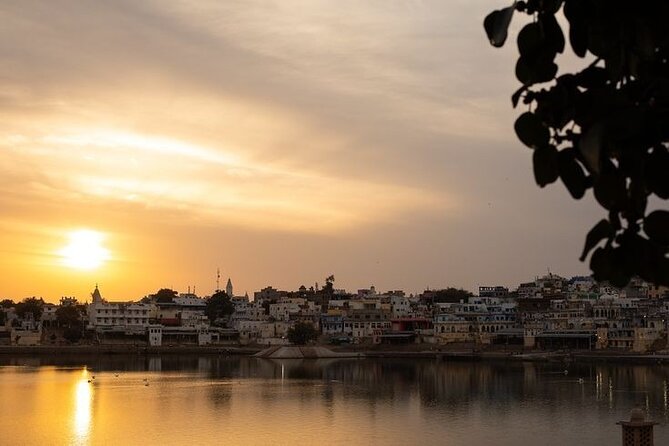
- Pushkar Lake at Sunset Point
- Brahma Ghat and the evening fire ceremony
- Atmateshwar Mahadev Mandir underground
- Walking the ghats toward another Brahma Ghat
- Brahma Temple, Pushkar’s signature shrine
- Rangji Temple and the old town lanes
- Halwai Gali and Pushkar Main Market
- What the $7 price really gives you
- Who should book this walk?
- My booking advice
- FAQ
- What time does the tour start?
- How long does the walk last?
- How much does the tour cost?
- How many people can join the tour?
- Is pickup available?
- Are temple admission fees included?
- Are food and drinks included?
- Can I cancel for a full refund?
What makes this Pushkar walk worth considering
- Sunset and ceremony in one outing: Watch the sun go down at Pushkar Lake before taking part in or observing the evening fire ritual at Brahma Ghat.
- Six-person maximum: The small group size gives the guide more room to answer questions and adjust the pace.
- A useful mix of famous and lesser-known places: The route includes Varaha Temple, Gurudwara Sahib, Brahma Temple, Atmateshwar Mahadev Mandir, Rangji Temple, and market lanes.
- Strong cultural explanation: Manish is praised for explaining Hindu philosophy, Sikh beliefs, temple customs, and the meaning behind ceremonies.
- Snacks and hot drinks included: This helps keep the afternoon comfortable during a three-hour walk.
- Optional blessings: You may be offered a blessing or family prayer at the lake, but this is not presented as compulsory.
Starting at 4:00 p.m. in Pushkar
The timing is one of the tour’s best choices. Pushkar can feel hot and exposed earlier in the day, while a 4:00 p.m. departure leads into the cooler part of the afternoon and reaches the lake near sunset. The tour lasts about three hours, so you should expect a fairly active outing rather than a slow temple visit.
Pickup is offered, and the meeting point is near public transportation. Exact pickup details should be confirmed when you book, since the supplied information does not give a single street address. Mobile tickets make the arrangement simple, and confirmation is provided at booking.
You do not need to research each temple before arriving. That is the point of this route. The guide handles the order of stops and gives the religious and local context that is easy to miss when you wander alone. The narrow lanes around Pushkar can be confusing, so having someone lead you through them is useful, especially after dark or during a crowded festival period.
More Sunset Tours in India:
- Taj Mahal Sunrise & Sunset All Inclusive Private Luxury Agra Tour
★ 5.0 · 348 reviews - Half-Day Sunset Camel Safari in Rajasthan
★ 5.0 · 160 reviews - Full-Day Jaipur Tour Ending with a Sunset Experience
★ 5.0 · 128 reviews
Varaha Temple and Pushkar’s older religious traditions
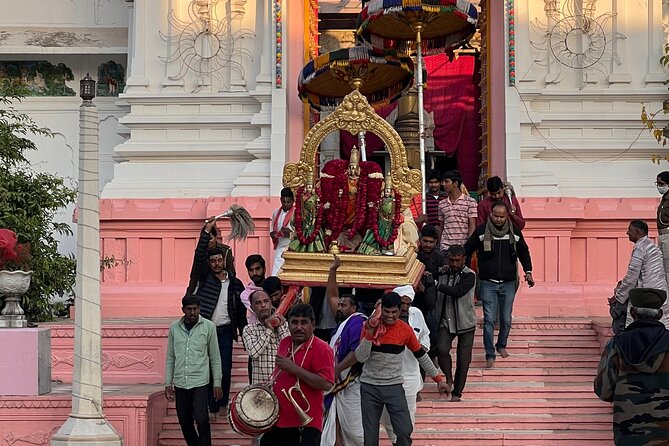
The first stop is Varaha Temple, dedicated to Lord Vishnu in his boar form. The temple is described as one of Vishnu’s eight Swayambhu Kshetra, places considered naturally sacred rather than established only through human construction.
The building dates to the 12th century and was built by King Anaji Chouhan. You get about 25 minutes here, with admission included. That is enough time for an introduction to the temple and its meaning, though not enough for an extended private study of every carving or shrine.
This is a good opening stop because it moves you beyond the most familiar image of Pushkar as the town of Brahma and the sacred lake. Pushkar’s religious importance includes several traditions and deities, and Varaha Temple gives the guide a chance to explain that wider setting.
Dress and temple behavior matter. The supplied information does not list a formal dress code, but you should follow the guide’s instructions and local signs. Treat the temple as a place of worship, not just a sightseeing stop.
Gurudwara Sahib and Pushkar’s Sikh connection
The 20-minute visit to Gurudwara Sahib adds a different religious perspective. Here, the guide explains Sikh history, Sikh beliefs, and why Pushkar is also sacred within Sikh religious tradition.
I like this stop because it keeps the tour from becoming a single-faith checklist. Pushkar is often introduced through Brahma, Shiva, Vishnu, and the lake, but this visit shows that the town has significance for more than one religious community.
The admission cost is free. As at the temples, listen carefully to instructions about footwear, photography, and respectful conduct. The value of this stop depends heavily on the guide’s explanation, and Manish is repeatedly praised for making religious ideas clear to people who are not Hindu.
Pushkar Lake at Sunset Point
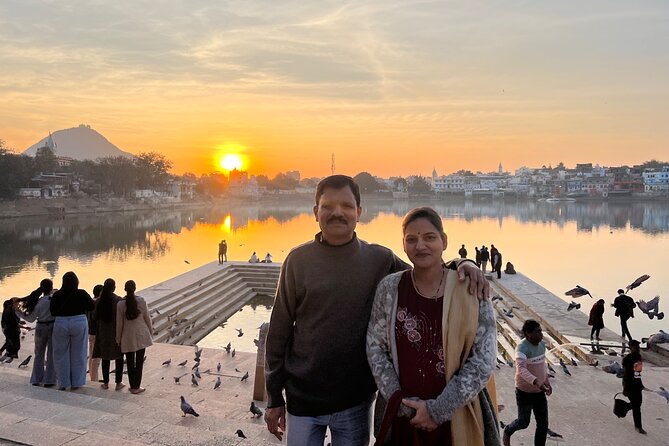
The route then reaches a ghat by Pushkar Lake, known as Sunset Point or Raj Ghat. This ghat was built by Raja Man Singh I of Amer in the early 16th century and later renovated by Jai Singh in the 18th century.
You spend around 20 minutes here, but the setting may encourage you to linger. The lake is the emotional center of Pushkar, and the late afternoon light gives this part of the walk a calmer rhythm after the temples and streets.
One of the most praised parts of the experience is sitting at the ghat for sunset while listening to live music. That combination gives you more than a quick photo stop. You have time to look across the water, watch the changing light, and take in the religious activity around the ghats.
The guide may explain blessings and offerings connected with the lake. Some people choose to receive a blessing for themselves or their families, while others simply observe. The option is there, but it should not be treated as a requirement. Be cautious with anyone who pressures you to pay for a ritual or donation. A useful guide should explain what is optional.
A few more options to weigh up in India
- Spiritual City Walking Tour-THE Pushkar Route
★ 5.0 · 907 reviews - Evening Walking Tour with Fire Rituals-The Pushkar Route
★ 4.9 · 108 reviews - Spiritual Walking tour with Puja Ceremony -The Pushkar Route
★ 5.0 · 101 reviews - From Jaipur : Private Ajmer Pushkar Tour by Cab
★ 4.5 · 29 reviews
Brahma Ghat and the evening fire ceremony
Brahma Ghat is the main ritual highlight. The evening Aarti, or fire ceremony, takes place beside the lake and includes music, flame, prayer, and movement. The scheduled visit lasts about 30 minutes, with admission included.
This is the point where the tour shifts from sightseeing to participation or observation. You can watch the ceremony, and the information provided also says you may take part. The experience is especially meaningful if you have already heard the guide explain the religious importance of the lake and the ghats.
The music is a major part of the appeal. One account singles out the live music at sunset, while another praises the drummers during a festival. The exact musical program can vary, so you should not expect the same performance every day.
Keep your expectations respectful. This is a working religious ceremony, not a staged show. Your guide can help you understand when to stand, sit, observe, or move aside. Give worshippers room, and ask before photographing people or rituals.
Atmateshwar Mahadev Mandir underground
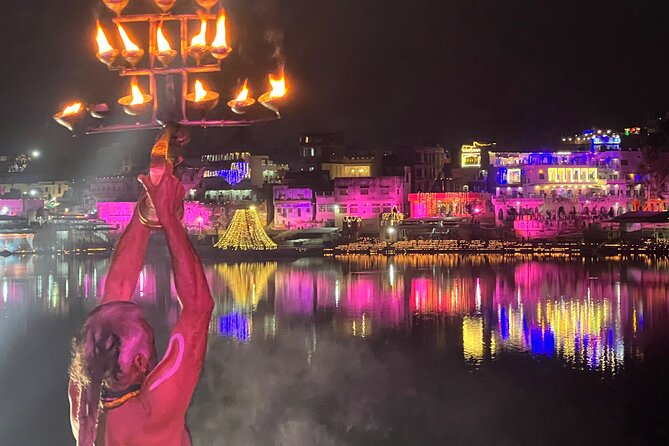
After the first visit to Brahma Ghat, the route continues to Ati Prachin Shri Atamteshwar Mahadev Mandir. This 12th-century temple is dedicated to Lord Shiva and is built as an underground cave temple.
The stop lasts about 15 minutes, with admission included. Its appeal is architectural as well as religious. The temple is known for Hemadpanti carvings, and the underground setting gives it a very different feel from the larger temple compounds elsewhere on the route.
This is one of the places you could easily miss without local direction. It is not the headline attraction most people associate with Pushkar, yet it adds depth to the walk. The short visit means you should think of it as a focused introduction rather than a long exploration.
The practical issue is simple: an underground temple may involve steps, confined areas, or uneven footing. The tour information does not give accessibility details, so ask the provider if you have mobility concerns.
Walking the ghats toward another Brahma Ghat
The tour returns to the ghats for a spiritual walk toward Brahma Ghat. This section takes about 20 minutes and focuses on ceremonies for families and prayers for ancestors.
The repetition of Brahma Ghat in the route description may reflect two parts of the visit: one dedicated to the fire ceremony and another connected with walking along the water and observing offerings. Either way, the ghats are not just scenic edges around a lake. They are active religious places where people come for prayer, remembrance, and ritual.
This is where a good guide makes a real difference. Manish is praised for explaining the philosophy behind the temples rather than giving only dates and names. He is also described as patient with questions, which matters when the customs are unfamiliar.
You should not feel obliged to participate in any prayer or blessing. Watch, listen, and join only if you understand what is being offered and feel comfortable doing so.
Brahma Temple, Pushkar’s signature shrine
The Brahma Temple receives about 30 minutes and includes admission. It is described as the only temple in the world dedicated to Lord Brahma, the creator figure in Hindu tradition.
The present structure dates to the 14th century and was partly renovated later. Its black and white marble construction gives it a distinct appearance, and the pillars add to the sense that this is a major religious site rather than a quick roadside shrine.
This is likely to be the most anticipated temple on the walk. The guide’s commentary helps you understand why Brahma has such a central connection with Pushkar and why this temple is unusual. If you visit without context, you may see an attractive building and a busy place of worship. With explanation, the stop becomes a clearer part of the town’s religious story.
Thirty minutes is a fair amount of time, but the temple may be busy. You may need to move at the guide’s pace and accept that you will not see every corner in detail.
Rangji Temple and the old town lanes
The route also includes the old Rangji Temple, located near Varaha Ghat in the middle of town. This temple is about 200 years old and dedicated to Lord Vishnu.
The supplied timing does not specify a separate duration for this stop, so treat it as a brief additional visit rather than a guaranteed extended tour inside. Its location near the ghats makes it a natural part of the walk through central Pushkar.
This is the kind of stop that gives the route variety. You move from a major Brahma shrine to a Vishnu temple, then into the everyday streets of town. The guide can point out how worship, commerce, food, and daily routines sit close together in Pushkar.
Halwai Gali and Pushkar Main Market
After Brahma Temple, the walk heads through the main market and narrow lanes toward Halwai Gali. This lane is known for malpuas, a sweet pancake-like treat, and the route continues toward Gandhi Ghat.
You get about 20 minutes in this area. It is a chance to see Pushkar as a living town rather than only a sacred site. The lanes also offer good photography spots, though you should take care around shopfronts and people going about their business.
The market section is short, so it is not designed as a full food tour or shopping expedition. Think of it as a final slice of local street life after the temples and ceremony. Hot drinks and snacks are provided during the experience, which is useful, but the description does not specify exactly where or when they are served.
What the $7 price really gives you
At $7 per person, this tour offers strong value if you want structure and interpretation. The price includes a guide, admission at listed ticketed stops, hot drinks, snacks, live music, and the fire ceremony experience. Even if you visited the lake and markets independently, the cost of arranging several temple visits and receiving sustained cultural explanation would be hard to match at this price.
The real value is not transport or luxury. This is a walking tour. You are paying for route planning, local knowledge, religious context, and access to a carefully timed sunset and evening ritual.
The six-person maximum is important. A small party should make it easier to hear the guide in narrow lanes and ask about customs without holding up a large crowd. Guide Manish is especially praised for his English, clear explanations, patience, and advice about what to do and avoid in Pushkar. Vishwanath is praised for flexibility when a group started late and for tailoring the outing to the time available.
There are limits. The tour covers many stops in about three hours, so some visits will be brief. If you prefer to sit quietly at one temple, spend an hour photographing the lake, or browse the market at leisure, you may find the pace too full.
Who should book this walk?
I would recommend it most strongly to first-time visitors who want a clear introduction to Pushkar in one afternoon. It also suits solo visitors and couples who prefer a small group, as well as anyone curious about Hindu traditions but unsure how to approach religious sites respectfully.
The route is also useful if you have only a short stay in town. In a single outing, you see the lake, several important temples, a Sikh place of worship, the market, sunset, and the evening Aarti.
You should think twice if you dislike walking in narrow lanes or want a highly relaxed schedule. The tour information does not provide a precise accessibility plan, and the underground temple may present a challenge for some people. Ask ahead if stairs, uneven surfaces, or standing during ceremonies are concerns.
Free cancellation is available if you cancel at least 24 hours before the local start time. Changes or cancellations made later are not accepted for a refund.
My booking advice
I would book this tour if you want to understand Pushkar rather than simply photograph it. The strongest features are the guide’s cultural explanations, the small group, and the progression from temples to lake sunset to fire ceremony.
Choose it with the right expectations. You will cover a lot of ground, and you will not receive a long private visit at every shrine. But for $7, the route gives you a practical introduction to Pushkar’s religious heart, plus several moments that are difficult to plan well alone.
If you book, arrive ready to walk, keep an open mind, and treat the blessing and ceremony as optional religious experiences rather than tourist performances. For a first afternoon in Pushkar, that is a very good bargain.
FAQ
What time does the tour start?
The tour starts at 4:00 p.m.
How long does the walk last?
The experience lasts approximately three hours.
How much does the tour cost?
The listed price is $7 per person.
How many people can join the tour?
The group is limited to a maximum of six people.
Is pickup available?
Yes, pickup is offered. The exact pickup details should be confirmed at booking.
Are temple admission fees included?
Admission is included at Varaha Temple, Atmateshwar Mahadev Mandir, Brahma Temple, and Brahma Ghat as listed in the schedule. Other listed stops have free admission.
Are food and drinks included?
Yes. Hot drinks and snacks are provided during the experience.
Can I cancel for a full refund?
Yes, if you cancel at least 24 hours before the experience start time. Cancellations made less than 24 hours in advance are not refundable.
Just added in India
- Five Days Golden Triangle Tour with Ranthambore Delhi Agra Jaipur★ 5.0 · 11 reviews
- 5 Days Golden Triangle Tour with Ranthambore India★ 5.0 · 10 reviews
- 5 Days Golden Triangle Tour with Ranthambore Delhi Agra Jaipur★ 5.0 · 11 reviews
- 5-Day Private Luxury Golden Triangle Tour From Delhi★ 5.0 · 45 reviews
- Delhi, Agra, Jaipur & Ranthambhore Tiger Safari 5-Day Tour★ 5.0 · 47 reviews
- Private 5 Days Golden Triangle Tour – Visit Delhi Agra and Jaipur★ 5.0 · 26 reviews
- 5-Day Private Delhi, Agra and Jaipur with Ranthambhore Tiger Tour From Delhi★ 5.0 · 44 reviews
- 5-Day Private Golden Triangle Tour: Delhi, Agra, and Jaipur★ 5.0 · 62 reviews
Sunset and Evening Tours, compared.
Taj Mahal Sunrise & Sunset All Inclusive Private Luxury Agra Tour
Read our review →

Full-Day Jaipur Tour Ending with a Sunset Experience
Read our review →
Jaipur Tuk Tuk Sightseeing Tour with Monkey Temple Sunset View
Read our review →
Jaipur Heritage Evening Walk – The Twilight Magic of Pink City
Read our review →
Mumbai Private Sunrise/Sunset Sailing 8ppl Boat Tour
Read our review →
Private Jaipur Night Tour with Nahargarh Sunset Views
Read our review →
Jaipur@Twilight Guided Heritage City walk tour with Food Tasting
Read our review →Browse the lists this tour appears in