
Reviewed · WALKING TOURS
Evening Walking tour with Fire Ceremony – The Pushkar Route
Pushkar reveals its soul after sunset. This three-hour evening walk links old temples, sacred ghats, and the nightly Maha Aarti beside Pushkar Lake, giving you a calmer look at one of Rajasthan’s most religious towns. I especially like the small group limit of six and the fact that the tour is explicitly shopping-free. You get local stories, Hindu customs, and hard-to-find corners instead of a forced stop at a shop.
I also like the low price, about $8 per person, for an experience that covers seven significant places. The main consideration is timing: a 5:00 pm start and three hours on foot may feel full, especially if you prefer a slow temple visit or need a break from walking.
In This Review
- Key points to know before booking
- Why Pushkar works better on an evening walk
- Brahma Ghat and the start of the evening
- Brahma Temple, one of India’s rare Brahma shrines
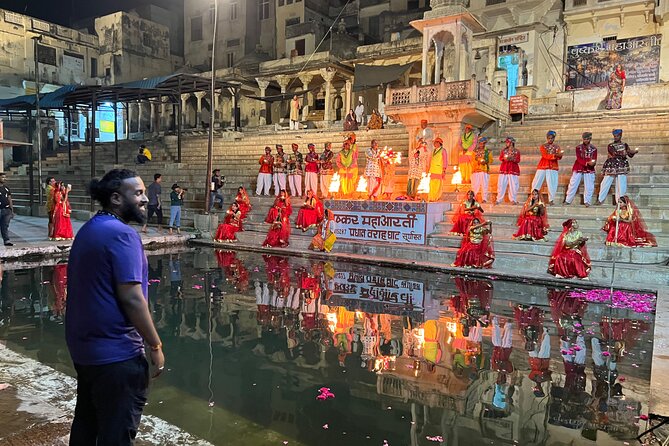
- The Maha Aarti at Brahma Ghat
- Varaha Temple and an older side of Pushkar
- Gurudwara Sahib and Pushkar’s religious mix
- Walking the 52 ghats around Pushkar Lake
- Old Rangji Temple, a short final temple visit
- What the $8 price really gives you
- Who will enjoy this Pushkar walk most
- Should you book The Pushkar Route?
- FAQ
- What time does the evening walking tour begin?
- How long does the tour last?
- How much does the experience cost?
- How many people can join the tour?
- Does the tour include the evening fire ceremony?
- Can I cancel for a refund?
Key points to know before booking
- The fire ceremony is the emotional center: At Brahma Ghat, you can watch the evening Maha Aarti beside Pushkar Lake.
- Seven stops fit into about three hours: The route includes temples, a Sikh gurdwara, lake ghats, and old town streets.
- The group is capped at six people: That makes it easier to ask questions and stay close to the guide.
- There is no shopping stop: The tour focuses on religion, history, customs, and walking rather than purchases.
- Guides named in the feedback include Manish and Kapil: Both were praised for friendly explanations and answering questions about Hinduism.
- Pickup is offered, and a mobile ticket is available: The stated start time is 5:00 pm, with confirmation provided when you book.
Why Pushkar works better on an evening walk
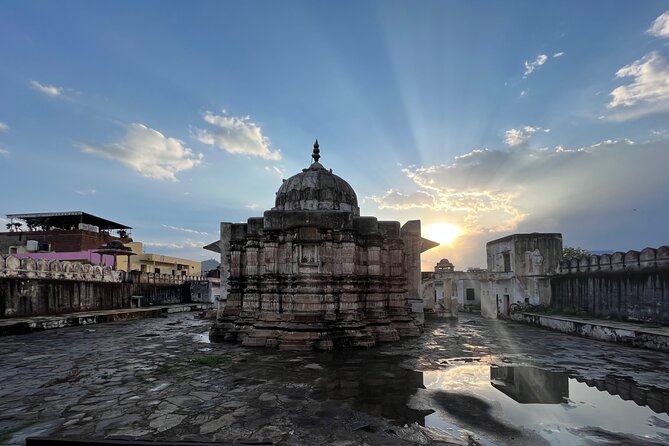
Pushkar can feel very different after the heat and noise of the day have eased. The town is built around a sacred lake, with 52 ghats and a large number of temples close together. An evening route lets you see these places while the town turns toward prayer.
The appeal is not just pretty nighttime streets. The tour brings you into the daily religious life of Pushkar, especially at the lake. Bells, lamps, chanting, and movement around the ghats give the walk a clear sense of place. You are not simply looking at old buildings. You are seeing how the town uses them.
I would choose this tour if you want your first evening in Pushkar to have a clear shape. A local guide can explain why a particular ghat matters, how the temples connect to Hindu beliefs, and what you are watching during the fire ceremony. That context is useful because religious sites can otherwise blur together.
The experience is also a good fit if you prefer to explore on foot. The route moves through the center of town and along the lake rather than relying on a vehicle. Since the group is limited to six, you should have a better chance of hearing the guide in the narrow streets and during explanations.
More Walking Tours in India:
- The Great Indian Food Tour: Old Delhi Food and Heritage Walk
★ 5.0 · 1,698 reviews - Group Guided Walking Tour in Fort and Colaba
★ 5.0 · 1,073 reviews - Spiritual City Walking Tour-THE Pushkar Route
★ 5.0 · 907 reviews
Brahma Ghat and the start of the evening
The walk begins at Brahma Ghat, one of the important bathing and prayer points around Pushkar Lake. It is especially associated with the Maha Aarti, so this first stop sets the tone for the whole evening.
You have about 30 minutes here. That gives the guide time to explain the ghat and its religious role before the ceremony later in the route. The ghat is also connected with a Shankaracharya temple built at its entrance, adding another layer to the setting.
This is a place where respectful behavior matters. The tour is built around Hindu customs, not around treating a ceremony as a stage show. You should expect to watch, listen, and follow local instructions. Photography may be attractive here, but the spiritual activity comes first.
The route returns to Brahma Ghat later for the evening Aarti. That repeated visit makes sense: the first stop provides background, while the later stop lets you experience the ritual at the appropriate point in the evening.
Brahma Temple, one of India’s rare Brahma shrines
From the ghat, the route continues to Brahma Temple, with about 30 minutes set aside for the visit. This is one of the few existing temples in India dedicated to Brahma, the Hindu creator-god, and it is considered the most prominent of them.
The temple structure dates to the 14th century, with later changes. That long timeline gives the guide plenty to explain, but the value of the visit depends on the quality of those explanations. The feedback about Manish and Kapil is encouraging here. Both were praised for clear information, friendliness, and their ability to answer questions beyond a fixed script.
I would use this stop to ask questions. If you are unfamiliar with Hindu deities, temple customs, or the role of Brahma, this is a better setting for learning than trying to work everything out from signs or brief independent visits. Kapil was specifically praised for explaining Hinduism while visiting key Pushkar temples and for handling curious questions.
One practical point: a 30-minute temple visit is enough for an introduction, but it is not an unhurried study of every detail. The tour covers several more places, so expect a guided overview rather than a long pause at one shrine.
The Maha Aarti at Brahma Ghat
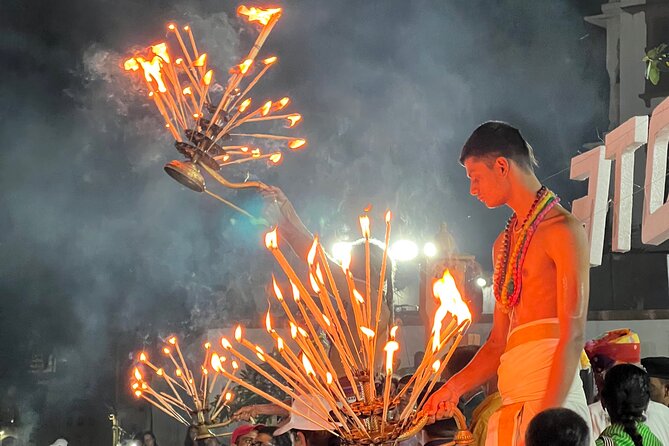
The second visit to Brahma Ghat lasts about 25 minutes and focuses on the evening Aarti, also called the fire ceremony. This is likely to be the most memorable part of the route.
Maha Aarti is a Hindu prayer ritual using lamps or fire. At Pushkar Lake, the setting adds weight to the ceremony. The ghats, the water, and the sound of bells from nearby temples create the calm and devotional mood that this tour promises.
The experience is open to anyone seeking quiet reflection, not only to people with a strong religious background. You can watch the ritual and take in the sound and movement without needing to take part in every custom. A guide is useful because small gestures and objects can have meaning that is easy to miss.
The timing is important. The tour starts at 5:00 pm, so the schedule is designed around reaching the ghat for the evening ritual. Seasonal conditions and local timing can affect any religious ceremony, and the supplied details do not promise an exact ceremony start time. Still, the Aarti is clearly a central reason to book this particular walk.
If you want a fast checklist of monuments, this stop may feel slower. If you want to see Pushkar as a living religious center, it is the part that gives the rest of the route purpose.
A few more options to weigh up in India
- Afternoon Walk Tour with Sunset & Fire Ritual -The Pushkar Route
★ 5.0 · 119 reviews - Evening Walking Tour with Fire Rituals-The Pushkar Route
★ 4.9 · 108 reviews - Spiritual Walking tour with Puja Ceremony -The Pushkar Route
★ 5.0 · 101 reviews - Walking Sightseeing Tour – The Shine Pushkar
★ 5.0 · 64 reviews
Varaha Temple and an older side of Pushkar
The Varaha Temple receives about 25 minutes. It is dedicated to Varaha, an incarnation of Vishnu, and is described as one of Pushkar’s ancient temples.
The temple was built in the 12th century by King Anaji Chouhan and is regarded as one of the eight Swayambhu Kshetra associated with Vishnu. Those details make this more than a quick architectural stop. The guide can place the temple within the wider religious story of Pushkar and explain why Vishnu worship matters here alongside the Brahma tradition.
This is also where a guide can help you notice the difference between major pilgrimage sites and less visited temples. The tour’s stated aim is to include places you may struggle to find alone. That is a real benefit in a town where a map can show a street but not explain why a small shrine matters.
The 25-minute allocation keeps the pace moving. You may find the stop a little brief if you want a long, quiet look at the temple. On the other hand, it prevents the evening from becoming a single-site visit.
Gurudwara Sahib and Pushkar’s religious mix
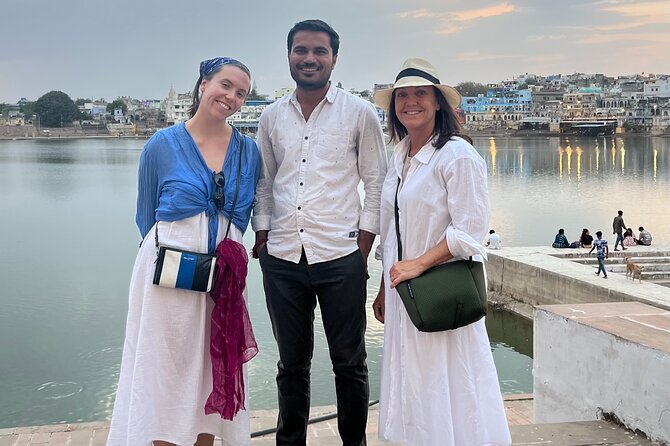
The 30-minute stop at Gurudwara Sahib broadens the tour beyond Hindu sites. A gurdwara is a Sikh place of worship, and this one is presented as a peaceful and attractive part of Pushkar.
That inclusion matters. Pushkar is strongly associated with Hindu pilgrimage, especially because of the lake and Brahma Temple. Visiting the Sikh temple shows you a wider picture of the town’s religious life and its mix of traditions.
The stop is described as tranquil, with the guide explaining its place in Pushkar’s diverse religious setting. You should expect a respectful visit rather than a formal comparative religion lesson, but it adds welcome variety to a route otherwise centered on Hindu temples.
The half-hour timing also gives the evening a change of pace after the fire ceremony and temple visits. If you are interested in how different faiths share one town, this may be one of the most useful stops.
Walking the 52 ghats around Pushkar Lake
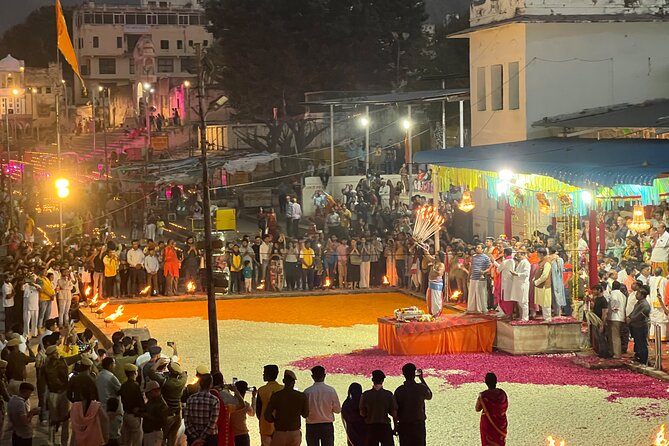
The lake walk lasts about 25 minutes and includes several ghats, photo spots, and small old temples on the water’s edge. This is the stretch where Pushkar’s geography and religious life come together.
The 52 ghats are not just a scenic promenade. They are tied to bathing, prayer, ceremonies, and the identity of the town. Walking among them at night gives you a different view from a daytime sightseeing visit. The bells of many temples around the lake are part of the appeal, and the route is intended to let you hear and observe that evening atmosphere.
You may want photographs here, but keep your camera use measured. The lake and ghats are sacred places, and people may be praying or carrying out rituals. The guide can help you understand where it is appropriate to pause.
This is also a useful part of the tour for orientation. Pushkar’s center is compact, but the ghats and temple lanes can be confusing on a first visit. A walk around the lake helps you understand how the town is arranged and which sites you may want to revisit during daylight.
Old Rangji Temple, a short final temple visit
The final listed stop is Old Rangji Temple, near Varaha Ghat. The visit lasts about 15 minutes, making it a brief closing stop rather than a major block of the evening.
The temple is about 200 years old and dedicated to Vishnu. Its location in the middle of town makes it a natural part of the walking route, and its connection with the Varaha Temple gives the guide another chance to explain different forms and traditions associated with Vishnu worship.
Because only 15 minutes are planned here, I would not book this walk expecting long interiors or detailed architectural study at every temple. The strength is the range of places covered and the way the guide links them. Old Rangji works best as a concise final example of Pushkar’s religious architecture.
What the $8 price really gives you
At about $8 per person, this is a strong-value tour if you want local interpretation. You are paying for a three-hour route, a guide, access to seven named places, and the chance to attend the evening Aarti without having to plan the sequence yourself.
The price is especially appealing for solo visitors. A private guide would usually cost more, while an independent walk may leave you without explanations at the temples or during the ceremony. A group maximum of six keeps this from feeling like a large procession.
The tour also avoids shopping stops. That matters if you want to spend your limited time on Pushkar’s religious and cultural side rather than browsing shops. You can still shop separately if you wish, but it is not built into this experience.
There are limits to the value. The route is fast enough that no single temple receives a long visit, and the information provided does not specify extras such as food, drinks, or hotel transfer details. Pickup is offered, but you should confirm the exact meeting arrangement when booking.
The tour is normally booked about 19 days ahead, so reserving early is sensible if your Pushkar dates are fixed. The cancellation terms are practical: cancel at least 24 hours before the local start time for a full refund. Within 24 hours, the price is not refunded, and late changes are not accepted.
Who will enjoy this Pushkar walk most
I would recommend it to you if you want:
- A first introduction to Pushkar’s temples and lake
- A calm evening activity rather than a shopping or food tour
- Explanations of Hindu customs and religious sites
- A small group with room for questions
- A planned route through places that can be hard to identify alone
- A low-cost way to attend the evening fire ceremony
It suits curious first-time visitors particularly well. The feedback gives the guides strong marks for friendliness, clear explanations, and answering questions outside the standard route. Manish was praised as both informative and welcoming, while Kapil was singled out for explaining Hinduism in a way that encouraged questions.
You should think twice if you dislike walking, want a private experience, or prefer to spend an hour at one temple. The tour covers a lot in three hours. Its strength is variety and context, not a slow, detailed examination of each building.
Most travelers can participate, and the tour is near public transportation. The supplied details do not give a specific walking distance, terrain description, or accessibility plan, so ask the operator if you have mobility concerns.
Should you book The Pushkar Route?
Book this tour if you want to see Pushkar’s religious heart after dark and would value a friendly local guide. The Maha Aarti, the 52 ghats, Brahma Temple, and the visit to Gurudwara Sahib create a well-rounded evening, especially at a price of about $8.
I would make it one of my first activities in Pushkar. It gives you the basic map and cultural setting you need for later independent exploring. Just arrive ready to walk, keep an open mind around religious customs, and accept that the schedule favors breadth over long visits.
FAQ
What time does the evening walking tour begin?
The stated start time is 5:00 pm.
How long does the tour last?
The tour lasts approximately three hours.
How much does the experience cost?
The listed price is $8 per person.
How many people can join the tour?
The group has a maximum of six travelers.
Does the tour include the evening fire ceremony?
Yes. The route includes the Maha Aarti, or fire ceremony, at Brahma Ghat beside Pushkar Lake.
Can I cancel for a refund?
Yes. You can receive a full refund if you cancel at least 24 hours before the experience start time. Cancellations or changes made within 24 hours are not refunded or accepted.
Just added in India
- Walking Tour in the old part of the city of Varanasi★ 5.0 · 25 reviews
- Explore Chennai City: Guided Walking Tour on Foot★ 4.3 · 22 reviews
- Walk of Divinity Bangalore (2 hours guided walking tour)★ 3.8 · 19 reviews
- Vibrant Markets of Trivandrum (2 Hours Guided Walking Tour)★ 4.5 · 15 reviews
- Victorian Gothic Heritage Quarter and Art Deco Walking Tour★ 4.9 · 14 reviews
- Vibrant Markets of Mumbai (2 Hours Guided Walking Tour)★ 4.4 · 44 reviews
- Varanasi Walking and Heritage Tour★ 4.6 · 15 reviews
- Varanasi: Manikarnika Ghat (Oldest Cremation Site) Tour★ 4.7 · 22 reviews
Walking Tours, compared.
The Great Indian Food Tour: Old Delhi Food and Heritage Walk
Read our review →


Blue City Heritage Private Walking Tour With Pickup and Drop-Off
Read our review →
Private Guided Walking Tour in Bandra Queen of Suburbs
Read our review →
Private Jodhpur Blue City Walking Tour with Guide
Read our review →Browse the lists this tour appears in