
Reviewed · WALKING TOURS
Jaipur walking tour.
Jaipur’s best stories are often off the main road. This private morning walk takes you through the old city’s lanes, temples, markets, and working neighborhoods, where priests, shopkeepers, artisans, and chai sellers shape daily life. I like that it looks beyond grand palaces and famous monuments, and I especially like the way guide Deepak connects Jaipur’s customs, caste, faith, and family traditions to the streets you are walking through.
The tour also offers a close look at craftspeople making bangles, food vendors at work, old havelis, and the trading lanes around Johri Bazaar. The main consideration is comfort: Jaipur’s back streets can be dirty in places, scooters and pedestrians share tight spaces, and the early start means meeting at 7:30 am. Wear modest clothing, carry water, and bring shoes that come off easily for temple visits.
In This Review
- Key Points Before You Book
- Why This Jaipur Walk Feels Different
- Meeting at Sanganeri Gate at 7:30 am
- Johri Bazaar and Jaipur’s Trading Streets
- Temples, Bells, and Everyday Faith
- Back Lanes, Havelis, and the Less Polished City
- Artisans, Food Sellers, and Small Human Encounters
- Monkeys, Head Nods, and Jaipur’s Sense of Humor
- What You Get for $34.04
- Who Will Enjoy This Walk Most
- FAQ
- Where does the Jaipur walking tour begin?
- What time does the tour start?
- How long does the walking tour last?
- Where does the experience end?
- Is this a private tour?
- What should I wear for the tour?
- What kind of shoes should I wear?
- Are food and breakfast included?
- Should You Book Once Upon a Time in Jaipur?
Key Points Before You Book
- Stories instead of a monument checklist: The focus is on how Jaipur works today, not simply on dates and buildings.
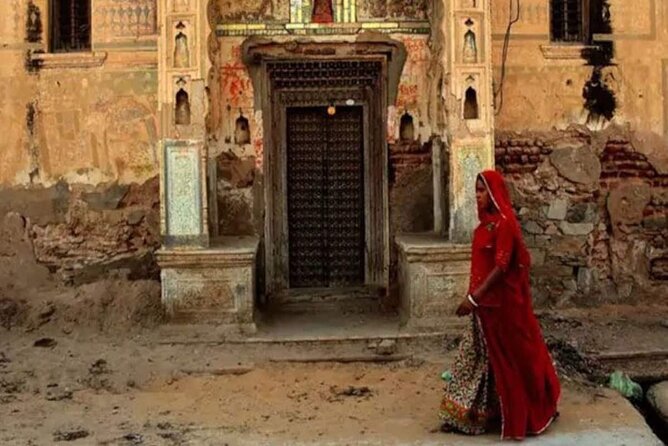
- Johri Bazaar and the old trading lanes: You’ll see the jewelry district, local commerce, and craftspeople at work.
- Private time with guide Deepak: Only your group takes part, allowing room for questions and conversation.
- Temple visits require practical dress: Wear long pants and long sleeves, and choose shoes that are easy to remove.
- A 7:30 am start: The early timing gives you a useful first look at Jaipur’s morning routines.
- Snacks are included: Breakfast is not, so eat beforehand if you need a substantial meal.
Why This Jaipur Walk Feels Different
Many Jaipur sightseeing tours center on the city’s famous forts, palaces, and grand gateways. Those sights deserve their place, but they can leave you looking at Jaipur from the outside. This walk takes another route. It asks you to watch the people who keep the old city going.
You may pass priests preparing temples, vendors arranging food, artisans working with bangles, and shopkeepers opening their businesses. The point is not to treat these scenes as a stage set. It is to help you understand how work, worship, neighborhood ties, and long-standing social customs meet in ordinary streets.
I like this approach because it gives context to the monuments you may visit later. A palace can show you how rulers lived. A market lane can show you how the city earned its living. Seeing both makes Jaipur easier to understand.
The tour also deals with subjects that many sightseeing walks avoid. The description specifically includes stories about faith, caste, religion, and community. These topics can be complicated, but they matter if you want a more honest picture of life in Jaipur. You should expect a personal interpretation from a local guide rather than a polished lecture designed only to flatter the city.
More Walking Tours in Jaipur
- Jaipur Bazaar & Food Walking Tour
★ 5.0 · 281 reviews - Heritage Walk & Street Food Tasting in Jaipur
★ 5.0 · 158 reviews - Jaipur Heritage Walk with Rickshaw Ride
★ 5.0 · 105 reviews
Meeting at Sanganeri Gate at 7:30 am
The walk begins at Sanganeri Gate in the Pink City and lasts about two and a half hours. It ends back at the meeting point, which makes planning the rest of your morning fairly simple.
The early start is worth considering carefully. At 7:30 am, you are not simply accepting an inconvenient meeting time. You are arriving as the old city begins its day. Vendors, shopkeepers, and workers are setting up, and the streets can feel more connected to daily routines than to sightseeing.
I would schedule this on your first full morning in Jaipur if possible. It can help you get your bearings before tackling larger sights, and the local details may give more meaning to later visits. The walk is also private, so the pace and conversation can suit your group better than a large public tour.
There is no private transport included. You meet at the gate, walk through the old city, and return there at the end. The area is near public transportation, but you will need to arrange your own way to Sanganeri Gate. The mobile ticket is useful for keeping the booking details on your phone.
Johri Bazaar and Jaipur’s Trading Streets
Johri Bazaar is the named stop on the route, but the experience reaches beyond a single market street. This part of Jaipur is associated with jewelry making and old trade. The surrounding lanes offer a chance to see commerce at a human scale, with workshops, storefronts, and people carrying on work that has shaped the district for generations.
You might see jewelry makers, bangle makers, and food vendors at work. That is more useful than simply passing rows of shops because you can connect the finished products to the hands and skills behind them. If you are interested in crafts or shopping, ask questions before you buy anything. The walk is designed for understanding the area, not just for sending you into stores.
The market can also be noisy and crowded. Scooters, calls from vendors, conversations, and temple bells may all arrive at once. That sensory mix is part of the old city, but it can be tiring if you prefer quiet, open streets. Keep your belongings secure and pay attention when crossing tight lanes.
A good guide makes the difference here. Deepak is repeatedly praised for his warmth, humor, and personal connection to Jaipur. That matters in a neighborhood where the value is not obvious from a quick glance. A skilled explanation can turn a shopfront, a lane, or a worn building into a clue about how the city developed.
Temples, Bells, and Everyday Faith
Temple visits add a religious layer to the walk. You may hear bells, see worship taking place, and learn how faith shapes ordinary routines in the old city. The experience is not presented as a grand architectural tour. Its focus is the way temples function as part of the neighborhood.
You should dress with care. Long pants and long sleeves are advised, and you should wear shoes that are easy to remove. Water is also important, since the walk takes place outdoors and Jaipur can feel hot even when the morning begins pleasantly.
Temple etiquette matters. Follow the guide’s instructions, keep your voice respectful, and ask permission before taking photographs of people. The instruction to request permission is especially useful in markets and working areas, where it is easy to forget that you are looking at someone’s job or daily life rather than a display.
The route may include stories about religion and caste. Listen with an open mind. Some subjects may not fit neatly into a short tour, but even a brief explanation can help you avoid treating local customs as strange curiosities. I value this kind of context because it encourages you to look and listen with more care.
A completely different kind of day out:
- Jaipur: Private Full Day Sightseeing Tour By Car with Guide
★ 4.9 · 1,839 reviews - 3-Hour Morning Bike Tour of Jaipur
★ 5.0 · 1,253 reviews - Jaipur: Private Sightseeing Day Tour with Guide by Car
★ 4.8 · 773 reviews - Jaipur: Full-Day City Tour with Car, Guide & Skip-the-Line
★ 4.8 · 512 reviews
Back Lanes, Havelis, and the Less Polished City
The old city is not presented as perfectly restored. You can expect crumbling havelis, worn walls, garbage corners, and streets that may look rough around the edges. That is not a flaw to hide. It is part of the setting the tour wants you to see.
The word authentic is often used too easily in travel marketing, but here the idea has a clear meaning. You are being shown places where people live and work, including areas that are not prepared for sightseeing. The reward is a closer sense of how the city operates. The tradeoff is that the surroundings may be messy, uneven, or less comfortable than a palace courtyard.
The old havelis can be especially interesting because they hint at the lives of former merchant families and city residents. You may not receive a full architectural study of each building. Instead, the buildings become part of a broader story about Jaipur’s merchants, castes, craftsmen, and changing neighborhoods.
Keep your expectations realistic. This is not a polished heritage presentation with every structure restored and every route cleared. You are walking through a living part of Jaipur. For some people, that is the strongest reason to book. For others, it may feel too basic or untidy.
Artisans, Food Sellers, and Small Human Encounters
The most praised part of this experience is its attention to people at work. You may watch bangles being made, see food vendors preparing local snacks, and meet sellers in the market. These encounters give the tour its strongest sense of place.
The included snacks fit this style of experience. You are not signing up for a full breakfast, and breakfast is not included, so eat before the walk if you need more than a small taste. The food component is best understood as a local introduction rather than a complete meal.
I also like that the route may include a school. The school visit, mentioned in the tour experience, adds another view of neighborhood life. It moves the focus away from shopping and worship and toward the institutions that serve local families. Since the exact school arrangements are not specified, you should treat this as something you may encounter rather than a guaranteed formal visit.
The same applies to direct interaction with vendors and artisans. The tour description promises contact with working people, but conversations can vary with time, privacy, and how busy someone is. Ask before taking photos, and do not assume every person wants to stop working for a picture.
Monkeys, Head Nods, and Jaipur’s Sense of Humor
The walk does not take itself too seriously. You may spot monkeys jumping across rooftops, and you’ll hear about the famously hard-to-read Indian head nod. A tilt or shake can seem to mean yes, no, maybe, or something in between, depending on context.
These details may sound small, but they help break up heavier subjects such as caste and religion. They also give you practical social clues. You are not expected to master local gestures in one morning, but noticing them can make your conversations feel less awkward.
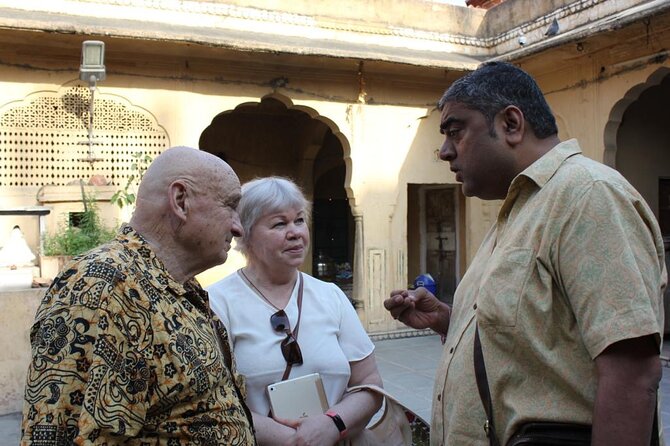
Deepak’s humor is one of the reasons this tour seems to work well for couples, families, and curious first-time visitors. His style is described as warm and easygoing, with plenty of room for stories. That personal quality is important because a walk through working neighborhoods can feel intrusive if the guide does not help you approach it respectfully.
What You Get for $34.04
At $34.04 per person, this is not the cheapest way to walk around Jaipur. You could enter the old city on your own for far less. The question is what you want from those two and a half hours.
The price pays for a private experience, a local guide, planned access to market and neighborhood stories, temple context, and included snacks. You are also paying for interpretation. Without a guide, you might see a bangle maker or an old haveli but miss the social connections that make the scene meaningful.
The value is strongest if you enjoy conversation, local customs, and everyday working life. It is weaker if your main goal is to cover Jaipur’s major monuments quickly. This walk does not replace the Amber Fort, City Palace, or other headline sights. It works better beside them.
Because only your group takes part, you can ask about topics that interest you, including crafts, religion, markets, and city life. That private format also makes the cost easier to justify for a couple or small group than for a solo visitor on a strict budget.
The experience has received a five-star rating with a 100 percent recommendation rate from 10 ratings. That is a small sample, so I would not treat it as a guarantee. Still, the consistent praise for Deepak’s character, organization, humor, and personal stories is a useful sign of what matters most here.
Who Will Enjoy This Walk Most
I would choose this tour if you want to see Jaipur beyond its palaces. It suits people who like markets, crafts, street food, religion, social customs, and local conversation more than a long list of official sights.
It is also a good fit for repeat visitors. If you have already seen Jaipur’s grand monuments, this offers a different angle on the old city. One previous participant had visited Jaipur many times and used the walk to see a less familiar side of it.
Families with older children may enjoy the changing scenery and the monkey sightings, though each person should be comfortable walking through busy lanes. Couples and small private groups will benefit from the chance to ask questions without a large crowd.
I would think twice if you dislike early starts, uneven or dirty streets, temple etiquette, or informal experiences. The tour is not designed for someone seeking polished architecture, air-conditioned comfort, or a full meal.
Free cancellation is available if you cancel at least 24 hours before the 7:30 am start. Changes or cancellations inside that window are not refunded, and poor weather can lead to a new date or full refund. That is worth remembering when planning around Jaipur’s weather.
FAQ
Where does the Jaipur walking tour begin?
The tour begins at Sanganeri Gate in the Pink City, Jaipur, Rajasthan 302003, India.
What time does the tour start?
The start time is 7:30 am.
How long does the walking tour last?
The tour lasts approximately 2 hours and 30 minutes.
Where does the experience end?
The walk ends back at the meeting point.
Is this a private tour?
Yes. Only your group participates in the activity.
What should I wear for the tour?
You are advised to wear long pants and long sleeves because the route includes a temple visit.
What kind of shoes should I wear?
Wear shoes that are easy to remove for temple visits.
Are food and breakfast included?
Snacks are included, but breakfast is not. You should carry a water bottle.
Should You Book Once Upon a Time in Jaipur?
Book it if you want Jaipur’s people and working streets to be the main subject. The strongest parts are the private format, Deepak’s warm storytelling, the Johri Bazaar area, the craftspeople, and the chance to discuss faith, caste, community, and ordinary life.
Skip it if you want a monument-heavy route or a quiet, spotless walk. At $34.04, the value depends on your interest in interpretation rather than entrance tickets. For an early morning introduction to the Pink City’s living neighborhoods, it offers a thoughtful and unusually personal start.
Just added in Jaipur
- Jaipur Private Sightseeing Tour – All-Inclusive with Car & Guide★ 5.0 · 16 reviews
- Jaipur Private Tour 2 Days with Car & Guide★ 5.0 · 13 reviews
- Private Jaipur Tour with Guide & All Entry Tickets★ 5.0 · 20 reviews
- Yoga in Jaipur with Amit (Yogi on Travel)★ 5.0 · 17 reviews
- Vintage Walk Amer★ 5.0 · 11 reviews
- Private 4-Day Wildlife & Taj Mahal Tour from Jaipur to Delhi★ 5.0 · 23 reviews
- Wheel Pottery Workshop★ 4.5 · 19 reviews
- Ranthambore Tiger Safari Private Same Day Trip from Jaipur★ 5.0 · 18 reviews
Walking Tours, compared.

The Great Indian Food Tour: Old Delhi Food and Heritage Walk
Read our review →

Blue City Heritage Private Walking Tour With Pickup and Drop-Off
Read our review →
Private Guided Walking Tour in Bandra Queen of Suburbs
Read our review →

Private Jodhpur Blue City Walking Tour with Guide
Read our review →Browse the lists this tour appears in