

Reviewed · WALKING TOURS
Jaipur Heritage Walking Tour
Jaipur reveals itself on foot. This small-group walk pairs a 3-kilometer route with local architecture students who explain the old city through its gates, streets, monuments, and religious sites. The group is limited to 10 people, which should make questions easier and keep the experience more personal than a large coach tour.
I like the architecture-focused guides, and I like that breakfast, water, and digital photos are included rather than treated as extras. The $16 price is appealing for a half-day introduction to Jaipur. My main concern is reliability: two serious complaints describe the guide failing to appear and not answering calls, so you should confirm the meeting details shortly before setting out.
In This Review
- Key points to know before booking
- Why this Jaipur walk is worth considering
- Starting at Ajmeri Gate
- Isarlat Sargasooli and Jaipur’s design ideas
- Tripolia Bazaar and a royal entrance
- Hawa Mahal, Jaipur’s famous face
- Jalebi Chowk and the back side of royal Jaipur
- Govind Devji Temple and the final chai
- Breakfast, water, and the value of $16
- Group size, pace, and physical effort
- The important booking concern
- Who should book this walk?
- Should you book the Jaipur Heritage Walking Tour?
- FAQ
- Where does the Jaipur Heritage Walking Tour take place?
- How long does the tour last?
- How far do you walk?
- What is included in the price?
- Is hotel pickup included?
- Are attraction admission fees included?
- How many people can join the group?
- Is the tour suitable for most people?
- Can I cancel for a full refund?
Key points to know before booking
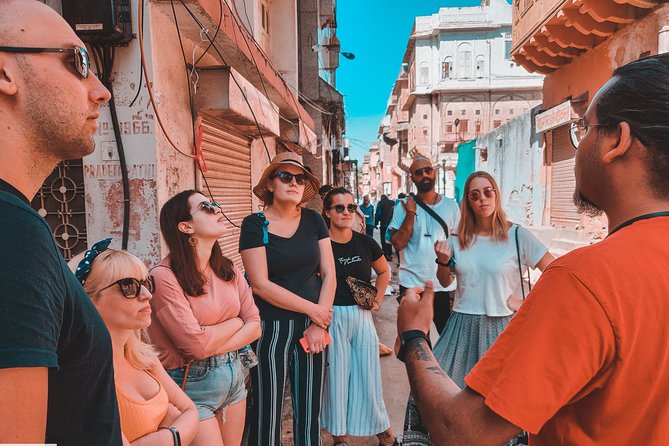
- A 3-kilometer walk through Jaipur’s old city: The route links Ajmeri Gate, Tripolia Bazaar, Hawa Mahal, Jalebi Chowk, and Govind Devji Temple.
- Architecture students lead the walk: Their training should add useful detail about design, planning, ventilation, and the purpose of Jaipur’s monuments.
- Small groups are capped at 10 people: This is a good size for conversation and questions.
- Breakfast and a chai stop are part of the experience: The walk ends with time for questions at a tea shop after Govind Devji Temple.
- Most listed admission charges are not included: Check whether you are viewing sites from outside or choosing to pay for entry.
- Booking reliability needs attention: Reports of a missed guide make it sensible to reconfirm the departure point and guide contact.
Why this Jaipur walk is worth considering
Jaipur can feel confusing at first. Its old city has grand gates, crowded roads, painted façades, religious landmarks, and layers of royal planning that are hard to understand from a quick photo stop. A walking tour gives those details an order.
This one is less about entering every major monument and more about reading the city from the street. You move between important landmarks while hearing how each place fits into Jaipur’s past and present. That makes it useful early in a stay, especially if you want a basic map of the old city before visiting larger sites on your own.
The guide’s architecture background is the strongest idea here. At Hawa Mahal, for example, you are not limited to the familiar postcard view. The explanation focuses on the building’s 900-plus windows and the engineering behind its design. At Isarlat Sargasooli, the guide discusses the city’s architecture and the thinking behind its construction.
The experience also has a pleasant local rhythm. You get breakfast, walk through market areas, pause at key monuments, visit Govind Devji Temple, and finish with chai and questions. That combination feels more useful than a tour that simply moves from one photo stop to another.
Still, you should keep expectations in check. The tour lasts about two to four hours, but the scheduled stops add up to roughly 105 minutes before allowing time for walking and breakfast. The pace, exact order, and amount of discussion may vary. This is an introduction to Jaipur, not a full archaeological tour.
More Walking Tours in Jaipur
- Jaipur Bazaar & Food Walking Tour
★ 5.0 · 281 reviews - Heritage Walk & Street Food Tasting in Jaipur
★ 5.0 · 158 reviews - Jaipur Heritage Walk with Rickshaw Ride
★ 5.0 · 105 reviews
Starting at Ajmeri Gate
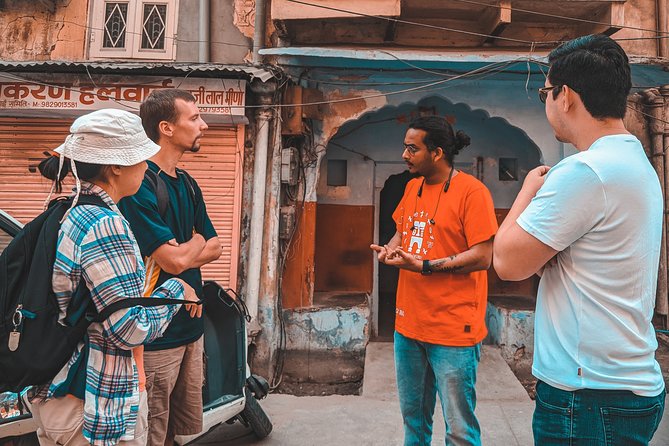
Ajmeri Gate is the first major stop, and it is a sensible place to begin. The gate is one of Jaipur’s busiest entrances, so the guide uses it to explain both its past role and the way transport through the old city has changed.
That modern connection matters. You will not hear only about royal Jaipur in the distant past. The discussion also covers present-day traffic and how the old city continues to function. It is a practical way to understand why historic gates are not just decorative backdrops.
The stop is listed at about 15 minutes, with no admission charge. Expect an outdoor explanation rather than a formal museum visit. Because this is a busy area, stay close to the guide and listen for instructions before crossing or moving on.
The meeting point is not clearly described in the supplied details, and the walk ends somewhere different from where it begins. Confirm both points before the morning of the tour. That is especially important here because the experience starts early, with operating hours listed from 8 a.m. to noon.
Isarlat Sargasooli and Jaipur’s design ideas
The group then sits in front of Isarlat Sargasooli for about 15 minutes. This pause shifts the focus from traffic and gateways to architectural thought.
The guide is meant to explain why the structure was built as it was and how it relates to the design of Jaipur. That approach is a good fit for anyone who likes buildings explained in plain terms. You get more than dates and names. You are encouraged to look at form, purpose, and the ideas behind the construction.
Admission is not included at this stop. The details do not say whether the group enters the structure or discusses it from outside, so ask the guide at the start if an interior visit matters to you. Do not assume that every place on the route includes admission simply because it appears in the program.
Tripolia Bazaar and a royal entrance

Tripolia Bazaar receives a shorter stop of about five minutes. The focus is Tripolia Gate, described as a grand private entrance for the royal family.
The story here is one of access and ceremony. The gate was opened to the public only once on the occasion of a former Jaipur king fighting an election. That detail gives the stop a human angle and shows how royal spaces once controlled movement through the city.
Five minutes is brief, so this is likely a quick explanation and photo opportunity rather than a long historical talk. Admission is not included. If painted details or royal architecture interest you, use the short pause to ask a focused question rather than expecting a long lecture.
Tripolia Bazaar also helps connect Jaipur’s formal royal design with its working streets. The route does not isolate palaces from everyday city life. It places grand entrances beside the movement and commerce of the old city.
A completely different kind of day out:
- Jaipur: Private Full Day Sightseeing Tour By Car with Guide
★ 4.9 · 1,839 reviews - 3-Hour Morning Bike Tour of Jaipur
★ 5.0 · 1,253 reviews - Jaipur: Private Sightseeing Day Tour with Guide by Car
★ 4.8 · 773 reviews - Jaipur: Full-Day City Tour with Car, Guide & Skip-the-Line
★ 4.8 · 512 reviews
Hawa Mahal, Jaipur’s famous face
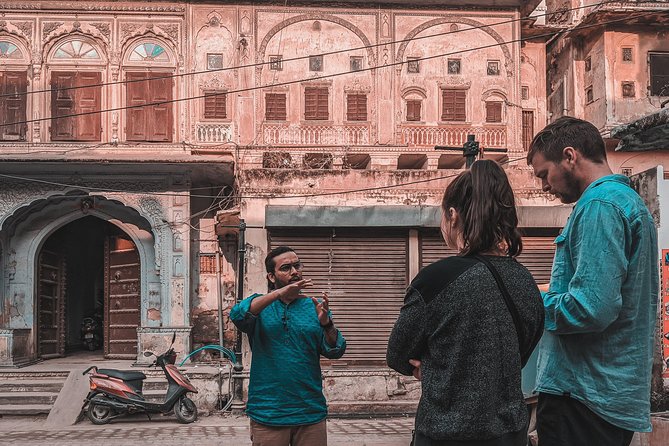
Hawa Mahal is the visual centerpiece of the walk. Its honeycomb façade and more than 900 windows are familiar from countless photographs, but the guide’s approach is meant to explain the practical side of the design.
The building’s nickname, Palace of Wind, points to its airflow. The many openings are not random decoration. The tour emphasizes the engineering involved, giving you a reason to look closely at the façade instead of simply taking a quick picture and moving on.
The scheduled discussion lasts about 20 minutes. That is enough time for a clear explanation and photographs, though not necessarily a full visit through every interior space. Admission is not included, so budget separately if you want to enter any site where tickets are required.
This is one of the tour’s best uses of an architecture student as a guide. Hawa Mahal can easily become a postcard stop. A design-based explanation gives the building more meaning and helps you notice details you might otherwise miss.
Jalebi Chowk and the back side of royal Jaipur

Jalebi Chowk is described as a square behind the City Palace, the official residence of Jaipur’s crown. The name comes from the serpentine road connecting it with the main east-west route.
The stop lasts around 20 minutes and has no admission charge listed. Its value is historical and spatial. You are looking at a place tied to royal Jaipur while also learning how roads and open squares shaped movement through the old city.
This section may appeal to you if you want context rather than another grand façade. The guide explains the square’s importance and how it relates to the City Palace area. Since the stop is outdoors and free according to the tour details, it also gives the group a break from admission questions and ticket decisions.
The precise description of the site is somewhat incomplete, so do not expect a detailed interior tour of the City Palace. The walk is designed to explain the setting and its role in Jaipur, not replace a separate palace visit.
Govind Devji Temple and the final chai
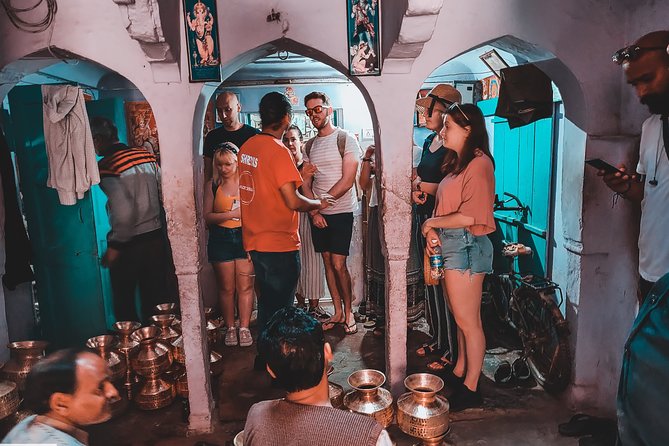
The last major stop is Govind Devji Temple, one of Jaipur’s best-known temples dedicated to Krishna. The planned visit lasts about 30 minutes, making it one of the longest stops on the route.
A temple visit brings a different side of Jaipur into the tour. The route begins with gates, roads, and royal architecture, then finishes with a living religious site. You should dress and behave respectfully, though the supplied information does not set out a specific dress code or temple entry procedure.
Admission is not included. Ask the guide how the visit is handled before assuming you will enter the temple complex. Rules and access can vary, and the program does not promise a formal religious ceremony or a particular viewing.
After the temple, the group goes to a chai shop for questions and answers. This is a useful ending. You can clarify directions, ask about other Jaipur sights, or revisit something from the walk while having tea. The breakfast and chai also give the experience a social quality that many short city walks lack.
Breakfast, water, and the value of $16
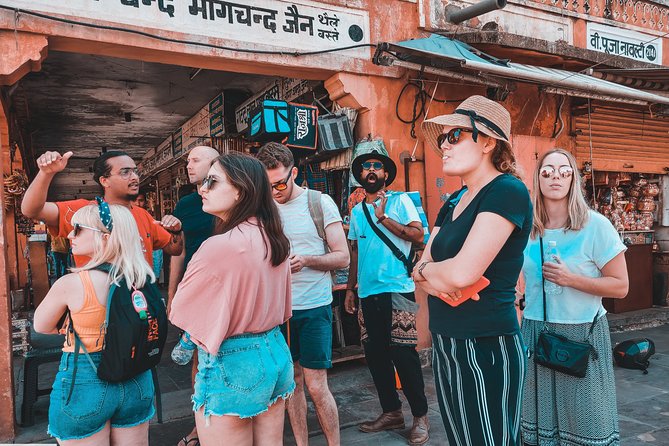
At $16, the tour offers good potential value. You receive an English-speaking guide, a water bottle, breakfast, the guided walk, architecture and heritage explanations, and digital photos taken by the guide.
Breakfast matters more than it may seem. The walk begins in the morning, and Jaipur’s streets are easier to handle when you have eaten and carried water. The exact breakfast menu is not given, only that it is a Rajasthani breakfast, so you should not book based on a specific dish.
The cost is particularly fair if you want orientation rather than paid entry into several monuments. The tour does not include GST, and listed admission charges are not included. That keeps the base price low but means your final cost can rise if you choose to enter sites.
I would compare it with the cost of arranging a private guide, transport between stops, breakfast, and photos separately. For one person or a couple, the small group and included food make the price attractive. Group discounts are also available, though no discount amount is provided.
The value drops if you want a long interior visit at Hawa Mahal, City Palace, or another monument. In that case, treat this as a city introduction and add separate admission-based sightseeing.
Group size, pace, and physical effort
The maximum group size is 10 people. That is small enough for the guide to answer questions without shouting across a crowd, while still keeping the price below that of a private tour.
The walk covers about 3 kilometers. Most people can participate according to the supplied details, and the activity is near public transportation. You should still be comfortable walking through an active old-city setting for several hours, with stops at gates, markets, monuments, and a temple.
The stated duration ranges from two to four hours. That wide range likely reflects walking time, breakfast, questions, and the pace of the group. Leave the rest of your morning open rather than planning a tightly timed appointment immediately afterward.
Service animals are allowed. Hotel pickup and drop-off are not included, so you need to reach the starting point yourself and arrange your own return from the separate end location.
The important booking concern
The biggest issue is not the route or the price. It is the possibility of a missed departure.
Two serious complaints describe a guide who did not arrive at the meeting place and did not respond to calls or messages. One account says hostel staff helped the person make other plans and were unhappy that their property had been used as the meeting location. These are specific operational warnings, not minor complaints about a late start.
That does not prove every departure will fail, but it does mean you should take precautions. Confirm the meeting point, start time, and active phone number before the tour date. If your accommodation can help you call the provider, use that help. Keep enough flexibility in your morning to make another plan if the guide is unreachable.
The activity has a 4.5 rating from 31 reviews, which suggests that many bookings have gone well. The rating should not erase the two no-show reports, especially because a missed tour can waste a valuable morning in Jaipur. The sensible approach is to book only if you are comfortable with that small but serious risk and have a backup plan.
Free cancellation is available up to 24 hours before the start time. Changes or cancellations inside that window are not accepted for a refund. Bad weather or failure to meet the minimum group size can lead to a new date or a full refund.
Who should book this walk?
I would choose this tour if you want a low-cost introduction to Jaipur’s old city, enjoy learning how buildings work, and prefer a small group over a large sightseeing bus. It is also a good first activity because it gives you a sense of the gates, roads, royal areas, and religious places before you explore further.
It suits solo visitors and couples who want conversation without paying for a private guide. The included breakfast, water, digital photos, and chai stop add practical value.
I would be more cautious if your schedule is tight, if you need guaranteed hotel transport, or if you mainly want extended access inside Jaipur’s monuments. I would also avoid depending on it as your only planned activity for the morning until the departure has been confirmed.
Should you book the Jaipur Heritage Walking Tour?
Book it for the architecture stories, small group, breakfast, and useful old-city orientation. At $16, it is a good deal when the walk operates as planned, and the route covers several of Jaipur’s most important public landmarks in a short time.
Before paying, make sure you understand what admission is not included and confirm the meeting details. If the provider responds clearly, this can be a friendly and worthwhile start to Jaipur. If no one confirms the guide and meeting place, choose a more dependable plan.
FAQ
Where does the Jaipur Heritage Walking Tour take place?
The tour takes place in Jaipur, India, and visits Ajmeri Gate, Isarlat Sargasooli, Tripolia Bazaar, Hawa Mahal, Jalebi Chowk, and Govind Devji Temple.
How long does the tour last?
The stated duration is approximately two to four hours.
How far do you walk?
The included details describe the route as a 3-kilometer walk around Jaipur.
What is included in the price?
The price includes a water bottle, a Rajasthani breakfast, an English-speaking guide, stories and facts about Jaipur’s architecture and heritage, the guided walk, and digital photos taken by the guide.
Is hotel pickup included?
No. Hotel pickup and drop-off are not included.
Are attraction admission fees included?
No. Admission is not included for stops where a ticket is listed as not included. Ajmeri Gate and Jalebi Chowk are listed with free admission.
How many people can join the group?
The activity has a maximum of 10 participants.
Is the tour suitable for most people?
The supplied details state that most people can participate. The tour is near public transportation, and service animals are allowed.
Can I cancel for a full refund?
Yes, if you cancel at least 24 hours before the scheduled start time. Cancellations or changes made less than 24 hours before the start time are not refunded or accepted.
Just added in Jaipur
- Jaipur Private Tour 2 Days with Car & Guide★ 5.0 · 13 reviews
- Jaipur Private Sightseeing Tour – All-Inclusive with Car & Guide★ 5.0 · 16 reviews
- Private Jaipur Tour with Guide & All Entry Tickets★ 5.0 · 20 reviews
- Yoga in Jaipur with Amit (Yogi on Travel)★ 5.0 · 17 reviews
- Vintage Walk Amer★ 5.0 · 11 reviews
- Private 4-Day Wildlife & Taj Mahal Tour from Jaipur to Delhi★ 5.0 · 23 reviews
- Wheel Pottery Workshop★ 4.5 · 19 reviews
- Uncover Hidden Treasures of Rural Life on a Village Tour★ 5.0 · 34 reviews
Walking Tours, compared.

The Great Indian Food Tour: Old Delhi Food and Heritage Walk
Read our review →



Blue City Heritage Private Walking Tour With Pickup and Drop-Off
Read our review →
Private Guided Walking Tour in Bandra Queen of Suburbs
Read our review →

Private Jodhpur Blue City Walking Tour with Guide
Read our review →Browse the lists this tour appears in