Reviewed · TEMPLES AND RELIGIOUS SITES
Jaipur Heritage Walk – Artisans | Bazaars | Culinary | Temples (Awarded)
Jaipur wakes before the sightseeing crowds. This walking tour shows you why the Pink City’s planned streets matter, then leads you into working lanes where metal beaters, bangle makers, priests, spice sellers, and market traders carry on old routines. I like the close look at family crafts and the chance to taste local food in ordinary neighborhood settings. I also like the guide-led storytelling, especially when guides such as Nidhi and Ani explain how the city’s people use its streets today.
The main tradeoff is time. Two and a half hours passes quickly, and the tour does not include entry to major monuments or transport between your hotel and the meeting point. You will also walk through tight, busy lanes, so this suits you best if you enjoy street life more than a polished sightseeing circuit.
In This Review
- Key Points to Know Before Booking
- Why Jaipur’s Walled City Makes a Good Walking Tour
- Narrow Lanes, Metal Workers, and Everyday Jaipur
- The Royal Gate and Jaipur’s Bridal Market
- Maniharo Ka Rasta and Handmade Bangles
- Tripolia Bazar, Flowers, Spices, and Isarlat Sargasooli
- The Guides Make the Difference
- What the $30.04 Price Covers
- Timing, Comfort, and Practical Advice
- Who Should Book This Jaipur Walk?
- Should You Book the Jaipur Heritage Walk?
- FAQ
- How long does the Jaipur Heritage Walk last?
- Where does the tour begin?
- Where does the walk finish?
- What is included in the tour price?
- Are meals included?
- Does the tour include monument admission?
- How many people can join the tour?
- Is the tour close to public transportation?
- What is the cancellation policy?
Key Points to Know Before Booking
- Old Jaipur’s seven gates: Begin near Golcha Cinema and learn how the walled city was organized and entered.
- Working artisan lanes: Watch metal beating and traditional bangle making, including bangles formed from sealing wax.
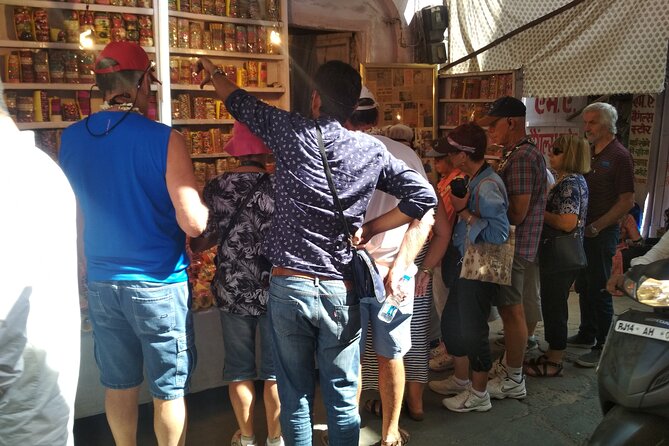
- Two local tastings: Sample Jaipur delicacies, including Mohanthal, with a hot cup of masala chai part of the food experience.
- Markets beyond the souvenir shops: Walk through flower, spice, vegetable, bridal, and Paani Puri wholesale markets.
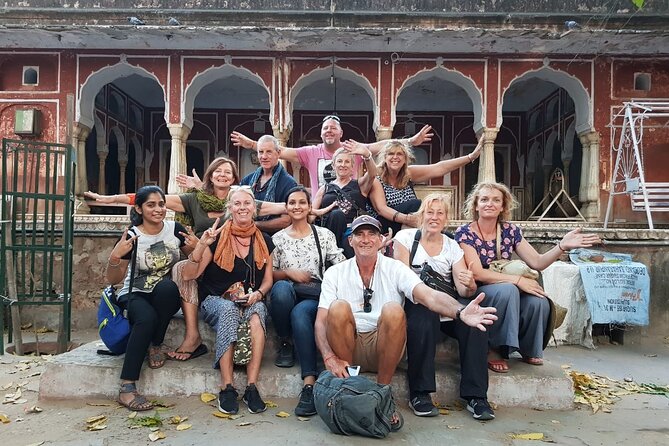
- Small-group format: The group can include up to 15 people, giving the guide room to explain details and answer questions.
- One-way route: The walk starts at Golcha Cinema near New Gate and finishes at the Flower Market near Choti Chaupar.
Why Jaipur’s Walled City Makes a Good Walking Tour
Jaipur was India’s first planned city, and its old center was laid out in clear geometric sections. That order is easy to miss from a car. On foot, you can see how the broad main roads give way to narrow lanes, market streets, workshops, shrines, and old residences.
The tour begins at Golcha Cinema on Chaura Rasta, near New Gate and Bapu Bazar. This is a useful meeting point because it places you inside Jaipur’s historic center from the first minute. Your guide introduces the seven gates of the walled city and explains their role in controlling movement into the old town.
That opening gives the rest of the walk a clear purpose. You are not simply passing colorful shops. You are learning how Jaipur’s grid works, then seeing how daily life fits inside it.
The first stop also includes a visit to a local priest family living in a heritage mansion. This adds a more personal note than a standard architecture tour. You get a glimpse of how older homes remain connected to family and religious life.
Do not expect a formal palace visit here. Monument admission is not part of the experience. The value comes from seeing how an old neighborhood functions, not from entering a famous royal building.
More Markets and Bazaars in Jaipur
- Jaipur Bazaar & Food Walking Tour
★ 5.0 · 281 reviews - Full Day Old City Private Tour with Local Market visit in Jaipur
★ 5.0 · 151 reviews - Jaipur Tuk-Tuk Tour with Flower Market Visit
★ 5.0 · 124 reviews
Narrow Lanes, Metal Workers, and Everyday Jaipur
The middle section moves into Jaipur’s back lanes, where the city feels less arranged and more immediate. This is the part I find most useful for understanding local work. You see small-scale trades taking place in the same neighborhoods where families may have practiced them for generations.
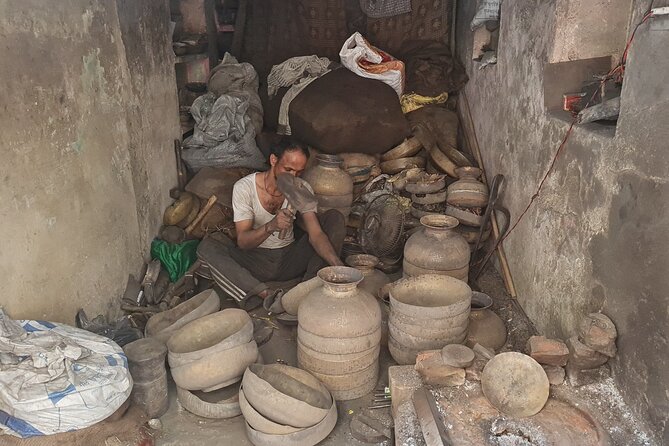
One highlight is the community of metal beaters. The name is plain, and so is the work: repeated hammering shapes and finishes metal by hand. The sound, tools, and close working spaces make this a more memorable encounter than simply looking at finished goods in a shop.
The tour is also designed around community contact. You are not only shown a workshop from the street. You get a closer look at the people and processes behind objects sold around Jaipur. As always in working neighborhoods, be respectful when taking photographs and follow the guide’s lead.
The route includes a wholesale market for Paani Puri, one of India’s best-loved snack foods. Wholesale markets can be more revealing than restaurant stops because they show the supply side of local eating. You may see the ingredients and trade that support the small snack stalls found throughout the city.
An Ayurveda center is another stop along these lanes. The visit adds a different angle to Jaipur’s culture, moving from handcraft to traditional wellness practices. The tour does not promise a treatment, so think of this as an introduction rather than a spa appointment.
The route also passes heritage lanes once visited by Prince Charles. That detail gives the streets a link to international history, but the real interest is still the lane itself: old facades, narrow passages, and the ordinary movement of a living neighborhood.
Some tour departures have included an auto-rickshaw ride and a temple visit, particularly on early-morning versions of the experience. The core description emphasizes walking, artisan visits, markets, and food, so the exact order or small transport details may depend on the guide and the day. If a temple visit matters most to you, confirm the plan when booking.
The Royal Gate and Jaipur’s Bridal Market
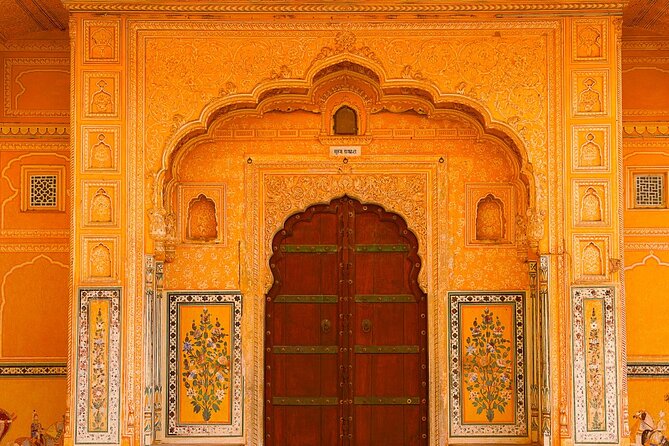
Along the route, you pass a large heritage gate that serves as an entrance to the Jaipur royal family’s residence. It is a strong visual reminder that the old city was not only a commercial center. Royal power, religion, craft, and trade were placed close together.
The gate is viewed from the route rather than treated as a separate monument visit. That distinction matters if you are hoping to tour a palace interior. You will get the exterior context and the guide’s explanation, but not a full royal residence admission.
The walk then reaches Sodhya Halwai, a colorful bridal market. Traditional Indian wedding clothing fills this area, and you may see brides or families shopping for ceremonial dress. This is one of the most photogenic sections of the tour, but it is also a working shopping district, not a staged display.
I like this stop because it connects Jaipur’s craft traditions to an important part of local life. Clothing, sweets, jewelry, and family buying decisions all meet in one place. You can look closely at the color and detail while still remembering that people are here to shop.
The included food tasting here is Mohanthal, a sweet made with gram flour, ghee, and sugar. The tour also includes a second local tasting opportunity, along with masala chai. These are small samples rather than a full meal, so plan to eat before or after the walk if you need breakfast or lunch.
Maniharo Ka Rasta and Handmade Bangles
Maniharo Ka Rasta is the craft-focused center of the experience. This street is known for bangle-making artisans, and you can watch a live demonstration using sealing wax to form traditional wrist bangles.
The demonstration is valuable because bangles often appear in Jaipur shops as finished objects. Here, you see the manual work behind them. The skill is in shaping, joining, and finishing a small item that must be attractive, wearable, and consistent.
This stop may appeal especially to anyone interested in textiles, jewelry, design, or family trades. It also gives children a clear process to watch, though the narrow streets and city traffic mean adults should keep a close eye on younger children.
You receive a souvenir from local artisans as part of the tour. That is a modest inclusion, but it adds a useful connection between the demonstration and something you can take home. I would treat the souvenir as a pleasant extra, not as a reason to choose the tour.
The route does not turn into a long shopping session. You may find opportunities to buy bangles or other goods, but purchases are not listed as part of the price. If you shop, ask about prices and take your time rather than feeling rushed.
More Temples and Religious Sites in Jaipur
- Jaipur Tuk Tuk Sightseeing Tour with Monkey Temple Sunset View
★ 5.0 · 108 reviews - Jaipur Heritage Walking Tour – Local life, Havelis and Temples
★ 5.0 · 72 reviews - Jaipur Guided Tour with Monkey Temple
★ 5.0 · 55 reviews - Jaipur: Private Evening Tour with Monkey Temple Sunset
★ 4.6 · 27 reviews
Tripolia Bazar, Flowers, Spices, and Isarlat Sargasooli
The final section leads through Tripolia Bazar and finishes at the Flower Market near Choti Chaupar. This is a good ending because the market activity becomes increasingly visual and aromatic as the walk proceeds.
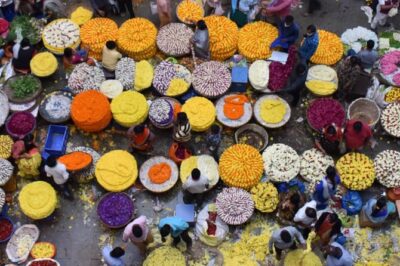
You pass Jaipur’s oldest flower market, along with a spice market. Flowers are tied to worship, celebrations, and daily religious practice, while spices point to the food culture that runs through every Indian city. Together, these markets give you more than colorful photographs. They show how ordinary goods move through the old center.
The route also passes Isarlat Sargasooli, one of Jaipur’s tallest minarets. You do not enter a monument, but the structure provides another architectural marker on the city route. Your guide can connect it to the surrounding bazaar and the historic center’s mix of royal, religious, and commercial buildings.
Finishing at the Flower Market near Choti Chaupar is practical. You are left in a central part of the old city, close to Tripolia Bazar and public transport. Because the walk is one-way, you should arrange your onward plans from the end point rather than assuming you will return to Golcha Cinema.
The Guides Make the Difference
This experience depends heavily on the person leading it. Nidhi receives particularly strong praise for her gentle manner, patience with photographs and shopping pauses, and ability to explain temple customs and Jaipur’s back streets. Ani is described as a personable storyteller who handled a wide mix of history, craft, markets, and local life.
The best guides on this route do more than list dates and buildings. They explain the city grid, point out details you might miss, and help you move safely through traffic and tight lanes. That matters in Jaipur, where crossing a road or keeping a group together can take as much attention as reading a facade.
The pacing is intended to be steady, not a race. You stop often, but the route still covers a lot in 2 to 2.5 hours. If you want long shopping breaks, extensive photography, or detailed time inside each workshop, this may feel brisk.
A group limit of 15 is a reasonable compromise. You get more interaction than on a large coach tour, but it is not necessarily a private walk. If you want the most personal experience, ask whether a private departure is available, though that option is not specified here.
What the $30.04 Price Covers
At $30.04 per person, this is priced as an affordable introduction to Jaipur’s old city rather than a full-day sightseeing package. The price includes an English-speaking city explorer, packaged drinking water, two local food tastings, and a local artisan souvenir.
The strongest value is the access and interpretation. You could walk through some of these markets alone, but you would likely miss the meaning of the seven gates, the craft communities, the heritage lanes, and the connection between the royal gate and the working bazaars.
The price does not include hotel transfers, meals beyond the specified tastings, monument entry, insurance, or unspecified services. Those exclusions are normal for a short walking tour, but you should budget for your own transport to Golcha Cinema and from the Flower Market.
You should also carry some money if you may want food or crafts along the way. Nothing in the tour details promises a full breakfast, and the tastings are meant to complement the walk, not replace a meal.
Timing, Comfort, and Practical Advice
The experience is listed with a mobile ticket, and confirmation is normally issued at booking. If you book within one day of departure, confirmation comes as soon as possible and depends on availability.
The route is near public transportation, which helps with both meeting and departure. Give yourself extra time to reach Golcha Cinema, since the start point is a specific location on Chaura Rasta rather than a broad neighborhood label.
Wear comfortable walking shoes. You will be on city streets, in narrow lanes, and around active markets. Keep your belongings close in crowded areas, and carry water even though packaged drinking water is included.
Morning departures can be especially appealing because markets and shops are getting started. The early version described by past participants ran from 7 a.m. to 9 a.m. and included a tuk-tuk ride, a temple, breakfast-area stops, and artisan workshops. Do not assume every departure follows that exact schedule, but an early start may give you a calmer and more authentic look at Jaipur’s daily routine.
The experience requires good weather and a minimum number of participants. If poor weather or insufficient bookings cancel the tour, you are offered another date or experience, or a full refund. You can cancel for a full refund up to 24 hours before the start time. Changes or cancellations inside that window are not accepted.
Who Should Book This Jaipur Walk?
I would choose this tour if you want a first look at Jaipur that goes beyond palaces and photo stops. It suits you if you enjoy local food samples, working crafts, religious customs, markets, and stories about how a city is organized.
Families can enjoy the variety, especially the metal beating and bangle demonstration. One past family outing included an eight-year-old, with a guide balancing explanation, movement, and time to look around. Still, children need to be comfortable walking and staying alert in city traffic.
This is also a good choice for first-time visitors who want help getting their bearings in the old city. The route gives you a useful base for returning later to shop, eat, or explore independently.
I would look elsewhere if you want a palace interior, a long food tour, a quiet architectural walk, or door-to-door transport. The tour is short, street-based, and focused on ordinary Jaipur life.
Should You Book the Jaipur Heritage Walk?
Book it if the sound of hammers, the smell of flowers and spices, a cup of masala chai, and a walk through old city lanes appeal to you. At $30.04, the combination of a small group, local tastings, artisan access, and strong guide-led context offers good value.
Set your expectations correctly. This is not a monument tour and not a full meal. It is a compact introduction to Jaipur’s living center, with the greatest rewards coming from the guides, the craft workers, and the markets along the way. For an authentic start to a Jaipur visit, I would put it high on the list.
FAQ
How long does the Jaipur Heritage Walk last?
The experience lasts approximately 2 hours and 30 minutes, with the walking program described as lasting about 2 to 2.5 hours.
Where does the tour begin?
The tour begins at Golcha Cinema on Chaura Rasta Road, near New Gate and Bapu Bazar in Jaipur’s Pink City.
Where does the walk finish?
The walk ends at the Flower Market near Choti Chaupar in Tripolia Bazar, Jaipur.
What is included in the tour price?
The price includes packaged drinking water, an experienced English-speaking city explorer, two local food tasting opportunities, and a souvenir from local artisans.
Are meals included?
Full meals are not included. Two local tastings are included, and the experience features local delicacies such as Mohanthal and masala chai.
Does the tour include monument admission?
No. Monument visits and entry fees are not included unless specifically stated, and this experience does not list a monument admission.
How many people can join the tour?
The group can include a maximum of 15 participants.
Is the tour close to public transportation?
Yes. The meeting and ending areas are near public transportation.
What is the cancellation policy?
You can cancel at least 24 hours before the start time for a full refund. Cancellations or changes made less than 24 hours before the start time are not accepted. Poor weather or failure to meet the minimum number of participants may result in another date, another experience, or a full refund.
More Walking Tours in Jaipur
- Heritage Walk & Street Food Tasting in Jaipur
★ 5.0 · 158 reviews - Jaipur Heritage Walk with Rickshaw Ride
★ 5.0 · 105 reviews - Food Walking Tour in Jaipur
★ 5.0 · 71 reviews - Jaipur Heritage Walking Tour
★ 4.5 · 31 reviews
Just added in Jaipur
- Jaipur Private Tour 2 Days with Car & Guide★ 5.0 · 13 reviews
- Jaipur Private Sightseeing Tour – All-Inclusive with Car & Guide★ 5.0 · 16 reviews
- Private Jaipur Tour with Guide & All Entry Tickets★ 5.0 · 20 reviews
- Yoga in Jaipur with Amit (Yogi on Travel)★ 5.0 · 17 reviews
- Vintage Walk Amer★ 5.0 · 11 reviews
- Private 4-Day Wildlife & Taj Mahal Tour from Jaipur to Delhi★ 5.0 · 23 reviews
- Wheel Pottery Workshop★ 4.5 · 19 reviews
- Uncover Hidden Treasures of Rural Life on a Village Tour★ 5.0 · 34 reviews
Temples and Religious Sites, compared.
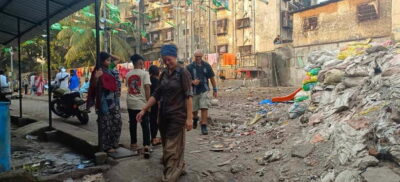
Dhobi Ghat Laundry and Dharavi Slum Tour with Local
Read our review →
Best of Mysore, UNESCO Somnathpur Temple & Srirangapatna Day Tour
Read our review →

Old Delhi Food-Spice Market-Temples Tour Soon Featured on NETFLIX
Read our review →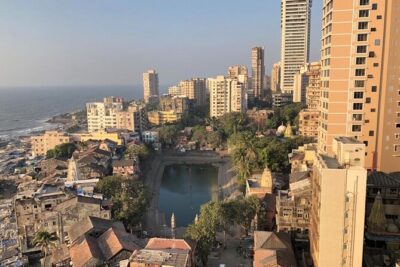
Private Guided Spiritual Walk in Banganga Hindu Temples
Read our review →
Private Combo Tours Sightseeing + Dharavi Slum + Dhobi Ghat & Dabbawalas
Read our review →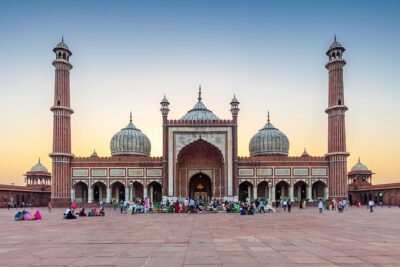
Private Delhi Temples and Spiritual Sites 6 Hours Tour
Read our review →