

Reviewed · WALKING TOURS
Heritage Culture and History Walking Tour in Jaipur
Jaipur’s old center rewards curious walkers. This private 2-hour-25-minute tour links Jantar Mantar, the City Palace, temples, markets, Hawa Mahal, and Isarlat Sargasooli into one compact route through the Pink City. I like the way it joins famous sights with ordinary streets, and I like that the guide can shape the conversation around your interests. The main drawback is cost: the $20 tour fee does not include several major entrance tickets, so your total spend can rise quickly.
You should also expect a fast-moving walk. Some stops last only 10 or 15 minutes, and the plan includes temples, crowded market lanes, and outdoor sights rather than long visits inside every monument. Still, the private format, supplied water bottle, English or Spanish written guide, and strong praise for guides such as Aditya, Ankit, and Richi make this a useful first look at Jaipur.
In This Review
- Key points to know before booking
- Why this Jaipur walk works well
- Starting at Jantar Mantar with Jaipur’s astronomical vision
- City Palace: royal stories in a short visit
- Govind Devji Temple and the rhythm of worship
- Chandi Ki Taksal and the old market streets
- Two temples, two quieter pauses
- Hawa Mahal from the street, not from inside
- Johri Bazar and Katla Purohit Ji Ka
- Isarlat Sargasooli and the final city view
- What the $20 price really includes
- Who will get the most from this walk
- Should you book the Jaipur heritage walk?
- FAQ
- How long does the Heritage Culture and History Walking Tour in Jaipur last?
- Where does the tour begin?
- Where does the tour end?
- Is this a private tour?
- Are entrance tickets included in the price?
- Does the tour enter Hawa Mahal?
- What is included with the tour?
Key points to know before booking

- A private walk with a flexible feel: Only your group participates, and the guide can focus on the subjects that interest you most.
- A smart mix of royal and local Jaipur: The route covers Jantar Mantar and the City Palace, then moves through temples, bazaars, and narrow lanes.
- Guides are the tour’s strongest feature: Aditya is praised for his historical explanations, while Ankit and Richi are also noted for warmth, energy, and cultural insight.
- The advertised price is only the starting cost: Jantar Mantar, City Palace, Hawa Mahal, and Isarlat Sargasooli all carry separate listed fees.
- Hawa Mahal is viewed from outside: You will learn about the facade but will not enter the Palace of Winds.
- The route ends with city views: Isarlat Sargasooli provides a final photo stop and a look across Jaipur from a historic tower.
Why this Jaipur walk works well

Many Jaipur sightseeing plans turn into a string of palace visits. This one gives you a broader sense of the city. You begin with science and royal planning, move through religious places, then enter the working markets of the old center. That progression helps you see Jaipur as a living city, not just a collection of monuments.
I especially like the balance between major landmarks and places that can be easy to miss on your own. Jantar Mantar and Hawa Mahal are obvious choices. Chandi Ki Taksal, Katla Purohit Ji Ka, and the temples offer a closer look at daily life and local worship.
The guide is central to the experience. Several comments praise clear English, friendly conversation, and the ability to answer questions about architecture, religion, history, and everyday life. One guide, Aditya, is described as a PhD student who used his academic background without making the walk feel like a lecture. That is a useful distinction. You want facts, but you also want stories that make the streets around you easier to understand.
The tour can also adapt to your group. The guide has been praised for asking what subjects interest you and adjusting the discussion. If you care more about Hindu traditions than royal architecture, say so early. If you want to understand Jaipur’s markets, ask for more context as you walk.
More Walking Tours in Jaipur
- Jaipur Bazaar & Food Walking Tour
★ 5.0 · 281 reviews - Heritage Walk & Street Food Tasting in Jaipur
★ 5.0 · 158 reviews - Jaipur Heritage Walk with Rickshaw Ride
★ 5.0 · 105 reviews
Starting at Jantar Mantar with Jaipur’s astronomical vision
The meeting point is the Jantar Mantar ticket counter. The planned visit lasts about 20 minutes, and the admission fee of 200 INR is separate.
Jantar Mantar is a good opening because it shows the intellectual ambition behind Jaipur’s creation. The guide explains the astronomical instruments and the vision of Raja Sawai Jai Singh II, who supported the construction of observatories to improve the study of the skies. You will look at the large stone and masonry instruments while hearing how they were intended to track time and celestial movements.
Twenty minutes is enough for an introduction, but not a full technical study. If astronomy is your main interest, you may want to return later with more time. For most people, the short visit works as a clear starting point before the route shifts toward palaces, temples, and markets.
The meeting arrangement is practical. You meet at the ticket counter rather than searching through the complex for a guide. Confirmation is provided at booking, and the starting point is near public transportation.
City Palace: royal stories in a short visit
From Jantar Mantar, you walk to the City Palace. The scheduled stop is about 20 minutes, with admission listed at 1,000 INR.
That price matters. The City Palace is one of Jaipur’s major paid attractions, so adding it to this tour creates a noticeably higher total than the $20 headline price suggests. The benefit is that you receive interpretation while looking at the complex, rather than simply passing through without context.
The guide discusses the royal family, the palace’s architecture, and the way the complex reflects Jaipur’s royal past. The visit is brief, so think of it as a guided orientation, not a complete palace tour. You will likely leave with a better sense of what you are seeing and a list of details to notice if you choose to spend more time there later.
I would ask at the start how much of the City Palace interior the schedule allows. The supplied timing is only 20 minutes, and the route contains many later stops. That makes this tour best for understanding the city’s main ideas, not for examining every room and courtyard.
Govind Devji Temple and the rhythm of worship
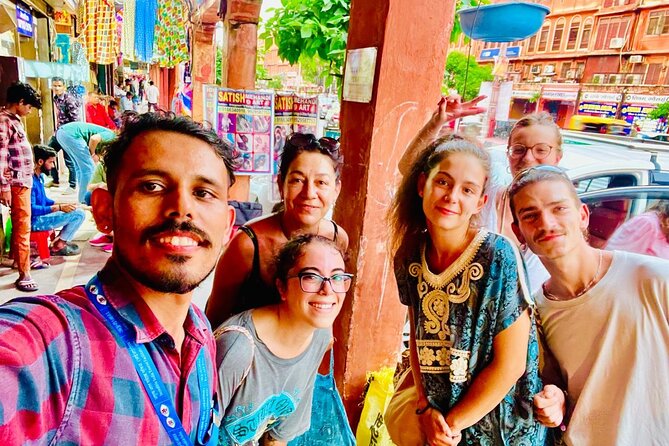
The next stop is Govind Devji Temple, with around 20 minutes set aside. Admission is listed as not included, so confirm the current arrangement with the guide before entering.
This is where the walk moves from royal power to living religious practice. The plan includes the possibility of seeing the aarti ceremony, a Hindu ritual involving devotional offerings and light. The guide can explain what is happening and why the temple matters, helping you observe respectfully instead of treating the ceremony as a photo opportunity.
The atmosphere may be more important than the architecture here. You will have a short window to notice the design, the devotional setting, and the way worship shapes the city’s daily rhythm. Temple visits can also change according to timing, so the exact experience may depend on when your walk begins.
The route then reaches Chandi Ki Taksal, a local bazaar in existence since the 17th century. The tour does not promote shopping, which I appreciate. You can look at the street life and traditional trade at your own pace without feeling pushed toward a purchase.
A completely different kind of day out:
- Jaipur: Private Full Day Sightseeing Tour By Car with Guide
★ 4.9 · 1,839 reviews - 3-Hour Morning Bike Tour of Jaipur
★ 5.0 · 1,253 reviews - Jaipur: Private Sightseeing Day Tour with Guide by Car
★ 4.8 · 773 reviews - Jaipur: Full-Day City Tour with Car, Guide & Skip-the-Line
★ 4.8 · 512 reviews
Chandi Ki Taksal and the old market streets

Chandi Ki Taksal gives the tour a useful change of pace. Instead of viewing Jaipur from behind palace walls, you walk through a market area that has served local commerce for centuries.
The point is not a shopping checklist. It is the chance to notice how narrow streets, storefronts, customers, and religious buildings fit together. Your guide can provide the local context that is hard to pick up from a quick walk through the bazaar.
This is also one of the places where the private format helps. If you want to pause for a question, examine a craft, or understand what a particular market lane is known for, your guide can respond without managing a large group. One customer specifically appreciated having time to shop while the guide waited patiently, although shopping remains optional rather than a central part of the tour.
Two temples, two quieter pauses
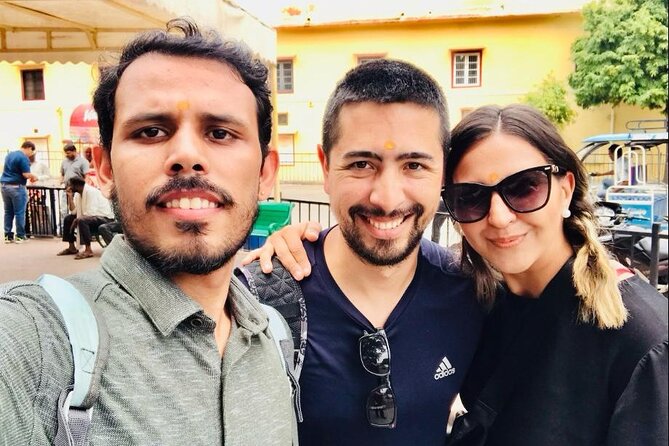
Mandir Shri Ram Chandra Ji follows the bazaar. The stop lasts about 20 minutes and admission is free.
This temple is dedicated to Lord Rama. You can take in its quiet setting, look at the architectural details, and hear about its religious importance. The visit adds another layer to the tour, showing that Jaipur’s cultural story is not limited to royal buildings and grand public facades.
Later, the route includes Mandir Shree Laxminarayan Ji for about 25 minutes. This temple is dedicated to Lord Vishnu and Goddess Laxmi, and admission is also listed as free. The longer stop gives you a little more breathing room than some of the earlier landmarks.
For you, the value of these temple visits depends on your interest in religion and architecture. If you enjoy understanding how faith shapes a city, they are important stops. If you want only Jaipur’s best-known monuments, the repeated temple visits may feel like a slower part of the route. The guide’s explanations are what make them worthwhile, so ask questions rather than rushing through.
Hawa Mahal from the street, not from inside
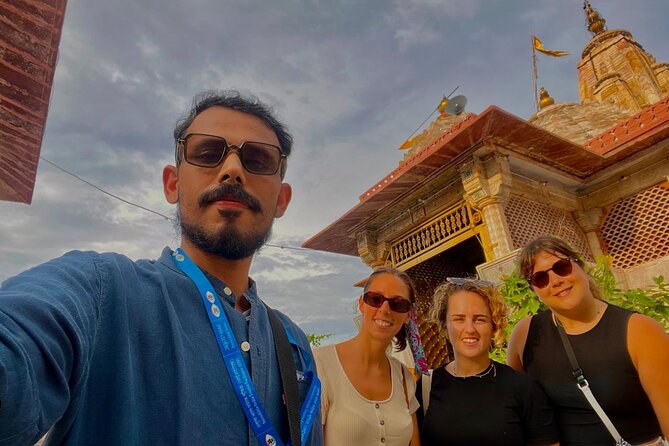
The walk continues to Hawa Mahal, the Palace of Winds. The planned stop lasts about 15 minutes, and the listed admission price of 200 INR is not included. Most importantly, this tour does not go inside.
You will admire the famous facade from outside and hear about its design and history. That is still useful because Hawa Mahal is one of Jaipur’s defining sights, and the street view gives you the classic photograph. But you should not book this experience expecting an interior visit.
This limitation is easy to miss when you first read the route. If entering Hawa Mahal is a priority, plan a separate visit and budget for the ticket. Within this walk, the building functions as a landmark and a teaching point, not a full museum stop.
Johri Bazar and Katla Purohit Ji Ka
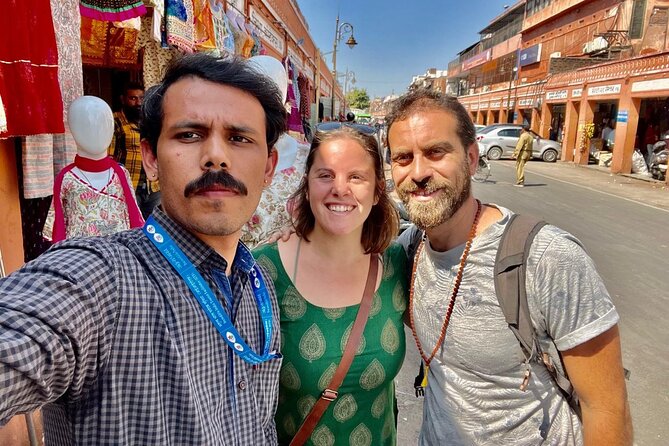
After the temple visit, the route passes through Johri Bazar, Jaipur’s famous jewelry and handicraft market. You can look at colorful shops and learn about the bazaar’s traditional trade. The tour does not require you to buy anything, which keeps the focus on observation and local context.
Johri Bazar can be lively and crowded, so stay close to your guide and keep an eye on your belongings. That is ordinary good sense in any busy market, not a special warning about this tour. The narrow lanes can also make it harder to hear, so ask the guide to repeat anything you miss.
Katla Purohit Ji Ka offers another look at the older market streets. Its narrow lanes and historic character are valuable because they show the small-scale structure of the old city. You are not simply looking at a famous facade. You are moving through places where commerce, worship, and neighborhood life overlap.
These sections may be the most rewarding part of the walk for anyone who wants a feel for Jaipur beyond the postcard sights. They also explain why comfortable shoes and a willingness to walk at street level matter more than dressing for a formal palace visit.
Isarlat Sargasooli and the final city view
The final scheduled stop is Isarlat Sargasooli, also known as a historic tower. The visit lasts about 10 minutes, and admission is listed at 200 INR.
The tower was built in the 18th century and offers panoramic views of Jaipur. The guide explains its importance and architectural features, while you get a final chance for photographs. Ten minutes is short, but the stop works well as the ending because it gives you a broad view after several hours at street level.
The tour ends at Isarlat Sargasooli in the Aatish Market and Gangori Bazaar area. You finish near the same general part of the old city where the walk began, though the stated endpoint is different from the Jantar Mantar meeting point.
If you want time at the tower, ask how the final stop fits into the day. The listed schedule is tight, and the experience is designed as a connected walk rather than a long stay at each attraction.
What the $20 price really includes
The tour costs $20, with group discounts advertised, and it is a mobile-ticket experience. Your group receives the guided walk, a water bottle, and an English or Spanish written guide.
The private format is the biggest value point. You are not sharing the activity with strangers, and the guide can respond to your questions or adjust the emphasis. That can make the price reasonable for a couple, family, or small group that wants personal attention.
The entrance fees require careful budgeting:
- Jantar Mantar: 200 INR
- City Palace: 1,000 INR
- Hawa Mahal: 200 INR
- Isarlat Sargasooli: 200 INR
That is 1,600 INR in listed admission charges if you enter all four paid sites, before any other costs. The itinerary says Govind Devji Temple admission is not included, while the two other temple visits are listed as free. Because admission arrangements can change, confirm the current fees and which sites you will enter before the walk begins.
For a low-cost introduction, you can treat the tour as a guided route and decide which paid sights matter most. For a full interior tour of every major monument, the total cost will be higher and the schedule may feel too compressed.
Who will get the most from this walk
I would choose this experience if you want a fast, personal introduction to Jaipur’s old center. It suits history fans, people interested in Hindu culture, photographers, and first-time visitors who want a guide to connect the main sights.
Families can also benefit. The guides are described as engaging and able to bring historical subjects to life, and the private format means you can ask questions at your own pace. Children may find the astronomical instruments, royal stories, temples, markets, and tower views more varied than a long single-site tour.
You may want a different plan if you dislike walking through markets, prefer long visits inside monuments, or want a relaxed schedule. The route covers a lot in 2 hours and 25 minutes. It is an introduction with strong storytelling, not a slow architectural study.
The tour is near public transportation, and most people can participate. Wear practical footwear, carry the supplied water bottle, and keep the admission budget in mind. The activity offers free cancellation up to 24 hours before the start time, but changes or cancellations inside that window are not accepted for a refund.
Should you book the Jaipur heritage walk?
Book it if you want a guide-led overview with real local texture, especially if this is your first time in Jaipur. The best parts are the private setup, the mix of royal sights and working markets, and the guide’s ability to explain religion, architecture, history, and daily life in plain language.
I would be clear about two limits before paying. Hawa Mahal is viewed only from outside, and the main admission tickets cost extra. If you accept those conditions, the $20 fee offers good value for a focused introduction, particularly for a small group that wants an informed guide rather than a fixed large-group script.
FAQ
How long does the Heritage Culture and History Walking Tour in Jaipur last?
The tour lasts approximately 2 hours and 25 minutes.
Where does the tour begin?
The meeting point is the Jantar Mantar ticket counter in Jaipur, at Malve Nagar, J.D.A. Market, Kanwar Nagar, Jaipur, Rajasthan 302002, India.
Where does the tour end?
The tour ends at Isarlat Sargasooli, also called Sarkasuli, in the Aatish Market and Gangori Bazaar area of Jaipur.
Is this a private tour?
Yes. Only your group participates in the activity.
Are entrance tickets included in the price?
No. Listed additional fees include 200 INR for Jantar Mantar, 1,000 INR for the City Palace, 200 INR for Hawa Mahal, and 200 INR for Isarlat Sargasooli.
Does the tour enter Hawa Mahal?
No. The tour stops outside Hawa Mahal so you can view the facade and hear about its history and design.
What is included with the tour?
The tour includes a water bottle and an English and Spanish written guide.
Just added in Jaipur
- Jaipur Private Tour 2 Days with Car & Guide★ 5.0 · 13 reviews
- Jaipur Private Sightseeing Tour – All-Inclusive with Car & Guide★ 5.0 · 16 reviews
- Private Jaipur Tour with Guide & All Entry Tickets★ 5.0 · 20 reviews
- Yoga in Jaipur with Amit (Yogi on Travel)★ 5.0 · 17 reviews
- Vintage Walk Amer★ 5.0 · 11 reviews
- Private 4-Day Wildlife & Taj Mahal Tour from Jaipur to Delhi★ 5.0 · 23 reviews
- Wheel Pottery Workshop★ 4.5 · 19 reviews
- Ranthambore Tiger Safari Private Same Day Trip from Jaipur★ 5.0 · 18 reviews
Walking Tours, compared.

The Great Indian Food Tour: Old Delhi Food and Heritage Walk
Read our review →



Blue City Heritage Private Walking Tour With Pickup and Drop-Off
Read our review →
Private Guided Walking Tour in Bandra Queen of Suburbs
Read our review →

Private Jodhpur Blue City Walking Tour with Guide
Read our review →Browse the lists this tour appears in