
Reviewed · WALKING TOURS
Culture and Heritage Walk | Pink City Jaipur
Jaipur reveals itself on foot. This three-hour walk brings you into the old Pink City through markets, food stalls, temples, crafts, and stories that are easy to miss from a car. I like the focus on local markets and long-running food shops, and I like the small group limit of 10 people, which should make questions and conversation easier. The main drawback is that the listed itinerary gives only brief stops at each market, so this is an introduction rather than a slow, detailed shopping tour.
The $20 price is fair if you want help making sense of Jaipur’s lanes on your first day. You’ll see Hawa Mahal from outside, explore Bapu Bazar, Tripolia Bazar, and Johri Bazaar, and sample the city’s street-food culture if the route and timing include those stops. Expect plenty of walking, traffic, crowds, uneven streets, and a tour shaped as much by the guide as by the four named locations.
In This Review
- Key points at a glance
- Why a walking tour works well in Jaipur
- Meeting at Golcha Cinema
- Hawa Mahal: a five-minute introduction
- Bapu Bazar: crafts, village products, and shopping energy
- Tripolia Bazar: metalwork, household goods, and religious objects
- Johri Bazaar: Jaipur’s jewelry district
- Food stalls, sweets, and a taste of everyday Jaipur
- The guide makes or breaks this experience
- What the $20 price really buys you
- Who should book this Jaipur walk?
- Should you book the Culture and Heritage Walk?
- FAQ
- How much does the Culture and Heritage Walk cost?
- How long does the walk last?
- Where does the tour begin?
- Where does the tour finish?
- Is Hawa Mahal visited from inside?
- Which markets are included?
- What can you see at Bapu Bazar?
- What is Tripolia Bazar known for on this walk?
- What is Johri Bazaar known for?
- How many people can join the tour?
- Is the ticket mobile?
- Can I cancel for a refund?
- What happens if bad weather cancels the tour?
- Is the tour suitable for most people?
Key points at a glance
- Hawa Mahal from the street: You get an exterior history lesson and time for photographs, but no palace entry.
- Three working markets: Bapu Bazar, Tripolia Bazar, and Johri Bazaar each point to a different side of Jaipur’s trade and craft culture.
- Food is part of the story: Traditional snacks, sweets, tea, and food stalls are central to the experience, though specific tastings are not listed as fixed inclusions.
- A small group of up to 10: This is useful in narrow lanes and makes it easier to ask about customs, shops, and local life.
- Guide-led access to less obvious places: Guides connected with the experience include Deepak, Ayush or Aayush, and Harshit, while the tour description identifies a female guide format.
- Good first-day value: At $20 per person, the walk can help you get your bearings before exploring Jaipur on your own.
Why a walking tour works well in Jaipur
Jaipur’s old city is easy to admire from a vehicle and harder to understand from one. A car can take you past painted walls, shop signs, shrines, and market entrances, but it rarely gives you time to notice how the city works at street level.
This walk slows things down. You move through lanes near the major monuments, then into places where the focus is trade, worship, food, and daily work. That mix gives you more than a parade of famous buildings. You get a sense of how Jaipur’s heritage continues in ordinary streets.
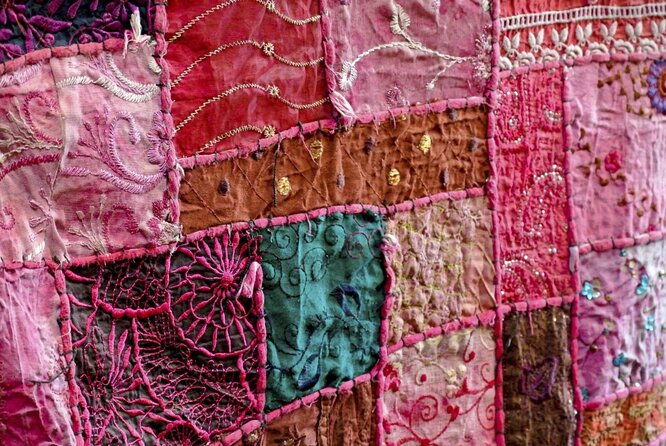
I especially like the emphasis on products made in Jaipur or brought in from nearby villages. This gives the market visits a useful purpose. You are not simply looking at colorful goods. You can ask what they are used for, where they come from, and why certain crafts matter to the city.
The route also seems designed for curiosity. The guide may point out a quiet lane, a traditional shop, an old building, or a place you would likely pass without entering alone. The strongest part of this kind of walk is not any single monument. It is the explanation that connects small details.
More Walking Tours in Jaipur
- Jaipur Bazaar & Food Walking Tour
★ 5.0 · 281 reviews - Heritage Walk & Street Food Tasting in Jaipur
★ 5.0 · 158 reviews - Jaipur Heritage Walk with Rickshaw Ride
★ 5.0 · 105 reviews
Meeting at Golcha Cinema

The walk begins at Golcha Cinema on Chaura Rasta Road, near New Gate and Bapu Bazar in the Pink City. This is a practical starting point because you are already near the old city markets and public transportation.
You should arrive ready to walk rather than treating the meeting point as a place to linger. The activity ends back at the same location, which makes the route easier to fit into a day of sightseeing. You can continue shopping afterward or use the return point to arrange your next stop.
Because the tour runs through the old city, I would keep your belongings compact. A small bag is easier than a large daypack in tight market lanes. Comfortable footwear matters more than fashionable footwear here. Three hours on hard streets can feel much longer if your shoes are wrong.
The exact pace may vary. A group that asks many questions or stops for food may move more slowly than a group focused on architecture. With a maximum of 10 people, the guide should have a reasonable chance to keep the group together, but Jaipur’s street activity still requires attention.
Hawa Mahal: a five-minute introduction
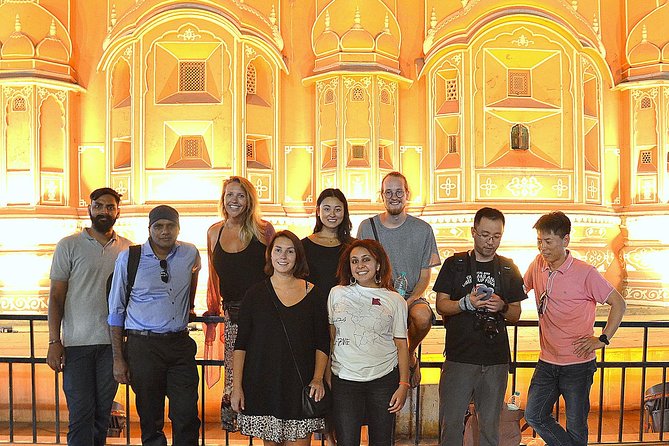
The first named stop is Hawa Mahal, Jaipur’s famous Palace of Wind. The tour sees it from the outside only, with about five minutes for photographs and a short explanation of its past.
That limited time is important to understand before booking. This is not a palace visit, and your ticket does not include entry because no entry is planned. If you want to walk through Hawa Mahal’s interior, look down through its small windows, and spend time with its architecture, you will need a separate visit.
Still, the exterior stop has value. Hawa Mahal is one of Jaipur’s most recognizable buildings, and a guide can give you useful context before you encounter the old city’s markets. The facade’s many small openings are more than decoration. They help explain the building’s connection to royal life and public observation.
The short stop also keeps the walk focused. You are not spending the main part of a market tour inside a monument. Instead, Hawa Mahal acts as a starting marker before you head into the commercial streets around it.
For the best use of this stop, have your camera ready and listen closely. Five minutes passes quickly, especially if the street is crowded.
Bapu Bazar: crafts, village products, and shopping energy
Bapu Bazar receives about 15 minutes on the listed route. Here, the guide shows products and art associated with Jaipur, including goods coming from nearby villages.
This is where the tour’s local focus becomes clear. Bapu Bazar is not presented simply as a place to buy souvenirs. It is a chance to learn what the city sells, what nearby communities produce, and how those goods reach Jaipur’s old center.
You might find this stop especially useful if you plan to shop later. A guide can help you identify the types of items connected with Jaipur and explain how they fit into local craft traditions. That does not replace careful bargaining or product research, but it gives you a better starting point.
The drawback is time. Fifteen minutes is enough for orientation and questions, not for a relaxed look through every shop. If you see something you want to buy, ask the guide whether the group will return to the area. Since the route ends back at Golcha Cinema, you may have a chance to continue browsing after the walk, but you should not assume a particular shop will be revisited.
I would treat Bapu Bazar as a lesson in Jaipur’s commercial culture first and a shopping stop second. You will get more from it if you pay attention to the range of products rather than rushing to make a purchase.
A completely different kind of day out:
- Jaipur: Private Full Day Sightseeing Tour By Car with Guide
★ 4.9 · 1,839 reviews - 3-Hour Morning Bike Tour of Jaipur
★ 5.0 · 1,253 reviews - Jaipur: Private Sightseeing Day Tour with Guide by Car
★ 4.8 · 773 reviews - Jaipur: Full-Day City Tour with Car, Guide & Skip-the-Line
★ 4.8 · 512 reviews
Tripolia Bazar: metalwork, household goods, and religious objects
Tripolia Bazar is also allotted about 15 minutes. Its character differs from Bapu Bazar, with a focus on antiques, utensils, locks, and metal products used in worship.
This stop adds a practical side to Jaipur’s heritage. Markets are not frozen museum displays. They serve households, craftspeople, places of worship, and tradespeople. Looking at utensils and metal objects can tell you more about daily customs than a quick visit to a grand palace.
The religious items are particularly useful for understanding how decoration and devotion overlap in Jaipur. The guide can explain which objects are linked to worship and how they are used. That context is valuable because an object that looks like a simple souvenir may have a specific purpose.
Tripolia Bazar may appeal more to curious observers than to shoppers seeking polished handicrafts. Antiques require care, and the tour does not promise authentication or shopping assistance. If you buy anything, you remain responsible for checking its condition, age, and price.
The short timing means you are likely to see a sample of the market rather than cover it in detail. That is fine for a first orientation, but anyone with a serious interest in antiques or metalwork should plan extra time independently.
Johri Bazaar: Jaipur’s jewelry district
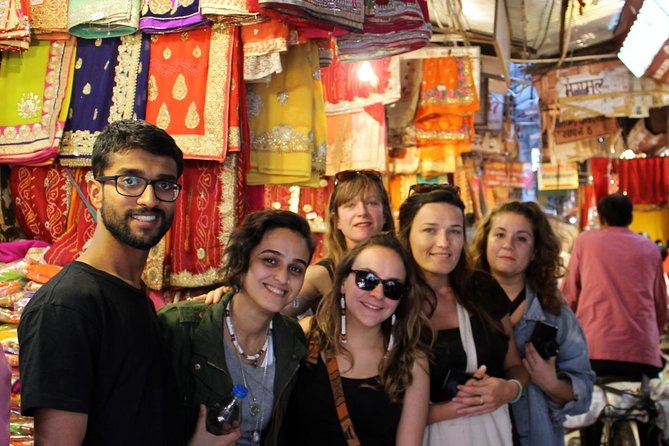
The final named market is Johri Bazaar, reached in about 15 minutes of the itinerary. Jewelry has been a major part of Jaipur’s economy, and this market is described as roughly 150 years old.
This stop gives the walk a stronger link to the city’s trade history. Jewelry is not just another shopping category here. It connects Jaipur with skilled work, family businesses, precious materials, and a long commercial tradition.
You do not need to be shopping for jewelry to enjoy this part of the route. The guide’s explanation can help you read the market as a working district, with shops and products tied to the city’s economic life. If you are considering a purchase, use the visit to observe rather than feel pressured to buy.
A 15-minute stop is again brief. You may see the atmosphere and hear the basic story, but you will not have time for a full comparison of stones, metalwork, prices, and certificates. This is one of the places where a guided introduction is useful, followed by a separate visit if you want to shop seriously.
I like the order of the markets because it moves from general Jaipur products to religious metal goods and then to jewelry. It gives the old city a sense of variety instead of presenting every bazaar as the same kind of shopping street.
Food stalls, sweets, and a taste of everyday Jaipur
Food is a major part of the experience, even though the supplied stop times do not identify a fixed tasting menu or specific included dishes. The walk is designed around snacks and sweets from legendary old-city shops, including food businesses described as operating for more than 50 years.
That can be one of the best reasons to choose this tour. A sweet shop or tea stop gives you a direct connection to local routine. Food also creates an easy way to talk about family businesses, ingredients, celebrations, and the habits that keep old shops operating.
Accounts of the experience include tea, street food, and traditional snack stops. Since the exact food choices can depend on the guide, opening hours, and the group’s pace, you should ask at the start what is included and what you will pay for separately.
I would carry some small cash for snacks unless the guide confirms another arrangement. The tour price is $20 per person, but that fee should not be assumed to cover every bite or drink. It is also sensible to tell the guide about food restrictions before ordering.
The food element adds warmth to the walk, but it is not the right choice if you want a formal food tour with a guaranteed list of tastings. Think of it as a heritage walk where food helps tell the story.
The guide makes or breaks this experience
The route itself is useful, but the guide’s storytelling will shape your day. The strongest guide accounts connected with this walk describe people who explain curious details, know the old city well, and take visitors into places they might not enter alone.
Names associated with different departures include Deepak, Ayush, Aayush, and Harshit. The tour information also describes a female guide format, so the person leading your walk may vary. That matters because the tone, food stops, and side streets may change from one departure to another.
I would ask questions freely. Ask about the goods in a market, the meaning of a shrine, the age of a shop, or how a traditional business works. This is not a tour where you get the most value by standing quietly behind the guide.
The small group limit helps. Ten people is large enough for a social walk but small enough for the guide to hear questions. Past accounts describe guides who kept the mood friendly and encouraged people to talk, which is useful if you are exploring Jaipur alone or want a relaxed introduction to the city.
The route may also include extra details beyond the four named stops. Food, tea, important buildings, smaller streets, and rooftop views have all been part of the experience described by participants. Treat these as possible additions rather than guaranteed features.
What the $20 price really buys you
At $20 per person, this is a reasonable buy if you value local explanation more than formal monument entry. The fee covers roughly three hours with a guide, a planned route through several important markets, and help understanding products, architecture, food, and traditions.
You are paying for access to context. You could walk past Hawa Mahal, Bapu Bazar, Tripolia Bazar, and Johri Bazaar on your own, but you would not necessarily know what to look for or how the markets connect to Jaipur’s past and present.
The value is strongest on your first day in Jaipur. The walk can help you decide which markets deserve a longer return visit and which products interest you. It can also make the Pink City feel less confusing before you begin exploring independently.
The value is weaker if you expect palace admissions, a long shopping session, or a fixed food package. Hawa Mahal is viewed only from outside, each listed market receives a short stop, and food details are not guaranteed in the price information.
I would compare this fee with the cost of spending three hours wandering without a plan. If you enjoy asking questions and trying local snacks, the guide’s help should justify the price. If you prefer to shop alone and set your own pace, you may get more from an independent visit.
Who should book this Jaipur walk?
I would recommend it to you if you are visiting Jaipur for the first time, enjoy street-level culture, and want a gentle introduction to the Pink City’s old markets. It also suits solo visitors who want company without joining a huge group.
Food-minded people should consider it, especially if the idea of tea, sweets, and established snack shops appeals to you. The same goes for shoppers who want to learn about Jaipur’s products before spending money.
It may not suit you if you dislike walking, crowded market streets, or changing plans. It is also not ideal if your top priority is a long visit inside Hawa Mahal or a detailed jewelry-buying consultation.
The tour requires good weather and may be canceled if the minimum group size is not reached. You can cancel up to 24 hours before the start time for a full refund. Later cancellations and changes are not accepted, according to the stated policy.
Should you book the Culture and Heritage Walk?
Book this walk if you want Jaipur explained through its markets, food, working traditions, and side streets rather than only through royal monuments. At $20, it offers solid value for a three-hour introduction, especially with a maximum of 10 people and a return to the original meeting point.
I would book it early in your Jaipur stay, then revisit the markets that catch your interest. Go in expecting a lively, practical orientation, not a palace tour or a guaranteed tasting menu. If that sounds like your kind of sightseeing, this walk should give you a more personal feel for the Pink City.
FAQ
How much does the Culture and Heritage Walk cost?
The listed price is $20 per person.
How long does the walk last?
The experience lasts approximately three hours.
Where does the tour begin?
It begins at Golcha Cinema, Chaura Rasta Road, New Gate, Bapu Bazar, in Jaipur’s Pink City.
Where does the tour finish?
The activity ends back at the meeting point at Golcha Cinema.
Is Hawa Mahal visited from inside?
No. The tour views Hawa Mahal from the outside, provides some history, and allows about five minutes for photographs.
Which markets are included?
The named markets are Bapu Bazar, Tripolia Bazar, and Johri Bazaar. Tripolia Bazar is also listed as a stop.
What can you see at Bapu Bazar?
The guide shows products and art associated with Jaipur, including goods that come from nearby villages.
What is Tripolia Bazar known for on this walk?
Tripolia Bazar is presented as a market for antiques, utensils, locks, and metal products used in worship.
What is Johri Bazaar known for?
Johri Bazaar is associated with Jaipur’s jewelry trade and is described as around 150 years old.
How many people can join the tour?
The maximum group size is 10 people.
Is the ticket mobile?
Yes. The experience offers a mobile ticket.
Can I cancel for a refund?
Yes, you can cancel at least 24 hours before the start time for a full refund. Cancellations made less than 24 hours in advance are not refunded.
What happens if bad weather cancels the tour?
You will be offered another date or a full refund if poor weather causes cancellation.
Is the tour suitable for most people?
The additional information says most people can participate, and the meeting point is near public transportation. You should still be comfortable walking for about three hours through old-city streets.
Just added in Jaipur
- Jaipur Private Tour 2 Days with Car & Guide★ 5.0 · 13 reviews
- Jaipur Private Sightseeing Tour – All-Inclusive with Car & Guide★ 5.0 · 16 reviews
- Private Jaipur Tour with Guide & All Entry Tickets★ 5.0 · 20 reviews
- Yoga in Jaipur with Amit (Yogi on Travel)★ 5.0 · 17 reviews
- Vintage Walk Amer★ 5.0 · 11 reviews
- Private 4-Day Wildlife & Taj Mahal Tour from Jaipur to Delhi★ 5.0 · 23 reviews
- Wheel Pottery Workshop★ 4.5 · 19 reviews
- Ranthambore Tiger Safari Private Same Day Trip from Jaipur★ 5.0 · 18 reviews
Walking Tours, compared.

The Great Indian Food Tour: Old Delhi Food and Heritage Walk
Read our review →



Blue City Heritage Private Walking Tour With Pickup and Drop-Off
Read our review →
Private Guided Walking Tour in Bandra Queen of Suburbs
Read our review →

Private Jodhpur Blue City Walking Tour with Guide
Read our review →Browse the lists this tour appears in