

Reviewed · WALKING TOURS
Victorian Gothic Heritage Quarter and Art Deco Walking Tour
Mumbai tells its story in stone. This two-hour walk links grand Gothic buildings, Art Deco façades, cricket grounds, and waterfront icons in one compact route. I like the variety of architecture and the way the walk connects famous sights with everyday city life. I also like the small group limit of 15 people, which gives you a better chance to hear the guide.
The tour costs $18.88 per person, a fair price for a guided introduction to central Mumbai. The main drawback is that the advertised timing allows only a short visit at each stop, and one past participant found the guide’s presentation weak. Your experience may depend heavily on which guide leads the walk.
- Ten major sights in two hours: The route covers the GPO, Asiatic Society, Horniman Circle, St. Thomas Cathedral, the High Court, Rajabai Clock Tower, Oval Maidan, Kala Ghoda, the Gateway of India, and the Taj Mahal Palace.
- A useful architecture lesson: You see Indo-Saracenic, neoclassical, Victorian Gothic, and Art Deco styles within a small part of South Mumbai.
- A walk with local texture: Sunday cricket at Oval Maidan, Kala Ghoda’s art scene, and old record stalls can add a more lived-in feel.
- Small group format: No more than 15 people are accepted, which is helpful on busy city streets.
- Flexible guiding: Abhi, Abhishek, Ravi, and Yash have each been praised for clear explanations, friendly service, and extra facts.
- Simple logistics: Bottled water is included, public transport is nearby, and the walk starts at Regal Cinema and finishes at Churchgate Station.
In This Review
- Why This Mumbai Walk Works as a First Orientation
- Starting at Regal Cinema in Colaba
- Mumbai GPO and the Story of Communication
- Town Hall and the Asiatic Society
- Horniman Circle’s Garden and St. Thomas Cathedral
- The High Court and Rajabai Clock Tower
- Oval Maidan: Gothic Stone, Art Deco Lines, and Cricket
- Kala Ghoda and the Route’s Cultural Turn
- Gateway of India and the Taj Mahal Palace
- What $18.88 Buys You
- Timing, Group Size, and Practical Comfort
- Who Will Get the Most From This Walk
- Should You Book the Victorian Gothic and Art Deco Walking Tour?
- FAQ
- How long does the walking tour last?
- Where does the tour start?
- Where does the tour end?
- What landmarks are included?
- Is transportation included?
- How many people can join the tour?
- What is the cancellation policy?
Why This Mumbai Walk Works as a First Orientation
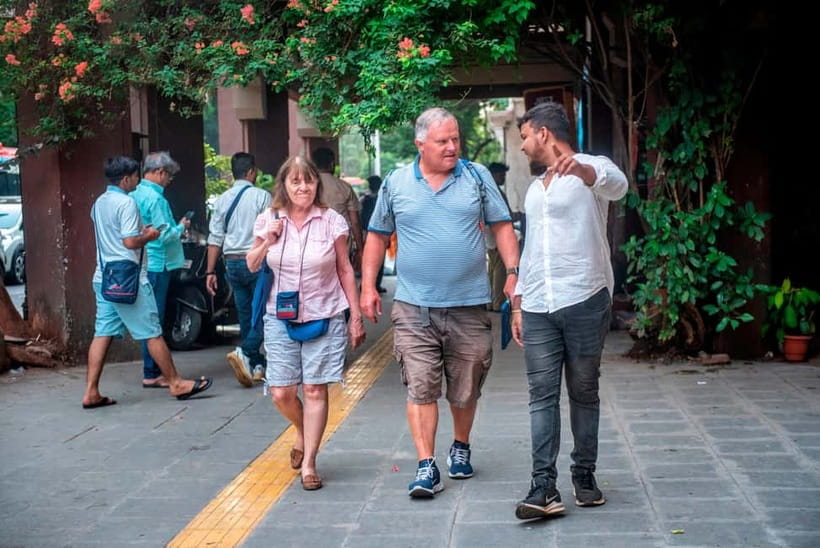
I see this tour as a quick introduction to South Mumbai rather than a slow architectural study. In two hours, you move from the old commercial quarter near the Fort area to the waterfront and then toward Churchgate. That gives you a useful mental map for later exploring on your own.
The route also avoids the trap of showing only one side of the city. You get grand colonial buildings, a working post office, a public garden, a church, a university landmark, a cricket field, an arts district, a famous hotel, and the Gateway of India. That mix helps you understand Mumbai as a city where government, commerce, sport, religion, culture, and tourism sit close together.
I especially like the contrast between the carved stone of the Victorian Gothic buildings and the cleaner lines of Art Deco Mumbai. The tour title promises both, although the listed stops give more time to Gothic and colonial landmarks than to detailed Art Deco viewing. If Art Deco is your main interest, ask the guide to point out specific façades around Oval Maidan and Churchgate.
Starting at Regal Cinema in Colaba
The walk begins at Regal Cinema in Apollo Bandar, Colaba. This is a practical starting point because you are already close to several of Mumbai’s best-known landmarks. It also gives the guide room to explain how the southern part of the city developed around trade, administration, transport, and the harbor.
You should arrive ready to walk on city streets for the full two hours. Private transport is not included, but that is not a serious weakness here. The start and finish are both near public transport, and using local transport to reach Regal Cinema or leave from Churchgate is more sensible than arranging a car for this route.
The group limit is 15 people. That is not a private tour, but it is small enough to make questions possible. This matters because the quality of the experience depends on the guide’s storytelling. Several guides associated with the tour, including Abhi, Abhishek, Ravi, and Yash, have been praised for friendliness, clear English, useful facts, and good photos.
More Walking Tours in Mumbai
- Group Guided Walking Tour in Fort and Colaba
★ 5.0 · 1,073 reviews - Private Guided Walking Tour in Fort & Colaba
★ 5.0 · 895 reviews - Private Guided Walking Tour in Bandra Queen of Suburbs
★ 5.0 · 383 reviews
Mumbai GPO and the Story of Communication
The first stop is Mumbai’s General Post Office, built in 1913. Its Indo-Saracenic design combines elements associated with Indian and Islamic architecture with the scale and planning of British public buildings. The large structure makes an immediate impression, but the more interesting point is its purpose.
A post office was once a vital part of urban life. It carried letters, business documents, family news, and official communication across a growing city and empire. Your guide can help you look beyond the grand exterior and consider how communication helped Mumbai expand.
You have about 15 minutes here, with no admission charge. That is enough for an exterior explanation and photographs, though not for a detailed interior visit. Keep your expectations focused on architecture and context rather than a full museum-style stop.
Town Hall and the Asiatic Society
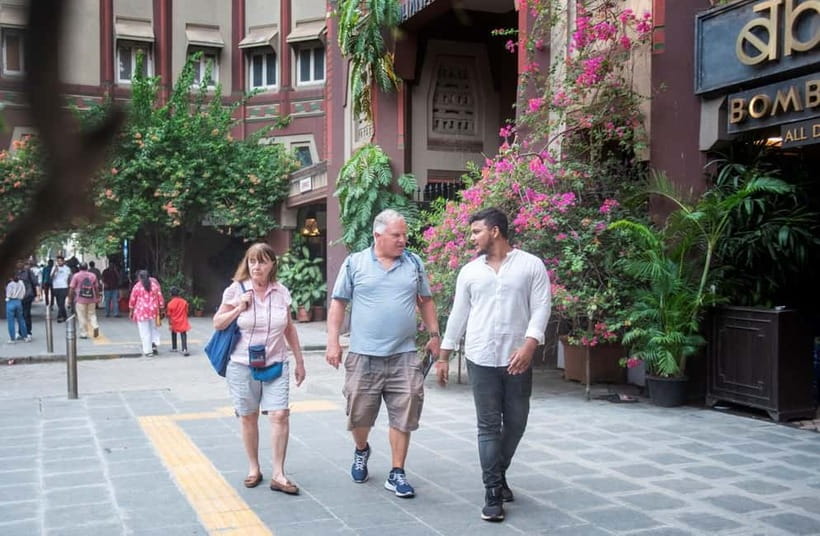
The next stop, Town Hall, brings a different style. The Asiatic Society Library was founded in 1804 and is known for neoclassical architecture. Its broad steps and balanced columns create a calmer, more formal look than the Gothic buildings later in the route.
The institution houses rare manuscripts, old texts, and valuable objects. You are not paying a separate admission fee on this tour, and the listed time is about 15 minutes. Treat this as an outside look and a short explanation of the institution’s role, not a complete library visit.
This is one place where a strong guide makes a real difference. The building can look impressive without immediately revealing why it matters. A good explanation connects the architecture to scholarship, collecting, and the way colonial institutions shaped public life in Mumbai.
Horniman Circle’s Garden and St. Thomas Cathedral
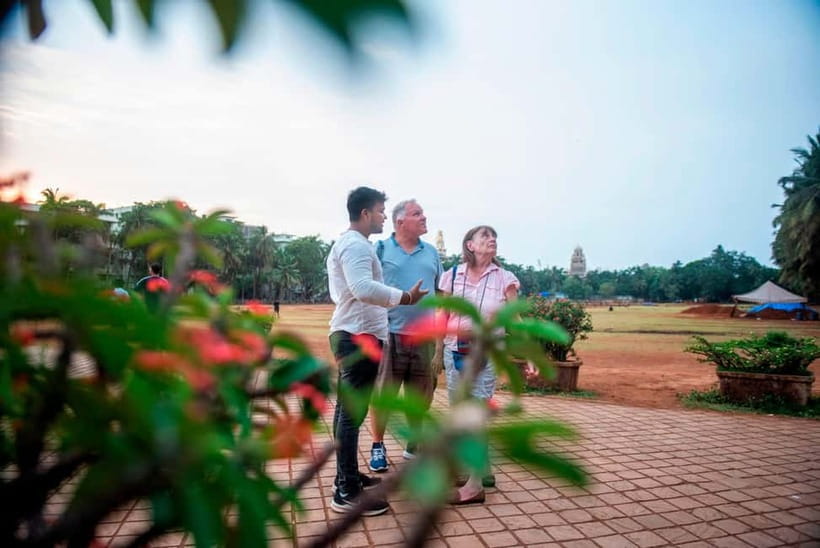
Horniman Circle Garden gives the walk a change of pace. Created in 1860 and surrounded by large colonial buildings, the circular garden offers an open public space among dense city streets. It is named after Benjamin Horniman, a British editor linked with the city’s press history.
The stop is scheduled for about 15 minutes. You can use that time to study the ring of buildings, take photographs, and watch city movement around the garden. Do not expect a long rest break, but the garden offers a welcome pause between blocks of stone and traffic.
St. Thomas Cathedral follows with another 15-minute stop. Consecrated in 1718, it is the oldest Anglican church in Mumbai. Its architecture reflects British colonial rule, but its importance is also social and religious. The cathedral helps show that the city’s early European institutions were not limited to offices and trading houses.
The short visit should let you appreciate the exterior and, if access allows, see something of the interior. The tour information does not promise a guaranteed inside visit, so I would plan around the building’s exterior significance.
A completely different kind of day out:
- Dharavi slum tour in Mumbai by Female tour guides of the slum
★ 5.0 · 1,976 reviews - Mumbai: Full-Day Sightseeing Tour of Mumbai
★ 4.9 · 1,822 reviews - Private Mumbai Sightseeing Tour (Traveller’s Choice Award Winner)
★ 5.0 · 1,565 reviews - Elephanta Caves & Island Guided Private Tour
★ 5.0 · 1,327 reviews
The High Court and Rajabai Clock Tower
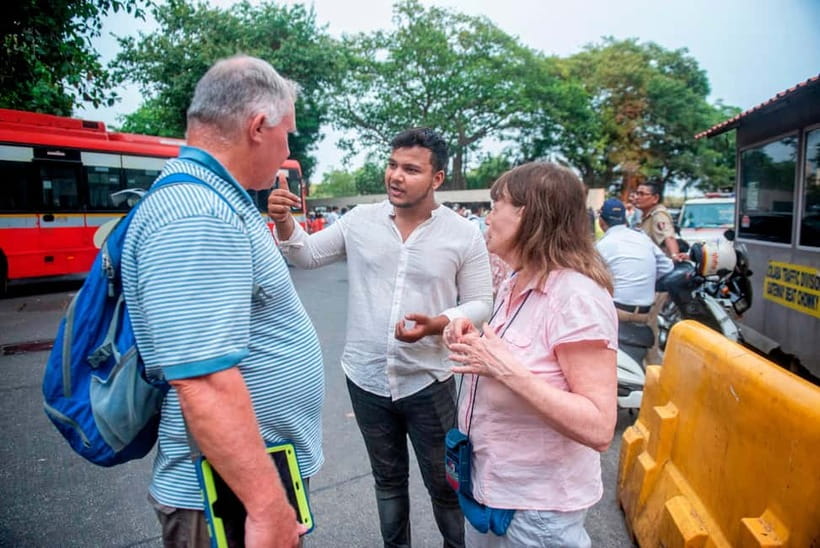
The Bombay High Court is one of the route’s strongest Gothic sights. Inaugurated in 1879, the building has the pointed forms, vertical emphasis, and detailed stonework associated with Gothic Revival design. It remains a working court, so you should view it respectfully from outside and follow the guide’s instructions.
This is a good stop for understanding how architecture was used to express authority. A courthouse was designed to look serious and permanent. The building’s style says as much about the ideals of the era as it does about decoration.
Rajabai Clock Tower, completed in 1878, provides another grand Gothic landmark nearby. It is part of the University of Mumbai and was designed by Sir George Gilbert Scott. Premchand Roychand funded the tower, giving the structure a direct link to Mumbai’s commercial wealth and civic ambitions.
The tower’s height and detail make it one of the route’s best photo stops. The listed visit lasts about 15 minutes, which should give you time to look upward, hear the basic story, and place the tower within the university complex. A limitation is that the tour does not include a stated interior climb or access to the tower.
Oval Maidan: Gothic Stone, Art Deco Lines, and Cricket

Oval Maidan is where the tour’s architectural comparison becomes easiest to see. The open ground is bordered by Victorian Gothic buildings on one side and Art Deco structures on the other. That pairing gives you a quick visual lesson in two very different design periods.
The maidan is also a place for ordinary recreation. If you take this tour on a Sunday, you might see several cricket matches in progress. That detail adds more than color. It shows how an open public ground can serve as a daily gathering place, not just a backdrop for grand buildings.
The stop is listed at 10 minutes, so you will not have time for an extended walk around the field. Still, the setting can be one of the most memorable parts of the route because it connects architecture with local use. I would keep your camera ready here, but stay aware of the guide and the group.
Kala Ghoda and the Route’s Cultural Turn
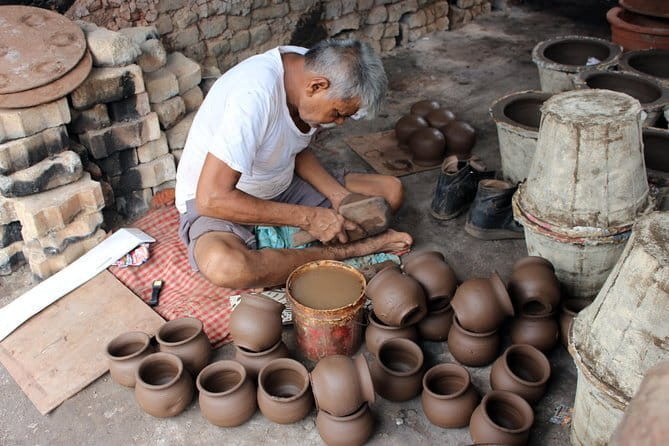
Kala Ghoda means Black Horse and refers to the area’s former statue of King Edward VII. Today, the precinct is associated with galleries, museums, street art, and the Kala Ghoda Arts Festival. The listed stop is only five minutes, so this is more of a quick orientation than a full visit.
That short timing is the clearest mismatch between the name of the tour and the itinerary. Kala Ghoda deserves far more than five minutes if you want to explore its cultural venues. The guide can point out what to return to later, but you should not expect to visit galleries or museums during this walk.
You might also encounter old Bollywood record stalls or small local details that are not part of the fixed stop list. Past participants have praised guides for adding unscheduled stops and lesser-known facts. These additions can make the walk feel more personal, but they may also stretch the tour beyond its advertised two hours.
Gateway of India and the Taj Mahal Palace
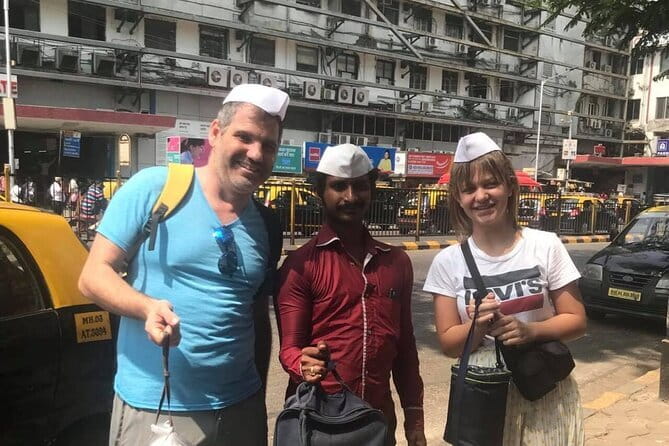
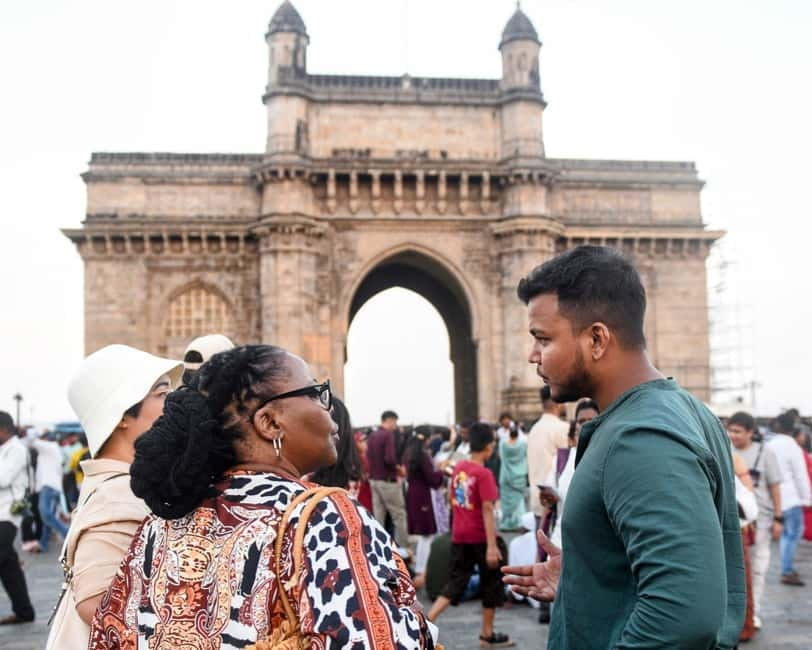
The Gateway of India is the route’s grand finale by the water. Built in 1924, the arch commemorated the visit of King George V and Queen Mary. Its later meaning is more complicated than its original purpose, and the monument now functions as one of Mumbai’s most recognized public meeting points.
You get about 10 minutes here. That is enough to hear the basic story, photograph the arch, and take in the harbor setting. It is not enough for an unhurried visit during a crowded period, so keep your belongings close and listen for the guide’s meeting instructions.
The final stop is the Taj Mahal Palace, built in 1903. The luxury hotel’s domes, towers, and waterfront position make it one of Mumbai’s most recognizable buildings. The tour gives it about five minutes, which is enough to discuss the exterior and its place in the city’s story.
You should not expect a hotel tour or access to private areas. Think of this stop as a closing view of Mumbai’s grand hotel tradition, followed by the walk toward the end point at Churchgate Station.
What $18.88 Buys You
At $18.88 per person, the tour offers solid value if you want an efficient introduction to central Mumbai. You are paying for a local guide, a planned route, architectural context, and the convenience of linking ten important places without working out the order yourself.
The price is especially reasonable for a first morning in the city. A good guide can explain details that are easy to miss, such as why the buildings use different styles, how public institutions shaped the city, and how Oval Maidan still functions today. Bottled water is included, which is a small but useful touch during a warm walk.
The value drops if you want long visits inside buildings or a focused Art Deco study. Most stops last 15 minutes or less, and admission is listed as free because the experience centers on walking and exterior interpretation. If you prefer to set your own pace, you may find the schedule too tight.
The current score is 4.7 from 13 ratings, with 92 percent recommending the experience. That is encouraging, but the sample is small. One negative account described poor historical explanation and weak presentation, so I would treat guide assignment as an important part of your decision.
Timing, Group Size, and Practical Comfort
The tour lasts about two hours, though one past walk ran for three hours after adding extra stops and finishing at Mumbai Railway Terminus. That suggests some flexibility, but you should not assume every departure will follow that longer version.
The maximum group size is 15. Smaller groups are useful for hearing the guide near roads and public spaces, and they make it easier to ask questions. You should still expect a shared pace rather than a private itinerary.
Wear comfortable shoes and bring sun protection, though these basic suggestions are practical rather than tour requirements. The provider includes bottled water, but no private transport. The meeting point is Regal Cinema, Apollo Bandar, Colaba, and the listed end point is Churchgate Station on Maharshi Karve Road.
Confirmation is provided when you book. You can cancel for a full refund up to 24 hours before the start time. Cancellations or changes made less than 24 hours before departure are not accepted for a refund.
Who Will Get the Most From This Walk
I would choose this tour for a first visit to Mumbai, especially if you want the city’s major central landmarks explained in plain language. It also suits repeat visitors who have seen the buildings but never understood how the architectural styles fit together.
It can work well for someone showing Mumbai to a friend or colleague. One local participant used it to explain the city to a manager from outside India, and the guide helped make the buildings easier to understand.
The walk is less suitable if you want a specialist architecture seminar, museum entry, or a slow photography outing. It is also not the best choice if you dislike fixed group timing. The route is broad rather than highly detailed.
Should You Book the Victorian Gothic and Art Deco Walking Tour?
I would book it if you want a compact, good-value introduction to South Mumbai. The mix of GPO grandeur, Town Hall, the cathedral, Gothic civic buildings, Oval Maidan cricket, Kala Ghoda, the Gateway of India, and the Taj Mahal Palace gives you a strong first look at the city.
The most important qualification is the guide. Abhi, Abhishek, Ravi, and Yash have each been praised for friendly service, clear English, useful facts, flexibility, and even taking photographs. Since one account describes a poor presentation, I would ask at booking if a particular guide is available and make your expectations clear.
Book this for orientation, context, and a lively walk through Mumbai’s central districts. Skip it if you want extensive interior access or a dedicated Art Deco tour. For most first-time visitors, the price and route make it a sensible way to get your bearings before exploring further on your own.
FAQ
How long does the walking tour last?
The advertised duration is approximately two hours. Some departures may run longer if the guide adds unscheduled stops.
Where does the tour start?
The meeting point is Regal Cinema in Apollo Bandar, Colaba, Mumbai.
Where does the tour end?
The listed end point is Churchgate Station on Maharshi Karve Road, Mumbai.
What landmarks are included?
The route includes Mumbai GPO, Town Hall and the Asiatic Society Library, Horniman Circle Garden, St. Thomas Cathedral, the Bombay High Court, Rajabai Clock Tower, Oval Maidan, Kala Ghoda, the Gateway of India, and the Taj Mahal Palace.
Is transportation included?
No. Private transportation is not included. The tour begins and ends near public transportation.
How many people can join the tour?
The group has a maximum of 15 participants.
What is the cancellation policy?
You can cancel up to 24 hours before the experience for a full refund. Cancellations or changes made less than 24 hours before the start time are not accepted for a refund.
Just added in Mumbai
- Mumbai Airport to Mumbai Hotels : Private Transfers★ 5.0 · 13 reviews
- Mumbai Sightseeing Tour★ 5.0 · 11 reviews
- Mumbai Spice Markets and Bazaars Tour with Guide and Transport★ 5.0 · 42 reviews
- Mumbai 800 Year Worli Village: Talking Goddess, Old Fort & more★ 5.0 · 94 reviews
- Customize private tour with pickup★ 5.0 · 95 reviews
- Gufran’s Slum Home Tour in the Mumbai Slums★ 5.0 · 19 reviews
- Private Guided Bandra Half Day City Tour in AC Vehicle★ 5.0 · 72 reviews
- The Famous Bollywood Tour of Mumbai★ 5.0 · 97 reviews
Walking Tours, compared.
The Great Indian Food Tour: Old Delhi Food and Heritage Walk
Read our review →


Blue City Heritage Private Walking Tour With Pickup and Drop-Off
Read our review →
Private Guided Walking Tour in Bandra Queen of Suburbs
Read our review →

Private Jodhpur Blue City Walking Tour with Guide
Read our review →Browse the lists this tour appears in