
Reviewed · VARANASI TOURS
Tourist Guide English & Spanish Varanasi/Benares
Varanasi reveals itself from the river. This experience brings you close to the city’s sacred ghats by boat, then leads you through old lanes, temples, markets, and traditional crafts. I especially like the sunrise Ganges ride, when pilgrims bathe and the ghats begin their daily rituals, and the chance to visit a working silk loom rather than only admire finished cloth in a shop. The main caution is time: the advertised two-hour visit covers an ambitious number of places, so you should confirm the exact focus before setting out.
I also like the choice of English, Spanish, or Hindi guiding. Guides such as Pintu, Pinto, and Dheeraj have been praised for explaining Hindu customs clearly and helping with practical matters, including taxis and local recommendations. At $16 per person, the price is excellent if the boat ride and guiding are both included, though solo visitors should confirm the final charge, since one person was asked to pay double.
In This Review
- Five things to know before you go
- Why the Ganges boat ride matters
- The ghats: ritual, death, and daily life
- Temples in the old lanes
- Markets, tea, lassi, and the working city
- The akhara and Varanasi’s physical traditions
- Silk looms and Banarasi craftsmanship
- What the guide adds
- Price, timing, and practical limits
- Is this the right Varanasi experience for you?
- FAQ
- How much does the Varanasi tour cost?
- How long does the experience last?
- What languages are available?
- Where is the meeting point?
- Is the Ganges boat ride included?
- Can I choose a sunrise or sunset boat ride?
- Is breakfast included?
- Are monument entrance tickets included?
- Is transport from my hotel included?
- Can I cancel the booking?
Five things to know before you go
- The sunrise boat ride is the emotional center: You see pilgrims bathing, people meditating, yoga groups, and the ghats waking from the river.
- The evening option includes the Ganga Aarti: Seeing the ceremony from a boat can give you a clear view away from the densest crowd on shore.
- You visit both sacred and everyday Varanasi: The route can include temples, an akhara, a flower market, a lassi stop, and a silk workshop.
- Cremation ghats require care: Manikarnika Ghat and Harishchandra Ghat are active funeral sites, not ordinary sightseeing stops.
- The route is packed for two hours: Ask whether your departure is focused on sunrise, sunset, temples, or the full old-city walk.
- The meeting point matters: Begin below Hotel MRK on Dashashwamedh Road, near the Bank of Baroda ATM.
Why the Ganges boat ride matters
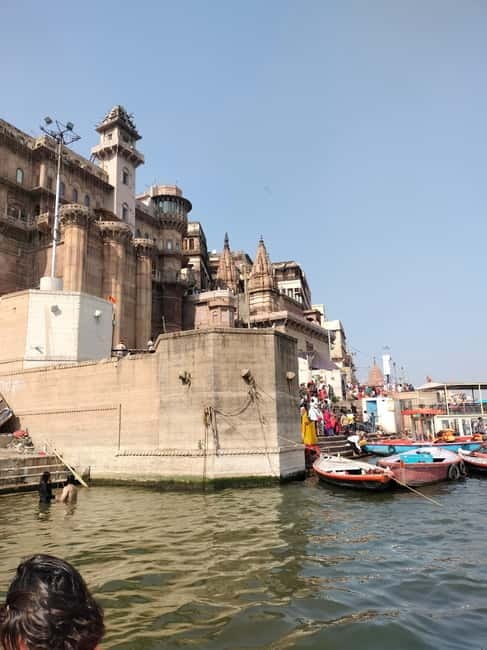
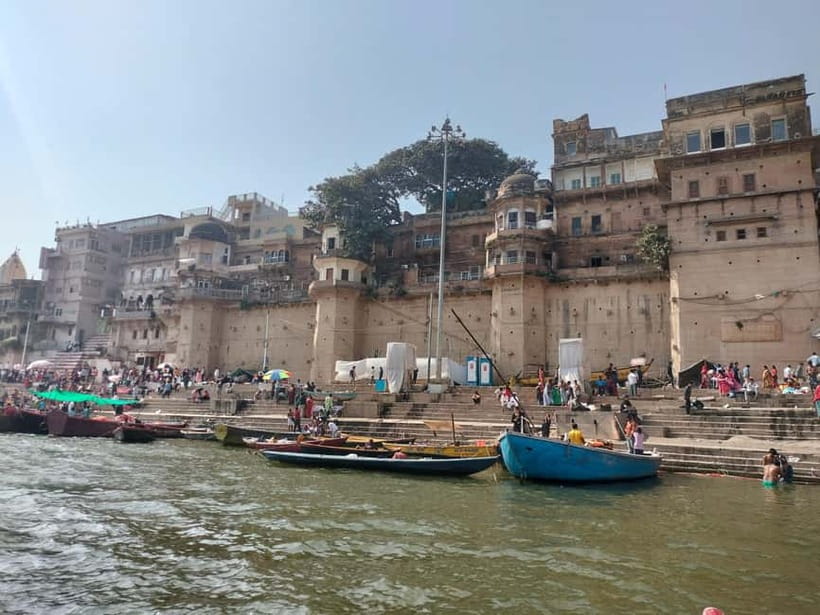
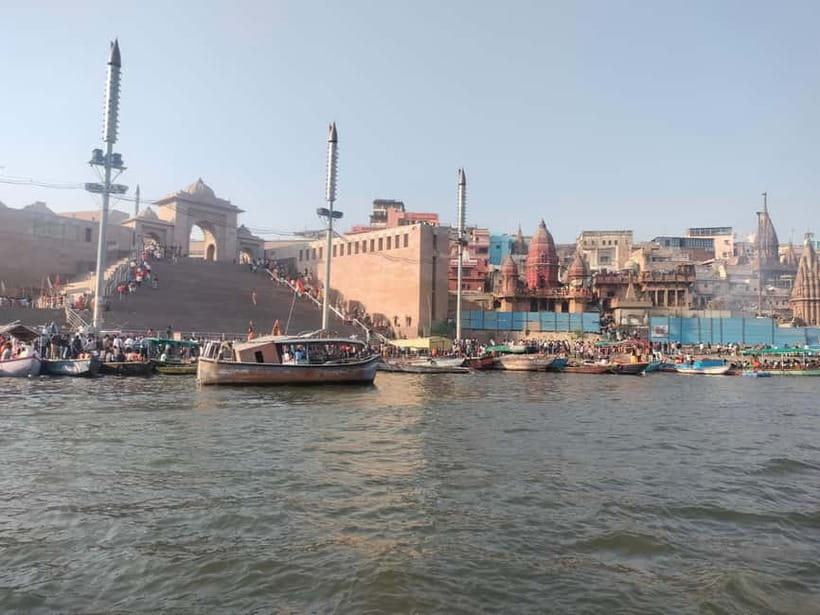
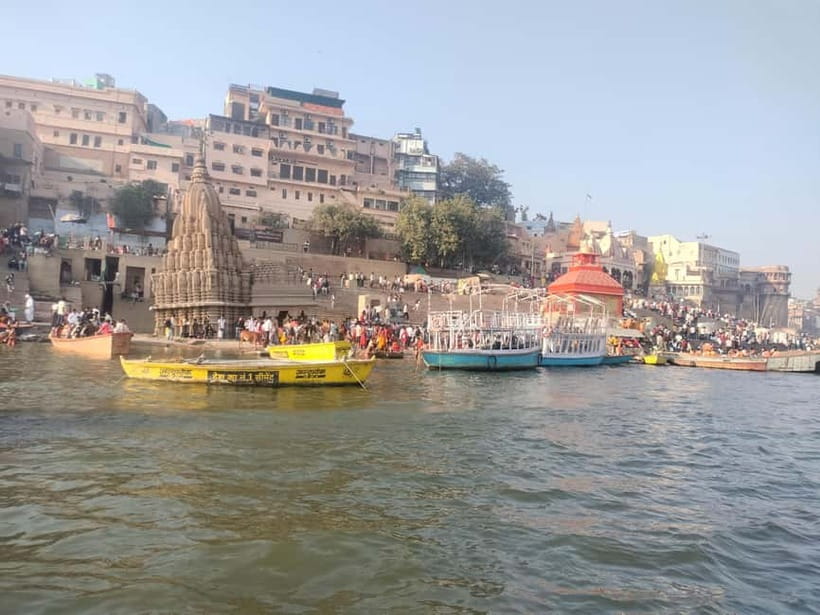
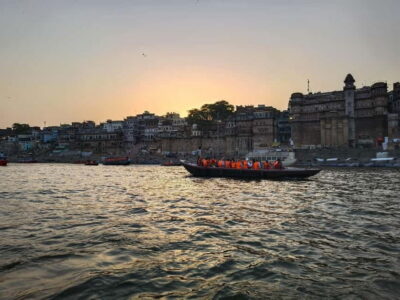
Varanasi makes more sense from the water. The river gives you a wide view of the ghats, while the narrow lanes behind them can feel confusing even with a map. From a boat, you can watch the city’s morning routine unfold in one long sweep.
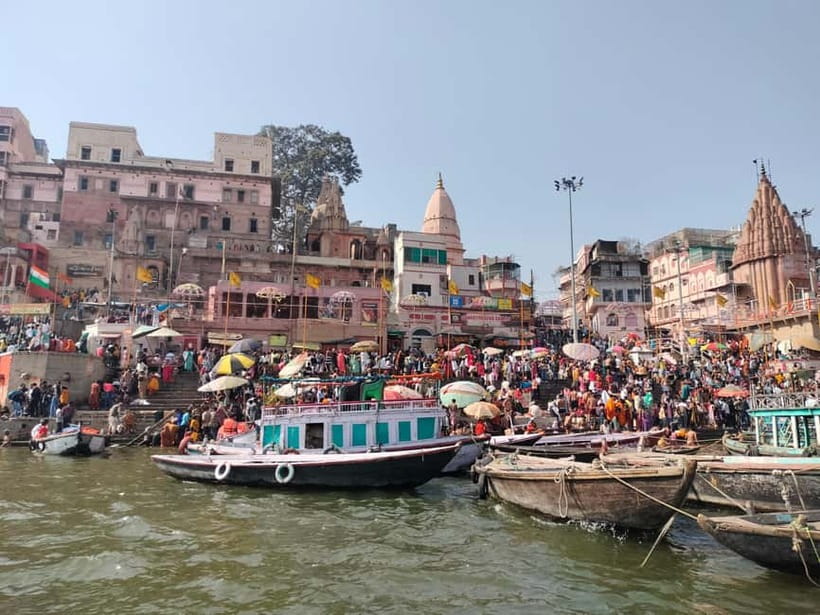
At dawn, the mood is quiet and serious. Hindu pilgrims walk down to the water for ritual bathing, while individuals and groups meditate or practice yoga on the stone steps. The rising light catches the ghats one by one, making this a strong choice if you want to see Varanasi before the noise and heat build.
The sunset ride offers a different experience. The river becomes a viewing place for the Ganga Aarti, the evening ceremony held at the ghats. Several people particularly liked seeing the ceremony from the boat and being positioned well for the performance. A small traditional motorboat is used, and the ride lasts about 30 minutes within the stated route.
You should choose your time of day carefully. Sunrise is better for daily religious life and a calmer view. Sunset is better for ceremony, lamps, music, and the spectacle of the ghats after dark. One morning visitor found the ride pleasant and authentic but less exciting than the evening version. That is a fair distinction.
A few more options to weigh up in Varanasi
- Varanasi : Full Day City Highlights Day Tour & Ganges Cruise
★ 4.8 · 520 reviews - Hidden Secrets of Varanasi: Vibrant Tradition (Guided Tour)
★ 5.0 · 429 reviews - Varanasi: Sunrise Boat Tour with Arti Ceremony
★ 5.0 · 375 reviews
The ghats: ritual, death, and daily life
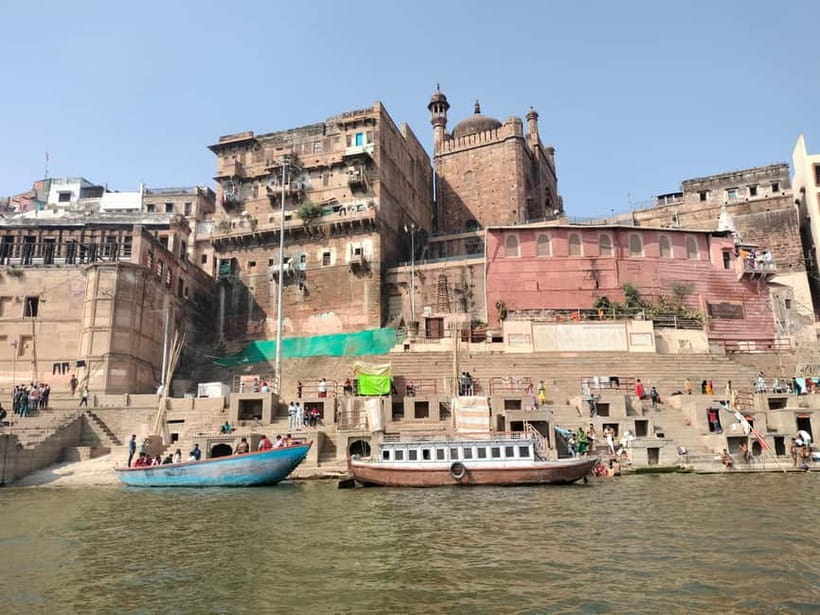
The route includes Dashashwamedh Ghat, Assi Ghat, Namo Ghat, Kedar Ghat, Manikarnika Ghat, and Harishchandra Ghat. Each offers a different window onto Varanasi, though the short timing means you should not expect a full historical lecture at every stop.
Dashashwamedh Ghat is the main reference point for the visit and the meeting area. It is also closely tied to the Ganga Aarti, so it can be crowded and intense, especially in the evening. Assi Ghat gives you a southern view of the river and is linked with morning activity, while Namo Ghat provides another broad look at the riverfront.
Manikarnika Ghat and Harishchandra Ghat are cremation sites. This is one of the most difficult and important parts of seeing Varanasi, because cremation is carried out as part of ordinary religious life rather than hidden away. Your guide can explain the meaning of the rituals and the role of the ghats, but you should follow local instructions, keep your voice low, and treat the families and workers with respect.
Do not approach these places as photo opportunities. Even if the schedule describes a photo stop, the human setting matters more than collecting an image. The value is in understanding how the river, death, prayer, and public life meet in one place.
Temples in the old lanes
The walking portion takes you through a dense collection of temples. The most important is Shri Kashi Vishwanath Temple, also called the Golden Temple, a major Hindu pilgrimage site dedicated to Shiva. The visit listed here is brief, and entrance rules or access may change, so any monument entrance fee is not included.
The Nepali Temple is another memorable stop. It is known for its carved woodwork, including scenes associated with the Kamasutra. The smaller temples can be just as rewarding because they show how worship is woven into ordinary streets rather than placed only in grand compounds.
The route may also include:
- Shri Kashi Kaamkoteeshwar Mandir
- Maa Tara Devi Temple
- Durga Bari Temple
- Chousatti Temple
- Hanuman Mandir
- Jain Temple
- Mata Anandomayi Ashram
- Kashi Kamkotisher Temple
- Shav Shiva Kali Mandir
- Tara Bari Mandir
- Purana Durga Bari
- Nav Grah Mandir
- Vishalakshi Mandir
- Dharm Kund
This is a lot of religious ground for two hours. I would treat the list as a menu of possible stops, not a promise that you will study every temple in detail. If a particular temple matters to you, tell the guide at the start.
The walk is also an education in religious variety. Hindu temples, Jain places, ashrams, shrines to Hanuman, and sacred tanks all appear within the old city. A local guide can help you understand which places are important for pilgrims, which are neighborhood shrines, and how to behave when entering.
Markets, tea, lassi, and the working city
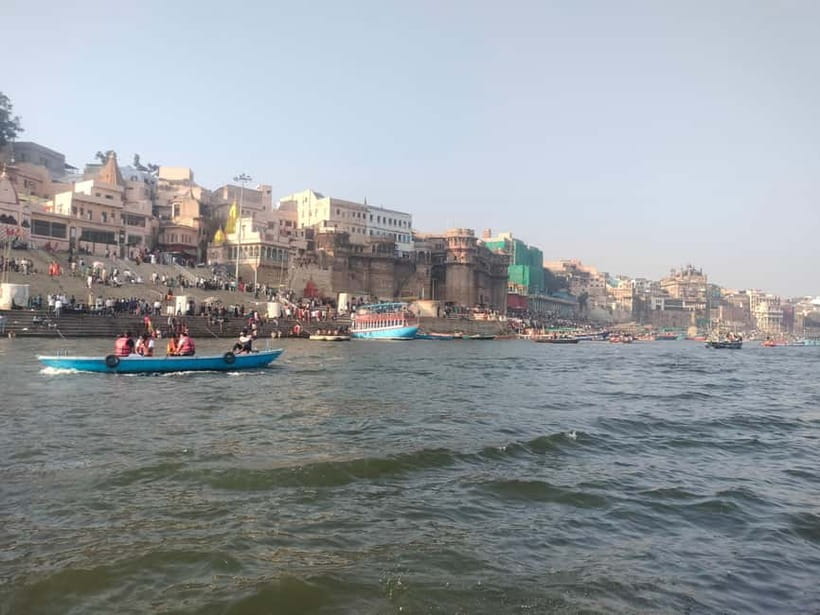
The tour is not limited to monuments. It also brings in the ordinary details that make Varanasi feel like a lived-in city.
You may pass through a vegetable market and a flower market, both useful places to see the supplies behind temple worship and family kitchens. The guide may stop for masala tea while explaining aromatherapy and essential oils. Tea, coffee, and mineral water are included during the experience, and a local Banarasi breakfast is also provided.
Blue Lassi Shop is a listed stop. Lassi is a thick yogurt drink, and the traditional serving may come in a clay cup. The cup itself is part of the pleasure, though the stop can also become a shopping-style visit depending on how the route is managed. If you prefer a slower walk, say so early. One person felt the experience moved too quickly and wanted more time to process the religious setting and information.
A short pause for local food gives the tour a useful change of pace. You are not only looking at sacred places from the outside. You are also seeing how people eat, trade, pray, and work around them.
A completely different kind of day out:
- Banaras Wala Tours
★ 5.0 · 329 reviews - The Ultimate 1 Day in Varanasi – How to Spend 13 Hours – Private Guided Tour
★ 5.0 · 295 reviews - A Journey of A lifetime
★ 5.0 · 272 reviews - Varanasi: Hidden Secrets of Vibrant Tradition (Guided Tour)
★ 4.9 · 176 reviews
The akhara and Varanasi’s physical traditions
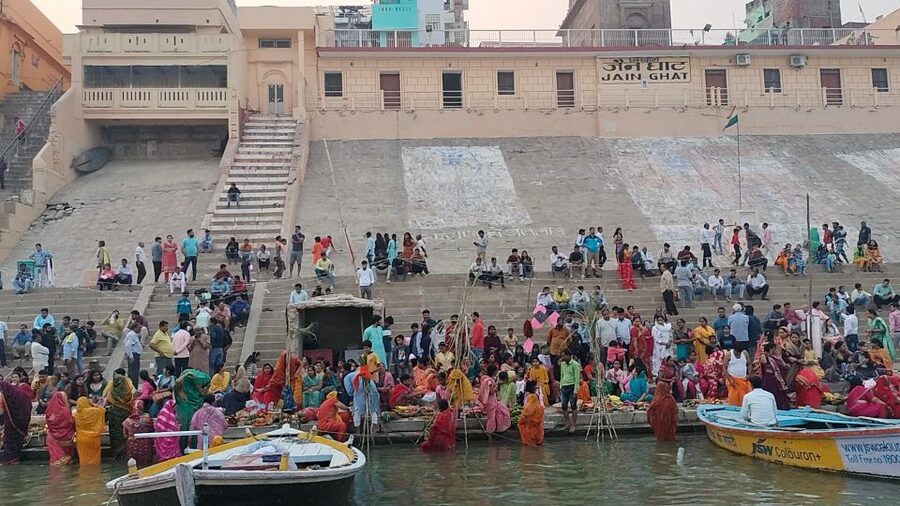
Akhara Goswami Tulsidas is included as a stop. An akhara is a traditional wrestling and training space, and the description connects it with old Indian exercise practices. This gives the walk a welcome change from temples and ghats.
The visit may be brief, but it shows another part of Banaras culture. Religious life here is not limited to prayer. Training, discipline, bodywork, food, music, craft, and ritual all overlap. I would ask the guide what is still practiced at the akhara today and how the space relates to local community life.
Silk looms and Banarasi craftsmanship
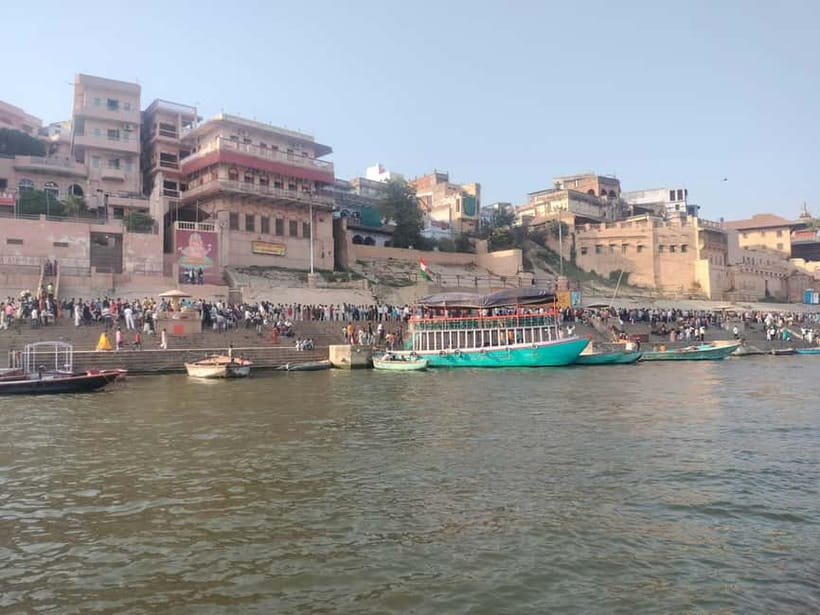
One of the most useful elements is the visit to a workshop where Varanasi silk is made by hand. The city is known for fine silk textiles featuring Mughal-inspired designs, and the tour offers a look at the loom rather than only a finished product behind glass.
You can expect the workshop visit to be a demonstration and explanation of the craft. The information provided does not say how long you will stay or whether purchases are expected, so ask before browsing if you are not shopping. Seeing the loom helps you understand why high-quality Banarasi fabric can cost much more than a factory-made scarf.
This stop is especially useful if you plan to buy textiles later. You can ask about handloom work, design details, and how to judge fabric quality. The experience may also include other local shops, so keep your budget and luggage space in mind.
What the guide adds
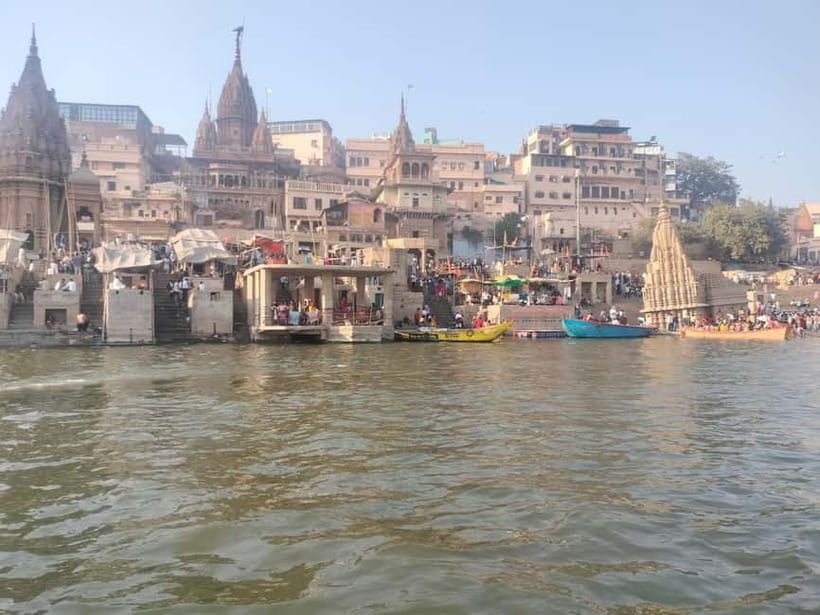
The best reason to book this experience is the local guide. Varanasi can be rewarding without one, but the religious customs are easier to understand when somebody explains what you are seeing as it happens.
Pintu, also written as Pinto in one account, is praised for clear English and Spanish, local knowledge, and patient answers. Dheeraj has also led the experience in Spanish. One Spanish-speaking visitor found that language choice made the city much easier to understand, while another praised the guide for explaining Hindu religion and showing less obvious places.
The guide’s help can extend beyond the formal walk. Pintu assisted one visitor with ordering taxis and other practical matters during a stay. That kind of local support is valuable in Varanasi, where transport, meeting points, and crowded lanes can cause more trouble than the monuments themselves.
Still, guide quality and pace can vary by departure. If you need Spanish, request it clearly. If you want a calm, reflective visit, say that too. The route includes sacred and emotionally difficult places, and a rushed delivery can reduce their meaning.
Price, timing, and practical limits
At $16 per person, this is strong value if you receive a boat ride, a live guide, drinks, and the Banarasi breakfast. A private guide and boat arranged independently would normally require more planning, while this option combines the main river experience with a city walk.
The two-hour duration is both a benefit and a warning. It fits well into a short stay or a first morning in Varanasi, but the stated route contains many 10, 15, 20, and 30-minute stops, plus a one-hour Ganga Aarti visit. Those timings cannot all fit comfortably into two hours. Ask the guide which version you are booking and whether the focus is the river, the evening ceremony, or the temple walk.
The meeting point is below Hotel MRK on Dashashwamedh Road near the Bank of Baroda ATM. Pickup may be free if your hotel is close, but no vehicle is included for hotels farther away. Vehicle transfers back to your hotel are also not included.
Monument entrance tickets are extra. Wheelchair support is not included, and the old city route involves walking through narrow areas and ghats with steps. The experience offers free cancellation up to 24 hours before departure and allows you to reserve now and pay later, which helps if your Varanasi plans are still shifting.
There is one important pricing point for solo visitors. A person who booked alone was charged double, even though the actual outing was shared with other people. Confirm the single-person price before payment so there is no surprise.
Is this the right Varanasi experience for you?
Book it if you want a compact introduction to the city with a strong focus on the Ganges, religious rituals, and local guiding. It suits first-time visitors, Spanish speakers, people with only a short window in Varanasi, and anyone who wants help interpreting the cremation ghats and Ganga Aarti.
Choose the sunrise option if you value quiet river views, pilgrims, yoga, and the city beginning its day. Choose sunset if the ceremony is your priority and you want to watch it from a boat.
I would hesitate only if you want a slow, deeply detailed temple visit or a private custom route. The schedule is packed, the vehicle is not included, and the final cost for a solo booking needs checking. For most people, though, $16 is a fair price for a boat ride, local guide, breakfast, and a first look at the sacred and everyday sides of Banaras.
FAQ
How much does the Varanasi tour cost?
The stated price is $16 per person. Solo visitors should confirm the final price before booking because one person was charged double for a shared outing.
How long does the experience last?
The stated duration is two hours. The route includes many possible stops, so you should confirm which parts will receive the most attention.
What languages are available?
Live guiding is available in English, Spanish, and Hindi. Guides named Pintu, Pinto, and Dheeraj have provided English and Spanish guiding.
Where is the meeting point?
Meet below Hotel MRK on Dashashwmedh Road, near the Bank of Baroda ATM machine.
Is the Ganges boat ride included?
Yes. The boat ride is included in the experience.
Can I choose a sunrise or sunset boat ride?
The experience describes both a dawn boat ride and an evening ride connected with the Ganga Aarti. Check the available starting time and confirm which version you are booking.
Is breakfast included?
Yes. A local Banarasi breakfast is included. Tea, coffee, and mineral water are also free during the tour.
Are monument entrance tickets included?
No. Entrance tickets for monuments are not included in the stated price.
Is transport from my hotel included?
Pickup may be free if your hotel is close to the meeting point. A vehicle charge may apply if your hotel is farther away, and transport back to your hotel is not included.
Can I cancel the booking?
You can cancel up to 24 hours in advance for a full refund. Reserve now and pay later is also available.
Just added in Varanasi
- The Ultimate 1 Day in Varanasi – How to Spend 13 Hours★ 4.9 · 32 reviews
- Spiritual Tour in Varanasi with a local- 2 Hours Tour★ 4.8 · 13 reviews
- Sarnath Tour- Where Buddhism Originated★ 4.9 · 15 reviews
- Private Sunset Boat Ride and Ganga Aarti with Reserved Seat★ 4.7 · 18 reviews
- Varanasi: Mysticism Tour with Boat Ride & Ganga Aarti★ 3.5 · 33 reviews
- GROUP YOGA CLASS – BEGINNER / ADVANCED – Sunrise Yoga with Ayush in Varanasi★ 5.0 · 79 reviews
- Walking tours – for an authentic Varanasi experience★ 5.0 · 40 reviews
- Single Walking Tour. Local culture, religion, traditions and more. Daily Tour★ 5.0 · 28 reviews
Varanasi Tours, compared.
Full Day City Highlights Day Tour & Ganges Cruise
Read our review →
Hidden Secrets of Varanasi: Vibrant Tradition (Guided Tour)
Read our review →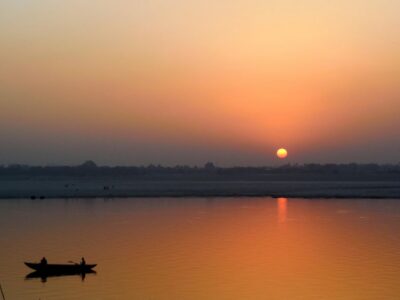
The Ultimate 1 Day in Varanasi – How to Spend 13 Hours – Private Guided Tour
Read our review →
Hidden Secrets of Vibrant Tradition (Guided Tour)
Read our review →
Private Heritage and Spiritual Walk Tour – Varanasi Kashi
Read our review →Browse the lists this tour appears in