
Reviewed · WALKING TOURS
Mumbai heritage walk- Story of Gothic and Art Deco buildings
Mumbai’s buildings tell the city’s story. This three-hour walk links grand Gothic monuments with early Art Deco landmarks, showing how Mumbai grew from a colonial port into a major trading center. I especially like the small group limit of 15 and the way the route connects architecture with personal stories, money, politics, and daily life.
I also like the range of stops, from Chhatrapati Shivaji Terminus to the David Sassoon Library and Eros Cinema. Guide Pankaj earns particular praise for making the history clear, lively, and useful. The main drawback is that much of the tour is an exterior viewing experience, and the walk requires good weather.
In This Review
- Key things to know before you book
- Why Mumbai’s architecture makes a good walking tour
- Starting at Chhatrapati Shivaji Terminus
- Eros Cinema and Mumbai’s Art Deco turn
- Empress Court and the meaning of Art Deco status
- Bombay High Court and the ideas of Justice and Mercy
- Rajabai Clock Tower, Mumbai’s Big Ben
- David Sassoon Library and a Jewish banker’s legacy
- Elphinstone College and famous alumni
- Finishing at the Prince of Wales Museum
- What the $35 price really buys you
- Practical advice for getting the most from the walk
- Who should book this Mumbai heritage walk?
- FAQ
- How long does the Mumbai Gothic and Art Deco walk last?
- Where does the tour begin?
- Where does the tour end?
- How much does the experience cost?
- How many people can join the tour?
- Is Chhatrapati Shivaji Terminus admission included?
- Can I go inside every building?
- Are snacks provided?
- Is the tour available with a mobile ticket?
- What happens if bad weather cancels the walk?
- Should you book it?
Key things to know before you book
- CST begins the story: Start with one of India’s finest Victorian Gothic buildings, with Indian design details worked into its European form.
- Art Deco gets equal billing: Eros Cinema and Empress Court show a very different side of Mumbai’s architectural past.
- Pankaj is a major strength: His storytelling, enthusiasm, and helpful answers receive especially strong praise.
- The group stays small: With no more than 15 people, you should have a better chance to hear the guide and ask questions.
- Most landmarks are viewed from outside: The David Sassoon Library can be seen from its lobby, while several other stops are exterior visits.
- The walk connects two historic districts: You begin at Chhatrapati Shivaji Terminus and finish near the Chhatrapati Shivaji Maharaj Vastu Sangrahalaya.
Why Mumbai’s architecture makes a good walking tour

Mumbai can feel like several cities at once. Its Gothic civic buildings recall the British colonial period, while its Art Deco cinemas and apartment blocks point to a newer, more confident city shaped by Indian business, cinema, and modern urban life.
This tour gives you a way to read those changes building by building. Instead of looking at a facade and simply calling it beautiful, you learn why it was built, who paid for it, what it signaled, and how it fit into Mumbai’s growth.
The route is also useful because the two styles are easy to compare. Gothic buildings reach upward with pointed forms, ornate details, and dramatic silhouettes. Art Deco buildings use clean lines, curved corners, strong geometry, and a more modern sense of glamour.
I think the format works best if you enjoy asking questions. The guide’s job is not just to point out towers and windows. The strongest part is the connection between architecture and people, including bankers, philanthropists, civic leaders, students, cinema audiences, and wealthy residents.
The advertised price is $35 per person. For a three-hour walk with a small group, snacks, and a guide who can explain both architecture and Mumbai’s development, that is a reasonable price if the subject interests you. It is less useful if you only want quick photographs of the major sights, since you can see several of the buildings without paying for a tour.
More Walking Tours in Mumbai
- Group Guided Walking Tour in Fort and Colaba
★ 5.0 · 1,073 reviews - Private Guided Walking Tour in Fort & Colaba
★ 5.0 · 895 reviews - Private Guided Walking Tour in Bandra Queen of Suburbs
★ 5.0 · 383 reviews
Starting at Chhatrapati Shivaji Terminus
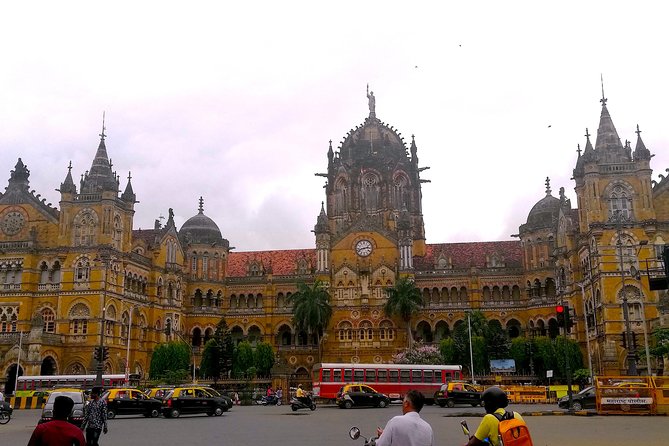
The walk begins at Chhatrapati Shivaji Terminus, commonly called CST, in the Fort area. This is the tour’s strongest opening because the building immediately shows how Mumbai borrowed from Europe while adapting design to India.
CST is a UNESCO heritage building and one of India’s finest examples of Victorian Gothic Revival architecture. You get about 30 minutes here, with admission included. That matters because the station is not just a grand monument viewed from a distance. It remains part of Mumbai’s working transport system, giving the architecture a practical setting rather than turning it into a silent museum piece.
Look for the blend of Gothic forms and Indian themes. The building’s design includes the pointed arches, towers, and ornament associated with Victorian Gothic architecture, but it also draws on local traditions. That mixture is central to understanding Mumbai’s public buildings from this period.
Your guide can help you separate the major visual elements from the small details. Without that help, CST can become a blur of domes, carvings, windows, and stonework. With context, you begin to see the building as a statement about commerce, imperial power, transportation, and Mumbai’s rise.
Allow a little patience at the start. A major station is an active public place, not a quiet photo set. Stay close enough to hear the guide and be ready for city noise.
Eros Cinema and Mumbai’s Art Deco turn
From CST, the walk moves toward Eros Cinema, viewed from outside for about 30 minutes. This is a sharp change from the heavy Gothic style at the station.
Eros is a fine example of Art Deco cinema design. Its most memorable feature is the tiered shape, which gives the building the look of a wedding cake topped by a semicircular tower. That comparison is easy to remember, and it helps you see why Art Deco buildings often feel more playful and theatrical than Gothic civic structures.
Cinemas were important symbols of modern city life. A grand movie theater promised entertainment, comfort, and a new kind of public experience. At Eros, the architecture helped sell that promise before you even entered the auditorium.
The outside viewing also has a limit. You do not get an admission visit here, so the value comes from the guide’s explanation and from learning how to read the facade. If you already know something about Art Deco, you may wish for more interior access. If the style is new to you, the exterior is enough to make the contrast with CST clear.
This is one of the points where Pankaj’s storytelling can add real value. He has been praised for giving information about more than buildings alone, placing the architecture within Mumbai’s wider social and economic development.
Empress Court and the meaning of Art Deco status
The next stop is Empress Court, an Art Deco residential building seen from outside for about 15 minutes. It is a shorter stop, but it adds an important idea to the tour.
A cinema represents public entertainment. Empress Court represents private life. The building lets the guide explain how an Art Deco address became a sign of status and wealth in Mumbai.
That point makes the route more than a style lesson. Architecture can show who had money, who wanted to appear modern, and how city residents imagined a desirable life. Residential buildings do not always receive the same attention as railway stations or courts, but they can reveal just as much about society.
You will not spend long here, so listen for the social context rather than expecting a full architectural inspection. The short stop keeps the three-hour route moving, but it also means you may want to take notes quickly if you are especially interested in Art Deco apartments.
A completely different kind of day out:
- Dharavi slum tour in Mumbai by Female tour guides of the slum
★ 5.0 · 1,976 reviews - Mumbai: Full-Day Sightseeing Tour of Mumbai
★ 4.9 · 1,822 reviews - Private Mumbai Sightseeing Tour (Traveller’s Choice Award Winner)
★ 5.0 · 1,565 reviews - Elephanta Caves & Island Guided Private Tour
★ 5.0 · 1,327 reviews
Bombay High Court and the ideas of Justice and Mercy
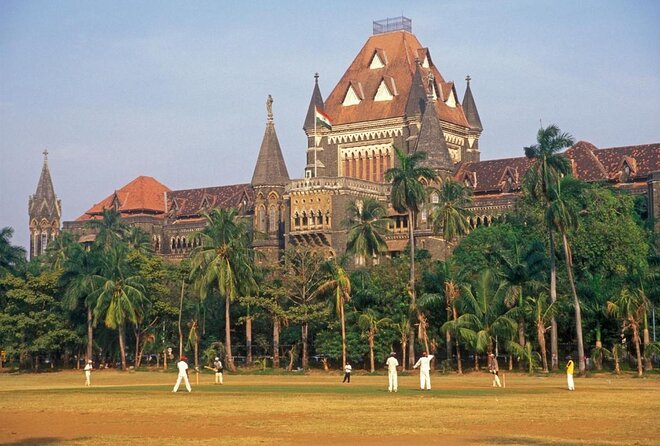
The Bombay High Court is another exterior stop, with about 30 minutes devoted to the building. It returns you to the Gothic language, but with a different purpose from CST.
The court is a grand civic structure designed to express authority. Your guide will direct your attention to the statues of Justice and Mercy on top of the building. Those figures give the facade a moral message, not just a decorative one.
This is exactly the sort of detail that can be easy to miss while walking through the Fort area. You may notice the towers and stonework first, but the statues explain what the building was meant to represent. They also give the guide a natural way to discuss law, power, and public institutions in colonial Mumbai.
The tour does not promise entry into the court, so plan on seeing it from outside. That is a recurring feature of this experience. You are paying for interpretation, not access to every interior.
I find the balance useful because it keeps the focus on the city itself. You are not spending the whole morning waiting in lines or moving through controlled rooms. You are looking at the buildings in their streetscape, where their scale and relationship to nearby landmarks make more sense.
Rajabai Clock Tower, Mumbai’s Big Ben
The Rajabai Clock Tower receives another 30 minutes. It is sometimes called the Big Ben of Mumbai, a comparison that gives you an instant sense of its visual role in the city.
The most engaging part is the story of how the tower was financed. The patron wanted the chimes to help his visually challenged mother hear the time and keep her fasts punctually. This small human detail turns an imposing tower into a story about family, faith, money, and public generosity.
It also shows why a guided walk can be better than a self-guided architecture checklist. You could photograph the tower in a few seconds. The story gives you a reason to remember it.
The tower is part of the larger Gothic setting around the High Court, university buildings, and libraries. Pay attention to the way these structures work together. The tour is not only about individual facades. It is also about how Mumbai created a civic center filled with education, law, reading, and public ceremony.
David Sassoon Library and a Jewish banker’s legacy
The David Sassoon Library and Reading Room gets about 20 minutes. The building was created by David Sassoon, a Jewish banker, as a library and reading room. Its Gothic design fits the surrounding civic architecture, but its purpose was different from that of a court or railway station.
You can see the building from the lobby, although only members are allowed inside. That restriction is worth knowing before you arrive. You will not tour the full reading room, but the lobby still gives you a sense of the building’s role as a place for study and public learning.
This stop also broadens your picture of Mumbai’s past. The city’s development was shaped by many communities, businesses, and donors. A Jewish banker building a library in Gothic style is a useful reminder that Mumbai’s urban story cannot be reduced to one group or one tradition.
If you like social history, this may be one of the most rewarding stops. If your main interest is photography, the outside details and entry view may be enough, but you should not expect an extended interior visit.
Elphinstone College and famous alumni

Elphinstone College is a shorter stop of about 15 minutes. The building is another notable Gothic structure, and the guide connects it with figures including Bal Gangadhar Tilak, Dr. B. R. Ambedkar, and Jamshedji Tata.
That list gives the building weight beyond its stonework. You are looking at an institution linked with political thought, social change, education, and industry. The architecture becomes a doorway into the people who helped shape modern India.
Because the stop is brief, it works best as part of the larger sequence. By this point, you have seen transport, entertainment, housing, law, religion, reading, and education. Elphinstone College adds another piece to the city’s civic identity.
The building is appreciated from outside. Keep your expectations realistic, and use the time to ask the guide about the alumni or the Gothic details you find most interesting.
Finishing at the Prince of Wales Museum
The walk ends at the Chhatrapati Shivaji Maharaj Vastu Sangrahalaya, formerly known as the Prince of Wales Museum. The building receives about 10 minutes at the end of the route.
This gives you a final heritage landmark in the Fort area and a useful place to continue exploring on your own. The building itself is described as magnificent and has a complicated past that includes earlier use as a military hospital for Children’s Welfare Exhibitions.
The short stop is more of a concluding look than a museum visit. The tour does not include a full visit to the museum’s galleries, so you should not count on seeing its collections during the walk. If you want to go inside, plan that as a separate activity.
The endpoint is at 159 to 161 Mahatma Gandhi Road near Lion Gate. Ending here makes practical sense because you finish among several important cultural and historic sights rather than returning to the starting station.
What the $35 price really buys you
At $35, the tour is not the cheapest way to see these buildings. Most are visible from public streets, and you can photograph many of them independently.
The price makes more sense if you value the guide’s interpretation. You get three hours, a route with eight stops, snacks, a group capped at 15, and admission to CST. You also avoid the work of researching why each building matters and how the sites fit together.
The small group is especially useful in a noisy city. A group of 15 is large enough to have some energy but small enough for the guide to answer questions. Pankaj receives strong praise for being helpful, enthusiastic, and clear, with stories that make Mumbai’s past easier to follow.
I would book it for the storytelling, not for entry access. If you need indoor visits at every landmark, this is not the right product. If you want to understand the buildings you see while walking through the Fort area, the fee is easier to justify.
The experience is often booked about 14 days ahead. That does not guarantee it will sell out, but it is a useful sign to avoid leaving it until the last minute if your Mumbai dates are fixed.
Practical advice for getting the most from the walk
Wear comfortable shoes. The tour lasts about three hours and moves between several sites in the Fort area.
Arrive at Chhatrapati Shivaji Terminus with enough time to find the meeting point in the CST area. The route ends at the Vastu Sangrahalaya, so you do not finish where you started.
Bring water, even though snacks are provided. The walk requires good weather, and the company may offer another date or a full refund if poor weather causes cancellation.
Keep your phone ready for photographs, but do not let the camera distract you from the guide. The most valuable details are often the ones high above street level, such as the Justice and Mercy statues or the tower decorations.
The tour is near public transportation, and most people can participate. A mobile ticket is accepted, and group discounts are available. The booking confirmation arrives at the time of booking, while free cancellation is available up to 24 hours before the start time. Changes or cancellations made later are not refunded.
Who should book this Mumbai heritage walk?
I would recommend it most strongly to architecture fans, history buffs, first-time visitors who want a clear introduction to the Fort area, and returning visitors who feel they have only seen Mumbai’s surface.
It is also a good choice if you prefer a small group and enjoy asking questions. Pankaj’s praised style is friendly and energetic, and the strongest benefit comes from hearing the stories behind the buildings.
You may want to skip it if you dislike walking, want extensive interior access, or are mainly interested in museum collections. Several stops are exterior views, and the route depends on suitable weather.
FAQ
How long does the Mumbai Gothic and Art Deco walk last?
The walk lasts approximately three hours.
Where does the tour begin?
It begins at Chhatrapati Shivaji Maharaj Terminus in the CST area of Fort, Mumbai.
Where does the tour end?
It ends at the Chhatrapati Shivaji Maharaj Vastu Sangrahalaya at 159 to 161 Mahatma Gandhi Road near Lion Gate.
How much does the experience cost?
The listed price is $35 per person.
How many people can join the tour?
The maximum group size is 15 people.
Is Chhatrapati Shivaji Terminus admission included?
Yes. Admission to Chhatrapati Shivaji Terminus is included.
Can I go inside every building?
No. Several buildings are viewed from outside. The David Sassoon Library can be seen from the lobby, but only members may enter beyond that area.
Are snacks provided?
Yes. Snacks are provided during the walk.
Is the tour available with a mobile ticket?
Yes. The experience offers mobile ticketing.
What happens if bad weather cancels the walk?
The experience requires good weather. If poor weather causes cancellation, you can receive a different date or a full refund.
Should you book it?
Book this walk if you want Mumbai’s Gothic and Art Deco buildings to make sense as part of a larger story. The route covers major landmarks, the group stays small, and Pankaj’s clear, enthusiastic explanations are a real strength.
The choice is less convincing if you want extensive interior visits or prefer to explore entirely at your own pace. For most architecture and history fans, though, $35 buys more than a list of facades. It gives you the connections, stories, and useful context that can turn a busy walk through Mumbai into a memorable lesson in how the city grew.
Just added in Mumbai
- Mumbai Airport to Mumbai Hotels : Private Transfers★ 5.0 · 13 reviews
- Mumbai Sightseeing Tour★ 5.0 · 11 reviews
- Mumbai Spice Markets and Bazaars Tour with Guide and Transport★ 5.0 · 42 reviews
- Mumbai 800 Year Worli Village: Talking Goddess, Old Fort & more★ 5.0 · 94 reviews
- Customize private tour with pickup★ 5.0 · 95 reviews
- Gufran’s Slum Home Tour in the Mumbai Slums★ 5.0 · 19 reviews
- Private Guided Bandra Half Day City Tour in AC Vehicle★ 5.0 · 72 reviews
- The Famous Bollywood Tour of Mumbai★ 5.0 · 97 reviews
Walking Tours, compared.

The Great Indian Food Tour: Old Delhi Food and Heritage Walk
Read our review →


Blue City Heritage Private Walking Tour With Pickup and Drop-Off
Read our review →
Private Guided Walking Tour in Bandra Queen of Suburbs
Read our review →

Private Jodhpur Blue City Walking Tour with Guide
Read our review →Browse the lists this tour appears in