
Reviewed · WALKING TOURS
Guided Walk through Bengaluru’s Ejipura Slums
Look past the city’s polished surface. This small-group walk through Ejipura offers a respectful look at daily life in one of Bengaluru’s largest slum areas, along with the local projects working to improve it. I especially like the personal scale, with no more than six people, and the chance to visit the Swabhimaan community center and clinic rather than simply walk through residential lanes.
I also like that the walk is led by guides closely connected to the neighborhood and that proceeds return to the community. The main consideration is emotional: poverty, poor infrastructure, and overcrowding are visible here, so you need to approach the experience with humility, not as a photo opportunity. The route may also feel physically basic, with walking through an area that was not designed for sightseeing.
In This Review
- Key Points to Know Before You Go
- Entering Ejipura From 80 Feet Road
- Swabhimaan Community Center and the School Visit
- A Rs. 10 Clinic With a Clear Purpose
- Local Businesses and Everyday Ingenuity
- Guides Who Make the Walk Work
- What the Experience Feels Like
- Timing, Group Size, and Practical Comfort
- Is $30.34 a Fair Price?
- Who Should Book This Ejipura Walk?
- Should You Book It?
- FAQ
- Where does the Ejipura walk begin?
- What time does the tour start?
- How long does the experience last?
- How many people can join the tour?
- Can I cancel for a full refund?
- What happens if bad weather cancels the tour?
Key Points to Know Before You Go
- Meet at 9:00 a.m. outside the Regional Passport Office: The starting point is on 80 Feet Road in Koramangala 8th Block.
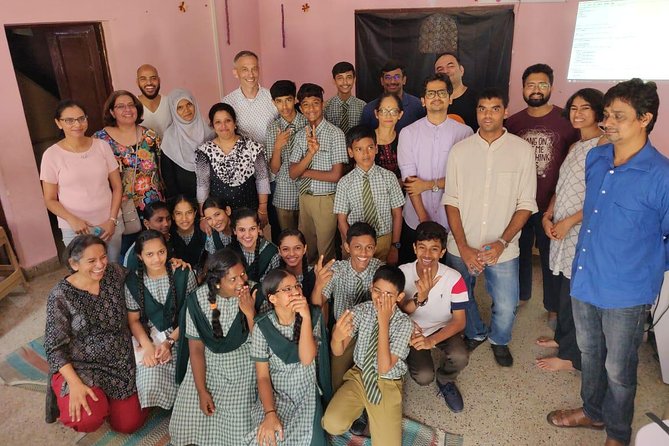
- Groups are limited to six people: This allows time for questions and personal attention from the guide.
- The Swabhimaan community center is a major highlight: You can meet teachers, volunteers, and children attending tuition and after-school programs.
- The Swabhimaan Clinic charges Rs. 10 per visit: Doctors consult and provide medicines for this all-inclusive price.
- Bring a refillable water bottle: You can refill it along the way.
- The walk lasts about 90 minutes to two hours: It ends back at the meeting point.
Entering Ejipura From 80 Feet Road
The tour begins at the Regional Passport Office, WJW9+9MJ, on 80 Feet Road in Koramangala 8th Block. This is a useful meeting point because it puts you beside Ejipura without asking you to find your way into the neighborhood alone.
From the main road, the setting changes quickly. Ejipura brings together the problems created by weak infrastructure, fast and unchecked construction, and large-scale migration into Bengaluru. The walk is not designed to soften those realities. You may see poverty and the effects that come with it, but the guide also explains how residents earn a living, run businesses, and build lives under difficult conditions.
That balance matters. A short walk cannot explain every cause of poverty in Bengaluru, and you should not expect a complete social study in two hours. What it can do is replace vague impressions with conversations and specific examples. The neighborhood becomes more than a place seen through a car window.
Because the group is capped at six, you should have a better chance to ask about the things you notice. Past guests have asked about social structures, construction, education, and everyday life. The guides, including Ashif and Dia, have been praised for answering questions carefully and adjusting the walk to individual interests.
More Walking Tours in Bangalore
- Bengaluru Pete City Market Half-Day Walking Tour
★ 5.0 · 163 reviews - Bangalore: Palace, Temples, Fort & Markets Walking Tour
★ 4.9 · 97 reviews - Street Food walking tour in Bangalore with a food evangelist
★ 5.0 · 83 reviews
Swabhimaan Community Center and the School Visit
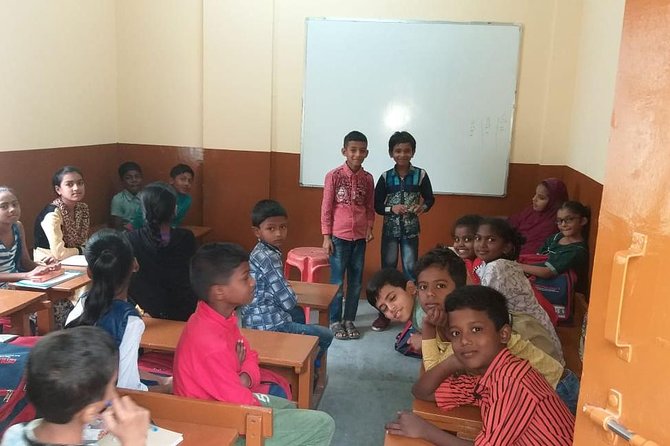
The Swabhimaan community center is the heart of the walk for many people. Children from the neighborhood come here for school support, curricular tuition, and after-school activities. You meet teachers and volunteers who are working to improve student performance.
This stop gives useful context to the streets outside. Instead of seeing only a shortage of services, you see a local response to that shortage. Education is being treated as a practical tool for helping children gain more choices later in life.
The visit can be especially meaningful if you work in education or have an interest in community programs. One young teacher from Germany found the school visit particularly rewarding, and the guides took time to match the experience to that interest. Children have spoken with visitors in English about India and other countries, creating a genuine exchange rather than a one-sided presentation.
Still, you should remember that this is a working community center, not a staged attraction. Children are there to learn. Follow the guide’s lead, ask before taking photographs, and avoid treating students as scenery. A friendly conversation can be welcome, but respect must come first.
I like that the stop focuses on people who are actively improving local conditions. The center shows help through education, but it also shows the limits of outside observation. You see one part of the work, while teachers and volunteers handle the long, patient effort every day.
A Rs. 10 Clinic With a Clear Purpose
The next important stop is the Swabhimaan Clinic. Doctors consult with local residents and distribute medicines for an all-inclusive fee of Rs. 10, listed as about 12 cents.
That price tells you something important about the clinic’s role. It is not simply a medical facility that happens to be in the area. It is designed to keep basic consultations and medicines within reach for people with very limited money.
The clinic also helps explain why community support needs to cover more than schooling. Better education matters, but families also need affordable health care. Seeing both projects in one short walk gives you a clearer picture of the range of needs in Ejipura.
The information provided does not promise that every visitor will meet a doctor or observe a consultation, so you should expect an introduction to the clinic rather than a private medical tour. Patient privacy comes first. The value is in understanding what the clinic offers and why a low-cost service can matter so much.
Local Businesses and Everyday Ingenuity
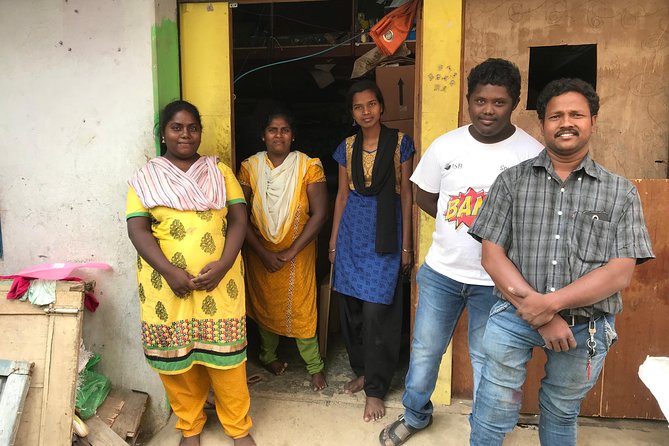
The walk also stops at local businesses that have managed to grow despite obvious setbacks. These visits are important because they shift the focus from hardship alone to work, skill, and resourcefulness.
A slum is not only a place where people receive help. It is also a place where people make and sell things, provide services, and find ways to support their families. The tour uses local businesses to show that practical ingenuity exists alongside poverty.
This part of the experience may feel less dramatic than the school or clinic, but I consider it essential. Without it, a slum walk could leave you with a narrow picture of helplessness. By meeting people connected to successful enterprises, you get a more accurate view of residents as workers, parents, business owners, and neighbors.
The supplied information does not name each business or guarantee exactly how long you will spend at every stop. Your guide may shape the route around the group’s questions and the day’s conditions. That flexibility is useful, but it also means you should not expect a fixed sightseeing schedule with minute-by-minute timing.
A completely different kind of day out:
- Discover Bangalore Through the Ages — Guided Tour with Lunch
★ 5.0 · 417 reviews - Best of Mysore, UNESCO Somnathpur Temple & Srirangapatna Day Tour
★ 5.0 · 384 reviews - (Mysuru) Mysore Day Out – A Royal Experience Private Tour from Bangalore
★ 5.0 · 302 reviews - Bangalore city tour with English guide & multi language support
★ 5.0 · 268 reviews
Guides Who Make the Walk Work
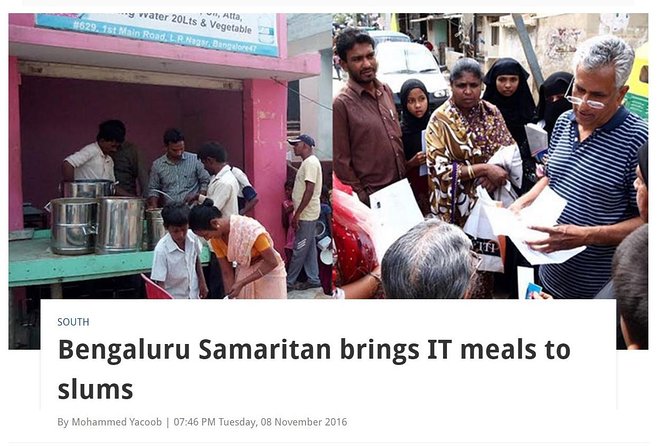
A walk like this depends heavily on the guide. Ashif and Dia have been singled out for their generosity, local insight, and ability to explain Ejipura’s story. Ashif has also been described as a volunteer connected with Swabhimaan, while the organization’s founder, Venkatraman, may greet the group.
Those personal links make a difference. A guide who knows the neighborhood can explain what you are seeing without reducing it to a list of problems. You can ask about the social structure of the community, the practical details of construction, education, or the programs run by Swabhimaan.
The small group helps here. With a maximum of six people, the walk should feel more like a conversation than a lecture. Solo visitors may find this especially reassuring. One solo female visitor felt safe and well supported, and another solo teacher appreciated how the guide paid attention to her interests.
That does not mean every question has a simple answer. Bengaluru’s urban migration, poverty, infrastructure problems, and development pressures are complicated issues. A good guide can offer useful local context, but you should treat the tour as an introduction rather than a final word.
What the Experience Feels Like
The strongest part of this walk is its tone. It aims to show hope beside hardship, not hardship for entertainment. You visit projects that residents use, meet people involved in those projects, and see how a local organization tries to improve education and health.
You may also find the experience uncomfortable. That is not necessarily a flaw. Seeing poor infrastructure at close range can make ordinary tourist sights feel very different later in the day. Several people described the walk as emotional or even life-changing, especially after thinking about the gap between their own worries and the difficulties faced by families in Ejipura.
You should decide in advance how you want to participate. Listen closely. Ask respectful questions. Do not assume that residents want their homes or children photographed. If you keep your attention on people’s dignity, the experience can feel like a useful exchange rather than a display of poverty.
The walk is also a reminder that charity is not the only story. Swabhimaan’s work is built around education, health care, and self-help. The businesses and community programs show residents taking part in their own progress.
Timing, Group Size, and Practical Comfort
The start time is 9:00 a.m., and the walk lasts approximately one hour and 30 minutes to two hours. Morning is a sensible choice for a walking activity, though the experience requires good weather. If poor weather cancels the tour, you are offered another date or a full refund.
Bring a water bottle because you can refill it during the walk. Wear comfortable shoes and clothing suited to walking, but those details are practical suggestions rather than special equipment requirements. Public transportation is nearby, and the tour ends where it begins.
Most people can participate, according to the supplied activity information. Still, this is a walk through a densely settled neighborhood, not a polished attraction with a designed visitor path. If you have mobility concerns, contact the provider before booking so you can confirm that the route suits you.
The mobile ticket is convenient. Confirmation is sent within 48 hours, subject to availability. Since the experience is booked an average of 17 days ahead, I would not leave it until the last minute if it is important to your Bengaluru plans.
Is $30.34 a Fair Price?
At $30.34 per person, this is not the cheapest way to spend two hours in Bengaluru. You are not paying for grand monuments, air-conditioned transport, or a long list of sightseeing stops.
You are paying for a small, guided introduction to a part of the city that would be hard to visit responsibly on your own. The price also supports a community-linked experience, with proceeds returned to the neighborhood. The school and clinic visits give the fee more purpose than a standard walk with only commentary.
Value depends on what you want. If you prefer major landmarks and polished presentations, this may not be your best use of money. If you want a direct look at urban life and a chance to understand local education and health projects, the cost is reasonable, especially with a group limited to six.
Free cancellation is available up to 24 hours before the start time. Cancellations made less than 24 hours before departure are not refunded, and late changes are not accepted.
Who Should Book This Ejipura Walk?
I would recommend it to people who want to see Bengaluru beyond the usual sightseeing route. It suits solo visitors, small groups, educators, and anyone interested in community work, public health, or urban development.
It is also a good choice if you value conversation. The guides have been praised for welcoming questions and adapting to personal interests. You may leave with a better understanding of how schools, clinics, volunteers, and local businesses fit together.
I would be more cautious about booking it for very young children or anyone who wants a light, carefree morning. The subject is serious, and the conditions may be confronting. You need to be comfortable walking through a poor neighborhood without expecting it to behave like a tourist site.
Should You Book It?
Book this walk if you want a small, respectful look at real urban life and are willing to listen more than photograph. The school, clinic, local businesses, and conversations with Ashif, Dia, or another guide give the experience real substance.
Skip it if you are uncomfortable with poverty-focused tours or want a predictable sightseeing route. For the right person, though, this can be one of the most memorable two hours in Bengaluru, not because it offers easy answers, but because it connects you with people working toward practical change.
FAQ
Where does the Ejipura walk begin?
It begins at the Regional Passport Office, WJW9+9MJ, on 80 Feet Road in Koramangala 8th Block, Bengaluru.
What time does the tour start?
The scheduled start time is 9:00 a.m.
How long does the experience last?
The walk lasts approximately one hour and 30 minutes to two hours.
How many people can join the tour?
The maximum group size is six people.
Can I cancel for a full refund?
Yes. You can cancel at least 24 hours before the experience’s start time for a full refund. Cancellations within 24 hours are not refunded.
What happens if bad weather cancels the tour?
The experience requires good weather. If it is canceled because of poor weather, you are offered a different date or a full refund.
Just added in Bangalore
- Bandipur Tiger Reserve with Somnathpur Temple Tour★ 5.0 · 21 reviews
- Taj Mahal sunrise and Agra Overnight Tour from Bangalore★ 5.0 · 15 reviews
- The story of Tipu Sultan, an immersive walking tour in Bangalore★ 5.0 · 11 reviews
- Bengaluru to Agra Taj Mahal Same Day Trip with Flights and lunch★ 5.0 · 16 reviews
- Sacred Bull walking tour in Bangalore with guide★ 5.0 · 15 reviews
- See Bangalore through my eyes (Cultural / Historical / Walking Tour)★ 5.0 · 60 reviews
- Private Tour: Palaces of Bangalore★ 4.0 · 15 reviews
- Story of Mysore Silk tour from Bangalore to experience Silk Weaving & Palace★ 5.0 · 28 reviews
Walking Tours, compared.

The Great Indian Food Tour: Old Delhi Food and Heritage Walk
Read our review →

Blue City Heritage Private Walking Tour With Pickup and Drop-Off
Read our review →
Private Guided Walking Tour in Bandra Queen of Suburbs
Read our review →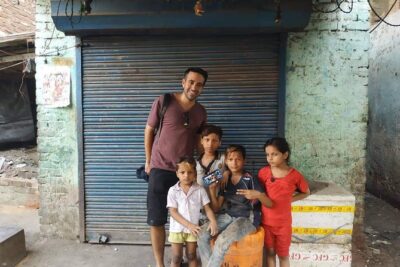
Private Jodhpur Blue City Walking Tour with Guide
Read our review →Browse the lists this tour appears in