Reviewed · FORTS AND PALACES
Bangalore: Palace, Temples, Fort & Markets Walking Tour
Old Bangalore rewards curious walkers. This three-hour tour links Tipu Sultan’s teak palace with a Vishnu temple, Bangalore Fort, and the flower-filled lanes of KR Market. I like the strong mix of royal history and ordinary city life, and I like that a small group of up to 10 people makes it easier to ask questions. The main tradeoff is simple: you cover a lot in three hours, and crowded streets can make the pace feel quick.
You begin at Tipu Sultan’s Summer Palace and finish at the Shri Adinath Jain Shwetamber Mandir. Along the way, guides such as Vijay, Vasuki, Vanaja, Raghu, and Ramesh bring local history to life with stories about Kempegowda, Tipu Sultan, British-era Bangalore, religion, trade, and the city’s rise into India’s technology center. I would plan on uneven walking, narrow lanes, traffic, cows, and plenty of noise.
In This Review
- Key points to know before you book
- Why old Bangalore makes a better introduction than a bus ride
- Tipu Sultan’s Summer Palace and the opening chapter
- Bangalore Fort: stone, power, and a short visit
- KR Market brings the city to life
- Hindu worship at the Vishnu temple
- The Jain temple finish offers a quieter ending
- What the guides add to the experience
- Walking conditions, timing, and transport
- Is $32 a fair price?
- Who should book this Bangalore walking tour?
- Final verdict: book it for the contrast
- FAQ
- How long does the Bangalore walking tour last?
- Where does the tour begin?
- Where does the tour finish?
- Which sites are included?
- Is transport included?
- What should I wear?
- Is the tour suitable for people who dislike crowds?
- What language is the tour offered in?
Key points to know before you book
- Tipu Sultan’s Summer Palace begins the story: See a 230-year-old palace built from teak, a striking reminder of Bangalore’s royal past.
- KR Market is the sensory high point: Fruit, vegetables, flowers, buyers, sellers, workers, vehicles, and cows crowd into a vivid slice of daily life.
- Temples require respectful clothing: Cover your legs and shoulders, avoid short or sleeveless clothing, and bring a headscarf and spare socks.
- The small group matters: The maximum group size is 10, though solo participants may sometimes receive a private-style experience.
- The tour is good value for a short city introduction: At $32, you get a guide, monument and temple entries, and a useful first look at old Bangalore.
- Transport is extra: Hotel pickup and return can be arranged for an additional fee, but it is not part of the tour price.
Why old Bangalore makes a better introduction than a bus ride
Modern Bangalore is spread out and hard to read from a vehicle. Its old center is different. Streets tighten, shops spill outward, temple bells compete with horns, and historic buildings appear beside working markets. This walking route lets you see how the city grew rather than simply ticking off isolated sights.
The tour connects several layers of Bangalore’s past. Kempegowda helped shape the early city in the 16th century. Tipu Sultan left his mark in the 18th century. The British later laid foundations for the modern city, which eventually became known for technology and software.
That story gives the walk a useful shape. You are not just looking at an old palace, then a fort, then a market. You are following the changes that turned a royal and military center into a huge working city.
I especially like the contrast between formal monuments and the street scenes between them. The buildings offer history and decoration, but the market shows the city doing its daily work. If you have only a few hours in Bangalore, that contrast gives you more than a string of grand facades.
More Forts and Palaces in Bangalore
- Tipu Palace + Koté Vishnu + Fort + KR Market + Jain Temple = Bengaluru Pété Walk
★ 5.0 · 150 reviews - Old Bangalore Historical Walk thro Palace, Temples, Fort & Market
★ 5.0 · 60 reviews - Bangalore: Walking Tour of Fort, Palaces, and Market
★ 5.0 · 58 reviews
Tipu Sultan’s Summer Palace and the opening chapter
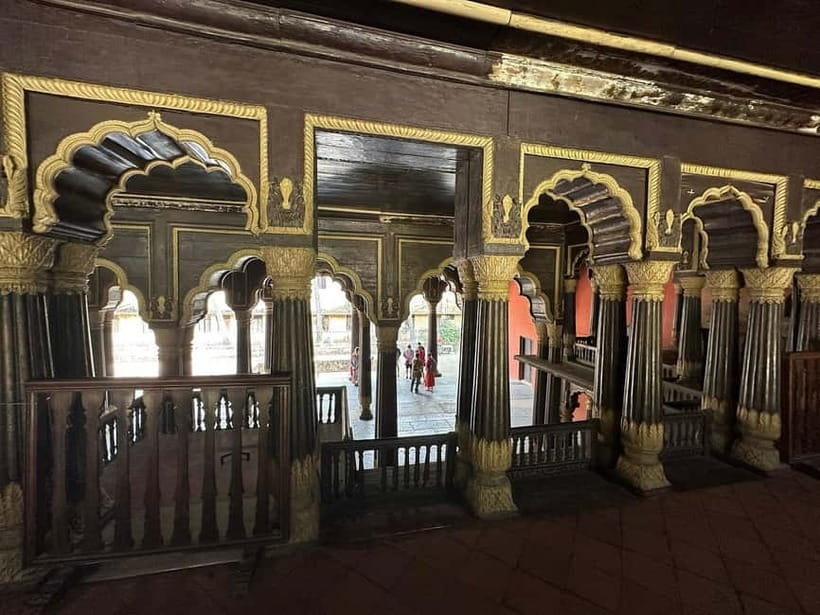
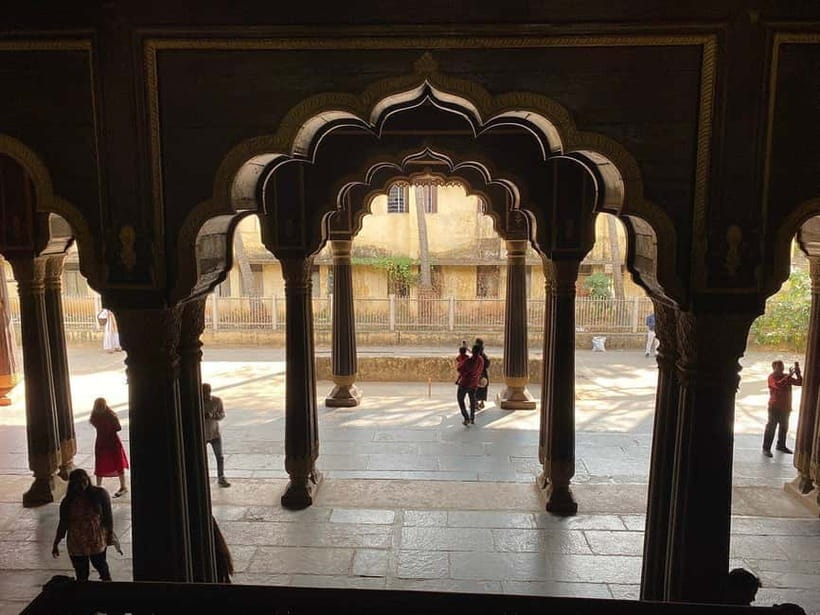
The meeting point is at the gates of Tipu Sultan’s Summer Palace. The building is about 230 years old and made largely from teak wood. That material gives the palace a different feel from the stone forts and temples later in the walk.
Your guide uses this first stop to explain the period between the 16th and 18th centuries, including the role of Kempegowda and Tipu Sultan. The palace is not a huge complex, so the value comes from the explanation and the details you might otherwise miss.
This is also a sensible place to start because it offers a quiet historical frame before you enter the city streets. Guides have been praised for combining dates with stories and for answering questions instead of delivering a fixed speech. Raghu, in particular, has been described as good at mixing historical facts, folklore, and storytelling.
Allow yourself time to look at the woodwork and structure. The palace is an architectural stop, but it also helps explain why Tipu Sultan remains such a central figure in Bangalore’s story.
Bangalore Fort: stone, power, and a short visit

From the palace, the tour continues to Bangalore Fort, where you spend about 30 minutes. The fort dates back to the 16th century and was later renovated, giving it more than one historical layer.
Do not expect a full morning inside a vast fortress. This is a compact stop within a route that has several destinations. I see that as a benefit if you want variety, but it may feel brief if military architecture is your main interest.
The guide’s role is important here. Without context, an old fort wall can be easy to glance at and forget. With a good explanation, it becomes part of the city’s political story and a link between the early settlement and later rulers.
Vijay has earned praise for explaining the history and religion of each place in clear terms, while also pointing out good spots for photographs. That combination is useful at the fort, where a guide can help you notice details and frame the visit rather than simply move you onward.
KR Market brings the city to life
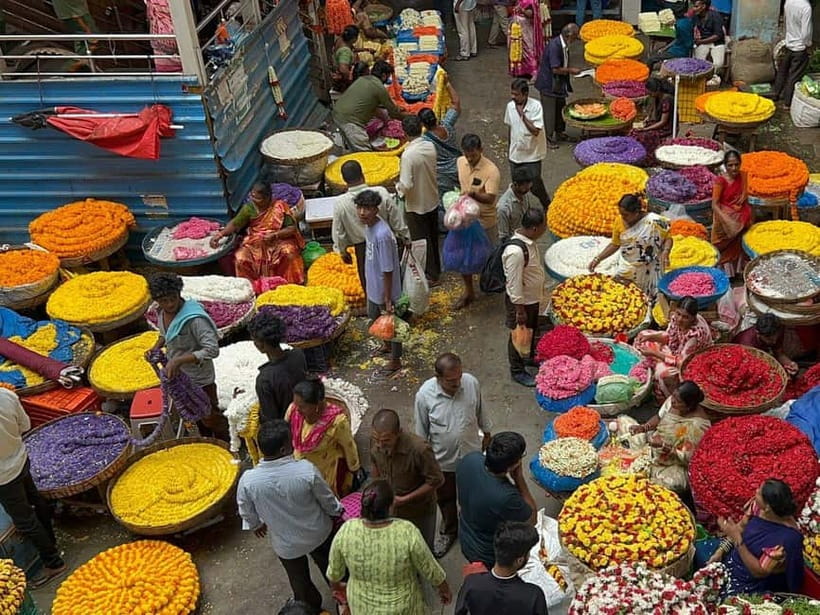
The market is the tour’s most intense section. You spend roughly 30 minutes walking through KR Market, an area filled with fruit, flowers, vegetables, sellers, buyers, vehicles, coolies, workers, walkers, and onlookers.
This is not a polished shopping district arranged for sightseeing. It is a working market, and that is precisely why it is valuable. You see how goods move, how people negotiate space, and how commerce fits into the rhythm of the old city.
The flower section can be especially memorable. Small flowers are gathered into large decorations on threads, creating color and texture in a setting that is otherwise noisy and crowded. The smells shift as you walk, with produce, flowers, traffic, and nearby shops all contributing to the experience.
The market can also be the hardest part of the tour. Sunday visits may be especially crowded, and the narrow streets require attention. Stay close to your guide, keep your belongings secure, and expect to walk at the group’s pace.
This is where guides such as Ramesh and Vijay have been praised for keeping groups together and speaking with local sellers when visitors had questions. A good guide also gives you time to look and shop instead of rushing you past every stall. One guide even helped a participant find spices and silk, while another helped arrange a ride back to the hotel after the walk.
You should not expect every market visit to become a shopping trip. The main point is to see the working city. Still, if you want to buy something, bring rupees and ask your guide for help. The supplied details specifically mention spices, silk, scarves, and coffee as parts of some participants’ extended experiences, but purchases and food are not included in the tour price.
More Markets and Bazaars in Bangalore
- Bengaluru Pete City Market Half-Day Walking Tour
★ 5.0 · 163 reviews - Experience Bangalore – City Tour, Authentic Food & market (Food/Culture/History)
★ 5.0 · 156 reviews - Bangalore : Evening Food Street Walk and Market Visit
★ 5.0 · 34 reviews - Bangalore Evening Food Street Walk and Market Visit
★ 5.0 · 32 reviews
Hindu worship at the Vishnu temple
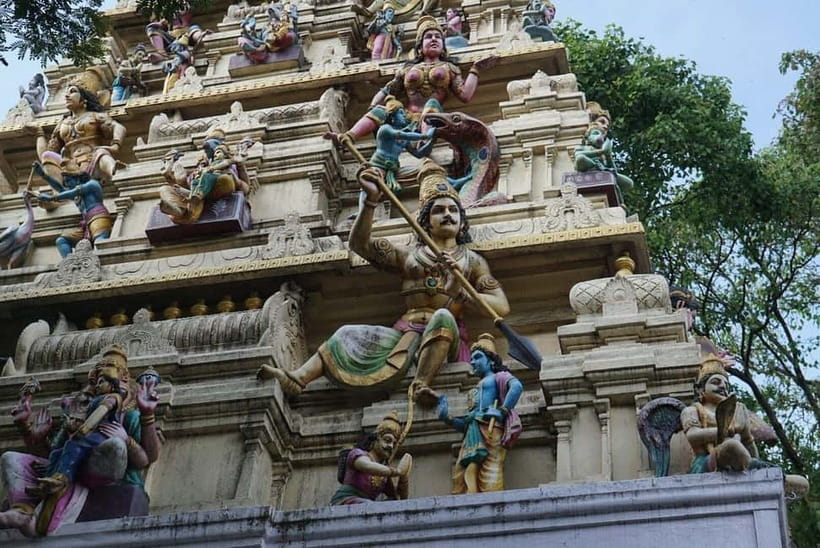
The route includes a 320-year-old Vishnu temple, where you can watch Hindu devotees offer prayers. This is a valuable part of the walk because it shifts the focus from rulers and buildings to living religious practice.
You need to behave quietly and respectfully. The point is to observe, not to treat worship as a performance. Your guide can explain what you are seeing, but temple routines and access may change with the season or operating hours.
One important detail needs clarification before you go: the general program includes entry to the Vishnu temple, but one participant chose not to enter the temples and therefore had a shorter experience. If you decide to remain outside, the tour can still work, but you will miss part of the intended visit.
Dress carefully from the start. Cover your shoulders and legs, and avoid short skirts, sleeveless shirts, skirts that do not provide suitable coverage, and see-through clothing. A headscarf is listed among the items to bring. Spare socks are also recommended, since temple visits may require you to remove footwear or walk in areas where socks are useful.
The Jain temple finish offers a quieter ending
The walk ends at the Shri Adinath Jain Shwetamber Mandir. After the market’s noise and movement, the Jain temple provides a calmer final stop.
The appeal here is the quietude, carvings, and inlay work. It gives the route a gentle change of pace and adds another religious tradition to the experience. The Vishnu temple shows active Hindu worship, while the Jain temple offers a more restrained setting for appreciating design and belief.
Again, modest clothing is essential. Temple access and opening hours can vary by season, so you should treat the exact order and length of the stops as flexible.
Finishing here also gives the tour a clear progression: palace, fort, market, and temples. You see power, defense, commerce, and faith within a short walk. That range is the strongest reason to choose this experience over a tour that focuses only on monuments.
What the guides add to the experience
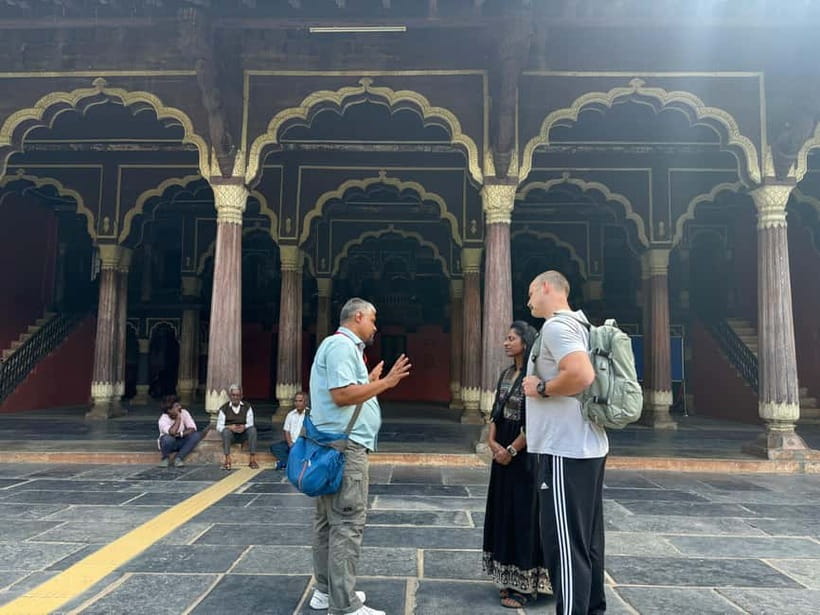
The guide can make or break a city walk, and the praise for this tour centers heavily on the people leading it. Vijay is often described as friendly, careful with safety, and strong on history, religion, and local customs. Vasuki is praised for kindness, humor, and easy company. Vanaja receives credit for looking after the whole group and making the route interesting.
Raghu’s strength appears to be storytelling and clear explanations. Kamakshi has been praised for combining facts with stories and for adapting to a participant’s interests. Ramesh is known for calm navigation through crowded areas, while Varun has been praised for enthusiasm about temples and Indian culture.
That range suggests a locally run experience with several guides rather than one fixed personality. Your exact style may vary. Some guides may focus more on historical detail, while others may spend more time helping with photographs, shopping, or practical navigation.
A few practical points matter. English is the listed language, but one participant found some explanations slightly difficult to understand. Most of the available feedback describes the guides as clear and easy to follow, yet accents and street noise can still make concentration necessary.
The strongest guides do more than recite facts. They help you cross busy areas, answer questions, keep the group together, speak with sellers, and adjust when you want more time at a particular stop. For a first visit to Bangalore, that local help has real value.
Walking conditions, timing, and transport
The advertised duration is three hours. That is enough for a focused introduction, not enough for a slow inspection of every monument or a long market-shopping session.
The route is described as light walking by one participant, but the official guidance says to prepare for a lot of walking, uneven roads, crowded lanes, and close quarters. Both statements can be true. The physical effort may not be extreme, but the city environment demands attention and steady movement.
Wear comfortable walking shoes. Keep your clothing cool and modest, carry water, and leave room in your schedule for the unexpected. Temple visits, crowd levels, and monument hours can affect the pace.
The tour does not include food, drinks, or transport. You meet at the palace gates, and you make your own way there unless you pay extra for hotel transport. A return service is also available for an additional fee.
That paid transport may be worth considering if you are new to Bangalore, staying far from the old center, or finishing the walk tired and unsure how to navigate back. Several guides have also helped participants reach hotels or find the Metro, but that personal assistance should not be treated as included transport.
Is $32 a fair price?
At $32 per person, the tour offers solid value for a three-hour experience. The fee includes a live English-speaking guide, entry to Tipu Sultan’s Summer Palace, the Vishnu temple, Bangalore Fort, and the Jain temple, plus the guided market walk.
The value is strongest if you want orientation and context. You could visit some of these places independently, but the old center can be confusing, and the market is not always easy to read from the outside. A guide who explains the city’s past and helps you move safely through the crowds adds something you cannot get from a quick photo stop.
The price is less attractive if you want a slow, private tour with long visits inside each building. Entry hours can vary, crowds can affect the pace, and the market section is designed for observation rather than a guaranteed shopping session.
Still, the small group limit of 10 helps. Solo participants have sometimes ended up with a private-style outing, while larger groups remain manageable. The combination of several major stops and everyday street life makes the fee reasonable for a short first look at Bangalore.
Free cancellation up to 24 hours before the start and reserve-now, pay-later booking also make it easier to fit into a changing schedule. Those policies do not improve the sightseeing itself, but they reduce the risk of committing too early.
Who should book this Bangalore walking tour?
I would choose this tour if you have one day or only a few spare hours in Bangalore and want a strong first impression. It suits solo visitors, couples, small groups, and anyone interested in the meeting point between history, religion, and ordinary city work.
It is also a good match for photographers. Guides have helped with photo spots, and the market offers flowers, produce, architecture, people, and motion in close quarters.
You should think twice if you dislike crowds, noise, uneven streets, or religious-site dress rules. The market is not a calm stroll, and the route is not designed for someone who wants only grand palaces and quiet gardens.
Final verdict: book it for the contrast
I recommend the Bangalore Palace, Temples, Fort and Markets Walking Tour for a compact introduction to the city’s old core. Its best feature is the contrast: teak palace, old fort, active temple, Jain carvings, and a market where Bangalore’s daily business unfolds around you.
Book it early in your visit so the history and street layout help you make sense of the rest of the city. Wear proper clothing, bring socks and a headscarf, stay ready for crowds, and confirm your meeting and transport plans. If you want a polished sightseeing loop, this may feel hectic. If you want to see how old Bangalore actually works, three hours here should be well spent.
FAQ
How long does the Bangalore walking tour last?
The tour lasts three hours. Starting times vary, so you should check availability when booking.
Where does the tour begin?
The tour begins at the gates of Tipu Sultan’s Summer Palace. The guide waits there for the group.
Where does the tour finish?
The walk finishes at the Shri Adinath Jain Shwetamber Mandir.
Which sites are included?
The tour includes Tipu Sultan’s Summer Palace, a Vishnu temple, Bangalore Fort, the Shri Adinath Jain Shwetamber Mandir, and KR Market.
Is transport included?
No. Transport is not included in the $32 price. Hotel transport to the meeting point and back can be arranged for an additional fee.
What should I wear?
Cover your shoulders and legs. Avoid short skirts, sleeveless shirts, skirts that do not provide suitable coverage, and see-through clothing. Bring a headscarf and spare socks.
Is the tour suitable for people who dislike crowds?
The route passes through crowded and narrow streets, especially around the market. You should be comfortable walking through busy areas and staying close to the group.
What language is the tour offered in?
The tour is offered in English with a live guide. The group is limited to 10 participants.
More Walking Tours in Bangalore
- Street Food walking tour in Bangalore with a food evangelist
★ 5.0 · 83 reviews - See Bangalore through my eyes (Cultural / Historical / Walking Tour)
★ 5.0 · 60 reviews - Bangalore Heritage Walk – Private Walking tour
★ 5.0 · 47 reviews - Guided Walk through Bengaluru’s Ejipura Slums
★ 5.0 · 24 reviews
More Temples and Religious Sites in Bangalore
- Best of Mysore, UNESCO Somnathpur Temple & Srirangapatna Day Tour
★ 5.0 · 384 reviews - World heritage Somnathpur sculptures and Talakadu temple mystery
★ 5.0 · 79 reviews - World heritage site of Belur & Halebid with temple sculptures
★ 5.0 · 24 reviews - Bandipur Tiger Reserve with Somnathpur Temple Tour
★ 5.0 · 21 reviews
Just added in Bangalore
- Taj Mahal sunrise and Agra Overnight Tour from Bangalore★ 5.0 · 15 reviews
- Bandipur Tiger Reserve with Somnathpur Temple Tour★ 5.0 · 21 reviews
- The story of Tipu Sultan, an immersive walking tour in Bangalore★ 5.0 · 11 reviews
- Bengaluru to Agra Taj Mahal Same Day Trip with Flights and lunch★ 5.0 · 16 reviews
- Sacred Bull walking tour in Bangalore with guide★ 5.0 · 15 reviews
- See Bangalore through my eyes (Cultural / Historical / Walking Tour)★ 5.0 · 60 reviews
- Private Tour: Palaces of Bangalore★ 4.0 · 15 reviews
- Story of Mysore Silk tour from Bangalore to experience Silk Weaving & Palace★ 5.0 · 28 reviews
Forts and Palaces, compared.

Same Day Taj Mahal, Agra Fort & Baby Taj Tour from Delhi by Car
Read our review →
Full Day Taj Mahal, Agra Fort & Baby Taj Tour from Delhi by Car
Read our review →
Same Day Taj Mahal, Fort & Baby Taj Tour from Delhi by Car
Read our review →

Sunrise Taj Mahal, Agra Fort & Baby Taj Tour from Delhi by Car
Read our review →
Taj Mahal Sunrise, Baby Taj & Agra Fort Day Tour
Read our review →
Skip-the-Line Taj Mahal & Agra Fort Private Tour
Read our review →