Reviewed · FORTS AND PALACES
Old Bangalore Historical Walk thro Palace, Temples, Fort & Market
Old Bangalore comes alive on foot. This three to four hour walk links Tipu Sultan’s 230-year-old teak palace, a Hindu temple, a surviving section of Bangalore Fort, two busy market areas, and a peaceful Jain temple. I like the way the experience mixes major sights with ordinary street life, and I especially like that a government-approved licensed guide leads the walk rather than leaving you to decode the city alone.
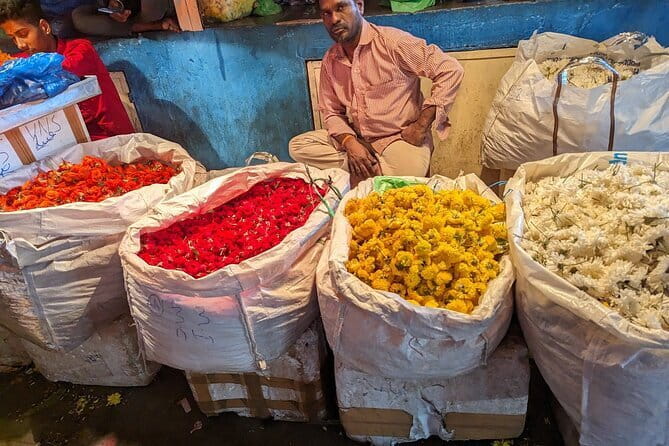
The market visit is a major strength. You see vendors, buyers, porters, cows, bicycles, flowers, fruit, vegetables, and traffic all sharing the same tight streets. I also appreciate the small group limit of 10 people, which should make it easier to hear the guide and move through crowded lanes. The main thing to consider is the walking environment: Old Bangalore is noisy, crowded, and active, not a polished heritage district.
The route begins at Tipu Sultan’s Summer Palace and ends near Chickpet Metro station at the Shri Adinath Jain Shwetamber Mandir. That one-way design is useful if you want to continue exploring central Bangalore afterward. Hotel transport is available for an extra fee, but lunch, gratuities, and transport are not included in the listed price of $22.38 per person.
In This Review
- Five details that shape the experience
- Why Old Bangalore works best on foot
- Tipu Sultan’s Summer Palace and the wooden beginning
- Kote Venkataramana Temple and living Hindu practice
- Bangalore Fort and the small surviving section
- KR Market, where the city turns up the volume
- The Jain temple and a quieter final stop
- The guide can make or break the walk
- Price, timing, and what you receive
- Who should book this Old Bangalore walk
- Should you book it?
- FAQ
- How long does the Old Bangalore Historical Walk last?
- How much does the tour cost?
- How many people can join the tour?
- Where does the walk begin?
- Where does the walk end?
- Are monument entry fees included?
- Is hotel pickup included?
- What should I wear for the temples?
- Can I cancel for a full refund?
Five details that shape the experience
- A 230-year-old teak palace: Tipu Sultan’s Summer Palace gives you an early look at Bangalore’s royal and Islamic architectural past.
- Two different religious traditions: You visit the Hindu Kote Venkataramana Temple and the Jain Shri Adinath Shwetamber Mandir.
- Only part of Bangalore Fort remains: The fort stop explains how a 16th-century mud fort became a stone structure under Hyder Ali.
- One hour in KR Market: This is the loudest, most physical part of the walk, with commerce happening all around you.
- A maximum of 10 participants: The small group format suits anyone who wants room for questions and clearer contact with the guide.
- A licensed local guide: Guides such as Raghavendra, Vanaja, and the husband-and-wife team have been praised for explanations, care, photography advice, and help planning the rest of the day.
Why Old Bangalore works best on foot
Modern Bangalore can feel spread out, but the older core is packed with places that make sense when seen together. Palaces, temples, fort walls, shops, and markets sit close enough to form a story about how the city developed. This walk does not treat history as a series of isolated monuments. It shows how historic buildings still sit beside working streets.
You should expect a changing pace. The palace and fort offer more space for listening. The market asks you to watch your footing, keep close to the group, and pay attention to the guide while the city carries on around you. The Jain temple slows things down again with its quiet interior and detailed religious art.
The experience is designed for people who want context, not just photographs. A guide can point out why a building looks the way it does, explain the religious practices you are seeing, and help you understand the role of the market in daily life. Several people specifically valued the insider stories, the detailed explanations, and practical tips for taking pictures.
More Forts and Palaces in Bangalore
- Tipu Palace + Koté Vishnu + Fort + KR Market + Jain Temple = Bengaluru Pété Walk
★ 5.0 · 150 reviews - Bangalore: Palace, Temples, Fort & Markets Walking Tour
★ 4.9 · 97 reviews - Bangalore: Walking Tour of Fort, Palaces, and Market
★ 5.0 · 58 reviews
Tipu Sultan’s Summer Palace and the wooden beginning
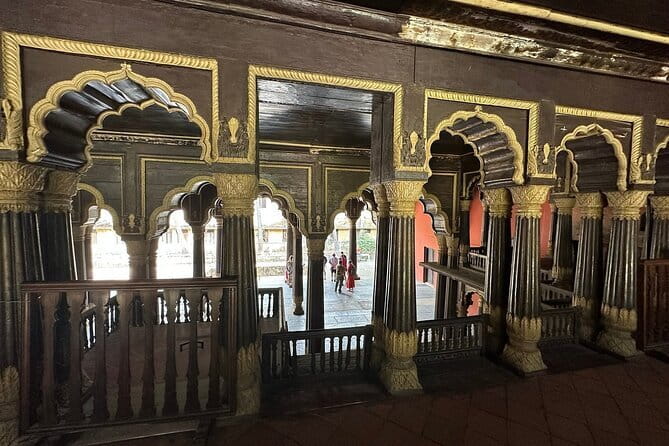
The first stop is Tipu Sultan’s Fort and Palace, also called Tipu Sultan’s Summer Palace, at KR Market. You meet the guide here before entering the 230-year-old palace, which is built mainly from teak wood and follows Islamic architectural traditions.
The palace is not a giant royal complex. Its appeal comes from the material, age, and design. The teak construction gives the building a different character from the stone monuments that follow. The guide’s role matters here because a quick look at wooden columns and decorative details does not explain much on its own. With context, you can better understand the palace as part of the city’s older royal and military story.
The scheduled time is about 45 minutes, with entry included. That is enough for a focused visit without making the opening stop feel rushed. You can listen to the explanation, look at the architectural features, and take photographs before moving to the adjoining temple.
If you are hoping for a large palace filled with many rooms, displays, and grand collections, adjust your expectations. This is a compact historic building, and its value is in its age, teak construction, and place in the route. It works well as a first stop because it gives you a calm introduction before the streets become more intense.
Kote Venkataramana Temple and living Hindu practice
The Kote Venkataramana Temple sits next to Tipu’s Palace. It was built in 1690 by Chikkadevaraja Wodeyar and is known for stone sculptures depicting figures from Indian mythology.
This visit is not only about carved stone. You may also see prayers being offered by devout Hindus, which gives the stop a sense of present-day religious life. The best approach is respectful observation. You are entering an active place of worship, not a museum arranged for sightseeing.
The temple visit lasts about 30 minutes and has no separate admission charge. The time is short but suitable for seeing the carvings, listening to the guide, and understanding the temple’s place beside the palace. The contrast is useful: the palace reflects one architectural tradition, while the temple presents a different religious and artistic language within a few steps.
Dress rules matter. Your legs and shoulders should be covered, and women are asked to carry a scarf. I would treat this as a requirement rather than a suggestion, since the walk includes two temples. Wear clothing that lets you enter both sites without having to improvise.
Bangalore Fort and the small surviving section
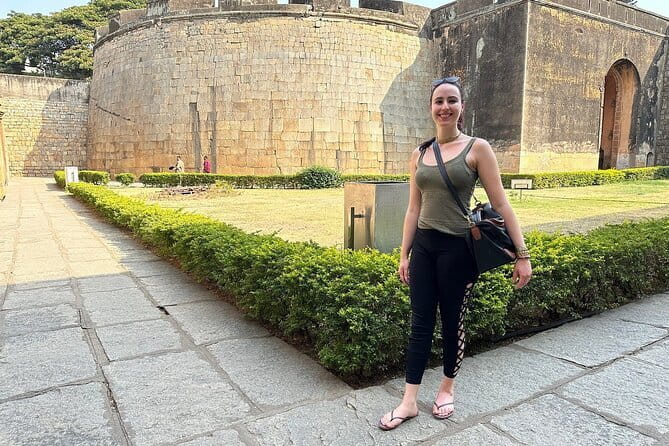
The third stop introduces the military side of Old Bangalore. Kempegowda, regarded as the founder of Bangalore, built a mud fort in the 16th century. Hyder Ali rebuilt it in stone in the 1760s.
Only about 5 percent of the fort remains today, so this is not a full fortress visit. That limitation is important. You are seeing a surviving fragment, not walking through an intact walled city. Still, the stop helps connect Bangalore’s early foundation with its later military and political importance.
The fort area is described as neatly maintained and open to visitors. You have around 30 minutes here. The guide can give the remaining section meaning, especially if you are not already familiar with Kempegowda, Hyder Ali, or Tipu Sultan.
I like the fort stop because it keeps the tour from becoming only an architecture walk. The route now covers royal residence, religious practice, and defense. The short visit also keeps the overall pace moving toward the market, where history gives way to commerce.
More Markets and Bazaars in Bangalore
- Bengaluru Pete City Market Half-Day Walking Tour
★ 5.0 · 163 reviews - Experience Bangalore – City Tour, Authentic Food & market (Food/Culture/History)
★ 5.0 · 156 reviews - Bangalore : Evening Food Street Walk and Market Visit
★ 5.0 · 34 reviews - Bangalore Evening Food Street Walk and Market Visit
★ 5.0 · 32 reviews
KR Market, where the city turns up the volume

Sri Krishnarajendra Market, commonly known as KR Market, is the longest and most sensory part of the walk. You spend about an hour in and around the market, seeing vendors, workers, porters, hawkers, buyers, cows, dogs, bicycles, vehicles, and pedestrians sharing limited space.
This is where the walk feels most immediate. You are not simply looking at an old building. You are watching people buy, sell, carry, negotiate, and move through one of Bangalore’s working commercial centers. The smells and sounds change from one stretch to the next, and the guide helps you notice what you might otherwise miss.
The market can be a lot to take in. It is crowded and noisy, and you may need to stay alert around traffic and moving people. That is not a flaw in the experience, but it is a real consideration. If you prefer quiet streets, open spaces, or a carefully controlled sightseeing setting, this hour may feel demanding.
For me, this is the part that gives the tour its value. Palaces and forts can be visited in many cities, but a market shows how a place functions now. You get a more useful sense of Bangalore by seeing the working city beside its historic monuments.
The guide can also help with photography. Vasuki has offered practical advice about taking pictures, and that sort of help is useful in a market where scenes change quickly. Ask before photographing people, shops, or religious activity, and follow the guide’s lead on what is appropriate.
The Jain temple and a quieter final stop
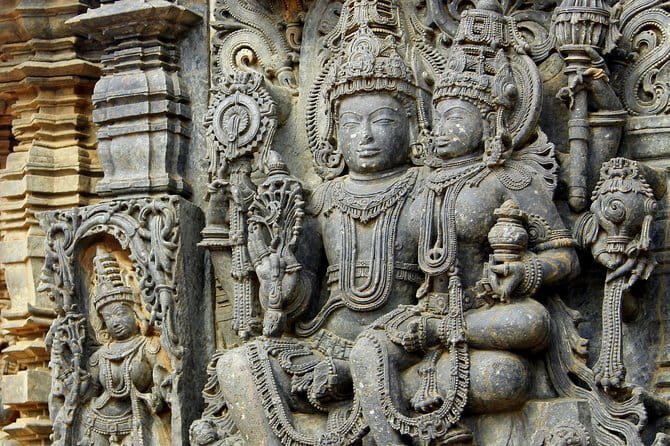
The route ends at the Shri Adinath Jain Shwetamber Mandir on Chickpet Road. The temple visit is scheduled for about an hour, making it the longest single monument stop after the market.
Jainism originated in India and has a history of at least 2,500 years. It is associated with non-violence and vegetarianism, among other principles. The guide introduces the faith and helps you understand the meaning behind the temple’s quiet atmosphere, carvings, and inlay work.
This stop provides a welcome change in tone. After the noise and movement of KR Market, the temple offers time to slow down and look closely. The contrast is part of the route’s design: the city does not become less intense, but you finish with a place devoted to stillness and careful detail.
Again, dress modestly, with your legs and shoulders covered. The end point is close to Chickpet Metro station, which is convenient if you plan to continue independently. Since the tour does not return you to the starting point, check your onward plan before booking. That one-way finish is useful, but it is not ideal if you need to return directly to your hotel.
The guide can make or break the walk
A route like this depends heavily on the person leading it. The local guide has to explain architecture, religion, politics, street life, and practical movement through crowded areas without turning the walk into a lecture.
The strongest guide feedback points to several useful qualities. Raghavendra has been praised for answering questions and explaining the markets, temples, and history clearly. Vanaja has been described as caring and reassuring while walking through the city. A husband-and-wife guide team has also been praised for their helpful attitude and personal investment in the experience.
Vasuki handles pre-tour communication and has provided photography tips. After the walk, Raghavendra helped one participant plan the next part of the day. That kind of local assistance can be especially helpful if you have only a few hours in Bangalore or are visiting during a work trip.
The small-group limit helps. With no more than 10 people, you have a better chance of hearing explanations and asking questions than on a large coach-style outing. The group still needs to stay together in the market, but the format should feel more personal.
Price, timing, and what you receive
At $22.38 per person, the walk is fairly priced for a three to four hour guided experience that includes entry fees at the monuments. You are paying for a licensed guide, several historic and religious stops, and the time needed to move through one of Bangalore’s oldest areas.
The value is strongest if you are short on time. Instead of arranging separate visits to a palace, temple, fort, market, and Jain shrine, you see them in one connected outing. The guide also adds value by explaining what you are seeing and helping you manage the cultural details.
The price does not include lunch, tips, or transport. Hotel pickup and return can be arranged for an additional fee, but you need to provide your hotel details so the operator can propose the cost. The meeting point is Tipu Sultan’s Summer Palace, and the tour ends at the Jain temple near Chickpet Metro station.
The walk lasts approximately three to four hours, although the listed stops add up to several hours before allowing for movement between them. Plan for a substantial morning or afternoon rather than a quick one-hour introduction. Confirmation is provided at booking, and free cancellation is available if you cancel at least 24 hours before the local start time.
Who should book this Old Bangalore walk
I would recommend this experience if you want a compact introduction to the city’s older core and prefer seeing daily life alongside formal attractions. It is especially suitable for first-time visitors, people on a short work trip, and anyone who wants a guide to explain religious customs and historic buildings.
It also suits curious photographers, provided you are comfortable asking before taking pictures and keeping pace in crowded areas. The market offers plenty to observe, while the palace, fort, and temples provide more structured subjects.
You should think twice if you dislike crowds, traffic, noise, or walking on busy streets. The tour does not promise a relaxed heritage stroll. It takes you into active parts of Bangalore, and the market is deliberately part of the experience.
Families and older participants may want to consider their comfort with three to four hours on foot. The information says most people can participate, but it does not describe special accessibility arrangements. If you need hotel transport, ask about the extra fee before the tour.
Should you book it?
Book this walk if you want history with everyday Bangalore around it. The strongest feature is the mix: a wooden palace, a Hindu temple, a fort remnant, a working market, and a Jain temple, all tied together by a local guide.
The $22.38 price offers good value when you count the included monument entry and the amount of ground covered. Just arrive dressed for temple visits, prepare for market noise, and remember that you finish near Chickpet Metro station rather than back at the palace.
If your ideal city tour means polished streets and quiet galleries, choose something gentler. If you want a direct, sensory look at how old and present-day Bangalore share the same streets, this is a strong choice.
FAQ
How long does the Old Bangalore Historical Walk last?
The experience lasts approximately three to four hours.
How much does the tour cost?
The listed price is $22.38 per person.
How many people can join the tour?
The maximum group size is 10 participants.
Where does the walk begin?
The walk begins at Tipu Sultan’s Summer Palace, 42 Tippu Sultan Palace Road, Kamalanagar, Chamrajpet, Bengaluru.
Where does the walk end?
It ends at Shri Adinath Jain Shwetamber Mandir on Chickpet Road, near Chickpet Metro station.
Are monument entry fees included?
Yes. Entry fees at all monuments are included.
Is hotel pickup included?
No. Hotel transport to and from the walk venue is not included, but it can be arranged for an additional fee.
What should I wear for the temples?
Your legs and shoulders should be covered. Women should also carry a scarf.
Can I cancel for a full refund?
Yes, if you cancel at least 24 hours before the experience start time. Cancellations made less than 24 hours beforehand are not refunded, and changes within that period are not accepted.
More Temples and Religious Sites in Bangalore
- Best of Mysore, UNESCO Somnathpur Temple & Srirangapatna Day Tour
★ 5.0 · 384 reviews - World heritage Somnathpur sculptures and Talakadu temple mystery
★ 5.0 · 79 reviews - World heritage site of Belur & Halebid with temple sculptures
★ 5.0 · 24 reviews - Bandipur Tiger Reserve with Somnathpur Temple Tour
★ 5.0 · 21 reviews
Just added in Bangalore
- Taj Mahal sunrise and Agra Overnight Tour from Bangalore★ 5.0 · 15 reviews
- Bandipur Tiger Reserve with Somnathpur Temple Tour★ 5.0 · 21 reviews
- The story of Tipu Sultan, an immersive walking tour in Bangalore★ 5.0 · 11 reviews
- Bengaluru to Agra Taj Mahal Same Day Trip with Flights and lunch★ 5.0 · 16 reviews
- Sacred Bull walking tour in Bangalore with guide★ 5.0 · 15 reviews
- See Bangalore through my eyes (Cultural / Historical / Walking Tour)★ 5.0 · 60 reviews
- Private Tour: Palaces of Bangalore★ 4.0 · 15 reviews
- Story of Mysore Silk tour from Bangalore to experience Silk Weaving & Palace★ 5.0 · 28 reviews
Forts and Palaces, compared.

Same Day Taj Mahal, Agra Fort & Baby Taj Tour from Delhi by Car
Read our review →
Full Day Taj Mahal, Agra Fort & Baby Taj Tour from Delhi by Car
Read our review →
Same Day Taj Mahal, Fort & Baby Taj Tour from Delhi by Car
Read our review →

Sunrise Taj Mahal, Agra Fort & Baby Taj Tour from Delhi by Car
Read our review →
Taj Mahal Sunrise, Baby Taj & Agra Fort Day Tour
Read our review →
Skip-the-Line Taj Mahal & Agra Fort Private Tour
Read our review →