
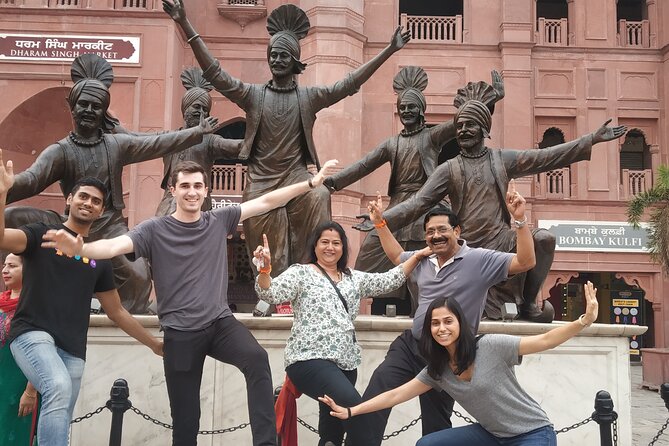
Reviewed · WALKING TOURS
Amritsar Heritage Walking Tour
Amritsar reveals itself one lane at a time. This walking tour links major sites with old neighborhoods, Sikh stories, local customs, and the city’s everyday rhythm. I like the way it begins at the Partition Museum, then moves toward the Golden Temple area instead of treating Amritsar as only a quick photo stop. I also like the chance to enter narrow lanes and visit places you might miss on your own. The main consideration is that the historical detail can vary by guide, and one published experience found the treatment of some subjects too light or too dependent on popular stories.
Guides such as Prerit, Hardik, and Hardik’s fellow storyteller Prarit have been praised for clear English, warm manners, punctual starts, and an easy willingness to answer questions. This is a group walk of up to 20 people, not a private tour, so you should expect a social pace and occasional pauses while the guide gathers the group.
In This Review
- Key things to know before you book
- Starting at the Partition Museum in Town Hall
- Saragarhi Memorial Gurudwara and the story of 21 soldiers
- Maharaja Ranjit Singh’s statue and the Punjab Empire
- Jallianwala Bagh and the weight of 13 April 1919
- Udasin Akhara Sangal Wala Road and Amritsar’s religious life
- Guru Bazar, Baba Bohar, and the old city lanes
- Finishing outside the Golden Temple
- What the guide quality means for your experience
- Timing, walking effort, and practical planning
- Is $16.66 good value?
- Who should book the Amritsar Heritage Walking Tour?
- FAQ
- How long is the Amritsar Heritage Walking Tour?
- Where does the tour start and finish?
- Is the Golden Temple entrance included?
- Are admission tickets included?
- How many people can join the tour?
- Can I cancel for a full refund?
Key things to know before you book
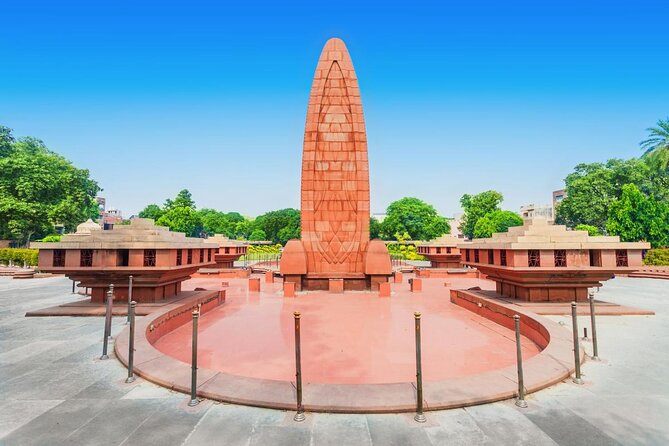
- It begins with Partition memory: The first stop is Amritsar’s Partition Museum in the Town Hall building, where the 1947 division of India and Pakistan is explained through personal stories and historical material.
- It ends outside the Golden Temple: The route finishes at Sri Harmandir Sahib, giving you a useful orientation point for a later or same-day visit.
- Old lanes are the real attraction: Guru Bazar, narrow alleys, Baba Bohar, and the 150-year-old banyan tree offer a close look at local life beyond the headline sights.
- The walk connects Sikh history with city life: You hear about Sikh soldiers, Maharaja Ranjit Singh, religious institutions, business communities, and the way Amritsar grew.
- Entry fees are separate: The guide is included, but admission to the Partition Museum and Jallianwala Bagh is not.
- The price is modest for a first look: At $16.66 per person, you are paying mainly for local direction, stories, and access to places that are easy to overlook.
Starting at the Partition Museum in Town Hall
The walk starts at the Partition Museum, located in Amritsar’s Town Hall building on Hall Road. This is a strong opening because it places the city’s modern identity beside the enormous upheaval of 1947, when the division of India and Pakistan affected more than 18 million people.
You spend about 10 minutes here as part of the planned route, and admission is not included. That short timing matters. This is an introduction rather than a full museum visit, so I would not book the walk expecting an extended examination of every exhibit.
The guide’s role here is to provide a frame for the rest of the morning or afternoon. Partition is not treated as an isolated event. It helps explain why Amritsar, so close to the modern border, carries such a strong sense of memory, loss, movement, and community.
If this subject matters greatly to you, allow extra time at the museum before or after the walk. The tour gives you a starting point, while a separate visit lets you read and reflect at your own pace.
More Walking Tours in Amritsar:
- 2 Days Tour! City Tour , Village Tour, Food n Heritage Walk Tour
★ 5.0 · 18 reviews - Amritsar Heritage Walk: “Back in Time”
★ 4.9 · 16 reviews - Guided Heritage Walk of Amritsar
★ 5.0 · 13 reviews
Saragarhi Memorial Gurudwara and the story of 21 soldiers

The route continues on foot to Saragarhi Memorial Gurudwara. The site honors 21 Sikh soldiers who gave their lives while serving in the British army.
This stop adds another layer to the city’s past. The story is not simply about a monument or military event. It also opens a conversation about Sikh courage, service, memory, and the complicated role of Indian soldiers under British rule.
The guide speaks in English, Hindi, or Punjabi, which helps the story reach a mixed group. You can also ask questions as you go, a useful feature since the tour is designed around conversation rather than a recorded script.
The information provided does not specify a separate visit length or admission cost here. Expect a brief walking-tour stop, not a long formal ceremony or a full religious service.
Maharaja Ranjit Singh’s statue and the Punjab Empire
At the statue of Maharaja Ranjit Singh, the focus shifts to the Sikh Empire and one of Punjab’s best-known rulers. The stop lasts about 10 minutes and is free to visit.
This is an important bridge between religious history and political history. Amritsar is not only a sacred city. It was also shaped by royal power, military ambition, trade, and the wider Punjab region.
I like this part of the route because a statue can otherwise become a quick photograph with no context. A good explanation turns it into a marker of how the city’s identity developed.
The guide’s storytelling style matters here. Prerit has been praised for organizing the tour well and explaining the city’s architecture and major figures in a clear way. Hardik has also received strong praise for being friendly, engaging, and able to handle extra questions. Your experience may vary with the assigned guide, but the operator uses trained English, Hindi, and Punjabi storytellers.
Jallianwala Bagh and the weight of 13 April 1919
The visit to Jallianwala Bagh lasts about 30 minutes. Admission is not included, so set aside money for the entry ticket.
This memorial marks the massacre that took place on 13 April 1919, on the eve of the Baisakhi festival. It is one of the most painful places in Amritsar, and the tour gives it more time than the statue and military memorial stops.
You should expect the tone to change here. The earlier parts of the walk introduce the city through monuments and stories. Jallianwala Bagh asks you to confront colonial violence and the human cost of political control.
I appreciate that the stop is long enough for the guide to explain the event rather than simply point out the site. Still, half an hour is not a substitute for a careful independent visit. If you want time to read every panel, pause in silence, and take in the memorial grounds, return later.
This is also one place where you should listen critically and ask questions. Most guides aim to make the story clear, but historical subjects deserve care. One poor experience raised concerns about popular stories and unverified claims being presented as fact. That does not cancel the tour’s many strengths, but it is a useful reminder to separate documented history from local legend.
A few more options to weigh up in Amritsar
- Amritsar City Tour ( Including Wagah Border Ceremony)
★ 5.0 · 262 reviews - Amritsar Excursion ( Private full day tour)
★ 5.0 · 211 reviews - Wagha Border Tour (Private tour )
★ 5.0 · 147 reviews - Real Village Tour Amritsar
★ 5.0 · 145 reviews
Udasin Akhara Sangal Wala Road and Amritsar’s religious life
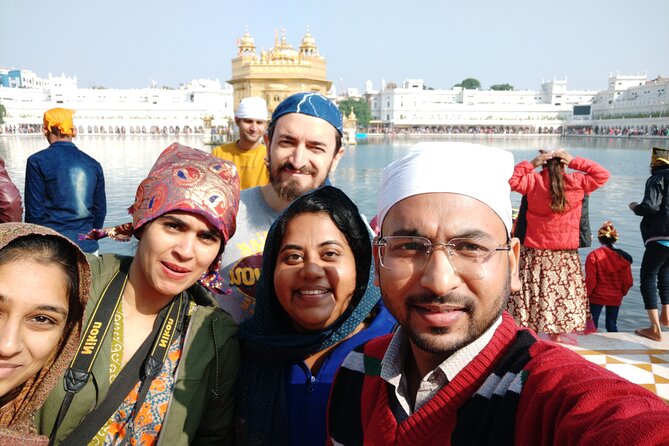
The stop at Udasin Akhara Sangal Wala Road lasts around 20 minutes and is free. An akhara is a religious or ascetic institution, and this visit explains its place in Amritsar’s culture.
This is the sort of stop that makes the walk different from a standard monument circuit. You are not only moving from famous site to famous site. You are also learning how religious communities occupy and shape the old city.
The tour description connects this stop with the significance of akharas in Amritsar. The exact amount of detail may depend on the storyteller and the group’s questions. One particularly praised walk included an ashram visit that a participant found especially interesting, suggesting that these less familiar religious spaces can become a highlight.
You should dress and behave respectfully at religious sites. The supplied information does not state a formal dress code, but modest conduct is the sensible approach whenever a walk enters a place of worship or religious practice.
Guru Bazar, Baba Bohar, and the old city lanes
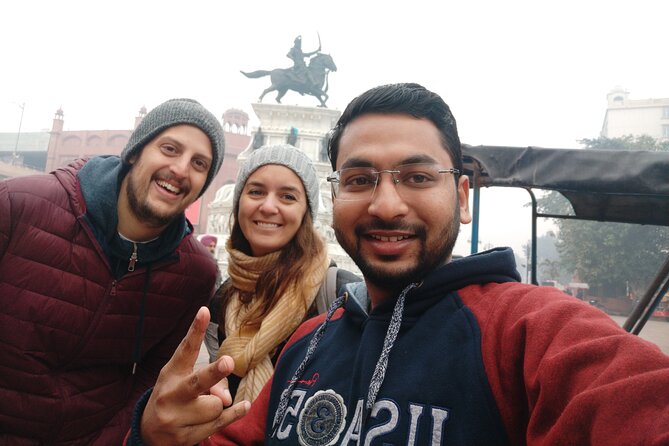
The longest part of the tour takes place around Guru Bazar and the older streets of Amritsar. This section lasts about 1 hour and 30 minutes, making it the heart of the experience.
You walk through narrow lanes and bylanes while the guide explains local life, architecture, business communities, and the city’s growth. The route includes Baba Bohar, a large old banyan tree in the middle of the city, along with a 150-year-old feature mentioned in the route description.
The wording of that final itinerary detail is incomplete, but the main point is clear: this is a close look at older Amritsar rather than a broad drive around town. You may see how homes, shops, shrines, alleys, and working streets sit beside one another.
This is where the tour earns its price. You can find the Golden Temple, Jallianwala Bagh, and major statues with a map. It is much harder to understand which lanes matter, where to turn, and how to read the city’s small details without someone who knows the area.
The walk also includes practical tips for bargaining and saving money. That may be useful if you plan to shop or buy food in Amritsar. The guide can help you understand local habits, though you should still make your own decisions and keep normal awareness in crowded streets.
One caution: the long old-city section may feel less like a formal history lesson and more like a collection of fragments, anecdotes, and observations. One experience found the treatment of business communities and commerce more prominent than the broader culture of Amritsar. If you want a tightly chronological account, this may feel loose. If you enjoy learning through streets, conversations, and small details, it is likely to be the best section.
Finishing outside the Golden Temple
The tour ends outside Sri Harmandir Sahib, commonly known as the Golden Temple. The endpoint is at Atta Mandi, near the temple complex, rather than inside the shrine itself.
This is practical. You finish in one of Amritsar’s central areas, with the option to visit the Golden Temple afterward or return at another time. The tour does not include a guided Golden Temple visit, so do not mistake the endpoint for temple admission or a full religious tour.
I like the order of this route. You first gain context about Partition, Sikh figures, colonial violence, religious institutions, and old-city life. Then you arrive at the city’s major spiritual center with more background than you would have at the start of the day.
The endpoint also makes the walk useful for first-time visitors. Several guides have been praised for helping people understand the Golden Temple area and for showing lanes they would not have found through ordinary sightseeing.
What the guide quality means for your experience
The strongest part of this tour is the human element. Prerit has been described as punctual, organized, and a strong storyteller. Hardik has been praised for friendly conversation, good English, and a willingness to answer extra questions. Prarit has also been noted for enthusiasm and clear explanations of Amritsar’s architecture and major events.
Those names are useful, but you cannot assume which guide you will receive. The operator assigns a trained storyteller, and the quality of the walk will depend partly on that person’s approach and partly on your group.
The format is interactive. You are encouraged to ask questions, and the guides have been praised for making people feel welcome, including a solo woman who felt safe during the walk. That is reassuring, though it is not a guarantee about every group or every day.
The group can reach 20 people. That is small enough to remain manageable, but larger than a private walk. If you want a custom route, long pauses, or a personal pace, this is not the right format. If you want an affordable introduction with other visitors, the group structure keeps the price low.
Timing, walking effort, and practical planning
The stated duration is about 2 hours and 45 minutes, although some walks have taken roughly two hours and a little more. The difference may depend on the group, the guide, waiting time, and how long people spend at individual stops.
You should plan for continuous walking through lanes and streets. The supplied information says most people can participate, but it does not give a distance or a detailed accessibility statement. If you have mobility concerns, ask the operator before booking because narrow old lanes may not suit every traveler.
The meeting point is the Partition Museum at Hall Road, Town Hall, Katra Ahluwalia. The end is outside the Golden Temple. Both locations are near public transportation, which makes the tour easier to fit into a wider Amritsar plan.
Wear comfortable shoes and keep the schedule flexible. Do not book a train, flight, or fixed appointment immediately after the walk. The route is structured, but street conditions and group timing can change the finish.
Admission tickets are not included for the Partition Museum or Jallianwala Bagh. Personal expenses and adventure activities are also excluded. The mobile ticket is convenient, and confirmation arrives at booking.
Is $16.66 good value?
At $16.66 per person, I consider this good value for a first visit to Amritsar. You are not paying for a luxury vehicle, a private guide, or entry to every attraction. You are paying for nearly three hours of local orientation, storytelling, language support, and access to old lanes that can be difficult to interpret alone.
The value improves if you are new to the city or have only a short stay. A well-run walk can help you decide where to return, how the Golden Temple area fits together, and which historical subjects deserve more time.
The price is less compelling if you already know central Amritsar well or want a scholarly treatment of every event. The walk is designed to be friendly and accessible, with fun facts, local customs, and conversation. It is not presented as an academic seminar.
Free cancellation is available if you cancel at least 24 hours before the start time. Cancellations within 24 hours are not refunded, and changes inside that window are not accepted.
Who should book the Amritsar Heritage Walking Tour?
I would recommend this walk to first-time visitors, solo visitors who want an organized introduction, and anyone who prefers local streets to a checklist of major attractions. It suits people who want Sikh history, Partition memory, architecture, religious culture, and everyday life in one route.
It is also a good choice if you want to understand the Golden Temple area before visiting the shrine on your own. The old lanes and local-life section give the tour a personal feel that a standard city bus or private car cannot provide.
I would be more cautious if you need a fully documented historical lecture, a private itinerary, or guaranteed depth at every stop. Ask questions, listen for the difference between established fact and local story, and consider spending extra time at the Partition Museum and Jallianwala Bagh.
For most visitors, the sensible call is to book it early in your Amritsar stay. At a low price, it gives you a map in your head, several useful stories, and a better sense of where the city’s sacred and ordinary worlds meet.
FAQ
How long is the Amritsar Heritage Walking Tour?
The stated duration is approximately 2 hours and 45 minutes. Some experiences have taken about two hours and a little more, depending on the group and pace.
Where does the tour start and finish?
It starts at the Partition Museum in the Town Hall building on Hall Road, Amritsar. It finishes outside Sri Harmandir Sahib, also known as the Golden Temple, at Atta Mandi.
Is the Golden Temple entrance included?
No. The tour finishes outside the Golden Temple and does not include a guided visit or admission inside the temple complex.
Are admission tickets included?
No. Admission to the Partition Museum and Jallianwala Bagh is not included. Personal expenses and adventure activities are also excluded.
How many people can join the tour?
The maximum group size is 20 people. This is a group walking tour rather than a private tour.
Can I cancel for a full refund?
Yes. You can receive a full refund if you cancel at least 24 hours before the experience start time. Cancellations or changes made within 24 hours are not accepted for a refund.
Just added in Amritsar
- Wagah Border Flag Retreat Ceremony★ 5.0 · 33 reviews
- Wagah Border Ceremony Half-Day Tour★ 4.0 · 13 reviews
- Wagah Border Amritsar Sightseeing Taxi★ 5.0 · 25 reviews
- Wagah Border Ceremony Booking★ 5.0 · 39 reviews
- Amritsar Food Walk With Hidden Gems★ 5.0 · 59 reviews
- Amritsar Full Day City Tour with Transportation (10 Hours)★ 4.5 · 22 reviews
- Guided Heritage Walk of Amritsar★ 5.0 · 13 reviews
- Private Full-Day Amritsar Tour: The Golden Temple & Wagah Border★ 5.0 · 14 reviews
Walking Tours, compared.

The Great Indian Food Tour: Old Delhi Food and Heritage Walk
Read our review →

Blue City Heritage Private Walking Tour With Pickup and Drop-Off
Read our review →
Private Guided Walking Tour in Bandra Queen of Suburbs
Read our review →

Private Jodhpur Blue City Walking Tour with Guide
Read our review →Browse the lists this tour appears in