
Reviewed · WALKING TOURS
Amritsar Heritage Walk: “Back in Time”
Amritsar reveals itself one alley at a time. This two-hour walking experience links Jallianwala Bagh, old markets, temples, workshops, and local neighborhoods in a way that helps you see more than the city’s famous golden shrine. I especially like the focus on ordinary streets and working crafts, and I like that guide Hardik adjusts the experience to your interests, from bargain shopping to local food. The main consideration is simple: this is a city walk, so expect uneven streets, crowded lanes, weather, and a steady amount of walking.
The tour costs $18 per person, a fair price for a private-feeling introduction to old Amritsar, especially if you have only one day. Entrance fees, camera charges, food, transport, and personal costs are extra, so keep some rupees handy. The walk is best for curious visitors who want context, stories, and local orientation rather than a string of formal monument visits.
In This Review
- Key points before you book
- Starting outside the Partition Museum
- Walking through old Amritsar’s historic streets
- Jallianwala Bagh and the cost of remembering
- Baba Bohar and the old lanes
- Frescoes, temples, and religious life
- A 150-year-old workshop and the makers of Amritsar
- Guru Bazaar, Kathia Bazaar, and Maisewan Bazaar
- Street food, jalebis, and a local lunch
- What the guide adds to the walk
- Weather, transport, and the two-hour pace
- Is $18 good value?
- Who should book this Amritsar walk?
- Final verdict: a smart first look at old Amritsar
- FAQ
- Where does the Amritsar Heritage Walk begin?
- How many heritage places does the tour visit?
- How long does the walk take?
- Which languages are available?
- Is Jallianwala Bagh included?
- Are entrance fees included in the price?
- Is food included?
- Can I pay later or cancel?
Key points before you book

- Eight to ten historic stops: The route covers Jallianwala Bagh, old streets, markets, religious sites, workshops, and lesser-seen corners of the city.
- A strong local guide: Hardik is praised for clear English, good storytelling, historical detail, and practical help. Another guide, Prarit, is also named in the feedback.
- Old Amritsar beyond the main sights: Narrow lanes lead toward Baba Bohar, an old tree and local landmark, along with craft areas, facades, temples, and small shrines.
- A useful market lesson: You receive advice on bargaining and saving money, helpful in Guru Bazaar, Kathia Bazaar, and Maisewan Bazaar.
- History with a human scale: The walk begins outside the Partition Museum and later reaches Jallianwala Bagh, connecting national events with streets and families.
- Flexible booking: You can reserve now and pay later, with a full refund available if you cancel at least 24 hours ahead.
Starting outside the Partition Museum

Beginning outside the Partition Museum gives the walk a serious frame from the first few minutes. The 1947 Partition changed Punjab and forced countless families to leave homes, businesses, and familiar streets. You begin by considering those upheavals before turning toward the older city around you.
That opening matters because Amritsar is not only a pilgrimage center or a food stop. Its markets and lanes carry memories of trade, migration, religion, political struggle, and family life. A guide can point out how the city’s past still appears in its buildings and street patterns.
You do not need to enter the museum for the tour to make sense, and the museum entrance is not included. If you want a longer visit inside, ask about timing before the walk begins. The walking experience itself uses the area as a starting point for conversation and orientation.
This is also a practical place to meet because it is easy to identify. From there, the route moves into the heritage streets rather than keeping you on broad modern roads.
More Walking Tours in Amritsar:
- Amritsar Heritage Walking Tour
★ 5.0 · 112 reviews - 2 Days Tour! City Tour , Village Tour, Food n Heritage Walk Tour
★ 5.0 · 18 reviews - Guided Heritage Walk of Amritsar
★ 5.0 · 13 reviews
Walking through old Amritsar’s historic streets
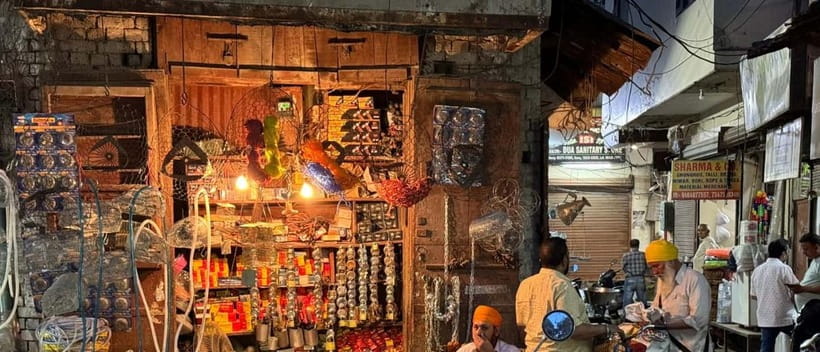
The strongest part of the experience is the change in scale. Instead of seeing Amritsar from a car or moving directly between major attractions, you walk slowly enough to notice old facades, religious details, workshops, shrines, and street activity.
Your guide explains local life and points out architectural influences. That can be more useful than memorizing dates. You begin to understand why one doorway, balcony, painted wall, or narrow passage matters, even when the site has no large sign explaining it.
The route includes eight to ten heritage and historic places. The exact order may change, but the walk can include lesser-known temples, an ashram, an old university, craft areas, and the lanes leading toward Baba Bohar. One of the pleasures is not knowing which small turn will produce the next story.
The narrow streets are also the main physical challenge. They are not designed for leisurely groups standing side by side. You may need to make room for scooters, pedestrians, animals, vendors, or other local traffic. Keep your bag close, wear shoes with a firm sole, and avoid treating the walk like a polished museum corridor.
Jallianwala Bagh and the cost of remembering
Jallianwala Bagh is the emotional center of the route. It commemorates the 1919 massacre, when British troops fired on people gathered in the enclosed garden. The place is tied to India’s independence movement and remains one of Amritsar’s most painful historic sites.
A guide adds value here by placing the memorial within the wider story of Punjab and the independence struggle. You can walk through the site with more understanding of why it matters, rather than simply taking photographs and moving on.
Allow yourself a quieter pace at Jallianwala Bagh. This is not a light sightseeing stop. Its meaning comes from remembering the people who died and the wider consequences of the event.
The practical limitation is that entrance charges are not included. Camera fees may also apply inside monuments. The tour price covers guiding and storytelling, not every admission cost, so check the current charges on the day and carry cash.
Baba Bohar and the old lanes
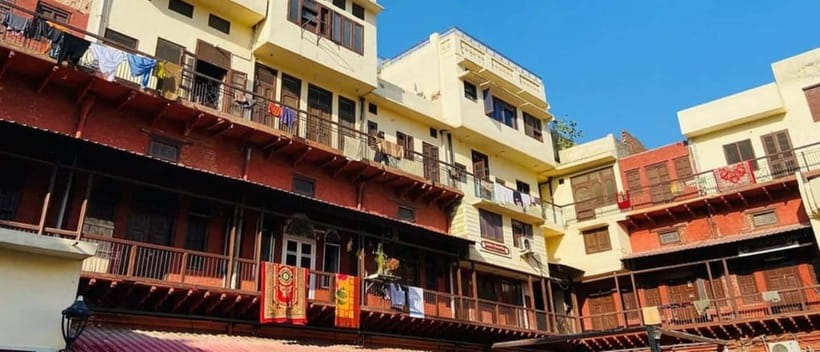
The walk toward Baba Bohar gives you one of the clearest examples of why a local guide helps. Old Amritsar’s back streets can be confusing, and many interesting places do not announce themselves from the main road.
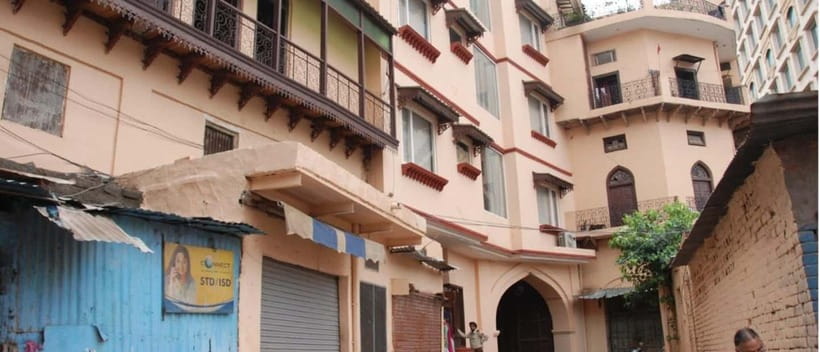
Baba Bohar is described as an incredible old tree and a local point of interest. Reaching it through narrow alleys turns the route into an exploration of the neighborhood rather than a checklist of famous sites. You may notice house fronts, small shrines, working spaces, and daily routines that would be easy to miss from a vehicle.
The lanes also show the limits of independent wandering. You can walk through the old city alone, but you may not know which doorway leads to a historic place, which lane is associated with a craft, or which small religious site is worth pausing for. A guide gives those details a reason and keeps the route purposeful.
Do not expect every lane to look preserved for visitors. Some areas are working neighborhoods. That is part of their value, but it also means you should be respectful, ask before photographing people, and follow your guide’s lead.
A few more options to weigh up in Amritsar
- Amritsar City Tour ( Including Wagah Border Ceremony)
★ 5.0 · 262 reviews - Amritsar Excursion ( Private full day tour)
★ 5.0 · 211 reviews - Wagha Border Tour (Private tour )
★ 5.0 · 147 reviews - Real Village Tour Amritsar
★ 5.0 · 145 reviews
Frescoes, temples, and religious life
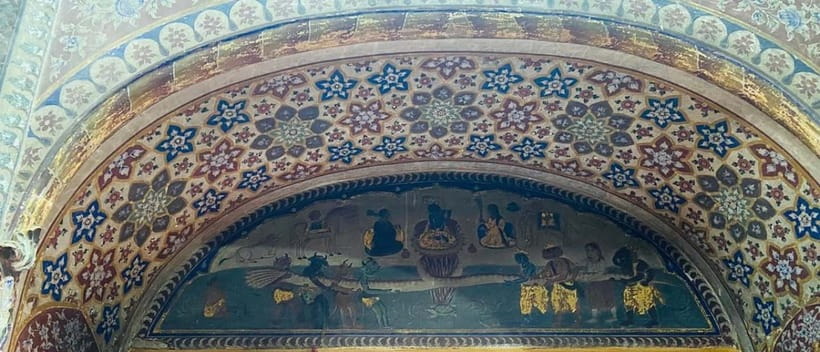
One stop is an ancient Hindu temple with beautiful fresco artwork on the walls. Painted religious scenes and old wall decoration can be easy to overlook when you are concentrating on the larger landmarks, so this visit is a good reminder to look up and look closely.
The walk also includes lesser-known religious places, including an ashram mentioned along the route. These stops help you see how faith fits into the city’s daily rhythm. The experience is not limited to one tradition or one grand building. It brings you into contact with the smaller places where worship and neighborhood life meet.
Treat these visits with care. Dress and behavior should be respectful, and photography may be limited. Since entrance arrangements and charges can vary, your guide is the best person to ask before taking pictures or entering a sacred interior.
The temple stop will suit you if you enjoy architecture and detail. If you prefer only major landmarks, it may feel slower. I think the slower pace is worthwhile because frescoes and small religious sites often provide a better sense of place than another large monument.
A 150-year-old workshop and the makers of Amritsar

The mention of a 150-year-old workshop connected with the early Industrial Revolution gives the walk a useful change of subject. Amritsar’s past was not made only in palaces, temples, or political gatherings. It was also shaped by tools, trades, production, and skilled hands.
A working craft area can show you how heritage continues through practical work. You may see artists or craftsmen at their workspaces, depending on what is open and active at the time. The exact details of the workshop visit are not fixed, so you should treat it as an opportunity to learn rather than a guaranteed demonstration.
This is one area where the guide’s explanations matter. Without context, an old workshop might look like a small business in a narrow lane. With context, you can understand its age, purpose, and connection to the city’s economic past.
I would ask questions here. What was made in the workshop? Which tools are still used? How has the trade changed? The included conversation is part of the value, and the experience works best when you take an active interest.
Guru Bazaar, Kathia Bazaar, and Maisewan Bazaar
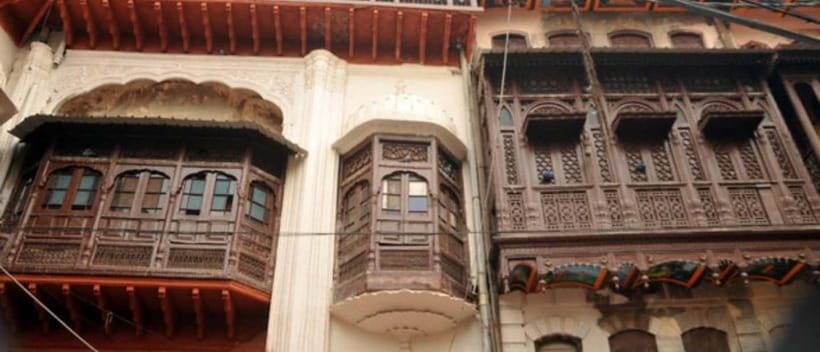
The market section brings the city’s history into the present. Guru Bazaar, Kathia Bazaar, and Maisewan Bazaar offer a chance to see jewelry, traditional crafts, spices, produce, and local foods in working commercial streets.
You are not simply passing through a shopping area. Your guide explains how to bargain and save money, which can protect you from paying more than necessary. That advice is especially useful if you want gifts but do not know local prices or customs.
Be specific about what you want to buy. One solo visitor had particular gifts in mind, and Hardik helped locate suitable places. That kind of practical support can turn an unfocused shopping stop into a useful part of your day.
The markets can be crowded and visually busy. You may stop often, wait for traffic to pass, or move at a slower pace than expected. Keep your valuables secure and do not feel pressured to buy. The point is to understand the market as well as shop in it.
Street food, jalebis, and a local lunch

Food appears as part of the street experience rather than as a formal restaurant meal. Fresh jalebis are one tasty possibility, and the walk can introduce you to local snacks and small eateries that are easy to miss on your own.
One particularly useful example is a local lunch stop where a kulcha cost 70 rupees. The guide helped make the place feel approachable for a solo visitor who might not have tried it independently. That is a modest detail, but it shows the kind of practical confidence a local guide can provide.
Food is not included in the $18 price. You pay for anything you eat, and personal expenses are excluded. Bring some cash in small denominations, especially if you want to sample snacks or buy something in a market.
If you have dietary restrictions, ask before ordering. The supplied information does not specify vegetarian, vegan, allergy, or religious food arrangements, so you should not assume a dish is suitable without checking.
What the guide adds to the walk
The guiding is the main reason to choose this experience over wandering alone. Hardik is repeatedly praised for keeping the conversation lively, explaining history and architecture clearly, and answering questions in good English. Prarit is also described as giving detailed explanations on a walk through old Amritsar.
You can request storytelling in English, Hindi, or Punjabi. That language flexibility matters because the quality of a heritage walk depends on how easily you can ask questions and follow the answers.
The best guiding here appears to combine facts with useful judgment. Hardik has helped visitors find particular gifts, locate a local lunch, handle an unexpected taxi problem, and stay in touch after the walk. In one case, he checked that a solo woman had returned safely to her hotel.
Those extra touches should not be treated as guaranteed services, but they show the practical value of a local contact. A guide who knows the city can help you make better use of limited time.
Weather, transport, and the two-hour pace
The walk is primarily on foot, and one described experience lasted about two hours. That is enough time for a solid introduction without turning the whole day into a march. You may also encounter a short tuk-tuk ride, as one participant did, but transport is not listed as a standard inclusion.
Weather can affect the experience. A thunderstorm once led to a change-of-time discussion, while the walk continued with shelter in a museum and a small eatery when necessary. Do not assume every tour will be moved or adapted in the same way, but it is sensible to check the forecast and wear suitable clothing.
The route involves old streets and narrow alleys. You should be comfortable walking for roughly two hours and standing during explanations. The supplied information does not give a formal accessibility description, so ask the operator directly if you have mobility concerns.
The pace is likely to suit you if you prefer conversation and observation. It may not suit you if you want a fast, photo-heavy tour with no pauses.
Is $18 good value?
At $18 per person, this is a strong value if you want local context. You are paying for access to a guide’s knowledge, route planning, language help, market advice, and the chance to find places that are easy to miss.
The value is greater for a first visit or a short stay. If you have one day in Amritsar, a well-planned walk can help you understand the old city quickly and make later independent exploring easier.
The price is less inclusive than some sightseeing packages. You still pay entrance fees, camera charges, food, personal purchases, and anything not specifically included. A tuk-tuk ride is not part of the listed inclusions either.
Even with those extras, the cost remains modest for a guided cultural experience covering eight to ten sites. I would judge it by the quality of the guide and the depth of the conversation, not by the number of admissions included.
Who should book this Amritsar walk?
I would recommend it to first-time visitors, history fans, architecture lovers, solo travelers, and anyone who wants to see working neighborhoods rather than only major attractions. It is also a good fit if you want help with local markets or feel unsure about trying a small eatery alone.
The experience is less suitable if you dislike walking, crowded lanes, religious sites, or unplanned street conditions. It is also not the right choice if you want a private vehicle tour with guaranteed indoor access at every stop.
The near-perfect rating of 4.9 from 16 ratings reflects consistently strong praise for the guides, storytelling, local knowledge, and route. The sample is small, so I would still keep expectations practical. This is an informal heritage walk, not a luxury excursion.
You can reserve now and pay later, which helps if your schedule is changing. Cancellation is allowed up to 24 hours before the tour for a full refund. Those policies are useful, but the real decision is whether you want to walk slowly through old Amritsar with a local interpreter.
Final verdict: a smart first look at old Amritsar
Book this tour if you want the city explained through its lanes, markets, crafts, faith, food, and difficult memories. The combination of Jallianwala Bagh, Baba Bohar, frescoed religious art, old workshops, and local shopping gives you a broader picture than a standard landmark visit.
I especially value the practical side: bargaining advice, help finding a 70-rupee kulcha, guidance through back streets, and clear explanations in several languages. At $18, it is an inexpensive way to gain your bearings and see places you might otherwise pass without understanding.
Bring comfortable shoes, modest clothing for religious sites, cash for extras, and curiosity. If that sounds like your kind of morning or afternoon, this is a worthwhile introduction to Amritsar.
FAQ
Where does the Amritsar Heritage Walk begin?
The walk begins outside the Partition Museum.
How many heritage places does the tour visit?
The experience includes eight to ten heritage and historic places.
How long does the walk take?
A described walking experience lasted about two hours. The supplied tour information does not state a fixed official duration.
Which languages are available?
Storytelling is available in English, Hindi, and Punjabi, according to your convenience.
Is Jallianwala Bagh included?
Yes. Jallianwala Bagh is one of the main historic places visited on the walk.
Are entrance fees included in the price?
No. Entrance fees to monuments and applicable camera charges are not included.
Is food included?
No. Personal expenses, including food and shopping, are not included. Fresh jalebis and local food may be encountered during the walk, and one local kulcha meal was priced at 70 rupees.
Can I pay later or cancel?
You can reserve your place and pay later. Cancellation up to 24 hours in advance qualifies for a full refund.
Just added in Amritsar
- Wagah Border Flag Retreat Ceremony★ 5.0 · 33 reviews
- Wagah Border Ceremony Half-Day Tour★ 4.0 · 13 reviews
- Wagah Border Amritsar Sightseeing Taxi★ 5.0 · 25 reviews
- Wagah Border Ceremony Booking★ 5.0 · 39 reviews
- Amritsar Full Day City Tour with Transportation (10 Hours)★ 4.5 · 22 reviews
- Amritsar Food Walk With Hidden Gems★ 5.0 · 59 reviews
- Private Full-Day Amritsar Tour: The Golden Temple & Wagah Border★ 5.0 · 14 reviews
- Guided Heritage Walk of Amritsar★ 5.0 · 13 reviews
Walking Tours, compared.

The Great Indian Food Tour: Old Delhi Food and Heritage Walk
Read our review →

Blue City Heritage Private Walking Tour With Pickup and Drop-Off
Read our review →
Private Guided Walking Tour in Bandra Queen of Suburbs
Read our review →
Private Jodhpur Blue City Walking Tour with Guide
Read our review →Browse the lists this tour appears in