
Reviewed · 7-DAY EXPERIENCES
7 Days Varanasi to Lumbini Buddhist Expedition ( All Inclusive )
Buddha’s story comes alive across two countries. This seven-day journey links Varanasi, Bodh Gaya, Rajgir, Nalanda, Kushinagar, Lumbini, Shravasti, and Lucknow in one carefully packed route. I like the way it connects major places in Buddha’s life, and I like the comfort of private transport and four-star hotels after long days on the road. The main drawback is the pace: several driving days take six to eight hours, and lunch and dinner are not included despite the all-inclusive wording.
I also appreciate the built-in airport or railway-station pickup in Varanasi, plus English-speaking guidance at the most important stops. Guides such as Tabish, Somu, Naresh, Salman, Arvind, and Sunny have received warm praise for organization, local explanation, and making transfers easier. You should still arrive ready for road time, simple sites, changing conditions, and a schedule that leaves little room for extra stops.
In This Review
- Key points at a glance
- Why this Buddhist route is worth considering
- Day 1: Sarnath and the Ganges at dusk
- Day 2: Bodh Gaya, the Great Buddha, and the Bodhi Tree
- Day 3: Rajgir, Bimbisar Jail, and Nalanda
- Day 4: Vaishali and Buddha’s final days at Kushinagar
- Day 5: Crossing into Nepal for Lumbini
- Day 6: Kapilavastu and the monasteries of Shravasti
- Day 7: A final afternoon in Lucknow
- Hotels, meals, guides, and transport
- Is $674.69 a fair price?
- Who should choose this expedition?
- Should you book it?
- FAQ
- Where does the tour start?
- Where does the tour end?
- How long is the expedition?
- Is transportation included?
- Are hotels included?
- Are meals included?
- Is the tour private?
Key points at a glance
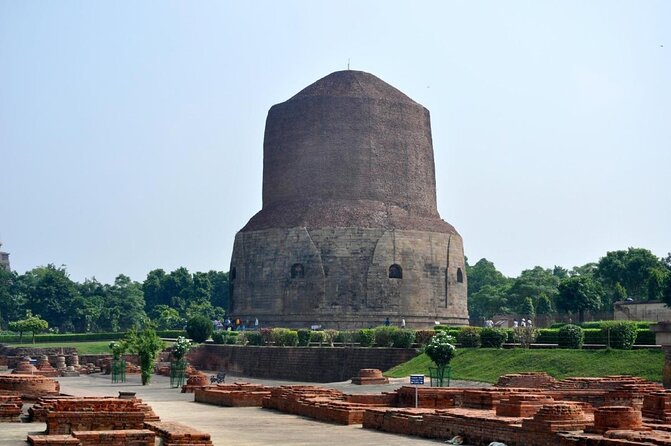
- Buddha’s major life sites in seven days: Visit Sarnath, Bodh Gaya, Kushinagar, Lumbini, Kapilavastu, and Shravasti, with several important archaeological sites along the way.
- A cross-border route: Start in Varanasi, enter Nepal at Lumbini, then return to India before ending in Lucknow.
- Private comfort: Six nights in four-star hotels, private transportation, six breakfasts, and a private group format are included.
- Long road sections: The route includes drives of about four, five, six, seven, and eight hours, so the trip is as much a road journey as a temple tour.
- A strong cultural opening: Sarnath followed by the evening Ganga Aarti gives you both Buddhist history and the living religious culture of Varanasi.
- Good value for a guided circuit: At $674.69 per person, the package covers transport, hotels, guides, admissions at many stops, and GST, but not lunch or dinner.
Why this Buddhist route is worth considering
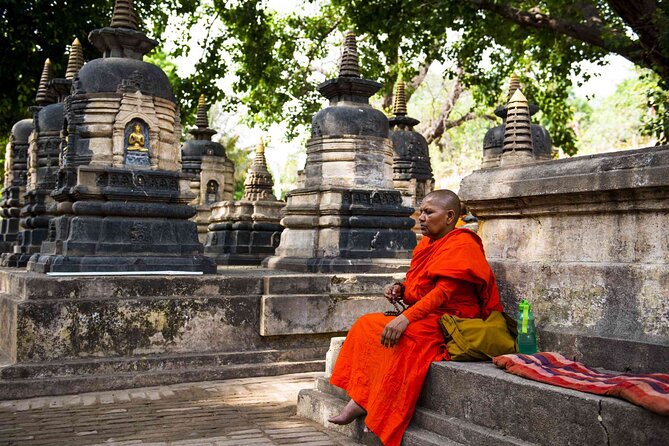
This is not a single-city sightseeing tour. It is a spiritual and historical circuit built around the key stages of Gautama Buddha’s life. You begin near Varanasi, where Buddha gave his first sermon at Sarnath, continue to Bodh Gaya, where he attained enlightenment, and then follow the route toward his birthplace at Lumbini and his final days at Kushinagar.
The appeal is the sequence. Each place answers a different question: Where did Buddha teach? Where did he awaken? Where was he born? Where did he die? By visiting the sites in one trip, you get a clear framework rather than a collection of unrelated monuments.
You also see how modern India and Nepal relate to these sacred places. Some sites are active pilgrimage centers, while others are quiet ruins with limited remains. That contrast is part of the experience, but it means you should not expect every stop to feel polished or dramatic.
The tour is private, so only your own group participates. That gives you more control than a large coach tour, though the supplied schedule suggests that the main route and driving times remain fairly fixed. The package is best for someone who values coverage and convenience over slow travel.
A few more options to weigh up in Varanasi
- Varanasi : Full Day City Highlights Day Tour & Ganges Cruise
★ 4.8 · 520 reviews - Hidden Secrets of Varanasi: Vibrant Tradition (Guided Tour)
★ 5.0 · 429 reviews - Varanasi: Sunrise Boat Tour with Arti Ceremony
★ 5.0 · 375 reviews
Day 1: Sarnath and the Ganges at dusk
Your arrival point is Varanasi Airport, with pickup listed for 11:30 a.m. Pickup from the airport or railway station is included, followed by hotel check-in. After some time to freshen up, you visit Sarnath.
Sarnath is one of the most important places on the entire route. It is traditionally identified as the spot where Buddha delivered his first sermon to five disciples after attaining enlightenment. That makes it the natural starting point for a trip focused on his teachings.
The planned visit lasts about three hours, and admission is included. An English-speaking guide is provided for Sarnath, giving you useful context rather than leaving you to read scattered signs on your own. This is one of the places where a good guide matters, since the significance comes from understanding the connection between the ruins, the sermons, and the spread of Buddhism.
In the evening, you go to the Ganges for the Ganga Aarti. This ceremony is not a Buddhist ritual, but it gives you a strong sense of Varanasi’s present-day religious life. The atmosphere is grand and public, with the river serving as the focus of an evening ceremony.
The two stops balance each other well. Sarnath is tied to Buddha’s early teaching, while the Ganga Aarti shows the Hindu traditions that shape Varanasi today. Allow yourself a little patience on the first day, since the schedule depends on your arrival time and the transfer from the airport or station.
Day 2: Bodh Gaya, the Great Buddha, and the Bodhi Tree
Day two is one of the hardest driving days. Bodh Gaya is about 247 kilometers from Varanasi, with an estimated journey of seven hours. The schedule gives Bodh Gaya about eight hours, followed by the Great Buddha Statue, Sujata Kuti, Mahabodhi Temple, and the Bodhi Tree.
This is a lot for one day. You should see it as a transfer combined with sightseeing, not as a relaxed morning at the hotel followed by a short excursion. The long drive is the price of connecting Varanasi with Bihar’s most important Buddhist site.
Bodh Gaya is where Buddha is traditionally believed to have attained enlightenment. The Mahabodhi Temple is the central attraction. It is one of India’s oldest brick temples, with roots connected to Emperor Ashoka and the early spread of Buddhism. The temple grounds also contain the Bodhi Tree, identified as the main tree at the site of the awakening.
The Great Buddha Statue offers a different kind of visit. It was unveiled and consecrated in 1989 in a ceremony attended by the Dalai Lama. At about one hour, it is a manageable stop and gives you a large, modern visual symbol of Buddhist devotion.
Sujata Kuti is tied to the story of Sujata, whose offering of food is connected with Buddha’s recovery before his enlightenment. It is a smaller stop, but it helps fill out the human side of the story. You are not only moving between grand temples. You are also following the people and events linked to Buddha’s path.
The Mahabodhi Temple admission is included, as are tickets for the Great Buddha Statue and Sujata Kuti. The package also provides guidance at Bodh Gaya. Wear clothing suitable for religious sites, since fully covered clothing is required at many stops on this route.
Day 3: Rajgir, Bimbisar Jail, and Nalanda
On day three, you leave Bodh Gaya for Patna via Rajgir and Nalanda. The stated distance is about 182 kilometers, with roughly eight hours allotted for the journey and visits. You spend the night in Patna.
Rajgir is tied to Buddha’s teaching years and to the ancient kingdom of Magadha. The visit includes Bimbisar Jail, where King Bimbisara was held by his son Ajatshatru. The site is modest, and the remains may not take long to see, but the story adds political context to the Buddhist route.
The stop at Bimbisar Jail lasts about an hour, with admission included. This is a place where your guide’s explanation will shape the experience more than the physical remains. Do not arrive expecting a large preserved prison complex.
Nalanda is the bigger draw. The ancient university was an international center of Buddhist learning and one of the oldest universities in the world. Today, you visit the ruins for about an hour before continuing to Patna.
This day is valuable because it moves beyond Buddha’s personal life and shows how Buddhist ideas were studied and passed on. It also introduces the wider intellectual world around Buddhism. At the same time, the schedule is demanding. Rajgir, Nalanda, and the drive to Patna make this another day when you will spend more time in the vehicle than on foot.
The overnight in Patna breaks up the route. It is not presented as a major sightseeing stop, so think of the hotel as a practical rest point rather than a destination in its own right.
A completely different kind of day out:
- Banaras Wala Tours
★ 5.0 · 329 reviews - The Ultimate 1 Day in Varanasi – How to Spend 13 Hours – Private Guided Tour
★ 5.0 · 295 reviews - A Journey of A lifetime
★ 5.0 · 272 reviews - Varanasi: Hidden Secrets of Vibrant Tradition (Guided Tour)
★ 4.9 · 176 reviews
Day 4: Vaishali and Buddha’s final days at Kushinagar
Day four takes you from Patna toward Kushinagar via Vaishali. The road distance is about 256 kilometers, with an estimated seven-hour journey. Vaishali receives about an hour, and then you continue to Kushinagar for an extended visit and overnight stay.
Vaishali is linked with Buddha’s teachings and the later period of his life. It is another site where the setting and story matter more than a single spectacular building. Your guide can help connect the ruins and sacred associations to the larger route.
Kushinagar is the emotional center of the trip. It is traditionally regarded as the place where Buddha died and entered Mahaparinirvana. The schedule allows about 12 hours here, which gives you more breathing room than at several earlier stops.
The Parinirvana Stupa is made of brick and was excavated in 1867. Inside is a reclining statue of Buddha, placed on a brick pedestal. This image is central to the site, representing Buddha’s final passing rather than a scene from his teaching life.
You also visit Ramabhar Stupa, associated with the spot where Buddha was cremated. The stupa has major importance for Buddhist pilgrims, even though the physical visit is fairly brief at about an hour.
Kushinagar rewards a slower attitude. You may find the site more contemplative than visually grand. There is no need to rush through the reclining Buddha and the stupas simply to collect photographs. The route gives you time here, so use it to reflect on how different this setting feels from Bodh Gaya’s focus on awakening.
Day 5: Crossing into Nepal for Lumbini
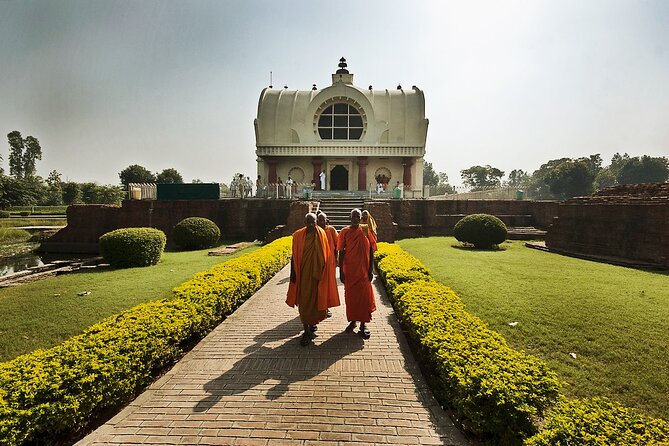
The journey from Kushinagar to Lumbini covers about 180 kilometers and takes an estimated five hours. After checking into the hotel, you visit Lumbini and the Maya Devi Temple. The schedule allows about 14 hours in the area.
Lumbini is the traditional birthplace of Gautama Buddha and the only major stop on this route in Nepal. Crossing the border gives the expedition a wider regional scope, though you should remember that border travel can affect the day’s rhythm. The package includes private transportation, but the supplied information does not describe border procedures or waiting times.
The Maya Devi Temple marks the place where Buddha was born. It sits beside the sacred Pushkarini pond and a sacred garden, with archaeological remains inside the temple area. Admission is included.
This is a quieter kind of sacred site than the Ganga Aarti or the Mahabodhi Temple. The value comes from the connection between the archaeological remains, the garden, and the birth story. I would plan to spend time listening to the guide here rather than treating the temple as a quick photo stop.
Lumbini is also one of the route’s strongest reasons to choose this package. Reaching it independently from Varanasi, Bodh Gaya, and Kushinagar would require careful planning across two countries. Here, the hotel, vehicle, and route are arranged as one trip.
Day 6: Kapilavastu and the monasteries of Shravasti
Day six begins with a drive from Lumbini to Shravasti via Kapilavastu. The stated distance is about 225 kilometers, with roughly six hours on the road. Kapilavastu is connected with Buddha’s childhood, making it a useful follow-up to the birthplace visit at Lumbini.
The Kapilavastu stop lasts about an hour and includes admission. Like several archaeological stops on this trip, it may feel understated if you expect a complete ancient city. Its importance comes from the role it plays in the sequence: Lumbini marks birth, Kapilavastu marks early life, and Shravasti marks years of teaching.
Shravasti is described as the place where Buddha preached many of his sermons. The Jetavana monastery area is especially linked with the monsoon seasons when Buddha is said to have stayed there. You visit the district and the ruins connected with ancient Sahet-Mahet.
The itinerary lists a 12-minute visit to the Shravasti District, followed by about an hour at Angulimala Stupa and another hour at the same named site. The repeated Angulimala entry suggests that the exact order or duration may need confirmation before departure. Do not assume every listed time is a separate attraction.
Pakki Kuti, also called Angulimala Stupa, is one of the largest mounds in the Mahet area. It was excavated in 1863 along with other ruins of Shravasti. The site is associated with the story of Angulimala, a figure in Buddhist tradition whose life changed after meeting Buddha.
Shravasti is especially useful for understanding the teaching phase of Buddha’s life. It is less about one famous building and more about the remains of a city and monastery center. The route works best if you enjoy historical context and can accept that some sites are archaeological mounds rather than fully restored monuments.
Day 7: A final afternoon in Lucknow
The final drive from Shravasti to Lucknow covers about 154 kilometers and is estimated at four hours. Once in Lucknow, the itinerary includes the Bara Imambara, often called Imam Bara, and Rumi Darwaza, with about five hours for sightseeing before the tour ends.
Lucknow is not a Buddhist site, so this final section changes the tone. The city adds architectural and cultural interest after a week focused on sacred places and ruins. It also gives the route a practical endpoint with connections beyond the tour.
The package ends in Lucknow rather than returning to Varanasi. That matters when you plan flights or train tickets. You should arrange onward travel from Lucknow and allow enough time after the scheduled sightseeing.
Hotels, meals, guides, and transport
Six nights in four-star hotels are included, with a private room. Breakfast is included each morning, for six breakfasts in total. This is a useful comfort level for a route with repeated long drives, especially since you return to the hotel after full sightseeing days.
Lunch and dinner are not included. This is the clearest point where the phrase all inclusive can mislead you. You should budget separately for two daily meals, drinks, and any personal purchases. The package covers GST, but the food plan remains limited to breakfast.
Private transportation is a major part of the value. The route covers large distances across India and includes a border crossing into Nepal. Having one arranged vehicle is simpler than organizing separate trains, buses, taxis, and local transfers.
English-speaking guides are listed for Varanasi, Sarnath, Bodh Gaya, Kushinagar, and Lumbini. The names associated with particularly positive service include Tabish, Somu, Naresh, Salman, Arvind, and Sunny. Their praised qualities include clear explanations, trip organization, and making transfers comfortable, but the exact guide assigned to your departure may differ.
The trip is private rather than a shared large-group departure. That suits families and small parties who want the same vehicle and room to ask questions. It does not mean the schedule is leisurely. Private touring improves control and comfort, but it cannot remove the distances between the sites.
Is $674.69 a fair price?
At $674.69 per person, the price is reasonable for what is covered. You receive six hotel nights, private transportation, six breakfasts, English-speaking guidance at several key sites, some included admission tickets, GST, and airport or railway-station pickup in Varanasi.
The value is strongest if you would otherwise need to arrange a multi-city, two-country journey yourself. The package handles the complicated movement from Uttar Pradesh to Bihar, Nepal, and back through northern India. It also reduces the risk of missing a major Buddhist site because of transport gaps.
The price is less all-inclusive than the title suggests. Add lunch and dinner for seven days, plus any entry charges not listed as included, personal spending, and onward transport after Lucknow. You should also verify the final hotel list, border arrangements, and the exact guide schedule before paying.
The tour is often booked about 36 days ahead. That is a useful planning clue, especially if your dates are fixed. Free cancellation is available up to 24 hours before the local start time, with no refund for later cancellation or late changes.
Who should choose this expedition?
I would choose this tour if you want the major Buddhist sites in one organized journey and do not want to manage Indian and Nepalese transport on your own. It is particularly well suited to families, private groups, first-time visitors to the region, and anyone who values hotel comfort after long road days.
It also suits people who want a historical framework. The itinerary moves in a clear order through birth, childhood, teaching, enlightenment, and final passing. That sequence makes the trip more meaningful than visiting isolated monuments.
I would hesitate if you prefer slow travel, long stays, or spontaneous changes. Several days involve six to eight hours of driving, and some visits last only an hour. You should also be comfortable with religious-site dress requirements and the fact that archaeological sites may have modest remains.
Should you book it?
Book this expedition if your priority is wide Buddhist-site coverage with private transport and organized hotels. The strongest moments are the first sermon at Sarnath, the Mahabodhi Temple and Bodhi Tree at Bodh Gaya, Buddha’s final resting places at Kushinagar, and the birthplace site at Lumbini.
Before booking, confirm three practical points: the exact hotel names, what happens at the India-Nepal border, and how meals beyond breakfast will be handled. If you accept the long drives and extra meal costs, this is a useful, well-supported route through the places most closely tied to Buddha’s life.
FAQ
Where does the tour start?
The tour starts at Varanasi Airport in Varanasi, India. Pickup is also offered from a Varanasi railway station, with the listed start time at 11:30 a.m.
Where does the tour end?
The tour ends in Lucknow after sightseeing that includes Imam Bara and Rumi Darwaza.
How long is the expedition?
The experience lasts approximately seven days and includes six nights of hotel accommodation.
Is transportation included?
Yes. Private transportation is included for the route, along with pickup at the start in Varanasi.
Are hotels included?
Yes. The package includes four-star hotels with a private room for six nights.
Are meals included?
Six breakfasts are included. Lunch and dinner are not included, so you need to budget for those meals separately.
Is the tour private?
Yes. Only your group participates in this private tour or activity.
Just added in Varanasi
- Walking Tour in the old part of the city of Varanasi★ 5.0 · 25 reviews
- Varanasi Walking and Heritage Tour★ 4.6 · 15 reviews
- Varanasi: Manikarnika Ghat (Oldest Cremation Site) Tour★ 4.7 · 22 reviews
- Varanasi: Private Heritage Walking Tour & Sunrise Boat Ride★ 4.9 · 11 reviews
- Varanasi: Sunrise Boat Ride w/ Ghats & Morning Rituals★ 3.5 · 26 reviews
- Full-day private Varanasi tour with AC car, boat & Sarnath★ 4.9 · 103 reviews
- Varanasi Landmark Evening City Tour – Aarti & Boating★ 4.7 · 34 reviews
- Varanasi: Ganga Arti Evening Light Ceremony on the Main Ghat★ 4.1 · 11 reviews
7-Day Experiences, compared.
6 Night 7 Days Udaipur Jodhpur and Jaisalmer Tour
Read our review →
7-Day Golden Triangle Tour with Ranthambore Tiger Safari
Read our review →
7-Day Golden Triangle & Varanasi Tour from Delhi with Guide
Read our review →
Private 7 Days Shimla Manali Hill Stations Tour From Chandigarh
Read our review →
7 Days Private Luxury Heritage Rajasthan Tour from Jaipur
Read our review →
7 Day Golden Triangle Tour { Delhi Agra Jaipur Tour }
Read our review →Browse the lists this tour appears in