
Reviewed · KOLKATA TOURS
In the Footsteps of the Raj – Dalhousie Square Walk
History feels close in Kolkata. This two to three hour walk brings the old British administrative quarter to life through grand buildings, sharp colonial stories, and the voices of guides such as Ramanuj Ghosh and Tuhina. I like the strong historical focus and the way the walk faces the darker side of British rule instead of presenting empire as a grand old postcard. I also like the personal touch: you receive a useful map of Kolkata, and the route ends with tea and toast at a local snack shop.
The main drawback is timing. The walk begins at 8:00 am, and the area can be much quieter on a Sunday than on a weekday, when traffic and office activity may make listening harder. Communication before the tour can also be slow, so I would not leave questions about meeting arrangements until the last minute.
In This Review
- Key points about the Dalhousie Square walk
- Why Dalhousie Square matters
- Starting at The LaLiT Great Eastern Kolkata at 8:00 am
- BBD Bagh: the British plan for a second city
- The General Post Office and the reach of empire
- The old tank at BBD Bagh
- St. John’s Church and the old British ground
- Writers’ Building and the East India Company
- Guides who bring the history to life
- Is $34.02 good value?
- Who should book this walk?
- Practical details before you book
- Should you book In the Footsteps of the Raj?
- FAQ
- Where does the walk begin?
- What time does the tour start?
- How long does the experience last?
- Where does the tour finish?
- What places are visited?
- Is admission included?
- How many people can join the tour?
Key points about the Dalhousie Square walk
- A 2 to 3 hour history walk: The route covers the former British administrative heart of Kolkata at a manageable pace.
- Guides with strong English: Ramanuj Ghosh, Tuhina, Ifte, and Vedant have all led walks praised for clear speech, energy, patience, and detailed storytelling.
- Five substantial stops: You visit BBD Bagh, the General Post Office, St. John’s Church, and the Writers’ Building, with time to look at the surrounding streets.
- Colonial history without rose-colored glasses: The tour explains British ambition while also addressing the harsh realities of colonial occupation.
- Tea and toast included in the route: A stop at the popular kona dukaan adds a simple local pause after the formal buildings.
- Small-group format: The maximum group size is 20, though one reported group had about 15 people.
Why Dalhousie Square matters
Dalhousie Square, now known as BBD Bagh, was designed to serve the British project of making Calcutta the second city of the empire. That ambition is still visible in the concentration of government offices, churches, postal institutions, and commercial buildings packed around the square.
This is not a walk built around one famous monument. Its value comes from seeing how several institutions worked together. The post office connected the eastern half of the empire. The Writers’ Building housed the East India Company’s administrative machinery. St. John’s Church served the Anglican establishment. The square itself was a public center for work, ceremony, social life, and power.
I find that this makes the walk useful for anyone who wants more than isolated facts. A building is easier to understand when you see how it fit into the system around it. The guide’s job is to connect those pieces, and that is where this experience earns its price.
The storytelling also appears to go beyond polished architecture. The tour promises a direct look at the costs of colonial rule, not only the grand plans of the British administration. That balance matters in Kolkata, where imperial buildings can be impressive while the system they supported was deeply unequal.
A few more options to weigh up in Kolkata
- Cultural Confluence of Kolkata – Culture Kaleidoscope Tour
★ 5.0 · 701 reviews - Kolkata Heritage Tram Tour
★ 4.0 · 395 reviews - Bengali Nights Kolkata Food Tour with 13+ Tastings
★ 5.0 · 325 reviews
Starting at The LaLiT Great Eastern Kolkata at 8:00 am
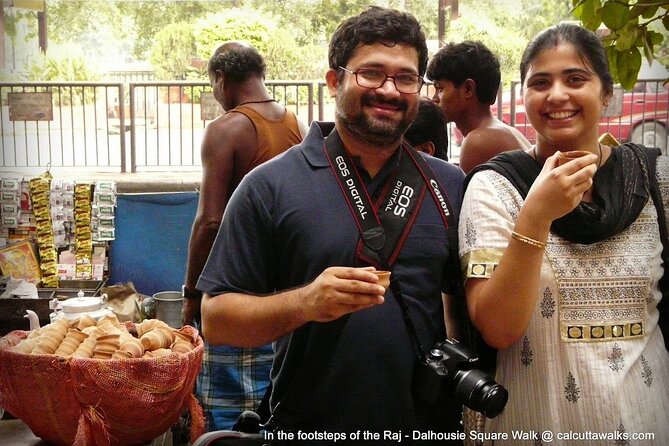
The meeting point is The LaLiT Great Eastern Kolkata, at Dalhousie Square, 1, 2, 3 Old Court House Street. Starting at 8:00 am is practical for two reasons. You get cooler morning conditions than later in the day, and you may find the square easier to hear and photograph before the working day reaches full speed.
A Sunday start has a particular advantage. One group of about 15 people found the streets noticeably quieter on a Sunday, which made it easier to follow the guide and appreciate the buildings. On a weekday, the same setting should feel more active, but traffic, office workers, and general city noise may compete with the commentary.
The group limit is 20 people. That is not a private tour, but it is small enough for a guide to keep a group together and answer occasional questions. A group of 15 appears to be a comfortable size for this route.
Bring a mobile ticket and arrive with enough time to find the hotel entrance. Confirmation is sent within 48 hours of booking, subject to availability. If you need to contact the operator, allow time for a response, since one participant experienced a delay with WhatsApp communication.
BBD Bagh: the British plan for a second city
The first stop sets the scale of the story. BBD Bagh was the place where the British sought to build a city that could rival London in importance within the empire. The guide uses the square and its surrounding buildings to explain how Calcutta became the administrative center of British power in this part of the world.
You can expect the first half hour to focus on the city as a planned European quarter. The emphasis is less on entering every building and more on understanding the purpose of the district. That makes the opening useful, since the later stops will mean more once you understand why so many official institutions were gathered here.
The stop has no admission charge. Its real value is the guide’s explanation of the buildings and the people who used them. A quick look at a facade would not tell you why the quarter mattered, or how it functioned as a center of imperial decision-making.
This is also where the tone of the walk becomes clear. You will hear about British ambition, but the experience is not designed as a celebration of empire. It places that ambition beside the realities of occupation, administration, and control.
The General Post Office and the reach of empire
The General Post Office gets about 30 minutes. It was described as the headquarters of the postal department for the entire eastern hemisphere, which gives you a sense of how far-reaching Calcutta’s official role had become.
A post office may sound less dramatic than a palace or church, but this stop is valuable because it shows the practical side of empire. Administration depended on communication. Letters, official orders, commercial records, and personal messages all moved through systems such as this.
The guide’s explanation should help you see the building as infrastructure, not just architecture. That is one of the best reasons to take a walking tour in this district. You are not simply being told when a building was built. You are being shown what it allowed the colonial government to do.
The stop is free to visit, according to the tour details. You should expect the focus to remain on the exterior and the historical setting, rather than a long interior visit. That is worth keeping in mind if you want extensive architectural access.
A completely different kind of day out:
- Magic Hour Tour
★ 5.0 · 241 reviews - Alleyway Food Tour
★ 5.0 · 137 reviews - Private Custom Full Day Sightseeing Tour of Kolkata
★ 5.0 · 128 reviews - Private Half-Day Kolkata Tour
★ 5.0 · 125 reviews
The old tank at BBD Bagh
The route returns to BBD Bagh for another 30-minute segment, this time focusing on an old tank. The British drank from it, and it became part of the social life of the European quarter.
This stop adds a more human scale to the formal story. The square was not only a place for offices and official business. Women walked around with parasols, and social encounters could include the search for suitable marriage partners. That detail gives you a glimpse of the routines and expectations of the colonial community.
I like this kind of stop because it complicates the picture. You begin with the grand imperial plan, then see the everyday habits that grew around it. The tank also shows how basic resources could sit at the center of public life.
The second visit to BBD Bagh is not repetitive if the guide handles it well. The first stop explains the square as a political and urban project. This one uses the same space to explore water, leisure, status, and social customs. If your group is large or the square is noisy, the quality of the explanation will depend heavily on where everyone can gather.
St. John’s Church and the old British ground
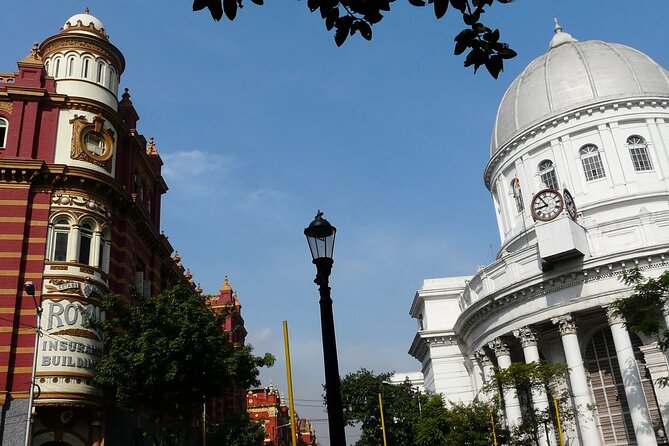
St. John’s Church receives the longest scheduled visit, about one hour. The tour describes it as an old Anglican cathedral on former British ground, making it a key stop for understanding the religious and institutional life of colonial Calcutta.
The longer visit gives the guide room to explain the church in more detail than the open-air stops. Admission is included. You should expect this to be the most substantial building visit on the route.
The church matters because it represents more than worship. Anglican churches in colonial capitals often served the official British community, and this site helps connect religion with the wider structure of empire. The guide’s historical framing is especially important here, since the building can otherwise seem like an isolated European monument.
This is likely the point where the tour feels most formal. If you prefer architecture and institutional history, it may be your favorite stop. If you are mainly interested in markets, food, or present-day Kolkata, an hour inside and around a colonial church may feel long.
The guides have received particularly strong praise for making this material accessible. Tuhina is described as factual, lively, and fun, while Ramanuj Ghosh is praised for exceptionally detailed explanations. Those qualities matter in a church, where dates and names can pile up quickly.
Writers’ Building and the East India Company
The final major historic stop is the Writers’ Building. The tour presents it as the headquarters of the East India Trading Company, followed by tea and toast behind the building at the popular kona dukaan.
This is an effective closing section because it brings the story back to administration and commerce. The East India Company was not simply a trading concern. Its presence helped create the machinery through which British power expanded and operated. The building gives the guide a natural place to connect trade, bureaucracy, and colonial rule.
The scheduled time is about 30 minutes, and admission is included. As with the other buildings, the exact experience may depend on access and the guide’s presentation, so you should think of this as a historically explained stop rather than a guaranteed extended interior tour.
The tea and toast afterward are a welcome change of pace. A simple snack at a local shop is more useful than another grand facade at this point in the morning. It gives you a chance to pause, ask questions, and process the information while doing something ordinary and local.
Do not expect a full meal. The details describe tea and toast, not breakfast or a broader tasting. If you need more food, plan accordingly before or after the walk.
Guides who bring the history to life
The experience depends heavily on the person leading it. The strongest guide names associated with these walks are Ramanuj Ghosh, Tuhina, Ifte, and Vedant.
Ramanuj Ghosh is praised for encyclopedic command of Kolkata’s past and exceptionally detailed explanations. That makes him a strong match for someone who wants dates, institutions, and political context.
Tuhina receives equally strong praise for passion, factual clarity, flexibility, and humor. She has also adjusted a route to include the Surveyors Government Department when a group had a particular interest. That suggests a useful level of responsiveness, although you should not assume every special request can be added.
Ifte is described as articulate, friendly, proud of his heritage, and able to give the city a personal perspective. Vedant is praised for patience, flexibility, and clear spoken English. All four qualities are helpful on a history walk, where a guide who can explain rather than simply recite makes a major difference.
The tour specifically says its guides have excellent English skills and well-researched content presented in an infotainment style. In practical terms, that means the walk aims to be informative without becoming a dry lecture. The praise for audible, clear speech is especially useful if you are concerned about following a group outdoors.
Is $34.02 good value?
At $34.02 per person, this is not the cheapest way to spend a morning in Kolkata. Several stops have no admission charge, and the route covers a fairly compact area. You are paying mainly for the guide’s time, research, storytelling, and the structure that ties the buildings together.
For me, that price can make sense if colonial history is a major interest. A good guide helps you understand why the General Post Office, BBD Bagh, St. John’s Church, and Writers’ Building belong in one story. Without that connection, you may see impressive buildings but miss the system behind them.
The map of Kolkata adds practical value. It is described as containing a large amount of city information based on the operator’s experience, so it can help you plan beyond this walk. The tea and toast are a small extra rather than the reason to book.
The value is weaker if you want a broad introduction to all of Kolkata. This is a focused walk through the former European administrative quarter. It does not promise markets, temples, riverfront sights, or the city’s many other cultural districts.
Who should book this walk?
I would recommend it to you if you enjoy urban history, political stories, architecture, and guides who explain how a city worked. It is also a good choice if you want to understand Kolkata’s colonial quarter before exploring the city on your own.
The walk suits people who appreciate context more than a fast list of photo stops. You will spend time hearing about institutions, social customs, and imperial power, so patience helps. The route is also useful for repeat visitors who have already seen the obvious attractions and want a closer look at the city’s administrative core.
You may want to skip it if your main goal is food, shopping, religious sites, or present-day neighborhood life. The colonial focus is clear from the beginning and remains central throughout.
Most people can participate, and service animals are allowed. The meeting point is near public transportation. The tour returns to the starting point, which makes the morning easy to fit into a larger Kolkata plan.
Practical details before you book
The activity starts at 8:00 am and lasts approximately two to three hours. The planned schedule gives 30 minutes to the first BBD Bagh discussion, 30 minutes to the General Post Office, 30 minutes to the old tank area, one hour to St. John’s Church, and 30 minutes to the Writers’ Building and tea stop.
The full timing is approximate, so allow some flexibility afterward. A mobile ticket is provided. The maximum group size is 20.
Cancellation is free up to 24 hours before the local start time for a full refund. Changes or cancellations inside that window are not accepted for a refund. The experience depends on good weather and a minimum number of participants. If poor weather or an insufficient group causes cancellation, you are offered another date or experience, or a full refund.
Should you book In the Footsteps of the Raj?
Book it if you want Kolkata’s British quarter explained by an energetic guide rather than viewed from a passing taxi. The strongest reasons are the serious treatment of colonial power, the guide quality associated with Ramanuj, Tuhina, Ifte, and Vedant, and the useful mix of major institutions with small human details such as parasols, suitors, tea, and toast.
Choose a Sunday morning if you can, since the quieter streets may make the storytelling easier to follow. If your interests are strongly historical, $34.02 is a fair price for the connections a good guide can make. If you want a wider sample of Kolkata, spend your money on a different kind of walk instead.
FAQ
Where does the walk begin?
It begins at The LaLiT Great Eastern Kolkata, Dalhousie Square 1, 2, 3, Old Court House Street, Chowringhee North, Ward Number 1, Kolkata, West Bengal 700001, India.
What time does the tour start?
The tour starts at 8:00 am.
How long does the experience last?
The walk lasts approximately two to three hours.
Where does the tour finish?
The activity ends back at the meeting point.
What places are visited?
The route includes BBD Bagh, the General Post Office, the old tank area at BBD Bagh, St. John’s Church, and the Writers’ Building.
Is admission included?
Admission is free at the BBD Bagh and General Post Office stops. Admission is included for St. John’s Church and the Writers’ Building.
How many people can join the tour?
The maximum group size is 20 participants.
Just added in Kolkata
- Kolkata 3-Hour Tour of Kumortuli – The Goddess Beckons★ 5.0 · 26 reviews
- Explore Kolkata- Private Tour with Lunch★ 5.0 · 87 reviews
- Walk the Kolkata Wetlands: Green Eye Candy★ 5.0 · 10 reviews
- Taj Mahal and Agra Day-Trip from Kolkata with Both side Commercial Flights★ 5.0 · 15 reviews
- Kolkata – A Sea of Faces and A Thousand Places (local guide)★ 5.0 · 52 reviews
- Guided Kolkata Sightseeing Trip by Car, Walk & Sunset Cruise Excursion Trip★ 5.0 · 13 reviews
- Day trip from Kolkata to Bishnupur for Terracotta Temples and Silk★ 5.0 · 14 reviews
- Raj Heritage Walk★ 5.0 · 93 reviews
Kolkata Tours, compared.
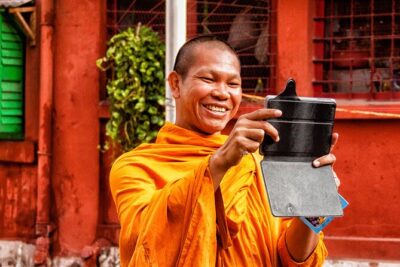
Cultural Confluence of Kolkata – Culture Kaleidoscope Tour
Read our review →

Bengali Nights Kolkata Food Tour with 13+ Tastings
Read our review →
Private Custom Full Day Sightseeing Tour of Kolkata
Read our review →

Browse the lists this tour appears in