
Reviewed · WORKSHOPS
Hands-on Block Printing Workshop
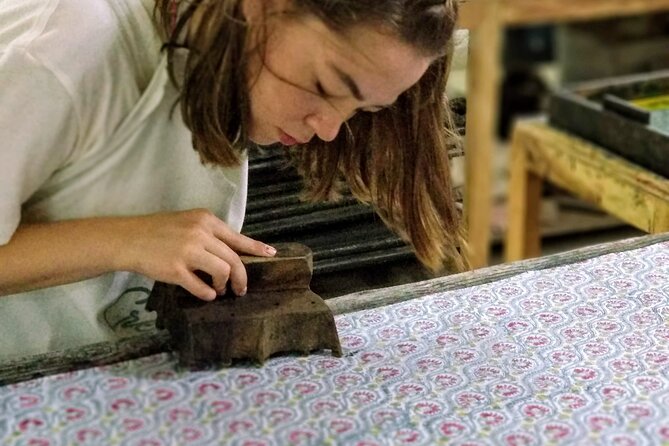
Make your own Rajasthan souvenir. This two-hour Creatis workshop gives you a practical introduction to block printing, from choosing carved wooden designs to building patterns with water-based pigments. I especially like the small group of up to 10 people and the fact that you leave with a wearable scarf or sarong, not just a quick demonstration.
The other strong point is the calm, repetitive nature of the work. Mohit, Vivek, and Aftab have been praised for clear instruction and patient help, including fixing mistakes without taking over your design. The main consideration is that this is a basic workshop, not a full course in carving blocks or professional textile production, and two hours can pass quickly once you begin printing.
In This Review
- Key Details Before You Book
- Why Block Printing Makes a Better Souvenir
- Entering Creatis and Meeting the Instructors
- The Short Introduction to Rajasthan’s Printing Tradition
- Understanding Gad, Rekh, and Datte Blocks
- Choosing a Sanganeri-Inspired Pattern
- Building the Pattern One Impression at a Time
- Why Two Hours Feels Like the Right Length
- Watching the Nearby Factory at Work
- What You Take Home for $24
- Who Will Enjoy This Class Most
- Practical Booking Notes for Your Rajasthan Schedule
- Should You Book the Creatis Block Printing Workshop?
- FAQ
- Where does the block printing workshop take place?
- How long does the class last?
- How much does the workshop cost?
- What will I make during the workshop?
- Are the materials included?
- Do I need previous block printing experience?
- Which languages do the instructors speak?
- How many people can join the workshop?
- Can I cancel the booking?
Key Details Before You Book
- You print a finished scarf or sarong: The Pico stitch scarf or sarong is included in the $24 price.
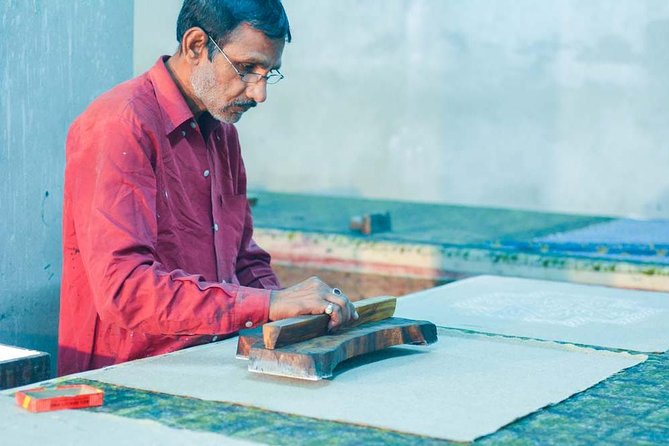
- You work with three block styles: Gad blocks cover the ground, Rekh blocks create outlines, and Datte blocks fill the design.
- You choose your own pattern and colors: Designs are inspired by Sanganeri prints, with room to mix colors and build a personal layout.
- You may watch professionals at work: The studio sits beside a small factory, giving you a glimpse of larger-scale block printing.
- You get direct help in English or Hindi: The team guides beginners through each stage, including errors and uneven prints.
- You need only two hours and comfortable clothes: All blocks, pigments, and fabric are supplied.
Why Block Printing Makes a Better Souvenir
Rajasthan is full of things to buy, but a handmade textile carries a different kind of memory. Here, you do not simply pick a scarf from a shelf. You make the pattern yourself, with all the small variations that prove it was printed by hand.
Block printing is built on repetition. You press a carved wooden block into pigment, place it on the fabric, and repeat the movement across the surface. The rhythm can feel almost meditative, but it also demands care. A slight shift can create a blurred edge or an uneven gap.
That small risk is part of the appeal. Your final piece will not look like something produced by a machine. It will show your choices, your color sense, and perhaps one or two tiny signs that a person made it.
I like that the activity gives you a better respect for the craft without asking you to sit through a long lecture. You learn by handling the materials. After a few prints, you begin to understand why experienced artisans work with such control.
A few more options to weigh up in Jaipur
- Jaipur: Private Full Day Sightseeing Tour By Car with Guide
★ 4.9 · 1,839 reviews - 3-Hour Morning Bike Tour of Jaipur
★ 5.0 · 1,253 reviews - Jaipur: Private Sightseeing Day Tour with Guide by Car
★ 4.8 · 773 reviews
Entering Creatis and Meeting the Instructors
Creatis provides the workshop in Rajasthan, with instruction in English and Hindi. The group is limited to 10 participants, which is a useful size for a hands-on class. You are not left watching from the back of a crowded room, and the instructors have a fair chance to see how each person is progressing.
Mohit has been praised for explaining the process clearly and encouraging people as they work. Vivek has also been thanked for expert guidance, while Aftab is known for patient support when a print does not come out as planned.
That last point matters. Beginners often worry about ruining the fabric with one badly placed block. The teaching approach here appears to treat mistakes as part of the process rather than a disaster. You still need to pay attention, but you do not need perfect artistic skill before you arrive.
The studio itself has been described as beautiful, and its position beside a small factory adds useful context. You may be able to see professional production nearby, which helps you compare your careful beginner work with the speed and precision of people who do this every day.
The Short Introduction to Rajasthan’s Printing Tradition
The opening part of the class introduces the history and cultural role of block printing. You also learn about the wooden blocks, fabric, pigments, and other tools used during the activity.
This introduction is brief by design. The purpose is to get you working rather than fill the whole two hours with background information. If you want an academic study of textile history, this will not be enough. If you want enough context to understand what your hands are doing, it should suit you well.
The connection to Sanganeri prints gives the class a clear artistic direction. Sanganer is associated with finely detailed printed textiles, and the designs offered here draw on that visual tradition. You can work with an established style while still making your own decisions about color and arrangement.
I find that balance useful. You are not asked to invent a pattern from nothing, which can be stressful for a beginner. At the same time, you are not simply copying a finished sample in one fixed way.
Understanding Gad, Rekh, and Datte Blocks
One of the most interesting parts of the class is learning that different blocks have different jobs. The three styles are Gad, Rekh, and Datte.
- Gad, or ground blocks: These help cover the main background or broad areas of the design.
- Rekh, or outline blocks: These define the edges and structure of the motif.
- Datte, or filler blocks: These add interior details and complete the pattern.
This system explains how a complex textile can grow from separate pieces. You begin to see that the final motif is not one single stamp. It is a set of related impressions that need to line up and work together.
For you, the practical lesson is simple: choose the order carefully. An outline, background, or filler placed at the wrong point can change the look of the design. The instructor support is especially useful here, since a quick demonstration can make the sequence much easier to understand.
The blocks themselves are part of the charm. You get to handle carved wood rather than press a modern rubber stamp onto fabric. That gives the workshop a direct connection to the older craft process.
A completely different kind of day out:
- Jaipur: Full-Day City Tour with Car, Guide & Skip-the-Line
★ 4.8 · 512 reviews - Full-Day Jaipur Private Sightseeing Tour by Car with Guide
★ 5.0 · 472 reviews - Pink City Cooking Class
★ 5.0 · 452 reviews - Private Elephant Sanctuary
★ 5.0 · 390 reviews
Choosing a Sanganeri-Inspired Pattern
After the introduction, you choose from a range of intricate designs inspired by Sanganeri prints. The selection lets you decide whether you want a simpler repeated form or something with more detail.
You can also access designs from the signature fabric collection when available through the relevant Creatis offering. The supplied information does not specify the full range of patterns, so I would expect the exact choices to vary by session.
Do not rush this decision. A pattern that looks beautiful on a small block may require more patience when repeated across a whole scarf or sarong. You should also think about how much contrast you want between the fabric and pigment.
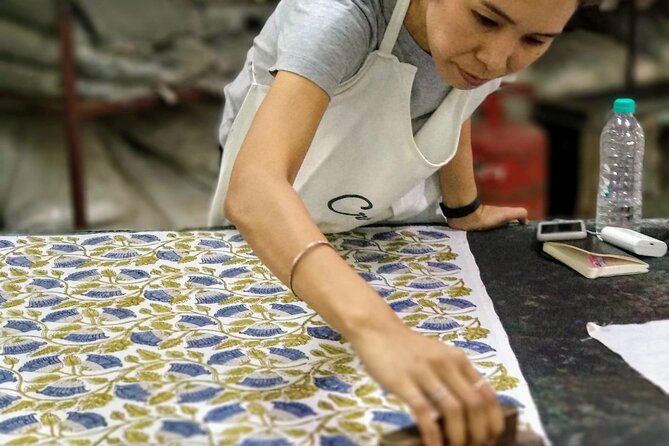
The class allows you to mix and match colors, so your piece does not have to look exactly like a sample. A restrained color choice may produce a calm result, while several contrasting pigments can create a livelier pattern. You get the freedom to experiment, but the instructor can help you avoid combinations that become hard to read.
Building the Pattern One Impression at a Time
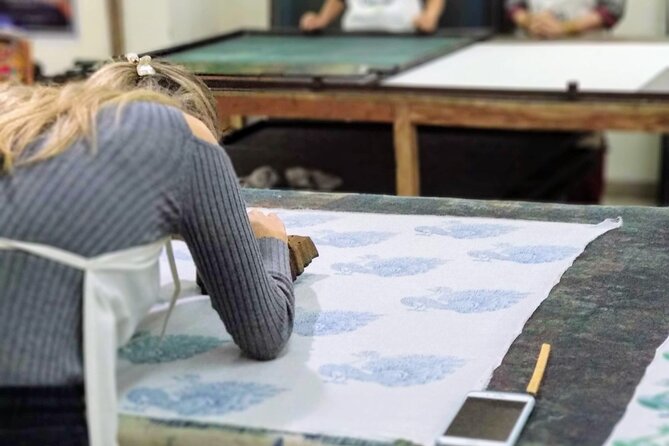
The main part of the workshop is hands-on printing. You practice pressing the wooden blocks into water-based pigments, then transferring each impression to the fabric.
This is where the activity becomes more than a craft demonstration. You need to judge pressure, placement, and spacing. Press too lightly and parts of the design may not appear clearly. Press too hard or move the block and the edges may blur.
The workshop teaches both a repeated all-over design and the option to layer a motif. An all-over pattern gives you a regular rhythm across the cloth. A layered motif lets you create more visual depth by adding related colors or block shapes.
I like the chance to test colors before committing to the full piece. You can see how one pigment looks beside another and decide how much layering feels right. The process is creative, but it is not without limits. Once pigment reaches the fabric, you cannot simply erase it.
That is why the guidance from the team has real value. A short tip about alignment or pressure can save a large section of fabric. Aftab’s patient help with mistakes is especially reassuring for anyone who has never used textile blocks before.
Why Two Hours Feels Like the Right Length
The class lasts two hours, which gives you enough time to learn the method and produce a finished piece without turning the activity into an all-day project.
You should expect the first stage to move quickly. The introduction, explanation of block types, and pattern selection take up part of the session. The actual printing then requires most of your attention.
For a first attempt, two hours is a sensible compromise. You get a real result, but you also avoid the fatigue that can come with repeating the same movement for an entire day. The downside is that you will not master every technique in one visit. If you become fascinated by the process, you may wish the class offered more time for complex layering or advanced designs.
The repetitive work is one of the best reasons to book this experience. Several people have described it as satisfying and meditative, though that response depends on your personality. If you enjoy careful handwork, the rhythm will likely appeal to you. If you prefer constant activity and quick changes, parts of the printing may feel slow.
Watching the Nearby Factory at Work
The studio is next to a small factory, and that setting adds a useful extra layer to the experience. You can see that your little scarf or sarong is part of a much larger textile tradition.
The class does not promise a full factory tour, so I would not book it expecting an extended production visit. Still, being near professional work helps put your own efforts into perspective. You may notice the speed, accuracy, and repeated motions that come with years of practice.
This is one of the better features for anyone interested in how handmade textiles reach the market. Your two-hour project is personal and small. The nearby production area shows the skill required when the same craft must be carried out at a much greater scale.
It also keeps the workshop tied to working craft rather than presenting block printing as a staged activity made only for tourists. You get an introduction, then you use the same basic tools and process yourself.
What You Take Home for $24
At $24 per person, the price is strong because it includes instruction, wooden blocks, pigments, fabric, and a finished Pico stitch scarf or sarong.
You are paying for more than the object. The fee also covers access to the designs, guidance from the Creatis team, and the chance to make choices throughout the process. A ready-made scarf may cost less in some places, but it will not carry the memory of your own work.
The value is best for you if you want an activity as well as a souvenir. If you only want inexpensive textiles, shopping may be the simpler choice. If you want to understand how a printed pattern is built and leave with something personal, the workshop offers a good return for two hours.
The price does not mention transport, meals, or any additional shopping, so you should treat it as the cost of the class and included textile only. All necessary workshop materials are supplied, which means you do not need to buy blocks, pigments, or fabric beforehand.
Who Will Enjoy This Class Most
I would recommend the workshop to solo visitors, couples, families with an interest in crafts, and anyone who wants a break from sightseeing. The small group makes it especially suitable for solo visitors, since the activity gives you a natural way to work alongside other people.
You do not need previous textile or art experience. The class begins with a basic explanation and provides support as you practice. You only need comfortable clothing suitable for a hands-on workshop.
It is also a good choice for people who prefer making something to simply looking at monuments. Your finished scarf or sarong can be worn, gifted, or kept as a reminder of your time in Rajasthan.
I would hesitate only if you want a long, advanced course in block carving, pigment chemistry, or professional textile design. The workshop gives you a clear foundation and a satisfying finished item, but it is not intended to train you as a printer in one afternoon.
Practical Booking Notes for Your Rajasthan Schedule
The activity takes two hours, so it can fit neatly into a busy day. Starting times depend on availability, and you should check the schedule before booking so the class does not clash with other plans.
The group limit is 10 people. That number is small enough for direct help, but the exact feel of the session will depend on how many places are booked. A full group may feel more social, while a smaller session could give you more individual attention.
You can cancel up to 24 hours in advance for a full refund. The reserve-now-and-pay-later option also keeps your plans flexible, since you can hold a place without paying at the time of booking.
Wear clothes that can handle a little pigment or at least feel comfortable for careful table work. The workshop provides the supplies, so your main job is to arrive ready to choose, print, and accept that handmade work is rarely perfectly uniform.
Should You Book the Creatis Block Printing Workshop?
Book it if you want a hands-on Rajasthan experience with a real object to take home. The strongest reasons are the fair $24 price, small group, personal design choices, and patient support from instructors including Mohit, Vivek, and Aftab.
I also like the link to the nearby factory. It gives the activity more substance than a quick souvenir-making stop, while the Sanganeri-inspired designs connect your work to a local textile tradition.
Skip it if you want a full-day artisan course or a detailed lesson in carving your own blocks. For everyone else, this is a friendly, practical way to spend two hours, make a useful gift, and gain a new respect for the patience behind printed fabric.
FAQ
Where does the block printing workshop take place?
The workshop takes place at Creatis in Rajasthan, India.
How long does the class last?
The workshop lasts two hours.
How much does the workshop cost?
The price is $24 per person.
What will I make during the workshop?
You will create a Pico stitch scarf or sarong using wooden blocks and water-based pigments.
Are the materials included?
Yes. Wooden blocks, pigments, and fabric are provided.
Do I need previous block printing experience?
No previous experience is stated as a requirement. The class gives a basic introduction and includes guidance throughout the printing process.
Which languages do the instructors speak?
Instruction is available in English and Hindi.
How many people can join the workshop?
The group is limited to 10 participants.
Can I cancel the booking?
Yes. You can cancel up to 24 hours in advance for a full refund. You can also reserve a place and pay later.
Just added in Jaipur
- Jaipur Private Tour 2 Days with Car & Guide★ 5.0 · 13 reviews
- Jaipur Private Sightseeing Tour – All-Inclusive with Car & Guide★ 5.0 · 16 reviews
- Private Jaipur Tour with Guide & All Entry Tickets★ 5.0 · 20 reviews
- Yoga in Jaipur with Amit (Yogi on Travel)★ 5.0 · 17 reviews
- Vintage Walk Amer★ 5.0 · 11 reviews
- Private 4-Day Wildlife & Taj Mahal Tour from Jaipur to Delhi★ 5.0 · 23 reviews
- Wheel Pottery Workshop★ 4.5 · 19 reviews
- Ranthambore Tiger Safari Private Same Day Trip from Jaipur★ 5.0 · 18 reviews
Workshops, compared.

5 Senses Tour – Old + New Delhi, Workshops, Lunch all inclusive
Read our review →
Veg and Non veg : Private Cooking Class in Delhi home (7 meal)
Read our review →
Indian Cooking Class in an Authentic Local Home – Learn 6 Dishes
Read our review →
Private Guided Cooking Workshop Experience in Jodhphur
Read our review →
Traditional miniature painting class at Pacific Art
Read our review →Browse the lists this tour appears in