
Reviewed · COOKING CLASSES
Indian Cooking Class in an Authentic Local Home – Learn 6 Dishes
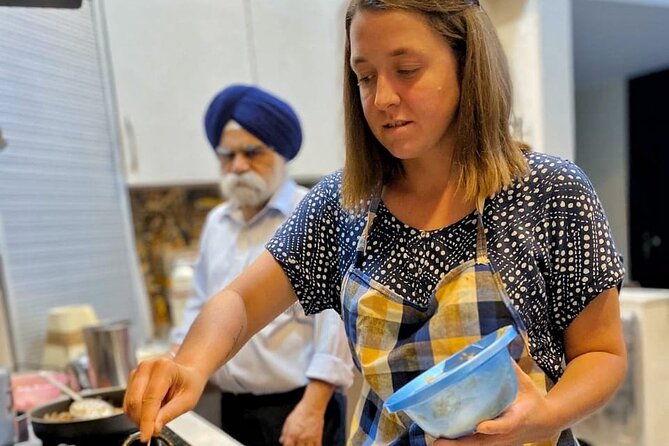
Cook dinner with a Delhi family. This small-group class brings you into JD’s home in Greater Kailash, where Indian recipes are taught through family methods, not studio demonstrations. I like the hands-on cooking and the chance to share the finished meal with the hosts. The main tradeoff is simple: the class lasts about two and a half hours, so the menu moves at a steady pace.
I also like the personal scale, with groups advertised at no more than eight, though the formal maximum is ten. JD and his father receive especially warm praise for their patience, hospitality, and clear explanations of spices. You should expect a social home meal rather than a quiet, private lesson, and the menu may vary depending on the session and dietary needs.
In This Review
- Key points to know before booking
- Arriving at Bindra’s House in Greater Kailash
- A warm welcome from JD and his father
- Building flavor with spices, not just following a recipe
- Preparing the main dish and rice
- Rolling and cooking the breads
- Finishing with dessert and a shared meal
- How authentic is the home setting?
- Group size, pace, and the value of $50.22
- Dietary needs and the practical limits
- Who will enjoy this cooking class most?
- Should you book it?
- FAQ
- Where does the Indian cooking class begin?
- How long does the experience last?
- How many people can join the class?
- What food will I prepare?
- Are vegetarian and non-vegetarian options available?
- What is included in the price?
Key points to know before booking
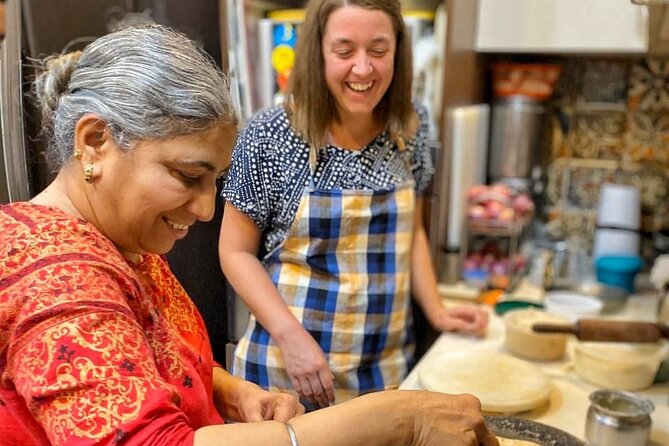
- You cook in a real family home: The class takes place at Bindra’s House in Greater Kailash, not in a commercial cooking school.
- JD and his father lead the class: Their family connection gives the food a personal feel, with recipes and methods linked to earlier generations.
- The meal covers several Indian staples: Expect a main dish, rice, two types of bread, and dessert, with some sessions including additional dishes.
- Spices receive serious attention: You learn how spices affect aroma and flavor, along with small methods that make a difference.
- The class ends around the family table: You eat what you have prepared while talking about Indian food and culture.
- The price is about $50.22 per person: That includes the cooking session, the meal, tea or coffee, and bottled water, but not gratuity.
Arriving at Bindra’s House in Greater Kailash
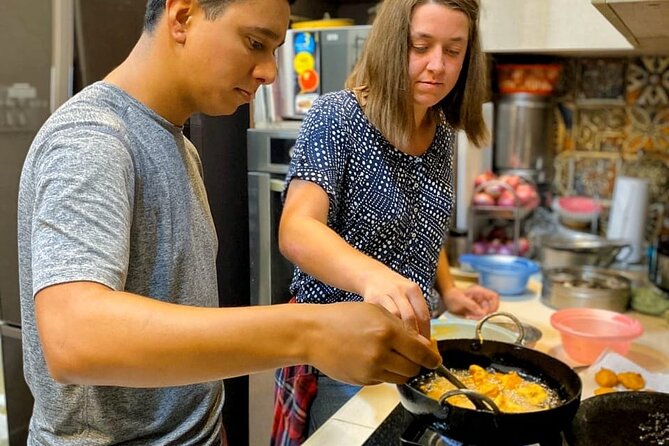
Your meeting point is R-142, Greater Kailash 1, Block R, part 1, New Delhi, Delhi 110048. The location is near public transportation, and the address is supplied clearly, which helps in a city where finding the right residential entrance can take more attention than expected.
The home setting changes the tone at once. You are not walking into a restaurant kitchen with rows of identical workstations. You are entering a family home, where the food has a connection to the people preparing it. That makes the first few minutes important: this is a social introduction to Indian cooking as practiced in one household.
The home has air-conditioning and restroom facilities, practical comforts in Delhi. You will want to allow time to reach Greater Kailash without rushing, since the class begins at a fixed meeting point and lasts only about two and a half hours. The activity ends at the same address, so you do not need to arrange a separate return point.
More Cooking Classes in New Delhi
- Five Course Cooking Class & Meal
★ 5.0 · 250 reviews - Veg and Non veg : Private Cooking Class in Delhi home (7 meal)
★ 5.0 · 226 reviews - New Delhi: Indian Cooking Class in a Local Home
★ 5.0 · 65 reviews
A warm welcome from JD and his father
JD and his father are the central reason this class feels different from a standard cooking demonstration. Their style is described as welcoming and patient, with the family treating the group as part of the household for the afternoon or evening.
The class may begin with tea, coffee, bottled water, and, according to one account, chai and biscuits. These small touches matter because they give you time to settle in before handling ingredients. You are not simply handed a recipe sheet and told to keep up.
JD’s father has been praised for making visitors feel at home, while JD takes time to explain the purpose behind each method. If you have never cooked Indian food, that patience is useful. Indian recipes can look easy on paper, yet the timing of spices, the heat of the pan, and the texture of dough often determine the result.
The family also has professional cooking experience, which helps explain the careful preparation and tidy kitchen described by one participant. Still, the atmosphere is informal. You get instruction from people who cook this food regularly, not a theatrical performance designed only for photographs.
Building flavor with spices, not just following a recipe
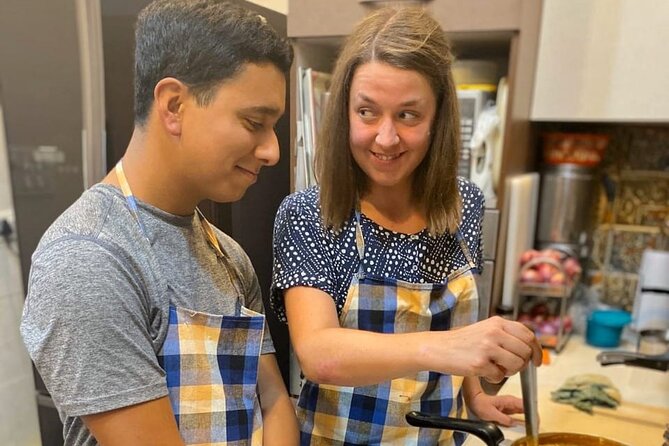
The best part of the class is likely to be the spice lesson. You learn how individual spices shape the dish, how aromas develop, and how small changes affect the finished food.
That is more useful than memorizing a fixed list of ingredients. Indian cooking often depends on order and heat. A spice added at one point can give a different result from the same spice added later. The class focuses on those practical choices, along with the small secrets that help a dish taste more complete.
You also hear the story behind the food you prepare. The lesson connects dishes to Indian tradition and family cooking, so the meal becomes more than a collection of techniques. I like this approach because it helps you understand why a dish is made in a certain way, not just what to put into it.
The preparation is designed to be hands-on. You take part in the work rather than watching JD do everything. At the same time, the hosts prepare some ingredients in advance, or may handle time-consuming chopping, so the limited class period can focus on cooking techniques. One particularly useful detail is that the emphasis is on spicing and methods rather than making you spend the whole session cutting vegetables.
Preparing the main dish and rice
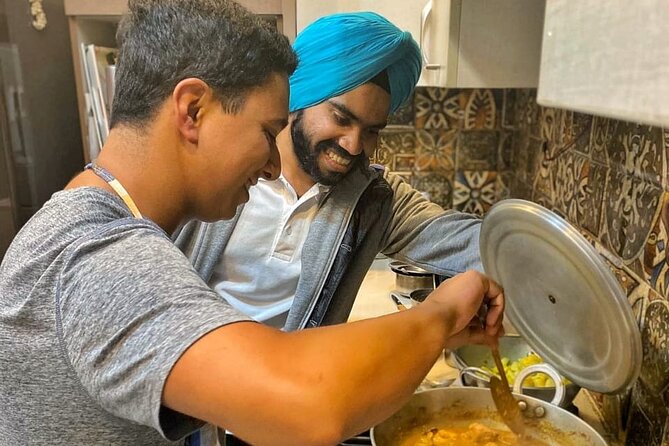
The meal includes one main dish and one rice dish. The exact recipes are not fixed in the information provided, so you should not book expecting a particular curry. The menu can change, and vegetarian and non-vegetarian options are available.
That flexibility is a plus if you have dietary needs or want to try a style of food that fits your preferences. Make those requirements known when arranging the experience, since the hosts have accommodated dietary requests in the past.
The main dish gives you a chance to see how a curry base develops. You learn how spices, ingredients, and cooking time work together, rather than simply adding a ready-made blend. The rice dish adds another useful lesson, since rice is often treated as a side item even though its texture and seasoning can make or break an Indian meal.
The finished menu has received particularly strong praise for dals and parathas, and rice pudding has been singled out as a satisfying dessert. Those dishes are not guaranteed for every session, but they give you a good sense of the kind of North Indian cooking the class may cover.
A completely different kind of day out:
- Old & New Delhi City Tour – Half or Full Day Options Available
★ 5.0 · 4,811 reviews - Same Day Taj Mahal, Agra Fort & Baby Taj Tour from Delhi by Car
★ 5.0 · 4,304 reviews - Taj Mahal Day Tour from Delhi by Superfast Train – TOP RATED TOUR
★ 5.0 · 4,166 reviews - Full Day Taj Mahal, Agra Fort & Baby Taj Tour from Delhi by Car
★ 5.0 · 3,647 reviews
Rolling and cooking the breads
Bread is one of the most useful parts of the class for anyone hoping to cook Indian food at home. The meal generally includes two types of bread, while the wider description refers to three types in one place. Because the details do not match perfectly, it is safest to expect at least two bread preparations, with the final selection depending on the session.
Paratha is one example mentioned in connection with the class. Learning to make it gives you practice with dough, rolling, shaping, and cooking on the pan. These are physical skills, and a written recipe cannot easily show the feel of the dough or the point at which the bread is ready.
The breads also make the class feel like a full meal rather than a narrow lesson on curry. You work across several parts of the menu, then sit down to see how the dishes fit together. If you have limited cooking experience, the hosts’ patient approach should help, though the two-and-a-half-hour schedule means you will need to stay engaged.
Finishing with dessert and a shared meal
Dessert closes the cooking portion. Rice pudding has been praised as a delicious ending, but the exact sweet dish is not promised in advance. This is another reason to treat the advertised menu as a guide rather than a fixed restaurant order.
Once the food is ready, the group eats together in the home. Lunch and dinner are both listed as inclusions, so the timing of your booking determines which meal you share. Tea or coffee and bottled water are also included.
I like this final stage because you get to judge your own work immediately. You can compare textures, ask why a spice was used, and talk through what you would change at home. The hosts also use the meal to share cultural information about India, turning the final table into part of the lesson.
The social side is a major part of the value. The group is small, but it is still a group. You may be cooking with a couple, a solo participant, or a small party, and the shared meal gives everyone an easy way to talk. If you prefer a completely private class with no conversation, this may feel more communal than expected.
How authentic is the home setting?
The word authentic can be overused in food tourism, but here the setting does carry real weight. You are cooking in the hosts’ family home, with recipes and techniques described as having passed through generations. The kitchen is air-conditioned, clean, and prepared for teaching, yet it remains part of a lived-in home rather than a purpose-built classroom.
That combination is useful. A commercial studio might offer more space, clearer stations, and a more polished setup. This experience gives you a closer look at how food, family, and hospitality come together in an Indian household.
You should also keep your expectations realistic. A two-and-a-half-hour class cannot explain every regional style of Indian cuisine. The focus is mainly on North Indian food and on the family’s own cooking traditions. That is a strength if you want a personal introduction, but less suitable if your main goal is a broad survey of cuisines from across India.
Group size, pace, and the value of $50.22
At $50.22 per person, the price is reasonable for a meal, instruction, refreshments, and access to a private home. You are paying not only for food but also for the time JD and his father spend explaining ingredients, correcting techniques, and talking about culture.
The group size helps keep the experience personal. The main description sets the limit at eight, while the additional information gives a maximum of ten. Either way, this is far smaller than a large food tour, although the exact number can vary. Smaller groups should mean more chances to ask questions and handle the preparation yourself.
There are group discounts, which may improve the value for couples, families, or friends booking together. A mobile ticket is accepted, making the practical side straightforward. Gratuity is not included, so budget separately if you want to thank the hosts for the service.
The class is also a good value for solo visitors. One solo participant booked at short notice and received joining instructions quickly, then took part in what became a highly personal cooking session. A solo booking may not always become private, but the small format gives you a better chance to connect with the hosts than a large group activity would.
Dietary needs and the practical limits
Vegetarian and non-vegetarian options are available, and dietary requirements have been accommodated. You should still provide those details before the class rather than waiting until ingredients are being prepared.
The experience is not presented as wheelchair accessible, and no specific accessibility details are supplied. If you have mobility, dietary, or other needs that affect participation, confirm them with the provider before booking.
Good weather is required, and the activity also depends on a minimum number of participants. If poor weather or low numbers cause cancellation, you are offered another date, another experience, or a full refund. For your own plans, avoid placing this class immediately before a flight or train departure.
Free cancellation is available up to 24 hours before the start time. Inside that window, you do not receive a refund, and changes are not accepted. The cut-off follows New Delhi local time.
Who will enjoy this cooking class most?
I would recommend this experience to anyone who wants to learn a few Indian dishes and understand the reasons behind them. It suits food lovers, curious home cooks, couples, families, and solo visitors who enjoy sitting down with new people after an activity.
It is especially good for you if:
- You want a family-home experience rather than a restaurant meal.
- You like learning by doing.
- You are interested in spices, breads, curry, and rice.
- You want recipes and methods you can use after returning home.
- You enjoy conversation and cultural exchange.
- You need vegetarian or non-vegetarian choices.
It may be less suitable if you want a silent, highly structured lesson, a professional kitchen with individual stations, or a guaranteed list of exact dishes. The schedule is compact, and the menu can change.
Should you book it?
I would book this class if your Delhi plans include one food experience with a personal connection. JD and his father bring warmth, patience, and practical instruction, while the meal gives you a satisfying reason to pay attention. The family-home setting, spice guidance, and shared table are the strongest reasons to choose it.
Before booking, confirm your dietary needs and ask which dishes are planned for your date if a specific menu matters to you. Also leave enough time to reach Greater Kailash and remember that gratuity is extra.
For about $50.22, you receive much more than a meal. You leave with several recipes, a better sense of how Indian spices work, and the memory of being welcomed into a Delhi home. That makes it a strong choice for a personal, food-centered afternoon or evening.
FAQ
Where does the Indian cooking class begin?
The class begins at R-142, Greater Kailash 1, Block R, part 1, New Delhi, Delhi 110048, India. It ends back at the same meeting point.
How long does the experience last?
The cooking class lasts approximately two hours and thirty minutes.
How many people can join the class?
The experience is described as an intimate group of up to eight people. The formal maximum is listed as ten participants.
What food will I prepare?
You prepare a complete Indian meal with one main dish, one rice dish, two types of bread, and a dessert. Another part of the description refers to three types of bread, so the exact menu may vary.
Are vegetarian and non-vegetarian options available?
Yes. The class offers both vegetarian and non-vegetarian options, and dietary requirements have been accommodated.
What is included in the price?
Lunch or dinner, coffee or tea, and bottled water are included. Gratuity is not included.
Just added in New Delhi
- Five Days Golden Triangle Tour with Ranthambore Delhi Agra Jaipur★ 5.0 · 11 reviews
- 5 Days Golden Triangle Tour with Ranthambore India★ 5.0 · 10 reviews
- 5 Days Golden Triangle Tour with Ranthambore Delhi Agra Jaipur★ 5.0 · 11 reviews
- 5-Day Private Luxury Golden Triangle Tour From Delhi★ 5.0 · 45 reviews
- Delhi, Agra, Jaipur & Ranthambhore Tiger Safari 5-Day Tour★ 5.0 · 47 reviews
- Private 5 Days Golden Triangle Tour – Visit Delhi Agra and Jaipur★ 5.0 · 26 reviews
- 5-Day Private Delhi, Agra and Jaipur with Ranthambhore Tiger Tour From Delhi★ 5.0 · 44 reviews
- 5-Day Private Golden Triangle Tour: Delhi, Agra, and Jaipur★ 5.0 · 62 reviews
Cooking Classes, compared.
Veg and Non veg : Private Cooking Class in Delhi home (7 meal)
Read our review →
Jaipur Market Tour & Vegetarian Rajasthani Home Cooking Class
Read our review →
Cooking Class in Jaipur – Family Experience with Meal & Transport
Read our review →
Interactive Cooking Class with a Local Family in Jaipur
Read our review →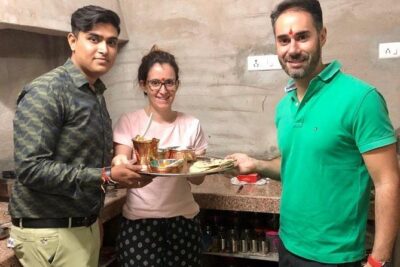
Private Cooking Class in Jodhpur With Pick Up & Drop Off
Read our review →Browse the lists this tour appears in