
Reviewed · COOKING CLASSES
Five Course Cooking Class & Meal
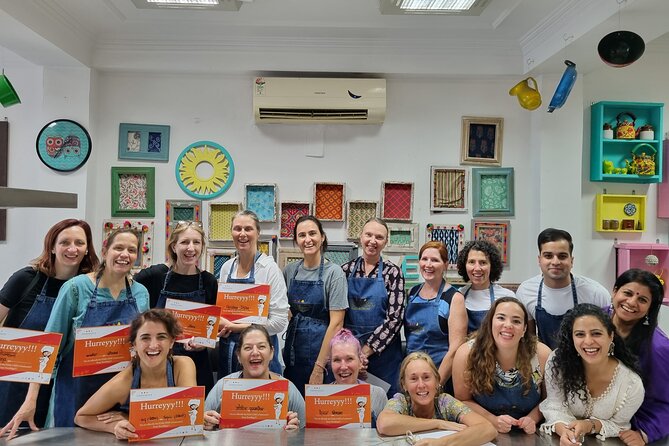
Spice lessons make better souvenirs than fridge magnets. This three-hour Tastesutra class near Lajpat Nagar Metro Station gives you hands-on practice with Indian spices, breads, lentils, paneer, chicken, vegetables, rice, and dessert. I like that you cook every stage instead of watching a chef perform, and I like that the recipes are practical enough to repeat at home.
The class also works well as a cultural introduction, with cooking and table customs explained along the way. My one caution is the pace: five courses in about three hours is a full morning or afternoon, so this suits you best if you want an active workshop rather than a slow, restaurant-style meal.
In This Review
- Key points to know before you book
- Why this Delhi cooking class is worth three hours
- Arriving near Lajpat Nagar Metro Station
- The spice lesson sets the tone
- Five courses, cooked rather than watched
- Chicken and paneer
- Lentils and seasonal vegetables
- Rice and breads
- Dessert and beverage
- What makes the teaching effective
- A meal that works for mixed groups
- The cultural side goes beyond the recipes
- Is $60.82 a fair price?
- Booking, timing, and practical details
- Who should book this Tastesutra experience?
- FAQ
- How long does the cooking class last?
- Where does the class meet?
- Where does the experience end?
- What food is included?
- Is lunch included?
- Are vegetarian options available?
- Can I request vegan or gluten-free food?
- How many people are required to book?
- Is the class private?
- What is the cancellation policy?
Key points to know before you book
- Five complete courses in one session: Expect a chicken dish, paneer, lentils, a seasonal vegetable, rice, breads, dessert, and one beverage.
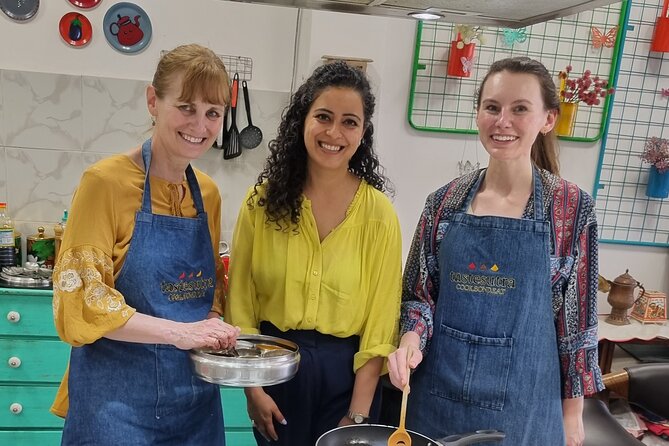
- Every participant cooks: You handle the food-making process step by step, including spice combinations and cooking techniques.
- A useful Delhi location: The studio is on the first floor near Lajpat Nagar Metro Station, with easy access by public transport.
- Small private-group format: Your booking is private to your group, with a minimum of two people and a maximum of 20.
- Dietary needs can be planned: Vegetarian, vegan, and gluten-free options are available if you request them when booking.
- Recipes continue after Delhi: Recipes are provided afterward by email, giving you a way to recreate the meal at home.
Why this Delhi cooking class is worth three hours
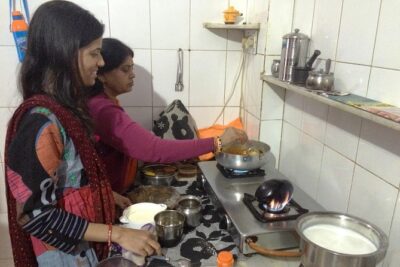
Indian food can look mysterious when you meet it only on a restaurant plate. This class gives you the useful parts of the story: which spices are used, when they go into the pan, how their proportions affect flavor, and how several simple dishes become a complete meal.
I particularly like the practical design. You are not limited to making one signature curry and calling it a day. The menu moves through several parts of a North Indian meal, so you see how lentils, vegetables, dairy, meat, rice, breads, and dessert fit together.
That range matters. Indian cooking depends on balance rather than one magic ingredient. A change in the amount of spice, or the moment it is added, can alter the result. The class explains those choices in a way that helps you cook again, rather than simply copy a dish once.
The food is described as home-style, fresh, and adaptable. You can ask for less chili, a useful point if your palate is not ready for a fiery Delhi meal. The emphasis is on traditional preparation, but the recipes are also presented as manageable for a home kitchen outside India.
More Cooking Classes in New Delhi
- Veg and Non veg : Private Cooking Class in Delhi home (7 meal)
★ 5.0 · 226 reviews - Indian Cooking Class in an Authentic Local Home – Learn 6 Dishes
★ 5.0 · 195 reviews - New Delhi: Indian Cooking Class in a Local Home
★ 5.0 · 65 reviews
Arriving near Lajpat Nagar Metro Station
The meeting point is Tastesutra Cooking Studio, First Floor, A-20, Block A, Lajpat Nagar II, near Lajpat Nagar Metro Station, New Delhi, Delhi 110024. The location is close to public transportation, and the nearest Metro station is Lajpat Nagar.
That makes the class easier to fit into a Delhi schedule than an experience far outside the central transport network. You still need to allow time to find the exact building and first-floor studio, so I would not plan a tight appointment immediately afterward.
The experience begins and ends at the same meeting point. Lunch and beverages are included, and there are no listed extra inclusions you need to budget for during the class.
The workshop lasts approximately three hours. That is long enough to cover a serious menu, but short enough to fit around sightseeing. The pace will likely feel active because you are preparing several dishes rather than spending the whole session on one recipe.
The spice lesson sets the tone
The class begins with an introduction to Indian spices and ingredients. This is more valuable than a quick list of names. You learn how combinations work, how ratios change flavor, and when different spices should be added during cooking.
That timing is one of the most useful lessons for a first-time Indian cook. Buying a jar of spice blend is easy. Knowing how to build flavor from separate ingredients is what lets you recreate the meal later.
The teaching also connects food with Indian customs. Participants have learned about traditional cooking methods, eating customs, table manners, and family food habits. Those details give the dishes a setting and help explain why home cooking may differ from what you find in a restaurant.
Different instructors are associated with the class, including Sonal, Sonam, Anchal, and Alchan. The teaching style described across the available comments is warm and clear, with personal stories, cooking tips, and explanations of the health uses of spices. Since instructors can vary, the exact personality of your session may differ.
Five courses, cooked rather than watched
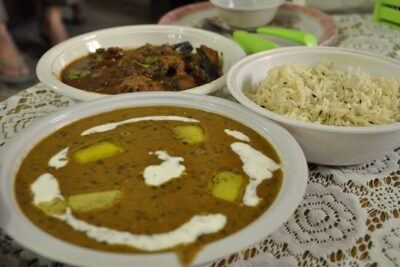
The menu includes a chicken dish, paneer dish, lentils, a seasonal vegetable, rice, breads, and dessert, along with one beverage. The phrase five-course meal covers several components, so you should think of it as a broad Indian cooking session rather than five restaurant-sized plated courses.
A completely different kind of day out:
- Old & New Delhi City Tour – Half or Full Day Options Available
★ 5.0 · 4,811 reviews - Same Day Taj Mahal, Agra Fort & Baby Taj Tour from Delhi by Car
★ 5.0 · 4,304 reviews - Taj Mahal Day Tour from Delhi by Superfast Train – TOP RATED TOUR
★ 5.0 · 4,166 reviews - Full Day Taj Mahal, Agra Fort & Baby Taj Tour from Delhi by Car
★ 5.0 · 3,647 reviews
Chicken and paneer
The chicken dish introduces one of the most familiar parts of North Indian cooking. The paneer dish provides a vegetarian protein and shows how the same general spice skills can be used with a different main ingredient.
This pairing is smart for a class. It lets you compare how spices behave with meat and fresh cheese, while also making the meal suitable for mixed groups. If someone in your party avoids meat, the available vegetarian alternatives can keep the whole session together.
Lentils and seasonal vegetables
Lentils are central to everyday Indian meals, and they offer a good lesson in building flavor from a modest base. The seasonal vegetable adds another texture and gives the menu a change from creamy or protein-heavy dishes.
The precise vegetable is not fixed in the information provided, which is normal for a seasonal component. If you have a strong preference or restriction, mention it when booking rather than assuming the dish will be changed at the last minute.
Rice and breads
Rice is included, and the class also covers breads. Past participants have described making as many as three types of bread in some sessions, though the exact selection may vary.
This is one of the hands-on parts worth anticipating. Bread preparation gives you a feel for Indian meals that a restaurant order cannot provide. It also adds work to the schedule, which helps explain why the session is described as intensive.
Dessert and beverage
Dessert completes the meal, and one beverage is included. Chai has been singled out as a memorable part of some sessions, although it is not guaranteed as the beverage for every booking.
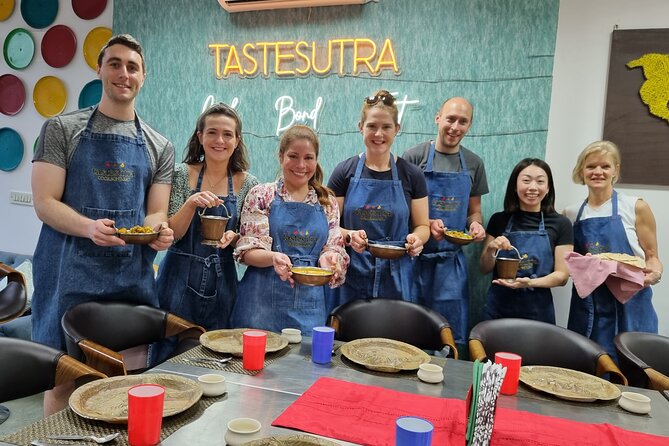
The final meal is served after the cooking is finished. You sit down with the food your group has prepared, which gives the class a satisfying finish and lets you taste how the separate dishes work together.
What makes the teaching effective
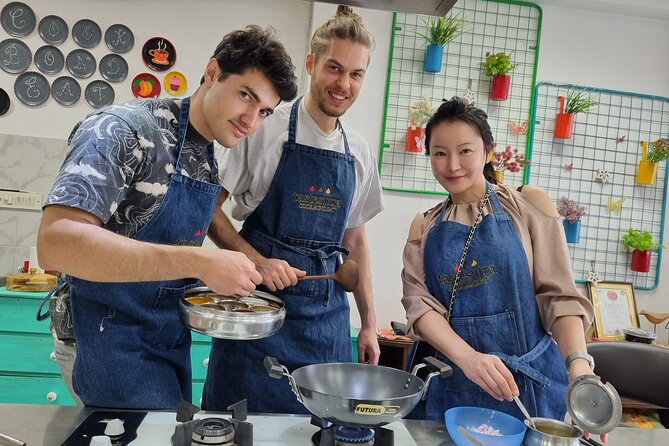
The strongest feature here is the instructor’s role. You are not simply handed ingredients and told to follow a card. The class explains the reason behind each stage, from spice mixing to the point at which ingredients enter the pan.
I also value the chance to adjust the heat. Indian food is not one fixed level of chili, and the ability to use less chili makes the session more welcoming for beginners. You can focus on flavor first, then increase the heat in your own kitchen once you feel more confident.
The instructors also explain how restaurant food can differ from traditional made-from-scratch cooking. That comparison helps you understand why a dish prepared at home may taste lighter, fresher, or less oily than a restaurant version.
The atmosphere appears friendly and personal. The class has been praised for warm hosts, clear explanations, clean facilities, and a relaxed tone. Some participants have even considered taking the course again, which suggests the teaching is not just a one-time demonstration.
Still, an interactive class asks something from you. You should expect to chop, mix, shape, stir, and pay attention. If you want to sit back while someone else does the work, this is the wrong format.
A meal that works for mixed groups
The menu covers both meat and vegetarian dishes, which makes the class suitable for couples or families with different eating habits. Vegetarian, vegan, and gluten-free options are available, but you must advise the provider at booking.
The gluten-free point deserves attention because breads are part of the standard menu. If you need to avoid gluten, ask for the modified plan in advance so the kitchen can prepare appropriately.
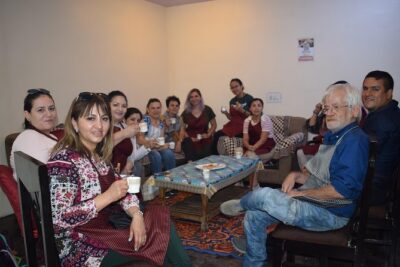
The class requires at least two people per booking and accepts up to 20. Your activity is private to your group, which can make questions and dietary adjustments easier than in a large open class. A group of 20 would feel different from a booking for two, so group size may affect how much individual attention you receive.
Families can also find this a useful shared activity. The cooking is educational without being formal, and the meal gives everyone a reason to stay involved until the end. The provider has also offered a separate market tour, but that is not included in this experience.
The cultural side goes beyond the recipes
Food is a direct way into Delhi life, and this class uses that advantage well. Along with recipes, you get context about how Indian families cook and eat, how spices support both flavor and tradition, and how dishes are served at home.
That cultural material may be the best reason to book if you have already seen several monuments. A cooking class does not replace Delhi’s historic sights, but it gives you a different way to understand daily life.
The hosts have also provided personal suggestions for places to visit in Delhi. Those recommendations are not part of the formal meal, and you should not count on them as a guided sightseeing service, but a friendly conversation at the studio can add useful local direction.
The experience is especially good for food-focused visitors, curious beginners, and anyone who wants a practical souvenir. You leave with cooking skills rather than another object in your luggage.
Is $60.82 a fair price?
At $60.82 per person, the price is not the cheapest way to eat lunch in Delhi. That is not the right comparison. You are paying for approximately three hours of instruction, ingredients, a full meal, beverages, cultural explanation, and the chance to take the recipes home.
The value improves if you know you will cook the dishes again. A restaurant meal gives you an immediate taste. This class gives you a repeatable method, and past participants have already prepared some of the recipes multiple times after returning home.
The private format also matters. Your group is not joined by unrelated participants, and the class can be adapted for vegetarian, vegan, or gluten-free needs when arranged ahead of time. For a couple or family that wants a shared activity, the cost can be easier to justify than several separate food stops.
I would be less enthusiastic if you are mainly looking for a cheap lunch or a short demonstration. The price makes sense when you want instruction and cultural context, not just food.
Booking, timing, and practical details
Confirmation is provided at booking, and the experience uses a mobile ticket. Public transport is a practical way to reach the studio, with Lajpat Nagar Metro Station the key landmark.
The activity ends back at the meeting point. Since the class runs for about three hours and includes eating at the end, leave a cushion before your next Delhi plan.
Free cancellation is available if you cancel at least 24 hours before the local start time. Inside that window, the payment is not refunded, and changes are not accepted. This is worth noting if your Delhi schedule may shift.
The class is listed as accessible to all kinds of public transportation. Specific details about step-free access inside the studio are not provided, so anyone needing a particular accessibility arrangement should confirm directly before booking.
Who should book this Tastesutra experience?
I would choose this class if you want to understand Indian food from the inside, especially if you are curious about spices and plan to cook at home. It is also a strong choice for couples, families, and private groups who want one shared activity near a Metro station.
You should book it if the idea of preparing several dishes sounds fun. The strongest praise has focused on the hands-on format, the friendly instructors, the clean kitchen, the clear explanations, and the fact that the finished food is both healthy and tasty.
I would skip it if you dislike group cooking, have only a narrow window before another appointment, or want a quiet meal with no participation. The class is active by design, and five courses require attention.
For most food-minded visitors, I think the cooking skills and cultural lessons make this a better souvenir than another restaurant meal. The chance to make the dishes again at home gives the experience value long after your Delhi stay.
FAQ
How long does the cooking class last?
The experience lasts approximately three hours, including the hands-on cooking workshop and meal.
Where does the class meet?
It meets at Tastesutra Cooking Studio, First Floor, A-20, Block A, Lajpat Nagar II, near Lajpat Nagar Metro Station, New Delhi, Delhi 110024, India.
Where does the experience end?
The class ends back at the meeting point.
What food is included?
The five-course cooking session includes a chicken dish, paneer dish, lentils, a seasonal vegetable, rice, breads, dessert, and one beverage.
Is lunch included?
Yes. Lunch and beverages are included in the experience.
Are vegetarian options available?
Yes. Vegetarian options are available, and you should request them when booking.
Can I request vegan or gluten-free food?
Yes. Vegan and gluten-free options are available. Advise the provider of your dietary needs at the time of booking.
How many people are required to book?
A minimum of two people is required per booking, and the maximum is 20 people.
Is the class private?
Yes. Only your group participates in the private activity.
What is the cancellation policy?
You can cancel at least 24 hours before the local start time for a full refund. Cancellations or changes made within 24 hours are not accepted and are not refunded.
Just added in New Delhi
- Five Days Golden Triangle Tour with Ranthambore Delhi Agra Jaipur★ 5.0 · 11 reviews
- 5 Days Golden Triangle Tour with Ranthambore India★ 5.0 · 10 reviews
- 5 Days Golden Triangle Tour with Ranthambore Delhi Agra Jaipur★ 5.0 · 11 reviews
- 5-Day Private Luxury Golden Triangle Tour From Delhi★ 5.0 · 45 reviews
- Delhi, Agra, Jaipur & Ranthambhore Tiger Safari 5-Day Tour★ 5.0 · 47 reviews
- Private 5 Days Golden Triangle Tour – Visit Delhi Agra and Jaipur★ 5.0 · 26 reviews
- 5-Day Private Delhi, Agra and Jaipur with Ranthambhore Tiger Tour From Delhi★ 5.0 · 44 reviews
- 5-Day Private Golden Triangle Tour: Delhi, Agra, and Jaipur★ 5.0 · 62 reviews
Cooking Classes, compared.
Veg and Non veg : Private Cooking Class in Delhi home (7 meal)
Read our review →
Indian Cooking Class in an Authentic Local Home – Learn 6 Dishes
Read our review →
Jaipur Market Tour & Vegetarian Rajasthani Home Cooking Class
Read our review →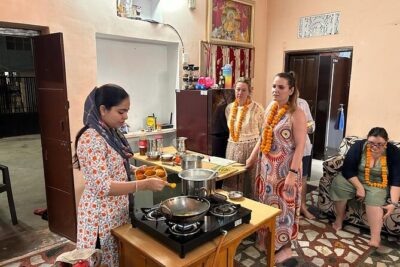
Cooking Class in Jaipur – Family Experience with Meal & Transport
Read our review →
Interactive Cooking Class with a Local Family in Jaipur
Read our review →
Private Cooking Class in Jodhpur With Pick Up & Drop Off
Read our review →Browse the lists this tour appears in