
Reviewed · WORKSHOPS
Hands-on Block Printing Workshop
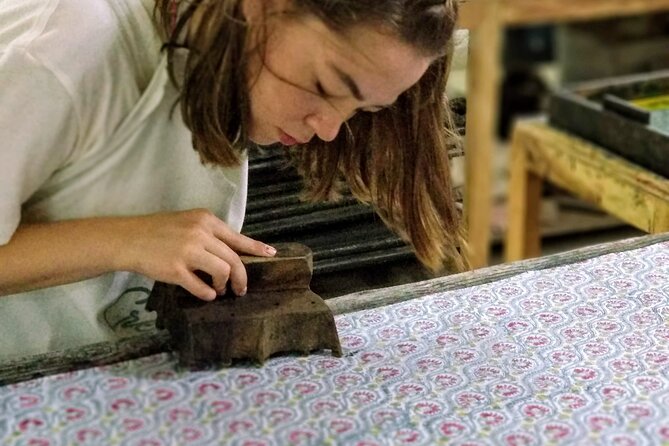
Make something you can wear home. This Jaipur workshop teaches Sanganeri block printing where the craft developed, using carved wooden blocks, water-based pigments, and patient step-by-step help. I like the authentic setting inside a working textile business, and I like that you leave with two personalized stoles rather than a souvenir picked from a shop shelf. The main consideration is the location in an industrial area, so you must arrange your own way there and allow time to find the studio.
The class is calm, practical, and creative. You learn the difference between ground, outline, and filler blocks, then build a design color by color. Your first print may be harder than it looks, especially when lining up several layers, and color swatches may not look exactly like the finished pigment. Still, the staff are patient, and the small-group format makes it easier to ask for help.
In This Review
- Key points at a glance
- Why Sanganeri printing is worth learning in Jaipur
- Arriving at the Sudarshanpura studio
- The first lesson: tools, blocks, and the order of a design
- Printing your first test piece
- Building two stoles, one layer at a time
- Borders and the finishing touch
- What makes the staff helpful
- Small-group comfort, with one group-size detail to check
- Is the $25.16 price good value?
- Who should book this Jaipur workshop?
- A few limitations to keep in mind
- Booking and cancellation advice
- Should you book it?
- FAQ
- Where does the block printing workshop take place?
- How long does the workshop last?
- What will I make during the class?
- Are materials and taxes included?
- Is hotel pickup provided?
- Is there an age requirement?
- Can I cancel for a full refund?
Key points at a glance
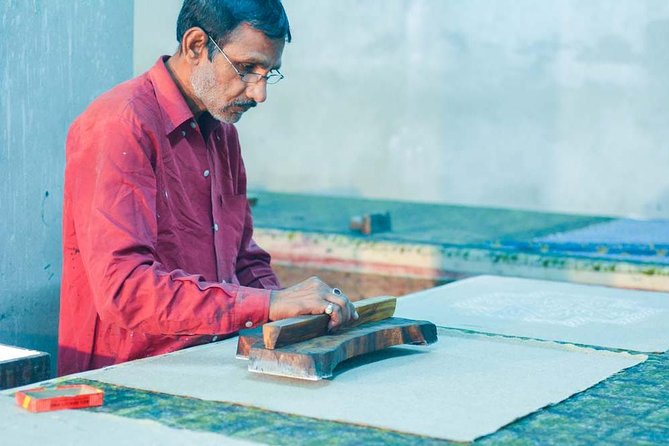
- Two handmade stoles to keep: You print the fabric yourself, making a useful Jaipur souvenir with a personal touch.
- Traditional Sanganeri technique: Learn a craft developed in the Jaipur region roughly 500 years ago.
- Three block types: Work with Gad for the ground, Rekh for outlines, and Datte for filling motifs.
- A relaxed working studio: The class takes place alongside an active textile business, not in a polished tourist show.
- Personal help with color and alignment: Staff can guide you through design choices and the tricky process of layering blocks.
- Plan your own transport: There is no hotel pickup, and the meeting point is in Sudarshanpura RIICO industrial area.
Why Sanganeri printing is worth learning in Jaipur
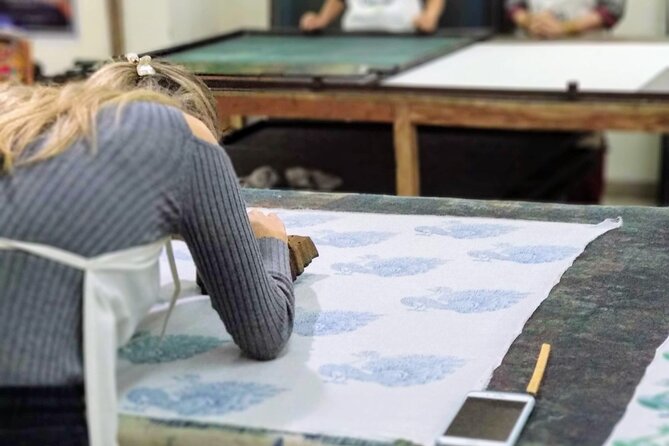
Block printing is easy to admire and surprisingly difficult to control. In Jaipur, printed fabrics appear throughout shops, markets, clothing stalls, and home interiors. This class gives you a chance to slow down and see the handwork behind those finished patterns.
Sanganeri printing is associated with the Jaipur region and is known for clear motifs and strong use of color. The technique depends on repeating carved blocks in the right order. A small mistake in pressure or placement can shift an outline, leave a pale patch, or make one section sit slightly higher than the next.
That small risk is part of the appeal. You are not simply watching a craftsperson work. You are learning why consistent printing takes practice.
The workshop begins with an introduction to the history and cultural role of block printing. You also get an explanation of the tools and materials, which helps make sense of the process before you handle the pigment. This opening is useful because the blocks are not interchangeable decorations. Each one has a job in the final image.
A few more options to weigh up in Jaipur
- Jaipur: Private Full Day Sightseeing Tour By Car with Guide
★ 4.9 · 1,839 reviews - 3-Hour Morning Bike Tour of Jaipur
★ 5.0 · 1,253 reviews - Jaipur: Private Sightseeing Day Tour with Guide by Car
★ 4.8 · 773 reviews
Arriving at the Sudarshanpura studio
The meeting point is Creatis, at A12 Sudarshanpura RIICO, behind the Tata Motors Service Center, in the Bais Godam area of Jaipur. It is in an industrial zone rather than near the city’s best-known monuments.
That setting may surprise you, but it also gives the workshop a working feel. The studio shares space with an actual textile operation, so the surroundings are practical and spacious rather than dressed up for tourists. I prefer this kind of setting when the goal is to understand how a craft is made.
You travel independently. Hotel pickup is not included, so check your route before leaving and give yourself enough time to locate the exact entrance. Public transportation is nearby, but the supplied information does not promise a particular route or travel time.
The activity ends back at the same meeting point. Plan your day around that fixed start and finish, especially if you are combining the class with a visit to Jaipur’s forts or old city.
The first lesson: tools, blocks, and the order of a design
The introductory section explains three useful block categories:
- Gad, or ground: Used for the base or broad background areas.
- Rekh, or outline: Used to define the edges of a motif.
- Datte, or filler: Used to add interior detail and complete the pattern.
Understanding this sequence matters. A multi-color peacock or floral design is not made with one stamp. It is built by placing separate blocks over the same piece of cloth, one layer at a time.
You are shown how the blocks work and how pigments are applied. The pigments are water-based, and the class lets you experiment with mixing and matching colors. The available designs come from the studio’s fabric collection, so you can choose from established Sanganeri-inspired motifs rather than having to invent a complete pattern from nothing.
This is a good balance for beginners. You get room to make choices, but you are not left staring at a blank piece of fabric.
Printing your first test piece
Before working on the final fabric, you receive a test piece for practice. Use it. This is where you learn the amount of pressure needed and start judging where the next block should land.
Alignment is the hardest part for many beginners. You need to look at the edges of the printed motif and place the following block so the design continues cleanly. The blocks may have registration marks or visual guides, but the process still depends on your eye and a steady hand.
Do not rush because the pattern seems simple. A plain-looking design may require careful spacing across a long strip of fabric. A more detailed design may require four or more color layers.
One especially useful tip is to judge the actual test print before committing to the final stoles. The color swatches may not match the mixed pigments exactly. If the first result is not to your taste, ask about changing the color before continuing.
That is practical advice, not fussiness. You are making something you plan to keep, and a small color change can affect the whole piece.
A completely different kind of day out:
- Jaipur: Full-Day City Tour with Car, Guide & Skip-the-Line
★ 4.8 · 512 reviews - Full-Day Jaipur Private Sightseeing Tour by Car with Guide
★ 5.0 · 472 reviews - Pink City Cooking Class
★ 5.0 · 452 reviews - Private Elephant Sanctuary
★ 5.0 · 390 reviews
Building two stoles, one layer at a time
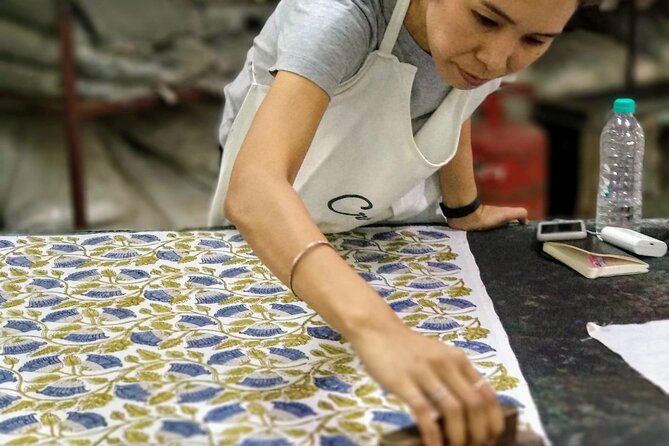
The main project is two block-printed stoles. You choose motifs and colors, then print them by layering the design across the fabric.
The two-hour length gives you enough time to make a finished piece while keeping the activity manageable during a busy Jaipur visit. A simpler pattern may be easier to complete within the session. A detailed, multi-color design requires more patience.
One participant completed a peacock design using a four-color process. That example gives you a good sense of the work involved. The final image is created through repeated overlaying, not one quick impression.
You can choose how ambitious to be. I would pick a pattern that interests you, but I would also listen to the staff if they warn that a particular stencil is difficult. Some people choose complicated designs and need extra time. The helpful part is that the studio team has been described as patient even when a project takes longer than expected.
The class is hands-on from start to finish. You are not given a preprinted stole and asked to add one decorative stamp. Your marks, color choices, and small imperfections become part of the finished piece.
Borders and the finishing touch
After the fabric has been printed, the borders are machine-embroidered. This gives the stoles a more finished appearance and helps turn your practice project into something you can use.
The border work is important for the final presentation. Block printing creates the central pattern, while the embroidered edge provides a neat frame. The result is still your handmade souvenir, but it does not look like a loose sample of fabric.
The supplied activity details also refer to creating a scarf or placemats, so the exact finished format may depend on the session arrangement or chosen project. The main description promises two stoles, and that is the expectation you should confirm when booking if the final format matters to you.
Some people have also used the workshop to print on clothing they brought with them. That possibility appears in the experience feedback, but it is not listed as a guaranteed inclusion. Ask first rather than arriving with a favorite garment and assuming it can be used.
What makes the staff helpful
The strongest feature here is the level of encouragement during the practical work. Staff help with choosing colors, selecting a manageable design, and placing the blocks correctly.
Mohit, the owner, is specifically praised for creating a welcoming atmosphere, while the assistants are described as calm, kind, and willing to stay with a difficult project. That matters because block printing can become frustrating after a few uneven impressions.
You can also choose your own level of difficulty. A beginner who wants a simple, clean pattern can keep the process straightforward. Someone who enjoys a challenge can try a more detailed stencil, provided there is enough time.
The best experience will come from asking questions early. Tell the staff if you prefer bold colors, a quieter design, or a pattern that is easier to align. Their guidance is part of the value of the class.
Small-group comfort, with one group-size detail to check
The experience is promoted as a small class capped at six people, which is the ideal arrangement for personal help. With only a few people at the tables, you should have a better chance to receive guidance when you are lining up a difficult motif or deciding between colors.
The additional booking information gives a maximum of 15 participants, so group size may depend on the date or booking arrangement. If personal instruction is important to you, confirm the expected number before paying.
A large school group had trouble getting full choice of colors and patterns. That is a useful warning. The workshop works best when the class is genuinely small, since too many people can limit the available designs and make one-to-one help harder.
For couples, solo visitors, or a small group of friends, the format should feel much more relaxed. The studio has room for creative work without the pressure of a large organized group.
Is the $25.16 price good value?
At $25.16 per person, the class is reasonably priced for a two-hour creative activity that includes materials, instruction, taxes, GST, and two finished stoles.
The value is not only in the fabric. You are paying for access to a traditional process, the use of studio designs and tools, guidance from people who work with the craft, and the chance to make corrections while you are still learning.
A shop-bought scarf may cost less, especially if you are skilled at bargaining. But it will not carry the same connection to your time in Jaipur. Your finished stoles may have tiny irregularities, and that is exactly what makes them personal.
The price is strongest for anyone who wants a useful souvenir rather than another decorative object. It is also a good choice if you need a quiet break from sightseeing and shopping.
Who should book this Jaipur workshop?
I would recommend this class to:
- Adults who enjoy hands-on activities
- First-time printers who want patient instruction
- Couples and small groups looking for a shared project
- People interested in Indian textile traditions
- Anyone who wants a wearable souvenir made during the trip
- Visitors who need a calm activity between busy sightseeing days
The official minimum age is 18. Although one piece of feedback describes the activity as suitable for children, you should follow the stated age rule when booking.
You should also have a moderate level of physical fitness. The workshop is not described as strenuous, but you will be working with fabric, standing or sitting at a work surface, and concentrating on repeated printing.
Smart casual clothing is recommended. Since you are handling pigments, avoid wearing anything you would be upset to mark.
A few limitations to keep in mind
This is a craft class, not a full textile tour of Jaipur. The cultural introduction is useful, but the main focus is on making your own piece. If you want a long lecture on regional textile history, this may feel light.
The industrial-area location is another tradeoff. It is less picturesque than a historic market or palace setting, and you must make your own way there. The benefit is a real working studio rather than a staged demonstration.
Color choice can also be less predictable than expected. The shade on a swatch may change after pigments are mixed or printed. Test first, speak up quickly, and do not feel obliged to continue with a color you dislike.
Finally, allow for the fact that two hours is an approximate duration. A simple project may fit comfortably. A detailed pattern, a large group, or extra finishing work may require more time.
Booking and cancellation advice
Confirmation is provided at the time of booking, and the ticket is mobile, so you do not need a printed voucher. The class includes all taxes, fees, handling charges, and GST.
Free cancellation is available if you cancel at least 24 hours before the local start time. Cancellation within 24 hours is not refundable, and late changes are not accepted. The activity also requires a minimum number of participants. If that minimum is not reached and the class is canceled, you are offered another date or experience, or a full refund.
Should you book it?
Book this workshop if you want to make, not just buy, your Jaipur souvenir. The best reasons are the traditional Sanganeri method, the chance to print two stoles yourself, and the kind support available when the alignment gets tricky.
I would book it early if you want the smallest possible class, then confirm the expected group size and finished item. Choose a design you can realistically complete, test every color, and leave enough time to reach Sudarshanpura.
Skip it if you want a polished sightseeing stop close to Jaipur’s major monuments, or if you dislike slow, careful handwork. For most adults who enjoy learning by doing, this is a worthwhile two-hour pause with something useful to take home.
FAQ
Where does the block printing workshop take place?
It takes place at Creatis, A12 Sudarshanpura RIICO, behind the Tata Motors Service Center, Industrial Area, Sudarshanpura, Bais Godam, Jaipur, Rajasthan 302006, India.
How long does the workshop last?
The activity lasts approximately two hours.
What will I make during the class?
The main activity includes creating two block-printed stoles. The activity details also refer to a scarf or placemats, so confirm the exact finished format if that is important to you.
Are materials and taxes included?
Yes. The price includes all taxes, fees, handling charges, GST, tools, pigments, and the materials used in the workshop.
Is hotel pickup provided?
No. You must travel independently to the meeting point. The location is near public transportation.
Is there an age requirement?
Yes. The stated minimum age is 18.
Can I cancel for a full refund?
Yes, if you cancel at least 24 hours before the experience start time. Cancellations or changes made within 24 hours are not accepted for a refund.
Just added in Jaipur
- Jaipur Private Sightseeing Tour – All-Inclusive with Car & Guide★ 5.0 · 16 reviews
- Jaipur Private Tour 2 Days with Car & Guide★ 5.0 · 13 reviews
- Private Jaipur Tour with Guide & All Entry Tickets★ 5.0 · 20 reviews
- Yoga in Jaipur with Amit (Yogi on Travel)★ 5.0 · 17 reviews
- Vintage Walk Amer★ 5.0 · 11 reviews
- Private 4-Day Wildlife & Taj Mahal Tour from Jaipur to Delhi★ 5.0 · 23 reviews
- Wheel Pottery Workshop★ 4.5 · 19 reviews
- Ranthambore Tiger Safari Private Same Day Trip from Jaipur★ 5.0 · 18 reviews
Workshops, compared.

5 Senses Tour – Old + New Delhi, Workshops, Lunch all inclusive
Read our review →
Veg and Non veg : Private Cooking Class in Delhi home (7 meal)
Read our review →
Indian Cooking Class in an Authentic Local Home – Learn 6 Dishes
Read our review →
Private Guided Cooking Workshop Experience in Jodhphur
Read our review →
Traditional miniature painting class at Pacific Art
Read our review →Browse the lists this tour appears in