

Reviewed · WALKING TOURS
Fortkochi Heritage Walking tour with a local guide
Old Kochi still has stories tucked behind its grand façades. This three-hour walk with Biju, a guide born in the area, brings Fort Kochi, Mattancherry, and Jew Town together through local stories, spice-trade sites, and working craft spaces. I especially like the close look at Chinese fishing nets and ginger warehouses, plus the chance to see candle-making, papadam-making, and the Dhobi Khana laundry in daily use. The main drawback is the heat, particularly on the 2pm to 5pm departure, along with extra fees for tuk-tuks and the synagogue.
This is not simply a checklist of churches and colonial buildings. Biju’s strength is explaining how Arab, Chinese, Portuguese, Dutch, British, Jewish, and local Kochi traditions shaped one compact part of Kerala. You should still arrive ready to walk for up to three and a half hours, and you will need modest clothing for religious sites.
In This Review
- Five things that make this Fort Kochi walk worthwhile
- Meeting Biju beside Kashi Art Café
- Fort Kochi through five outside influences
- Chinese fishing nets and the working waterfront
- Ginger warehouses and Kochi’s spice-trade legacy
- Candle-making, papadam, and the Dhobi Khana
- Portuguese churches, Dutch Palace, and the colonial layers
- Jew Town and the Paradesi Synagogue
- How Biju’s guiding style changes the experience
- Timing, heat, clothing, and walking effort
- Is $25 good value for three hours?
- Who should book this Fort Kochi heritage walk?
- Should you book it?
- FAQ
- Where does the Fort Kochi heritage walk begin?
- How long does the tour last?
- Is the tour conducted in English?
- Is entry to the Dutch Palace included?
- Is the Paradesi Synagogue entrance fee included?
- What happens if the Dutch Palace or other sites are closed?
- Is this tour suitable for children and people with limited mobility?
Five things that make this Fort Kochi walk worthwhile
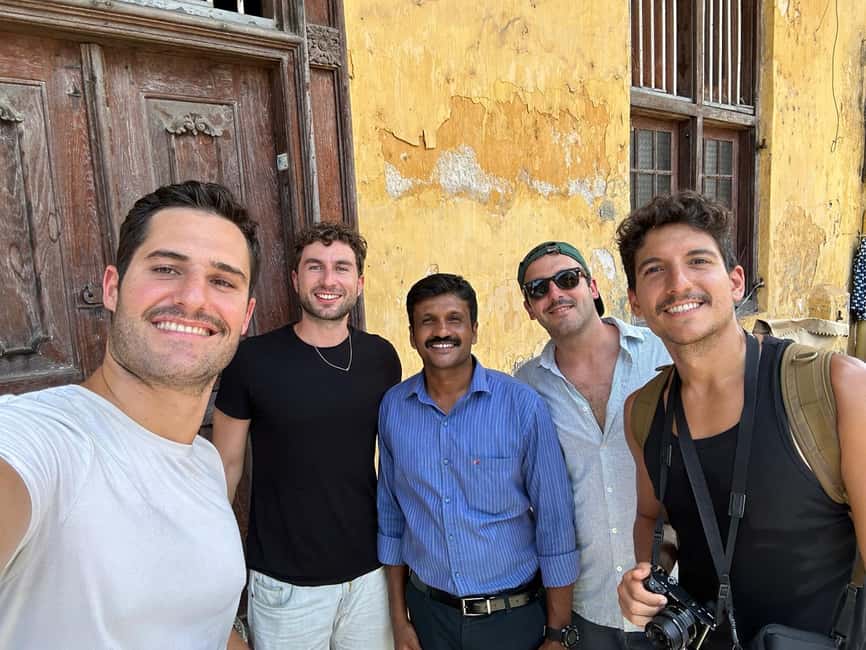
- Biju’s local connection: Your guide was born and raised in Old Kochi and brings personal insight to the streets, buildings, and communities.
- Working heritage, not just monuments: See traditional candle-making, papadam-making, spice handling, ginger storage, and the open-air Dhobi Khana laundry.
- A broad cultural story: Learn how Arab, Chinese, Portuguese, Dutch, British, Jewish, and Kochi influences shaped food, architecture, and customs.
- Jew Town and the Paradesi Synagogue: Visit one of India’s oldest Jewish quarters, with synagogue entry available for an extra fee when open.
- Good value at $25: The price includes a three-hour guided walk, Dutch Palace entry, local craft stops, and short tuk-tuk rides arranged as part of the route, though the tuk-tuk fare itself is extra.
Meeting Biju beside Kashi Art Café
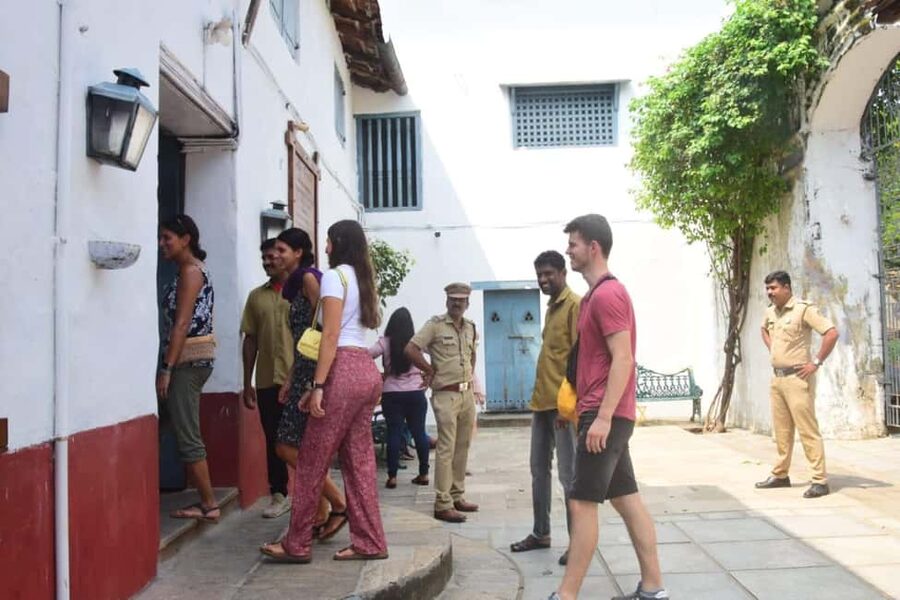
The tour begins in front of Kashi Art Café on Burger Street in Fort Nagar, Fort Kochi. Arrive about 10 minutes early. The guide will ask for your name, and the operator sends the guide’s details and final meeting information by WhatsApp or email before the walk.
Starting here makes practical sense. Fort Kochi is easier to understand on foot than from a vehicle, and the café is a clear reference point in an area filled with narrow streets, old walls, galleries, cafés, and guesthouses. Wear shoes that can handle uneven walking, and bring sunscreen, a hat, sunglasses, water, insect repellent, and an umbrella.
The route combines walking with short tuk-tuk rides, mainly for the move from Fort Kochi toward Mattancherry and Jew Town. That saves your legs and gives you a quick look at the changing streets between the districts, but remember that tuk-tuk transfer fees are not included in the $25 price.
More Walking Tours in Kochi
- Kochi Tour Guide -A Heritage walking tour in Fort kochi and Mattancherry !
★ 5.0 · 143 reviews - Walking Tour Of Fortkochi & Local Lunch
★ 5.0 · 40 reviews - Kochi: Local Street Food Guided Walking Tour with Tastings
★ 4.5 · 34 reviews
Fort Kochi through five outside influences
Biju’s main job is to connect places that can otherwise seem unrelated. A church may look Portuguese, a warehouse may point to the spice trade, and a fishing net may appear simply picturesque. The guide explains how these details fit into Kochi’s long contact with merchants, rulers, religious groups, and colonial powers.
The tour presents Old Kochi as a place where more than 30 communities once lived side by side. That figure matters because it explains why the area feels culturally mixed rather than neatly divided. Arab traders helped shape the commercial story, Chinese contacts left their mark on fishing methods, and Portuguese, Dutch, and British rule affected buildings, administration, religion, and trade.
I like this approach because it gives you a way to read the streets after the tour ends. You begin to look at food, façades, warehouses, and religious buildings as clues rather than isolated sights.
The colonial story is not presented as a simple parade of European achievements. You also hear about the difficult and turbulent side of foreign rule, including the Freedom Fighters’ Jail, a lesser-known place connected with India’s independence struggle. It offers a useful change of mood from the more polished colonial buildings nearby.
Chinese fishing nets and the working waterfront

The Chinese fishing nets are among Fort Kochi’s most familiar sights, but timing and explanation make a difference. You may see the nets being operated at close range, with their large wooden frames rising and lowering over the water. The action gives the famous waterfront view a practical purpose.
Biju’s commentary helps explain the Chinese influence without treating the nets as a decorative photo stop. You see a traditional fishing system still connected to local work, not just an old object preserved for visitors.
This part is also a good reason to keep your camera ready, although the tour is more than a photo walk. The nets can be busy or quiet depending on local conditions, so the experience may vary. Even if there is less activity, the stop gives you a useful introduction to Kochi’s relationship with the sea and its trading past.
Ginger warehouses and Kochi’s spice-trade legacy
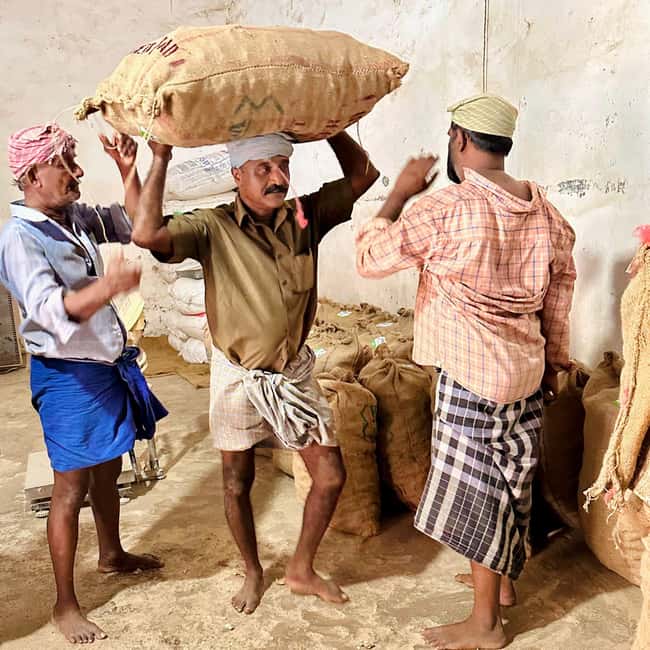
Spices are central to Kochi’s story, but you will get more from this tour than a general explanation about pepper and old sea routes. The route includes ginger warehouses and spice-processing areas, where you can see how the trade connects to ordinary work and storage.
That is one of the strongest parts of the experience for me. A grand palace tells you who held power, while a warehouse helps you understand what made the city valuable in the first place. Ginger, papadam, and other food-related stops bring the commercial story down to street level.
You should expect these to be working spaces rather than staged museum displays. Activity can be limited on Sundays and public holidays, so the full sight of production is not guaranteed. The tour still has value on quieter days, since Biju can explain the purpose and background of the places you visit.
Shopping may be part of the route, and you can buy spices, souvenirs, or handicrafts if you wish. You are not required to purchase anything, and those personal expenses are separate from the tour fee.
A completely different kind of day out:
- Adventure Tuk Tuk Tour in kochi – A Private Guided Tour with Hotel Pick up
★ 5.0 · 579 reviews - Cochin: Backwater Village Eco Boat Cruise with Lunch
★ 4.8 · 502 reviews - Full Day Backwater Village Punting Boat Cruise
★ 5.0 · 393 reviews - Kochi: Private Tuk-Tuk City Tour with Hotel Pickup
★ 4.8 · 292 reviews
Candle-making, papadam, and the Dhobi Khana
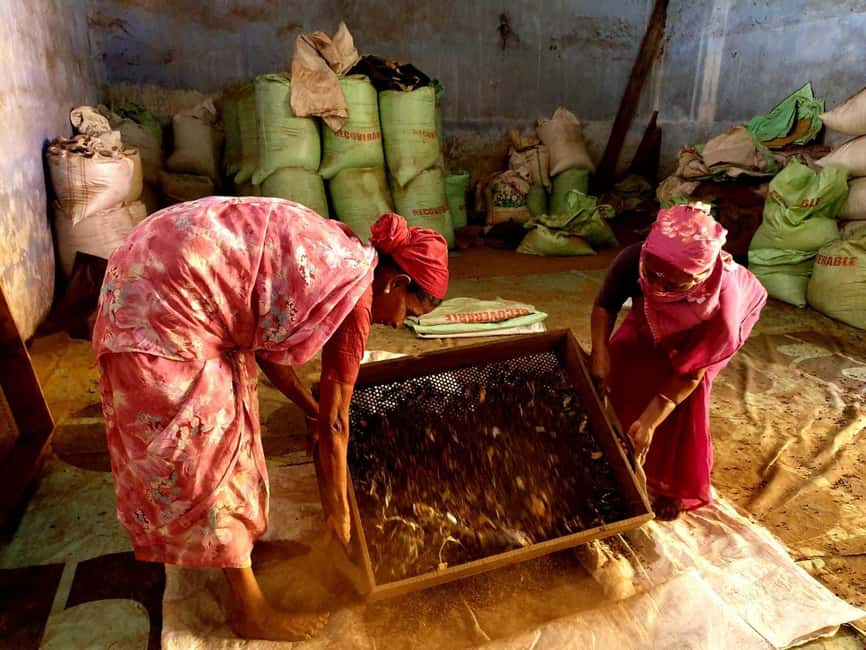
The craft stops give the walk its strongest everyday character. Traditional candle-making and papadam-making show small-scale production that is easy to miss if you stay only with major monuments.
Papadam is familiar to many people as a crisp accompaniment to an Indian meal, but seeing it made connects the finished food with local hands and routines. Candle-making offers a similar glimpse into a practical craft. These are modest stops, yet they help you see that heritage is not limited to palaces and churches.
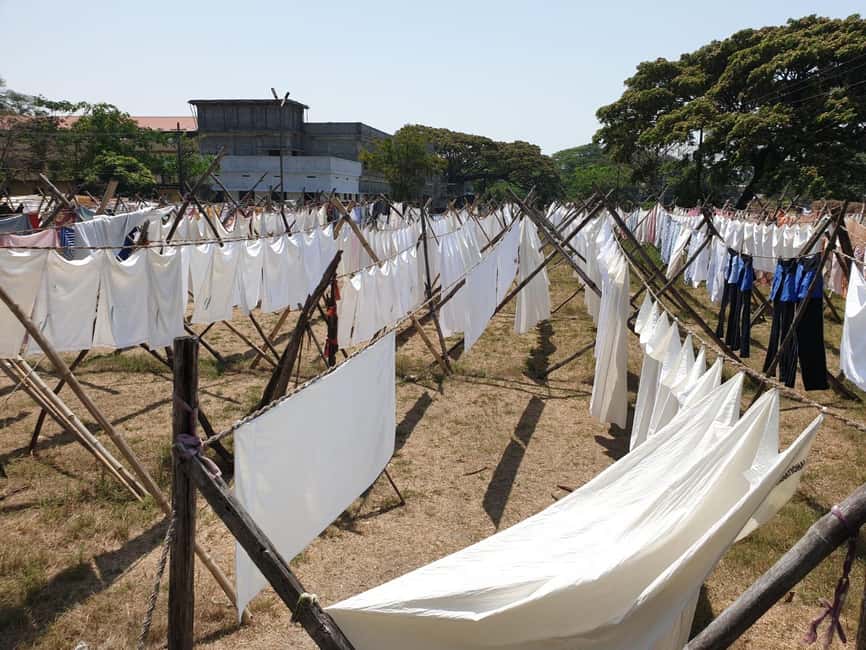
The Dhobi Khana laundry is another useful stop. This open-air laundry reflects a long-standing service tradition and gives you a look at work that continues outside formal tourist attractions. You may find the setting more revealing than another restored colonial room because it shows how the neighborhood functions today.
Be prepared for the possibility that working areas are quiet at certain times. The tour does not promise a full demonstration at every stop, and Sunday or public-holiday schedules may reduce activity.
Portuguese churches, Dutch Palace, and the colonial layers
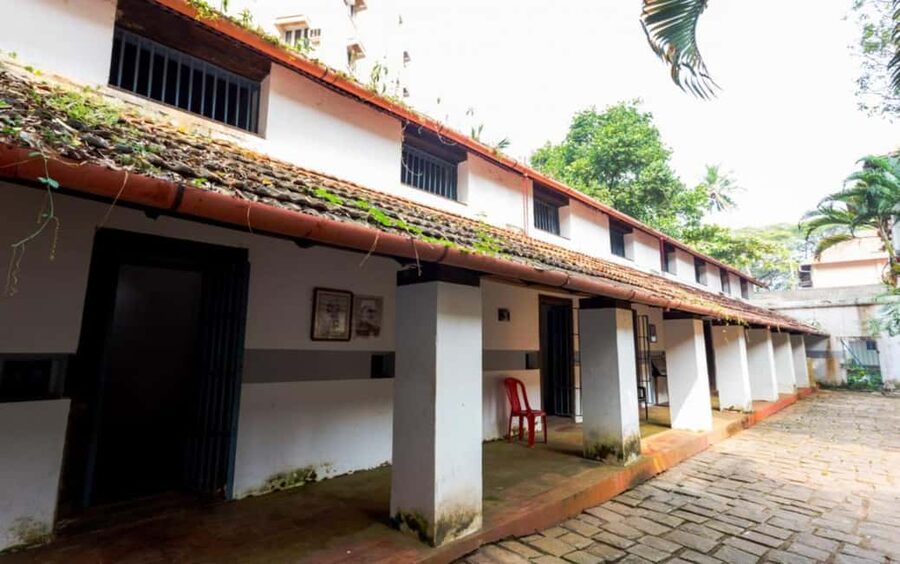
The Portuguese-style churches show how early European power shaped Fort Kochi’s religious and architectural identity. Biju places these buildings within the wider contest among European powers, rather than presenting Portuguese, Dutch, and British influence as one single period.
The Dutch Palace, also called Mattancherry Palace, is included in the tour price. It gives you a more formal setting for understanding Kochi’s royal connections, court culture, and Dutch-era influence. Admission is a useful inclusion because individual entry costs can otherwise add up during a sightseeing day.
The palace is closed on Fridays. On that day, the route includes alternate sights, so you should not book this tour expecting palace entry on every departure.
The Freedom Fighters’ Jail adds a different kind of historical perspective. If it is open, you can visit this place connected with India’s independence struggle. It may not have the visual drama of a palace, but it gives the colonial story a local human cost and reminds you that Kochi’s past was not only about commerce and architecture.
Jew Town and the Paradesi Synagogue
The tuk-tuk ride to Mattancherry and Jew Town helps cover more ground within the three-hour schedule. Once there, the mood changes from Fort Kochi’s waterfront and colonial streets to a quarter linked with one of India’s oldest Jewish communities.
The Paradesi Synagogue is the key stop. Biju explains the community’s peaceful coexistence and its close ties with the royal family of Kochi. That context is important because the building is not simply another attractive historic interior. It represents a small community that formed part of Kochi’s wider trading and social network.
The synagogue charges an entrance fee that is not included. It is also closed on Friday afternoon, Saturdays, and Jewish holidays. On those dates, you will receive an alternate visit, so check the calendar if synagogue entry is one of your main reasons for booking.
Jew Town is also a shopping area, with opportunities to browse spices, handicrafts, and souvenirs. The tour allows time for shopping, but do not let it take over the entire walk if your main goal is cultural context. A short stop for a local lassi may also be included, although food and drinks are not part of the price.
How Biju’s guiding style changes the experience
The strongest praise for this tour centers on Biju’s storytelling. He is described as friendly, passionate, and able to explain local history, architecture, and present-day life with humor. You can expect more than dates and names because the focus is on how people lived, traded, worshipped, and worked in the neighborhood.
His local background is especially useful in places that are not polished for tourism. The route includes quieter streets and lesser-known sites, and Biju is said to have access to parts of the area that many ordinary walks do not reach. That can make the morning feel personal rather than packaged.
The tour also appears to adapt when conditions change. A local strike once meant that some museums were closed, but the guide still provided a worthwhile route. That flexibility is valuable in Kochi, where religious closures, public holidays, weather, and local schedules can affect what is open.
You should choose this walk if you like asking questions. The small-group or private format allows more personal attention, and the experience will be stronger if you want to understand the place rather than simply photograph it.
Timing, heat, clothing, and walking effort
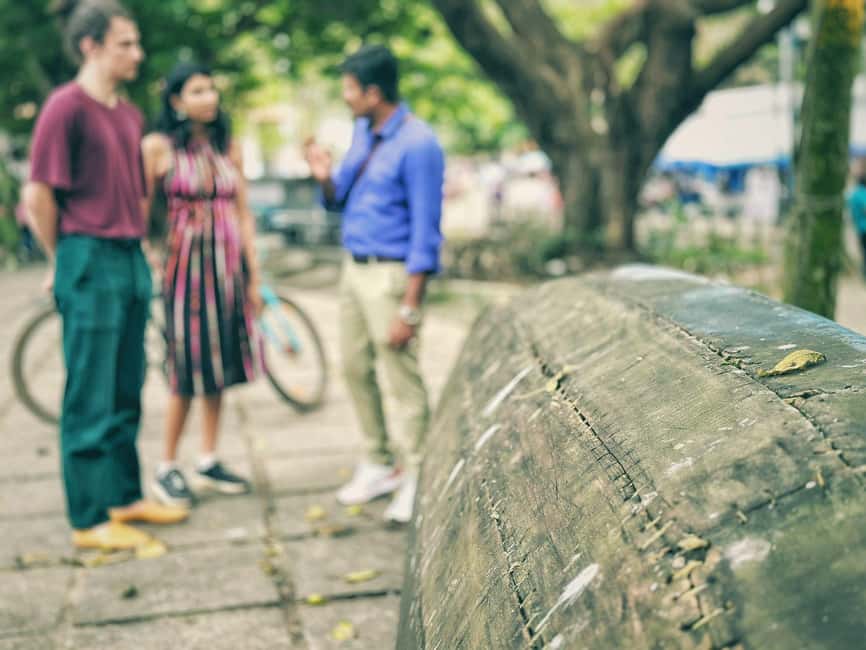
Three hours sounds manageable, but the route covers several districts and can involve up to three and a half hours of walking when transfers and stops are included. You should be comfortable walking in warm, humid conditions and standing during explanations.
The morning is the safer choice for comfort. February can already be very hot and humid in the afternoon, so the 2pm to 5pm departure may feel tiring. If that is your only option, carry water, use sunscreen, and take the short drink stop seriously rather than rushing through it.
Wear comfortable shoes. Bring a scarf and avoid short skirts or sleeveless shirts, especially because the route includes religious and culturally significant places. Children aged six and older can join if accompanied by an adult, but the walking and heat may be challenging for very young children.
The experience is not suitable for pregnant women, wheelchair users, people with mobility impairments, or people with severe back problems or heart conditions. This is a practical walking tour, not a vehicle-based sightseeing trip.
Is $25 good value for three hours?
At $25 per person, the price is fair if you want a guide who can link many parts of Old Kochi into one story. You receive a three-hour English-language tour, Biju’s local guiding, Dutch Palace entry, visits to craft and spice sites, and a route through Fort Kochi, Mattancherry, and Jew Town.
The value is strongest for first-time visitors. You could walk between many of these places alone, but you would likely miss the meaning of the Dhobi Khana, the spice warehouses, and the connections among the different communities. The guide also saves you time by arranging the route and using short tuk-tuk rides between districts.
Budget separately for tuk-tuk transfers, synagogue entry, drinks, lunch, and anything you buy. The tour does not include snacks or meals, though you may stop at a local café or for a lassi.
Free cancellation is available up to 24 hours before the start, and you can reserve now and pay later. Those terms are useful if your Kerala plans are still shifting.
Who should book this Fort Kochi heritage walk?
I would choose this tour if you want a first introduction to Fort Kochi that combines major sights with ordinary working life. It suits curious adults, families with older children, and anyone who prefers a local storyteller to a large sightseeing group.
It is especially useful for you if the Chinese fishing nets, spice trade, Jewish heritage, and colonial history all interest you. The tour covers a lot in three hours, so it gives you a strong orientation for returning later to the palace, synagogue, markets, or waterfront on your own.
I would be more cautious if you dislike heat, walking, shopping stops, or changing plans around closures. You should also avoid the afternoon departure in hot weather if possible.
Should you book it?
Book this Fort Kochi heritage walk if you want local context and working places, not only famous façades. Biju’s personal connection, clear storytelling, and access to less familiar corners are the main reasons to choose it.
Pick a morning start, check the Friday and Saturday closures, and carry modest clothing and sun protection. At $25, it is a solid choice for seeing how Kochi’s spice trade, colonial past, religious communities, and present-day work still meet in the same streets.
FAQ
Where does the Fort Kochi heritage walk begin?
The meeting point is in front of Kashi Art Café on Burger Street, Fort Nagar, Fort Kochi, Kerala 682001, India. Arrive 10 minutes early, and expect the guide to ask for your name.
How long does the tour last?
The tour lasts three hours, although you should be comfortable walking for up to three to three and a half hours, including short tuk-tuk rides and sightseeing stops.
Is the tour conducted in English?
Yes. The tour includes a live English-speaking guide.
Is entry to the Dutch Palace included?
Yes. Entry to the Dutch Palace, also called Mattancherry Palace, is included in the tour price.
Is the Paradesi Synagogue entrance fee included?
No. The synagogue entrance fee is separate. The synagogue is closed on Friday afternoon, Saturdays, and Jewish holidays, with alternate sights provided when necessary.
What happens if the Dutch Palace or other sites are closed?
The Dutch Palace is closed on Fridays. The tour includes alternate sights on closure days, and local markets or artisan units may have less activity on Sundays and public holidays.
Is this tour suitable for children and people with limited mobility?
Children aged six and above can join when accompanied by an adult. The tour is not suitable for wheelchair users, pregnant women, people with mobility impairments, or people with severe back problems or heart conditions.
Just added in Kochi
- Walking Tour of Fortkochi★ 5.0 · 15 reviews
- Kochi Village Life Experience tour – The Real Tour of Kochi !★ 5.0 · 11 reviews
- Local and personalized Tours of Fort Kochi and Mattancherry by Tuk Tuk★ 5.0 · 31 reviews
- Village Bike Tour & Birdwatching★ 5.0 · 18 reviews
- Serene Munnar Retreat: Private Tour from Kochi to the Munnar Hill★ 5.0 · 11 reviews
- Tuk Tuk Cochin Tour★ 5.0 · 13 reviews
- Sunrise Cruise with Village Life and Local Food★ 5.0 · 82 reviews
- Solo Kerala Private Tour Package ( 5 Nights) – Munnar, Thekkady, Houseboat★ 5.0 · 46 reviews
Walking Tours, compared.

The Great Indian Food Tour: Old Delhi Food and Heritage Walk
Read our review →
Blue City Heritage Private Walking Tour With Pickup and Drop-Off
Read our review →
Private Guided Walking Tour in Bandra Queen of Suburbs
Read our review →
Private Jodhpur Blue City Walking Tour with Guide
Read our review →Browse the lists this tour appears in