
Reviewed · COOKING CLASSES
Best cooking class with family in Jaipur – Activity in jaipur
Come hungry, leave with a recipe book in your head. This three-hour Jaipur cooking class combines hands-on food preparation with a warm family visit, traditional dress, and Rajasthani dance. I like the freedom to choose your menu, and I like that Manju and her family teach the food in a relaxed, practical way. The main consideration is that the class takes place in a family home, so it may feel more personal and less polished than a formal cooking school.
The price is about $22.70 per person, which is strong value if you want more than a meal. You receive an Indian welcome, refreshments, cooking instruction, dinner, and a cultural performance. The class can accommodate up to 20 people, so ask about the expected group size if you prefer a quieter kitchen setting.
In This Review
- Key points at a glance
- Entering Manju’s Jaipur family home
- Traditional dress and the welcome refreshments
- Choosing your Indian cooking menu
- Learning the food, not just watching it
- Fresh produce, spices, and the working kitchen
- Sharing the meal you helped prepare
- Rajasthani dance after dinner
- How the three-hour timing works
- Is $22.70 a good value?
- Who will enjoy this Jaipur cooking class?
- Booking, cancellation, and practical advice
- Should you book it?
- FAQ
- Where does this cooking class take place?
- How long does the experience last?
- How much does the class cost?
- Is pickup available?
- Can I use a mobile ticket?
- What happens when I arrive?
- Can I choose what to cook?
- What dishes might be available?
- Is Rajasthani dance included?
- How many people can join?
- Are service animals allowed?
- What is the cancellation policy?
Key points at a glance
- Choose what you cook: You receive a menu and decide which Indian dishes you want to prepare.
- Learn with Manju’s family: Manju, Ekta, and other family members help explain the recipes and cooking methods.
- Wear traditional Indian clothing: Clothing is offered according to gender before the cooking begins.
- Cook with fresh ingredients and spices: The class focuses on regional food made from fresh produce.
- Eat together afterward: Your cooking becomes a shared Indian meal in the family home.
- Finish with Rajasthani dance: Time is set aside for a cultural performance and a chance to enjoy it with the family.
Entering Manju’s Jaipur family home
The experience begins with a traditional Indian welcome. That first greeting matters because this is not simply a lesson in chopping vegetables and stirring pots. You are being received into a family setting, and the tone is friendly from the start.
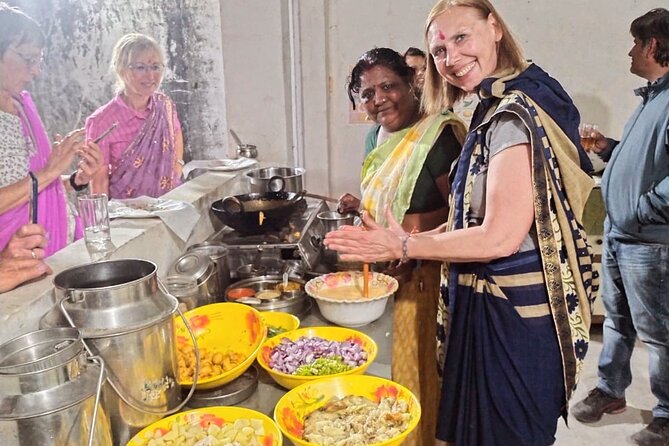
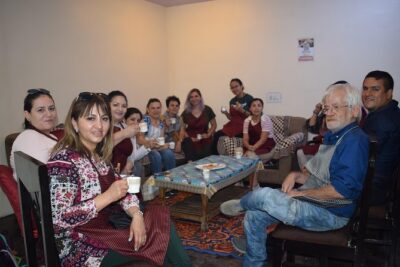
Manju’s family is part of the class. The people involved can include her children, daughters-in-law, and grandchildren, giving the afternoon a distinctly domestic feel. You may also meet hosts such as Ekta, who has helped make the instruction easy and relaxed.
The setting is worth keeping in mind. This is a home-based cooking experience, not a hotel demonstration kitchen. I see that as a major advantage if you want conversation and a sense of everyday hospitality. It also means the pace and layout may feel informal, and the room may become lively if the group is large.
The maximum group size is 20 people. That is not a tiny private lesson, but the family format can help keep the class social. If you are booking as a couple or family, you may enjoy the shared energy. If you are alone and want close individual instruction, try to confirm the group size before you reserve.
More Cooking Classes in Jaipur
- Pink City Cooking Class
★ 5.0 · 452 reviews - Jaipur Market Tour & Vegetarian Rajasthani Home Cooking Class
★ 5.0 · 113 reviews - Cooking Class in Jaipur – Family Experience with Meal & Transport
★ 5.0 · 101 reviews
Traditional dress and the welcome refreshments
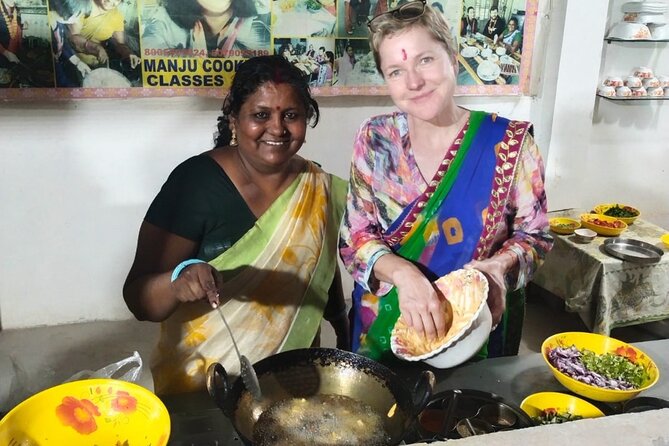
Before cooking, the hosts offer Indian clothing according to gender. Several participants have described being dressed in saris before heading to the cooking area, while the experience information explains that traditional clothing is provided as part of the welcome.
This is a fun cultural touch, especially for a first visit to Jaipur. It also makes the class feel different from a standard food workshop. You are not just arriving, cooking, and leaving. You are given a small introduction to local hospitality and presentation.
You also receive refreshments before the lesson gets underway. The exact refreshments are not specified, so I would treat them as a light welcome rather than a replacement for lunch or dinner. Arriving ready to eat is sensible, particularly since the cooking and final meal take several hours.
The clothing element may not suit everyone. If you prefer not to dress up, or you need a particular fit, discuss that with the host ahead of time. The available information confirms that clothing is offered, but it does not promise a full range of sizes or styles.
Choosing your Indian cooking menu
One of the best features is that you are shown a menu and allowed to decide what you want to cook. This gives you more control than a class where every person prepares the same fixed dish.
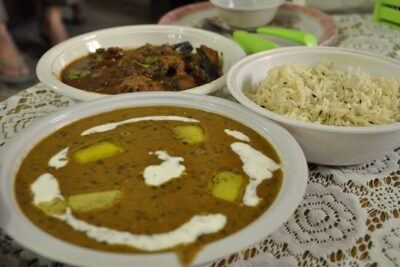
The examples connected with the class include paneer dishes, chapati, dal, mixed dal, and other vegetarian Indian foods. One completed menu included paneer butter masala, chapati, dal, and additional dishes. A vegetarian dinner can also include paneer chida and mixed dal.
That choice makes the class useful for different interests. If you already know Indian food, you can focus on a favorite dish or try a preparation you have never made. If you are new to Indian cooking, you can select familiar items and watch how spices, lentils, dairy, and flatbreads come together.
I would ask about the available menu if you have strong dietary needs. The food described is mainly vegetarian, but the supplied information does not list a formal allergy policy or confirm every possible dietary substitution. The host can help you understand the options before you arrive.
Learning the food, not just watching it
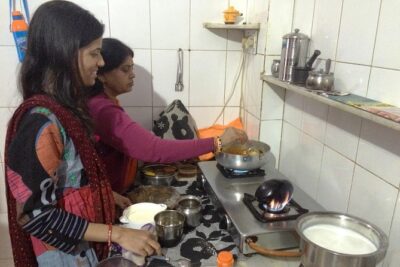
The class is hands-on. Manju teaches you how to cook Indian food, and the family helps explain what to do as you work. This is important because Indian cooking often depends on timing, texture, and the order in which ingredients meet the pan.
You should expect to take part rather than sit at the edge and watch a chef perform. The teaching is described as clear and easy to follow, which helps beginners. At the same time, experienced home cooks can still get value from seeing how this family handles familiar ingredients.
The lesson is not presented as a technical culinary school course. You may not receive exact measurements, formal worksheets, or a professional kitchen certificate. What you get instead is a practical family method, explained while the food is being made.
That style suits me better for a Jaipur visit. You can ask questions as they come up, see the ingredients being used, and notice how the finished food tastes. The relaxed format also leaves room for conversation, which is often where the most useful cooking tips appear.
One solo participant especially praised the dal and described the class as smooth and easy to follow. That is useful advice if you are cooking alone or feel unsure about your kitchen skills. You do not need to arrive as an expert. Even if your chapati is less than perfectly round, the family appears ready to guide you without fuss.
A completely different kind of day out:
- Jaipur: Private Full Day Sightseeing Tour By Car with Guide
★ 4.9 · 1,839 reviews - 3-Hour Morning Bike Tour of Jaipur
★ 5.0 · 1,253 reviews - Jaipur: Private Sightseeing Day Tour with Guide by Car
★ 4.8 · 773 reviews - Jaipur: Full-Day City Tour with Car, Guide & Skip-the-Line
★ 4.8 · 512 reviews
Fresh produce, spices, and the working kitchen
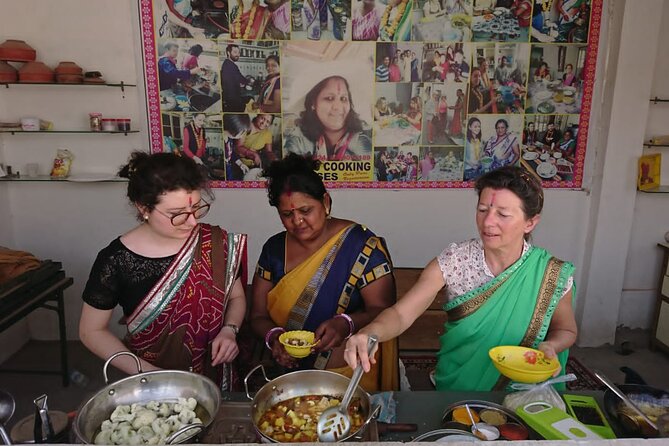
Fresh ingredients and spices are central to the experience. The food is prepared with the produce used for the class, rather than relying on a pre-cooked demonstration meal.
That distinction affects the value. You see the dish develop from basic ingredients, then eat the result at the end. The process gives you a better sense of how Indian home cooking works than simply ordering paneer or dal in a restaurant.
Spices are also part of the lesson. You can pay attention to how flavor is built, not just to the names of the dishes. The class description promises stories and traditions behind the recipes, so expect some cultural explanation alongside the cooking.
The exact techniques vary with the menu you choose. Chapati gives you a chance to work with bread dough, while dal shows how simple lentils can become a deeply seasoned dish. Paneer preparations offer a different texture and a good introduction to familiar North Indian flavors.
The setting may be upstairs on a rooftop. That detail appears in the experience descriptions and adds a pleasant Jaipur touch, though it should not be treated as guaranteed for every booking. If the class is held there, the open setting can make the meal and cooking feel especially memorable. Ask in advance if the location matters to you.
Sharing the meal you helped prepare
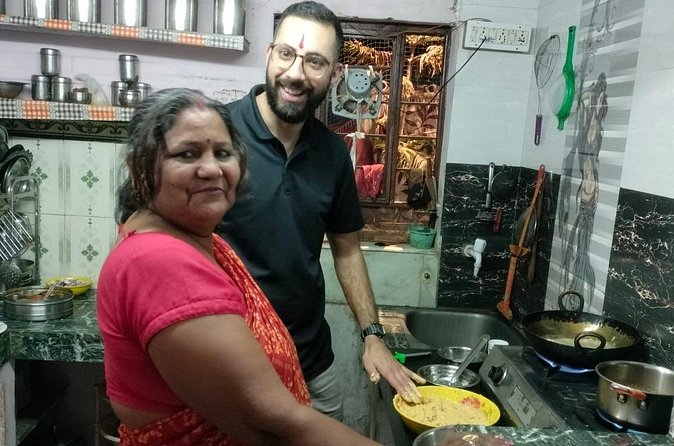
Once the cooking is finished, everyone sits down to enjoy the food together. This is the natural payoff of the class, and it turns the lesson into a social meal rather than a rushed tasting.
I like this part because you can judge the food immediately. Did the dal reach the right thickness? Did the paneer sauce carry enough spice? Did your chapati puff or remain stubbornly flat? Eating together gives those questions a friendly answer.
The meal is described as vegetarian in some of the class experiences, with dishes such as paneer, dal, chapati, and other Indian preparations. The food has earned especially warm praise, including comments about fresh ingredients, good quality, and strong flavor.
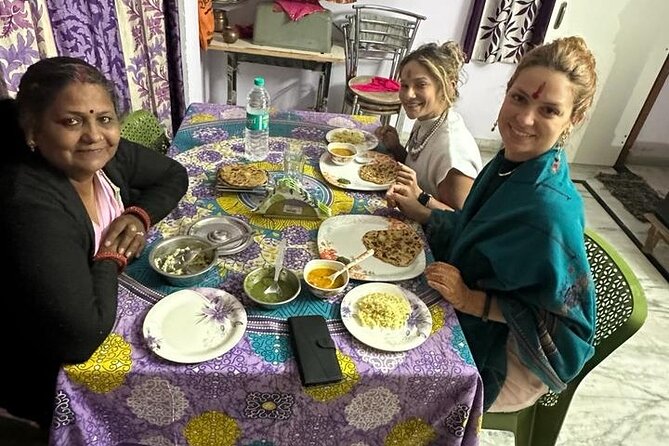
The family meal also gives you time to talk with Manju and the others. This can be the most personal part of the afternoon. You are sharing food in a home rather than sitting at a restaurant table, and that makes the visit feel more connected to daily life in Jaipur.
Do not expect a fine-dining presentation. The appeal is the food, the teaching, and the welcome. If you value polished service, a printed menu, and a formal kitchen, you may prefer a restaurant-led class. If you value warmth and conversation, the home setting is the better fit.
Rajasthani dance after dinner
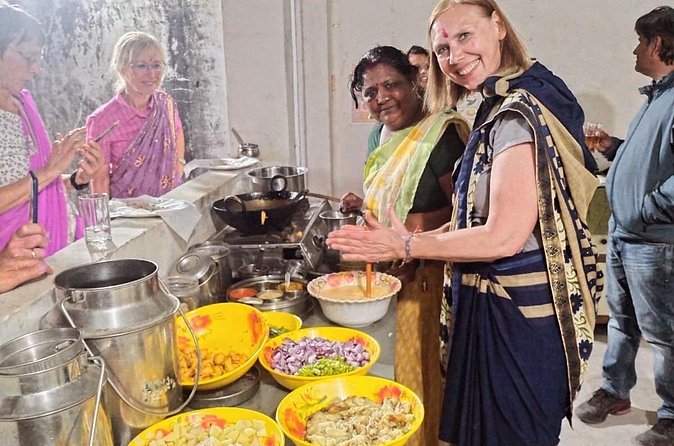
The class also includes time for Rajasthani dance. A space is arranged for the performance, and you can enjoy the dance with the family after the meal.
This gives the experience a second cultural focus. Cooking explains one part of local life, while the dance offers a look at regional performance and celebration. It also provides a lively ending to a class that might otherwise finish once the plates are cleared.
The description does not specify the length of the dance or whether you are expected to participate. You should think of it as a cultural presentation included in the visit, not as a separate professional show.
For families, this final segment can be a strong reason to book. Children may find the clothing, food, and dance more engaging than a long museum visit. Couples and solo visitors may appreciate the chance to spend a little more time with the hosts instead of leaving immediately after dinner.
How the three-hour timing works
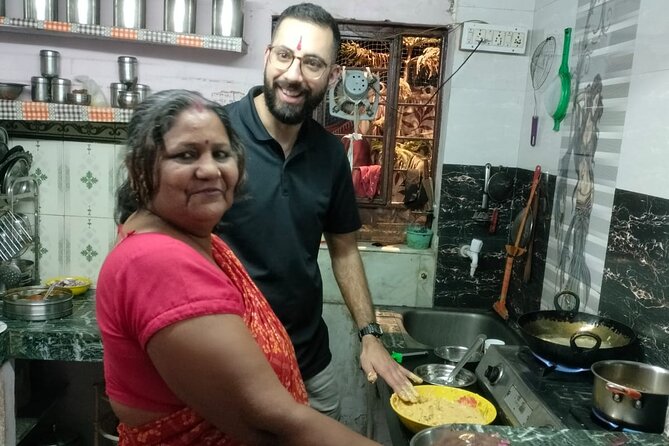
The advertised duration is about three hours. That is long enough to include the welcome, clothing, refreshments, menu choice, cooking, dinner, and Rajasthani dance without making the class feel like a full-day commitment.
The schedule is likely to feel social rather than tightly timed. Your menu choice, cooking pace, conversation, and group size can all affect how long each stage takes. I would avoid booking another major activity immediately afterward.
Pickup is offered, which can make the outing easier in Jaipur. The experience is also near public transportation, and a mobile ticket is available. These details are useful if you are planning around sightseeing, though the pickup area and exact meeting arrangements should be confirmed at booking.
Confirmation is provided when you book. Service animals are allowed. Those points are helpful, but the available details do not describe wheelchair access, specific vehicle arrangements, or the exact home address, so ask the operator if any of those issues affect your plans.
Is $22.70 a good value?
At about $22.70 per person, the price is reasonable for a three-hour activity that includes several elements. You are paying for instruction, ingredients, refreshments, a meal, traditional clothing, family interaction, and Rajasthani dance.
The strongest value comes from the combination. A restaurant meal alone would give you food, but not the preparation lesson or the family setting. A formal cooking course might teach technique, but it may not include the same personal welcome or cultural program.
The price is especially attractive for couples, families, and first-time visitors who want one activity that combines food and culture. It also works well if you have only a few days in Jaipur and want something more personal than a standard sightseeing stop.
The value is less clear if you want a highly specialized culinary lesson. The class is built around hospitality and shared food, not advanced chef training. You are also choosing from the available menu rather than designing a private course around a long list of dishes.
Who will enjoy this Jaipur cooking class?
I would recommend it most strongly to:
- Families looking for an activity that works across age groups.
- Couples who want a shared meal and a relaxed cultural visit.
- Solo visitors who enjoy meeting a local family.
- Beginners who want clear guidance without pressure.
- Vegetarians or anyone interested in Indian vegetarian cooking.
- Home cooks who want to learn dishes such as dal, chapati, and paneer.
You may want another option if you dislike home visits, do not want to wear traditional clothing, or need strict control over ingredients. The class is also less suitable if you want a short, highly structured lesson with professional equipment.
Booking, cancellation, and practical advice
You can cancel for a full refund if you do so at least 24 hours before the start time. Cancellations made within 24 hours are not refunded, and changes during that period are not accepted.
I would message Manju Cooking Classes before the day of your visit with your preferred menu, dietary concerns, pickup needs, and clothing questions. That small step can make the experience feel more personal and reduce uncertainty.
The group limit is 20 people. If you want the most relaxed interaction with Manju and her family, ask how many spaces are booked. A larger group may bring more energy, while a smaller group should allow more direct help at the stove.
Should you book it?
Book this class if you want home cooking, family hospitality, and cultural activity in one Jaipur outing. The combination of choosing your dishes, preparing them with Manju and her family, eating together, and watching Rajasthani dance gives you more than a standard cooking demonstration.
I would be especially comfortable recommending it to families and first-time visitors who want a friendly introduction to Indian food. Keep your expectations practical: this is an informal home experience, not a polished culinary academy. For many people, that is exactly why the $22.70 price feels worthwhile.
FAQ
Where does this cooking class take place?
The experience takes place in Jaipur, India, in a family-home setting associated with Manju Cooking Classes.
How long does the experience last?
The cooking class lasts approximately three hours.
How much does the class cost?
The listed price is $22.70 per person.
Is pickup available?
Yes, pickup is offered. Confirm the exact pickup arrangements when booking.
Can I use a mobile ticket?
Yes, a mobile ticket is available.
What happens when I arrive?
You receive an Indian traditional welcome, refreshments, and clothing offered according to gender.
Can I choose what to cook?
Yes. You receive a menu and can decide which dishes you want to prepare.
What dishes might be available?
The food described includes paneer dishes, chapati, dal, mixed dal, and other Indian recipes. Some experiences include vegetarian dinner preparations.
Is Rajasthani dance included?
Yes. A space is arranged for Rajasthani dance after the cooking and meal.
How many people can join?
The activity has a maximum group size of 20 people.
Are service animals allowed?
Yes, service animals are allowed.
What is the cancellation policy?
You receive a full refund if you cancel at least 24 hours before the experience start time. Cancellations or changes made within 24 hours are not accepted for a refund.
Just added in Jaipur
- Jaipur Private Tour 2 Days with Car & Guide★ 5.0 · 13 reviews
- Jaipur Private Sightseeing Tour – All-Inclusive with Car & Guide★ 5.0 · 16 reviews
- Private Jaipur Tour with Guide & All Entry Tickets★ 5.0 · 20 reviews
- Yoga in Jaipur with Amit (Yogi on Travel)★ 5.0 · 17 reviews
- Vintage Walk Amer★ 5.0 · 11 reviews
- Private 4-Day Wildlife & Taj Mahal Tour from Jaipur to Delhi★ 5.0 · 23 reviews
- Wheel Pottery Workshop★ 4.5 · 19 reviews
- Uncover Hidden Treasures of Rural Life on a Village Tour★ 5.0 · 34 reviews
Cooking Classes, compared.

Veg and Non veg : Private Cooking Class in Delhi home (7 meal)
Read our review →
Indian Cooking Class in an Authentic Local Home – Learn 6 Dishes
Read our review →
Jaipur Market Tour & Vegetarian Rajasthani Home Cooking Class
Read our review →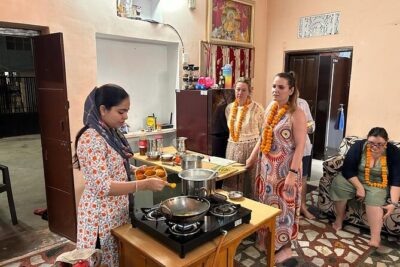
Cooking Class in Jaipur – Family Experience with Meal & Transport
Read our review →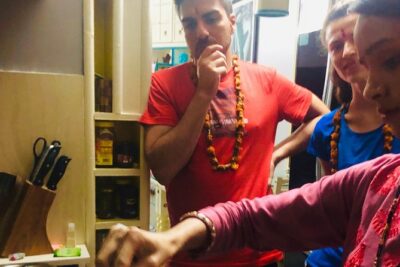
Interactive Cooking Class with a Local Family in Jaipur
Read our review →Browse the lists this tour appears in