
Reviewed · GOLDEN TRIANGLE TOURS
4 Day Golden Triangle Tour to Agra and Delhi From Jaipur
Four days, three cities, one unforgettable marble monument. This private Golden Triangle tour links Jaipur, Agra, and Delhi in a tidy north India route, with a private air-conditioned car, local guides, three nights of accommodation, and daily breakfasts. I like the way it brings major sights such as Amber Fort, the Taj Mahal, and Qutub Minar into one manageable trip. I also like the freedom to customize the tour and finish at a chosen address in Delhi, Noida, or Gurugram.
The strongest points are the private transport and the guides at each sightseeing stop. You are not left to work out the monuments alone, and the driver handles the long road transfers. The main catch is cost: the advertised price is $174.01 per person, but entrance tickets add about $60 per person, and the hotel-included option needs careful checking before you book.
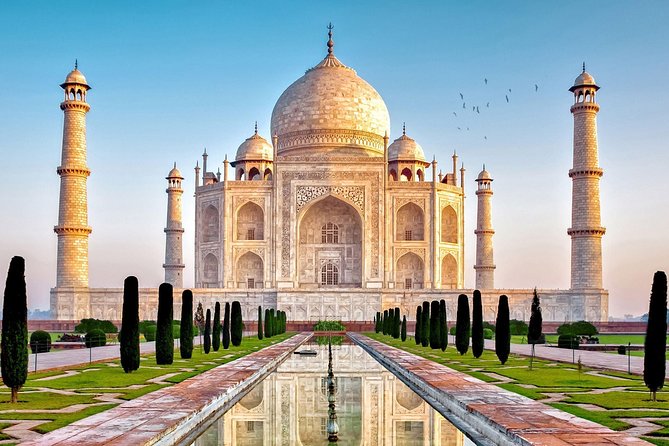
- Sunrise at the Taj Mahal gives you the best-known sight on the route before the day grows hot and crowded.
- Chand Baori and Fatehpur Sikri break up the Jaipur to Agra drive with two memorable historic stops.
- Private local guides explain the monuments and help arrange entrance tickets at the sites.
- Three nights of hotel accommodation and breakfasts make the short schedule easier to manage.
- A private air-conditioned car gives your group more control than a large coach tour.
- Delhi drop-off flexibility lets you end at a hotel, airport, or another chosen location in Delhi, Noida, or Gurugram.
In This Review
- What This Four-Day Route Does Well
- Day One: Amber Fort, Jantar Mantar, and Jaipur’s Pink City
- Day Two: Chand Baori and Fatehpur Sikri on the Road to Agra
- Day Three: Taj Mahal at Sunrise, Agra Fort, and Baby Taj
- Day Four: Qutub Minar and the Ceremonial Center of Delhi
- Hotels, Meals, Cars, and Guides
- What the $174.01 Price Really Covers
- Pace, Practical Details, and Who Will Like It
- Should You Book This Jaipur to Delhi Tour?
- FAQ
- Is this tour private?
- Are hotels included?
- Does the tour include breakfast?
- Are monument entrance fees included?
- What type of vehicle is used?
- Where does the tour end?
What This Four-Day Route Does Well
The Golden Triangle is India’s classic first trip for good reason. Jaipur gives you Rajput forts and royal buildings, Agra supplies the Taj Mahal and Mughal monuments, and Delhi closes the journey with imperial avenues, ancient towers, and old city structures.
I like this version because it begins in Jaipur rather than Delhi. If your trip already brings you to Rajasthan, the route saves you from backtracking. You also get a private car for the entire journey, which matters on a schedule packed with monuments spread across three cities.
The tour is private, so only your own group participates. Vehicle size depends on the party: one or two people use a four-seat sedan, three or four people use a six-seat wagon, and groups of five to ten use a ten-seat van. Bottled mineral water and soft drinks are supplied during the drives.
The tour is aimed at first-time visitors, and that is where it has the most value. You see the headline sights without having to coordinate several hotels, road transfers, local guides, and ticket counters yourself. The pace is still brisk, though. This is a sightseeing circuit, not a slow stay in each city.
Day One: Amber Fort, Jantar Mantar, and Jaipur’s Pink City
Your first day begins with pickup from a Jaipur hotel, airport, railway station, or another chosen location. The exact start time is important, since Jaipur has several major sights and the day includes both the hilltop fort at Amer and central Jaipur.
Amber Fort, also called Amer Fort, sits about 11 kilometres from Jaipur. Its position above the town gives the first day a dramatic opening, with fortified walls and royal buildings spread across the hill. A guided visit is especially useful here because the complex is large and its rooms, courtyards, and defensive setting are easier to understand with context.
The listed stop time is brief, so confirm the actual sightseeing schedule with the operator before departure. A short entry on a timetable does not necessarily describe the full time spent at the monument, but you should still expect a full day of movement rather than a leisurely fort visit.
Next comes Jal Mahal, the palace set in Man Sagar Lake. You view the palace from the lakeside rather than treating it as a standard palace interior visit. Fifteen minutes is enough for photographs and a quick look, but not for a long stop.
Jantar Mantar is one of Jaipur’s most unusual sights. Built in 1734 by Sawai Jai Singh II, it contains 19 large astronomical instruments. These stone and masonry structures were designed to measure time and track celestial positions, and a guide can turn what first looks like abstract architecture into a clear lesson in old scientific practice.
Allow about an hour here. It is a good stop for anyone who enjoys places that are different from the usual palaces and forts. The instruments are not just decorative, and the scale makes them much easier to appreciate in person.
The City Palace follows, with about an hour set aside. The palace complex reflects Jaipur’s royal center and its connection to the city’s foundation in 1727, when Sawai Jai Singh II moved his court from Amber. The visit helps connect the fortified hill capital with the planned city below.
You also see Hawa Mahal, the famous pink and red sandstone palace with its many small windows. It sits along the edge of the City Palace complex and was built in 1799 for the women of the royal household. The stop is a reminder that Jaipur’s grand architecture often served both ceremony and privacy.
At day’s end, you are transferred to your Jaipur hotel. The first day covers a lot, but the private vehicle gives you a place to sit between stops instead of repeatedly arranging taxis or public transport.
More Golden Triangle Tours in Jaipur
- Golden Triangle & Ranthambore: 4-Day Private Tour from Delhi
★ 5.0 · 355 reviews - From Delhi: Private 3-Day Golden Triangle Tour with Hotels
★ 4.9 · 339 reviews - From Delhi: Private 5-Day Golden Triangle Tour
★ 4.9 · 208 reviews
Day Two: Chand Baori and Fatehpur Sikri on the Road to Agra

After breakfast, you leave Jaipur for Agra. This is the longest-feeling travel day because it combines a road transfer with two substantial historic visits.
The first stop is Chand Baori at Abhaneri, an enormous stepwell dating from the eighth or ninth century. Its water was reached by approximately 3,500 steps arranged in steep, repeating patterns. The design is practical, but the geometry is the reason the stop is so memorable.
The visit is listed at about 30 minutes. That gives you time to see the structure, take photographs, and hear the basic explanation, though it does not allow for a slow exploration. Wear shoes that feel secure, since the defining feature of the site is its many steps.
Fatehpur Sikri is the larger stop, with around two hours planned. Founded by the Mughal emperor Akbar in the 16th century, this former city is built largely from red sandstone. Buland Darwaza, the great entrance to the Jama Masjid, is one of its most imposing features.
I like the order of this day. Chand Baori offers a sharp change from Jaipur’s palaces, while Fatehpur Sikri prepares you for the Mughal architecture you will see in Agra. The drawback is that the route can feel road-heavy, especially if traffic slows the journey. Transfer times are approximate and depend on the time of day.
After Fatehpur Sikri, you continue to Agra and check into the hotel. Your room is included only if you select the hotel-included option. Accommodation is generally arranged on a twin-sharing basis. A booking of three people normally means triple sharing, while two rooms for three people cost extra.
Day Three: Taj Mahal at Sunrise, Agra Fort, and Baby Taj
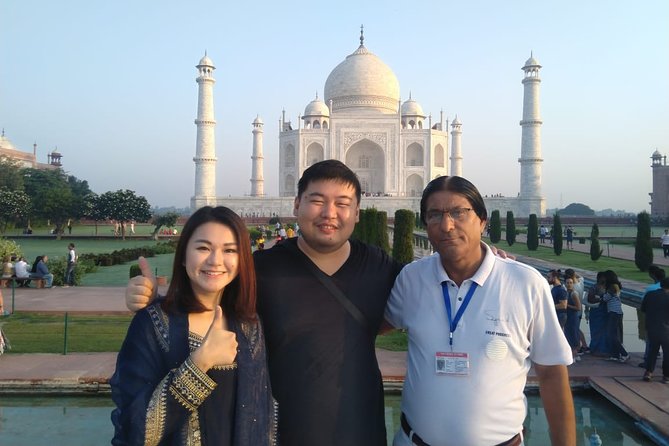
Day three begins with the tour’s main event: a sunrise visit to the Taj Mahal. You receive a guided visit inside the monument for about two hours, along with a battery bus ride to and from the parking area.
The early start is worth protecting. The white marble changes in the softer morning light, and beginning early also helps you avoid placing the Taj Mahal at the hottest and busiest part of the day. The monument is a mausoleum built on the southern bank of the Yamuna River, and the guided visit gives you more than a quick photograph from the entrance.
The battery bus is a useful practical detail. Vehicles do not take you directly to the monument, so the short electric transfer reduces the walk from the parking area. Your guide also helps you buy entrance tickets, meaning you do not need to wait at the ticket counter yourself.
After the Taj Mahal, you visit Agra Fort for about an hour. This was the main residence of the Mughal emperors until the capital moved from Agra to Delhi in 1638. The fort helps put the Taj Mahal into a wider royal setting. Instead of seeing the mausoleum as an isolated monument, you begin to understand the imperial power and family story behind it.
The third Agra stop is Itmad-ud-Daulah, often called the Baby Taj. This smaller Mughal tomb is frequently described as a jewel box because of its detailed decoration and refined scale. Forty-five minutes is a sensible amount of time for a compact monument, especially after the morning’s two-hour Taj Mahal visit.
You then drive to Delhi and check into your hotel. This is another substantial transfer, so the private air-conditioned car earns its keep. The schedule is efficient, but you should not expect much unplanned free time in Agra or Delhi.
Day Four: Qutub Minar and the Ceremonial Center of Delhi
After breakfast, your half-day Delhi tour begins. The first major stop is Qutub Minar, a 72.5-metre victory tower within the Qutb complex in Mehrauli. The site is a UNESCO World Heritage Site, and an hour gives you time to see the tower and the surrounding complex.
Delhi’s scale makes a private car particularly helpful. The city’s sights are spread far apart, and traffic can affect the transfer time. Your guide and driver keep the route organized, but the order or exact duration may change with road conditions.
India Gate is a shorter stop of about 15 minutes. It is a war memorial on the eastern end of New Delhi’s ceremonial axis. This is mainly an exterior visit, useful for a photograph and a quick look at the formal design of the capital.
You also pass the Parliament building and Rashtrapati Bhavan, the President’s official residence. These stops show the planned government center of New Delhi, with broad ceremonial spaces and major state buildings. Since the listed times are short, treat them as orientation stops rather than full interior tours.
Agrasen Ki Baoli provides a change of mood. This protected stepwell is about 60 metres long and 15 metres wide, and it sits within central Delhi’s modern city fabric. The visit is listed at 15 minutes, so you get a quick look at the descending structure before continuing.
The tour finishes with drop-off at your chosen location in Delhi, Noida, or Gurugram. That flexibility is useful if you have a flight, a continuing hotel booking, or a separate onward plan.
A completely different kind of day out:
- Jaipur: Private Full Day Sightseeing Tour By Car with Guide
★ 4.9 · 1,839 reviews - 3-Hour Morning Bike Tour of Jaipur
★ 5.0 · 1,253 reviews - Jaipur: Private Sightseeing Day Tour with Guide by Car
★ 4.8 · 773 reviews - Jaipur: Full-Day City Tour with Car, Guide & Skip-the-Line
★ 4.8 · 512 reviews
Hotels, Meals, Cars, and Guides

Three nights of accommodation and three breakfasts are included when you choose the package with hotels. The accommodation is described as four- or five-star, but you should confirm the exact properties and room arrangement before paying. The hotel level can affect the value considerably.
Breakfast is practical rather than glamorous on this itinerary. It gives you food before early sightseeing and reduces the need to find a meal while leaving for the Taj Mahal or a long road transfer. Other meals are not listed as included, so budget separately for lunch, dinner, and any drinks outside the supplied water and soft drinks.
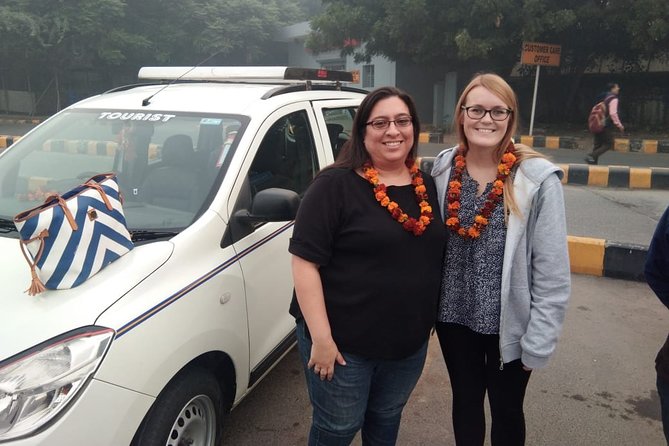
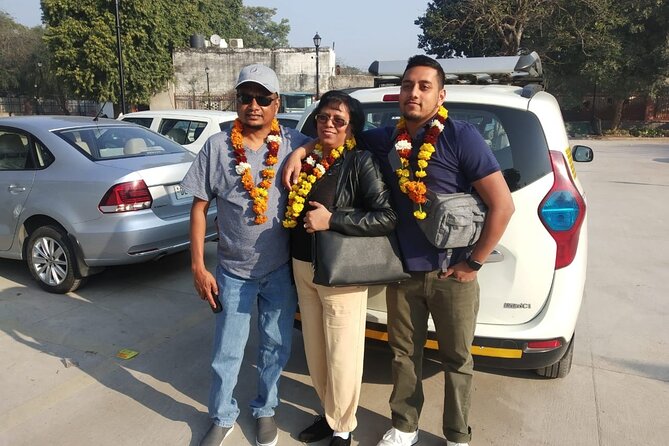
The private car is one of the tour’s best features. You can store your belongings in the vehicle, avoid changing between several transport services, and make reasonable adjustments to the sightseeing day. The driver handles the road while the local guides focus on the monuments.
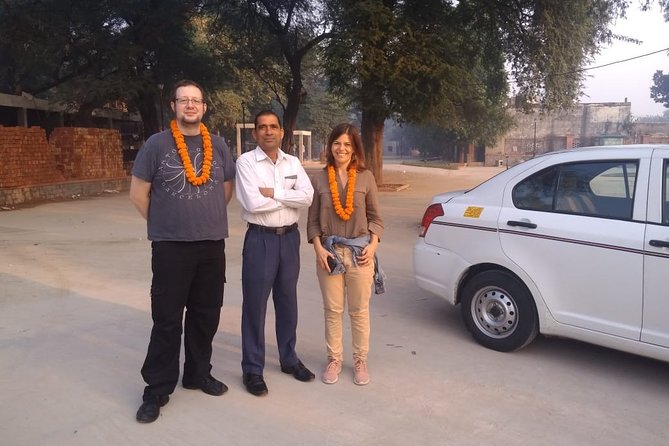
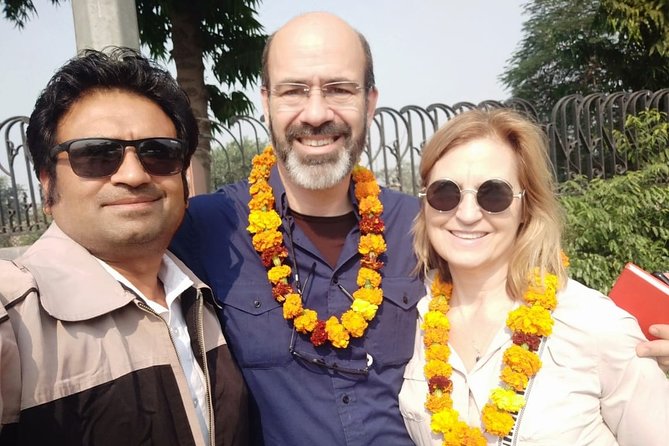
One driver named in the feedback is Sanjeev, praised for being friendly, patient, humorous, and careful. The broader service was also praised for courteous drivers, a strong sense of safety, and guides who explained the sites with energy and clear knowledge. Since a different local guide may meet you in each city, the experience can vary slightly from stop to stop.
What the $174.01 Price Really Covers
At $174.01 per person, the price can be good value for a private four-day trip if the hotel-included option applies to your booking. You are paying not just for transport, but also for three nights of accommodation, breakfasts, local guides, hotel or airport pickup, sightseeing transfers, taxes, service charges, and Taj Mahal battery buses.
The important extra is monument admission. Entrance fees for all monuments add about $60 per person. The guide helps you buy these tickets and avoids the need to stand in line, but the money still comes out of your budget.
The value improves for a small group because the vehicle and guide costs are shared. A solo visitor pays more per person for a private experience, while two to four people can make better use of the sedan or wagon. Groups of five to ten have a larger van, though you should confirm luggage space if everyone carries substantial bags.
The advertised price should not be treated as the final trip budget. Check whether your selected rate includes the hotels, confirm the exact hotel category, and add meals, tips, entrance tickets, and personal spending.
Pace, Practical Details, and Who Will Like It
This is a strong choice if you want the major Golden Triangle sights without handling the planning yourself. First-time visitors, couples, families, and small groups can all benefit from the private format.
You will spend a fair amount of time in the car. That is unavoidable when Jaipur, Agra, and Delhi are combined in four days, and traffic can make transfers longer than expected. The schedule rewards early starts and a willingness to keep moving.
I would choose this tour if your priority is coverage. In four days, you see Jaipur’s principal monuments, Chand Baori, Fatehpur Sikri, three major Agra sights, and Delhi’s key landmarks. I would choose a slower itinerary if you want long market visits, extra rest, or several unplanned hours in each city.
The tour is also useful if you need a dependable final transfer. Ending in Delhi, Noida, or Gurugram gives you more options than a fixed return to Jaipur. Pickup can begin at a hotel, airport, railway station, or another requested place in Jaipur.
Free cancellation is available up to 24 hours before the experience starts. Changes or cancellations inside that window are not accepted for a refund, so keep the local cutoff time in mind.
Should You Book This Jaipur to Delhi Tour?
Book it if you want a private, well-organized first look at north India and you value guides, hotel arrangements, and door-to-door transport. The sunrise Taj Mahal visit, the stop at Chand Baori, and the chance to see Fatehpur Sikri without arranging separate transport give this route real substance.
Before booking, confirm three things: the exact hotels, the total monument admission cost, and the pickup time for day three. If you accept the fast pace and extra ticket expense, this is a sensible way to cover the Golden Triangle in four days. If you want India to unfold slowly, give Jaipur, Agra, and Delhi more nights instead.
FAQ
Is this tour private?
Yes. Only your own group participates in the tour.
Are hotels included?
Three nights of accommodation are included when you book the option that includes hotels. The accommodation is generally arranged on a twin-sharing basis. Three-person bookings normally use triple sharing unless you pay extra for two rooms.
Does the tour include breakfast?
Yes. Three daily breakfasts are included with the hotel-included option.
Are monument entrance fees included?
No. Entrance fees for all monuments add approximately $60 per person. Your guide can help you purchase the tickets and avoid waiting in the ticket queue.
What type of vehicle is used?
One or two people use a four-seat sedan, three or four people use a six-seat wagon, and groups of five to ten use a ten-seat van. All vehicles are private and air-conditioned.
Where does the tour end?
The final drop-off can be arranged at your desired location in Delhi, Noida, or Gurugram.
Just added in Jaipur
- Jaipur Private Sightseeing Tour – All-Inclusive with Car & Guide★ 5.0 · 16 reviews
- Jaipur Private Tour 2 Days with Car & Guide★ 5.0 · 13 reviews
- Private Jaipur Tour with Guide & All Entry Tickets★ 5.0 · 20 reviews
- Yoga in Jaipur with Amit (Yogi on Travel)★ 5.0 · 17 reviews
- Vintage Walk Amer★ 5.0 · 11 reviews
- Private 4-Day Wildlife & Taj Mahal Tour from Jaipur to Delhi★ 5.0 · 23 reviews
- Wheel Pottery Workshop★ 4.5 · 19 reviews
- Ranthambore Tiger Safari Private Same Day Trip from Jaipur★ 5.0 · 18 reviews
Golden Triangle Tours, compared.
3-Days Private Golden Triangle Tour: Delhi, Agra & Jaipur by Car
Read our review →3-Days Private Golden Triangle Tour: Delhi, Agra & Jaipur by Car
Read our review →
3-Day Delhi, Agra and Jaipur Private Tour – India Golden Triangle
Read our review →
Four-Day Private Luxury Golden Triangle Tour to Agra and Jaipur From New Delhi
Read our review →
5 Nights 6 Days Private Golden Triangle Tour – Delhi Agra Jaipur
Read our review →

Private Car and Drive for Golden Triangle (4N/5D)
Read our review →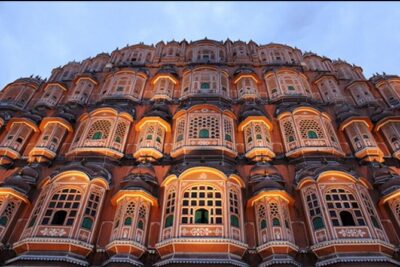
Private Golden Triangle Tour Delhi Agra Jaipur ( Top Rated )
Read our review →Browse the lists this tour appears in