
Reviewed · COOKING CLASSES
Traditional Gowda Cooking Class and Meal in a Bangalore Home
Food can open a door that sightseeing cannot. This three-hour private class in Rajajinagar takes you into a Bangalore family home, where Archana and her family teach traditional Gowda recipes, explain the customs behind them, and share a meal served on a banana leaf. The setting feels personal rather than staged, and the food goes well beyond the usual restaurant menu.
I especially like the hands-on cooking and the chance to learn dishes such as bisi bele huli anna and ragi mudde. I also like the family connection: Archana, her husband Rajesh, and her mother bring personal stories and generations of Bangalore food traditions to the table. The main consideration is that the experience lasts about three hours and takes place in a home, with the meal traditionally eaten while sitting on the floor, so it may not suit everyone.
In This Review
- Key points to know before booking
- Arriving at Archana’s Bangalore home
- Learning Gowda recipes by cooking them yourself
- A rooftop garden and the meaning of local ingredients
- Sitting down to a banana-leaf Gowda meal
- The family connection is the real draw
- Is $74 a fair price?
- Getting there and planning the visit
- Who will enjoy this cooking class most?
- Should you book the Gowda cooking experience?
- FAQ
- Where does the cooking class take place?
- How long does the experience last?
- Is the class private?
- What dishes might I prepare?
- Is a vegetarian option available?
- Are hotel pickup and drop-off included?
Key points to know before booking
- A private class in Rajajinagar: Only your group participates, making it easier to ask questions and receive cooking help.
- Recipes beyond standard restaurant fare: Depending on the menu, you may prepare bisi bele huli anna, ragi mudde, holige, or mamsada saaru.
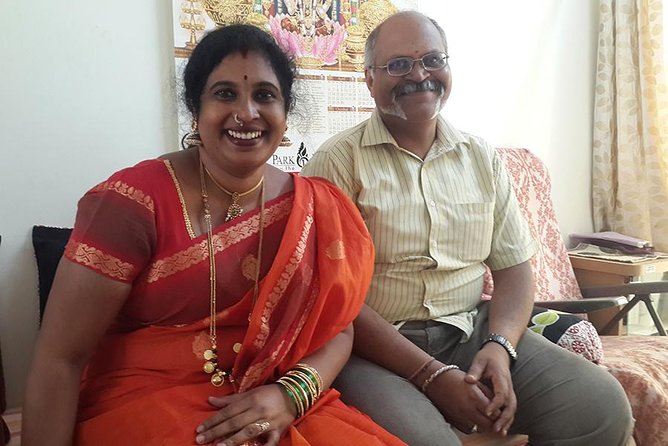
- A family-hosted experience: Archana shares her heritage with help from her family, including her mother and husband Rajesh.
- A full banana-leaf meal: Cooking is followed by starters, main dishes, dessert, and drinks, not just a small tasting.
- Vegetarian meals are available: You need to request a vegetarian option or mention dietary needs when booking.
- Plan your own transport: Hotel pickup and drop-off are not included, and the meeting point is in Rajajinagar.
Arriving at Archana’s Bangalore home
The experience begins in Rajajinagar, a residential part of Bangalore, rather than at a restaurant or a cooking school. That choice matters. You are not simply watching a chef perform in a polished demonstration kitchen. You are entering the setting where family food traditions are actually practiced.
Archana is the main host, and her husband Rajesh and mother may also welcome you. The family has roots going back five generations in Bangalore, which gives the conversation a local angle that a generic cooking lesson cannot easily provide. You can ask about ingredients, customs, family food, and the place of particular dishes in Karnataka life.
The welcome begins with paanaka, a sweet lemonade, along with snacks. Depending on what is prepared that day, these may include kosambari, a lentil salad; neruli bajji, fried onion fritters; or crisp snacks such as nippat, chakli, and usli. This is a good first taste of the meal’s range. The food is not limited to one famous curry, and the snacks help you understand how texture and spice are balanced in South Indian cooking.
Archana has also welcomed people with a hot immunobooster drink and a short introduction to Indian food values. The exact welcome may vary, but the useful point is that the class starts with conversation, not a rush to the stove.
More Cooking Classes in Bangalore:
- Private South Indian Cooking Class in Bangalore with a Local
★ 5.0 · 11 reviews - Pink City Cooking Class
★ 5.0 · 452 reviews - Five Course Cooking Class & Meal
★ 5.0 · 250 reviews
Learning Gowda recipes by cooking them yourself
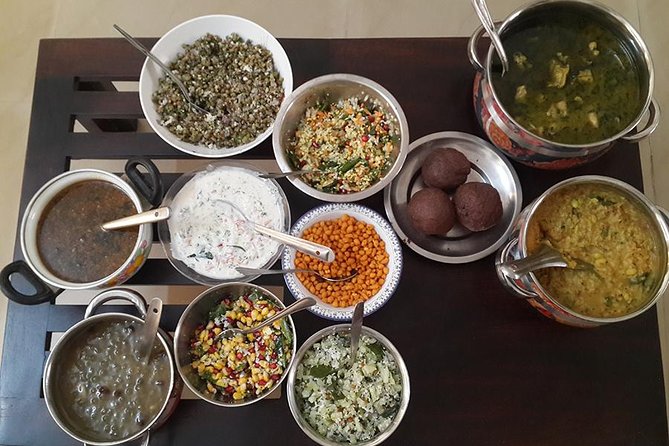
The cooking portion covers two or three traditional Gowda dishes. The menu is not fixed in a way that guarantees every dish listed, so you should think of the examples as possible highlights rather than a promised sequence.
One likely centerpiece is bisi bele huli anna, a savory preparation combining rice, vegetables, and lentils. It is a filling, one-pot style dish with the sour and spicy notes associated with many Karnataka meals. Preparing it yourself helps you see how staple ingredients become a complete dish, rather than encountering it as an unfamiliar bowl on a menu.
You may also learn to make ragi mudde, or ragi balls. Ragi, a millet flour, has long been important in rural Karnataka cooking. The finished balls are simple in appearance but carry plenty of cultural meaning, especially when eaten with a stew or sauce. This is the kind of dish you might overlook in a city restaurant, yet it tells you something about regional food habits and everyday nourishment.
Other possible dishes include holige, a flatbread filled with lentils, and mamsada saaru, a stewed mutton preparation. Holige brings a sweet and festive note to the cooking, while mamsada saaru offers a meat-based option with a stronger, more savory profile. If you require vegetarian food, mention it when booking so the menu can be planned accordingly.
The value of a private class is the help you receive while preparing these recipes. You are not left to copy a demonstration from across the room. Archana can explain the ingredients, show you the method, and adjust the pace for your group. That makes this a better choice for a beginner than a large class where everyone works from a distance.
Still, you should keep expectations realistic. This is a three-hour introduction, not a professional culinary course. You will learn several dishes and gain useful context, but you are unlikely to master every technique in one visit. The best souvenir is the understanding of how the meal fits together, not a certificate or a long recipe book.
A rooftop garden and the meaning of local ingredients
One particularly appealing detail is the chance to visit the rooftop garden and select herbs for the meal. This adds a small but memorable connection between the home, the ingredients, and the cooking.
You may not find a large farm-style garden, and the visit is not presented as a separate gardening tour. Its value is simpler. You can see where some fresh herbs come from, choose ingredients with your host, and then use them in the kitchen. That short step makes the meal feel connected to the home rather than assembled for a passing appointment.
Archana also uses the kitchen to explain staple ingredients and how they can be combined in different ways. This is practical information for anyone who wants to recreate South Indian food later. You begin to see that the cooking is not just a list of fixed recipes. It depends on balancing grains, lentils, vegetables, spices, and sauces.
The family setting adds another layer. You may hear about food traditions, cultural values, and the way recipes pass from one generation to the next. I find this kind of conversation more useful than a formal lecture because it comes up naturally while you are handling the food.
Sitting down to a banana-leaf Gowda meal
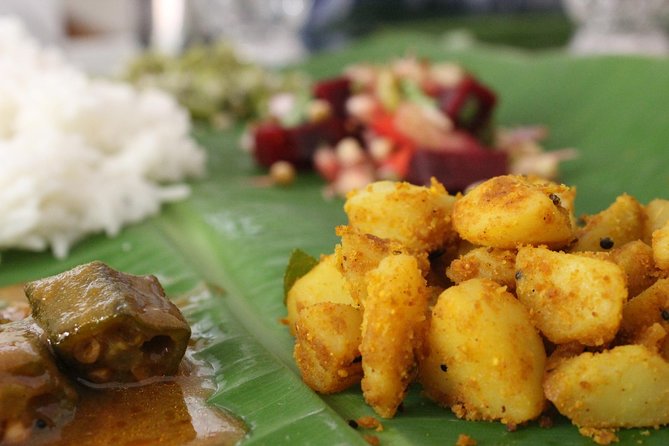
After the cooking, you eat the dishes you helped prepare. The meal is served on a banana leaf, and the traditional arrangement includes starters, main dishes, dessert, and drinks.
Eating from a banana leaf is not just a decorative touch. It changes the rhythm of the meal. Instead of receiving one plated entrée, you experience several tastes and textures together. The leaf also reflects a long-standing South Indian way of serving food, making the final meal feel tied to the cooking lesson.
The spread may include kosambari, fried snacks, holige, ragi mudde, and mamsada saaru, along with bisi bele huli anna. Traditional Gowda sweets follow the savory dishes. The exact combination can change, so you should not book expecting every listed item in one sitting.
For many people, this meal will be the strongest part of the experience. You have watched the preparation, helped with the work, and then sit down with the family to eat. The result is more satisfying than a cooking demonstration that ends with a token sample.
There is one practical issue to consider. You sit on the floor for the traditional meal. If you have mobility limitations or simply prefer a chair and table, ask about arrangements before booking. The available information confirms the floor seating, but does not promise an alternative.
A few more options to weigh up in Bangalore
- Discover Bangalore Through the Ages — Guided Tour with Lunch
★ 5.0 · 417 reviews - Best of Mysore, UNESCO Somnathpur Temple & Srirangapatna Day Tour
★ 5.0 · 384 reviews - (Mysuru) Mysore Day Out – A Royal Experience Private Tour from Bangalore
★ 5.0 · 302 reviews - Bangalore city tour with English guide & multi language support
★ 5.0 · 268 reviews
The family connection is the real draw
The food is important, but the hosts are what give this experience its character. Archana is described as enthusiastic about her heritage and family recipes, and her mother adds another personal link to the traditions being discussed. Rajesh also helps create the welcoming family atmosphere.
The tone appears to be conversational and generous. You are encouraged to ask questions, talk about food, and learn how a Bangalore household connects cuisine with identity. Several details point to an experience that goes beyond cooking instruction, including the home visit, family participation, rooftop herbs, and discussion of cultural values.
That does not mean every minute is tightly scripted. In fact, the relaxed pace is part of the appeal. If you want a fast, highly organized class with exact timings and restaurant-style presentation, this may feel informal. If you want a chance to sit with a local family and ask questions, the informality works in your favor.
I would allow some flexibility in your schedule. The published duration is approximately three hours, but conversation and the meal are central parts of the experience. Rushing away immediately after the last dish would miss much of what you are paying for.
Is $74 a fair price?
At $74 per person, this is not the cheapest way to eat in Bangalore. You can find a filling local meal for far less. The price makes more sense when you count the private instruction, the ingredients, the full home-cooked meal, and the time spent with the family.
This is a private activity, so only your group participates. That improves the value for couples, families, and small groups who want personal attention. Group discounts may also be available, which can make the cost easier to justify for a larger party.
You are paying for access as much as food. The class offers a look at family cooking, traditional Gowda dishes, and a style of hospitality that you cannot get from ordering a plate at a restaurant. If you only want to taste Karnataka cuisine, a restaurant will be cheaper. If you want to understand how several dishes are prepared and why they matter, the class earns its higher price.
The 4.9 rating from 31 reviews and 100 percent recommendation suggest a strong record, though I would still judge the experience by your interests. The price is best suited to someone who values conversation, cultural context, and a private setting as much as the meal itself.
Getting there and planning the visit
Hotel pickup and drop-off are not included. You need to make your own way to the meeting point in Rajajinagar, Bengaluru. The area is near public transportation, which helps, but you should allow time to reach a residential address in Bangalore.
The activity ends back at the meeting point. Confirm the exact meeting details after booking, since confirmation is issued within 48 hours and remains subject to availability.
Mobile tickets are accepted, and the experience is usually booked around 15 days ahead. That advance planning is sensible if you have fixed dates in Bangalore, especially if you want a vegetarian menu or have specific dietary requirements.
Free cancellation is available until 24 hours before the local start time. Changes or cancellations made inside that period are not accepted for a refund, so check your transport plans before the final day.
Who will enjoy this cooking class most?
I would recommend this experience to:
- Food lovers who want Karnataka dishes rarely seen outside the region
- Couples and families looking for a private cultural activity
- First-time visitors who want direct contact with local home life
- People who enjoy asking questions and learning through conversation
- Anyone interested in traditional vegetarian or meat-based South Indian cooking
- Travelers who are comfortable sitting on the floor for a meal
It may be less suitable if you want a quick tasting, a large professional kitchen, or a fully fixed menu. It may also be difficult if floor seating is uncomfortable for you. Ask about dietary needs and seating before you commit.
Should you book the Gowda cooking experience?
Book it if you want more than a meal. The strongest reasons are the private home setting, Archana’s personal connection to Bangalore, the chance to cook several regional dishes, and the full banana-leaf meal afterward. The rooftop garden visit and family participation add small details that make the afternoon feel personal.
Skip it if your main goal is simply to eat cheaply or if you prefer a formal class with a guaranteed menu and restaurant-style seating. At $74, the value comes from the people, instruction, and cultural exchange, not from the food alone.
For most food-focused visitors to Bangalore, I think this is a worthwhile splurge. You leave with a better sense of how Gowda cooking works, what local hospitality looks like inside a real home, and why dishes such as ragi mudde and holige deserve a place beyond the standard curry list.
FAQ
Where does the cooking class take place?
The class takes place in a private home in Rajajinagar, Bengaluru, Karnataka, India.
How long does the experience last?
The cooking class and meal last approximately three hours.
Is the class private?
Yes. Only your group participates in the activity.
What dishes might I prepare?
The class includes two or three traditional Gowda dishes. Possible dishes include bisi bele huli anna, ragi mudde, holige, and mamsada saaru.
Is a vegetarian option available?
Yes. A vegetarian option is available, but you should request it when booking and provide details of any dietary requirements.
Are hotel pickup and drop-off included?
No. Hotel pickup and drop-off are not included. You need to travel to and from the meeting point in Rajajinagar.
Just added in Bangalore
- Taj Mahal sunrise and Agra Overnight Tour from Bangalore★ 5.0 · 15 reviews
- Bandipur Tiger Reserve with Somnathpur Temple Tour★ 5.0 · 21 reviews
- The story of Tipu Sultan, an immersive walking tour in Bangalore★ 5.0 · 11 reviews
- Bengaluru to Agra Taj Mahal Same Day Trip with Flights and lunch★ 5.0 · 16 reviews
- Sacred Bull walking tour in Bangalore with guide★ 5.0 · 15 reviews
- See Bangalore through my eyes (Cultural / Historical / Walking Tour)★ 5.0 · 60 reviews
- Private Tour: Palaces of Bangalore★ 4.0 · 15 reviews
- Story of Mysore Silk tour from Bangalore to experience Silk Weaving & Palace★ 5.0 · 28 reviews
Cooking Classes, compared.
Veg and Non veg : Private Cooking Class in Delhi home (7 meal)
Read our review →
Indian Cooking Class in an Authentic Local Home – Learn 6 Dishes
Read our review →
Jaipur Market Tour & Vegetarian Rajasthani Home Cooking Class
Read our review →
Cooking Class in Jaipur – Family Experience with Meal & Transport
Read our review →
Interactive Cooking Class with a Local Family in Jaipur
Read our review →Browse the lists this tour appears in