
Reviewed · HIKING AND TREKKING
The Best Monsoon Trek: Kashmir Great Lakes
Kashmir saves its best scenery for hikers. The Kashmir Great Lakes trek links flower-filled meadows, clear mountain lakes, snow patches, and high passes in one demanding seven-day route from Srinagar. I like the sharp change in scenery from day to day, and I like the small group size, which is capped at 11 people. The main consideration is physical effort: this is not a gentle walk, especially on the 10-hour day to Gadsar and the long descent to Naranag.
The timing matters greatly. Early July gives you snow beside fresh summer flowers, while late July offers fuller blooms and warmer nights. By late August, rain can become more frequent, flowers begin to fade, and colder weather returns to the high meadows.
In This Review
- Key points before you book
- Why the Kashmir Great Lakes route is special
- Day 1: Srinagar to Sonamarg by the Sind River
- Day 2: Shitkadi to Nichinai Camp
- Day 3: Nichinai Pass and Vishansar Lake
- Day 4: Vishansar to Gadsar, the hardest day
- Day 5: Toward Satsar and the Tarsar route note
- Day 6: Zaj Pass and Gangabal Lake
- Day 7: Gangabal to Naranag, then Srinagar
- What the $481 price includes
- Guide quality, group size, and camp support
- The best time to go
- Who should book this trek?
- Should you book the Kashmir Great Lakes trek?
- FAQ
- Where does the Kashmir Great Lakes trek start and finish?
- How long does the trek last?
- What accommodation is included?
- Are meals included?
- Is a porter included?
- What happens if bad weather cancels the trek?
Key points before you book
- Snow and flowers in early July: Higher slopes may still be white while the lower meadows begin their summer bloom.
- Six nights in tents: Double-occupancy tents, sleeping bags, mats, dining facilities, and a toilet tent are included.
- A serious middle section: The 10-hour trek toward Gadsar Pass is the hardest day on the schedule.
- Strong food and camp support: Meals can include hot soup, dal, rajma, pasta, popcorn, and mountain trout dishes.
- Small groups help: The maximum group size is 11, and several departures have used groups of about 10.
- Personal luggage costs extra: A porter for a bag under 12 kilograms is charged at INR 500 per bag, per day.
Why the Kashmir Great Lakes route is special
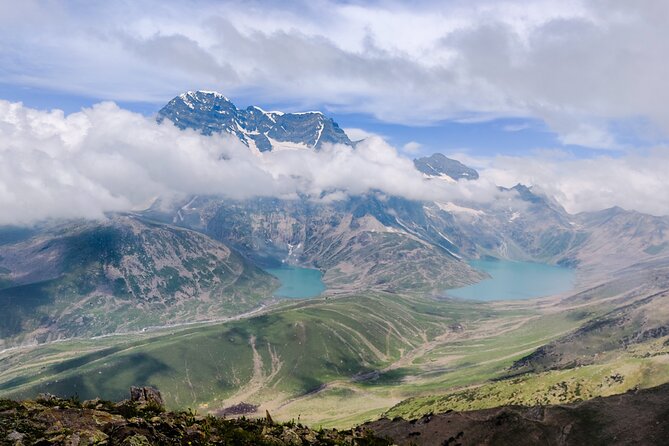
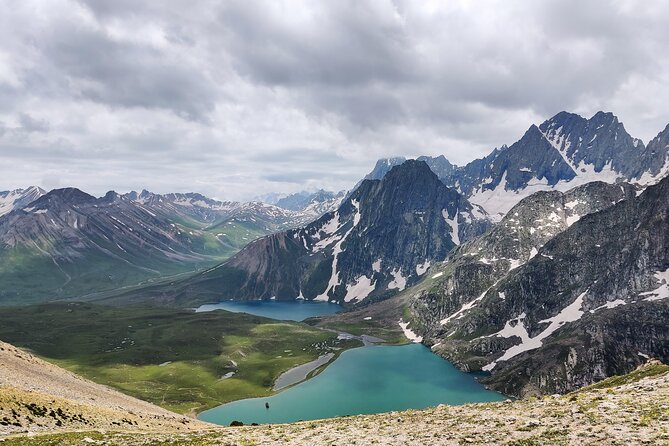
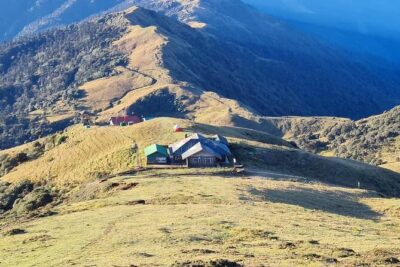
Many mountain treks offer one famous view and several hours of walking to reach it. This route gives you a new setting almost every day. You begin beside the Sind River, walk through maple-dotted meadows, cross the 4,100-meter Nichinai Pass, and spend nights near several high-altitude lakes.
The scenery changes quickly. You might walk beside a stream, cross open grassland, pick your way over boulders, and then reach a lake framed by dark ridges and snow. That variety is the real strength of the trek. You are not simply walking toward one destination. The route keeps changing its mood.
The trek runs roughly from early July into the second week of September. Early July is best for a strong contrast between snow and flowers. Late July is the safest choice if your priority is full meadow bloom and slightly warmer nights. Late August can still be beautiful, but you should be prepared for abrupt rain, wind, and colder conditions.
More Hiking and Trekking in Srinagar:
- Kashmir Great Lakes Trek
★ 5.0 · 56 reviews - Mountain Hiking in Munnar (half day) By Munnar Info
★ 5.0 · 390 reviews - Half day trekking (munnar valley Trekking & Tours )
★ 5.0 · 310 reviews
Day 1: Srinagar to Sonamarg by the Sind River
The first day is mostly a road journey. Departure is listed around 11:00 a.m., with the drive from Srinagar described as beginning at about 1:00 p.m. Because those times do not match exactly, confirm your pickup time before setting out.
The drive reaches Sonamarg around 4:30 p.m. and follows the Sind River. Along the way, you pass Anchar Lake and cross to the true right bank of the river at Wayil Bridge, about 25 kilometers beyond Srinagar.
This is not a strenuous day, but it matters. You are moving from the city toward the trailhead and beginning to adjust to mountain travel. The overnight camp is at Shitkadi, where you stay in a standard tent with double occupancy.
The included camp arrangement is practical rather than luxurious. You get a sleeping bag, sleeping mat, kitchen and dining tents, a toilet tent, portable seats, and camping stools. That is a useful level of support for a week in the mountains, especially when rain makes sitting outside unpleasant.
Day 2: Shitkadi to Nichinai Camp
The trek begins properly beside the Nichinai stream. For roughly the first 1.5 kilometers, you follow the water upstream before reaching a meadow dotted with maple trees.
This opening section gives you a gentle introduction to the route, but do not mistake the word gentle for easy. The trail keeps gaining height, and the day is listed at about five hours. Your pace will depend on the group, weather, and trail conditions.
The stream is a useful reference point for much of the day. That makes the route easier to understand, but wet ground and uneven footing can still slow you down. The meadow and maple trees add a softer feel before the route becomes more exposed at higher elevations.
Nichinai Camp prepares you for the next morning, when you cross the pass itself. Keep your warm clothing close at hand rather than buried in your main luggage. Mountain mornings can feel far colder than the valley, even during the summer trekking season.
Day 3: Nichinai Pass and Vishansar Lake
The climb from camp to Nichinai Pass takes about two hours at a moderate pace. At around 4,100 meters, the pass is high enough for thin air to become a real factor.
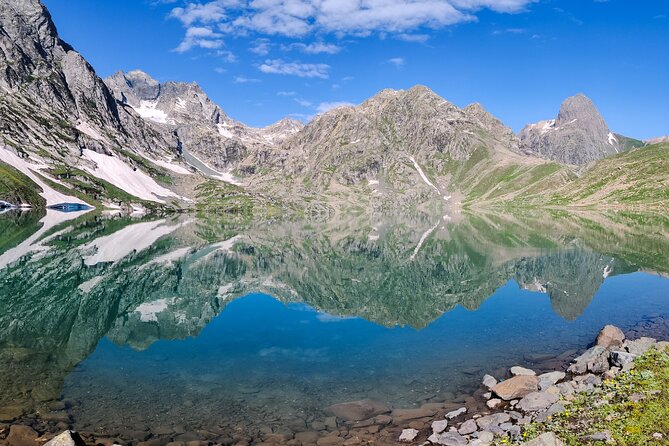
The effort pays off when the route opens beyond the pass. You leave the stream valley behind and move toward Vishansar Lake, one of the major visual rewards of the trek. The day is listed at about four hours, though altitude and trail conditions can make the walking feel more demanding than the time suggests.
This is where you should slow down and manage your energy. A high pass is not the place to race ahead for photographs. Take steady steps, drink regularly, and let the guide set a sensible rhythm.
Vishansar is also where the trek begins to feel fully alpine. The open slopes, high ridges, and lake views create a sharp contrast with the greener lower valleys. Early July can add snow to the scene, while late July usually brings more flowers around the camps and open meadows.
A few more options to weigh up in Srinagar
- Kashmir Family Tour – 07 Days Includes Accommodation and Private Transport
★ 5.0 · 164 reviews - 6 Days Private Tour in Kashmir Valley
★ 5.0 · 140 reviews - Private 5-Day Charming Kashmir Package Tour from Srinagar
★ 5.0 · 138 reviews - 5-Days Kashmir tour includes Accommodation and Private Transportation
★ 5.0 · 134 reviews
Day 4: Vishansar to Gadsar, the hardest day
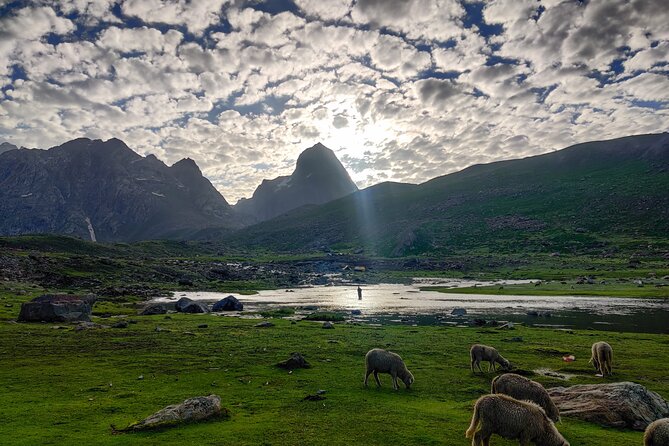
This is the day to take seriously. The trek from Vishansar to Gadsar is listed at about 10 hours and crosses the highest point of the route, Gadsar Pass, at approximately 4,210 meters.
The trail continues from the Vishansar campsite toward the pass, then drops toward Gadsar Lake. The combination of distance, altitude, and changing ground makes this the most demanding section of the itinerary. You should expect a long day rather than a quick walk between two scenic stops.
Gadsar Lake is the reward, but the route is not only about the view at the end. The high pass gives you a sense of the scale of the mountains, while the changing trail keeps the day interesting. The route can include steep sections, uneven ground, and exposed stretches. Rain or strong wind can make the same miles much harder.
Several departures have had bad weather, including persistent rain and strong wind. This is why a qualified guide and a first-aid kit matter. The guide team has been praised for staying alert and helping groups descend safely when conditions deteriorated. Surendra Rana and Rishabh have received particular thanks for their care during difficult weather.
You should also protect your schedule. A bad-weather delay can affect permits and available trekking time. One departure lost a day because of permit arrangements, so it is wise not to schedule an important flight immediately after the trek.
Day 5: Toward Satsar and the Tarsar route note
The supplied route information labels this day Tarsar Lake, while the description says the trek runs from Gadsar to Satsar. That difference is worth checking with Himalaya Shelter before you pay, because the exact camp and lake sequence should be clear on your departure documents.
The day itself is described as easier than the previous one. It begins with a steep climb lasting a little more than an hour, then settles into a more gradual trail across mostly level ground. After the long Gadsar day, this change of pace should be welcome.
The route continues to show off its variety. Instead of another relentless climb, you get more time on open ground, with opportunities to stop, eat, and take in the views without rushing. The walking time is about six hours, so it is shorter than Day 4 but still a full mountain day.
Food is one of the more praised parts of the camp operation. Expect filling meals suited to long days, with hot soup, dal, rajma, pasta, and popcorn among the reported camp offerings. Trout dishes have also been served on the mountain. Do not expect restaurant service, but warm food in a cold camp has real value.
Day 6: Zaj Pass and Gangabal Lake
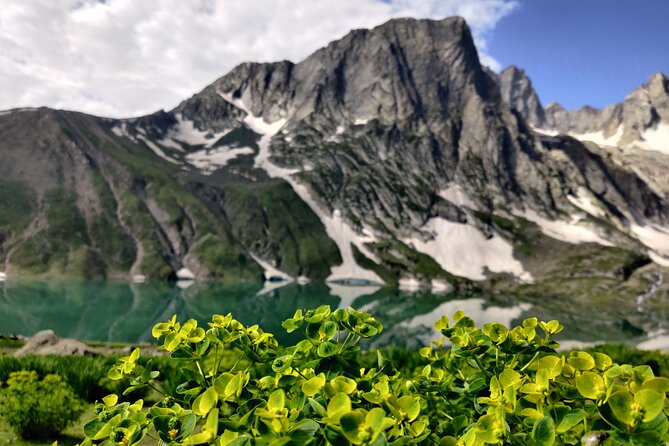
The route climbs again toward Zaj Pass, which is lower than the two earlier high passes. The pass reaches about 13,280 feet and takes around two hours to reach.
Compared with Gadsar Pass, Zaj Pass is less extreme, but altitude still affects your pace. The day is listed at about six hours, leaving time to appreciate the changing views as you approach Gangabal Lake.
Gangabal is the final major lake on the route and gives the trek a strong finish before the descent. The camp setting allows you to look back at the terrain you have crossed, from the lower valleys and meadows to the high passes.
This is a good day to organize your luggage. You will soon leave the high camps, and anything you need for the long descent should be easy to reach. If you use a porter, remember that personal luggage is not included. The stated charge is INR 500 per bag under 12 kilograms, per day.
Day 7: Gangabal to Naranag, then Srinagar
The final trekking day begins with smaller ups and downs. Around halfway through, the trail turns into a steep descent all the way to Naranag.
The downhill section is listed at about 13 kilometers. That distance can be harder on your knees than an uphill climb, especially after several days of walking. Trekking poles would be useful, although the provided information does not confirm that they are supplied.
From Naranag, you return to Srinagar, arriving between 5:00 and 7:00 p.m., depending on your starting time at Gangabal. Do not plan a tight onward connection that evening. The arrival window is broad, and weather or trail conditions can affect the schedule.
The tour ends back at the Srinagar meeting point. Accommodation in Srinagar on the final night is not included, so arrange that separately if you need to rest before a flight or continue your journey the next day.
What the $481 price includes
At $481, the trek offers solid value if you want a supported mountain trip rather than a self-organized route. The price includes six nights in double-occupancy tents, transport support from Srinagar onward, fees and taxes, a professional trek guide, a first-aid kit, camp equipment, sleeping bags, and mats.
Food is also covered:
- Six breakfasts
- Six dinners
- Five lunches
The main value comes from the logistics. You do not need to arrange separate camp transport, kitchen support, tents, or mountain meals. For a seven-day route with several high passes, that removes a large amount of planning.
The price does not cover your journey to Srinagar, personal medicines, phone calls, tips, personal expenses, or a final night in Srinagar. You also pay extra for a porter carrying your personal bag. Emergency-related cost increases are excluded as well.
For a fair comparison, do not compare $481 only with the cost of a hotel-based holiday. Compare it with the cost of arranging transport, camping equipment, food, permits, guides, and support across six nights in a remote mountain area.
Guide quality, group size, and camp support
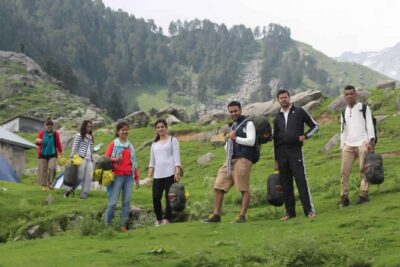
The group limit is 11 people, and groups of around 10 have been used. That is a useful size for a high-altitude trek. You get the social benefit of walking with others without the feel of a large procession.
The guide is described as a mountaineering-qualified and BMC-certified professional, with a first-aid kit carried on the trek. That does not remove the risks of altitude or bad weather, but it gives you a better safety structure than traveling without trained support.
The strongest praise has focused on the staff. Surendra Rana has been singled out for being alert and vigilant, while Rishabh has also been thanked for helping the group in severe weather. The cooking team has received equal credit for keeping meals warm and plentiful in difficult mountain conditions.
The tents are simple A-frame units, with separate kitchen, dining, and toilet tents. Portable seats and stools are included. This is basic camping, but the separate dining area and sleeping equipment make a major difference after a long day.
The best time to go
Choose early July if your priority is snow on the high reaches and young summer flowers in the meadows. The scenery is likely to have the strongest contrast at this point, but snow and cold can also make some sections more demanding.
Late July is the best all-around choice for flowers. The meadows should be in fuller bloom, temperatures are warmer than in early July, and nights are more comfortable for camping.
Late August brings cooler conditions and a higher chance of sudden rain. Flowers start to fade as cold returns to the high meadows. The trek may continue into the second week of September, but winter weather begins to threaten the higher sections after that.
No date is risk-free. The experience requires good weather, and a cancellation caused by poor conditions may lead to another date or a full refund. The same applies if the minimum group size is not reached.
Who should book this trek?
You should book if you enjoy long days outdoors, can manage steep climbs and descents, and want several lakes rather than a single viewpoint. The route suits someone with moderate physical fitness who is comfortable sleeping in tents for six nights.
You should think twice if you dislike basic camping, struggle with long downhill walks, or need a fixed return time. The 10-hour Gadsar day and the final 13-kilometer descent are the clearest tests.
This is also a good choice for people who value a small group and practical support. The food, camp equipment, and guide service reduce the work you would otherwise need to handle yourself. You still need to bring patience, warm clothing, and a willingness to adjust plans when mountain weather changes.
Should you book the Kashmir Great Lakes trek?
Yes, if you want a demanding but well-supported Kashmir mountain route with strong scenery every day. The best reasons to book are the changing terrain, the high lakes, the small group size, and the careful camp team.
Before booking, confirm the exact Day 5 route, the pickup time from Srinagar, the porter arrangement, and the permit schedule. Choose late July for the fullest flowers, early July for snow and flowers together, and avoid building a tight travel connection after the final descent.
FAQ
Where does the Kashmir Great Lakes trek start and finish?
The trek starts in Srinagar, with transport support provided from Srinagar onward. The activity ends back at the Srinagar meeting point after returning from Naranag.
How long does the trek last?
The experience lasts approximately seven days and includes six nights of camping.
What accommodation is included?
Six nights in standard double-occupancy tents are included. Sleeping bags, mats, a kitchen tent, dining tent, toilet tent, portable seats, and camping stools are also provided.
Are meals included?
Yes. The package includes six breakfasts, six dinners, and five lunches.
Is a porter included?
No. A porter for personal luggage is optional and costs INR 500 per bag under 12 kilograms, per day.
What happens if bad weather cancels the trek?
If poor weather causes cancellation, you will be offered a different date or a full refund. The same options apply if the minimum number of participants is not reached.
Just added in Srinagar
- Srinagar Splendors: A Private City Tour★ 4.5 · 12 reviews
- Kashmir Great Lakes Trek★ 5.0 · 56 reviews
- Private Sedan Cab to and from Srinagar Airport and Dal Lake★ 5.0 · 46 reviews
- Kashmir Ladakh Tour★ 5.0 · 12 reviews
- 6 Days Private Tour in Kashmir★ 4.5 · 31 reviews
- Fascinating Kashmir 4 Nights / 5 Days★ 5.0 · 112 reviews
- Private Kashmir Family 7-Day Tour★ 5.0 · 122 reviews
- Amazing Kashmir Tour – 03 Nights & 04 Days★ 5.0 · 127 reviews
Hiking and Trekking, compared.
Mountain Hiking in Munnar (half day) By Munnar Info
Read our review →
Half day trekking (munnar valley Trekking & Tours )
Read our review →
Wild Elephant Anakulam & Waterfalls Tour(munnar valley Trekking)
Read our review →
Browse the lists this tour appears in