
Reviewed · HIKING AND TREKKING
Kashmir Great Lakes Trek
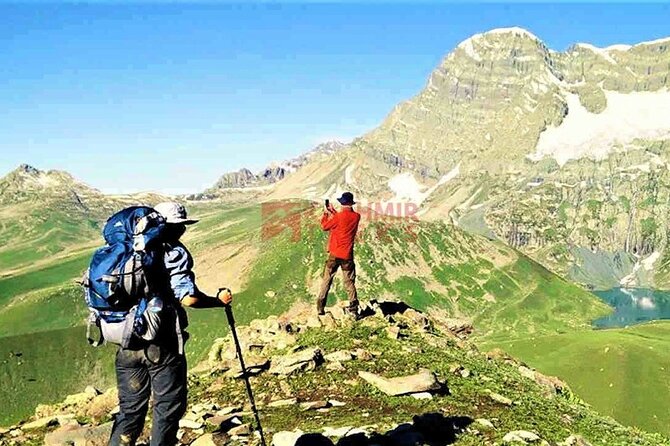
Kashmir rewards people who walk slowly. I like the route’s three major lake stops, Vishansar, Gadsar, and Gangabal, and I like that horses carry the heavy camp gear while you carry only a day pack. The main drawback is the demanding altitude: several days reach passes above 4,000 meters, and the long walking days require moderate fitness and good weather.
This is an eight-day private trek from Srinagar to Naranag, with tented camps, cooked vegetarian meals, permits, equipment, transport, and one night in a deluxe hotel or houseboat. Guides such as Wajid, Ali, and Mudasir are associated with the operation, and personal care from the guide team is one of the strongest parts of the experience.
In This Review
- Key points to know before booking
- What the Kashmir Great Lakes Trek is really like
- Day 1: Srinagar to Sonamarg and the first camp
- Day 2: Sonamarg to Nichnai, 11 kilometers uphill
- Day 3: Nichnai Pass to Vishansar Lake
- Day 4: Vishansar to Gadsar over the highest pass
- Day 5: Gadsar to Satsar, a shorter mountain day
- Day 6: Satsar to Gangabal Lakes via Zajibal Pass
- Day 7: Gangabal to Naranag, then back to Srinagar
- Day 8: Srinagar airport or bus stand drop
- Camping, food, horses, and included equipment
- How hard is the trek?
- The guide team and personal service
- Srinagar houseboat or hotel and the value of $112
- Who should book this Kashmir trek?
- Should you book the Kashmir Great Lakes Trek?
- FAQ
- How long is the Kashmir Great Lakes Trek?
- Where does the trek start and finish?
- How far do you walk each day?
- What is the highest point on the route?
- Are meals and camping equipment included?
- Can I cancel for a full refund?
Key points to know before booking
- Four high mountain passes: Nichnai, Gadsar, Zajibal, and another pass above 4,000 meters shape the trek.
- Three major alpine lakes: Vishansar, Gadsar, and Gangabal provide the route’s most memorable scenery.
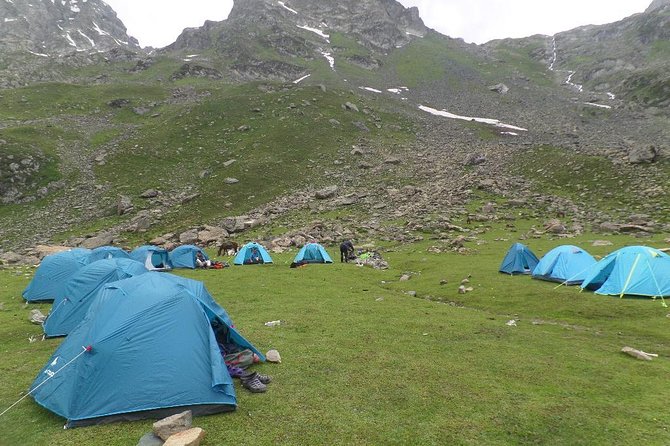
- Horses carry the camp: Tents, sleeping bags, mats, blankets, poles, cooking equipment, and other supplies are offloaded for you.
- A real point-to-point trek: You start at Sonamarg and finish at Naranag, rather than returning to the same camp each night.
- Full-board camping: Breakfast, lunch, dinner, tea, coffee, and bottled water are included during the mountain portion.
- Strong overall ratings: The experience has a 4.8 rating from 56 reviews, with 96 percent recommending it.
What the Kashmir Great Lakes Trek is really like
The Kashmir Great Lakes Trek is a proper mountain journey, not a series of easy walks from a comfortable base. You move camp each day through open meadows, narrow mountain routes, passes, and high lake basins. The route begins at Sonamarg, at about 2,610 meters, and ends at Naranag after a descent to roughly 2,250 meters.
I like the structure because every day has a clear purpose. You are not simply walking in circles. The route gradually takes you from the Sind River near Sonamarg to Vishansar Lake, Gadsar Lake, Satsar, and Gangabal before dropping toward Naranag.
The listed price is $112, which is unusually low for an eight-day private trek with transportation, guides, permits, horses, camping equipment, meals, and a Srinagar hotel or houseboat night. That makes the package look excellent for value, provided the quoted price matches your travel date and all listed inclusions still apply at booking.
You should not read the low price as a sign that this is an easy outing. The physical work remains yours. Horses carry the shared gear, but you still walk between 9 and 15 kilometers most days, often for five to eight hours, with several steep or high sections.
More Hiking and Trekking in Srinagar:
- The Best Monsoon Trek: Kashmir Great Lakes
★ 5.0 · 26 reviews - Mountain Hiking in Munnar (half day) By Munnar Info
★ 5.0 · 390 reviews - Half day trekking (munnar valley Trekking & Tours )
★ 5.0 · 310 reviews
Day 1: Srinagar to Sonamarg and the first camp
Pickup begins at 8:00 a.m. in Srinagar, which sits at about 1,600 meters. The drive to Sonamarg covers roughly 100 kilometers and takes about three hours, so your first day is mostly a transfer and a gentle change of altitude.
Sonamarg is the first campsite, at about 2,610 meters, beside the Sind River. Tea and dinner are included, and the evening gives you a chance to organize your day pack before the walking starts.
This first night matters because the trek climbs quickly after Sonamarg. You may appreciate having a short travel day rather than arriving late and immediately facing a long mountain walk. The listed package includes transport from Srinagar, but you should confirm the exact pickup point when you book.
Day 2: Sonamarg to Nichnai, 11 kilometers uphill
The first walking day covers about 11 kilometers and takes around seven hours. You climb from 2,610 meters to 3,450 meters, with breakfast, lunch, tea, and dinner provided.
Nichnai is less about a single famous viewpoint and more about the shift into high mountain country. You will feel the air becoming thinner, and the seven-hour estimate can feel long if you are not used to walking at altitude.
I like that the horses carry the tents and cooking supplies on this section. You still need a warm layer, rain protection, water, snacks, personal medication, and your camera in your day pack. Keep that bag light. A heavy pack becomes much more unpleasant on the climb to 3,450 meters.
Day 3: Nichnai Pass to Vishansar Lake
Day three is one of the route’s major scenic stages. You walk about 12 kilometers in seven hours, leaving Nichnai at 3,450 meters, crossing Nichnai Pass at 4,080 meters, and reaching Vishansar Lake at about 3,650 meters.
The pass is the day’s main physical test. The lake is the reward, with high peaks, open mountain country, and a wide sense of space around the camp. Vishansar is also the first of the trek’s signature lakes, so this is when the route begins to feel distinctly different from a standard hill walk.
You should allow for changing conditions. The supplied information notes that weather affects the trek, and one review specifically points out that monsoon conditions can make boulder-covered sections difficult. Clear weather makes the passes easier to cross and improves the views, but mountain conditions can change quickly.
A few more options to weigh up in Srinagar
- Kashmir Family Tour – 07 Days Includes Accommodation and Private Transport
★ 5.0 · 164 reviews - 6 Days Private Tour in Kashmir Valley
★ 5.0 · 140 reviews - Private 5-Day Charming Kashmir Package Tour from Srinagar
★ 5.0 · 138 reviews - 5-Days Kashmir tour includes Accommodation and Private Transportation
★ 5.0 · 134 reviews
Day 4: Vishansar to Gadsar over the highest pass
At 14 kilometers and about eight hours, day four is the longest and hardest stage on paper. You leave Vishansar at around 3,650 meters, cross Gadsar Pass at approximately 4,180 meters, then descend toward Gadsar at about 3,550 meters.
This is a day for pacing, not racing. The high pass is the central challenge, and the descent can be tiring after the climb. Your guide and support staff should set the rhythm, but you need to be honest if you feel unwell or cannot maintain the planned pace.
Gadsar Lake is another major stop and one of the places that gives the trek its name. After a long day, reaching camp near a high lake feels satisfying, but do not expect a soft landing. Tented accommodation means basic mountain comfort, not a heated room or private bathroom.
Day 5: Gadsar to Satsar, a shorter mountain day
The walk to Satsar covers about nine kilometers and takes roughly five hours. You climb slightly from 3,550 to 3,650 meters, making this a shorter day after the demanding Gadsar Pass crossing.
This is useful recovery time. You still need to walk steadily, but the shorter schedule may give you more time around camp for tea, drying clothes, checking equipment, and enjoying the setting.
Satsar is included in the route even though the supplied stop list highlights Vishansar, Gadsar, Gangabal, and Naranag. That distinction is worth noting. Satsar is a camp and route stage, while the other places are the headline scenery or cultural stop.
Day 6: Satsar to Gangabal Lakes via Zajibal Pass
Day six covers about 11 kilometers in six hours. The route rises from 3,650 meters, crosses Zajibal Pass at around 4,080 meters, and finishes near Gangabal Lakes at approximately 3,580 meters.
Gangabal is one of the trek’s main scenic rewards and the final high lake area before the descent to Naranag. The combination of mountain water, open grass, and snow-covered peaks gives this section the wide views many people hope to find in Kashmir.
The altitude profile is deceptive. The final elevation is lower than Satsar, but you still cross a high pass. A downhill finish does not make the day effortless. You will want proper socks, broken-in footwear, and a small bag that does not swing or pull at your shoulders.
Day 7: Gangabal to Naranag, then back to Srinagar
The final walk is about 15 kilometers and takes around six hours. You descend from about 3,580 meters to Naranag at 2,250 meters, then drive back to Srinagar.
This is a long exit day, but the altitude drop should feel welcome. Naranag is more than a trail endpoint. It is a village and Hindu pilgrimage site, with the Naranag Temple included as one of the experience’s main stops.
The transition from high mountain camp to a settled cultural site gives the trek a satisfying finish. You are not simply collected from a roadside camp. You walk out through Naranag, then continue by vehicle to Srinagar.
Breakfast, transport, lunch, and dinner are listed for this day. Confirm the timing of the Srinagar arrival if you have a fixed evening plan, since a 15-kilometer walk followed by a drive leaves little room for delay.
Day 8: Srinagar airport or bus stand drop
The final morning includes breakfast and transport. The drive is listed as about five kilometers and 20 minutes to the bus stand, or 12 kilometers and 30 minutes to Srinagar airport.
The stated times are estimates, so I would avoid booking a tight onward connection. Your transport follows seven days of mountain walking, and road conditions or the group’s return time can affect the schedule.
Camping, food, horses, and included equipment
The package includes six nights of full-board tented accommodation in the mountains and one night in a deluxe houseboat or hotel in Srinagar. That Srinagar night is a pleasant contrast to sleeping in a tent and may be especially appealing if the houseboat option is used.
The camping setup includes tents, sleeping bags, mats, blankets, trekking poles, cooking utensils, and an LPG stove. A first-aid kit, trekking and wildlife permits, bottled water, tea, coffee, breakfast, lunch, and dinner are also included.
Meals are described as stove-cooked and vegetarian. Tell the operator about dietary requirements when booking. Do not assume that every personal snack, specialty food, or clothing item is supplied.
The horse support is a major practical benefit. It lets you carry a day pack instead of a full camping load, which makes the passes more manageable. You still need personal clothing and equipment, and travel insurance is not included.
How hard is the trek?
The operator asks for a moderate physical fitness level, but the itinerary gives a clearer picture than that label. You will walk between nine and 15 kilometers for five to eight hours, with passes reaching 4,080 and 4,180 meters.
This is best for someone who already enjoys long walks and can manage consecutive active days. You do not need to carry the tents, but you do need to cope with altitude, uneven ground, long descents, and basic camping.
The biggest difficulty is not one dramatic climb. It is the repeated effort. Days three and four include high passes, day seven is long, and the route offers no easy hotel reset between stages.
Weather is another serious factor. Poor conditions can cancel the trek, in which case you are offered a different date or a full refund. A review of the route also points out that monsoon weather can make boulder sections hard to cross, while clear weather is much better for the passes.
The guide team and personal service
This is a private tour, so only your group participates. That gives you more control than a large fixed departure, especially when you need to adjust your walking pace or discuss a difficult section with the guide.
The provider has received strong praise for organization, safety, and care from local staff. Wajid is singled out for guiding a group of six women, while Ali is praised for looking after a family. Mudasir is also named in connection with an organized walking trip, and Mehraz and his team are associated with airport reception and the transfer to the base camp.
You should confirm your guide’s name before departure. A private trek works best when communication is clear from the start, especially around fitness, dietary needs, equipment, and weather changes.
Srinagar houseboat or hotel and the value of $112
At $112, this package offers a lot for the money. Private transport alone, six nights of camp support, horses, permits, meals, trekking equipment, and a final transfer would normally make a self-organized trek complicated.
The real value is convenience. You do not need to arrange separate tents, cooking gear, pack animals, permits, or mountain food. You can focus on walking and photography while the support team handles camp logistics.
Still, check the exact price and inclusions before paying. Travel insurance, personal clothing, personal equipment, and tips are excluded. The listed price may also be a starting rate or depend on dates, so ask for a written confirmation of what your group receives.
Who should book this Kashmir trek?
I would recommend it to you if you want a serious but supported Himalayan trek, prefer a private group, and care more about mountain scenery than luxury. The route gives you alpine lakes, high passes, tented camps, a village temple, and a houseboat or hotel night in Srinagar.
It is also a good fit if you dislike carrying heavy equipment. The horses make a meaningful difference, especially on the 4,080-meter and 4,180-meter passes.
I would hesitate to recommend it if you want short daily walks, private bathrooms, fixed hotel rooms, or a relaxed sightseeing schedule. You should also reconsider if you have no experience with long walks or cannot manage six active days at altitude.
The 4.8 rating from 56 reviews and 96 percent recommendation rate support the strong value, particularly for the guides, scenery, safety, and organization. The practical warnings matter just as much: March and April were described as good periods by one booking, October worked well in another, and monsoon conditions can make the route harder. Treat season and weather as central parts of your decision.
Should you book the Kashmir Great Lakes Trek?
Book this trek if you want Kashmir at walking pace and are ready for real mountain days. The route’s best features are clear: three remarkable lakes, four high passes, horse-supported camping, full-board meals, and a private guide team.
Before booking, confirm the final price, guide name, exact Srinagar accommodation, departure date, weather terms, and equipment list. Pack for cold, wet conditions even if the forecast looks friendly.
For a fit hiker who values scenery and practical support, this is one of the better-value ways to see the high country around Srinagar. For anyone seeking an easy holiday, it is the wrong trip, no matter how attractive the price looks.
FAQ
How long is the Kashmir Great Lakes Trek?
The experience lasts approximately eight days. It includes travel from Srinagar to Sonamarg, six nights in mountain camps, the trek to Naranag, a return drive to Srinagar, and a final airport or bus stand drop.
Where does the trek start and finish?
The walking route starts in Sonamarg and finishes in Naranag. The tour begins with pickup in Srinagar and ends with transport back to Srinagar.
How far do you walk each day?
The listed walking distances range from nine to 15 kilometers per day. The daily walking time is approximately five to eight hours.
What is the highest point on the route?
The route crosses several high passes. Nichnai and Zajibal Pass are listed at about 4,080 meters, while Gadsar Pass reaches approximately 4,180 meters.
Are meals and camping equipment included?
Yes. Six nights of full-board tented camping are included, along with breakfast, lunch, dinner, tea, coffee, bottled water, tents, sleeping bags, mats, blankets, trekking poles, cooking equipment, and a stove.
Can I cancel for a full refund?
You can receive a full refund if you cancel at least 24 hours before the experience start time. Cancellations or changes made less than 24 hours before the start are not accepted, and poor weather may lead to a different date or a full refund.
Just added in Srinagar
- Srinagar Splendors: A Private City Tour★ 4.5 · 12 reviews
- The Best Monsoon Trek: Kashmir Great Lakes★ 5.0 · 26 reviews
- Private Sedan Cab to and from Srinagar Airport and Dal Lake★ 5.0 · 46 reviews
- Kashmir Ladakh Tour★ 5.0 · 12 reviews
- 6 Days Private Tour in Kashmir★ 4.5 · 31 reviews
- Fascinating Kashmir 4 Nights / 5 Days★ 5.0 · 112 reviews
- Private Kashmir Family 7-Day Tour★ 5.0 · 122 reviews
- Amazing Kashmir Tour – 03 Nights & 04 Days★ 5.0 · 127 reviews
Hiking and Trekking, compared.
Mountain Hiking in Munnar (half day) By Munnar Info
Read our review →
Half day trekking (munnar valley Trekking & Tours )
Read our review →
Wild Elephant Anakulam & Waterfalls Tour(munnar valley Trekking)
Read our review →
Browse the lists this tour appears in