
Reviewed · GOLDEN TRIANGLE TOURS
Private Golden Triangle Tour With Jodhpur From Delhi
Four royal cities, one busy week. This private tour links Delhi, Agra, Jaipur, and Jodhpur with a private air-conditioned car, local guides, hotel stays, and hotel pickup. I like the door-to-door planning, especially for first-time visitors, and I like that the schedule includes both famous sights and less crowded places such as Mehtab Bagh and Jaswant Thada. The main drawback is pace: seven days covers a lot of ground, and entrance fees, tips, and the domestic flight are extra.
I also appreciate the freedom built into a private trip. Your own group travels together, and evenings are generally available for independent time. Still, guide quality can vary. One guide was reported to speak too quickly and rush some sightseeing, so it is wise to ask for a slower pace when a monument deserves more time.
In This Review
- Key points to know before booking
- Four cities in seven days
- Day 1: Old Delhi, Mughal monuments, and New Delhi
- Day 2: Delhi to Agra and the Baby Taj
- Day 3: the Taj Mahal, Agra Fort, and Fatehpur Sikri
- Day 4: Jaipur’s palaces, astronomy, and lake views
- Day 5: the long move to Jodhpur
- Day 6: Mehrangarh Fort and Jodhpur’s royal monuments
- Day 7: fly or drive back to Delhi
- What the $443 price really covers
- Guide quality, pace, and personal time
- Who should book this private route?
- Practical booking advice
- Should you book it?
- FAQ
- How long is the private Golden Triangle tour with Jodhpur?
- Which cities are included?
- Is transportation included?
- Are hotel stays and breakfast included?
- Are entrance fees included in the tour price?
- Is the flight from Jodhpur to Delhi included?
Key points to know before booking
- Seven days cover four major cities: Delhi, Agra, Jaipur, and Jodhpur, with six hotel nights and breakfast included.
- The Taj Mahal gets two useful viewpoints: an early visit inside the monument and a sunset stop at Mehtab Bagh.
- Private transport saves hassle: an air-conditioned car, driver, hotel transfers, and a tuk-tuk ride in Old Delhi are included.
- The advertised price is not the final total: the $443 per person rate excludes about $82 in entrance fees, gratuities, and any domestic flight.
- The schedule is full but not nonstop: some evenings are free, while Day 3 and Day 4 require early starts and several major monuments.
- Dates matter: the Taj Mahal is closed Fridays, and the Lotus Temple is closed Mondays.
Four cities in seven days
This is a sightseeing-heavy route, not a slow holiday. You move from Mughal Delhi to Agra, then through Jaipur and onward to the blue city of Jodhpur. The private format makes the mileage easier because you are not waiting for a large group, but the number of monuments still demands energy.
I see the tour as a practical introduction to north India. You get the essential landmarks, private transport between cities, guides in each destination, and a fixed hotel plan. That combination is useful if you want structure without joining a bus tour.
The tradeoff is time. Delhi alone receives a full day, Agra gets part of Day 2 and most of Day 3, Jaipur receives one full sightseeing day, and Jodhpur gets an arrival day plus one touring day. You will see a great deal, but you will not have much room for spontaneous detours.
More Golden Triangle Tours in New Delhi:
- 3-Days Private Golden Triangle Tour: Delhi, Agra & Jaipur by Car
★ 5.0 · 1,107 reviews - 3-Days Private Golden Triangle Tour: Delhi, Agra & Jaipur by Car
★ 5.0 · 1,098 reviews - 3-Day Delhi, Agra and Jaipur Private Tour – India Golden Triangle
★ 5.0 · 812 reviews
Day 1: Old Delhi, Mughal monuments, and New Delhi
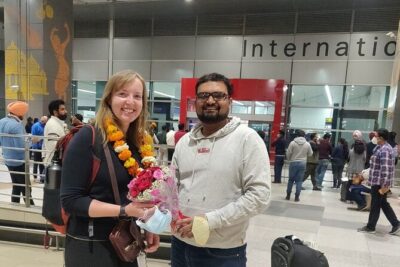
The tour begins with pickup from your airport or Delhi hotel. You meet the guide and start with a long city tour that can run for about eight hours. That opening day gives you a useful contrast between Old Delhi’s narrow lanes and New Delhi’s broad ceremonial avenues.
Jama Masjid is an impressive first stop. Built by Shah Jahan in 1656, the mosque has a large red sandstone courtyard and strong Mughal design. The planned 30-minute visit is enough for a look, but it may feel short if you want time for quiet observation or photographs.
Next comes Chandni Chowk, one of Old Delhi’s oldest commercial areas. The included tuk-tuk ride is a smart touch here. A small vehicle fits the lanes better than the tour car, and the route gives you a close look at the crowded, intensely active side of Delhi. This is one of the more local-feeling parts of the day, though the narrow streets can be tiring.
Humayun’s Tomb is calmer and more spacious. This 16th-century garden tomb is an important Mughal building and a clear architectural predecessor to the Taj Mahal. The visit lasts about 45 minutes, with the entrance fee extra.
Qutub Minar provides a different period and style. The 73-meter brick minaret dates from the 13th century and is covered with detailed carving. The planned visit is only 30 minutes, so you should tell the guide if you want to focus on the surrounding structures rather than only the tower.
The Lotus Temple offers a change of mood. Its white, lotus-shaped design belongs to the Bahá’í faith, and the building welcomes people of all faiths. The visit is free, but the temple closes on Mondays, so check your dates before booking.
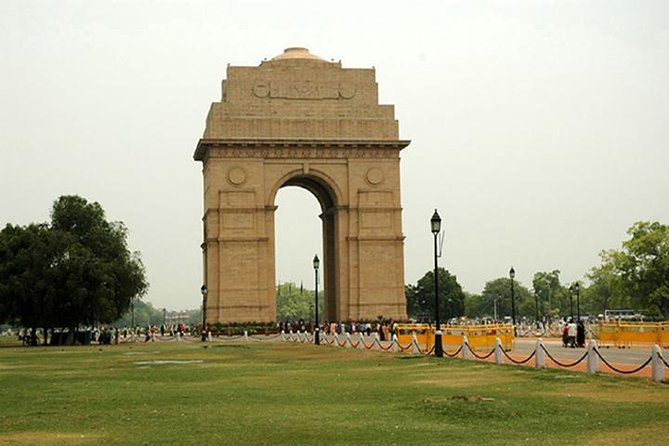
The day ends with quick stops at India Gate and Rashtrapati Bhavan. India Gate is a war memorial honoring Indian soldiers of World War I. Rashtrapati Bhavan, the president’s official residence, was originally built as the Viceroy’s House and blends Indian and Western architectural elements. These stops are mainly exterior views, so they work well as brief additions rather than major visits.
You return to the hotel for the night. Because Day 1 includes several major sites, do not expect a leisurely start or long breaks. The benefit is that many of Delhi’s headline sights are handled at once.
Day 2: Delhi to Agra and the Baby Taj
After breakfast, you check out and drive to Agra in the private air-conditioned car. The stated drive time is about three hours. Private transport matters on this route because you can keep your luggage with you and travel directly instead of changing vehicles.
After checking into the Agra hotel and having lunch, the afternoon begins at Mehtab Bagh. This riverside garden sits across from the Taj Mahal and is especially useful for seeing the monument from a different angle. The scheduled visit is about 90 minutes, with admission extra.
Mehtab Bagh is not a substitute for entering the Taj Mahal. It is a quieter visual introduction, and the setting helps you understand the monument’s position beside the Yamuna River. If sunset conditions are favorable, this can be one of the most relaxed moments in the tour.
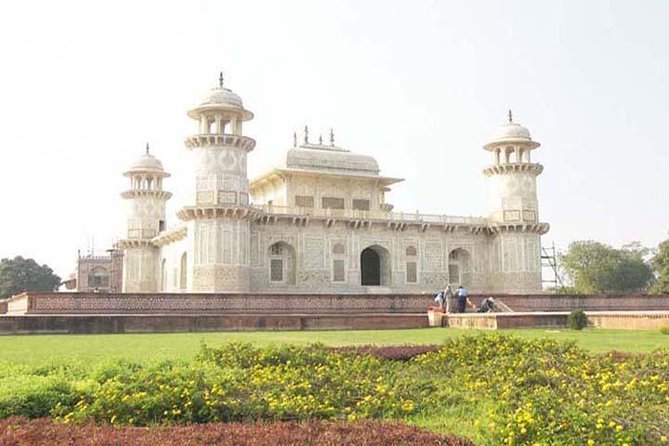
Itmad-ud-Daula follows. Often called the Baby Taj, this marble tomb was commissioned by Nur Jahan for her father. Its delicate inlay work and garden setting reward close attention, particularly after the broad scale of Delhi’s monuments.
The day ends back at the hotel. This is a sensible rhythm after the transfer from Delhi. You get two focused Agra visits without trying to force the Taj Mahal into the same afternoon.
Day 3: the Taj Mahal, Agra Fort, and Fatehpur Sikri
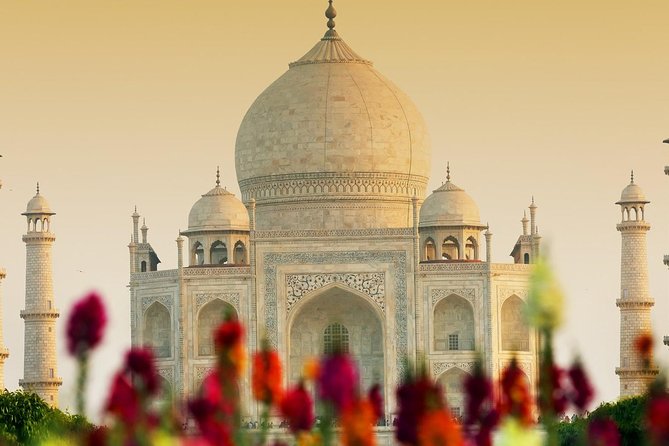
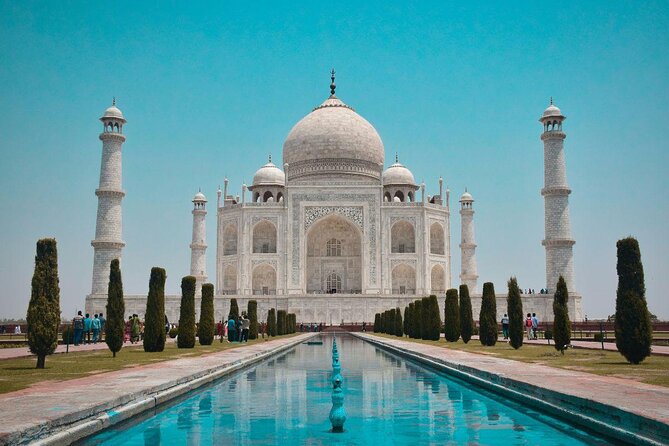
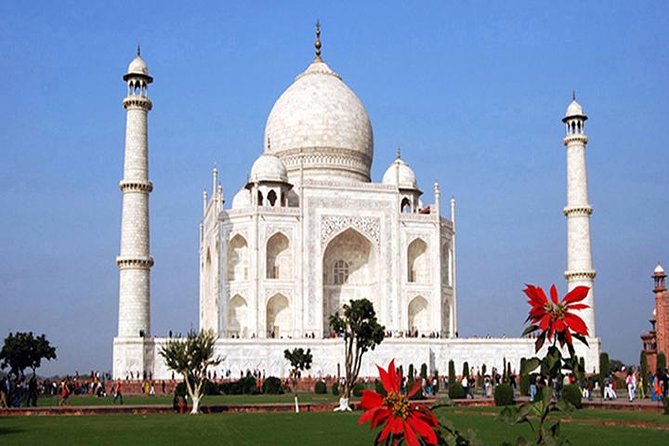
The early start for the Taj Mahal is one of the strongest choices in the schedule. The visit lasts about three hours, giving you more time than the short photo stops elsewhere. Your guide escorts you to the monument, built by Shah Jahan in memory of Mumtaz Mahal.
The Taj is famous for good reason, but the practical value of an early visit is just as important as the monument itself. You have a better chance to see it before the day becomes too hot and crowded. The entrance fee is not included, so budget for it separately. The Taj Mahal is closed every Friday, an important point when choosing your start date.
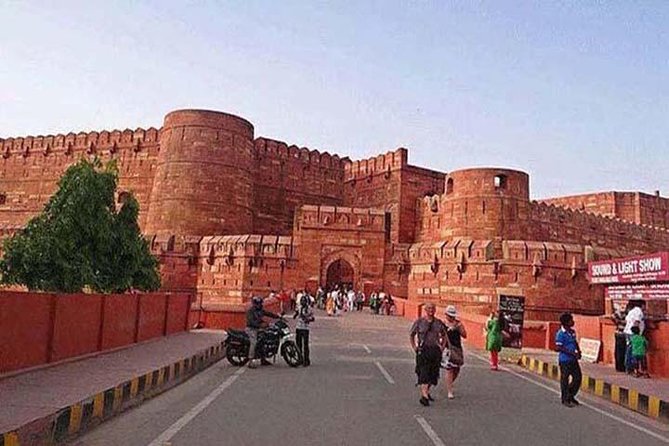
After returning to the hotel for breakfast, you visit Agra Fort. This large Mughal complex receives about two hours, which is appropriate for its scale. The fort is not simply a defensive wall. Its palaces, courtyards, and red sandstone architecture help explain the power of the rulers who commissioned the Taj Mahal.
Then you check out and continue toward Jaipur, stopping at Fatehpur Sikri for about two hours. The former imperial city gives the route a welcome change from Agra’s most famous monuments. The listed admission is free, but you should still confirm exactly what is covered on the day.
This is the most demanding travel day. You combine the Taj Mahal, breakfast, Agra Fort, hotel checkout, a long onward journey, and Fatehpur Sikri. The schedule is worthwhile, but I would not plan a late-night activity in Jaipur.
A few more options to weigh up in New Delhi
- Old & New Delhi City Tour – Half or Full Day Options Available
★ 5.0 · 4,811 reviews - Same Day Taj Mahal, Agra Fort & Baby Taj Tour from Delhi by Car
★ 5.0 · 4,304 reviews - Taj Mahal Day Tour from Delhi by Superfast Train – TOP RATED TOUR
★ 5.0 · 4,166 reviews - Full Day Taj Mahal, Agra Fort & Baby Taj Tour from Delhi by Car
★ 5.0 · 3,647 reviews
Day 4: Jaipur’s palaces, astronomy, and lake views
Jaipur’s touring day begins with pickup from the hotel and a meeting with the local guide. The City Palace sits in the old city and blends Rajasthani and Mughal design. The planned 90-minute visit introduces the former royal residence, though some areas may remain restricted.
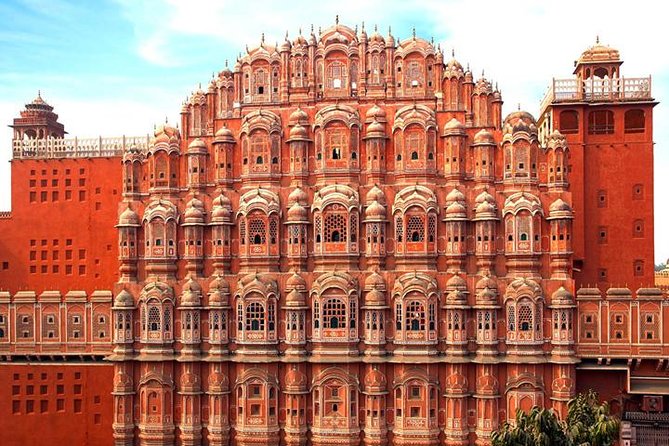
Hawa Mahal is a short stop of about 30 minutes. Its pink sandstone front has 953 windows, designed so royal women could watch street life without being seen. The building is more facade than full palace experience from the outside, so the brief visit makes sense. Have your camera ready, since the honeycomb front is one of Jaipur’s most recognizable views.
Jaigarh Fort receives two hours and gives you a look at Jaipur’s military side. The fort is linked to Maharaja Jai Singh II and is known for Jaivana, described as the world’s largest cannon. The hilltop position also provides broad views over the city and surrounding area. Entrance is extra.
Jantar Mantar is one of the tour’s most unusual stops. This UNESCO-listed collection of giant astronomical instruments includes the world’s largest stone sundial. The visit lasts about 90 minutes, enough time for a guide to explain how the instruments were used rather than treating them as oversized sculptures.
The day finishes with Jal Mahal, the Water Palace. The five-story building appears to float in Man Sagar Lake, though the stop is only about 15 minutes and does not include an interior visit. Think of it as a scenic roadside pause for photographs.
You return to your Jaipur hotel for the night. The day mixes royal architecture, military engineering, science, and a quick lake view. That variety keeps Jaipur from feeling like a single run of palaces.
Day 5: the long move to Jodhpur
After breakfast, you check out and continue to Jodhpur. The schedule lists about two hours for this part of the day, followed by hotel check-in and free time.
Because the transfer details are brief, I would confirm the exact departure time, vehicle plan, and expected arrival when you book. The free afternoon is useful after four days of major sights. Use it to rest, walk near the hotel if convenient, or simply prepare for the next day’s fort visit.
Jodhpur changes the visual mood of the tour. Jaipur is known for pink buildings and planned royal spaces, while Jodhpur is associated with its blue-painted old-city houses and the great fort above them. This tour gives Jodhpur less time than Delhi or Jaipur, so the following morning matters.
Day 6: Mehrangarh Fort and Jodhpur’s royal monuments
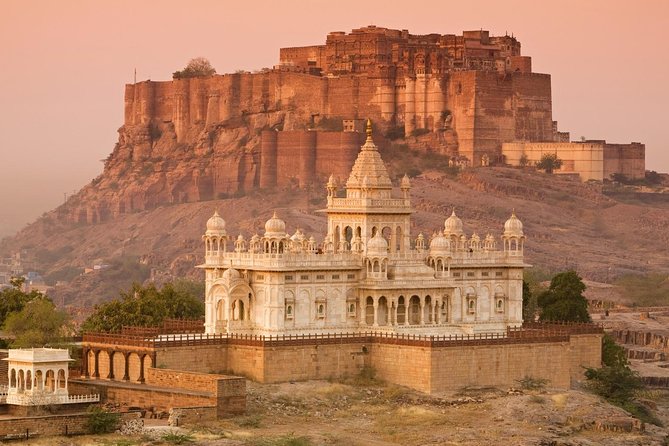
Mehrangarh Fort is the main reason to add Jodhpur to this route. Built on a low sandstone hill, it includes rooms such as Moti Mahal and Phool Mahal. The scheduled visit is two hours, with admission extra.
Two hours should give you a solid introduction, but the fort has enough material to reward a slower pace. Ask the guide to explain the rooms and their uses, not just point out the best viewpoints. The stone walls, palace interiors, and position above Jodhpur make this the tour’s strongest final monument.
Jaswant Thada follows, with two hours listed. This marble memorial from the 18th century offers a quieter counterpoint to Mehrangarh’s scale and defenses. The pale stonework and calmer setting make it a good place to slow down and take in the details.
The final stop is the Umaid Bhawan Museum and the public gardens, scheduled for about one hour. The tour description gives fewer details here than for the other monuments, so confirm whether the visit includes museum admission and which areas you will see. Admission is listed as extra.
You spend the night in Jodhpur. With a full morning and afternoon of sightseeing, this is a satisfying use of the city portion of the trip, though an additional night would suit anyone who wants more free time.
Day 7: fly or drive back to Delhi
After breakfast, the tour ends with a transfer to Jodhpur Airport for a flight to Delhi, or a drive to Delhi in an air-conditioned car. The listed driving time is about six hours.
The domestic flight is not included in the tour price. If you choose to fly, arrange that cost and schedule separately. If you choose the car, six hours is a substantial final transfer, so think carefully about your onward plans from Delhi.
The two return options make the tour more adaptable, but they also mean the final day is not identical for every booking. Confirm which option you want and how the transfer connects with your next hotel or flight.
What the $443 price really covers
At $443 per person, the tour offers a strong bundle for anyone seeking a private, organized route. Six hotel nights, six breakfasts, the private car, city guides, hotel pickup and drop-off, and the Old Delhi tuk-tuk ride are included. The private format is especially useful for a four-city route because you avoid sharing a vehicle with strangers and can keep the same basic travel arrangement for much of the trip.
Still, the price is not fully inclusive in the everyday sense. Entrance fees add about $82 per person. Tips and gratuities are extra, and a domestic flight from Jodhpur to Delhi is also excluded. The package is best understood as a convenient base price rather than the complete cost of the holiday.
Hotel category depends on the option selected, generally four-star or five-star accommodation. Hotel names depend on availability, and a similar-category property may replace the listed choice. Early check-in before 2 p.m. is not guaranteed. If your room is not ready, luggage storage is available while you begin sightseeing.
If you arrive around midnight, book an extra hotel night in advance. Otherwise, you may technically have a reservation beginning on a date that does not match your arrival hours.
Guide quality, pace, and personal time
The strongest service feature is the private setup. Only your group participates, and you have a driver, guides in each city, and hotel transfers arranged. That reduces the small but repeated frictions that can wear you down on a packed trip.
Guide quality deserves attention. One reported weakness was a guide who spoke too quickly and rushed through some sights. You can help prevent that by saying clearly that you want slower explanations and enough time for photographs. The schedule already moves quickly, so a guide who rushes makes the experience less satisfying.
The food arrangements received praise for bringing the group to restaurants that were both delicious and easy on the stomach. That is useful on a busy route, though you should still tell the guide about dietary needs before meals.
Evenings are generally open for your own plans. That small amount of freedom matters. You can rest, explore near the hotel, or simply avoid turning every hour into a scheduled activity.
Who should book this private route?
I would recommend it to a first-time visitor who wants the main sights of north India without arranging every hotel, transfer, and guide separately. It also suits families or small groups who value a private car and the ability to travel together.
The tour is less suitable if you prefer slow mornings, long stays in one city, or extensive independent exploration. The schedule gives you highlights, not a deep stay in each place. Jaipur receives one principal sightseeing day, and Jodhpur receives only one substantial touring day.
It also suits people who are comfortable with extra costs. Plan for entrance fees, tips, and possibly a flight on top of the advertised rate. Group discounts may be available, which could improve the value for a larger private party.
Practical booking advice
Choose dates that avoid Friday if the Taj Mahal is essential, and avoid Monday if the Lotus Temple is important. Since both closures are stated clearly, a small date change can protect two major stops.
Ask for the hotel names and the room category before departure, especially if you have a preference between four-star and five-star lodging. Also confirm the Jodhpur to Delhi return plan, since the flight is not part of the listed inclusions.
Build some flexibility into Day 3. The Taj Mahal, Agra Fort, Fatehpur Sikri, checkout, and the Jaipur transfer make it a long day. Comfortable clothing, patience, and an early bedtime will help more than trying to add another activity.
The cancellation policy allows a full refund when you cancel at least 24 hours before the experience starts. Changes or cancellations within 24 hours are not accepted for a refund.
Should you book it?
Book this tour if you want maximum sightseeing with minimum planning. The private car, local guides, included breakfasts, and six hotel nights make the $443 starting price attractive, even after adding monument tickets and other extras.
Skip it if you want a relaxed, independent trip with several nights in each city. For everyone in between, this is a useful introduction to Delhi, Agra, Jaipur, and Jodhpur. Just confirm the hotel category, request a measured guide pace, budget for the excluded costs, and choose dates that avoid the Taj Mahal’s Friday closure.
FAQ
How long is the private Golden Triangle tour with Jodhpur?
The tour lasts approximately seven days and includes six nights of hotel accommodation.
Which cities are included?
The route includes New Delhi, Agra, Jaipur, and Jodhpur.
Is transportation included?
Yes. Transportation by private air-conditioned car, hotel pickup and drop-off, and a tuk-tuk ride in Old Delhi are included.
Are hotel stays and breakfast included?
Six nights of hotel accommodation and six breakfasts are included when the selected package includes the stated hotel option.
Are entrance fees included in the tour price?
No. Entrance fees are not included and are estimated at about $82 per person.
Is the flight from Jodhpur to Delhi included?
No. The domestic flight is not included. You may instead drive to Delhi in an air-conditioned car, with the listed driving time of about six hours.
Just added in New Delhi
- Old Town Delhi Walking Tour (2 Hours Guided Tour with Local)★ 4.5 · 22 reviews
- Yoga class in Delhi★ 5.0 · 29 reviews
- Vegetarian : Private Cooking Class in Delhi home ( Learn 7 meal)★ 5.0 · 58 reviews
- Private Taj Mahal & Agra Fort Tour, Dine with a View★ 5.0 · 27 reviews
- Unveil Old Delhi’s Food, Spice Market & Heritage Walk★ 5.0 · 26 reviews
- Tour to Akshardham temple with Guide and Delhi Transfer★ 5.0 · 26 reviews
- Private Tour of Taj mahal from Delhi by Train in 90 Min★ 5.0 · 46 reviews
- Private 2-Day Agra & Delhi Tour by Car–Includes Taj Mahal Sunrise★ 5.0 · 11 reviews
Golden Triangle Tours, compared.
3-Days Private Golden Triangle Tour: Delhi, Agra & Jaipur by Car
Read our review →3-Days Private Golden Triangle Tour: Delhi, Agra & Jaipur by Car
Read our review →
3-Day Delhi, Agra and Jaipur Private Tour – India Golden Triangle
Read our review →
Four-Day Private Luxury Golden Triangle Tour to Agra and Jaipur From New Delhi
Read our review →
5 Nights 6 Days Private Golden Triangle Tour – Delhi Agra Jaipur
Read our review →
Private Car and Drive for Golden Triangle (4N/5D)
Read our review →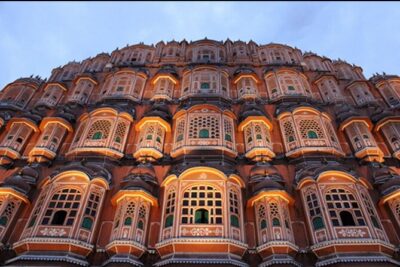
Private Golden Triangle Tour Delhi Agra Jaipur ( Top Rated )
Read our review →Browse the lists this tour appears in