
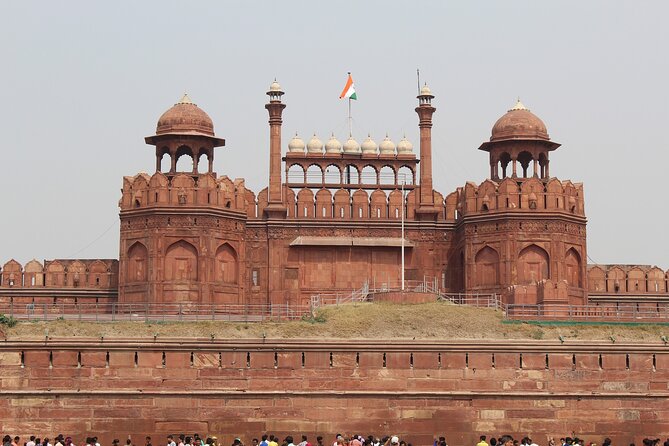
Reviewed · GOLDEN TRIANGLE TOURS
Private 5 Days Golden Triangle Tour ( Delhi – Agra – Jaipur )
India’s grandest first trip fits into five busy days. This private Golden Triangle tour links Delhi, Agra, and Jaipur with a driver, private guides, hotel stays, monument tickets, and airport pickup, making it a useful choice if you want the major sights without arranging every transfer yourself. I especially like the door-to-door transport and the chance to choose between mid-range and high-end hotels. The included tickets also save you from handling admission counters at every major stop.
The trade-off is time. Day one packs much of Delhi into a tight schedule, and the drives between cities take three to four hours. You should also note that meals are not included, and Delhi’s Humayun’s Tomb and Akshardham Temple are presented as an either-or choice. Still, at $219 per person, the package offers strong value if the selected hotel level and private vehicle match your plans.
In This Review
- Key points at a glance
- Why this private format works well
- Day one: Old Delhi, Sikh tradition, and Delhi’s grand avenues
- Humayun’s Tomb or Akshardham: an important Day One choice
- Day two: Delhi to Agra and the Mughal capital
- Day three: sunrise at the Taj Mahal and the road to Jaipur
- Day four: Amer Fort and Jaipur’s royal symbols
- Day five: a practical return to Delhi
- What the $219 price really gives you
- Who should book this tour?
- Final verdict: strong value for a classic first visit
- FAQ
- How long is the Golden Triangle tour?
- What cities does the tour visit?
- Are hotel stays included?
- Are monument admission tickets included?
- Is transportation private?
- Can I be picked up from the airport?
Key points at a glance
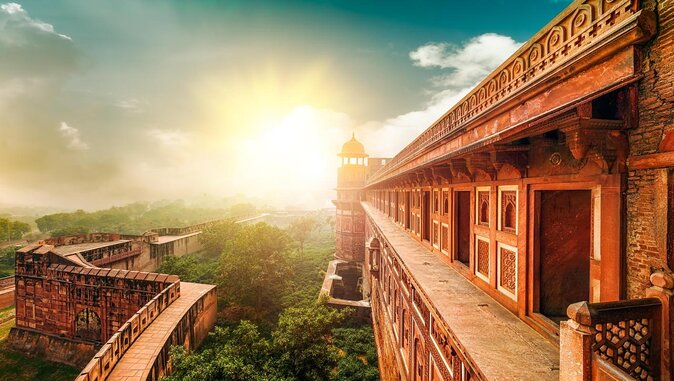
- Sunrise at the Taj Mahal: Day three begins with up to three hours at India’s most famous monument, with a guide available to help with photographs.
- Your own air-conditioned car: The private vehicle links Delhi, Agra, Jaipur, and the return to Delhi without public transport changes or luggage transfers.
- Two hotel levels: You can choose mid-range or high-end accommodation, with four nights and breakfast included when that option is selected.
- A full Delhi opening day: Jama Masjid, Chandni Chowk, Gurudwara Bangla Sahib, Qutub Minar, and either Humayun’s Tomb or Akshardham are covered.
- Jaipur’s royal core: Amer Fort, Hawa Mahal, City Palace, and Jal Mahal provide a solid first look at the Pink City.
- Personal guiding matters: In Agra, guide Shain is praised for clear English, strong historical explanations, and helping visitors take good photographs.
Why this private format works well
The Golden Triangle is easy to understand on a map and tiring to arrange on the ground. Delhi, Agra, and Jaipur are connected by road, but the route still involves hotel check-ins, monument tickets, changing schedules, and long transfers. Here, one driver and a series of local guides handle the basic movement.
I like the private format because you are not tied to a large group’s pace. If you want more time at the Taj Mahal or less time at a particular market, you can discuss that with your guide. The tour is still structured, so it is not a completely open-ended private trip, but it gives you more breathing room than a coach excursion.
Pickup is available from Delhi, Noida, Gurugram, Ghaziabad, and Faridabad. On the first morning, you can select a pickup time between 9 and 11 a.m. Airport pickup is also offered, which is useful if Delhi is your arrival point.
The vehicle is air-conditioned, and complimentary water bottles and an umbrella are included. Those sound like small touches, but they matter during long road transfers and hot monument visits. You will spend several hours in the car, so having a private vehicle is one of the main reasons to consider this package.
More Golden Triangle Tours in New Delhi:
- 3-Days Private Golden Triangle Tour: Delhi, Agra & Jaipur by Car
★ 5.0 · 1,107 reviews - 3-Days Private Golden Triangle Tour: Delhi, Agra & Jaipur by Car
★ 5.0 · 1,098 reviews - 3-Day Delhi, Agra and Jaipur Private Tour – India Golden Triangle
★ 5.0 · 812 reviews
Day one: Old Delhi, Sikh tradition, and Delhi’s grand avenues
The first day begins with pickup in Delhi and a meeting with your guide. The opening stop is Chandni Chowk, where you ride by tuk-tuk through Old Delhi’s colorful bazaars. This gives you a quick view of one of the city’s most active commercial areas while your guide explains how the markets serve local life.
The tuk-tuk ride is a smart choice here. Old Delhi is dense, noisy, and full of narrow lanes. A short ride lets you see more than you would by walking alone, though you should expect a quick, crowded introduction rather than a slow market visit.
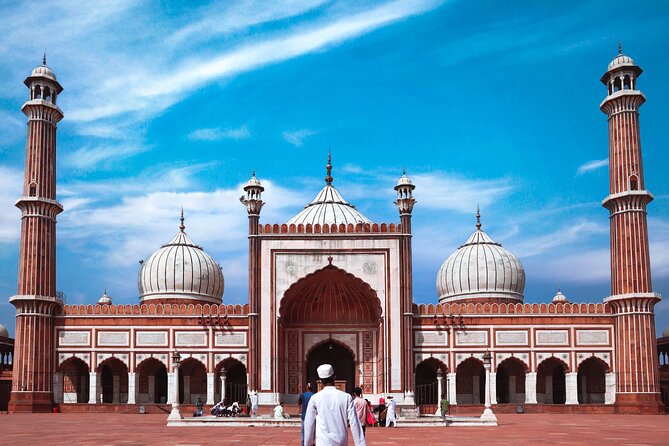
Next comes Jama Masjid, India’s largest mosque. Built in 1656 with the help of about 5,000 workers, the mosque has a broad red sandstone courtyard and a strong connection to the Mughal capital that once surrounded it. You receive about an hour here, enough for the main courtyard and an explanation of the building’s place in Delhi’s story.
Dress respectfully at Jama Masjid and follow your guide’s instructions. Religious sites reward patience, but this schedule keeps moving, so do not expect a long unplanned visit.
Gurudwara Bangla Sahib provides a very different atmosphere. This Sikh place of worship is linked to the eighth Sikh Guru, who is said to have visited in 1664 and helped people during smallpox and cholera outbreaks by distributing water from the tank. You have about 30 minutes, which is enough for a brief visit and an introduction to Sikh traditions.
The route then passes Delhi’s major government landmarks. The 1921 India Gate memorial carries the names of 13,300 Indian servicemen who died during the First World War. You also see the grand New Delhi area built in the late 1920s under architects Sir Edwin Lutyens and Herbert Baker. These stops help explain the difference between Old Delhi’s Mughal lanes and New Delhi’s broad, formal avenues.
Humayun’s Tomb or Akshardham: an important Day One choice
The schedule gives you a choice between Humayun’s Tomb and Swaminarayan Akshardham. That choice is worth taking seriously because the two sites offer very different experiences.
Humayun’s Tomb is a UNESCO World Heritage Site and India’s first garden tomb. Built after the death of Mughal emperor Humayun at the request of his wife, it uses gardens and formal geometry to create a calm setting around the mausoleum. If you want Mughal architecture and a direct connection to the design tradition that later shaped the Taj Mahal, this is the stronger pick.
Akshardham Temple was completed in 2005, yet its design draws on older Hindu architectural ideas. The complex is one of India’s largest Hindu temples and is intended to look far older than its construction date. Choose it if modern religious architecture interests you more than Mughal tomb design.
You should confirm how this choice works with your guide on the day. The schedule lists about 30 minutes for the selected site, so neither option receives an especially long visit.
The final major stop is Qutub Minar, the tall brick minaret built in 1192. It forms part of the Qutub complex in Mehrauli, a UNESCO World Heritage Site. The 45-minute visit gives you time to see the minaret and surrounding remains, while the guide supplies the historical framework that turns a quick photo stop into a more useful visit.
Day one covers a lot. That is its strength and its weakness. You get a broad introduction to Delhi, but the pace may feel brisk, especially after an arrival flight. If you are tired, the private format gives you the best chance of asking for a simpler day.
Day two: Delhi to Agra and the Mughal capital
After breakfast, you travel roughly three hours to Agra. This is not a sightseeing drive with a long list of roadside stops. It is a practical transfer, so settle into the air-conditioned car and use the time to rest.
On arrival, your guide helps with the hotel check-in before sightseeing begins. That small piece of support is valuable after the road journey, especially if you need to freshen up before entering the monuments.
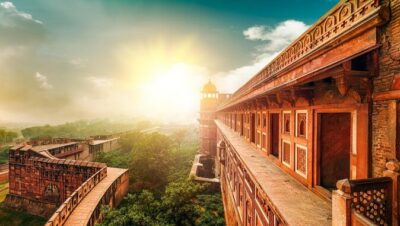
Agra Fort is the first major visit. Built in the 17th century, this UNESCO World Heritage Site combines Indian and Islamic architectural details. Its walls and pavilions reflect Agra’s role as a Mughal seat of power, and the one-hour visit gives you a clear look at the fort’s formal spaces without trying to cover every corner.
I would pay close attention to the guide here. The fort can look like a series of courtyards and red walls if you visit without context. A private guide can explain how the spaces worked and how the building relates to the Mughal rulers connected with Agra.
The second stop is Itmad-ud-Daula, sometimes called the Baby Taj. The supplied schedule allows about an hour. Its inclusion is useful because it adds a smaller, more delicate monument to a day otherwise focused on monumental fortifications and imperial scale.
This day is fairly balanced, but it does not include the Taj Mahal yet. That is intentional. The following morning is reserved for the main event, when light and crowds can make a major difference.
A few more options to weigh up in New Delhi
- Old & New Delhi City Tour – Half or Full Day Options Available
★ 5.0 · 4,811 reviews - Same Day Taj Mahal, Agra Fort & Baby Taj Tour from Delhi by Car
★ 5.0 · 4,304 reviews - Taj Mahal Day Tour from Delhi by Superfast Train – TOP RATED TOUR
★ 5.0 · 4,166 reviews - Full Day Taj Mahal, Agra Fort & Baby Taj Tour from Delhi by Car
★ 5.0 · 3,647 reviews
Day three: sunrise at the Taj Mahal and the road to Jaipur
The Taj Mahal visit begins early, at sunrise. You have about three hours at the marble mausoleum, which is the most generous single sightseeing block in the tour. Your guide can help you find good photo positions and explain the monument as you move through the grounds.
The early start is the right call. The light is softer, the temperature is usually more manageable, and the visit feels less rushed than a short midday stop. Bring your patience as well as your camera. The Taj is a place where the view from several angles matters, and the guide’s help with photographs can be genuinely useful. Guide Shain, in Agra, is praised for clear English, strong historical explanations, and taking good pictures, so requesting him may be worthwhile if scheduling allows. The tour data does not promise a specific guide, however.
After returning to the hotel and gathering your things, you drive toward Jaipur. Fatehpur Sikri is the route’s main stop, about 40 kilometers west of Agra. This fortified city served as the Mughal capital from 1572 until 1585, making it a short-lived but important chapter in imperial history.
The visit lasts about an hour. Fatehpur Sikri works well as a stop between Agra and Jaipur because it breaks up the long road journey and adds a different kind of Mughal site. You see a planned former capital rather than a living city center, and the setting helps you understand how quickly political centers could change.
The Jaipur drive takes about four hours. By the time you reach the Pink City, check in, freshen up, and rest, the day will feel full. I would avoid planning extra evening activities unless you are comfortable with a long travel day.
Day four: Amer Fort and Jaipur’s royal symbols
Jaipur sightseeing begins with Amer Fort, the major highlight of the day. You have about two hours to see the fort’s Hindu-style architecture, courtyards, and hilltop setting. The fort is more than a quick photo stop, so this time allocation is welcome.
Amer Fort rewards a guide who can explain how the spaces were used and how the decorative details fit together. The tour description emphasizes its artistic Hindu design, and you should expect the visit to focus on architecture, royal life, and the fort’s visual appeal.
Hawa Mahal follows. The Palace of Wind is famous for its 953 windows, many decorated with intricate designs. Built in 1799 for royal women, the red and pink facade is one of Jaipur’s most recognizable sights.
The one-hour visit is enough to appreciate the exterior and hear the story behind the windows. Do not expect Hawa Mahal to feel like a huge palace complex. Its importance is in the facade, its clever openings, and the way it represents Jaipur’s royal image.
You then spend about two hours at the City Palace of Jaipur. Once the seat of the Maharaja, it now includes museum areas as well as gardens and patterned architecture. This is where the city’s royal identity becomes more personal and detailed, with palace spaces rather than only fort walls and exterior facades.
The final stop is Jal Mahal, the 17th-century palace set in Man Sagar Lake. You have about 30 minutes, making this a short scenic pause rather than a full palace visit. Its position in the water gives you a calmer contrast after a day of forts, courtyards, and city streets.
Day four is the most focused sightseeing day. The sites are close enough to form a sensible Jaipur circuit, and the schedule gives the biggest monuments enough time. The main limitation is that every stop is fixed, so you may need to accept a brief visit if you become especially interested in one place.
Day five: a practical return to Delhi
The final day is kept for the return journey. The drive to Delhi takes about four hours, and you may also choose a drop-off at Jaipur airport.
This arrangement suits an open-jaw plan: arrive in Delhi, tour south and west through the Golden Triangle, then fly onward from Jaipur. If your flight leaves Delhi, allow plenty of extra time beyond the stated driving duration. Traffic conditions can affect the road journey, and the package information does not provide a guaranteed arrival time.
The day is described as relaxing, but it is still a transfer day. You will spend much of it in the car, so consider it part of the tour’s transport plan rather than another sightseeing day.
What the $219 price really gives you
At $219 per person, the value depends on your accommodation choice and group size. The price includes private air-conditioned transfers, sightseeing by car and driver, private live guides at the monuments, monument tickets, four nights of hotel accommodation when selected, and breakfast with the accommodation package.
That is a useful bundle. Admission fees can add up across the Taj Mahal, Agra Fort, Qutub Minar, Jaipur’s monuments, and the other included sites. You also avoid paying separately for each long transfer and do not need to arrange a new driver in every city.
The price does not include meals. Budget for lunch and dinner each day, plus any personal spending. Since the tour provides breakfast with the hotel option, your first meal of the day is covered when that package is chosen, but you should check the exact hotel selection before booking.
The mid-range and high-end choices are important. If your priority is comfort after long drives, the high-end option may be worth the extra cost. If you mainly need a clean base for sleeping and want to keep the total down, mid-range accommodation may make more sense.
Who should book this tour?
I would choose this tour if you want India’s best-known northern sights but do not want to manage Indian road transfers yourself. It suits first-time visitors, couples, families, and small private groups that value a personal driver and guide.
It is also a good match if you want flexibility without building a fully custom itinerary. You can select your pickup point, choose a hotel level, and discuss the Delhi monument choice, while the main route stays organized.
You may want something slower if you prefer long museum visits, unplanned neighborhood walks, or quiet mornings. The schedule is efficient, but it is not leisurely. Delhi’s first day and the Agra to Jaipur transfer are especially demanding.
This is not an ideal choice for anyone who wants every meal included or who dislikes long road journeys. The private car removes much of the hassle, but it does not shorten the distances.
The provider, Markable Joy, offers free cancellation up to 24 hours before the start time for a full refund. Changes or cancellations made within 24 hours are not refunded, and the times follow local time.
Final verdict: strong value for a classic first visit
Book this Golden Triangle tour if you want the main monuments, private transport, included tickets, and hotel support in one package. The sunrise Taj Mahal visit, four-night stay, and personal guiding give the tour its strongest value, while the private car makes the three-city route far easier to handle.
Before booking, confirm the accommodation level, your preferred Delhi choice between Humayun’s Tomb and Akshardham, the pickup details, and the final airport or Delhi drop-off. If you can accept full days and several hours on the road, this is a practical and well-priced introduction to Delhi, Agra, and Jaipur.
FAQ
How long is the Golden Triangle tour?
The tour lasts approximately five days and includes Delhi, Agra, Jaipur, and the return journey to Delhi or an optional drop-off at Jaipur airport.
What cities does the tour visit?
It visits New Delhi, Agra, and Jaipur. The route also includes Fatehpur Sikri between Agra and Jaipur.
Are hotel stays included?
Four nights of accommodation with breakfast are included when the selected tour option includes either the three-star or five-star accommodation package.
Are monument admission tickets included?
Yes. Monument tickets are included for the scheduled sightseeing stops. Delhi’s Chandni Chowk and Fatehpur Sikri are listed without an admission charge.
Is transportation private?
Yes. Transfers and sightseeing are provided in a private air-conditioned car with a driver. Only your group participates in the private activity.
Can I be picked up from the airport?
Airport pickup is offered. Pickup is also available from locations in Delhi, Noida, Gurugram, Ghaziabad, and Faridabad.
Just added in New Delhi
- Old Town Delhi Walking Tour (2 Hours Guided Tour with Local)★ 4.5 · 22 reviews
- Yoga class in Delhi★ 5.0 · 29 reviews
- Unveil Old Delhi’s Food, Spice Market & Heritage Walk★ 5.0 · 26 reviews
- Vegetarian : Private Cooking Class in Delhi home ( Learn 7 meal)★ 5.0 · 58 reviews
- Private Taj Mahal & Agra Fort Tour, Dine with a View★ 5.0 · 27 reviews
- Tour to Akshardham temple with Guide and Delhi Transfer★ 5.0 · 26 reviews
- Private Tour of Taj mahal from Delhi by Train in 90 Min★ 5.0 · 46 reviews
- Private 2-Day Agra & Delhi Tour by Car–Includes Taj Mahal Sunrise★ 5.0 · 11 reviews
Golden Triangle Tours, compared.
3-Days Private Golden Triangle Tour: Delhi, Agra & Jaipur by Car
Read our review →3-Days Private Golden Triangle Tour: Delhi, Agra & Jaipur by Car
Read our review →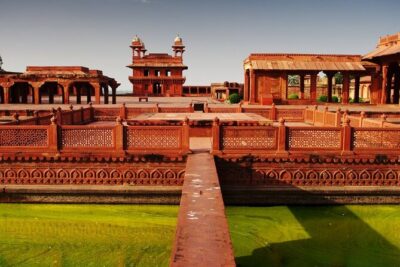
3-Day Delhi, Agra and Jaipur Private Tour – India Golden Triangle
Read our review →
Four-Day Private Luxury Golden Triangle Tour to Agra and Jaipur From New Delhi
Read our review →
5 Nights 6 Days Private Golden Triangle Tour – Delhi Agra Jaipur
Read our review →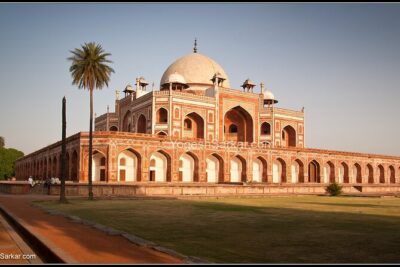

Private Car and Drive for Golden Triangle (4N/5D)
Read our review →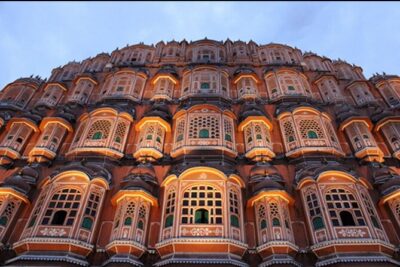
Private Golden Triangle Tour Delhi Agra Jaipur ( Top Rated )
Read our review →Browse the lists this tour appears in