Reviewed · MUMBAI TOURS
Mumbai: South Mumbai Heritage Walking Guided Tour
Old Mumbai tells its story on foot. This three-hour walk connects grand colonial buildings, working city streets, and major landmarks in a way that helps you understand how Mumbai grew. I especially like the strong lineup of historic sights, from Chhatrapati Shivaji Terminus to the Gateway of India, and the chance to hear local context instead of simply passing each building. I also like the personal touch reported by several guests, with guides such as Sanika, Krishna, Ketan, Alan, Abhi, and Alkama answering questions and adjusting the walk to individual interests.
The main consideration is simple: this is a walking tour, not a sightseeing ride. Three hours on city streets may feel long in heat or crowded conditions, and the route covers many landmarks rather than offering extended interior visits. Still, for a first look at South Mumbai, the $28 price is reasonable if you want the buildings to make sense rather than remain a string of impressive façades.
In This Review
- Key points at a glance
- Why walking makes South Mumbai easier to understand
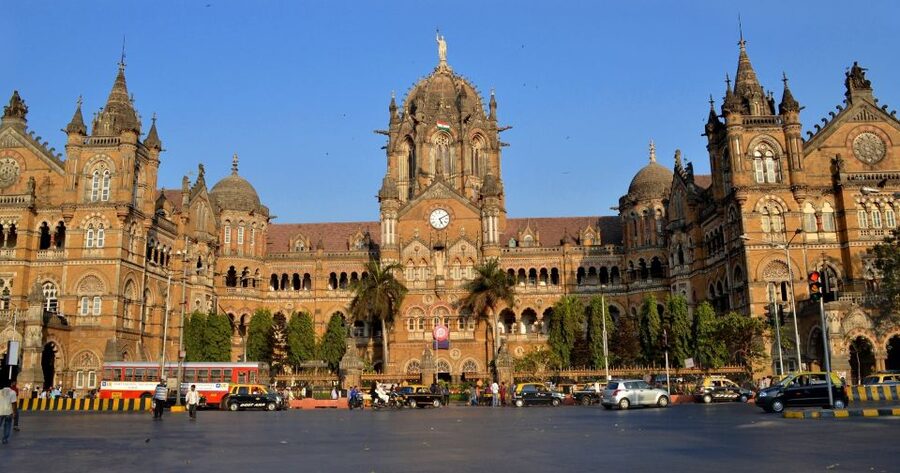
- Chhatrapati Shivaji Terminus: begin with Mumbai at full volume
- Town Hall and the Asiatic Society: a quieter colonial pause
- St. Thomas’ Cathedral and Flora Fountain: faith, civic life, and sculpture
- University of Mumbai and Bombay High Court: institutions in stone
- Kala Ghoda and Watson’s Hotel: art and unusual construction
- The Taj Mahal Palace and Gateway of India: a grand finish
- What the guides add to the three-hour route
- Price, pace, and who gets the best value
- Practical advice before you go
- Should you book the South Mumbai Heritage Walking Tour?
- FAQ
- Where does the Mumbai heritage walking tour take place?
- How much does the tour cost?
- How long does the walking tour last?
- What language is the tour offered in?
- Which major sights are included?
- Is Marine Drive part of the experience?
- Can I pay later?
- What is the cancellation policy?
- Who provides the tour?
Key points at a glance
- Three hours through Old Mumbai: The route brings together major colonial, civic, religious, artistic, and waterfront sights.
- CST is a major opening highlight: Chhatrapati Shivaji Terminus is both a remarkable railway station and a UNESCO World Heritage Site.
- Guides add the real value: Sanika, Krishna, Ketan, Alan, Abhi, and Alkama are praised for warmth, clear explanations, and thoughtful answers.
- A useful first-day orientation: The walk covers many main sights and can help you understand South Mumbai before exploring alone.
- The route reaches the waterfront: Marine Drive, the Taj Mahal Palace, and the Gateway of India give the history a memorable visual finish.
- Flexible booking terms: You can reserve now and pay later, with a full refund available when cancelling at least 24 hours ahead.
Why walking makes South Mumbai easier to understand
South Mumbai can feel like several cities pressed together. Railway architecture, British-era civic buildings, religious landmarks, art spaces, luxury hotels, and public streets all sit within the same broad historic district. From a vehicle, you may see them quickly, but you can miss the connections between them.
This walk gives those details a human scale. You move from one building to the next while a guide explains why the area developed as it did, how colonial planning shaped the streets, and how architecture reflects social and cultural change. That context matters because the sights are not just isolated photo stops.
The Mumbai Heritage Walks group was founded in April 1999 by city architects Abha Bahl and Brinda Gaitonde. Its stated purpose is to help residents and visitors notice Mumbai’s architecture, monuments, planning features, and decorative details. That background explains the character of the tour: it is meant to teach you how to look, not only where to stand for a photograph.
The format also suits curious first-time visitors. You can ask questions as you go, and several guides have been praised for being friendly and easy to talk with. Ketan, who was described as studying Indian literature and archaeology, brought particular enthusiasm to the historical side of the walk. Addison had a one-person tour with Krishna and found that the experience could be adapted personally when the group was very small.
A few more options to weigh up in Mumbai
- Dharavi slum tour in Mumbai by Female tour guides of the slum
★ 5.0 · 1,976 reviews - Mumbai: Full-Day Sightseeing Tour of Mumbai
★ 4.9 · 1,822 reviews - Private Mumbai Sightseeing Tour (Traveller’s Choice Award Winner)
★ 5.0 · 1,565 reviews
Chhatrapati Shivaji Terminus: begin with Mumbai at full volume
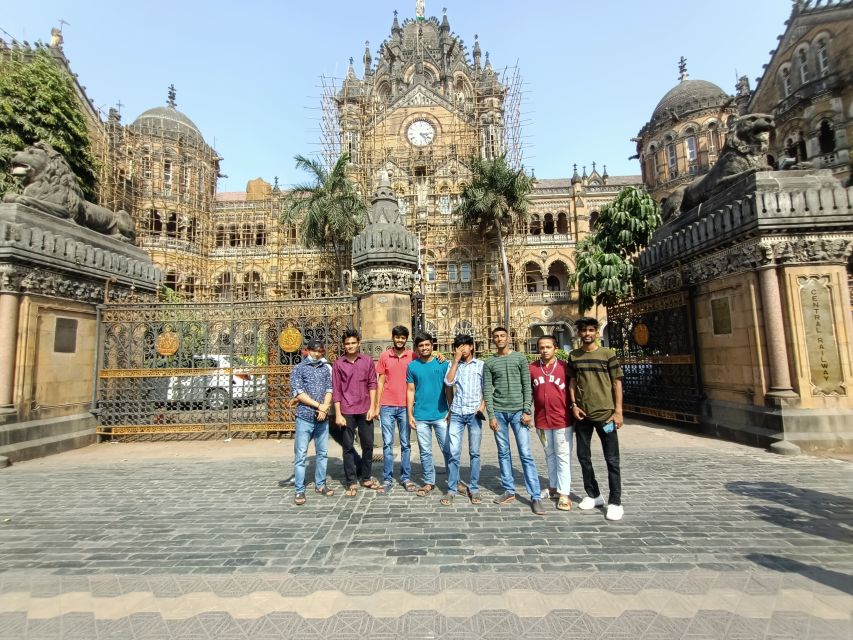
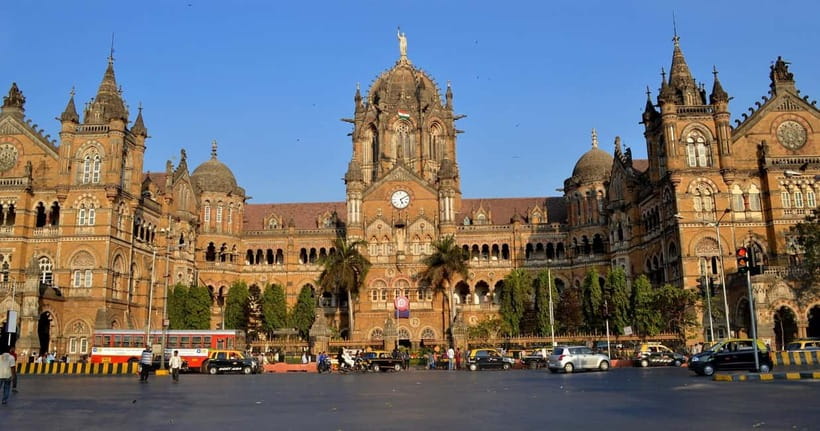
Chhatrapati Shivaji Terminus is one of the tour’s essential stops. It is a railway station, a daily transport hub, and one of India’s most striking public buildings. It is also a UNESCO World Heritage Site, giving the stop importance beyond its appearance.
The station is a useful introduction to Mumbai because it combines grand design with ordinary city life. You are not looking at a preserved monument cut off from the modern city. Trains, commuters, and urban movement continue around it, making the building part of Mumbai’s present as well as its past.
A guide can help you notice the architectural treatment instead of seeing only a large, ornate station. The tour description points to the range of styles, planning features, and decorative details that shape Old Mumbai. That is exactly the sort of information that can turn a quick exterior view into a meaningful stop.
Town Hall and the Asiatic Society: a quieter colonial pause
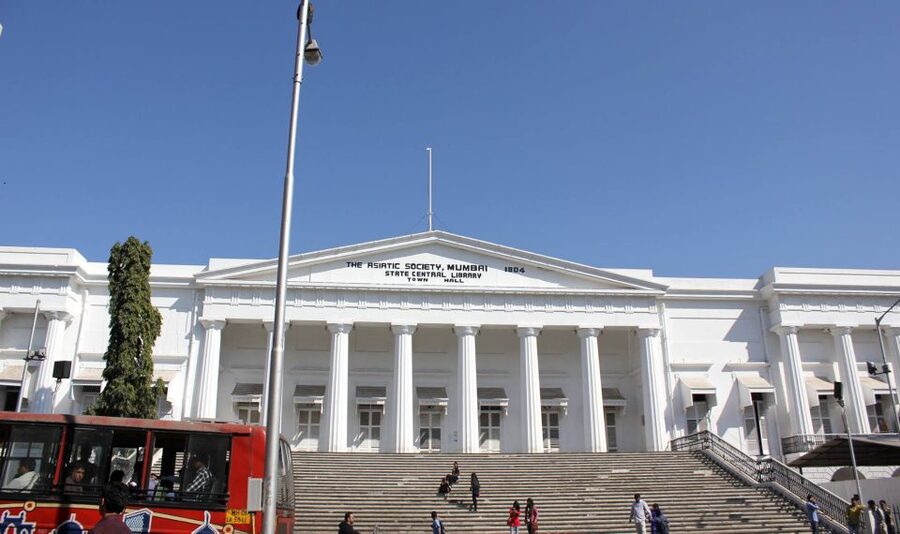
The Town Hall, home to the Asiatic Society Library, offers a different mood. It is a colonial structure and one of Mumbai’s oldest libraries, so it introduces the city’s intellectual and civic life rather than its railways or commercial power.
This is where the walking format earns its price. You have time to consider the building as part of the city’s institutional history, while the guide explains how such places fit into colonial Mumbai. I would not expect a long library visit or a detailed indoor tour, since the experience is built around walking between landmarks. Its value lies in the explanation and setting.
The Town Hall also helps break up the larger sights. A good heritage walk needs quieter moments between famous landmarks, and this stop provides one. You get a chance to notice architectural balance, public purpose, and the older rhythm of the district.
St. Thomas’ Cathedral and Flora Fountain: faith, civic life, and sculpture
St. Thomas’ Cathedral is described as a 300-year-old cathedral church belonging to the Diocese of Mumbai of the Church of North India. Its age gives the route a strong historical anchor, while its religious role shows that South Mumbai’s story is not limited to government offices and commercial buildings.
The cathedral is also a reminder that architecture can reveal the communities that shaped a city. You may find the stop most rewarding if you listen for the social setting around the church, not just the date attached to it. The guide’s explanation is important here because the building may seem quiet and formal beside the city’s busy streets.
Nearby Flora Fountain was built in 1864 and depicts the Roman goddess Flora. It is a compact stop, but useful for understanding how public decoration and European classical references were used in colonial Mumbai.
I like the contrast between these two sites. St. Thomas’ Cathedral represents worship and continuity, while Flora Fountain is a civic monument placed in public space. Together, they show how the district was shaped by different institutions and ideas.
A completely different kind of day out:
- Elephanta Caves & Island Guided Private Tour
★ 5.0 · 1,327 reviews - Group Guided Walking Tour in Fort and Colaba
★ 5.0 · 1,073 reviews - Mumbai: Elephanta Caves Half-Day Guided Tour with Expert
★ 4.8 · 1,032 reviews - Highlights of Mumbai Sightseeing Tour: TRAVELLERS CHOICE AWARDED
★ 5.0 · 915 reviews
University of Mumbai and Bombay High Court: institutions in stone
The University of Mumbai is one of India’s oldest and premier universities. The Bombay High Court is one of the oldest high courts in India and is seated primarily in Mumbai. These buildings give the walk a strong civic and educational section.
For you, the benefit is not simply seeing impressive architecture. The university and court help explain the role South Mumbai played in administration, law, education, and public life. Their presence makes the district feel planned and purposeful, with institutions placed close to one another.
The route’s focus on architectural styles and ornamental details is especially useful here. Large civic buildings can blur together after several stops, so a guide who points out distinctions adds real value. The strongest comments about the guides repeatedly focus on their ability to explain history clearly and answer questions sincerely.
This is also one reason I would book the walk early in a Mumbai visit. After three hours of seeing these institutions in context, you should have a better sense of the city’s historic core. Later, when you pass the university, court, or fountain again, the area is easier to read.
Kala Ghoda and Watson’s Hotel: art and unusual construction
Kala Ghoda is a crescent-shaped art district that contains several heritage buildings. Its role on the route adds variety because it shifts attention from formal colonial institutions to an area associated with art and culture.
The district works well as a walking stop. Its buildings are close enough to compare, and the setting rewards a slower pace. You might find that the guide’s commentary matters more here than a fixed list of facts, since the area is best understood as a collection of buildings and public spaces rather than one single monument.
Watson’s Hotel offers one of the route’s most unusual architectural details. It is the earliest surviving example of cast-iron architecture in India. That fact alone makes it worth pointing out, especially if you would otherwise walk past without noticing how different its construction is from the surrounding stone buildings.
This is the kind of detail that separates a heritage walk from a basic city orientation. The famous sights are easy to find. The unusual building material, less obvious planning choices, and connections between districts are what you need a guide to reveal.
The Taj Mahal Palace and Gateway of India: a grand finish
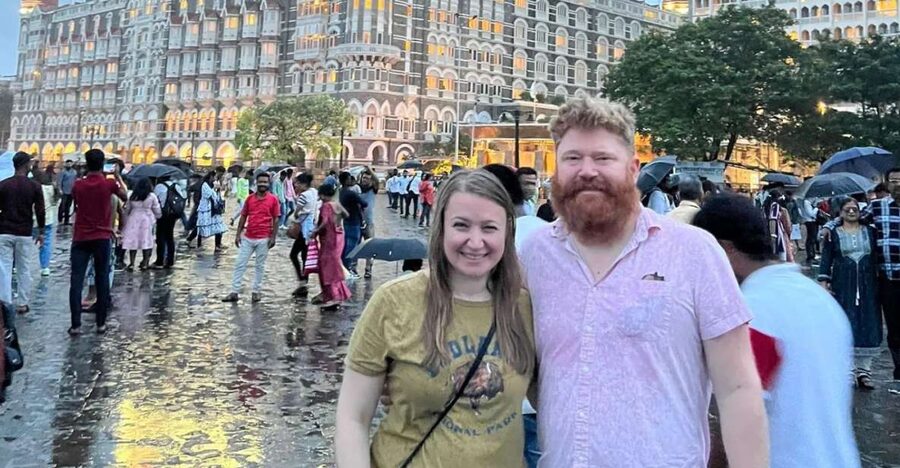
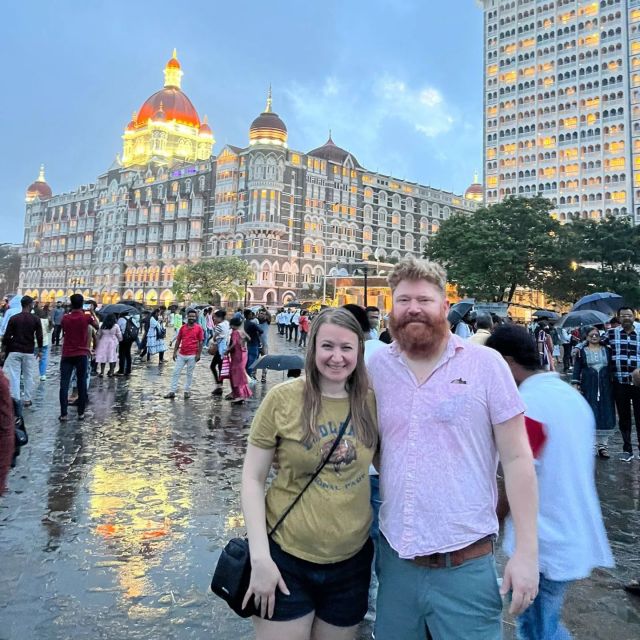
The Hotel Taj Mahal Palace is a heritage five-star luxury hotel in Colaba. It brings the route into a later chapter of Mumbai’s public image, where hospitality, status, and the waterfront meet.
The hotel is likely to be one of the most recognizable exterior stops. I would treat it as a place to appreciate from outside unless your tour arrangements clearly say otherwise. The walk is designed around heritage viewing, and the supplied details do not promise an interior visit.
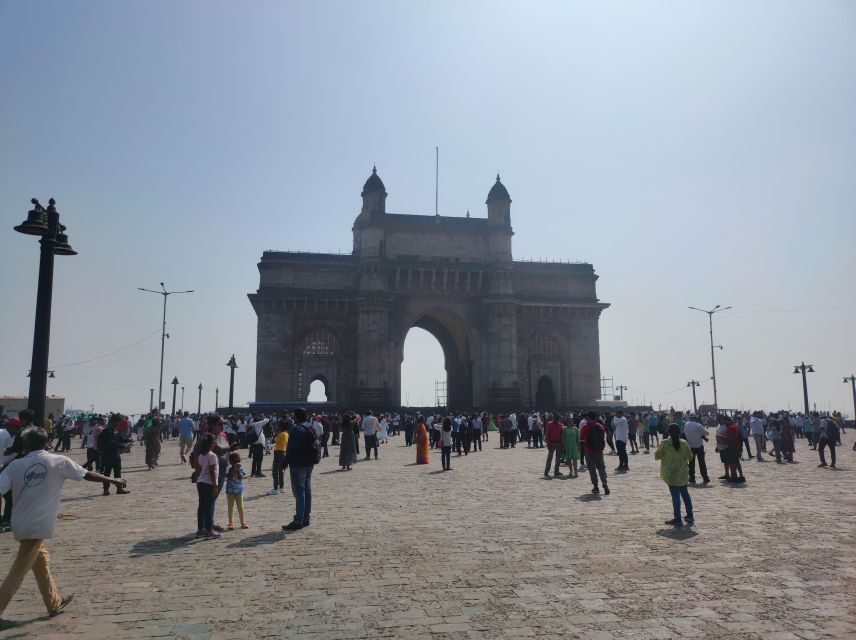
The Gateway of India provides a natural closing point. This arch-monument was built in the early 20th century in Mumbai and is one of the city’s defining landmarks. Reaching it after the older civic and religious buildings gives the route a sense of progression through different periods of the city.
The waterfront also gives you a change of scale. Earlier stops focus on streets, façades, courtyards, and institutions. At the Gateway, the city opens outward, and the monument connects Mumbai to its harbor and its role as a major port city.
Marine Drive is another major attraction included in the description of Old Mumbai. The sweeping seafront is one of the city’s best-known views, and it gives the heritage story a broad visual ending. Depending on the precise walking sequence, you should confirm how much time is spent there, since the full route contains many landmarks.
What the guides add to the three-hour route
The guide is the most important part of this experience. Buildings provide the setting, but the explanations make the walk worth paying for. The strongest praise is consistent: guests describe guides as warm, enthusiastic, helpful, sincere, and able to share history in an engaging way.
Sanika is singled out for creating a relaxed, friendly experience and for explaining Mumbai’s past clearly. Ketan is praised for enthusiasm and for answering questions with care. Krishna is described as personable and able to personalize the route when the group was very small.
Other named guides include Abhi, Alan, and Alkama. Abhi is praised for helping a first-time visitor understand sites that might otherwise be easy to pass without notice. Alan is described as a good conversationalist as well as a strong source of information. Alkama is praised for bringing energy and detailed knowledge to the landmarks.
The rating is 4.5 from 69 reviews, which is a solid result for a walking experience. The repeated praise for guide quality is more useful than the number alone. It tells me that you should expect the human side of the tour to shape the experience, and that asking questions is likely to be worthwhile.
Price, pace, and who gets the best value
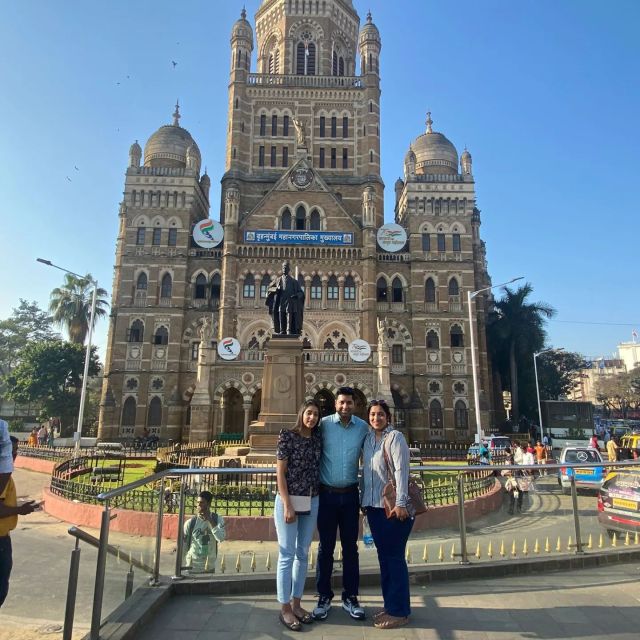
At $28 per person, this is a fair price for a three-hour guided introduction to South Mumbai. You are paying for local interpretation, route planning, and the ability to connect ten major sights rather than finding each one independently.
The value is strongest for a first visit. If you arrive without much knowledge of Mumbai, the walk can provide a useful framework for the rest of your stay. It is also a good fit if architecture, public history, and city planning interest you more than shopping or food stops.
You should think twice if you dislike walking, prefer long visits inside individual monuments, or want a small-group experience guaranteed in advance. The supplied details do not state the group size, and the route includes many exterior landmarks. The walk is informative and broad rather than slow and deeply focused on one building.
The tour is offered in English. You can reserve and pay later, which helps if your plans are still shifting, and cancellation is available for a full refund up to 24 hours in advance. Those terms reduce the risk of booking early.
Practical advice before you go
Wear shoes suited to three hours on foot. The route is built around streets and public landmarks, so comfort matters more than dressing for a formal attraction.
I would also book this near the start of your Mumbai stay. The walk covers CST, the Town Hall, St. Thomas’ Cathedral, Flora Fountain, the university, the High Court, Kala Ghoda, Watson’s Hotel, the Taj Mahal Palace, the Gateway of India, and the wider Old Mumbai area. Seeing this cluster early can make later independent exploring less confusing.
Keep your expectations clear. You are not buying a private car tour or a sequence of long indoor visits. You are buying an interpretive walk through the historic core, with the chance to stop, look up, and ask why a building matters.
Should you book the South Mumbai Heritage Walking Tour?
I would book it if you want a strong first introduction to South Mumbai and enjoy learning through buildings, streets, and conversation. The guide quality receives the clearest praise, and the route covers an unusually broad set of landmarks for $28.
I would skip it only if three hours of walking sounds unpleasant or if you need guaranteed interior access to the cathedral, library, court, hotel, or station. For most first-time visitors who want more than quick photographs, this is a sensible and fairly priced way to get your bearings in Old Mumbai.
FAQ
Where does the Mumbai heritage walking tour take place?
The tour explores South Mumbai and the historic Old Mumbai area in Maharashtra, India.
How much does the tour cost?
The price is $28 per person.
How long does the walking tour last?
The experience lasts about three hours.
What language is the tour offered in?
The tour is offered in English.
Which major sights are included?
The route includes Chhatrapati Shivaji Terminus, Town Hall and the Asiatic Society Library, St. Thomas’ Cathedral, Flora Fountain, the University of Mumbai, Bombay High Court, Kala Ghoda, Watson’s Hotel, the Taj Mahal Palace, and the Gateway of India.
Is Marine Drive part of the experience?
Marine Drive is included among the Old Mumbai attractions covered by the heritage walk.
Can I pay later?
Yes. You can reserve your place and pay later, with nothing required at the time of booking.
What is the cancellation policy?
You can cancel up to 24 hours in advance for a full refund.
Who provides the tour?
The experience is provided by Mumbai Dream Tours.
Just added in Mumbai
- Mumbai Airport to Mumbai Hotels : Private Transfers★ 5.0 · 13 reviews
- Mumbai Sightseeing Tour★ 5.0 · 11 reviews
- Mumbai Spice Markets and Bazaars Tour with Guide and Transport★ 5.0 · 42 reviews
- Mumbai 800 Year Worli Village: Talking Goddess, Old Fort & more★ 5.0 · 94 reviews
- Customize private tour with pickup★ 5.0 · 95 reviews
- Gufran’s Slum Home Tour in the Mumbai Slums★ 5.0 · 19 reviews
- Private Guided Bandra Half Day City Tour in AC Vehicle★ 5.0 · 72 reviews
- The Famous Bollywood Tour of Mumbai★ 5.0 · 97 reviews
Mumbai Tours, compared.

Dharavi slum tour in Mumbai by Female tour guides of the slum
Read our review →
Private Mumbai Sightseeing Tour (Traveller’s Choice Award Winner)
Read our review →
Elephanta Caves Half-Day Guided Tour with Expert
Read our review →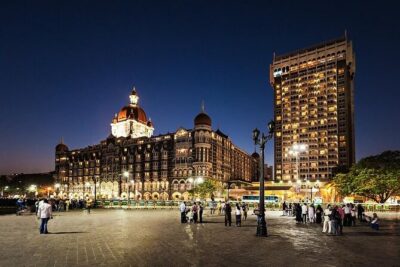
Highlights of Mumbai Sightseeing Tour: TRAVELLERS CHOICE AWARDED
Read our review →